What to see
Visiting Nicosia: A Complete Guide to Cyprus's Divided Capital
We may earn a commission when you book through links on this page, at no extra cost to you. We don't visit or try the places we cover: we summarize published sources. How we work
In short
- One full day covers the essentials: Cyprus Museum, St. John's Cathedral and the Byzantine Museum, Laiki Yitonia, Ledra Street and, across the crossing, northern Nicosia.
- The old town is entirely walkable; the Venetian walls form a 4.5 km (2.8 mi) circle with eleven bastions and take about 1 h 30 to walk.
- The Ledra Street crossing is on foot only and open daily (as of October 2026); what you need to cross depends on your passport.
- Larnaca Airport (LCA) is 45 km (28 mi) away; Intercity buses link Nicosia to Larnaca, Limassol and Paphos.
Nicosia is a city like no other. The capital of Cyprus for centuries, it is today the last urban area in the world still cut in two by an active border. A line of barbed wire, sandbags and no man’s land runs right through the center of the city, separating abandoned buildings on both sides, in a silence that contrasts with the bustle of the surrounding streets. Yet Nicosia is not a sad city. It is a city on the move, proud of its thousands of years of history, its Venetian walls, its world-class museums and its reviving food scene.
This complete guide takes you to both sides of Nicosia, the recognized capital of the Republic of Cyprus and the Turkish-held north, with all the practical advice to organize your visit.
Nicosia’s history: four thousand years at the center of the island
Nicosia (Lefkosia in Greek, Lefkoşa in Turkish) has been inhabited since the Early Bronze Age, around 2500 BC. But it was under the medieval Cypriot kings that the city took off. The Lusignan dynasty, Frankish crusaders who ruled from 1192 to 1489, made Nicosia the capital of one of the most prosperous crusader kingdoms in the eastern Mediterranean. They built Gothic cathedrals, a royal palace and fortifications that echoed those of the cities of France and Italy.
In 1489, Venice took control of Cyprus. The Venetians, fearing an imminent Ottoman attack, razed Nicosia’s medieval suburbs to build immense circular walls, the ones you still see today. Yet these fortifications held out only one summer against the Ottoman armies: in 1570, after a seven-week siege, Nicosia fell. Sixty thousand inhabitants were massacred or enslaved; the Gothic cathedrals were converted into mosques.
The city remained under Ottoman rule until 1878, when Britain took control of Cyprus. Independence was proclaimed in 1960. Then came 1974: a coup fomented by the Greek junta triggered a Turkish invasion that divided the island, and Nicosia with it.
The Green Line: the city cut in two
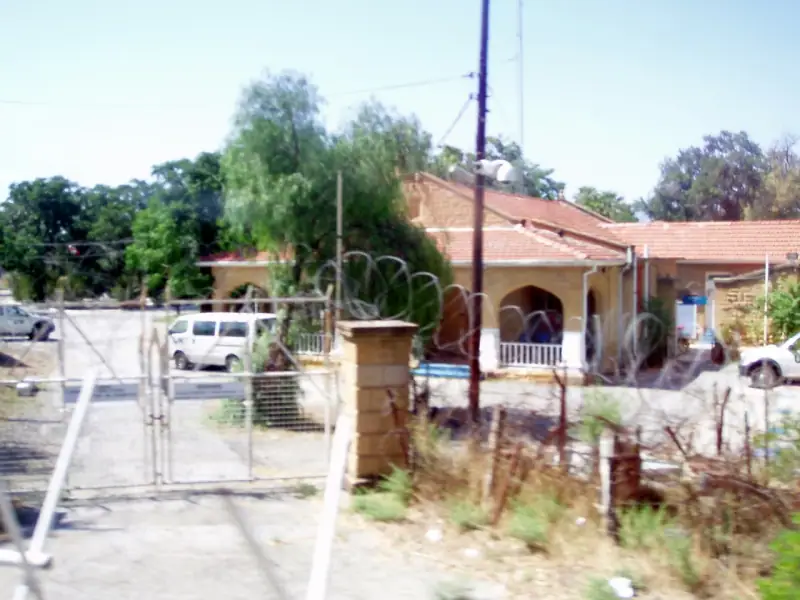
The Green Line (Attila Line on the Turkish side) is the de facto border that has divided Nicosia since 1974. It takes its name from the line drawn in green pencil on a military map by the British general Peter Young during the events of 1964, a line meant to be provisional that has lasted more than fifty years.
In Nicosia, the Buffer Zone is a strip roughly 50 to 200 meters (165 to 650 ft) wide depending on the sector. The buildings that line it were abandoned as they stood at the partition: you can sometimes see coffee cups left on tables, open books on dusty shelves, calendars stopped in 1974. It is an open-air museum of the absurd, one of the most unsettling things you will see in Cyprus.
The Ledra Street crossing (Ledra Crossing) is the pedestrian crossing point that has allowed free crossing since 2008. The crossing is open daily (as of October 2026), with extended hours: check them before you go. What you need to cross depends on your passport, so check the official travel advice of your government: travel.state.gov (US), GOV.UK (UK), travel.gc.ca (Canada), Smartraveller (Australia) (checked November 2026).
Hotels in central Nicosia
Stay in the old town or near the Venetian walls to explore the capital on foot.
The Venetian walls: the perfect circle
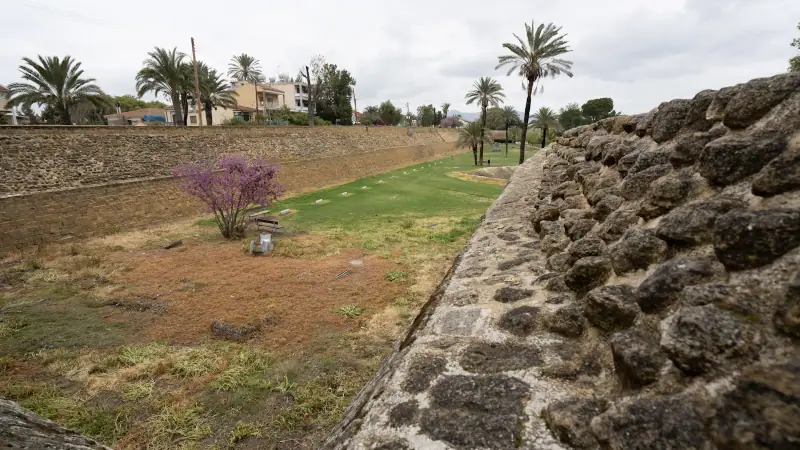
Nicosia’s Venetian walls are one of the best-preserved examples of Renaissance military architecture in the Mediterranean. Built between 1567 and 1570 to plans by the Venetian engineer Francesco Barbaro, they form an almost perfect circle 4.5 km (2.8 mi) around, flanked by eleven star-shaped bastions characteristic of the bastioned style of the time.
The bastions bear the names of noble Venetian families: Podocataro, Constanza, d’Avila, Quirini… Today they serve very peaceful uses: public gardens, museums, art galleries and café terraces. The Famagusta bastion, in the northeast, has a very pleasant municipal garden for a shaded break.
The three Venetian gates are the only openings in the original walls:
- The Famagusta Gate (Porta Giuliana): the best preserved of the three, with its 15-meter (50 ft) vaulted tunnel and central circular hall. It now serves as an exhibition and concert hall.
- The Paphos Gate: on the west side, this gate was rebuilt under the Ottomans and has a plainer look.
- The Kyrenia Gate: in the north, it opens onto the Buffer Zone and has therefore been closed since 1974.
A full walk around the walls (4.5 km / 2.8 mi) takes about 1 h 30 on foot and offers changing perspectives on the old city and the modern districts outside the walls.
The Cyprus Museum: the island’s best archaeological museum
The Cyprus Museum is the island’s most important archaeological museum and one of the richest in the whole eastern Mediterranean. Housed in a neoclassical building of 1908 near the walls, it holds collections covering seven thousand years of Cypriot history, from the Neolithic to the Roman period.
Collections to see:
Room 1, the Neolithic and Bronze Age: geometric pottery, obsidian tools, cult objects. The Vounous figurines (3rd millennium BC) are among the oldest depictions of religious rites in Cyprus.
Room 2, the stone idols: a fascinating collection of cruciform figurines and Bronze Age votive statuettes, some of which oddly foreshadow Byzantine icons by fifteen centuries.
Room 4, the limestone statues: one of the most impressive rooms, with hundreds of votive statues found in the sanctuary of Ayia Irini (around 700 BC). The ensemble, arranged in a circle as in the original temple, is striking.
Room 14, the Zeus of Anavargos statue: a gilded bronze Zeus of the 1st century AD of remarkable fineness, one of the most beautiful sculptures in the exhibition.
Bronze room: the collection of Cypriot Late Bronze Age bronzes is unique in the world: miniature chariots, the Kourion tripod, decorated votive shields.
Practical information:
- Address: 1 Museum Street, Nicosia
- Hours: closed Monday; open Tuesday to Saturday during the day and Sunday morning (check hours with the Department of Antiquities)
- Admission: €4.50 (adults, ~$5), €2.50 (students, ~$3), free for under-18s
- Allow 1 h 30 to 2 hours for a serious visit
St. John’s Cathedral and the Byzantine Museum
St. John’s Cathedral (Agios Ioannis) is the finest Orthodox church in Nicosia. Built in 1662 on the site of a medieval Benedictine monastery, it is famous for its 18th-century Byzantine frescoes that cover the whole of the walls and vault. These paintings, commissioned by Archbishop Filotheos in 1736, show scenes from the Old and New Testaments in exceptionally vivid colors: deep blues, sumptuous golds, carmine reds.
The most original cycle of frescoes depicts the discovery of the tomb of Lazarus in Larnaca in the 9th century, a direct reference to the Cypriot tradition linking Cyprus and the risen saint.
The Byzantine Museum (Byzantine Museum and Art Galleries), next to the cathedral in the Archbishop’s palace, holds the largest collection of Byzantine icons in Cyprus: more than 230 icons from the 9th to the 19th centuries, including several very rare examples from the iconoclast period. The collection also includes mosaics, sculptures and illuminated manuscripts.
Practical information:
- St. John’s Cathedral: free entry, 8 am-12 pm and 2-4:30 pm (closed Sunday morning)
- Byzantine Museum: Monday-Friday 9 am-4:30 pm, Saturday 9 am-1 pm, admission €5 (~$6)
Guided tours of Nicosia
Discover the Green Line, both sides of Nicosia and the historic sites with a local guide.
Laiki Yitonia: the renovated traditional district
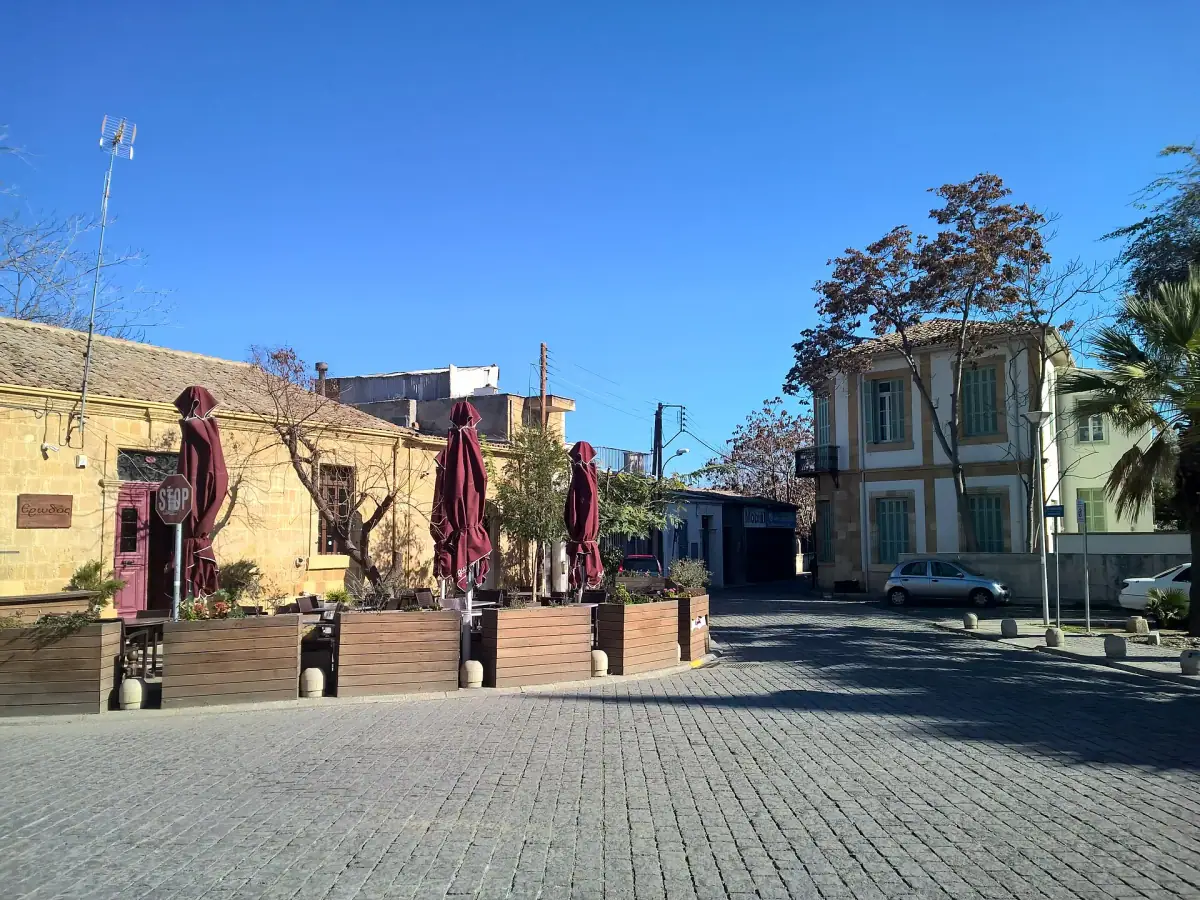
Laiki Yitonia (“the popular neighborhood” in Greek) is the rehabilitated pedestrian district of the old town, just north of Eleftheria Square. Its lanes paved in white limestone, Ottoman houses with wooden balconies and flowered inner courtyards make one of the loveliest settings in Nicosia for strolling and lunch.
The district’s rehabilitation in the 1980s preserved the Ottoman architecture while adding restaurants, craft shops and galleries. The result is a bit touristy but authentic: local residents still live here, old ladies fill their balconies with flowers and stray cats doze at the crossroads.
What to see and do in Laiki Yitonia:
- Hadjigeorgakis Kornesios House: one of the best-preserved Ottoman residences in Nicosia (18th century), with its suites of rooms, harem, private bath and polychrome stucco. Now a museum of domestic life (admission €2.50, ~$3).
- Art galleries: several galleries show contemporary Cypriot artists in attractive spaces.
- Cypriot restaurants: several traditional tavernas serve Cypriot meze in shaded inner courtyards, one of the best food experiences in the city.
- The Folk Art Center: a small but rich collection of traditional Cypriot crafts (embroidery, pottery, goldsmithing). Admission €2 (~$2.30).
Ledra Street and the crossing to the north
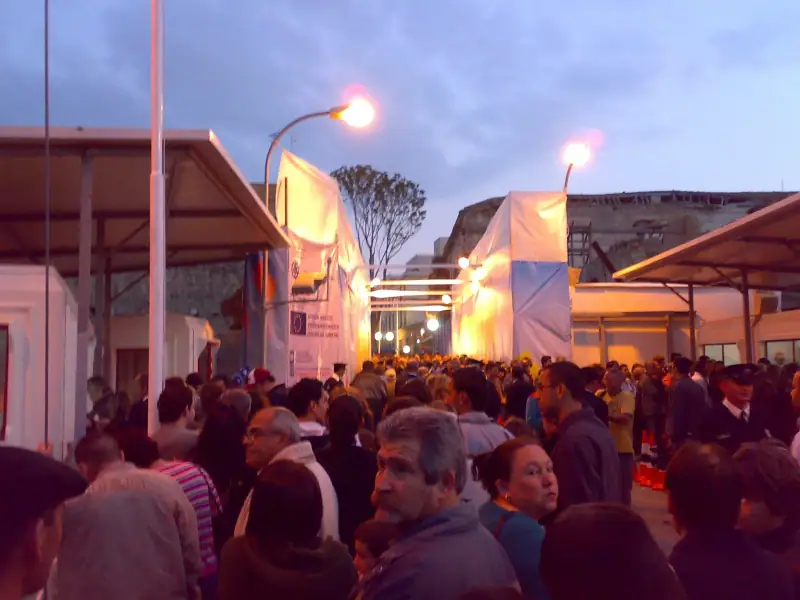
Ledra Street (Odos Ledra) is the old town’s main shopping artery. About 500 meters (1,640 ft) long, this pedestrian street holds fashion shops, cafés, restaurants and a few architectural remains of the Ottoman and British colonial periods. At its north end is the city’s only pedestrian crossing point.
Crossing the Green Line on Ledra Street is a unique experience: in a few minutes, you go from a modern European city to a distinct Middle Eastern atmosphere, with its minarets, covered bazaars (bedestens), Turkish signs and cafés with low tables.
North side: Turkish Nicosia (Lefkoşa)
The northern part of Nicosia, under Turkish administration since 1974, deserves half a day of exploration. It is a city with a very different atmosphere: calmer, less commercially developed, with an intact Ottoman charm that the south has sometimes lost in its modernization.
North-side must-sees:
St. Sophia Cathedral (Selimiye Mosque): the finest Gothic cathedral in Cyprus, built by the Lusignans in the 13th century. Converted into a mosque in 1571, it keeps its pointed arches and Gothic sculptures, set beside Ottoman carpets and minarets. The interior, stripped back in the Islamic tradition, creates a deeply particular atmosphere: blond Gothic stone, stained glass replaced by clear glass, and the nave oriented toward Mecca.
The Büyük Han (the Great Inn): the largest Ottoman caravanserai in Cyprus (1572), restored as a cultural center. Its central courtyard with a raised miniature mosque is one of the loveliest spaces in the city. Craft galleries, artists’ studios and cafés coexist in a magnificent setting.
The Belediye Pazari (covered municipal market): built in 1933 on the foundations of a medieval caravanserai, this market offers spices, dried fruit, leather, carpets and souvenirs in an authentic souk atmosphere.
Atatürk Square: the center of the northern city, with its Venetian granite column (originally raised in Venice in honor of a naval victory) and its Ottoman and British colonial administrative buildings.
Tips for visiting the north side:
- Bring euros and Turkish lira (euros are accepted in many shops but the official currency is the Turkish lira, TL)
- Purchases made in the north cannot be brought into the south in large quantities (customs rules)
- A Cypriot (southern) SIM card does not work in the north: check your carrier’s roaming terms and fees before you cross
Car rental in Cyprus
A car is essential for ranging out from Nicosia to Limassol, Larnaca or the Troodos Mountains.
Food in Nicosia
Nicosia is the food capital of Cyprus, with a restaurant scene booming since the 2010s. The old town concentrates the best addresses, from traditional tavernas to contemporary Cypriot restaurants.
Cypriot meze
Meze is Nicosia’s fundamental food experience. Expect 20 to 30 small plates following one another on your table: hummus, tarama, talatouri (Cypriot tzatziki with mint), grilled halloumi, loukanika (red-wine sausages), afelia (pork with coriander and wine), stifado (stew with cinnamon and onions), calamari, shrimp, fish of the day… All served with warm bread and zivania (Cypriot brandy).
Areas for meze:
- Laiki Yitonia: several tavernas in inner courtyards, authentic atmosphere, reasonable prices (€18 to 28 per person, ~$21 to 32)
- Onasagorou Street: the old town’s street of trendy restaurants, with more modern concepts
- Engomi district (outside the walls): the tavernas of Nicosians, less touristy and often better
Specialties to try in Nicosia
- Flaounes: savory pastries with halloumi cheese and raisins, typical of Easter but sold year-round in traditional bakeries
- Kolokasi: a Cypriot tuber (similar to taro) braised in a stew, a local dish little known to tourists
- Sheftalia: grilled pork and lamb sausages in caul fat, a Cypriot specialty distinct from Greek souvlaki
- Commandaria: the oldest wine in the world in continuous production, served as a dessert wine or aperitif in tavernas
Cafés and trendy scene
The area around Nikokreontos Street and the Chrysaliniotissa district (east of the old town, near the walls) concentrates craft cafés, cocktail bars and fusion restaurants in rehabilitated Ottoman houses. This is where the heart of Nicosia’s young, creative scene beats.
Visiting Nicosia in 1 day: recommended itinerary
Morning (9 am-1 pm):
Start with the Cyprus Museum at 9 am (before the crowds). Allow 1 h 30 to 2 hours for a serious visit. Then walk (10 minutes) to St. John’s Cathedral and the Byzantine Museum in the Archbishop’s palace. The morning ends with a stroll through Laiki Yitonia to explore the lanes and watch local life.
Lunch (1-2:30 pm):
In a Laiki Yitonia taverna for a relaxed meze, or in a Ledra Street café for something lighter.
Afternoon (2:30-6 pm):
Walk down Ledra Street toward the Green Line. Go through the checkpoint to the north side. Walk to St. Sophia Cathedral (20 minutes on foot from the crossing), then to the Büyük Han for a coffee break in the courtyard. Cross back to the south side in the late afternoon.
Evening (6-10 pm):
A walk on the Venetian walls at sunset (the Famagusta bastion is ideal), then dinner in the Chrysaliniotissa district.
Practical information for visiting Nicosia
How to get to Nicosia
By air: there is no active airport in Nicosia (the historic airport has been in the Buffer Zone since 1974). The nearest airport is Larnaca (LCA), 45 km (28 mi) away (40 minutes by car or taxi). A Larnaca-Nicosia taxi costs €45 to 55 (~$52 to 64).
By Intercity bus: comfortable buses link Larnaca to Nicosia every 30 minutes (45 min, ~€3, ~$3.50), Limassol every hour (1 h, ~€5, ~$6), and Paphos several times a day (1 h 45, ~€8, ~$9).
By car: Nicosia is linked to the other cities by the A1 highway (to the south). Allow 40 min from Larnaca, 1 h from Limassol, 1 h 30 from Paphos. Reminder: in Cyprus, you drive on the left.
Getting around Nicosia
On foot: the walled old town can be visited entirely on foot. The Cyprus Museum → St. John’s Cathedral → Laiki Yitonia → Ledra Street circuit is about 3 km (1.9 mi) and can be done in one relaxed day.
City buses: the OSEA network serves the modern city outside the walls. For the old town, walking is preferable.
Taxi/Bolt: Uber does not operate in Cyprus; taxis and the Bolt app are available on demand and cheap for short distances in town (€5 to 10, ~$6 to 12, for a trip within the walls).
Budget in Nicosia
| Item | Budget | Comfort |
|---|---|---|
| Accommodation (night) | €45-65 (~$52-75) | €90-140 (~$105-160) |
| Meals (per day) | €22-35 (~$26-41) | €45-65 (~$52-75) |
| Local transport | €5-10 (~$6-12) | €10-20 (~$12-23) |
| Activities and museums | €8-15 (~$9-17) | €15-30 (~$17-35) |
| Total / day | €80-125 (~$93-145) | €160-255 (~$185-295) |
Nicosia is slightly cheaper than Limassol or Paphos for accommodation. For an overview of the Cyprus budget, see the complete guide.
Nicosia in your Cyprus itinerary
Nicosia is ideally placed as a stop on a Cyprus road trip: equidistant from Larnaca (40 min) and Limassol (1 h), it is a practical base for ranging out. Many travelers visit it as a day trip from Larnaca, using the airport and the Finikoudes seafront as a base.
For travelers interested in history and culture (ancient sites, Byzantine frescoes, crusader remains), Nicosia deserves a night there. Nightlife is livelier here than in Larnaca, and the restaurants more varied than in Ayia Napa.
To learn everything about Cyprus before leaving, see the complete guide to Cyprus and the article on entry requirements for Cyprus (visa, documents needed, rules for crossing the Green Line).
Nicosia is a city that asks for a little effort; its treasures do not reveal themselves at first glance. But for those who linger, it is one of the most singular experiences in the Mediterranean: a capital out of time, cut in two, that nonetheless keeps living and reinventing its identity.
Frequently asked questions
Is Nicosia the only divided capital in the world?
Yes, Nicosia is today the only capital still divided in the world. Since 1974, a dividing line known as the Green Line or UN Buffer Zone has split the city between the Republic of Cyprus (south, internationally recognized) and the Turkish Republic of Northern Cyprus (north, recognized only by Turkey). Ledra Street has a pedestrian crossing between the two sides; what you need to cross depends on your passport, so check the official travel advice of your government before you go (travel.state.gov (US), GOV.UK (UK), travel.gc.ca (Canada), Smartraveller (Australia), checked November 2026).
Can you cross freely from southern to northern Nicosia?
There has been a pedestrian crossing point on Ledra Street since 2008, open daily (as of October 2026), with hours that you should check before you go. The formalities are quick (a few minutes), but the requirements depend on your passport, so see the official travel advice of your government. The currency changes: in the south you pay in euros; in the north, in Turkish lira.
How many days do you need to visit Nicosia?
One full day is enough to see the essentials: the Venetian walls, Ledra Street, the Cyprus Museum, St. John's Cathedral and Laiki Yitonia on the south side, and a walk of two to three hours on the north side (bazaars, St. Sophia, Atatürk Square). Two days allow a deeper exploration and a relaxed pace with coffee breaks in the courtyards.
Where is Nicosia in relation to the other cities of Cyprus?
Nicosia is in the middle of the island, about 45 km (28 mi) north of Larnaca (40 minutes), 80 km (50 mi) north of Limassol (1 hour) and 145 km (90 mi) northeast of Paphos (1 h 30). It is the only major Cypriot city without direct access to the sea. The nearest airport is Larnaca.
What is the best time to visit Nicosia?
Spring (April-May) and fall (September-October) are ideal: pleasant temperatures (20 to 28 °C / 68 to 82 °F), few crowds, gardens in flower. Summer (July-August) is very hot in Nicosia (often 38 to 42 °C / 100 to 108 °F), hotter than on the coast because the city is inland. Winter (December-February) is mild (12 to 18 °C / 54 to 64 °F) but some sites close early.
Is there parking in Nicosia for visiting the old town?
Yes, there are several underground parking garages around the Venetian walls (Eleftheria Square, City Hall square). Expect €0.50 to 1 an hour (~$0.60 to 1.20). It is advisable to park on the edge of the old town and explore on foot, as the medieval lanes are not suited to car traffic. Eleftheria parking lot (Liberty Square) is the most central.
Do you need a car to visit Nicosia?
No, Nicosia's old town can be visited entirely on foot. The main sights (walls, Ledra Street, Cyprus Museum, Laiki Yitonia, Byzantine Museum) are within a 2 km (1.2 mi) radius. To link Nicosia to the other Cypriot cities, however, you need a car or the Intercity buses.
More Cyprus guides
Keep reading
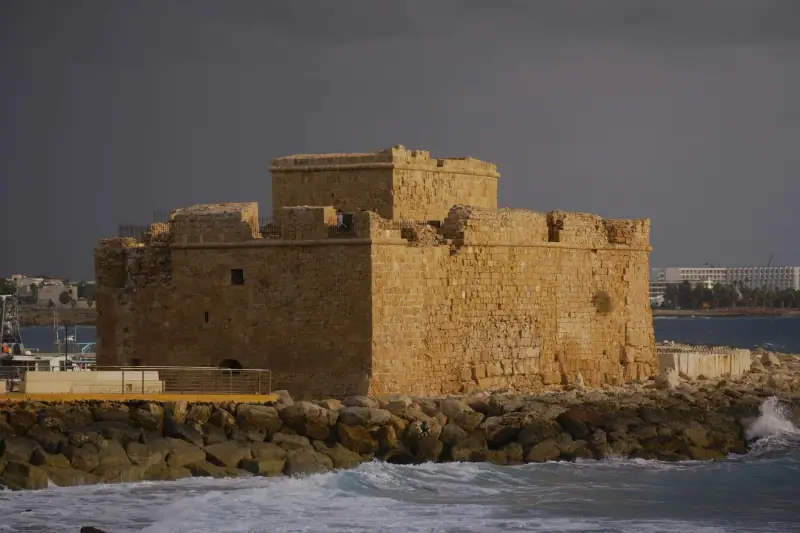
Visiting Paphos: A Complete Guide to the City of Aphrodite
Visit Paphos: UNESCO Roman mosaics, Tombs of the Kings, the harbor castle, Aphrodite's Rock, Coral Bay and the Akamas. A complete guide.
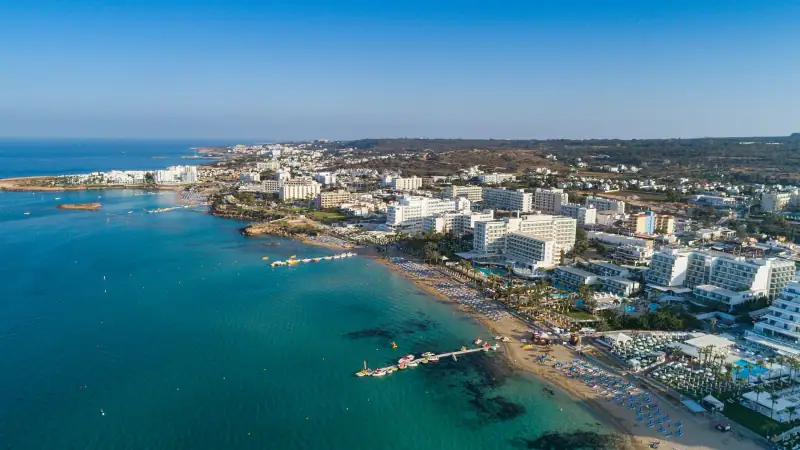
Visiting Protaras: A Complete Guide to Cyprus's Family Resort
Complete guide to Protaras: Fig Tree Bay, Cape Greco, beaches, diving, activities and practical information for Cyprus's east coast.
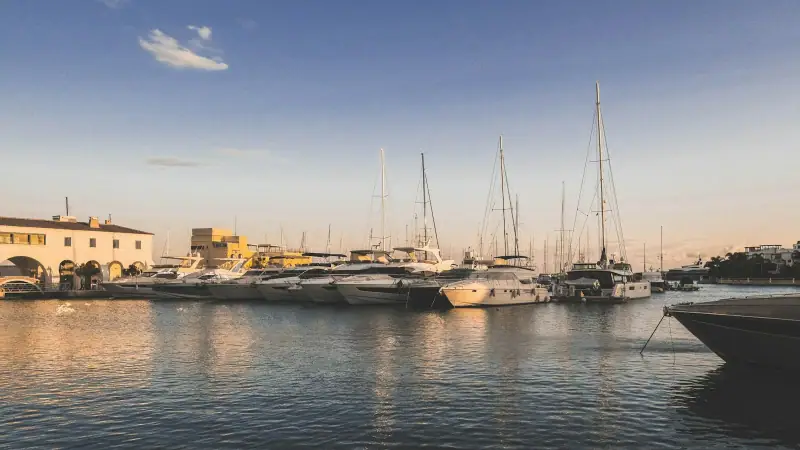
Visiting Limassol: A Complete Guide to Cyprus's Second City
Everything you need to visit Limassol: medieval castle, old town, marina, beaches, wine and food. A complete guide with a 2-day itinerary.
Ready-made
Cyprus itineraries
5 days
Cyprus in 5 Days Without a Car: A Realistic Bus Itinerary
LarnacaLimassol
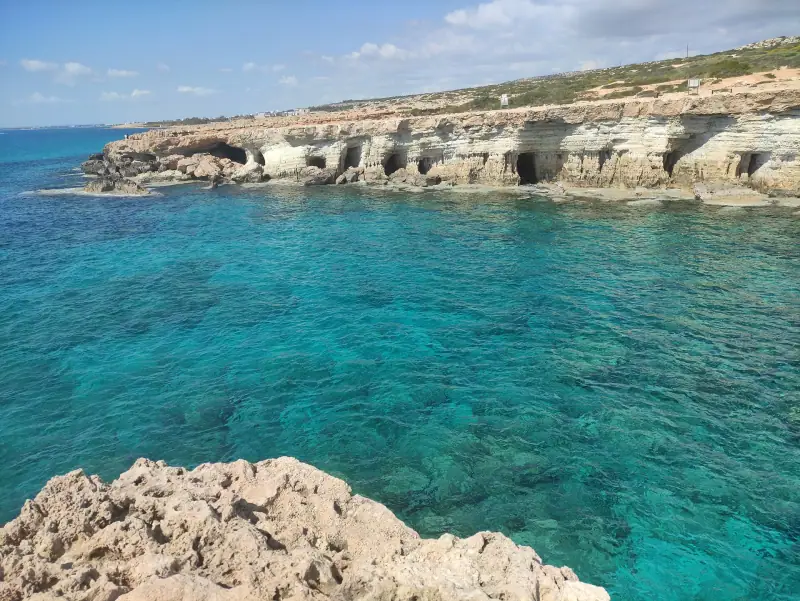
7 days
Cyprus in 7 Days: A Complete Day-by-Day Itinerary
Cyprus 7-day itinerary: the best plan for a full week. From Paphos to Ayia Napa via Limassol, Nicosia and the Troodos, day by day.
Cyprus Road Trip: The Complete Itinerary Around the Island
Drive around Cyprus in 10 to 14 days. Complete itinerary, essential stops and practical tips for an unforgettable road trip.