Things to do
Hiking in the Troodos: The Best Trails in Cyprus
We may earn a commission when you book through links on this page, at no extra cost to you. We don't visit or try the places we cover: we summarize published sources. How we work
In short
- The Troodos peaks at 1,952 m (6,404 ft) on Mount Olympus; the Forestry Department maintains about 50 marked trails totaling about 200 km (124 mi).
- Top trails: Atalante (14 km / 8.7 mi loop, moderate), Artemis (7 km / 4.3 mi, easy) and the Caledonia Falls walk (about 3 km / 1.9 mi each way, easy).
- Spring (March-May) and fall (September-October) are the best seasons; a rental car is strongly recommended.
- Troodos villages (Platres, Kakopetria, Pedoulas) have guesthouses at about €50 to 90 a night (~$58 to 105).
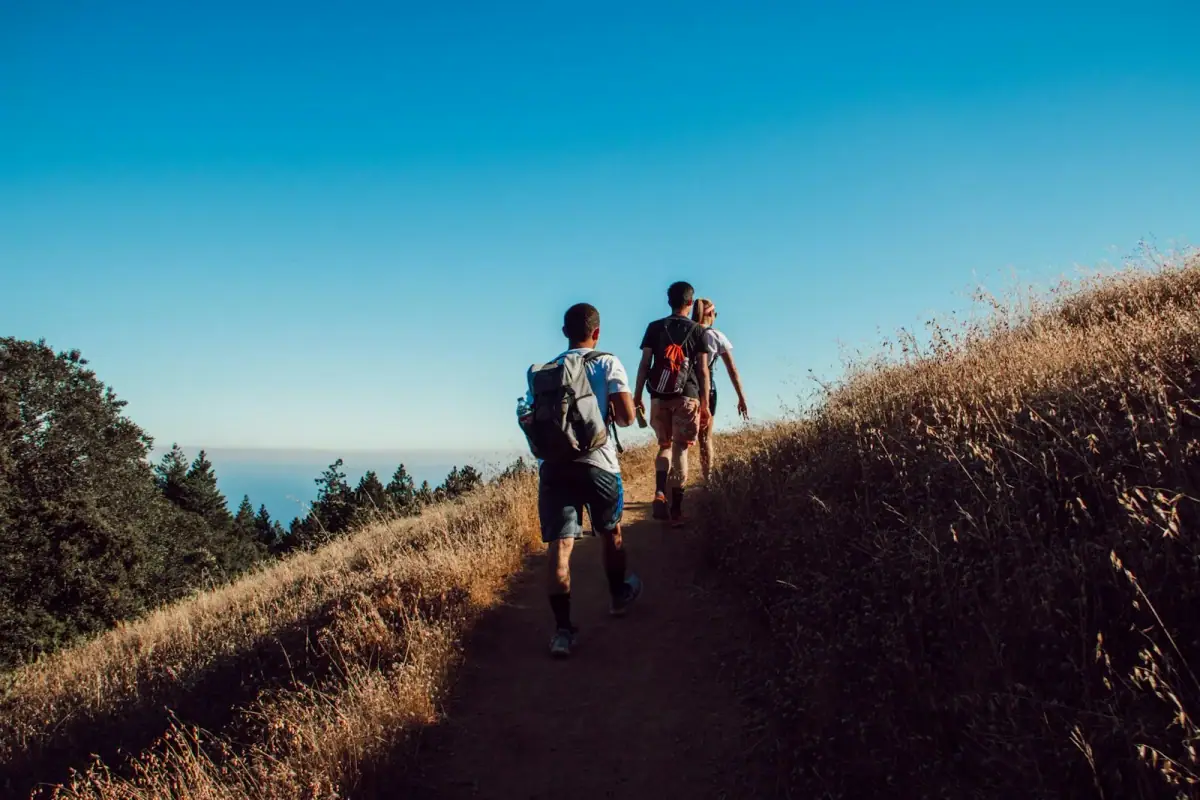
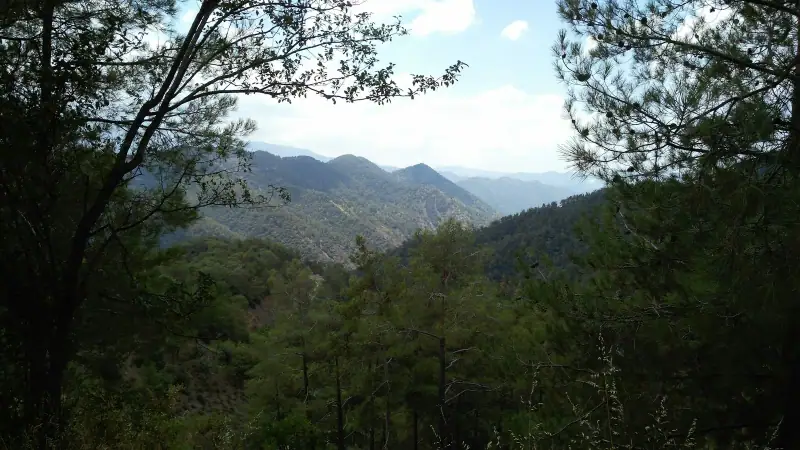
The Troodos Mountains are the green heart of Cyprus and a hikers’ paradise. Peaking at 1,952 meters (6,404 ft) on Mount Olympus, the island’s highest summit, this massif of ophiolitic rock is covered with pine and cedar forests and vineyards. It is also home to the famous Byzantine monasteries and churches listed by UNESCO. A destination in its own right, far from the sunny beach image generally associated with Cyprus.
The massif at a glance
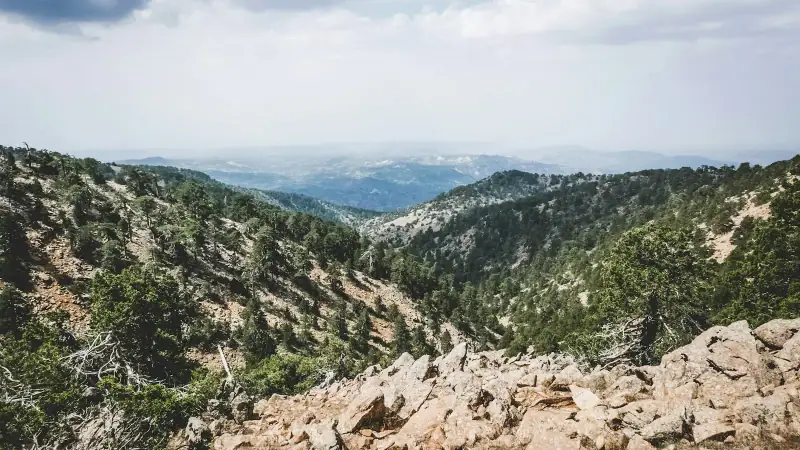
The Troodos covers the central and western part of Cyprus. The Forestry Department maintains a network of about 50 marked trails across the region, totaling about 200 km (124 mi) of paths.
The main areas:
- Platres: the hiking “capital” of the Troodos, well equipped
- Kakopetria: a charming medieval village, a base for the northeast of the massif
- Pedoulas: a village of cherry trees, authentic atmosphere
- Olympus: the summit, reachable by car almost up to 1,900 m (6,235 ft)
The essential trails
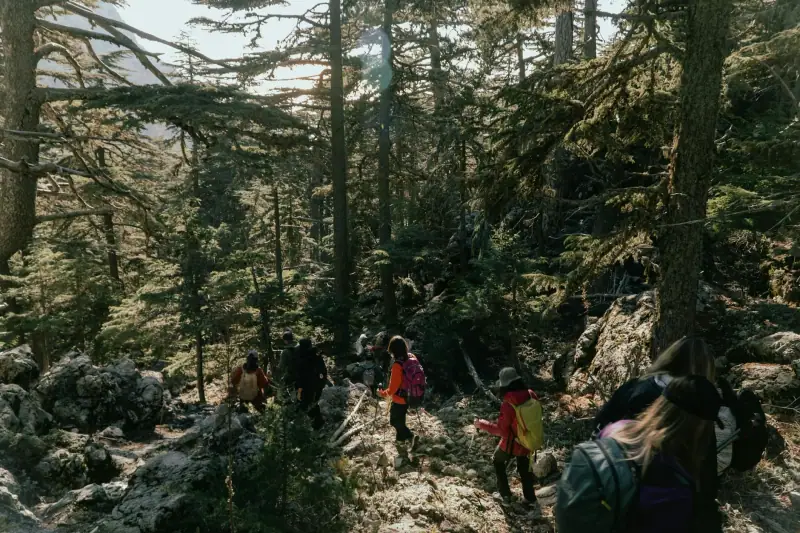
1. Atalante Trail (★★★★★)
Difficulty: Moderate | Distance: 14 km (8.7 mi) loop | Duration: 4-5 h Start: Troodos Square
The Atalante Trail is considered the finest route in the Troodos. This loop goes around the Chionistra massif through black pine forests, junipers and ridges with panoramic views over the whole island; in clear weather you can even see the sea on both sides.
Highlights:
- Spectacular views from the ridges (360°)
- Dense, fragrant pine forest
- Variety of vegetation
- Quiet and little visited outside weekends
Tips: start early in the morning (7-8 am) to enjoy the cool air and the light. Bring enough water.
2. Artemis Trail
Difficulty: Easy | Distance: 7 km (4.3 mi) loop | Duration: 2 h 30-3 h Elevation gain: 150 m (490 ft) | Start: Mount Olympus ski resort
The Artemis Trail is the most popular in the Troodos. Laid out at an altitude of 1,835-1,850 m (6,020-6,070 ft), it circles Mount Olympus: it is the classic high-altitude hike in Cyprus. Easy and well marked, it offers open views without much effort.
Highlights:
- Accessible to everyone (children included)
- High altitude means relative coolness even in summer
- Panoramic view over the massif
3. Caledonia Falls
Difficulty: Easy | Distance: about 3 km (1.9 mi) each way (out and back) | Duration: 1 h-1 h 30 Start: Psilo Dendro or the Troodos road
A short but beautiful trail along the Krios River to the Caledonia Falls (12 m / 39 ft high), the most spectacular in Cyprus. The path follows the stream through a forest of plane trees and pines, very pleasant even in summer.
Best for: families with children, beginner hikers.
4. Pouziaris Trail
Difficulty: Moderate | Distance: 7 to 11 km (4.3 to 6.8 mi) depending on sources | Duration: about 4 h Start: Psilo Dendro
A trail distinct from the one to the falls, which climbs from about 1,180 to 1,720 m (3,870 to 5,640 ft) through mixed forests. A good alternative to the classic trails.
5. Persephone Trail
Difficulty: Easy | Distance: 3 km (1.9 mi) loop | Duration: 1 h-1 h 30 Start: Troodos village
A short, scenic trail ideal as an introduction to Troodos landscapes. Accessible to everyone and well maintained.
The Byzantine monasteries of the Troodos
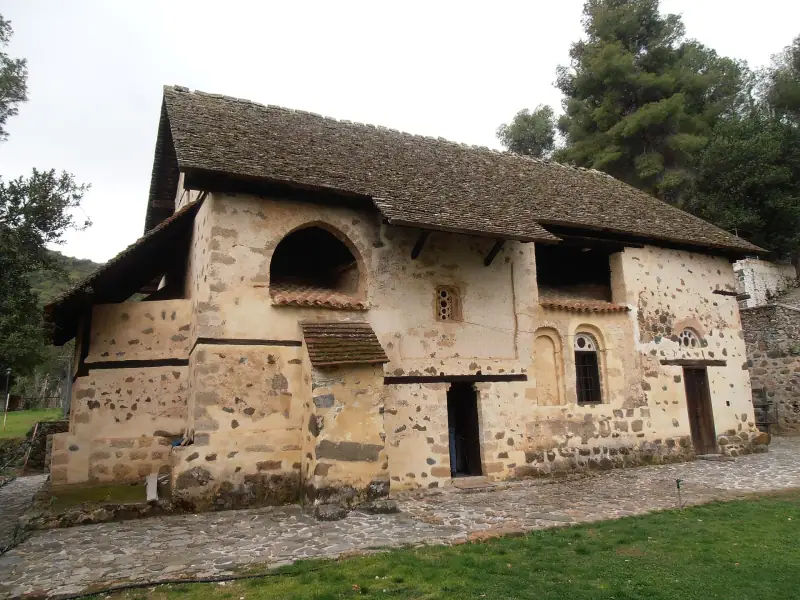
The Troodos is home to ten painted churches listed as UNESCO World Heritage (Asinou, Agios Nikolaos tis Stegis, Lagoudera, Pedoulas, Pelendri…). Nine of them were listed in 1985, and the church of the Transfiguration of the Savior at Palaichori was added in 2001. The monasteries of Kykkos and Trooditissa, however, are not on the list. Their frescoes of the 11th to 14th centuries are among the best preserved in the whole Byzantine world.
Kykkos Monastery
The most important and richest of all the monasteries in Cyprus. Founded in the 11th century, it holds a precious relic: an icon of the Virgin Mary attributed to the evangelist St. Luke. The monastery is still active, run by a community of monks.
Practical: modest dress required (shoulders and knees covered). Open daily, free entry.
Trooditissa Monastery
Nestled in a pine forest at about 1,300 m (4,265 ft) altitude, Trooditissa is one of the most accessible monasteries from Platres. Its buildings date from the 18th century and it holds a famous icon of the Virgin.
Panagia tou Arakou (Lagoudera)
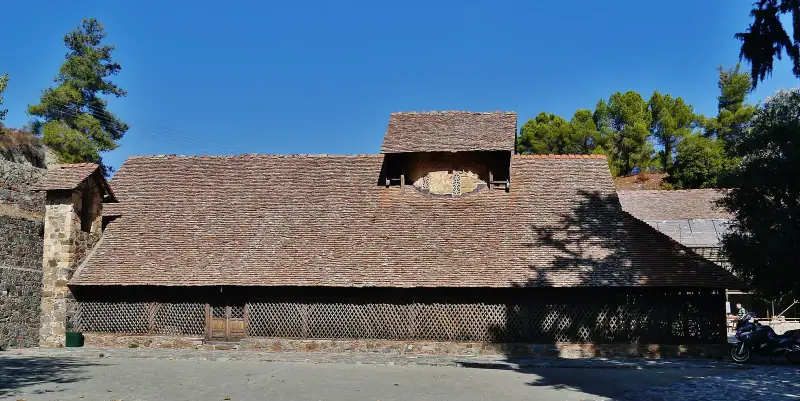
One of the most artistically important monasteries. Its 12th-century frescoes are of exceptional artistic quality, evidence of Byzantine art at its height.
Troodos flora and fauna
The Troodos massif is a treasure of Mediterranean biodiversity.
Flora:
- Cyprus black pine (a widely distributed Mediterranean species)
- Cyprus cedar (endemic, only in the Troodos)
- Wild orchids (30+ species in spring)
- Cyclamens in fall
- Anemones and poppies in March-April
Fauna:
- Cyprus mouflon (endemic, Stavros tis Psokas reserve)
- Egyptian vulture
- Swallows and swifts in summer
- Foxes, rabbits
Troodos wines
The Troodos region is home to the oldest vineyards in Cyprus. Commandaria, a natural sweet wine produced in the villages of Kalokhorio, Zoopigi and Monagri, is the oldest wine still produced in the world. Its history goes back to the beginnings of Cypriot wine production (~800 BC), but the region and its present name date from the 12th century, when the Knights Templar and the Order of St. John set up their Commanderies on the island. Several wine estates offer visits and tastings.
To learn more, see the guide to Cyprus wines.
Practical information
Accommodation in the Troodos
Comfortable agrotourism hotels and guesthouses are available in the villages. Book ahead in summer and for weekends.
Agrotourism hotels in the Troodos
Stay in authentic mountain villages.
Recommended gear
- Hiking shoes (the trails are often rocky)
- Layered clothing (the temperature can drop quickly at altitude)
- Water (minimum 1.5 L / about 50 oz per hike)
- Sunscreen and a hat (even at altitude)
- Map or GPS downloaded offline
Getting there
By car: from Limassol (50 km / 31 mi, 1 h), Nicosia (71 km / 44 mi, 1 h 40) or Paphos (70-80 km / 43-50 mi, 1 h 30-2 h). The roads are winding but in good condition.
By bus: services from Limassol and Nicosia to Platres (infrequent, mostly on weekdays).
Frequently asked questions
What is the best time to hike in the Troodos?
Spring (March-May) is the best period: cool temperatures, green and flowering landscapes, clear trails. Fall (September-October) is also excellent. In summer, hikes are possible but exhausting in the heat. In winter, snow is possible on the summits.
Do you need to be an experienced hiker for the Troodos?
No, the Troodos has trails suited to all levels. Many trails are easy (1 to 2 hours, little elevation gain) and perfectly marked. More demanding hikes exist for experienced walkers.
Can you reach the Troodos without a car?
It is difficult. Buses from Limassol and Nicosia exist but are infrequent. To explore the trails in depth, a rental car is strongly recommended.
Is there accommodation in the Troodos for multi-day hiking?
Yes, many agrotourism hotels and guesthouses are available in the Troodos villages (Platres, Kakopetria, Pedoulas). They are comfortable, authentic and reasonably priced (€50 to 90 a night, ~$58 to 105).
Are the Troodos trails well marked?
Yes, the official trails of the Cyprus Forestry Department are well marked with signs and color blazes. Maps are available at the Platres information center. The AllTrails app lists most of the trails.
More Cyprus guides
Keep reading
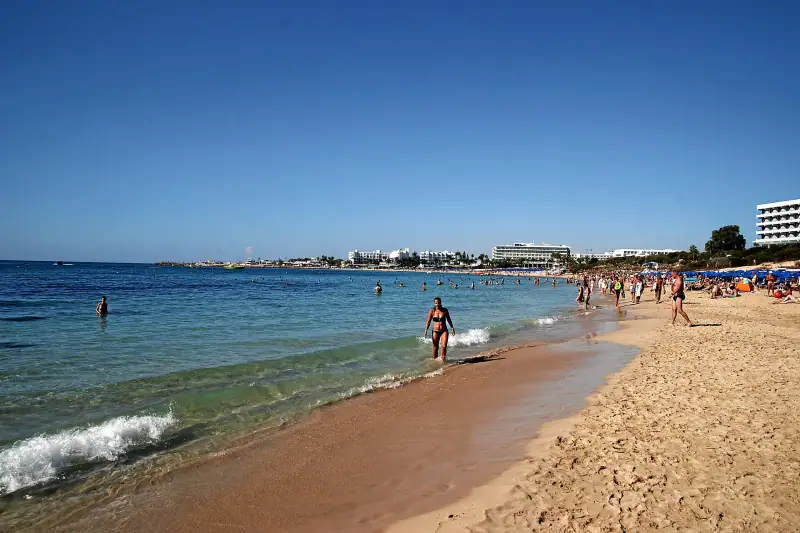
Things to Do in Ayia Napa: Beaches, Cape Greco and Must-Do Activities
What to do in Ayia Napa? Nissi Beach, Cape Greco, sea caves, water sports and nightlife: the complete guide to the best activities in Ayia Napa.
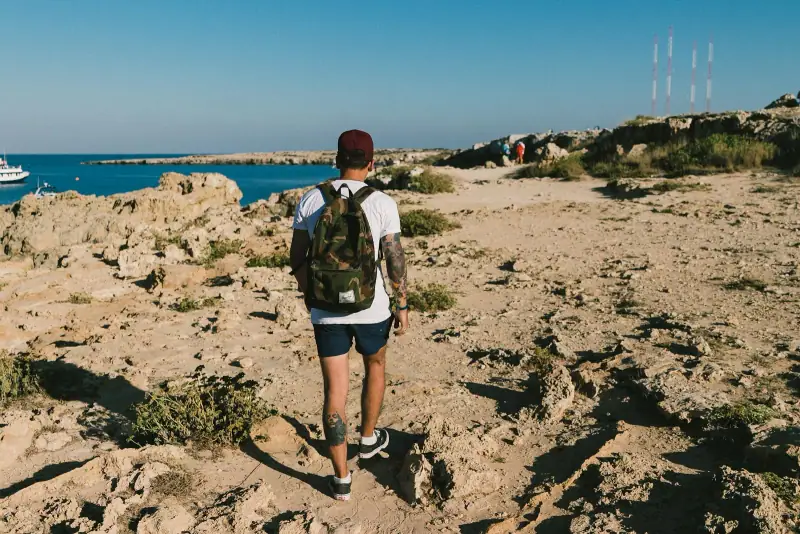
Hiking at Cape Greco: Which Trail to Choose, Length, Difficulty and Access
Hiking at Cape Greco (Ayia Napa, Protaras): the 2 km Aphrodite trail, the 4.8 km loop, length, difficulty, start points, water, shoes and best time.
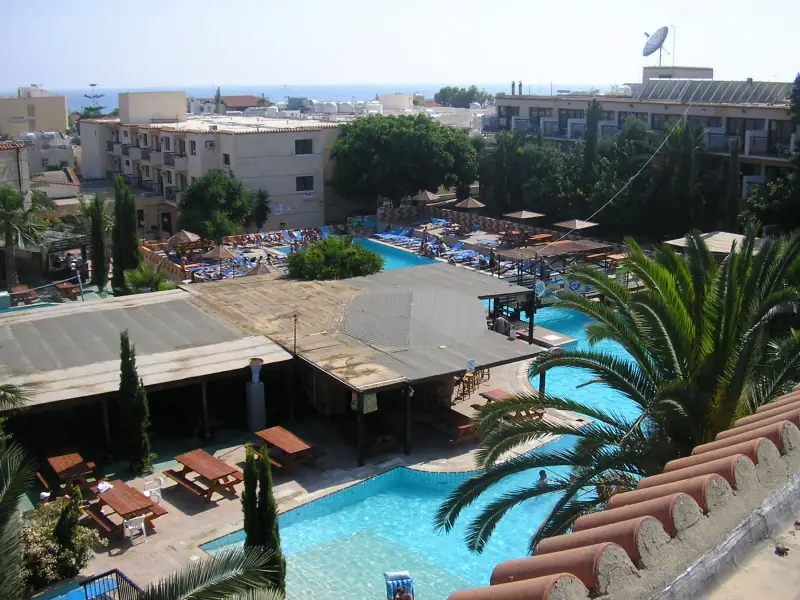
Where to Stay in Ayia Napa: Areas, Hotels and Practical Tips
Where to stay in Ayia Napa: the town center, Nissi Beach, Makronissos and Cape Greco, with options by budget and type of trip.
Ready-made
Cyprus itineraries
5 days
Cyprus in 5 Days Without a Car: A Realistic Bus Itinerary
LarnacaLimassol
7 days
Cyprus in 7 Days: A Complete Day-by-Day Itinerary
Cyprus 7-day itinerary: the best plan for a full week. From Paphos to Ayia Napa via Limassol, Nicosia and the Troodos, day by day.
Cyprus Road Trip: The Complete Itinerary Around the Island
Drive around Cyprus in 10 to 14 days. Complete itinerary, essential stops and practical tips for an unforgettable road trip.