Where to stay
Where to stay in Zadar: guide to the best areas and accommodation
We may earn a commission when you book through links on this page, at no extra cost to you. We don't visit or try the places we cover: we summarize published sources. How we work
In short
- The old town peninsula is car-free and puts every sight within 5-15 minutes on foot: guesthouses €50-100 (~$58-115), apartments €70-150 (~$80-175) in high season.
- Borik is the beach resort area for families, about 3 km (1.9 mi) from the center; Diklo is quieter and cheaper but needs a car.
- Zadar is cheaper than Split and Dubrovnik: an old-town apartment costs €60-120 (~$70-140) in high season.
- For July-August, book 3 to 5 months ahead. Prices fall 30-40% in May, June and September.
Zadar is one of Dalmatia’s little-known pearls. Less crowded than Dubrovnik and more affordable than Split, it appeals to travelers looking for a truly Croatian city: a medieval old town built on a peninsula, sunsets reputed to be among the most beautiful in the Mediterranean, the one-of-a-kind Sea Organ, and an authentic food scene. Alfred Hitchcock himself is said to have called Zadar’s sunset the most beautiful he had ever seen.
But which area should you stay in? The old town, Borik, Diklo and the immediate surroundings each have their own personality. This guide helps you choose according to your profile, your budget and the length of your stay.
The old town (peninsula): the essential choice for immersion
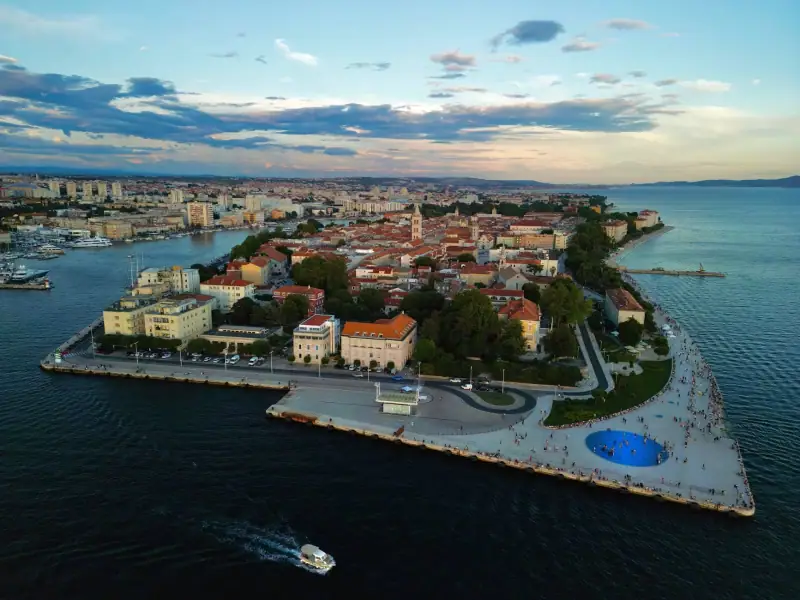
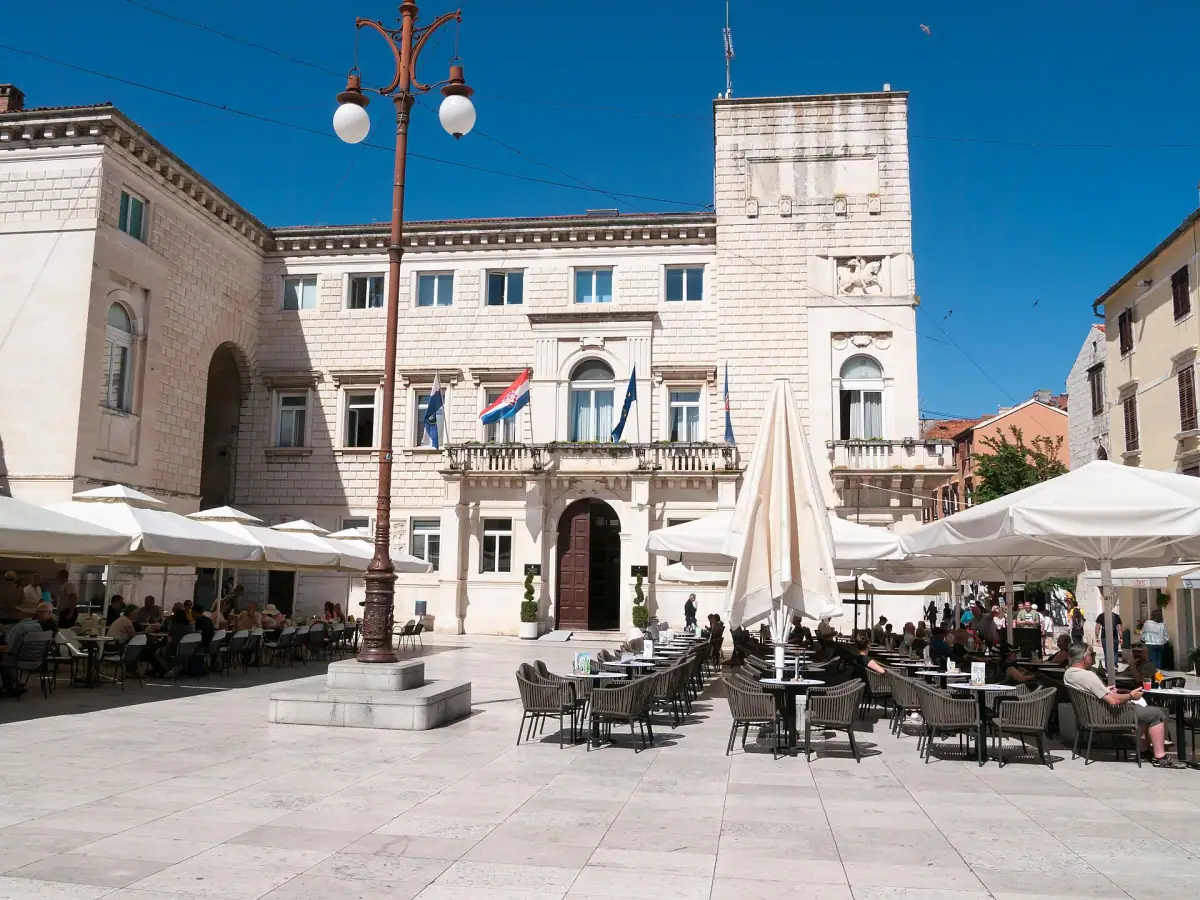
Zadar’s old town occupies a long rocky peninsula that juts into the Adriatic. It is entirely pedestrian inside its 16th-century Venetian walls, which became a UNESCO World Heritage Site in 2017. This is where the main attractions are concentrated: the Roman Forum (the largest on the eastern Adriatic coast, measuring 95 m × 45 m / 312 ft × 148 ft), St. Donatus Church (a 9th-century pre-Romanesque monument), St. Anastasia Cathedral, the Sea Organ and the Greeting to the Sun light installation.
Staying on the peninsula means waking up in history and going to sleep to the sound of waves playing in the pipes of the Sea Organ.
Who is it for?
Couples, culture-minded travelers, photographers of the Adriatic sunrise, and anyone who wants to see the city on foot without taking a bus.
Pros
- All attractions 5-15 minutes on foot
- A unique atmosphere between medieval lanes and the waterfront
- Many cafés, restaurants and bars in historic settings
- The Sea Organ and the Greeting to the Sun within a few minutes
- Direct connection to the Jadrolinija ferries to the Zadar islands (Ugljan, Dugi Otok)
Cons
- No parking inside the peninsula
- Cobbled lanes (rolling suitcases are a struggle)
- Can be lively (and so noisy) on the quayside in summer
- More limited accommodation supply than Borik (mostly large hotels there)
Accommodation budget
- Rooms in private homes / guesthouses: €50-100 (~$58-115) a night in high season
- Apartments in Venetian palaces: €70-150 (~$80-175) a night
- A few small boutique hotels: €100-200 (~$115-230) a night
Accommodation in Zadar's old town
Apartments and rooms in the heart of the historic peninsula.
Borik: the beach resort for families
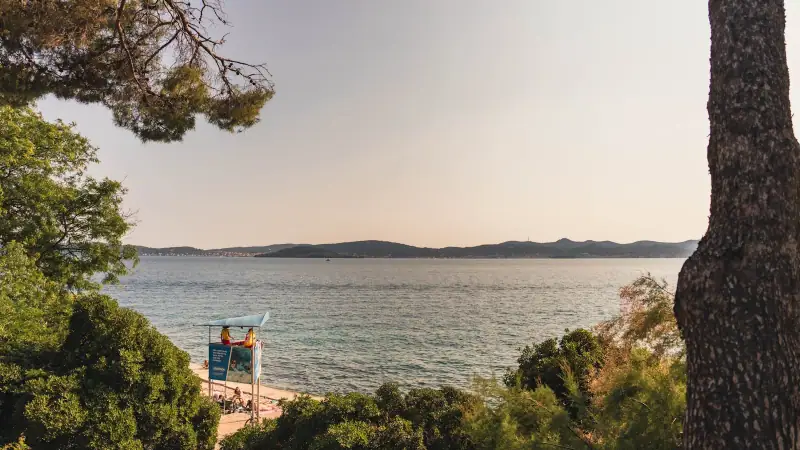
About 3 km (1.9 mi) northwest of the historic center (reachable by local bus or bike), Borik is Zadar’s main hotel area. It is a kind of large seaside resort developed in the 1970s and 1980s, with pebble and fine-sand beaches, hotel complexes with pools, green spaces and sports facilities (tennis, sailing, windsurfing).
Borik’s seafront extends over about 1.5 km (0.9 mi) of developed coastline. The main beach, regularly awarded the Blue Flag, is one of the best equipped on the whole Dalmatian coast.
Who is it for?
Families with children, groups, travelers looking for a hotel resort with a pool and entertainment, and those who want the beach within reach of their room.
Pros
- Developed beaches directly accessible
- Large hotels with pools, spas and kids’ entertainment
- Calm, green surroundings
- Easy parking (often included with the hotel)
- Regular bus to the historic center (about 15-20 minutes)
- Many seafood restaurants along the seafront
Cons
- Far from the old town (needs a bus or car)
- A more international/touristy atmosphere than the peninsula
- Hotel rates sometimes high in high season for the big brands
Accommodation budget
- 3-star beach hotels: €80-160 (~$93-185) a night
- 4-5 star hotels with spa: €150-300 (~$175-350) a night
- Apartments near the beach: €60-120 (~$70-140) a night
Hotels in Borik, Zadar
Beach resorts with a pool and direct beach access.
Diklo: residential calm between sea and pine woods
Diklo is a residential neighborhood between Borik and the village of Petrčane, about 5 km (3 mi) north of the center of Zadar. It offers a quieter, more local atmosphere than Borik, with a few pebble beaches tucked among pine woods that run down to the sea.
It is a popular option with Croatian families and with travelers who rent an apartment for a week or more, with a car. You mostly find apartments in private homes and a few small complexes.
Who is it for?
Independent travelers with a car, families who rent by the week, and those looking for real tranquility steps from the sea.
Pros
- Calm and green (pine woods, no heavy traffic)
- Less crowded beaches than Borik
- Lower prices (20-30% below Borik)
- Several local grocery stores and mini-markets
- Easy, often free parking
Cons
- A car is almost essential to visit the old town
- Few restaurants in the immediate vicinity (compared with Borik or the center)
- Less nightlife
Accommodation budget
- Apartments in private homes (1 week): €40-80 (~$46-93) a night
- Small complexes with a pool: €70-130 (~$80-150) a night
Poluotok Sud and Jazine: between the peninsula and the mainland
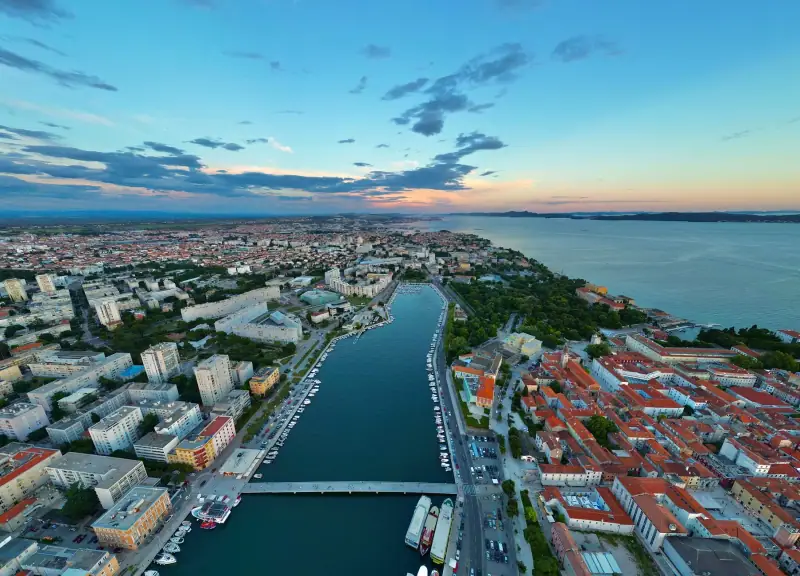
Between the old town and Zadar’s modern neighborhoods, the area around Jazine (the marina) and the entrance to the peninsula is an interesting alternative. It is not the old town, but it is 10 minutes on foot from the Roman Forum. It is a more modern area, with supermarkets, pharmacies and convenient bus connections.
Prices here are between the old town and Borik, and there is a good variety of apartments and small hotels.
Who is it for?
Travelers who want to be close to the center without paying the peninsula’s price, and those who need car access.
Pros
- 10-15 minutes on foot from the old town
- Parking more accessible than on the peninsula
- Many modern apartments at good prices
- Supermarket and practical services nearby
- Marina views from some apartments
Accommodation budget
- Apartments: €50-100 (~$58-115) a night
- Small hotels and guesthouses: €60-120 (~$70-140) a night
Car rental in Zadar
Essential for exploring Krka Park, Plitvice and the surrounding area.
Getting to Zadar: airport and transport
Zadar’s international airport (ZAD) is about 10 km (6 mi) southeast of the city center (15-20 minutes by road), in the Zemunik area.
From the airport to the center:
- Taxi or ride-hailing: about 15-20 minutes, expect between €15 and €25 (~$17-29) depending on the period.
- Airport bus: shuttles run to the city center, cheaper but with limited timetables off season.
- Car rental: very practical if you plan to explore the region.
From the bus station: Zadar’s bus station is ideally placed right at the entrance to the peninsula, 5 minutes on foot from the old town. Zadar is linked to Zagreb (3 h 30 to 4 h by bus), Split (2 h 30), Rijeka (3 h) and Šibenik (1 h).
Practical tips for booking in Zadar
Book early for July-August. Zadar is increasingly popular, and good old-town apartments are taken several months ahead for high season. If you are aiming for June or September, you can book 6 to 8 weeks before.
Prefer September if you can. The sea is still warm (23-25 °C / 73-77 °F), the old town returns to its local rhythm, and prices fall by 30 to 40%. It is the ideal season to combine beach and cultural visits without the crowds.
Ask about parking when you book. If you have a car, say so when booking: parking on the peninsula is limited and paid in summer. Accommodation in Borik and Diklo often includes free parking.
The old town is small but dense. Everything is done on foot. You do not need “central” accommodation in the strict sense: any apartment on the peninsula puts you 10 minutes at most from the Sea Organ or the Roman Forum.
Do not underestimate the quality of private apartments. Zadar has an excellent supply of private accommodation (rooms and apartments) in Dalmatian stone houses. It is often much more charming, and cheaper, than a standard hotel.
Activities and excursions from Zadar
Plitvice, Krka, the Zadar islands, kayaking... all from the city.
Zadar as a base for exploring northern Dalmatia
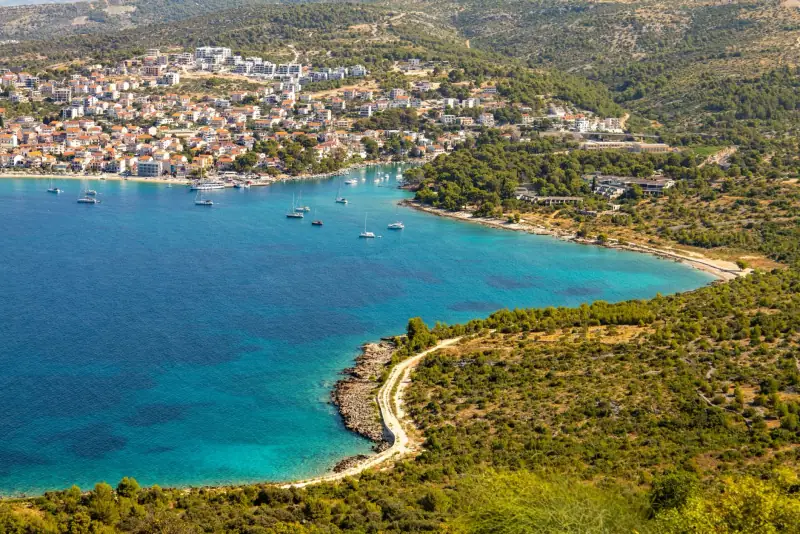
One of Zadar’s great assets is its geographic position. It lies exactly halfway between Rijeka to the north and Split to the south, and serves as an ideal base for excursions throughout northern Dalmatia.
From Zadar by car:
- Plitvice Lakes: about 1 h 30 to 2 h depending on the entrance. A day trip from Zadar is doable but intense; plan a night there if you want to visit at a relaxed pace.
- Krka National Park: about 1 h to 1 h 15 to the Skradin entrance. Ideal for a half day or a full day. Note: swimming at the foot of the Skradinski Buk waterfall has been banned since 2021; ask the park about authorized areas.
- Island of Pag (famous for its cheese and sandy beaches): about 45-50 minutes via the Pag bridge.
- Šibenik: about 1 h down the coast to the south. St. James Cathedral, a UNESCO site, is absolutely worth the detour.
For these excursions, a rental car is recommended; public transport exists but is less flexible for national park hours.
Summary: which area for your profile?
| Area | Who for | Budget | Highlights |
|---|---|---|---|
| Old town (peninsula) | Couples, culture seekers | $$ to $$$ | Total immersion, everything on foot |
| Borik | Families, swimmers | $$$ | Developed beaches, pools, greenery |
| Diklo | Couples, weekly renters | $ to $$ | Calm, nature, low prices |
| Jazine / Poluotok Sud | In-between | $$ | Close to the center, parking possible |
Zadar is a city you have to earn: less spectacular at first glance than Dubrovnik, it reveals a rare Dalmatian authenticity. Choose the old town for historic escape, Borik for seaside comfort, Diklo for tranquility with a car. In every case, Zadar will stay in your memory for a long time, especially in the evening when the Sea Organ sings and the sun disappears into the Adriatic to the notes of the Greeting to the Sun.
To continue exploring the region, see our complete guide to visiting Zadar, our article on Plitvice Lakes and our advice on where to stay in Split if you are continuing south.
Frequently asked questions
What is the best area to stay in Zadar?
The old town (peninsula) is ideal for immersion: the Sea Organ, the Roman Forum and all the historic lanes are on foot. Borik is the best choice for families with children thanks to its developed beaches and hotel resorts.
Is Zadar cheaper than Dubrovnik or Split?
Yes, Zadar is clearly cheaper. In high season, a comfortable apartment in the old town costs €60-120 (~$70-140), compared with €120-200 (~$140-230) in Split and €150-250 (~$175-290) in Dubrovnik. It is one of the best-value destinations in Dalmatia.
Is it easy to park in Zadar?
The old town is a pedestrian peninsula: parking is possible at the entrance to the bridge, but paid and limited in summer. Borik and Diklo have free or inexpensive parking lots. If you are traveling by car, prefer accommodation off the peninsula.
Is Zadar a good base for visiting northern Dalmatia?
Absolutely. Zadar is the administrative capital of northern Dalmatia and an excellent starting point for Plitvice Lakes (1 h 30-2 h), Krka Park (1 h 30), the island of Pag (45 min) and Šibenik (1 h). It is also well served by Zemunik international airport.
Are there beachfront hotels in Zadar?
Yes, notably in Borik and Diklo, where several hotel resorts are directly on or steps from the sea. The historic peninsula itself has no developed beaches in the strict sense, but the quays are accessible for swimming.
When should you book accommodation in Zadar?
For July-August, book 3 to 5 months ahead. May, June and September are less busy and prices fall by 30 to 40%. Off season (October-April), Zadar stays lively thanks to its student population and accommodation is very affordable.
More Croatia guides
Keep reading
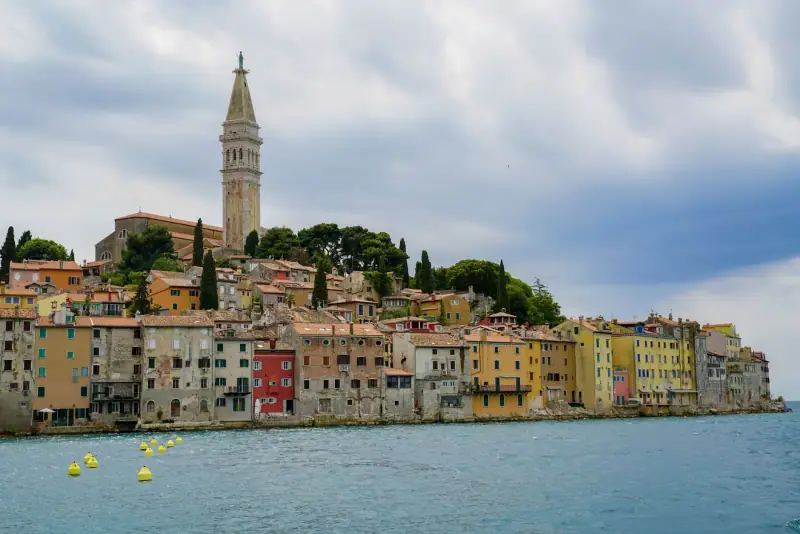
Where to stay in Rovinj: guide to the best areas and hotels
Where to stay in Rovinj? Best areas: Stari Grad, harbor zone, Monte Mulini, Monsena. Hotels, apartments and campsites for every budget in Istria.
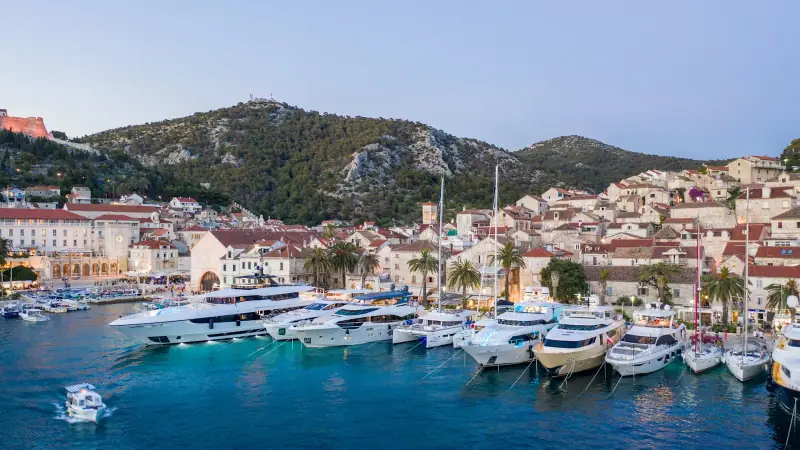
Where to stay in Hvar: guide to the best areas and accommodation
Where to stay in Hvar? Hvar Town, Stari Grad, Jelsa or Vrboska: a full comparison of areas, styles and budgets to choose your base on the island.
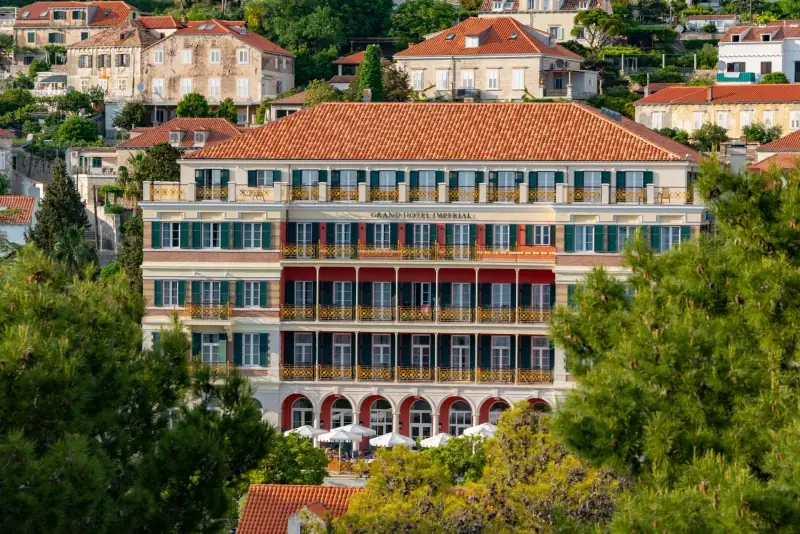
Where to stay in Dubrovnik: the best areas and hotels
How to choose where to stay in Dubrovnik: Old Town, Lapad, Ploče, Gruž. Hotels and apartments for every budget with practical tips.
Ready-made
Croatia itineraries
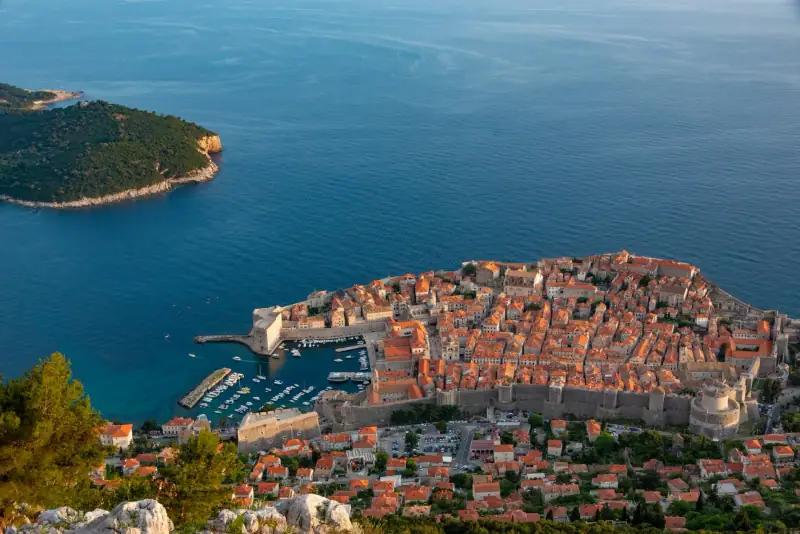
Croatia road trip: the coastal route from Zagreb to Dubrovnik
The ultimate Croatian coastal road trip from Zagreb to Dubrovnik via Split, Zadar and the national parks. 10-14 day route with stops and tips.
7 days
Croatia in 7 days: the perfect one-week itinerary
Detailed itinerary to visit Croatia in 7 days: Split, the Dalmatian islands, Dubrovnik and Plitvice. Day-by-day plan with practical tips.
10 days
Croatia in 10 days without a car: a realistic bus and ferry itinerary
ZagrebZadarSplitHvar TownDubrovnik