Where to stay
Where to stay in Hvar: guide to the best areas and accommodation
We may earn a commission when you book through links on this page, at no extra cost to you. We don't visit or try the places we cover: we summarize published sources. How we work
In short
- Hvar Town is lively and the most expensive; Stari Grad is calm and family-friendly, with prices 20-40% lower; Jelsa is a central, affordable compromise; Vrboska is tiny and quiet.
- In July-August, expect about €80-150 (~$93-175) for a guesthouse or apartment, and €150-300 (~$175-350) for a 4-star hotel in Hvar Town.
- Book at least 2 to 3 months ahead for high season. Prices fall 40-60% in May-June and September-October.
- You do not need a car in Hvar Town (cars are banned in the historic center), but a car or scooter helps to explore the rest of the island.
Hvar is one of the most popular islands in Croatia: a magnificent old town overlooking an elegant harbor, lavender fields as far as the eye can see, deep blue waters and a reputation as a party destination that attracts travelers from around the world every summer. But choosing where to stay in Hvar well changes the experience dramatically. The island is about 68 km (42 mi) long, and the atmosphere varies enormously from one end to the other.
This guide helps you choose between the main accommodation areas, identify your traveler profile and anticipate prices so you can plan your stay with peace of mind.
Hvar Town (Grad Hvar): the lively historic center
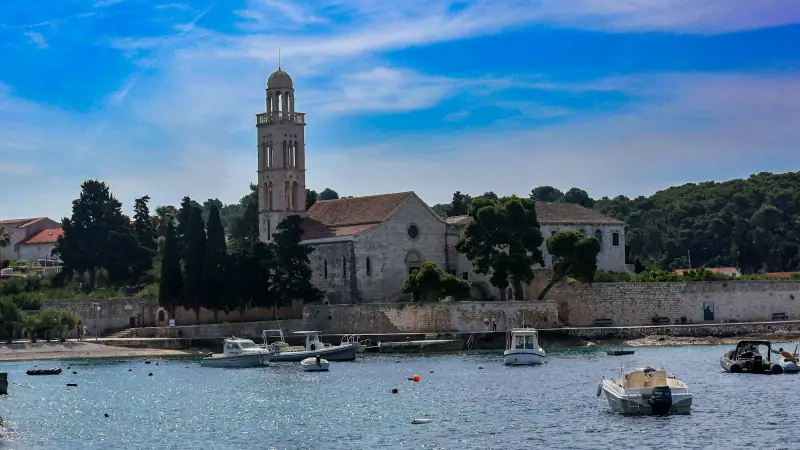
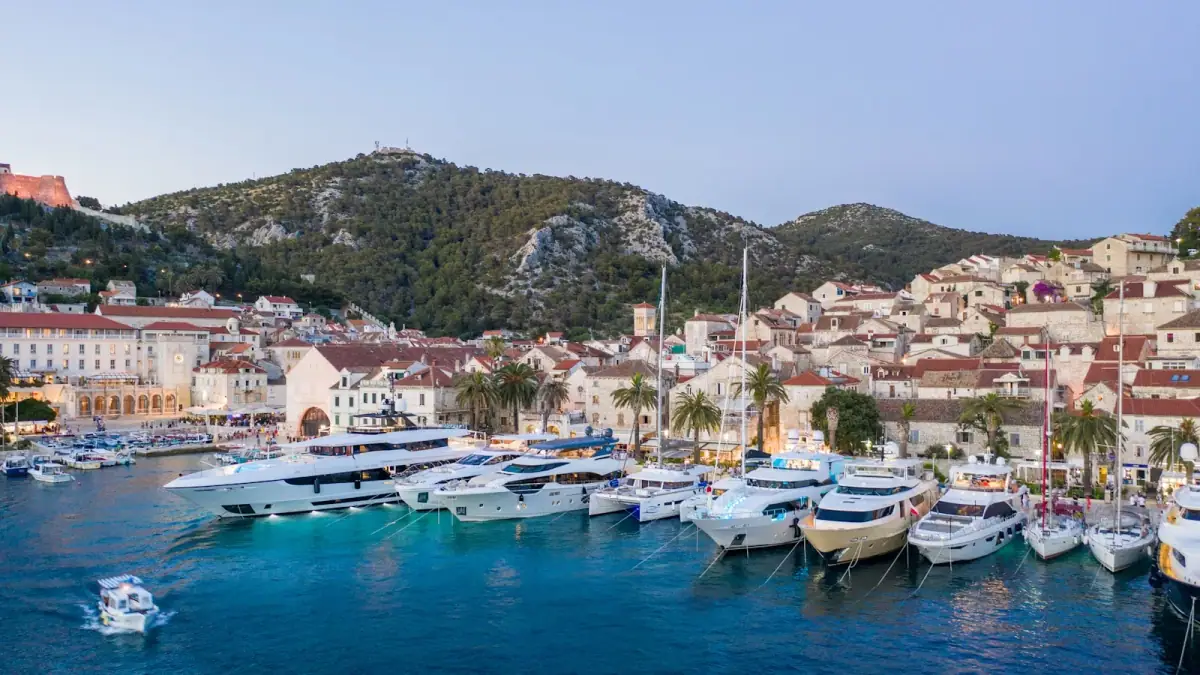
Hvar Town is the beating heart of the island. Its main square (the Pjaca), its horseshoe harbor, its medieval lanes and the Spanish fortress (Španjola) perched above the town make one of the most beautiful sights on the Adriatic. It is also the liveliest area, and the most expensive.
Who is it for?
Couples, solo travelers, party-goers, and travelers on foot without a car who want everything within immediate reach.
Pros
- Restaurants, bars and cafés within immediate reach
- Boat excursions to the Pakleni Islands leave from the harbor
- Incomparable summer atmosphere
- Beautiful Venetian and Dalmatian architecture
- Direct access to the Split-Hvar catamaran
Cons
- Noisy in July-August (music and parties late into the night)
- Accommodation prices among the highest on the Croatian islands
- Cars banned in the historic center (luggage is carried on foot)
- Crowded in high season
Accommodation budget
- Guesthouse or B&B room: about €80-160 (~$93-185)
- Apartment with harbor view: €100-220 (~$115-255)
- 4-star waterfront hotel: €180-350 (~$210-405)
Accommodation in Hvar Town
Hotels and apartments right in the historic center, harbor on foot.
Stari Grad: the oldest town, calm and family-friendly
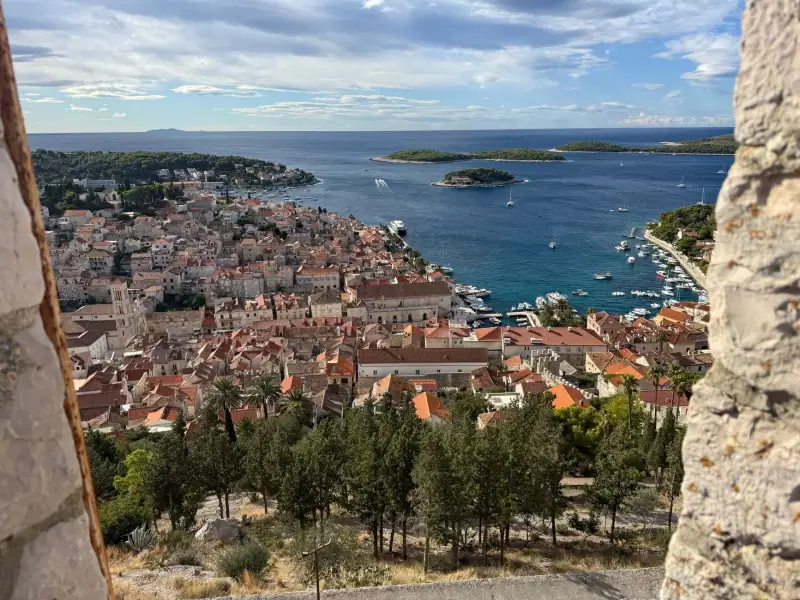
About 20 km (12 mi) east of Hvar Town (on the island’s north coast), Stari Grad is the cradle of the Greek colonization of the island; archaeologists date it to 384 BC. Its agricultural plain (the Stari Grad Plain) is a UNESCO World Heritage Site. The atmosphere is radically different from Hvar Town: quiet, authentic, almost timeless.
Who is it for?
Families with children, travelers seeking authenticity and calm, those arriving on the car ferry from Split (the ferry lands at Stari Grad), and fans of ancient history.
Pros
- A much calmer, more local atmosphere
- Stari Grad’s medieval old town is worth a visit in itself
- Access to the Split-Stari Grad ferry (ideal if you have a car)
- Several quiet beaches nearby
- Prices generally 20-40% lower than Hvar Town
- Central position on the island for exploring by car
Cons
- Less nightlife
- You need a vehicle (or a bus) to reach Hvar Town
- Fewer restaurants and bars than in town
Accommodation budget
- Apartments and vacation homes: €60-130 (~$70-150)
- Small family hotels: €70-140 (~$80-160)
Jelsa: the central village, between lively and quiet
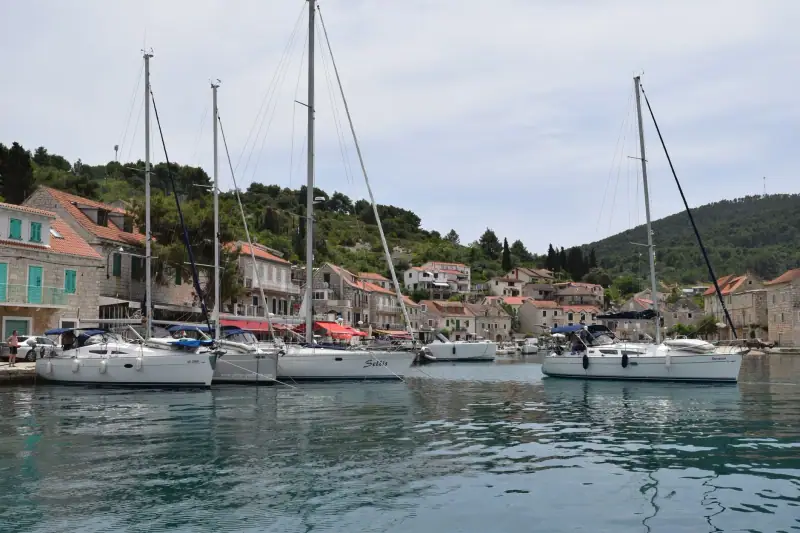
Jelsa is a fishing village in the center of the island, about 26 km (16 mi) from Hvar Town by road (about 30 minutes). With its pleasant harbor, small beaches and summer market, it is a good compromise between the buzz of Hvar Town and the calm of Stari Grad. Buses link Jelsa to Hvar Town several times a day in season.
Who is it for?
Families, couples who want some life without the crowds and excessive noise, and budget travelers who want to stay within reach of Hvar Town.
Pros
- Warm, local atmosphere
- Access to beautiful pebble and rock beaches
- Buses to Hvar Town in season (about 30-40 min)
- A few good restaurants around the harbor
- Noticeably more affordable than in town
Cons
- You will need to rely on the bus or a vehicle for excursions
- Fewer luxury accommodation options
Accommodation budget
- Apartments and studios: €50-100 (~$58-115)
- Guesthouses: €60-110 (~$70-125)
Vrboska: the island’s “Little Venice”
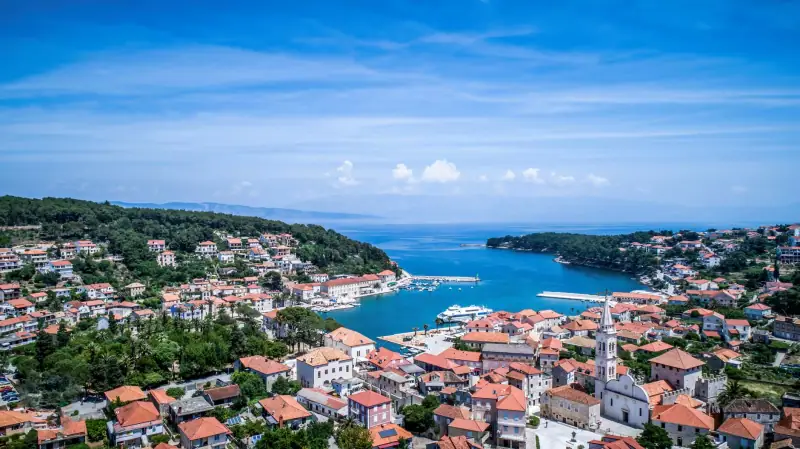
Vrboska is a tiny fishing village about 5-6 km (3-4 mi) from Jelsa by road, sometimes nicknamed “Little Venice” because of the small bridges spanning its sea channel. It is one of the most photogenic and restful places on the whole island, with an excellent fish tradition and a very slow pace of life.
Who is it for?
Couples who want a haven of peace off the beaten track, photographers, and travelers returning to Hvar who want to discover a secret spot.
Pros
- Unique, very authentic charm
- Access to little-visited coves and beaches
- Very reasonable prices
- Small fishermen’s taverns
Cons
- Very few accommodations available
- You need a car or a bike to explore
- Little nightlife
Accommodation budget
- Vacation homes and private rooms: €45-90 (~$52-105)
Practical tips for booking in Hvar
Book early, especially for Hvar Town
In July and August, the island of Hvar is overrun with tourists: cruise passengers passing through, party-goers from Northern Europe, Italian families. Accommodation in Hvar Town goes very early. If you have a specific date in high season, start looking at least 2 months ahead, ideally 3.
Best season for accommodation
- May and early June: ideal, few people, everything is open, temperatures already summery (22-26 °C / 72-79 °F), mid-season prices
- Late June and early July: a lovely period before the tourist peak
- July-August: very lively, strong heat (30-35 °C / 86-95 °F), peak prices
- September-October: the best value, sea still warm, thinner crowds
Car or no car?
- If you only stay in Hvar Town: unnecessary. The center is closed to cars and the Pakleni Islands are reached by water taxi from the harbor.
- If you want to explore the island (Stari Grad, Jelsa, remote beaches, Sućuraj): a car or scooter is very handy. Book ahead in summer, as rental agencies run out quickly.
The Pakleni Islands from Hvar Town
The Pakleni Islands (Paklinski otoci) are an archipelago of small wild islands a few minutes by water taxi from Hvar harbor. Some have accommodation (notably Palmižana on Sveti Klement), a luxurious and exclusive option for those who want to get away from it all. Expect high rates and mandatory booking.
Breakfast included?
Most Dalmatian guesthouses and B&Bs offer breakfast (often included in the rate or available as an option). Self-contained apartments generally do not include it, but they have a fully equipped kitchen, handy for preparing your meals and cutting costs.
All accommodation in Hvar
Compare hotels, apartments and villas across the island.
Summary: which area for your profile?
| Area | Who for | Budget | Highlights |
|---|---|---|---|
| Hvar Town | Young people, couples, party-goers | $$$ | Nightlife, harbor, Split catamaran |
| Stari Grad | Families, calm, car | $$ | Tranquility, UNESCO, car ferry |
| Jelsa | Compromise, moderate budget | $$ | Beaches, bus to Hvar, authenticity |
| Vrboska | Couples, quiet, secret spot | $ | Charm, fishermen, total calm |
The island of Hvar offers a great variety of atmospheres depending on where you put down your bags. For a first visit, Hvar Town is the obvious pick if you want the full experience, but if you are returning or looking for the authentic island Croatia, Stari Grad or Jelsa will pleasantly surprise you, at much lower prices.
To prepare your stay, see also our complete Croatia guide, our article on visiting Hvar and our selection of the best islands in Croatia.
Frequently asked questions
What is the best place to stay in Hvar?
Hvar Town (Grad Hvar) is ideal if you want nightlife, restaurants and the harbor on foot. Stari Grad suits families and travelers looking for peace and quiet. Jelsa is perfect for those who want a central and affordable base.
How much does a hotel in Hvar cost in high season?
In July-August, expect about €80-150 (~$93-175) for a guesthouse or a decent apartment, and €150-300 (~$175-350) for a 4-star hotel in Hvar Town. Prices drop by 40 to 60% in May-June and September-October.
How do you get to Hvar from Split?
There are two options: the fast catamaran (passengers only, about 1 h), which arrives in the center of Hvar Town, or the car ferry (about 30 minutes from Drvenik) to Sućuraj at the east end of the island, then 1 h 30 by road. Most travelers take the catamaran or the Split-Stari Grad ferry (about 2 h).
Is it better to book far ahead in Hvar?
Absolutely. Hvar Town in particular is in high demand in July and August. Book at least 2 to 3 months ahead for high season if you want choice. Off season, there is often availability until the last minute.
Can you go to Hvar by car?
Yes, but cars are not allowed in Hvar Town's historic center. The car ferry arrives at Stari Grad (from Split, about 2 h) or at Sućuraj (from Drvenik, about 30 min). From Stari Grad, allow another 25-30 minutes by road to Hvar Town. Summer parking is limited and expensive.
Is Hvar lively at night?
Hvar Town is one of the party capitals of the eastern Mediterranean, particularly in July-August. If you want quiet evenings, choose Stari Grad, Jelsa or Vrboska instead.
More Croatia guides
Keep reading
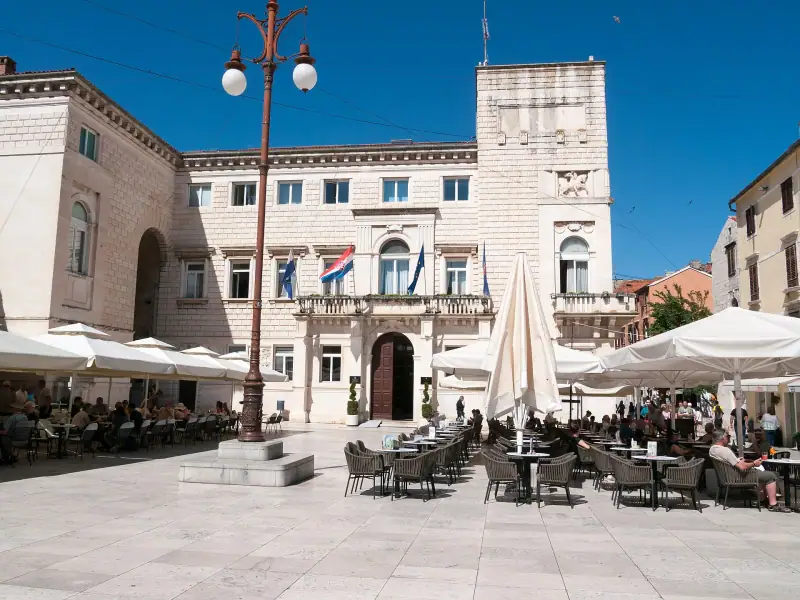
Where to stay in Zadar: guide to the best areas and accommodation
Where to stay in Zadar? Old town, Borik, Diklo: the best areas, hotels and apartments for every budget on the Dalmatian coast.
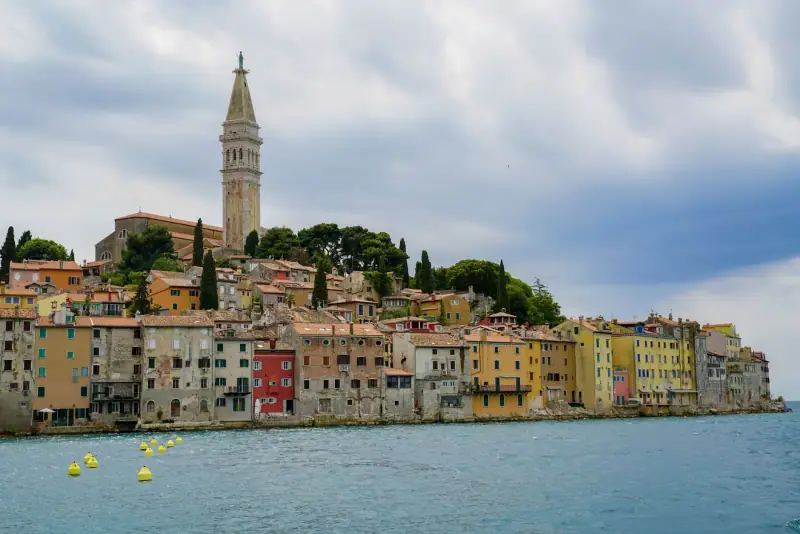
Where to stay in Rovinj: guide to the best areas and hotels
Where to stay in Rovinj? Best areas: Stari Grad, harbor zone, Monte Mulini, Monsena. Hotels, apartments and campsites for every budget in Istria.
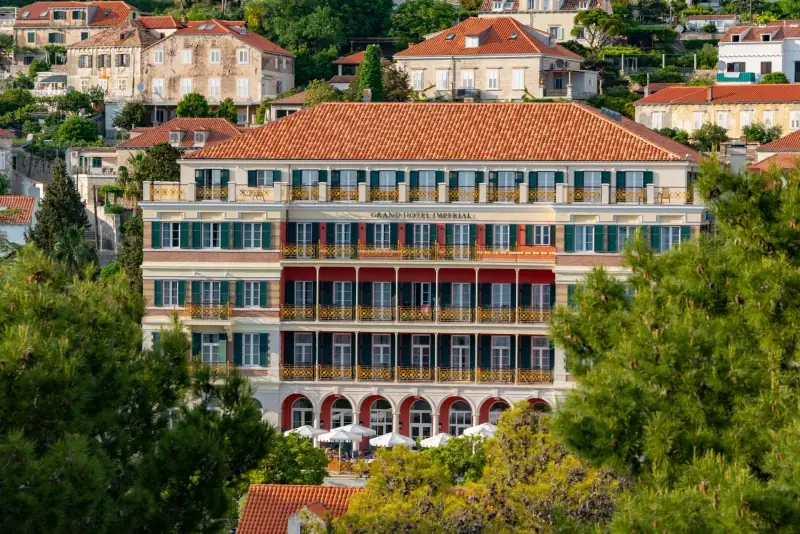
Where to stay in Dubrovnik: the best areas and hotels
How to choose where to stay in Dubrovnik: Old Town, Lapad, Ploče, Gruž. Hotels and apartments for every budget with practical tips.
Ready-made
Croatia itineraries
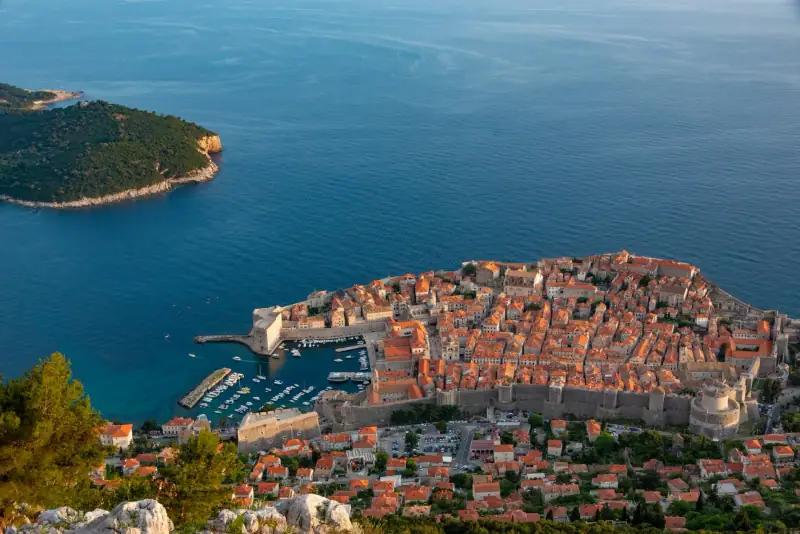
Croatia road trip: the coastal route from Zagreb to Dubrovnik
The ultimate Croatian coastal road trip from Zagreb to Dubrovnik via Split, Zadar and the national parks. 10-14 day route with stops and tips.
7 days
Croatia in 7 days: the perfect one-week itinerary
Detailed itinerary to visit Croatia in 7 days: Split, the Dalmatian islands, Dubrovnik and Plitvice. Day-by-day plan with practical tips.
10 days
Croatia in 10 days without a car: a realistic bus and ferry itinerary
ZagrebZadarSplitHvar TownDubrovnik