Where to stay
Where to stay in Rovinj: guide to the best areas and hotels
We may earn a commission when you book through links on this page, at no extra cost to you. We don't visit or try the places we cover: we summarize published sources. How we work
In short
- The Old Town (Stari Grad) has the atmosphere but the highest prices: €90-200 (~$105-230) for a studio or apartment in July-August.
- The harbor zone is a good compromise: central, easier parking, slightly cheaper (apartments €70-150 / ~$80-175).
- Monte Mulini and Zlatni Rt offer luxury and pine forest; campsites around Rovinj are the budget and family option (Valalta is naturist).
- Book 2 to 3 months ahead for July and August. Prices fall 40-60% in May, June and September.
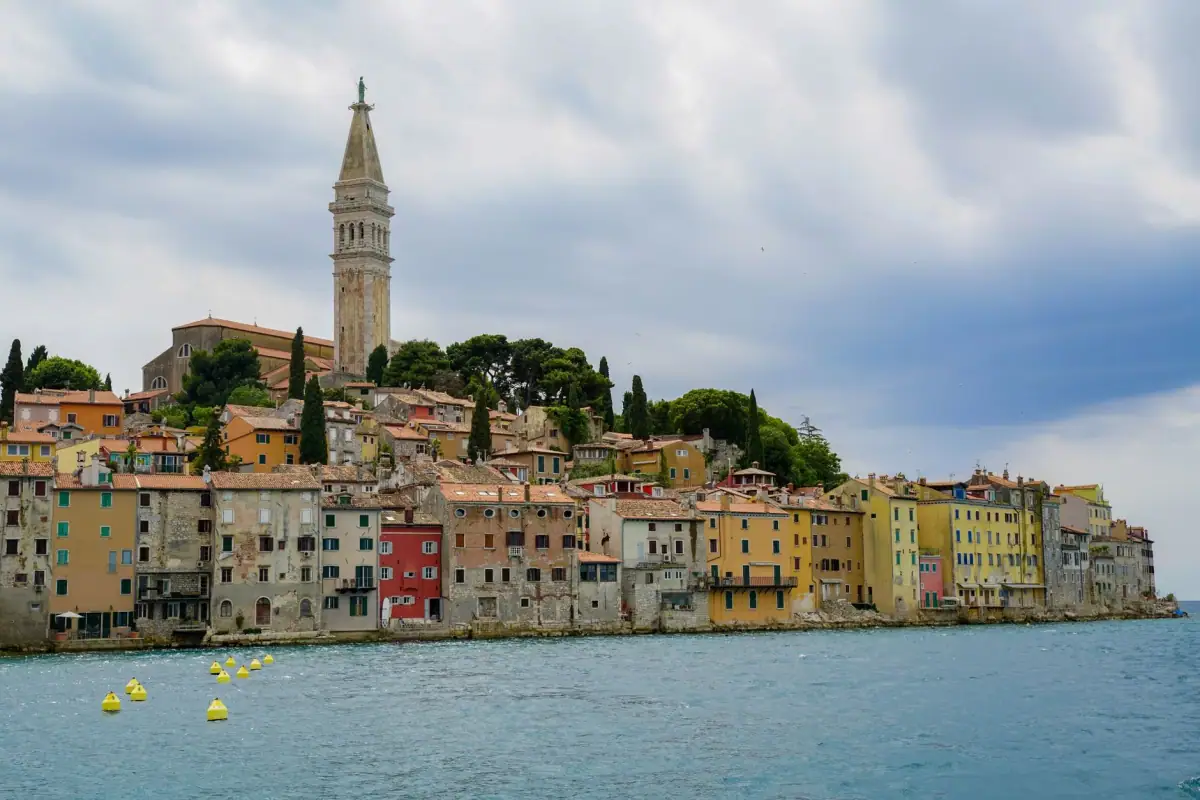
Rovinj is one of the most beautiful towns in Croatia, and arguably the most seductive in Istria. Its pastel-colored old quarter, clinging to a peninsula that was once an island in the Adriatic, the bell tower of St. Euphemia visible from everywhere, and its lanes paved with bricks worn by the centuries all make it an essential stop on the Croatian west coast.
Choosing where to stay in Rovinj starts with understanding the town’s geography: a dense, pedestrian historic core on the peninsula, a busy harbor on the mainland, and lush pine woods stretching south into the Zlatni Rt nature reserve (the “Golden Cape”). Depending on your profile and budget, the experience will be very different.
The Old Town (Stari Grad): the soul of Rovinj
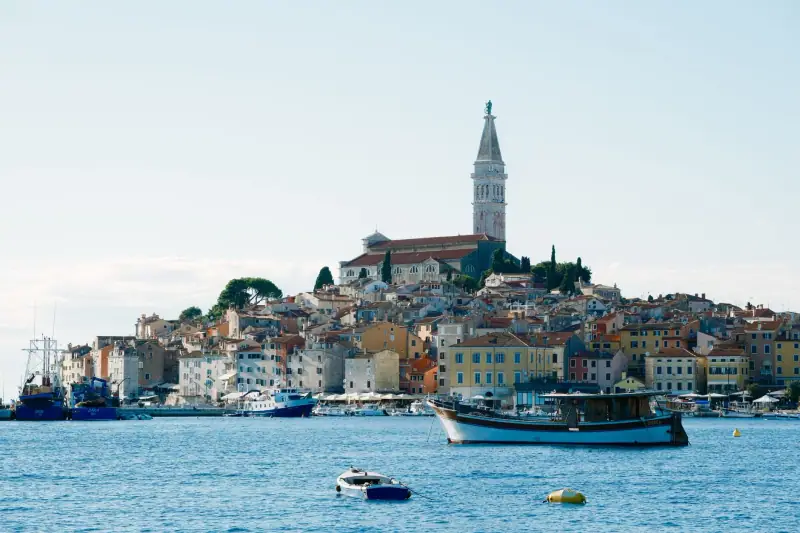
Rovinj’s old town is a tangle of climbing lanes paved with red bricks, lined with pastel-fronted houses topped by the Baroque bell tower of the Church of St. Euphemia (Sveta Eufemija). Until the 18th century this peninsula was a true island, separated from the mainland by a channel filled in 1763 by the Venetian authorities. The Venetian heritage is everywhere: in the porticoes, the stone wells, the Italian inscriptions on the walls.
Who is it for?
Travelers who want to be in the heart of the atmosphere, wake up before the tourists to walk the empty lanes, and have all the cafés, art galleries and restaurants a few steps away.
Pros
- Complete immersion in Venetian architecture
- Everything on foot: harbor, galleries, restaurants, waterfront
- Sea views from the upper houses and the bell tower
- Magical atmosphere in the evening and early morning
Cons
- The highest prices in town
- Noisy in high season (tour groups during the day)
- Very narrow lanes, impossible by car, difficult with big suitcases
- Few parking spaces nearby
Accommodation budget
- Charming studios and apartments: €90-200 (~$105-230) in July-August
- Guest rooms (sobe): €60-120 (~$70-140)
Accommodation in Rovinj's Old Town
Apartments and rooms in the heart of Stari Grad.
The harbor zone and the center: the ideal compromise
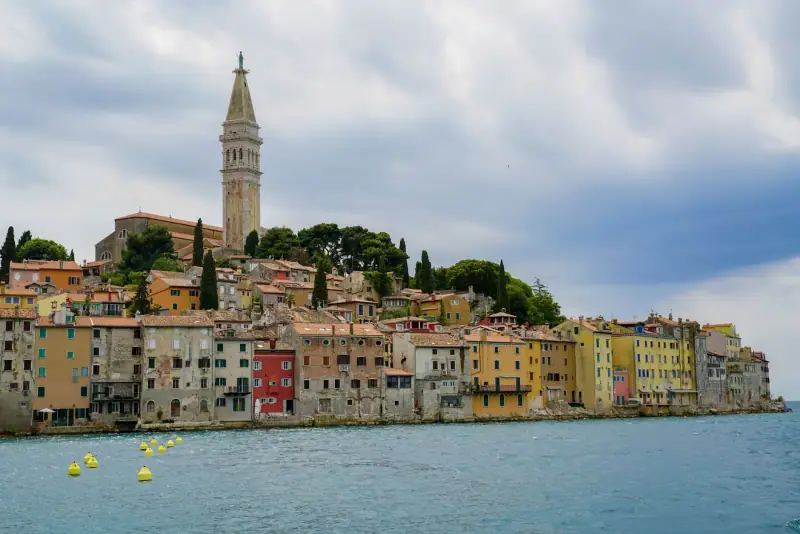
Just east of the peninsula, Rovinj’s marina is lined with a long promenade with sidewalk cafés, restaurants and shops. This mainland sector is more practical for cars, slightly cheaper than the old town, and still two minutes’ walk from the entrance to Stari Grad.
Who is it for?
Couples and travelers who want Rovinj’s atmosphere without the logistical drawbacks of the old town (suitcases, car, nighttime noise in the lanes).
Pros
- Central location, between the old town and the bus
- More accessible parking (paid parking lots about 300-500 m / 1,000-1,650 ft away)
- Harbor promenade, cafés and restaurants on foot
- Prices slightly lower than in the heart of Stari Grad
Cons
- Less charm and authenticity than inside the old town
- Noisy in season (motorbikes, lively cafés until midnight)
Accommodation budget
- Apartments: €70-150 (~$80-175) in high season
- 3-star hotels: €80-160 (~$93-185)
Monte Mulini and Zlatni Rt: luxury and nature to the south
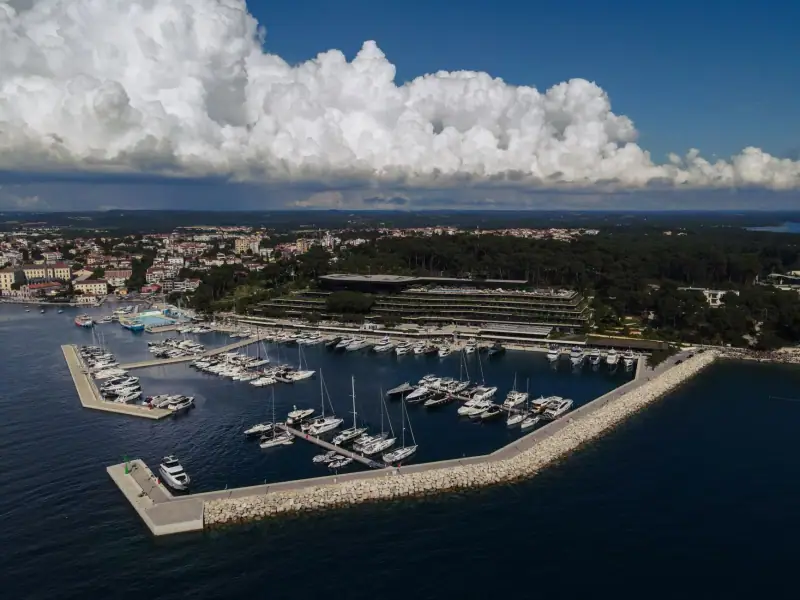
South of the old town stretches the Zlatni Rt nature reserve (the Golden Cape), covered with century-old pine woods planted on the initiative of Georg Hütterott, an Austro-Hungarian industrialist, starting in the 1890s. The wooded peninsula plunges straight into remarkably clear water, with several coves and small pebble and rock beaches.
This is where Rovinj’s most luxurious hotels are concentrated, with direct access to the forest and the sea while staying about fifteen minutes’ walk from the old town.
Who is it for?
Travelers who want tranquility, beautiful green spaces and a pool, and who do not mind walking 15-20 minutes to the historic center or taking a bike.
Pros
- Guaranteed calm: away from the noisy tourist circuit
- Direct access to the Zlatni Rt reserve and its coves
- The town’s best hotels with spa, pool and sea view
- A beautiful coastal walk along the forest toward the old town
Cons
- The upscale properties in this area are among the most expensive in Istria
- Less practical without a car for outings beyond Rovinj
Accommodation budget
- 4-5 star hotels: €150-400 (~$175-465) in peak season
- A few independent villas and apartments: €100-200 (~$115-230)
Monsena, Valalta and Polari: the campsite and bungalow option
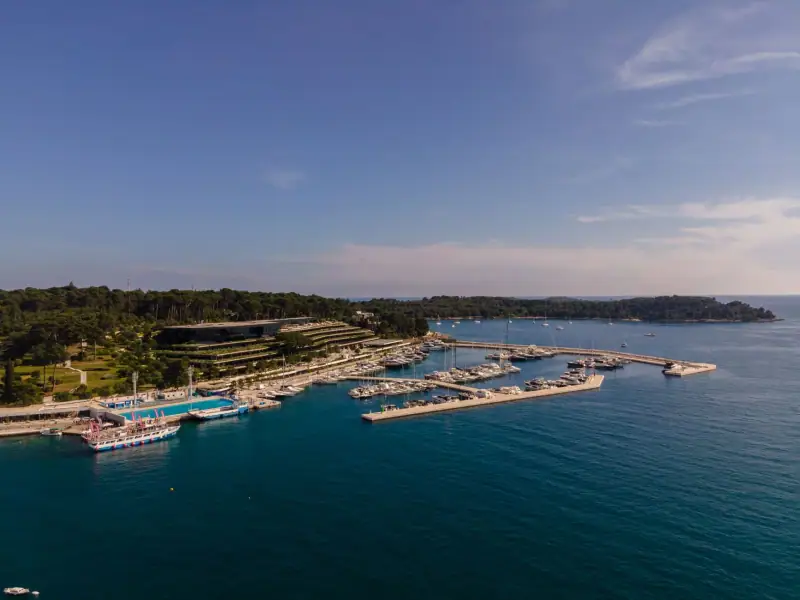
North and south of Rovinj stretch several large, well-equipped campsite complexes, some of them among the best on the Adriatic. These sites offer pitches for tents and motorhomes, but also ready-to-use bungalows and mobile homes, perfect for families. Note: Valalta is a naturist campsite, to avoid if that is not your plan (Amarin and Polari are standard campsites).
Who is it for?
Families with children, motorhome travelers, tight budgets, and anyone who enjoys nature, the beach and shared facilities (pools, entertainment, restaurants).
Pros
- Very competitive prices: €20-60 (~$23-70) for a pitch in high season, €60-120 (~$70-140) for a bungalow
- Direct sea access with set-up swimming areas
- Entertainment, kids’ clubs, restaurants and convenience stores on the grounds
- Natural, green surroundings
Cons
- Distance from the center of Rovinj: about 3 to 5 km (2 to 3 mi) (a shuttle or bike is recommended)
- Noisy and very busy in July-August
- A car or bike is almost essential
Activities and excursions in Rovinj
Brijuni Islands, kayaking, snorkeling, diving in Istria.
Outlying neighborhoods: the budget options
East of the old town, beyond the harbor and the market, several less touristy residential neighborhoods offer apartments to rent at much more affordable prices. These are apartments in private homes, often in modern houses, without the charm of the old town but comfortable and well equipped.
Who is it for?
Travelers on a tight budget, or those who come by car and prefer to avoid the parking complications of the center.
Pros
- Prices 30-50% lower than the old town and the harbor zone
- Easier parking, often included
- More local neighborhood life (bakery, supermarket)
Cons
- 20-30 minutes on foot from Stari Grad (or a bus)
- Little tourist atmosphere or sea view
Accommodation budget
- Apartments: €40-90 (~$46-105) per night in high season
- Studios: €35-70 (~$41-80)
Practical tips for booking in Rovinj
Book early in high season. Rovinj is one of the most sought-after destinations in Istria. In July and August, good apartments in the old town are booked 2 to 3 months ahead. Demand is strong, especially among Italians (Venice is only about 3 to 4 hours away by seasonal ferry; check the timetables for the year).
Take advantage of the shoulder seasons. May, June and September are the ideal months to visit Rovinj: the sea is already (or still) warm, there are far fewer tourists, and prices fall by 40 to 60%. September is particularly mild and bright.
Parking in the town center: plan ahead. The heart of the old town is entirely pedestrian. Paid parking lots near the center fill up quickly in season. If you come by car, ask about your accommodation’s parking before booking, or choose accommodation on the outskirts with private parking.
The old town: one or two nights are enough to enjoy it fully. If you are on a road trip in Istria, one night in Stari Grad lets you experience the unique evening and morning atmosphere. Beyond that, the noise and the price can weigh on you.
Private rentals are often the best. Rovinj has an abundant supply of sobe (rooms in local homes) and apartments rented by private owners. These options are often more authentic and cheaper than hotels, often with an attentive welcome.
All accommodation in Rovinj
Hotels, apartments and guesthouses, in every area.
Summary: which area for your profile?
| Area | Who for | Budget | Highlights |
|---|---|---|---|
| Old Town (Stari Grad) | Couples, romantics | $$$$ | Atmosphere, charm, everything on foot |
| Harbor zone | All profiles | $$$ | Central, practical, well located |
| Monte Mulini / Zlatni Rt | Luxury, nature | $$$$$ | Spa, forest, quiet beaches |
| Monsena / Valalta (camping) | Families, camping | $ to $$ | Nature, kids, seafront |
| Outskirts | Tight budgets, car | $ to $$ | Economical, parking |
Rovinj is a town you have to earn: it rewards those who linger beyond a one-hour visit and who choose their accommodation to match their travel rhythm. Whether you want total immersion in Stari Grad, the tranquility of the Zlatni Rt pine woods or the friendly atmosphere of a family campsite facing the sea, Rovinj can offer one of the finest Adriatic experiences in Croatia.
To go further, see our complete Rovinj guide and our article on Istria, the peninsula to discover. If you want to cut your budget, our comparison of cheap hotels in Croatia will give you useful leads.
Frequently asked questions
What is the best area to stay in Rovinj?
The Old Town (Stari Grad) is ideal for atmosphere and proximity to the sights, but it is the most expensive area. The harbor zone offers a good compromise between a central location and more reasonable prices. For calm and nature, the Zlatni Rt area to the south is perfect.
Is Rovinj expensive compared with other Croatian towns?
Yes, Rovinj is one of the most expensive destinations in Istria in high season. Expect €80-180 (~$93-210) for a good apartment in July-August. Prices drop by 40 to 60% in May, June and September, which are still excellent months to visit.
Do you need to rent a car in Rovinj?
The old town and its surroundings can be visited without a car. To explore Istria (Pula, Poreč, the inland villages), however, a car is very useful. Parking in the town center is limited and paid in summer.
When should you book accommodation in Rovinj?
In July and August, book at least 2 to 3 months ahead. The town is very popular and good places go fast. In June and September, 3 to 4 weeks is generally enough.
Can you visit Rovinj as a day trip from Pula or Poreč?
Yes, Rovinj is about 36 km (22 mi) from Pula and 35 km (22 mi) from Poreč, roughly 35 to 40 minutes by road in both cases. Many travelers visit for the day, but spending a night lets you enjoy the town in the evening and early morning, when the atmosphere is incomparable.
Are there campsites near Rovinj?
Yes, several large campsites are found around Rovinj: Valalta (a naturist campsite) and Amarin (Monsena area) are to the north/northwest, and Polari is to the south (~3.5 km / 2.2 mi). Most have modern facilities, pools and sea access, and some also offer bungalows and mobile homes.
More Croatia guides
Keep reading
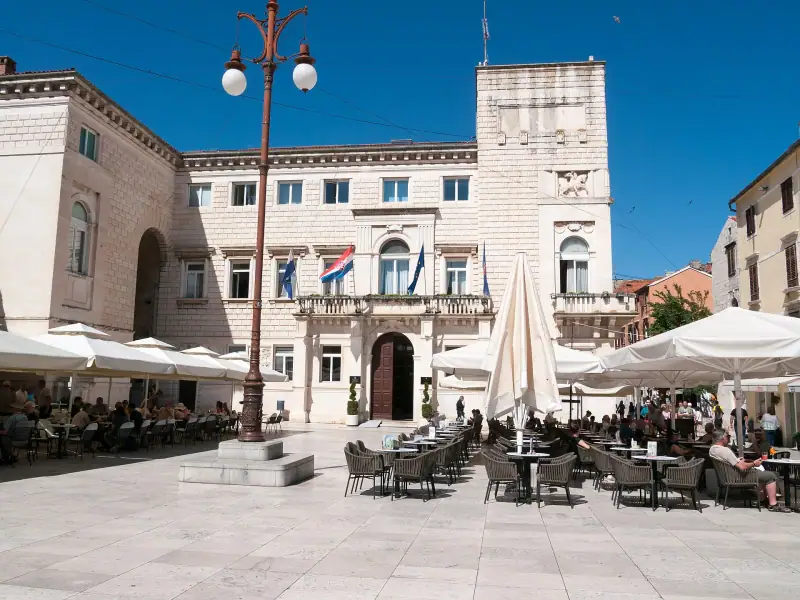
Where to stay in Zadar: guide to the best areas and accommodation
Where to stay in Zadar? Old town, Borik, Diklo: the best areas, hotels and apartments for every budget on the Dalmatian coast.
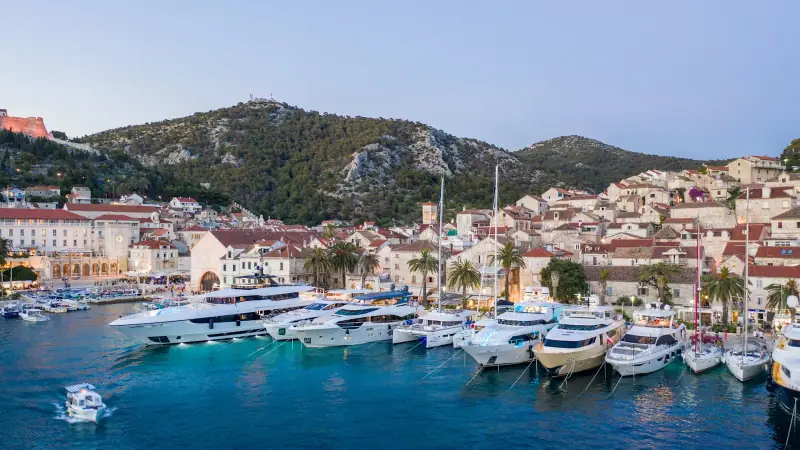
Where to stay in Hvar: guide to the best areas and accommodation
Where to stay in Hvar? Hvar Town, Stari Grad, Jelsa or Vrboska: a full comparison of areas, styles and budgets to choose your base on the island.
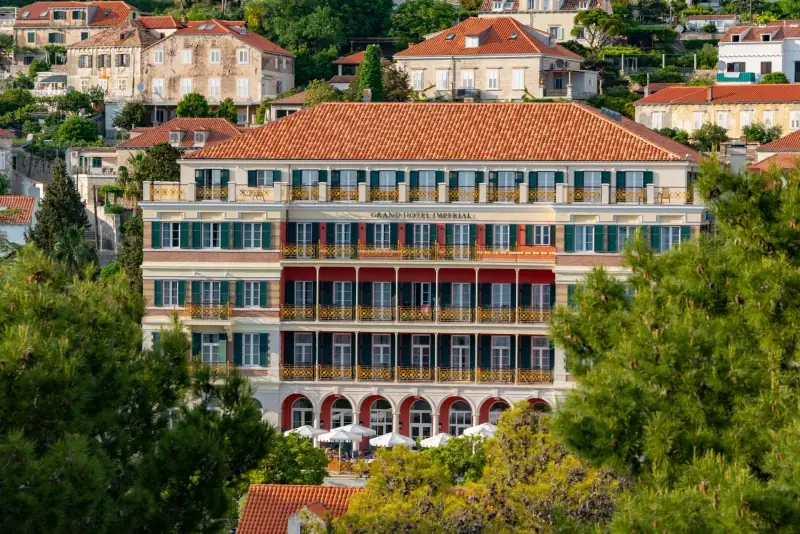
Where to stay in Dubrovnik: the best areas and hotels
How to choose where to stay in Dubrovnik: Old Town, Lapad, Ploče, Gruž. Hotels and apartments for every budget with practical tips.
Ready-made
Croatia itineraries
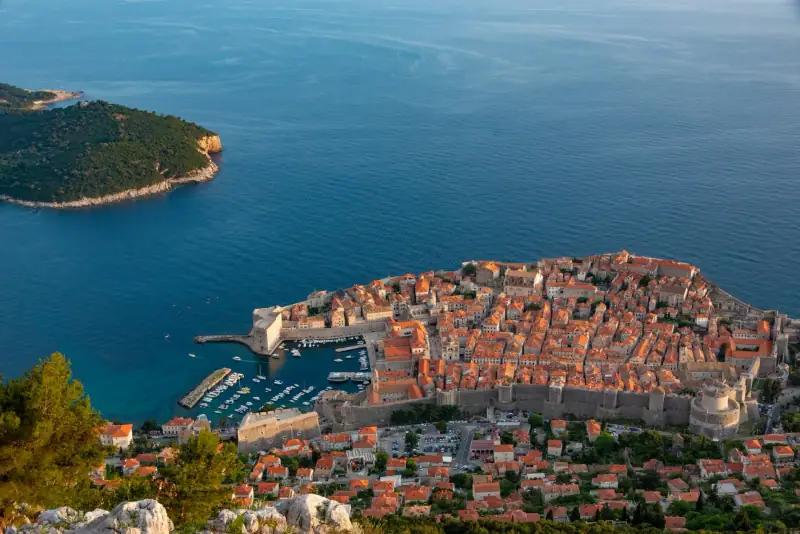
Croatia road trip: the coastal route from Zagreb to Dubrovnik
The ultimate Croatian coastal road trip from Zagreb to Dubrovnik via Split, Zadar and the national parks. 10-14 day route with stops and tips.
7 days
Croatia in 7 days: the perfect one-week itinerary
Detailed itinerary to visit Croatia in 7 days: Split, the Dalmatian islands, Dubrovnik and Plitvice. Day-by-day plan with practical tips.
10 days
Croatia in 10 days without a car: a realistic bus and ferry itinerary
ZagrebZadarSplitHvar TownDubrovnik