What to see
Visiting La Fortuna: a complete guide to the Arenal Volcano area
We may earn a commission when you book through links on this page, at no extra cost to you. We don't visit or try the places we cover: we summarize published sources. How we work
In short
- Two to three days cover the waterfall, hot springs, Arenal National Park and one adventure activity; allow four with kayaking or El Castillo.
- The waterfall is about 5 km (3 mi) from town, with roughly 500 steps down to the pool. Arrive at opening (usually 8 am).
- From San José it is about 130-140 km (81-87 mi) and 2 h 30 to 3 h by car on Route 1 and Route 141, all paved.
- Hot spring complexes cost roughly $45-100 per person (Baldi and Ecotermales at the lower end, Tabacón at the top); book ahead in December-January and July-August.
La Fortuna de San Carlos, which everyone simply calls “La Fortuna”, is one of the most visited towns in Costa Rica, and for good reasons. In the shadow of Arenal Volcano, this lively town in the north of the country packs an exceptional density of natural experiences: a spectacular waterfall, geothermal hot springs, an emerald lake, rainforests and wildlife accessible even to travelers without a guide. If your Costa Rica itinerary includes only one nature destination, make it La Fortuna.
La Fortuna Waterfall
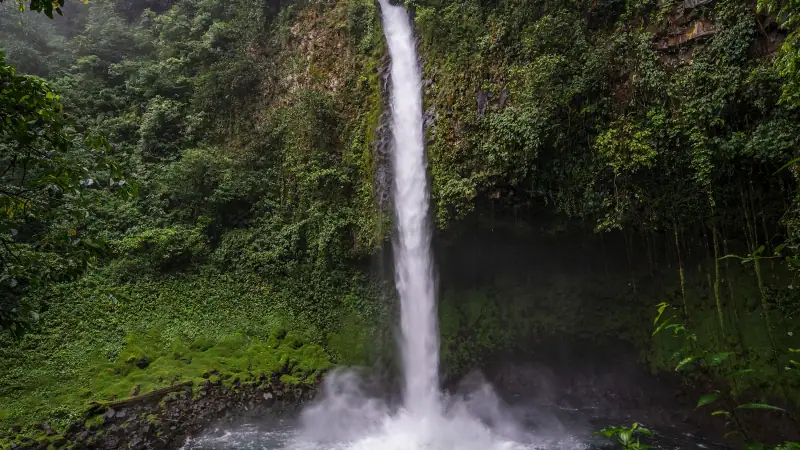
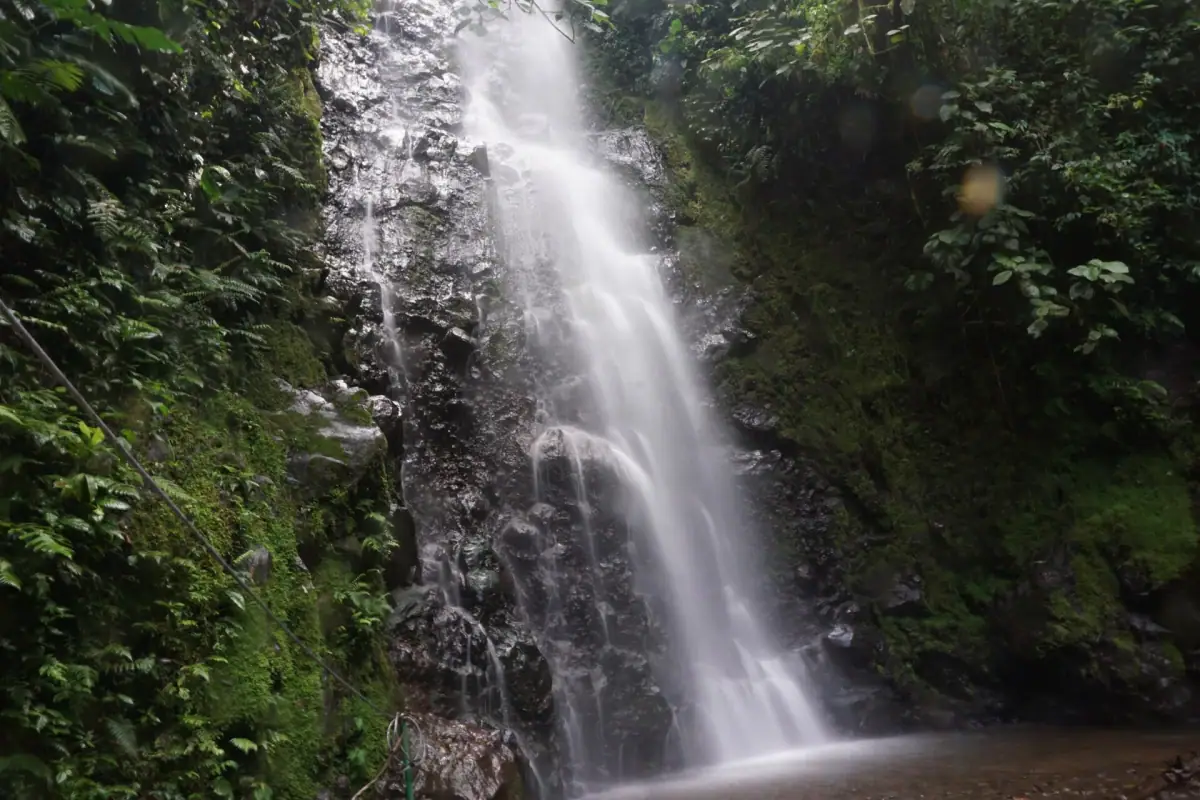
The town’s most iconic attraction is without doubt the Catarata Río La Fortuna, a waterfall about 70 meters (230 ft) high that plunges into a circular pool of intense green. Framed by basalt cliffs covered in giant ferns and bromeliads, the waterfall is one of the most photogenic in all of Central America.
How to get there
The site is run by the local community and charges admission. The main entrance is about 5 km (3 mi) from the center of La Fortuna, reachable by car, taxi or bike (an electric bike helps on the climb back). From the entrance, you walk down a staircase of about 500 steps to reach the pool; allow 10 to 15 minutes going down and 20 to 30 minutes coming back up. The descent is steep but well built, with handrails.
Tip: arrive at opening (usually 8 am) to enjoy the site before the midday groups arrive. The morning light filters beautifully into the canyon and lights the waterfall from the front.
Swimming
Swimming in the natural pool is possible and very pleasant. The water is cool (about 20-22 °C / 68-72 °F) and invigorating after the descent. Wear a swimsuit under your clothes, as there are no changing rooms right at the water’s edge. Ropes and marked areas let you swim safely. Avoid the area directly under the falls (strong current and rock blocks).
Guided tours in La Fortuna
Waterfall, hot springs, canyoning and rappelling tours with certified guides.
La Fortuna’s hot springs
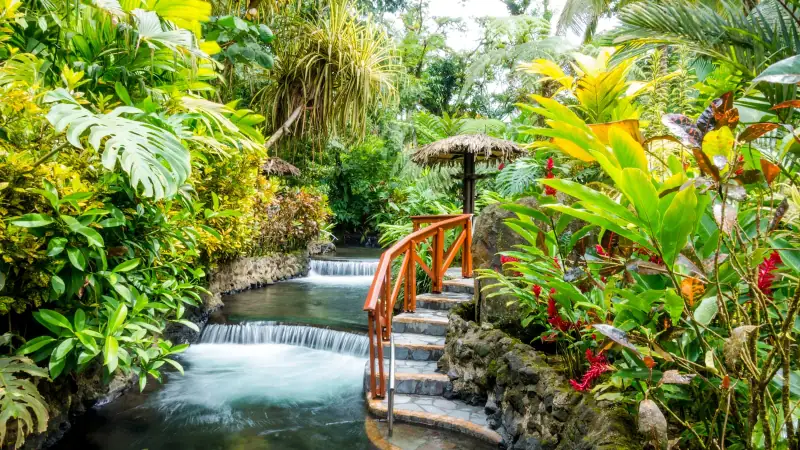
La Fortuna is Costa Rica’s capital of geothermal hot springs. The water, heated by the magma of Arenal Volcano several dozen meters underground, emerges at temperatures from 37 °C to 42 °C (99-108 °F) depending on the spot. Several resorts have channeled these waters into open-air pools set in lush tropical gardens.
The developed complexes
The region’s hot spring complexes have invested in facilities ranging from simple pools to themed water parks. Most offer several pools at different temperatures, changing rooms, lockers, and one or more bars and restaurants. Some let you see Arenal Volcano from the pools on clear evenings, an unforgettable experience.
Prices vary with the standard of the complex, generally between €20 and €80 (about $23-93) per person. Evening or night admission rates are often more attractive and let you enjoy the lit-up evening atmosphere. Book ahead in high season (December-January and July-August).
The free springs
For travelers on a tight budget, natural hot springs flow freely in some rivers downstream of the complexes. They are less equipped but just as authentic, and used by locals. Ask your accommodation which access points are currently usable, as they vary with the seasons and river water levels.
Tip: end a day of hiking in Arenal National Park with an evening at a hot spring complex. After several hours of walking in the jungle, nothing beats soaking in 40 °C (104 °F) water while watching the volcano’s silhouette at sunset.
Lake Arenal
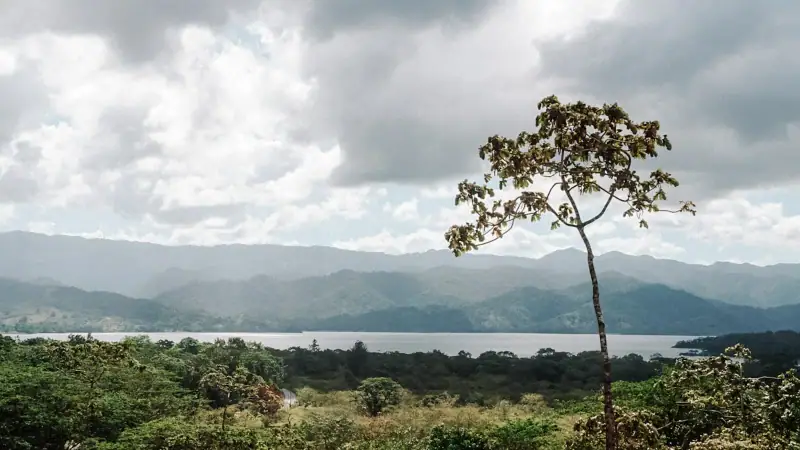
About twenty kilometers (12 mi) west of La Fortuna lies Lake Arenal, the largest body of water in Costa Rica, with an area of about 85 km² (33 sq mi). This artificial reservoir was created by the Sangregado Dam, completed in 1979 for hydroelectric power. It is now a well-known water sports site, with the unmistakable silhouette of the volcano as a backdrop.
Kayaking and paddleboarding
Morning is ideal for kayaking on Lake Arenal: winds generally blow harder in the afternoon (which explains the site’s windsurfing reputation). Several local operators offer kayak rentals or guided canoe tours, sometimes combined with birdwatching along the shores.
Windsurfing and kitesurfing
Lake Arenal is recognized as one of the best windsurfing spots in Latin America, thanks to the steady winds that sweep the lake late in the day. The main windsurfing hub is in Tilarán, on the southwest shore of the lake (Tico Wind center, Route 142); Tronadora is a secondary spot. Operators offer equipment rental and lessons for beginners, although the offer is smaller than it used to be.
Lake Arenal road and El Castillo
The road around the lake to El Castillo offers spectacular views of the volcano and the lake. In El Castillo, an unusual small village with a very different atmosphere from La Fortuna, you can visit a butterfly garden and a reptile garden, or simply enjoy the view from the terraces of local cafés.
Car rental to explore the area
A 4x4 is recommended to reach El Castillo and explore secondary roads.
Arenal National Park
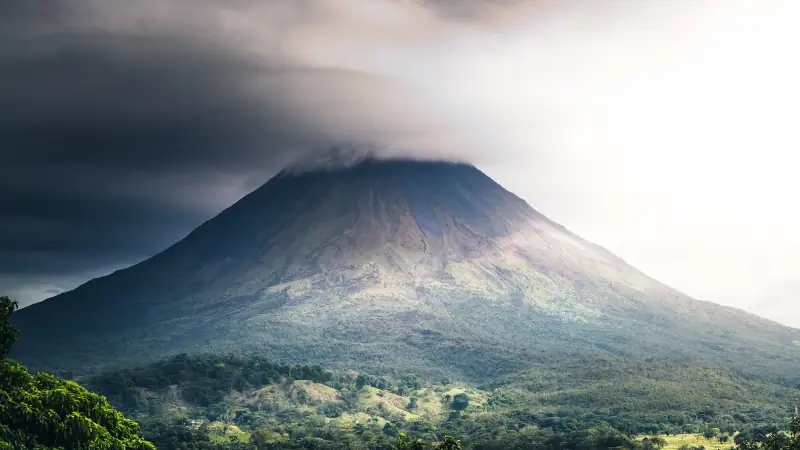
Arenal Volcano National Park is the main reason most travelers come to La Fortuna. With its trails across solidified lava flows, its viewpoints on the volcano’s perfect cone and its rainforest inhabited by howler monkeys, sloths and macaws, it is one of the most emblematic nature walks in Costa Rica.
For everything about the park (history of the volcano, detailed trails, wildlife, visiting tips and hours), see our dedicated guide to Arenal Volcano and its hikes.
Adventure activities in La Fortuna
The La Fortuna area is an adventure capital. Here are the most popular activities, apart from Arenal park and the waterfall.
Canyoning and waterfall rappelling
Rappelling down tropical waterfalls is the most adrenaline-filled activity in the region. Several operators run guided circuits with rappels of 25 to 60 meters (80 to 195 ft) in narrow gorges and jungle rivers. No previous experience is needed; certified guides equip and train participants on the spot. Check operators’ safety certifications before committing.
ATV and quad
ATV (all-terrain quad) tours let you explore forest tracks and rural paths around La Fortuna with great views of the volcano. Several routes exist, from gentle rides to technical courses with river crossings. Driver’s license required.
Horseback riding
The green hills around La Fortuna are especially well suited to exploring on horseback. Local farms offer rides of 1 h 30 to 3 h through pastures and forests, sometimes to viewpoints over the volcano or to the waterfall. A gentle, local alternative to motorized tours.
Ziplines above the forest
Several resorts in the area offer zipline (canopy) courses above the tropical canopy, with views of the volcano when the sky is clear. Cable lengths range from a few dozen to several hundred meters. Suitable from age 8-10 depending on the operator.
Cycling
The center of La Fortuna is flat and pleasant by bike. The bike path to the waterfall (5 km / 3 mi) is doable on a regular bike in one direction and better on an electric bike for the climb back. Electric bikes can be rented in town for the day. The road along Lake Arenal toward Nuevo Arenal makes a fine half-day bike excursion for active travelers.
Wildlife around La Fortuna
The Arenal/North region is one of the richest in biodiversity in the country. Without even venturing far from downtown, it is common to see:
In town and its immediate surroundings
- Keel-billed toucans and Swainson’s toucans: perched on power lines or fruit trees in gardens
- Great green macaws and scarlet macaws: often heard before they are seen, flying over town at dawn and dusk
- White-faced capuchin monkeys: common in the trees of parks and gardens
- Two-toed and three-toed sloths: nearly motionless in cecropia and yam trees
- Plumed basilisks (“Jesus Christ lizards”): run on the water of rivers and streams
In the forest and by the lake
- Howler monkeys: their deep call is one of the most emblematic sounds of the Costa Rican jungle
- Spectacled caimans: on the banks of Lake Arenal and in rivers, harmless outside nesting periods
- Kingfishers and herons: along the grassy shores of the lake
- Opossums and armadillos: mostly nocturnal, but sometimes visible at dawn on park trails
A guided night tour around La Fortuna or in the gardens of some lodges multiplies the chances of rare sightings (tree frogs, non-venomous snakes, bioluminescent insects).
Eating in La Fortuna
The town of La Fortuna has developed a food offer that goes well beyond standard tourist dining. The center holds most of the restaurants, around the central park and on the perpendicular streets.
Costa Rican food in La Fortuna
Local sodas (small family eateries) serve the basics of Costa Rican food at very affordable prices:
- Gallo pinto: the national breakfast, rice and black beans sautéed with cream (natilla) and scrambled eggs. Hearty and cheap.
- Casado: the full lunch plate, with white rice, black beans, vegetable salad, fried ripe plantain and a protein of your choice (grilled chicken, tilapia, red meat). Filling and balanced.
- Arroz con pollo: rice sautéed with chicken, vegetables and local herbs, a safe bet in every soda.
- Chifrijo: a popular snack specialty combining rice, beans, crispy fried pork (chicharrón) and pico de gallo. Served in bars.
Cafés and bakeries
Specialty coffee culture has reached La Fortuna in recent years. Several places roast local beans from the San Carlos region and offer alternative brewing methods. A good coffee, ideal for an early start before a day of activities.
Markets and local produce
Some accommodations or small local markets sell seasonal tropical fruit: papaya, maracuyá (passion fruit), cas (a local guava), pejibaye (peach palm) and rare banana varieties. Homemade jams and jars of palm hearts in brine make good food souvenirs to bring home.
To go further into local food, read our guide to Costa Rican cuisine.
Finding your way around La Fortuna
La Fortuna de San Carlos is a town of about 15,000 people, a short distance as the crow flies from Arenal. The town center is organized around a central park (the parque central, typical of the Costa Rican colonial model) with its church, banks and sodas. Most of the budget and mid-range hotels, tour agencies, supermarkets and pharmacies are within a 5-minute walk of the park.
The main road (Route 142) leaves the center to the west toward the volcano and the national park. Along this road, between 3 and 15 km (2 to 9 mi) from the center, are the upscale lodges with views of Arenal, the hot spring complexes and the activity providers.
Practical orientation:
- La Fortuna center = services, transport, inexpensive restaurants, agencies
- Route 142 toward the volcano (3-15 km / 2-9 mi west) = luxury lodges, hot springs, national park access
- Road to El Castillo / south shore of the lake = quiet, views, adventure
For accommodation options by area and budget, see our complete guide: where to stay in La Fortuna.
La Fortuna in your Costa Rica itinerary
La Fortuna works perfectly as a central base for a Costa Rica circuit. Its two natural connections are:
La Fortuna to Monteverde (taxi-boat-taxi)
The most scenic trip in Costa Rica links La Fortuna to Monteverde without going back through San José. It is done in three stages: a taxi from La Fortuna to the Arenal boat dock (~30 min), a boat crossing of Lake Arenal (~30-45 min), then a taxi to Santa Elena/Monteverde (~1 h 30). Total: about 2 h 30 to 3 h for a trip that would otherwise be impossible to shorten. La Fortuna agencies sell this transfer as a very affordable package.
To learn all about Monteverde, read our Monteverde guide.
La Fortuna to San José and onward
In a classic 10 to 14-day Costa Rica itinerary, La Fortuna fits into the first or second week, often after San José and before heading down to the Pacific. See our complete Costa Rica road trip for the best sequences.
How to get to La Fortuna
By car from San José
The standard route from San José takes Route 1 (Pan-American Highway) north to Naranjo, then turns onto Route 141 toward La Fortuna via Zarcero. Distance is about 130 to 140 km (81 to 87 mi); allow 2 h 30 to 3 h depending on traffic leaving San José. Roads are paved all the way.
An alternative route goes via San Carlos (Ciudad Quesada) and is slightly longer but often less congested. In a rental car, a standard (non-4x4) vehicle is more than enough to reach La Fortuna by the main roads; a 4x4 becomes useful for secondary tracks to El Castillo and some remote lodges.
By bus from San José
Direct buses link San José (Terminal Atlántico Norte, Avenida 9 / Calle 12) to La Fortuna daily. The trip takes about 4 h depending on intermediate stops. It is the cheapest option, but check schedules in advance, as frequencies are limited to a few departures a day.
By tourist shuttle
Shared shuttles are the choice of independent travelers without a car. They connect La Fortuna directly from San José, Monteverde, Tamarindo, Puerto Viejo and other destinations, with door-to-door service. Comfortable and with no changes, they cost more than the bus but less than a private taxi. They can be booked online or at local tourist agencies.
By plane (domestic flights)
Domestic flights serve La Fortuna from San José via La Fortuna Arenal airport (FON, ICAO: MRAN). Flight time is about 30 minutes. Local airlines operate these routes with small propeller planes; check seasonal availability, as frequencies vary through the year.
Practical tips for visiting La Fortuna
Weather: La Fortuna is in a rainforest zone and can get rain at any time of year. The rainy season (May-November) generally brings late-afternoon showers. Schedule outdoor activities in the morning and keep hot springs or museums for the evening or rainy afternoons. A light raincoat is essential in your backpack.
Money and payments: most businesses in La Fortuna accept US dollars and international bank cards. The Costa Rican colón is still needed in local sodas, markets and local taxis. ATMs are available downtown.
Safety: La Fortuna is a safe tourist town by regional standards. The usual precautions apply: do not leave valuables visible in a parked vehicle, keep an eye on your belongings in busy tourist areas, avoid poorly lit areas at night outside the center. Legitimate tour agencies hold official registrations from the Costa Rican Tourism Institute (ICT).
Altitude and temperature: La Fortuna sits at about 250 meters (820 ft) in a hot, humid tropical zone. Temperatures range between 22 °C and 32 °C (72-90 °F) all year. Humidity can be high; bring lightweight breathable clothing, sunscreen and insect repellent for outdoor activities.
Internet: mobile coverage (4G) is good downtown and in most hotels in the tourist area. It weakens in the forested areas of the national park and on secondary tracks to El Castillo. Download offline maps before remote excursions. Check your carrier’s international plan or use a travel eSIM before you go.
Reservations: in high season (December-January and July-August), book popular activities (canyoning, well-known hot spring complexes) and your accommodation ahead, especially if you want lodges with views of the volcano.
La Fortuna is a gateway to one of the most photogenic landscapes in Costa Rica. With its volcano, waterfall, hot springs and wildlife, the area has enough to keep the most demanding travelers busy for several days. Linking La Fortuna to Monteverde across Lake Arenal probably makes for the most memorable nature circuit of your trip. Pura Vida.
To prepare your stay, also see our complete Costa Rica travel guide and our article on the Costa Rica road trip.
Frequently asked questions
How long should you spend in La Fortuna?
Two to three days let you enjoy the essentials: the waterfall, the hot springs, Arenal National Park and at least one adventure activity (kayaking on the lake, rappelling, ATV). If you want to kayak on Lake Arenal, add a half day of cycling or a trip to El Castillo: plan four days. Most travelers who stay only one night regret it.
What is the best time to visit La Fortuna?
The dry season (December to April) is ideal for seeing Arenal Volcano and for outdoor activities. In the rainy season (May to November), rain often falls in the late afternoon, leaving mornings free. Vegetation is greener and the waterfall more impressive. July-August is a very pleasant mini dry season. Avoid the weeks of Christmas and Easter if you want to escape the crowds.
How do you get to La Fortuna from San José?
By car, allow about 2 h 30 to 3 h from San José, taking Route 1 (Pan-American Highway) to Naranjo, then Route 141 to La Fortuna (about 140 km / 87 mi). Direct buses also leave from the San Carlos terminal (Ciudad Quesada) in San José. Shared shuttles (tourist shuttles) connect San José directly to La Fortuna, a very popular comfort-and-price option.
Can you visit La Fortuna without a car?
Yes, it is entirely possible. La Fortuna tour agencies run daily excursions to all the sights (waterfall, Arenal park, hot springs, lake). Local taxis and shuttle services complete the offer. The town itself is easy to explore on foot. To reach Monteverde by public transport, the taxi-boat-taxi connection across Lake Arenal is the classic route.
What is the difference between La Fortuna and El Castillo?
La Fortuna is the main town with all services: restaurants, banks, agencies, shops, buses. El Castillo is a small village perched on a hill about 20 km (12 mi) west of La Fortuna, on the south shore of Lake Arenal. El Castillo has a more rural atmosphere, beautiful views of the volcano and a few very popular lodges. Ideal for those looking for more peace and quiet.
Do you have to pay for the hot springs in La Fortuna?
The developed hot spring complexes (with pools at different temperatures, changing rooms, restaurants) charge admission, generally between €20 and €80 (about $23-93) per person depending on standard. There are also free springs in the river downstream of the complexes, reachable on foot, less equipped but authentic. Ask locally, as access changes with the season and water levels.
More Costa Rica guides
Keep reading
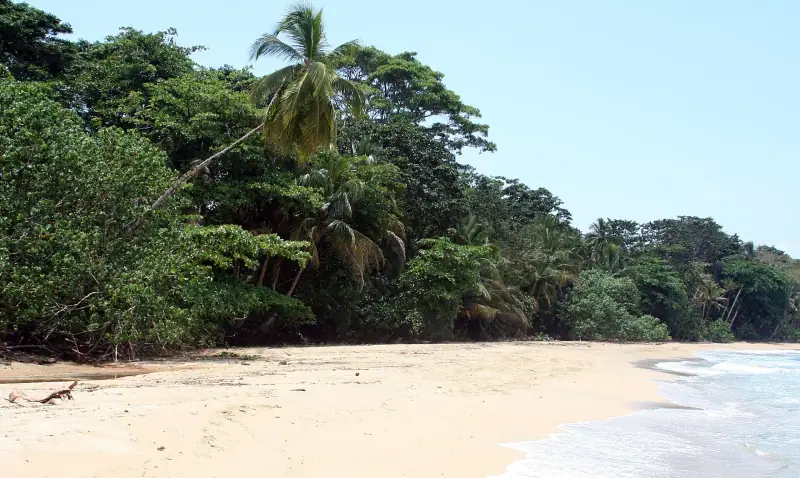
Visiting Puerto Viejo: a complete guide to Costa Rica's Caribbean coast
Everything about visiting Puerto Viejo de Talamanca: beaches, surf, Afro-Caribbean culture, Manzanillo, Cahuita and practical tips.
Visiting Guanacaste: a complete guide to Costa Rica's northern Pacific
Complete Guanacaste guide: beaches, volcanoes, national parks, surf, sea turtles and Pura Vida. Everything you need to plan your stay.
San José, Costa Rica: the capital's top sights
What to see in San José: museums, neighborhoods, markets and food in Costa Rica's capital. A guide to spending 1 to 3 days there.
Ready-made
Costa Rica itineraries
10 days
Costa Rica in 10 days: an itinerary from the Caribbean to the volcanoes
TortugueroPuerto ViejoLa FortunaMonteverde
14 days
Costa Rica road trip: the grand tour in 2 weeks
14-day Costa Rica road trip by 4x4: from volcanoes to beaches, Caribbean to Pacific. Full itinerary with road tips and where to stay.
10 days
Costa Rica in 10 days without a car: a realistic shuttle and bus itinerary
San JoséLa FortunaMonteverdeManuel AntonioSan José