What to see
Visiting Monteverde: a complete guide to Costa Rica's cloud forest
We may earn a commission when you book through links on this page, at no extra cost to you. We don't visit or try the places we cover: we summarize published sources. How we work
In short
- Plan at least two days: one for the Monteverde Cloud Forest Reserve with a guide, one for ziplines, hanging bridges and other attractions. Book reserve entry ahead, especially in high season.
- From San José it is about 133 km (83 mi), 3 h 30 to 4 h by car. Much of the road is dirt or gravel; a 4x4 is highly recommended in the rainy season.
- Temperatures are generally 14-24 °C (57-75 °F) and the forest is damp: bring layers, a light raincoat and waterproof walking shoes.
- From La Fortuna, the taxi-boat-taxi trip across Lake Arenal takes about 3 h and beats going back through San José.
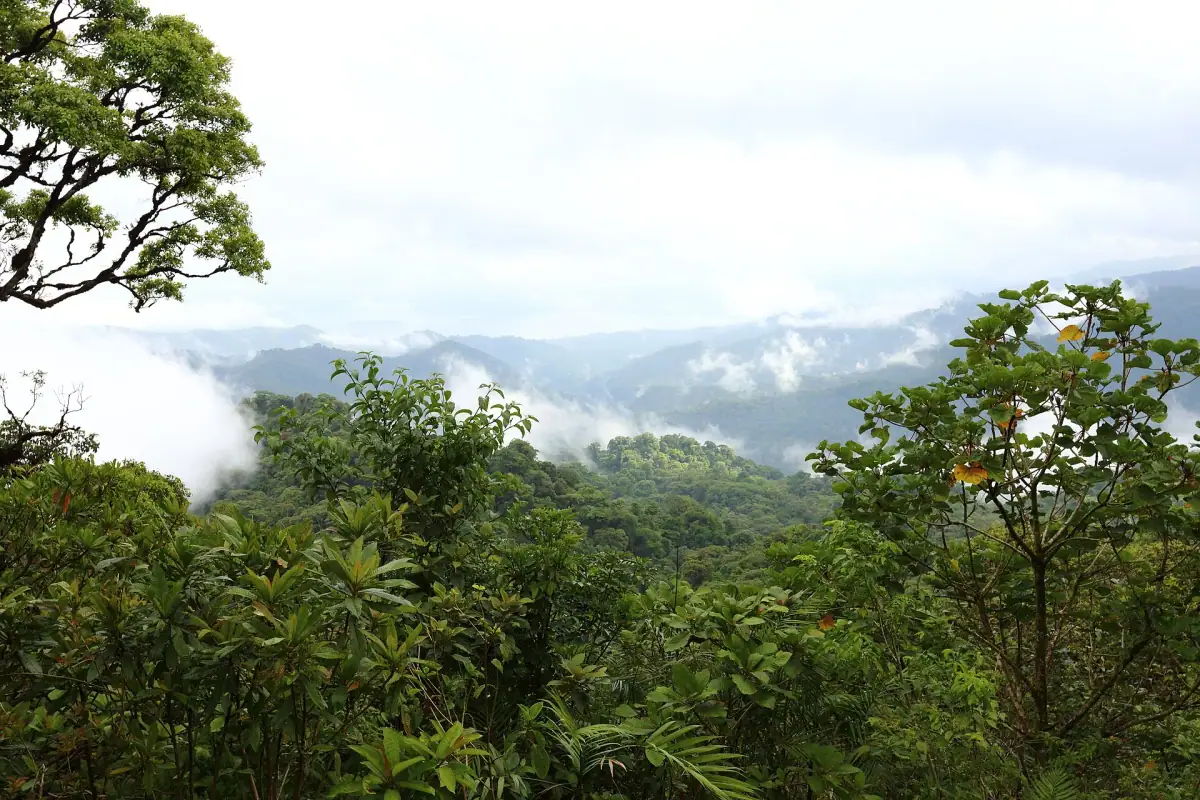
Perched at about 1,400 meters (4,595 ft) in the Tilarán mountain range, Monteverde is one of the most emblematic destinations in Costa Rica. The name actually refers to a small farming community, founded in the 1950s by American Quakers from Alabama, and the vast cloud forest reserves around it. This is where clouds permanently cling to the canopies of giant oaks, where the resplendent quetzal hides in mountain fig trees, and where ziplines whisk you at speed across dizzying valleys. If you only come to Costa Rica once, Monteverde should be on your list.
The Monteverde Cloud Forest Reserve
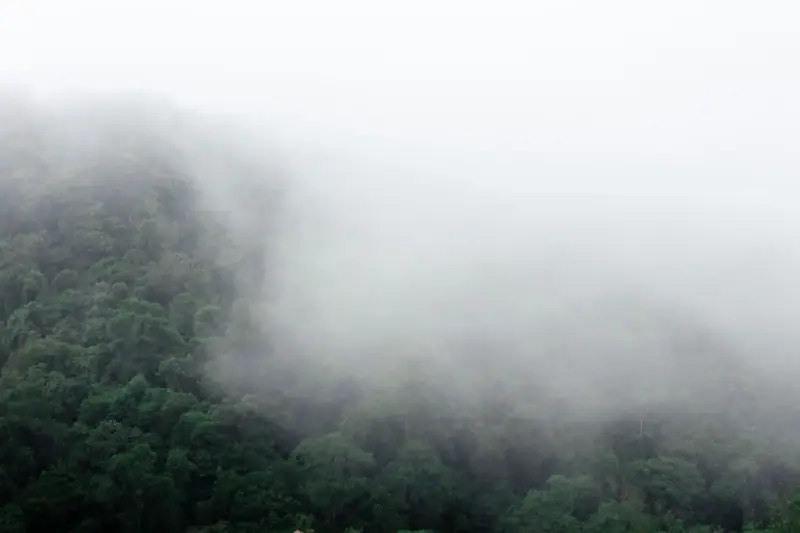
The Reserva Biológica Bosque Nuboso de Monteverde is a private reserve managed by the Tropical Science Center since 1972. With about 10,500 hectares (26,000 acres) protected, it is one of the most important cloud forest reserves in Central America. It is home to more than 400 bird species, 100 mammal species, 120 to 161 species of amphibians and reptiles, and more than 2,500 species of vascular plants, including more than 500 orchid species.
How to visit the reserve
The main entrance is about 6 km (4 mi) from the center of Santa Elena (the main town in the area). The number of visitors in the reserve at the same time is limited to avoid overcrowding, so it is advisable to book ahead (check the details on the official website), especially in high season.
Admission: about $25-28 for adults (indicative price, check the official website) Hours: generally 7 am-4 pm Tip: arrive early in the morning to maximize your chances of seeing wildlife, before the tourists arrive and before the clouds thicken too much.
The main trails
The reserve has a network of marked trails of varying difficulty:
- Sendero Bosque Nuboso (1.9 km / 1.2 mi): the busiest, passing through a stretch of old primary forest with oaks reaching 40 meters (130 ft) high.
- Sendero El Valle (2 km / 1.2 mi): runs along areas of secondary forest and viewpoints over the valley.
- Sendero La Ventana (0.3 km / 0.2 mi): leads to a lookout on the Continental Divide; on a clear day, you can see both sides of the country.
- Sendero Chomogo (1.8 km / 1.1 mi): the highest trail, often in the clouds, ideal for morning birdwatching.
Guided visits
A visit with a naturalist guide radically changes the experience. What looks like branches or leaves turns out to be stick insects, brightly colored frogs or mimic snakes. Guides know the hiding places of the resplendent quetzal, the reserve’s most sought-after bird, recognizable by its long iridescent tail feathers and metallic green plumage.
Guided night walks (generally in the late afternoon, around 5:30 or 6 pm; check with operators) let you see the forest’s nocturnal animals: kinkajous, olingos, tamanduas, glass frogs, poison dart frogs and a multitude of bioluminescent insects.
Monteverde cloud forest guided tours
Day and night guided visits with naturalist guides.
The Santa Elena Reserve
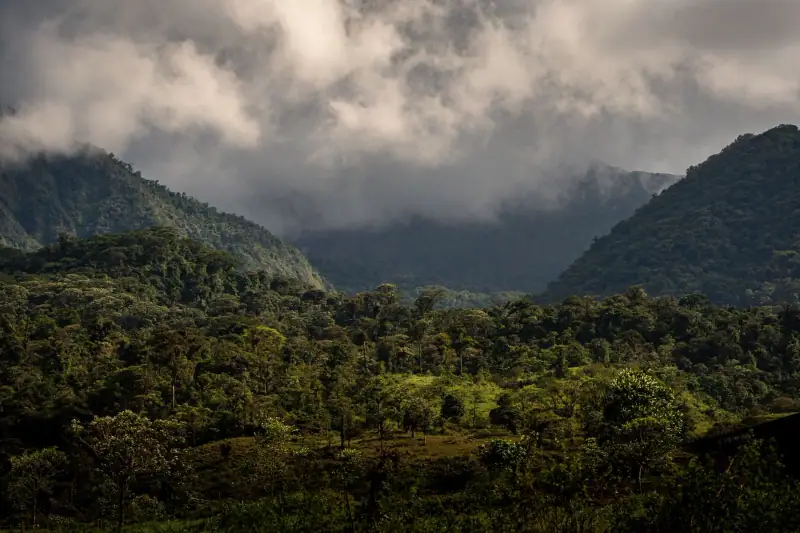
The Reserva Santa Elena is the neighboring reserve, less well known and less visited than the Monteverde reserve. Managed by the local Santa Elena high school since the 1990s, it covers about 310 hectares (770 acres) at a higher altitude (up to 1,700 m / 5,580 ft). Because of the higher elevation, clouds are even more present and vegetation even more lush.
This reserve is ideal for those who want a quieter, more authentic experience. Trails are less developed, but the chances of seeing wildlife outside peak hours are better. The admission fee is generally lower than at the main reserve.
Tip: combine the two reserves on two different days: Monteverde early in the morning, Santa Elena in the afternoon or the next day.
Watching Monteverde’s wildlife
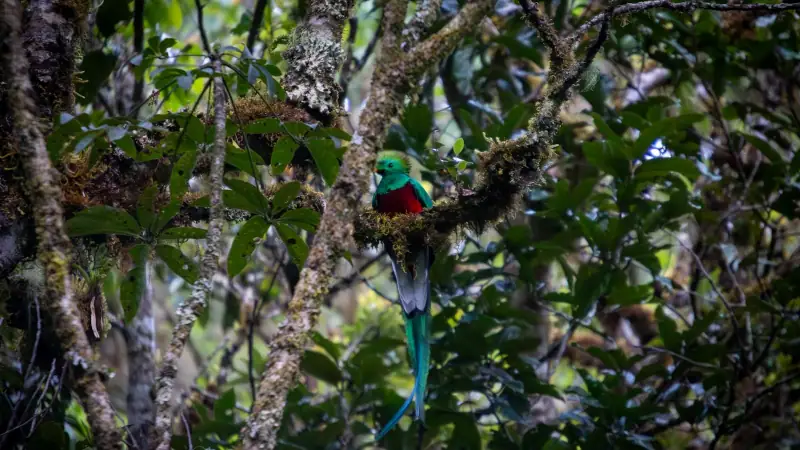
Monteverde is one of the best birdwatching destinations in Central America. Here are the most sought-after species:
The resplendent quetzal
Pharomachrus mocinno, the “king” of Monteverde’s birds. The adult male has tail feathers more than 60 cm (24 in) long, in iridescent emerald green. It is easiest to see from March to June, during the nesting period. Reserve guides know where it appears, and spotting a quetzal in the wild remains one of the most magical moments of a trip to Costa Rica.
Hummingbirds
More than 30 hummingbird species have been recorded in the Monteverde area. Several viewing spots with feeders are accessible in the region, some paid, others in hotel or lodge gardens. The diversity and density of hummingbirds in Monteverde is unique in the world.
Other notable species
- Three-wattled bellbird: its thunderous call (among the loudest of any bird) can be heard from about 0.8 km (0.5 mi).
- Puma and Baird’s tapir: present in the reserve, very rarely seen.
- Coati, collared peccary, agouti: regularly seen on the trails, even without guides.
- Fer-de-lance and parrot snakes: guides know how to spot them, one more reason to go with someone.
Car rental for Monteverde
A 4x4 is recommended for the Monteverde road, especially in the rainy season.
Adventure activities in Monteverde
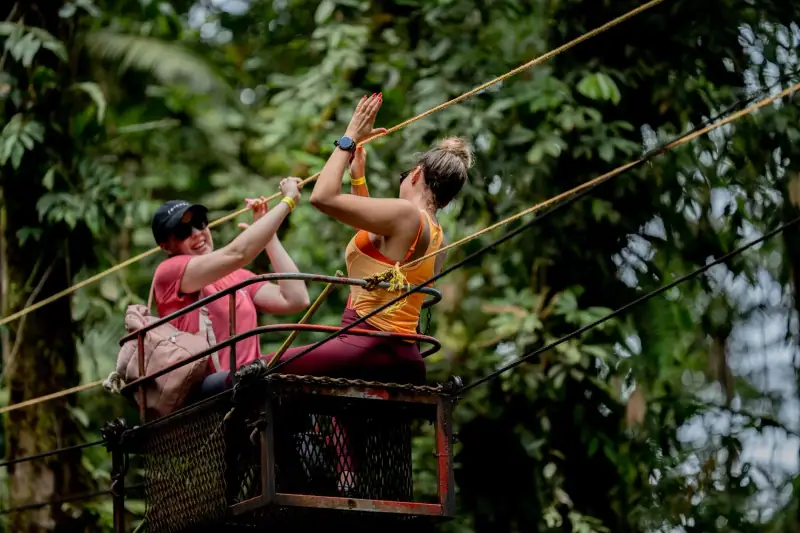
Ziplines and hanging bridges (Sky Adventures / Selvatura)
Monteverde is the birthplace of adventure ecotourism in Costa Rica. Two large complexes offer zipline (canopy) circuits and hanging bridge courses above the canopy:
Sky Adventures Monteverde (now marketed as Treetopia Park): offers one of the longest zipline circuits in Costa Rica (about 3 km / 1.9 mi in total over several cables), a hanging bridge circuit in the forest (Sky Walk) and an aerial gondola ride (Sky Tram). The complex is well organized and suited to all levels, including families.
Selvatura Park: another large complex with hanging bridges, ziplines, butterfly gardens, a reptile vivarium and a hummingbird garden. The presentation of biodiversity is more educational, appreciated by families and school groups.
Important tip: book directly on the complexes’ websites or through a local tour operator to avoid extra costs. Combined tickets (canopy + bridges + other attractions) are generally better value.
Canyoning and rappelling
Several operators offer rappelling down waterfalls in the region, some more than 40 meters (130 ft) high. The activity is supervised by certified guides and is for participants in good physical shape. Checking the guides’ certifications beforehand is recommended.
Horseback riding
The Monteverde area is especially well suited to exploring on horseback. Several local farms offer rides through the pastures and forests of the region, with spectacular views of the Gulf of Nicoya on clear days.
Santa Elena village and the Quaker community
Despite its name, the area tourists call “Monteverde” is actually made up of two distinct communities: Santa Elena (the main town, with shops, restaurants, banks and bus terminals) and Monteverde proper (a few kilometers farther, the rural community founded by the Quakers).
Quaker history
In 1951, 11 Quaker families (44 people) from Alabama refused to serve in the US army during the Korean War. They chose to settle in Costa Rica, one of the few countries in the world to have abolished its army (1948). These pioneers cleared the area, set up dairy farms and founded a cheese cooperative that still exists.
The Monteverde cheese cooperative is one of the founding institutions of the region. Its production, notably Costa Rican gouda and tilsit, is known across the country. The cooperative shop lets you taste and buy the cheeses, butters and other local products directly.
Santa Elena in practice
The town of Santa Elena has everything needed for a comfortable stay: supermarkets, pharmacies, ATMs (note that remote villages do not always have them), restaurants for different budgets, bike rental shops and car rental offices.
Getting around locally: Santa Elena and Monteverde are linked by a dirt road (or asphalt, depending on the stretch). The shared taxi (taxi compartido) is the cheapest way between the two villages. Some hotels offer shuttles to the reserves.
More attractions around Monteverde
Bat Jungle (Jardín de los Murciélagos)
A one-of-a-kind interpretive center dedicated to Costa Rica’s bats. About a hundred bats of several species live in a re-created habitat, observable through windows with reversed lighting (day/night). The one-hour guided tour demystifies these often-unloved animals and explains their crucial role in tropical ecosystems. Suitable for children and adults.
Monteverde Orchid Garden
With more than 450 orchid species on display, some so rare that a magnifying glass is needed to see them, this private garden is a paradise for botany fans. A guide accompanies each visit and explains flowering cycles and pollination strategies. The world’s smallest orchid is on display.
Butterfly farm
Several establishments in the region have butterfly greenhouses where dozens of tropical species fly freely. The visit generally includes watching the different stages of the life cycle (eggs, caterpillars, chrysalises). Very popular with children.
Cheese Factory Tour
The Monteverde cheese cooperative offers guided tours of its cheese-making facilities in the morning (active production). You see the steps of making artisanal cheese and finish with a tasting of the product range. A cultural experience that recalls the community’s Quaker origins.
Places to stay in Monteverde
Forest lodges, ecolodges and hotels in the heart of nature.
Where to stay in Monteverde
Monteverde has a wide range of accommodation for all budgets, from hostels to luxury ecolodges. Here is what you can find in each category:
Luxury ecolodges
The high-end lodges of the Monteverde area play on immersion in nature: canopy views, private terraces, wildlife-watching programs, a dedicated naturalist guide. Several properties have their own access to the forest or to a biological corridor. Rates are generally between €120 and €350 (about $140-405) a night in high season.
Mid-range lodging
Most travelers stay in small family hotels or mid-range comfort lodges around Santa Elena. Rates generally range from €50 to €130 (about $58-150) a night for a double room. Many of these places include a Costa Rican breakfast (gallo pinto, eggs, fruit) and offer shuttle services to the reserves.
Budget / hostels
Santa Elena has several hostels offering dorms and inexpensive private rooms. Rates start around €15-20 (about $17-23) per person in a dorm. Central Santa Elena is convenient for walking to restaurants and travel agencies.
Location tip: if you want peace and immersion in nature, choose lodging on the Monteverde side (toward the reserve), a few kilometers from Santa Elena. If you prefer to be near shops and restaurants, stay in Santa Elena.
Eating in Monteverde
Monteverde’s food scene has grown noticeably in recent years. Central Santa Elena holds most of the restaurants, from local sodas (traditional Costa Rican eateries) to international restaurants.
Local specialties to try:
- Gallo pinto at breakfast: rice and black beans sautéed with local cream, served with eggs and platano maduro (plantain)
- Casado: the national dish, a full plate with rice, beans, salad, plantain and a protein (chicken, fish or meat)
- Monteverde cheese: in all its forms, from fondue to sandwiches to local pizza
- Monteverde coffee: local specialty cafés roast beans from the region, excellent quality
For gourmet and creative cooking, several carefully designed places have opened in the area in recent years. See our Costa Rica food guide for more tips.
Monteverde in your Costa Rica itinerary
Monteverde fits easily into a classic Costa Rica circuit. The two most common pairings:
Monteverde + La Fortuna / Arenal (2-3 days each)
The Costa Rica classic combines Monteverde and La Fortuna. The link between the two is the taxi-boat-taxi across Lake Arenal (a trip of about 3 h, very scenic). It is the best route between the two destinations, much shorter and nicer than going back through San José. Read our article on Arenal Volcano and La Fortuna to plan this stage.
Monteverde + San José + northern Pacific beaches
A more classic circuit: San José (1-2 days), Monteverde (2-3 days), then on to Guanacaste/Tamarindo (3-4 days). Allow about 4 h from Monteverde to Tamarindo via the Pan-American Highway and Liberia.
Full road trip
Our Costa Rica road trip guide includes Monteverde in its 10-day and 15-day itineraries, with the most practical roads and recommended intermediate stops.
How to get to Monteverde
By car from San José
Allow about 3 h 30 to 4 h of driving (about 133 km / 83 mi). There are two route options:
- Via Sardinal/Esparza and Puntarenas: the shortest route in distance, but with a long dirt or gravel section depending on conditions. A 4x4 or high-clearance vehicle is strongly recommended, especially in the rainy season.
- Via the Pan-American Highway (Route 1), San Ramón, Route 606 and Guacimal: slightly longer but fully paved to Santa Elena.
Important: a large part of the road to Monteverde is dirt or gravel. It is passable with a standard vehicle in the dry season, but a 4x4 is highly recommended in the rainy season (May-November). Avoid driving at night.
By bus from San José
Direct buses leave the 7-10 terminal in San José for Santa Elena. The trip takes about 4 to 5 h depending on stops. It is the cheapest option, but check schedules in advance, as frequencies are limited.
Via ferry + bus (from San José or La Fortuna)
The route via Puntarenas plus a minibus is a scenic alternative less used from San José, but it is the standard trip between La Fortuna and Monteverde by taxi-boat-taxi across Lake Arenal (about 3 h in total, no vehicle on board the boat).
Shared shuttle transfers
Shared shuttles serve Monteverde daily from San José, La Fortuna, Tamarindo, Manuel Antonio and other tourist destinations. This is often the best comfort-and-price compromise for travelers without a car, bookable through local travel agencies or specialized websites.
Practical tips for visiting Monteverde
Weather and clothing: forget your image of hot, tropical Costa Rica in Monteverde. Temperatures generally range between 14 °C and 24 °C (57-75 °F), and cloud forest means permanent humidity. A light raincoat, a fleece and waterproof walking shoes with lugged soles are essential. Even in the dry season, mornings can be cool and misty.
Internet and communication: mobile coverage (4G) is generally good in Santa Elena but can be very limited in the reserve areas and on the trails. Download offline maps (Maps.me or offline Google Maps) before you go. Check your carrier’s international plan or use a travel eSIM before you go.
Money: bring enough Costa Rican colones or US dollars in cash. ATMs in Santa Elena generally work well, but may be out of service or out of cash on weekends and public holidays. Bank cards are accepted in most hotels and larger restaurants, but not always in small places.
High season: from mid-December to mid-January and in July-August, Monteverde is very busy. Book reserve entries, activities and your accommodation several weeks ahead. Arrive early (7-8 am) at the reserves to avoid the groups.
Altitude: Monteverde sits between 1,200 and 1,800 meters (3,940-5,910 ft) depending on the area. If you have any concern about altitude, ask your doctor or a travel clinic, and see the official travel health pages (CDC in the US, TravelHealthPro in the UK).
Monteverde is one of those places with a gift for turning skeptics into devoted fans of Costa Rican nature. Its forests forever wrapped in cloud, its jewel-colored birds and its dizzying biological density leave a lasting impression. Pura Vida.
To plan your full circuit, see our complete Costa Rica guide and our article on Costa Rica’s biodiversity.
Frequently asked questions
How long should you spend in Monteverde?
A minimum of two days is recommended to enjoy Monteverde fully. A first day for the cloud forest reserve with a guide, and a second for the complementary activities (ziplines, hanging bridges, bird sanctuary). If you love nature and birdwatching, three days let you explore both reserves at a relaxed pace and enjoy the night walks.
What is the best time to visit Monteverde?
The dry season (December to April) brings less rain, but Monteverde stays cloudy all year, which is exactly what makes it a unique ecosystem. In the rainy season (May to November), the forest is greener and the clouds denser, but trails can be muddy. High season (December-January and July-August) requires booking ahead. March and April are a good compromise.
How do you get to Monteverde from San José?
The road from San José takes about 3 h 30 to 4 h by car (about 133 km / 83 mi). There are also direct buses from the 7-10 bus terminal in San José (about 4 to 5 h). A popular option is the ferry-bus via Puntarenas and Lake Arenal, more scenic but longer. From La Fortuna/Arenal, the trip is about 3 h by car or by taxi-boat-taxi across Lake Arenal.
Do you need to book the cloud forest reserve in advance?
Yes, it is strongly recommended to book the Monteverde Cloud Forest Reserve and the Santa Elena Reserve online, especially in high season. Daily entries are limited to protect the ecosystem. Book at least 2 to 3 days ahead in high season, preferably a week.
Is Monteverde's cloud forest suitable for children?
Yes, Monteverde is an excellent family destination. The hanging bridges are accessible to children from about 6-8 years old. Guided night walks are very popular with children (frogs and insects). The hummingbird gardens, the Bat Jungle (bat museum) and the butterfly farms are perfect for families. Bring light raincoats and good walking shoes.
What gear should you bring to Monteverde?
The cloud forest is cool and damp: bring layers, a light raincoat or poncho, and waterproof walking shoes with non-slip soles. Temperatures are generally between 14 °C and 24 °C (57-75 °F) depending on altitude. Pack insect repellent, sunscreen (for open stretches) and binoculars for birdwatching.
More Costa Rica guides
Keep reading
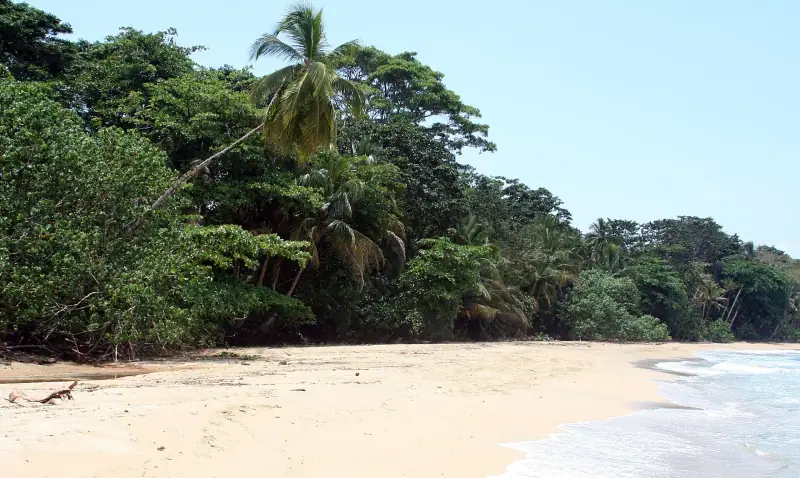
Visiting Puerto Viejo: a complete guide to Costa Rica's Caribbean coast
Everything about visiting Puerto Viejo de Talamanca: beaches, surf, Afro-Caribbean culture, Manzanillo, Cahuita and practical tips.
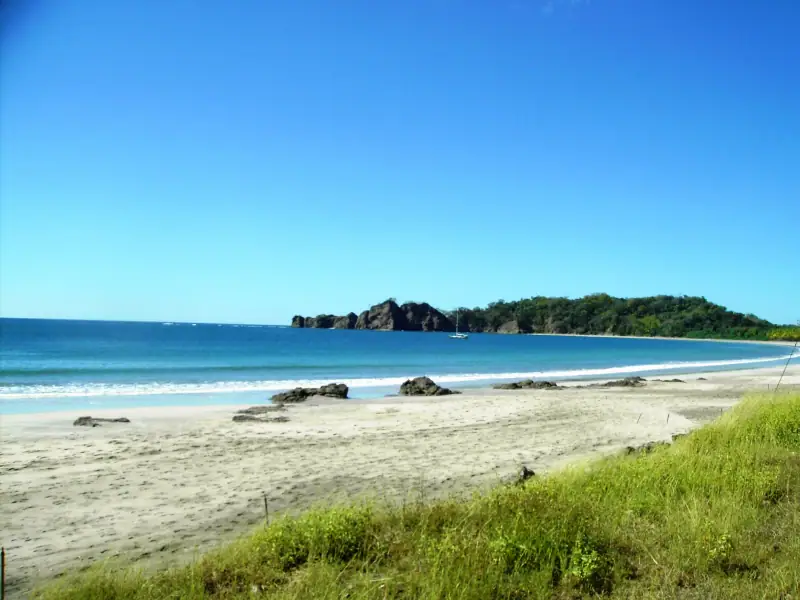
Visiting Guanacaste: a complete guide to Costa Rica's northern Pacific
Complete Guanacaste guide: beaches, volcanoes, national parks, surf, sea turtles and Pura Vida. Everything you need to plan your stay.

San José, Costa Rica: the capital's top sights
What to see in San José: museums, neighborhoods, markets and food in Costa Rica's capital. A guide to spending 1 to 3 days there.
Ready-made
Costa Rica itineraries
10 days
Costa Rica in 10 days: an itinerary from the Caribbean to the volcanoes
TortugueroPuerto ViejoLa FortunaMonteverde
14 days
Costa Rica road trip: the grand tour in 2 weeks
14-day Costa Rica road trip by 4x4: from volcanoes to beaches, Caribbean to Pacific. Full itinerary with road tips and where to stay.
10 days
Costa Rica in 10 days without a car: a realistic shuttle and bus itinerary
San JoséLa FortunaMonteverdeManuel AntonioSan José