What to see
Visiting Puerto Viejo: a complete guide to Costa Rica's Caribbean coast
We may earn a commission when you book through links on this page, at no extra cost to you. We don't visit or try the places we cover: we summarize published sources. How we work
In short
- Plan at least 3 to 4 days; 5 to 7 days is ideal. The beach road runs about 13 km (8 mi) from Puerto Viejo to Manzanillo and is best done by bike.
- From San José it is about 200 km (125 mi), around 4 hours by car via Route 32 and coastal Route 36, fully paved. MEPE buses take about 4 h 30 to 5 h.
- The Caribbean has the opposite calendar to the Pacific: driest in September-October and March-April; best Salsa Brava surf from December to March.
- Salsa Brava is for experienced surfers only; beginners should learn at Playa Cocles. Cahuita National Park is about 16 km (10 mi) north.
Puerto Viejo de Talamanca is not like the rest of Costa Rica. No volcanoes here, no cloud forest, no seaside resort with an infinity pool. What you find is an authentic, laid-back Caribbean atmosphere, a vibrant Afro-Costa Rican culture, strikingly beautiful beaches between Manzanillo and Cahuita, and one of the most formidable surf waves in Central America. Puerto Viejo is one of those destinations that appeals as much to seasoned surfers as to travelers seeking authenticity, and it has a knack for keeping people far longer than planned when they thought they would stay two or three days.
Puerto Viejo, the Caribbean coast and its unique identity
Puerto Viejo de Talamanca, not to be confused with Puerto Viejo de Sarapiquí in the north of the country, is in Limón province on Costa Rica’s Caribbean coast, about 200 km (125 mi) southeast of San José. The village developed away from the main tourist routes for decades before being “discovered” in the 1980s-1990s, first by surfers drawn by the legendary Salsa Brava wave, then by travelers looking for an authentic alternative to the crowded Pacific beaches.
The population of Puerto Viejo is mostly Afro-Costa Rican, descended from the Jamaican workers who arrived in the late 19th century to build the railway to San José and to work on the United Fruit Company banana plantations. This history shaped a resolutely Caribbean local culture: Creole spoken alongside Spanish, reggae and calypso everywhere, spicy and generous cooking, and a pace of life that spontaneously invites you to slow down.
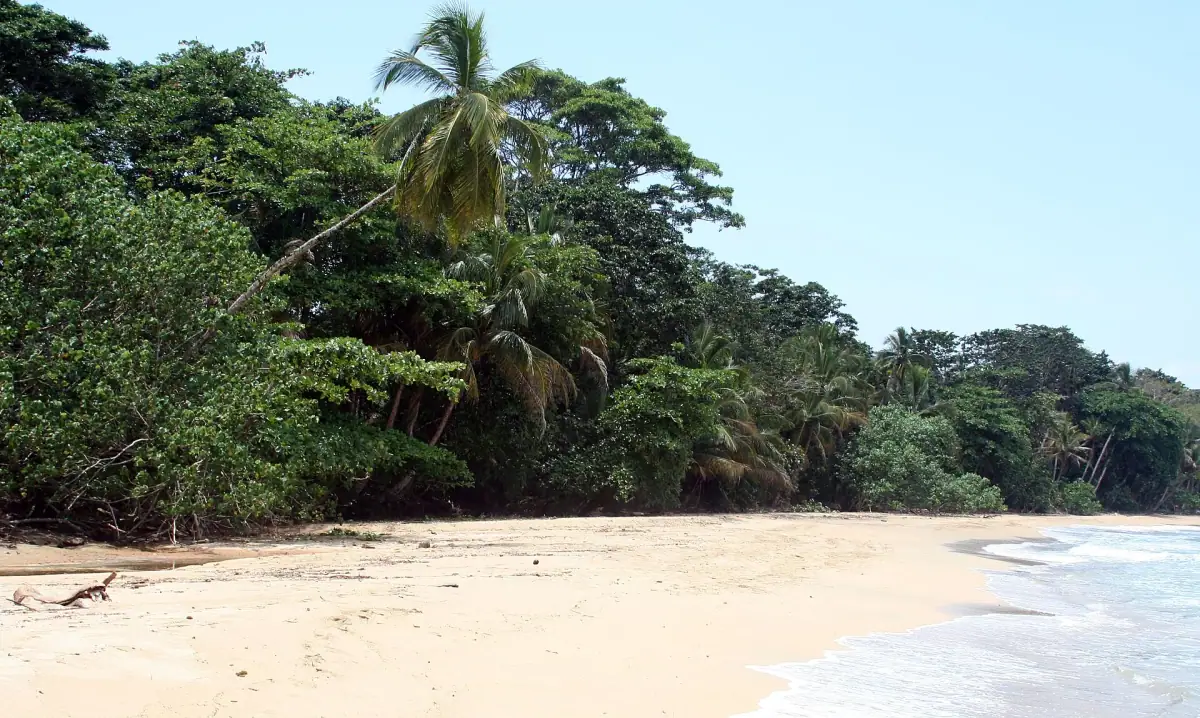
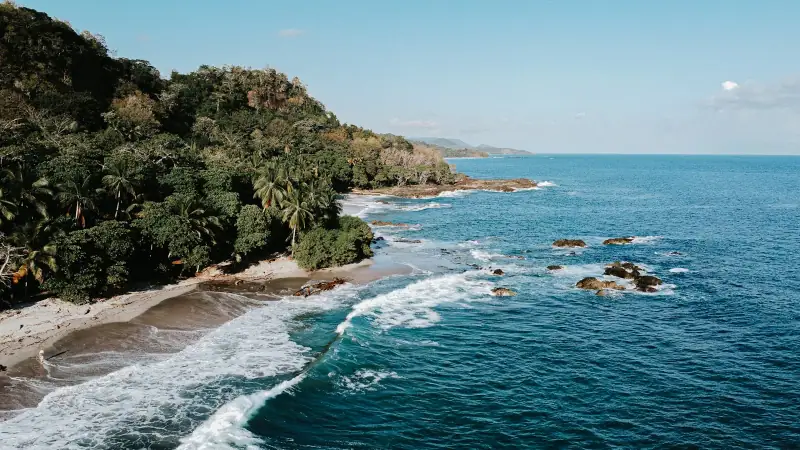
The coast stretching south from Puerto Viejo to the village of Manzanillo, about 13 kilometers (8 mi), is often described as one of the most beautiful in the country. It is a series of beaches separated by rocky headlands, some rough and ideal for surfing, others calm and perfect for swimming and snorkeling, lined with dense vegetation that comes down almost to the sand.
Places to stay in Puerto Viejo
Caribbean lodges, jungle bungalows and beachfront hotels.
Beaches from Puerto Viejo to Manzanillo
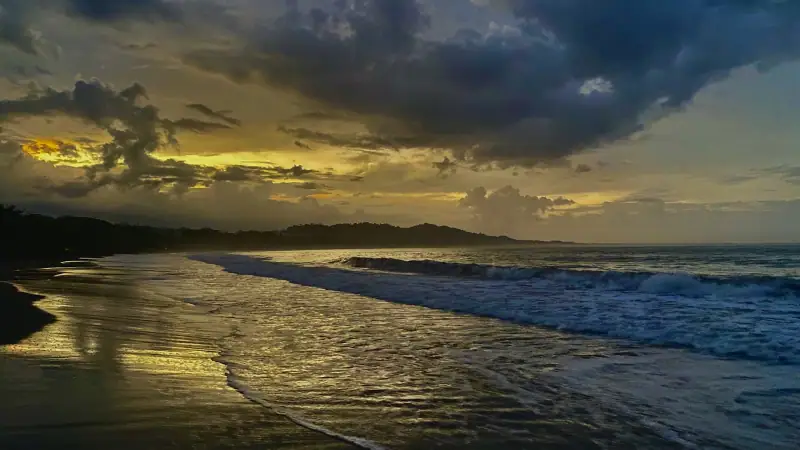
The beach road linking Puerto Viejo to Manzanillo is the area’s main axis. It is best covered by bike, which is almost every visitor’s favorite way to get around. Allow 45 minutes to 1 h 30 to link the two ends, depending on your pace, stops and swims.
Playa Puerto Viejo
The village’s own beach, directly in front of the center, is lined by a lively promenade of restaurants, bars and small shops. It is mainly visited for the Salsa Brava (see the surf section below). Swimming is not recommended for non-swimmers because of currents and the submerged reef.
Playa Cocles
About 2 kilometers (1.2 mi) east of the village center, Playa Cocles is the liveliest beach in the area. The golden-brown sand stretches for nearly 2 km, with more accessible surf conditions than Salsa Brava. Outside the surf zones, calm areas allow swimming. A cluster of restaurants, cafés and accommodation sits next to the beach. This is where many travelers base themselves.
Playa Chiquita
Farther south, Playa Chiquita is a series of small coves separated by rocks. The water is often calmer than at Cocles, and dense vegetation creates shaded areas. Some spots are excellent for snorkeling. The Jaguar Rescue Center (see the wildlife section) is in the Playa Chiquita area.
Punta Uva
Considered by many the most beautiful beach in the area, Punta Uva is a long curve of sand between two jungle-covered rocky headlands. The water is remarkably calm and clear, ideal for family swimming and snorkeling. An easy hiking trail goes around the rocky headland north of the beach with fine sea views. Punta Uva is quieter than Cocles, an excellent option for those seeking calm.
Manzanillo
The end of the beach road, the village of Manzanillo is a fishing hamlet at the end of a road lined with jungle, about 13 km (8 mi) from Puerto Viejo. The village goes to sleep very early and has only a few places to stay and eat. But its proximity to the Gandoca-Manzanillo National Wildlife Refuge makes it an ideal base for hikers and divers. The beaches beyond Manzanillo, reachable on foot, are among the most remote and wild in the region.
Gandoca-Manzanillo National Wildlife Refuge
At the southern end of the beach road, the Gandoca-Manzanillo National Wildlife Refuge protects about 9,000 hectares (22,000 acres) of coastal rainforest, mangrove swamps, seagrass beds and coral reefs. It is one of the richest sites for biodiversity on Costa Rica’s Caribbean coast, and one of the least visited by tourists.
Hiking in the coastal jungle
From the village of Manzanillo, a hiking trail follows the coast south through the coastal forest to several isolated wild beaches. The trail is marked but not developed: bring sturdy water-resistant closed-toe shoes and insect repellent. Wildlife is abundant: spider monkeys and howler monkeys, sloths, and a variety of coastal birds. Allow about 2 to 3 hours round trip to the first isolated beaches.
Snorkeling and diving on the reef
The Manzanillo coral reef is one of the few healthy coral reefs on the whole Costa Rican Caribbean coast. Snorkeling from Manzanillo beach reveals remarkable marine life: sea turtles (leatherbacks nest from March to July, peaking in April-May; green turtles are present from July to October), stingrays, small nurse sharks and a wide variety of tropical fish. Dive operators based in Puerto Viejo offer boat trips to the most interesting spots in the refuge.
Sea turtle watching
The Gandoca-Manzanillo refuge is one of the most important leatherback (Dermochelys coriacea) nesting sites in Costa Rica, with the main season between March and July. Local conservation organizations run supervised night outings to watch the nesting, an unforgettable experience, to be booked with licensed operators to ensure your visit respects nest protection protocols.
Activities in Puerto Viejo and Manzanillo
Diving, snorkeling, turtle watching and jungle excursions.
The Jaguar Rescue Center
The Jaguar Rescue Center is a wildlife rehabilitation center in the Playa Chiquita area, a few kilometers from the center of Puerto Viejo. Despite its name, it hardly deals with jaguars anymore (very rare on the coast), but takes in, treats and rehabilitates hundreds of injured, orphaned or trafficked wild animals each year.
What to see and do at the center
Guided visits (booking ahead recommended, especially in high season) let you see two-toed and three-toed sloths in rehabilitation, toucans, howler monkeys, opossums, reptiles, birds in recovery cages and various wild cat species. Guides explain each animal’s story and the rehabilitation process.
The center also offers short- and long-term volunteer programs for those who want to get directly involved in animal care (check current conditions with the center), an experience popular with travelers staying several weeks in the area.
Practical: guided visits generally take place in the morning. The center is reachable by bike from Puerto Viejo in about 20 to 30 minutes along the beach road.
Surfing in Puerto Viejo: the legendary Salsa Brava
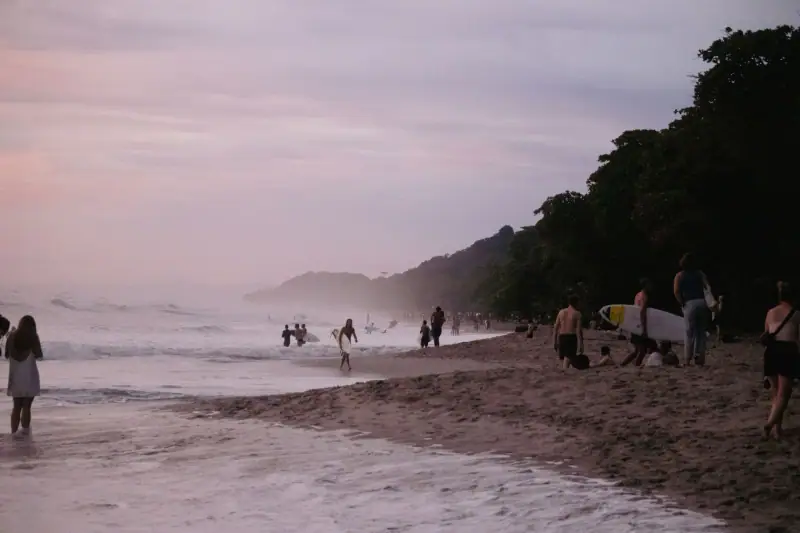
Puerto Viejo is famous in the surfing world for the Salsa Brava wave, a powerful right and left breaking over the coral reef right in front of the village. The wave is active mainly from December to March, when the North Atlantic swell brings regular sets.
Salsa Brava for the experienced
Salsa Brava is reserved for top-level surfers. The wave breaks very hollow over shallow coral, and wipeouts can be dangerous. It attracts local and international surfers who come specifically for this wave when conditions are good. Watch from the beach before getting in the water, and talk to locals or your host to judge the day’s conditions.
Where to learn to surf in Puerto Viejo
For beginners and intermediates, Playa Cocles is by far the best option in the area. Waves there are less powerful and longer, the bottom is sand, and several surf schools offer lessons. A first group surf lesson generally lasts 2 hours and includes equipment, a good introduction on the Caribbean coast.
Afro-Caribbean culture and food
One of Puerto Viejo’s most distinctive experiences is culinary. The Afro-Costa Rican cooking of the Caribbean coast is radically different from standard national cuisine: it blends Jamaican, Creole and indigenous Bribri influences, with coconut milk, spices and tropical fruit at the center.
Specialties to try
- Rice and beans: made with coconut milk (not to be confused with the “gallo pinto” of the rest of the country), this is the basic dish of the Caribbean coast, often served with fish or stewed chicken.
- Rondón (rundown): the quintessential Creole dish, a stew simmered in coconut milk with fish, seafood, yam, green banana and spices. It takes several hours to prepare and is served only in certain local places, often on weekends.
- Pan bon: dense, fruity bread made with candied fruit, typical of Afro-Costa Rican culinary tradition, sold in local bakeries.
- Patí: small spicy turnover filled with meat or fish, an emblematic street snack of the Caribbean coast.
- Agua de sapo: the local refreshing drink, made with ginger, cane sugar and lime, perfect in the heat.
- Local cacao: the Talamanca region is one of the most renowned cacao-growing areas in Costa Rica. Several farms nearby offer cacao tasting tours, from tree to chocolate.
The town has several small family restaurants (“sodas”) serving these specialties in a friendly atmosphere. The village market and weekend street stalls are ideal for tasting authentic local food. To go further in Costa Rican food, see our guide to Costa Rican cuisine.
Car rental for the Caribbean coast
A vehicle gives you freedom to reach Cahuita, Limón and the whole coast.
Don’t-miss trip: Cahuita National Park
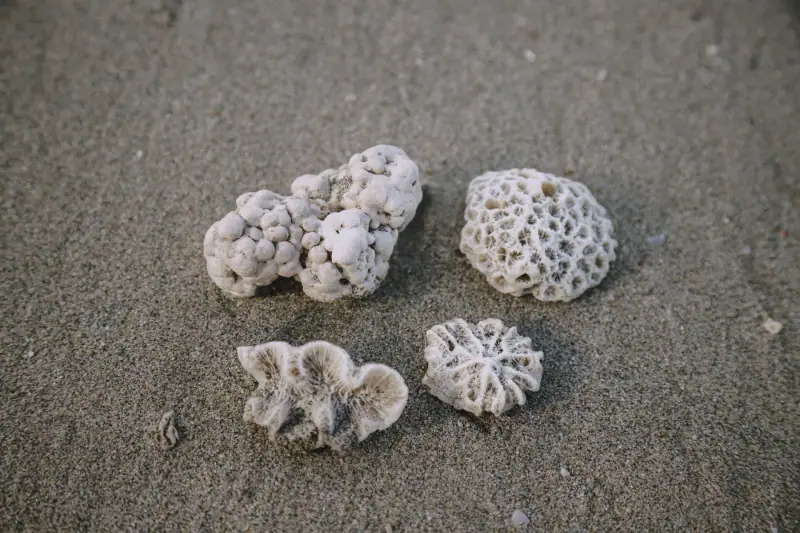
About 16 km (10 mi) north of Puerto Viejo (about 20-25 minutes by car or bus), Cahuita National Park is one of the most beautiful nature reserves on Costa Rica’s Caribbean coast. This small park protects about 1,100 hectares (2,700 acres) of coastal forest and some 22,400 hectares (55,000 acres) of marine environment, including about 600 hectares (1,480 acres) of coral reef, one of the few still-healthy reefs in the country.
Cahuita’s coastal forest
An easy coastal trail of about 8 km (5 mi) crosses the forest between the main Kelly Creek entrance (at the entrance of Cahuita village) and Puerto Vargas beach (the park’s north entrance). The trail runs along the beach and through forested areas where howler monkeys and spider monkeys are frequently seen, along with raccoons (mapaches), sloths and many tropical bird species.
The Kelly Creek entrance is by voluntary donation, an uncommon arrangement in Costa Rican parks, which adds to the relaxed atmosphere of Cahuita village. The Puerto Vargas entrance (north side) charges national rates. Our guide to Cahuita National Park details prices, hours and guided snorkeling.
Cahuita’s coral reef
Cahuita’s coral reef is considered the largest protected coral reef in all of Costa Rica. Snorkeling around Punta Cahuita (the rocky point separating the park’s two beaches) reveals abundant underwater life. Local operators rent snorkeling gear and offer boat trips on the reef. The best visibility is generally in the dry season (September-October and March-April), when there are fewer sediments in the water.
The Bribri community and indigenous tourism
Beyond the beaches and Afro-Costa Rican culture, the Talamanca region is home to a Bribri indigenous territory, one of the best-preserved indigenous peoples in Costa Rica. Several Bribri families in the Talamanca valley villages offer authentic cultural visits and immersion stays.
Typical Bribri tours include a canoe trip on the Yorkin River, a visit to a cacao farm run using traditional methods (fermentation, artisanal roasting, preparation of ceremonial hot chocolate), and an introduction to the forest’s medicinal plants. These visits are arranged directly with community families, a concrete way to support the local indigenous economy.
Almost all of these excursions are reachable through local operators in Puerto Viejo or directly through Bribri community associations. Plan a full day, clothes that can get wet and a good dose of curiosity.
Where to stay in Puerto Viejo
Puerto Viejo has a varied range of accommodation, from budget jungle bungalows to charming beachfront lodges. The style of lodging is generally more colorful, more relaxed and more rooted in the tropical environment than on the Pacific coast.
Beach and jungle area
Most “Caribbean lodge” style accommodation is between Playa Cocles and Punta Uva, along the beach road. Wooden bungalows on stilts, tropical gardens, hammocks, and often a pool or direct beach access. Places in this category generally charge between €70 and €200 (about $80-230) a night depending on standard.
Village center
To be within walking distance of everything (restaurants, bars, bike rentals, supermarkets), central Puerto Viejo offers guesthouses and small hotels at more affordable rates, often between €35 and €80 (about $41-93) a night. Ideal for travelers who want to immerse themselves in the local village buzz.
Hostels
Puerto Viejo has several hostels well known among backpackers. Dorms start around €12-18 (about $14-21) per person. A friendly atmosphere is guaranteed, with plenty of exchanges with other travelers, and often excellent tips for local activities.
Manzanillo and seclusion
If you want absolute peace and do not mind the lack of nightlife, a few places in the Manzanillo area or off the main road offer total immersion in nature. Be sure to book ahead in high season.
Puerto Viejo in your Costa Rica itinerary
Puerto Viejo is ideal for combining with San José (entry and exit point) and a Pacific destination, to enjoy the country’s two contrasting coasts.
2-week itinerary: two coasts
- Days 1-2: San José (airport, historic center)
- Days 3-5: La Fortuna / Arenal Volcano (volcanoes, hot springs)
- Days 6-8: Monteverde (cloud forest, ziplines)
- Days 9-11: Manuel Antonio (parks, Pacific beaches)
- Days 12-14: Puerto Viejo (Caribbean, beaches, jungle)
This circuit requires a return to San José from Puerto Viejo (about 4 h) to catch your flight.
Express Caribbean itinerary (4-5 days)
If you have little time but absolutely want to see the Caribbean coast, a 4 to 5-day stay in Puerto Viejo with one day in Cahuita is enough for a good introduction. From San José, you can also go through Braulio Carrillo National Park on Route 32, one of the most spectacular roads in the country, crossing thousands of meters of high-altitude humid rainforest without ever stopping.
For a full itinerary of the country, see our Costa Rica road trip guide and our article on the differences between the Pacific and the Caribbean to refine your choice.
Practical tips for visiting Puerto Viejo
Bikes: bike rental is cheap in Puerto Viejo (around $8-15 a day depending on the shop), and it is by far the best way to explore the beach road to Manzanillo. Bikes are available in many places downtown. Check the tires and brakes before setting off.
Money: there are ATMs in Puerto Viejo and a few businesses accept bank cards. For small local restaurants, beach vendors and shared taxis, it is better to have colones in cash. Avoid exchanging money locally if possible, as rates are less favorable than in San José.
Network and connection: internet is available in most accommodations and cafés downtown, but can be unstable depending on the weather. Mobile coverage is good in town, patchier on jungle trails and in Manzanillo. Check your carrier’s international plan or use a travel eSIM before you go.
Local transport: shared taxis (local buses) serve the road between Puerto Viejo and Manzanillo regularly, a cheap way to reach the different beaches if you have not rented a bike. Individual taxis are also available in the village for trips to Cahuita.
Insects and health: bring an effective insect repellent, especially if you plan forest hikes or stay in accommodation without mosquito nets. For health questions, ask your doctor or a travel clinic, and see the official travel health pages (CDC in the US, TravelHealthPro in the UK).
Beach safety: never leave personal belongings unattended on the beach. Some beaches in the area have lateral currents; respect the flags and local advice on swimming conditions.
Atmosphere and pace: Puerto Viejo runs on Caribbean time. Restaurants, shops and activity providers sometimes open later than announced, close early or change their hours without notice. This is a feature of the place, not a flaw. Adopt the local rhythm and take delays with a smile.
Puerto Viejo de Talamanca is not a destination that tries to impress. It does not have the country’s most visited national parks, the most spectacular volcanoes or the most Instagram-staged beaches. What it offers (an authentic Caribbean atmosphere, preserved coastal biodiversity, a living Afro-Costa Rican culture and some of the wildest beaches in the country) is far rarer and far more lasting. Pura Vida.
To prepare your full stay, read our complete Costa Rica guide and our article on Costa Rica’s biodiversity.
Frequently asked questions
How long should you spend in Puerto Viejo?
Plan at least 3 to 4 days to enjoy Puerto Viejo and its surroundings fully. A stay of 5 to 7 days is ideal to explore the village, bike along the beaches to Manzanillo, visit the Jaguar Rescue Center, take a trip to Cahuita and try surfing or snorkeling. Beach lovers often stay much longer.
What is the best time to visit Puerto Viejo?
Costa Rica's Caribbean coast has the opposite climate calendar to the Pacific coast. There is no true dry season; the relatively drier periods are February to March and September to October, the most recommended times for the beaches. December to March is the high tourist season, with less rain and the best Salsa Brava waves for surfing. The rainy season (May-August and November) brings frequent but short showers, and the vegetation is even lusher.
How do you get to Puerto Viejo from San José?
By car, the trip from San José takes about 4 hours (about 200 km / 125 mi) via Route 32 then coastal Route 36 from Limón. The road is fully paved and passable with any vehicle. By bus, direct MEPE services leave from the MEPE terminal (Barrio México) in San José, taking about 4 h 30 to 5 h. Expect several departures a day (about six according to the latest published schedules); check times and departure point with MEPE before you travel.
Is Puerto Viejo safe for tourists?
Puerto Viejo is an established tourist destination and generally safe in busy areas. As anywhere touristy, take a few precautions: do not leave anything of value visible in your car or on the beach, do not wear conspicuous jewelry, and avoid walking alone late in the evening on poorly lit streets. The village center and busy beaches by day remain pleasant and lively. Ask your accommodation about areas to avoid in the evening.
Do you need a car in Puerto Viejo?
Not necessarily. The village of Puerto Viejo and its beaches as far as Manzanillo (about 13 km / 8 mi) are accessible by bike, which is the most popular and pleasant way to travel between them. Bike rentals are easy to find in town. Shared taxis also serve the beach road. A car is useful for trips to Cahuita (about 16 km / 10 mi north, 20-25 min by car) or the Talamanca jungle.
Where is the Salsa Brava wave?
The Salsa Brava wave forms over the reef right in front of the center of Puerto Viejo village, a few hundred meters from the main beach. It is one of the most powerful and hollow waves in Central America, breaking over coral. It is reserved for experienced surfers. For beginners, Playa Cocles (about 2 km / 1.2 mi east of the center) offers more forgiving conditions.
More Costa Rica guides
Keep reading
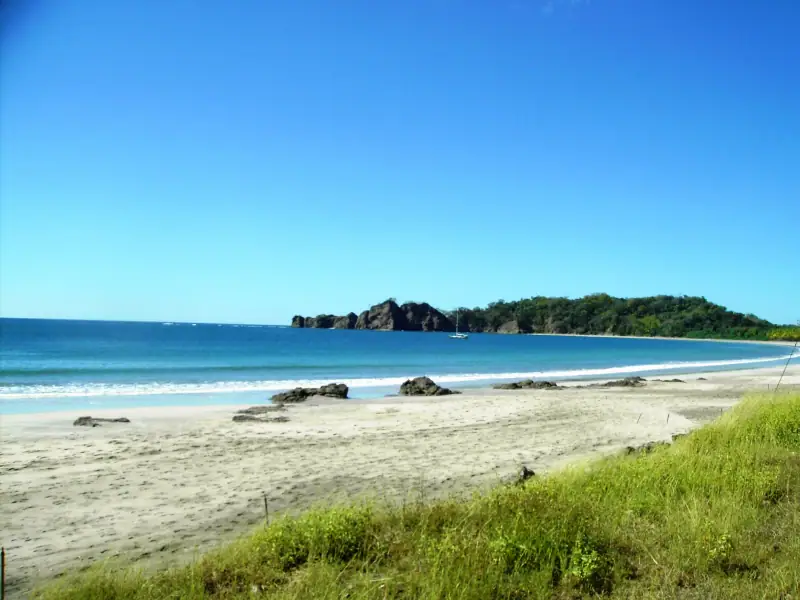
Visiting Guanacaste: a complete guide to Costa Rica's northern Pacific
Complete Guanacaste guide: beaches, volcanoes, national parks, surf, sea turtles and Pura Vida. Everything you need to plan your stay.
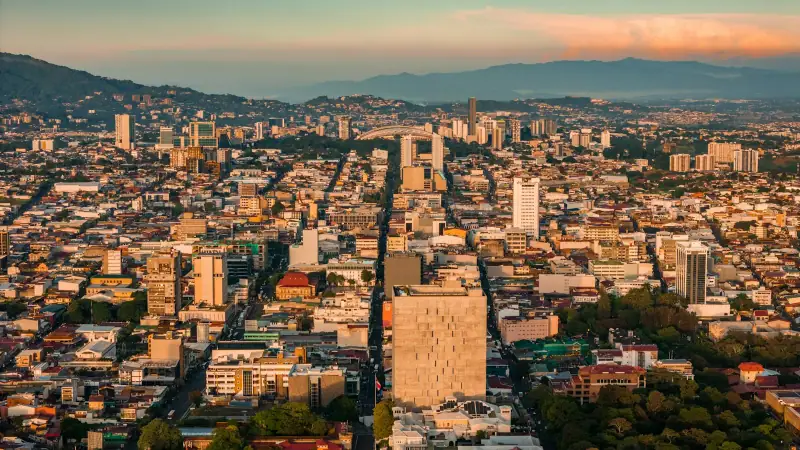
San José, Costa Rica: the capital's top sights
What to see in San José: museums, neighborhoods, markets and food in Costa Rica's capital. A guide to spending 1 to 3 days there.
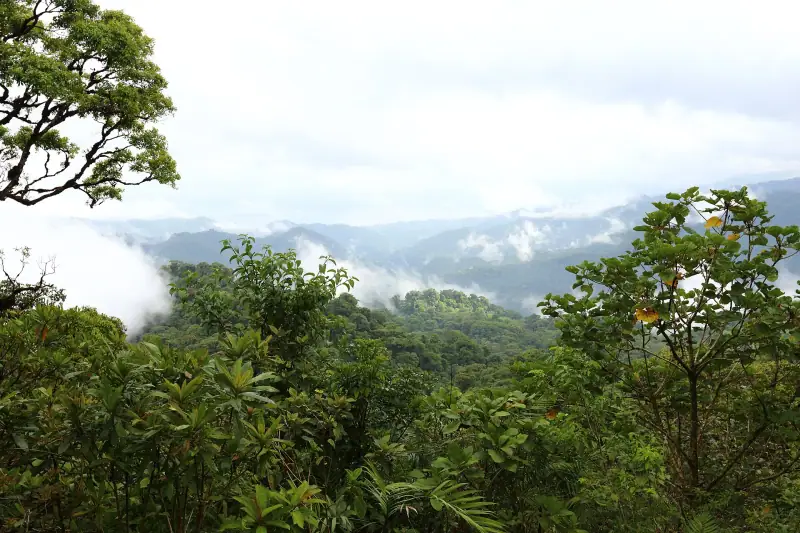
Visiting Monteverde: a complete guide to Costa Rica's cloud forest
Everything about visiting Monteverde: cloud forest reserves, ziplines, hanging bridges, wildlife, where to stay and practical tips.
Ready-made
Costa Rica itineraries
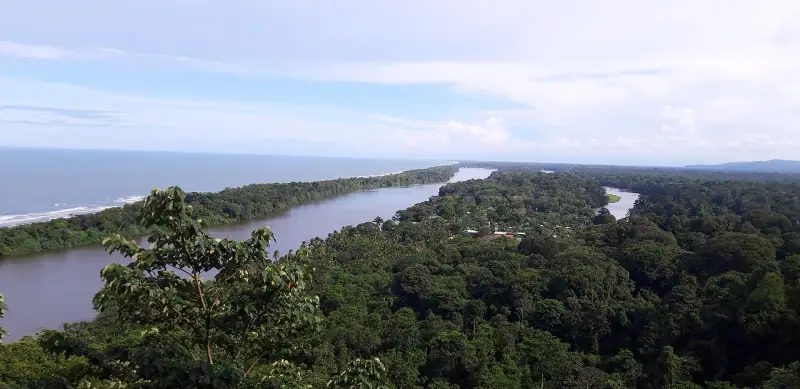
10 days
Costa Rica in 10 days: an itinerary from the Caribbean to the volcanoes
TortugueroPuerto ViejoLa FortunaMonteverde
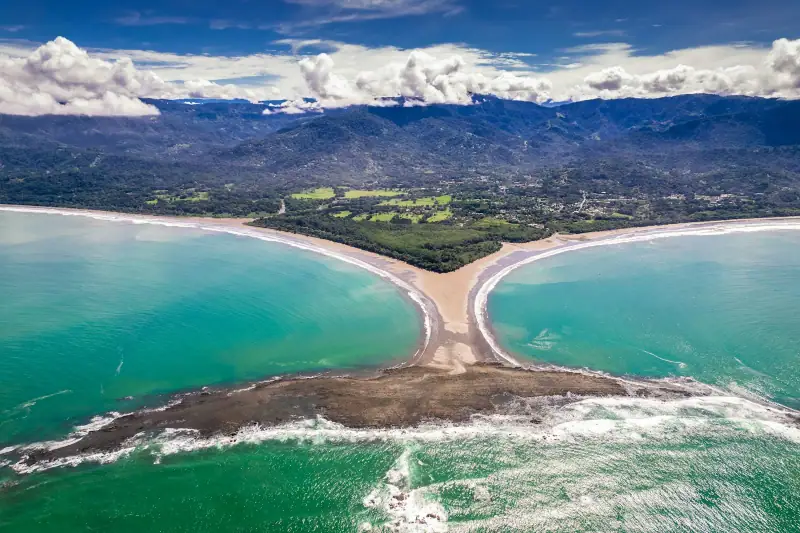
14 days
Costa Rica road trip: the grand tour in 2 weeks
14-day Costa Rica road trip by 4x4: from volcanoes to beaches, Caribbean to Pacific. Full itinerary with road tips and where to stay.
10 days
Costa Rica in 10 days without a car: a realistic shuttle and bus itinerary
San JoséLa FortunaMonteverdeManuel AntonioSan José