What to see
Visiting Corte: a complete guide to Corsica's inland capital
We may earn a commission when you book through links on this page, at no extra cost to you. We don't visit or try the places we cover: we summarize published sources. How we work
In short
- Two days are ideal: citadel, Museum of Corsica and old town on the first, the Restonica gorges and lakes on the second.
- Corte is 83 km (52 mi, 1 h 30) from Ajaccio and 68 km (42 mi, 1 h) from Bastia by the N193; the CFC train also stops here.
- Since the November 2023 floods, cars cannot go beyond the Tuani campground in the Restonica; a seasonal shuttle runs to Tragone, then you walk to Grotelle.
- The hike to Lake Melo (1,711 m / 5,613 ft) takes 45 to 60 minutes up from Grotelle; Lake Capitellu (1,930 m / 6,332 ft) adds 45 minutes with chains.
Corte is a town that surprises. Perched at 396 meters (1,300 ft) of altitude at the crossroads of two gorges, the Restonica and the Tavignano, it is the only town in the interior of Corsica with a genuine urban identity. Its citadel, planted on a sheer rocky peak above the old town, is one of the most striking silhouettes on the island. Below, paved lanes, a university, students who liven up the cafés, and everywhere a strong awareness of what Corsica is and has been.
Corte is not just a picturesque town. It is the political and cultural heart of the island. Pasquale Paoli made it the capital of the Corsican Republic from 1755 to 1769, the only independent republic in Corsican history, with a constitution before most European states. The university he founded there in 1765, dissolved by France after the conquest and refounded in 1981, still bears his name. In Corte, history is not just in museums: it is in the walls, in the conversations, in the flags. To understand this identity better (language, polyphony, traditions), read our article on Corsican culture.
This guide helps you discover Corte in all its facets: the historic town, the wild mountains, and the soul of an island like no other.
The Corte Citadel: sentinel on its peak
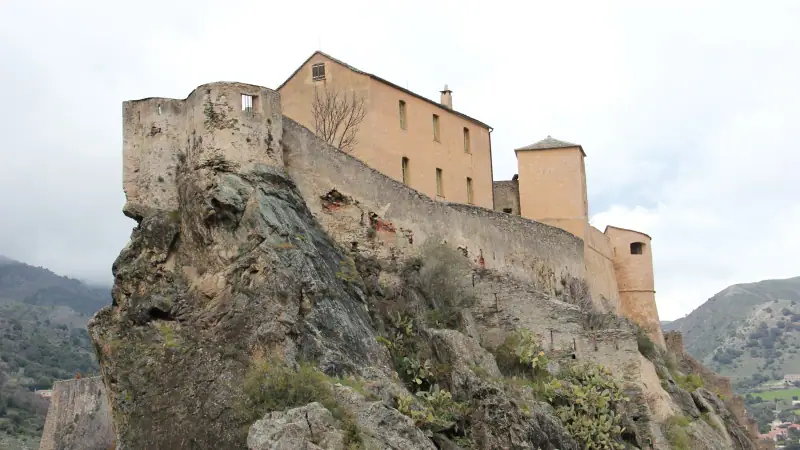
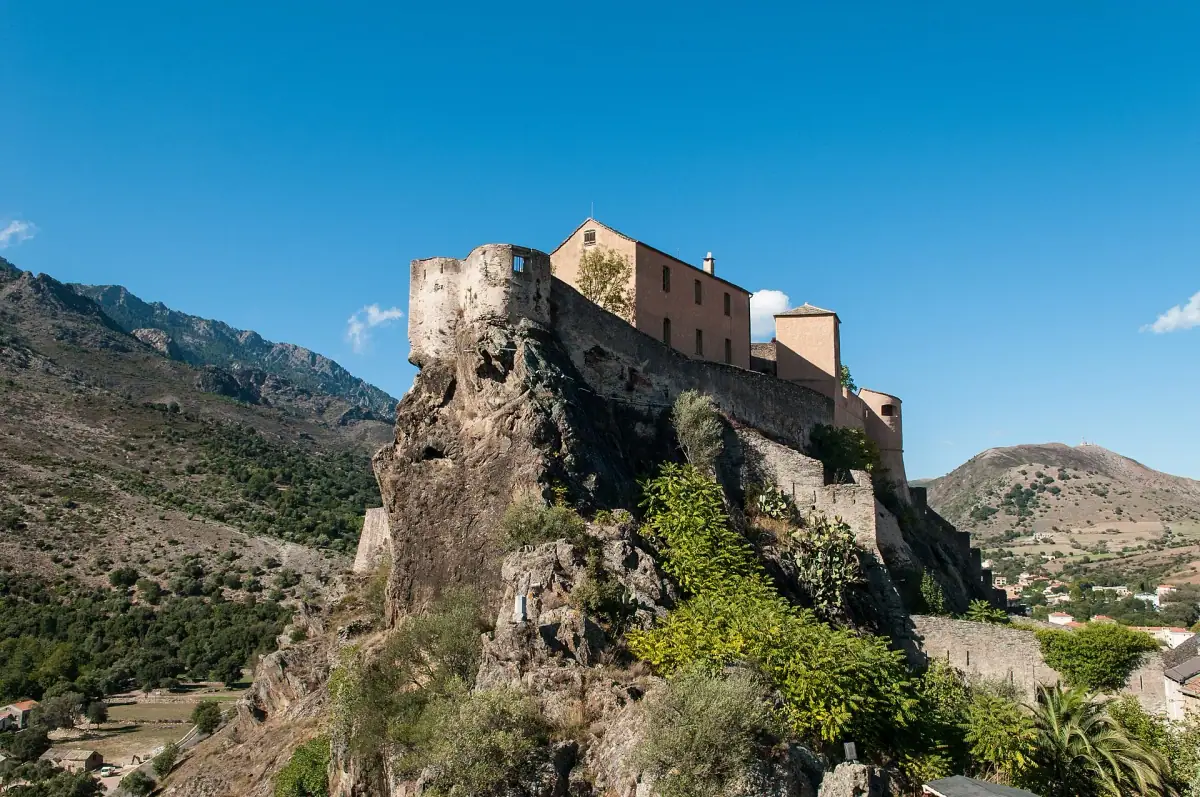
The Corte citadel is the emblematic image of the town. Built in 1419 by Vincentello d’Istria, viceroy of Corsica representing the Crown of Aragon, it occupies the top of a rocky peak that rises abruptly in the center of the town. Its position is dizzying: on three sides, cliffs plunge sheer onto the gorges; on the fourth, a steep path once gave access. Today, a built staircase climbs to the citadel from Place Gaffori.
The castle and the eagle’s nest
The citadel has two distinct parts: the castle proper (the medieval keep) and the lower bastion around it. The castle, called the “eagle’s nest”, is the oldest part. Its thick walls and arrow slits testify to a military architecture designed to withstand prolonged sieges. From the top of the keep, the 360° view over the Corsican mountains is one of the most impressive on the island; in clear weather, you can see ridges rising above 2,700 meters (8,860 ft).
The citadel houses the Museu di a Corsica within its walls, making it a doubly interesting site: military architecture on one side, ethnographic and historical collections on the other.
The Museu di a Corsica (Museum of Corsica)
Opened in 1997 in the Serrurier Barracks (built in the 19th century inside the citadel), the Museu di a Corsica is one of the best regional museums in France. Not to be confused with the Palazzu Naziunale (National Palace), a building separate from the citadel where Pasquale Paoli had established the government of the Corsican Republic. Its permanent collections explore the island’s history, ethnology and culture through objects, tools, works of art and archive documents.
The exhibition on Corsican pastoral life is particularly striking: it recreates the transhumance, cheese and charcuterie making techniques, and the practices of 19th-century Corsican shepherds. Another section is devoted to the island’s political history, from the Corsican Republic to French integration.
The museum also offers temporary exhibitions that change each year, often focused on lesser-known aspects of island culture.
Price: around €4 to €6 (~$5 to $7) per adult. Open all year (closed Monday outside summer): check prices and hours with the museum before you come.
Guided tours of Corte
Discover the citadel and the history of the Corsican capital with a knowledgeable guide.
The old town and the spirit of Pasquale Paoli
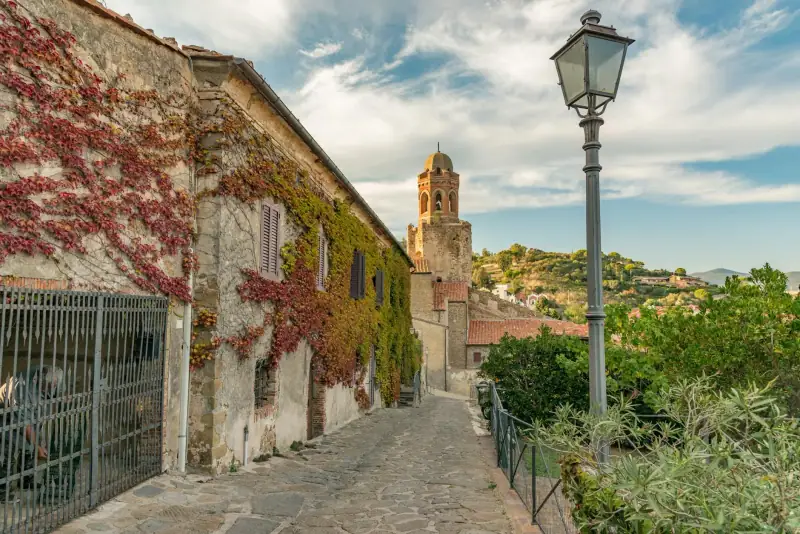
Corte’s old town is organized around Place Gaffori, dominated by the statue of Jean-Pierre Gaffori, hero of Corsican independence. The houses around the square still bear the marks of musket balls embedded in the facades, souvenirs of the fighting of 1746 in which Gaffori defended the town besieged by the Genoese.
Place Gaffori and its surroundings
Place Gaffori is the historic heart of Corte. This is where the main cafés are concentrated and where residents meet in the evening. The atmosphere is different from the coastal towns: fewer tourists in the evening, more students and residents, a slower and more authentic rhythm of life.
From the square, several paved lanes climb toward the citadel. These picturesque streets, sometimes so narrow that they only get sun at midday, are lined with houses with colored shutters and small signs in the Corsican language.
The National Palace
The National Palace, where Pasquale Paoli’s government sat (the museum itself is in the citadel), is visible from the street climbing to the citadel. Its sober facade recalls the austere character of the Corsican Republic, which had little time to build lavish monuments before the French conquest of 1769.
The University of Corsica Pasquale Paoli
The University of Corsica, refounded in 1981 after 212 years of absence, welcomes about 4,500 students. Its presence transforms the atmosphere of the town outside the summer months: Corte is the only Corsican town where you feel real university life, with its bookshops, lively cafés and youth from all over the island and the mainland.
The university notably offers courses in Corsican language and culture, making Corte a center for the preservation and study of the island language.
The Restonica gorges: hiking to the lakes
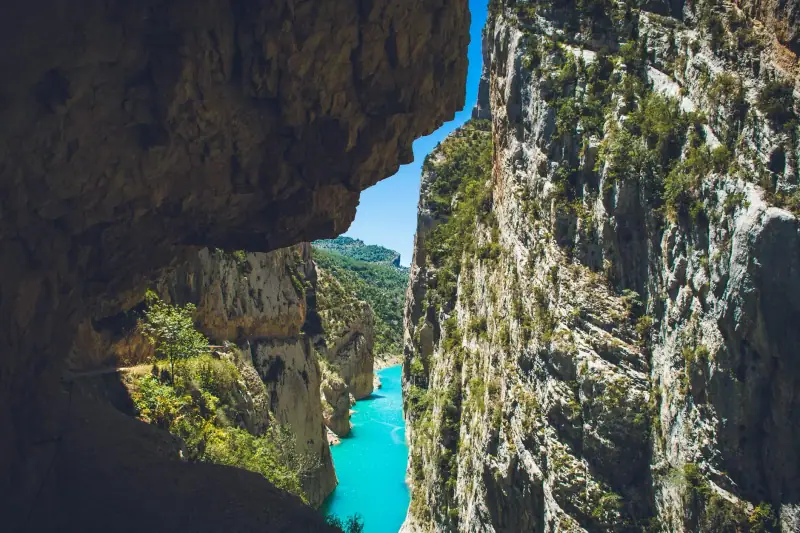
The Restonica gorges are Corte’s flagship natural attraction and one of the most beautiful hikes in Corsica. The D623 road climbs the gorge for about 15 km (9 mi) to the Grotelle sheepfold (1,375 m / 4,510 ft of altitude), the starting point for trails to the high-altitude lakes. Since the November 2023 floods, however, it is closed to vehicles beyond the Tuani campground: a seasonal shuttle leaves Corte station for Tragone, then you must walk to Grotelle.
The trail to Lake Melo (1,711 m / 5,613 ft)
Lake Melo is the first and most accessible goal. From the Grotelle sheepfold, the yellow-marked trail climbs steadily through granite rocks, laricio pines and green alders for 45 to 60 minutes. The lake appears suddenly, blue-green in its setting of rock walls, one of the most beautiful mountain landscapes in the Mediterranean.
Swimming is allowed and enjoyed in summer, even though the water temperature stays cool (around 15-18 °C / 59-64 °F in August). A shepherd keeps a sheepfold at the lakeside in season and offers fresh sheep’s cheese.
What to know:
- Elevation gain: about 340 m (1,115 ft) from the Grotelle sheepfold
- Round-trip time: about 2 h from Grotelle (including 1 h to 1 h 15 uphill), to be added to the approach walk from Tragone
- Difficulty: moderate, accessible to families with children of 8-10 in good shape
- Equipment: closed hiking shoes essential, the rocks are slippery in wet weather
The climb to Lake Capitellu (1,930 m / 6,332 ft)
For more experienced hikers, continuing to Lake Capitellu (1,930 m / 6,332 ft) takes 45 more minutes from Lake Melo. The trail becomes more technical: chains fixed in the rock help with the steepest sections. Lake Capitellu, dark and enclosed by its sheer walls, gives off a wilder and lonelier atmosphere than Melo.
In clear weather, the ridges above the lake rise above 2,600 meters (8,530 ft), an alpine panorama that contrasts with images of Corsican beaches.
Practical tips for the gorges
In season: cars now only reach the start of the valley (Tuani). A shuttle leaves Corte station for Tragone (ask the Corte Tourist Office for 2026 dates and prices). Leave early to avoid the crowds.
Off season: the road can be closed by snow or ice from October to April depending on the year, and the shuttle does not run.
Water: Mountain torrents in the gorges are generally clean, but drink only the water from your own bottle on hikes.
Car rental in Corte
Essential to explore the Restonica gorges and the Tavignano at your own pace from Corte.
The Tavignano gorges: the secret hike
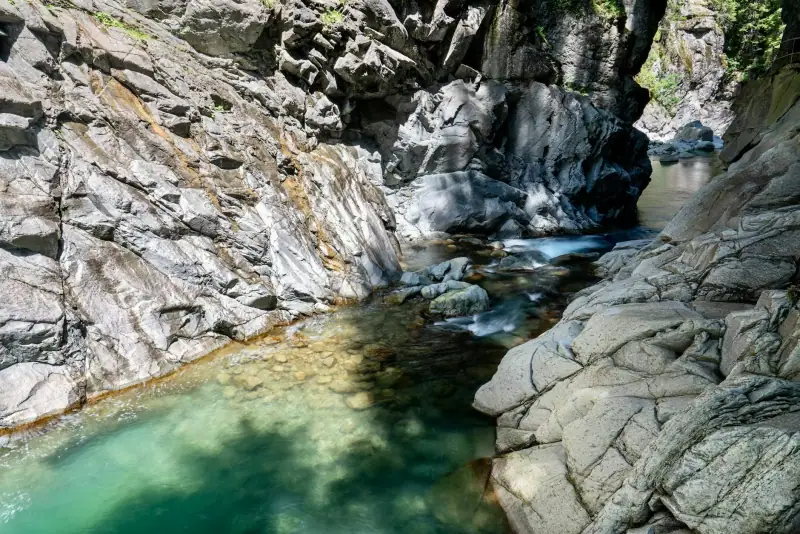
Less known than the Restonica gorges, the Tavignano gorges are nonetheless one of the most beautiful hikes in Corsica and have the advantage of being reachable directly on foot from the center of Corte.
The orange-marked trail starts from the citadel (via the Sainte-Croix chapel) and descends to the Tavignano river before climbing the gorges. The hike is long (about ten kilometers / 6 mi to the Sega hut on the GR20, allow 3 h 30 to 4 h one way) and demands more physical commitment than the Restonica, but it rewards with almost guaranteed solitude and spectacular scenery: orange granite walls, turquoise Tavignano water, natural pools to swim in.
For a first visit, be content with the first 2-3 kilometers (1-2 mi; about 1 h one way), which already give a good idea of the gorge without requiring half a day of walking. The natural pools of the Tavignano, reachable without going too deep into the gorge, are perfect for a freshwater swim.
Nature around Corte: the heart of the island
Corte is the natural starting point for exploring the Regional Natural Park of Corsica (PNRC), which covers about 40% of the island. The town is its most logical gateway for anyone who wants to combine culture and mountains.
The GR20: the legendary hike
The GR20, considered one of the hardest long-distance trails in Europe, crosses Corsica from north (Calenzana) to south (Conca) over the highest ridges and passes. The section around Corte, notably the Monte Rotondo sector (2,622 m / 8,602 ft), is among the wildest and most isolated.
Corte is an important stop for GR20 hikers who come down from the ridges to resupply, rest and recover. The town’s lodging (gîtes, hostels) is used to welcoming walkers with big packs.
Our complete GR20 guide gives you all the details to prepare this legendary hike.
The Vergio pass and the Aïtone forest
About 50 km (31 mi) west of Corte by the D84, the Vergio pass (1,477 m / 4,846 ft) is the highest road pass in Corsica. It gives access to the magnificent Aïtone forest, a forest of centuries-old laricio pines that offers shaded hikes and breathtaking alpine landscapes. In winter, the pass hosts a small cross-country ski area.
The road from Corte to the pass crosses Corsican mountain landscapes of great beauty: chestnut trees in the valley bottoms, laricio pines on the slopes, gray-pink granite below the ridge line.
Corsican food in Corte
Corte’s cuisine is that of the island’s interior: more mountain-based, more rustic, and often more authentic than what you find by the sea. The restaurants of the old town offer menus built around traditional Corsican products.
Specialties to taste
Inland charcuterie: Pigs raised free-range in the Corsican chestnut groves give the island’s best charcuterie. Coppa (dried loin), lonzu (dried fillet), pancetta and myrtle sausages are tasted as starters in nearly every Corte restaurant.
Brocciu: This fresh sheep or goat cheese, protected by an AOC since 1998 (a European PDO since 2003), is the base of many Corsican dishes: brocciu fritters (fritelli), brocciu tart (fiadone), brocciu ravioli. In Corte it is often fresher than by the sea because the mountain sheepfolds are close.
Chestnut and pulenda: In Corte’s hinterland, the chestnut is historically the staple food. Pulenda, a kind of chestnut-flour polenta cooked in a big cauldron, is a rural specialty to try at autumn village festivals.
Mountain wines: The Corsican wines of the interior (AOP Corse appellations) are less known than those of the coast, but producers around Corte offer powerful reds, sometimes aged at altitude, with notes of garrigue and black fruit.
Where to eat
The center of Corte has several restaurants and brasseries around Place Gaffori. For an authentic meal, look for places that display Corsican menus (rather than pizzas) and work with local producers. Farm-table dinners in the surrounding villages (Évisa, Vivario, Venaco) are often the most memorable food experience of the region.
For a broader view of Corsican cuisine, our guide to Corsican food lists the specialties to taste on the island.
Hotels and lodging in Corte
From hostel to mountain charm: compare and book with free cancellation.
Getting to Corte: scenic train or car
The CFC train: an experience in itself
The Chemins de Fer de la Corse (CFC) links Ajaccio to Bastia across the island through the center, and crossing the Corsican mountains by train is one of the most spectacular rail experiences in France. The Ajaccio-Corte trip takes about 2 h; Bastia-Corte about 1 h 40 (check timetables and any works before leaving). The train goes over viaducts, through tunnels cut in the rock, along rivers and out onto unexpected alpine panoramas.
For rail fans, it is a journey in itself, whatever the destination.
The car: freedom and access to the gorges
The car remains the most practical way to explore Corte and its surroundings, especially to reach the Restonica gorges and the mountain passes. The N193 links Corte to Ajaccio (83 km / 52 mi, about 1 h 30) and to Bastia (68 km / 42 mi, about 1 h). Mountain roads in the area are often narrow and winding, and careful driving is recommended, especially on the D623 of the Restonica gorges.
Practical tips for visiting Corte
Lodging: Corte has a good range of lodging: boutique hotels, gîtes and a hostel popular with GR20 hikers. Book ahead for June to September. Outside the summer season, the town is easy to book last minute. Neighborhoods and addresses are detailed in our guide where to stay in Corte.
When to go: May-June and September are the best periods. The Restonica gorges are accessible, nature is at its best, and the July-August crowds are absent. The town keeps university activity until June, which gives it a pleasant atmosphere.
Budget: Corte is clearly cheaper than the coastal towns. Restaurants have reasonable prices, lodging is more affordable than in Porto-Vecchio or Bonifacio, and the main attractions (hikes, old town) are free.
Altitude and weather: At 396 m (1,300 ft), Corte is cooler than the coast, especially in the evening. In May and September, bring a light jacket for evenings. In the mountains (Restonica gorges, GR20), weather changes can be quick, so always carry a windbreaker even in summer.
Corsican language: In Corte more than elsewhere, Corsican is present in daily life: bilingual signs, conversations in Corsican in the cafés, a university that teaches the language. A simple “Bonghjornu” (hello) is appreciated by residents.
To plan a full stay on the island, see our complete guide to Corsica or our comparison of Corse-du-Sud and Haute-Corse to choose the region that suits you best.
Frequently asked questions
How long do you need to visit Corte?
Two days are ideal: the first to explore the citadel, the Museum of Corsica and the old town, the second for a hike in the Restonica gorges to Lakes Melo and Capitellu. If you only have one day, combine a morning in town with an afternoon in the gorges.
How do you get to Corte from Ajaccio or Bastia?
From Ajaccio, allow about 1 h 30 on the N193 (83 km / 52 mi). From Bastia, about 1 h 15 on the same national road (68 km / 42 mi). The Chemins de Fer de la Corse (CFC) train links Ajaccio to Bastia via Corte, a scenic trip of about 2 h from Ajaccio and about 1 h 40 from Bastia (check timetables and any works on the CFC website), with spectacular views of the interior mountains.
Can you do the Restonica gorges without being an experienced hiker?
The trail to Lake Melo (1,711 m / 5,613 ft) is accessible to anyone in good physical condition: 45 to 60 minutes of climbing from the Grotelle sheepfold, which must now be reached on foot from Tragone (more than 2 hours of extra walking). Continuing to Lake Capitellu (1,930 m / 6,332 ft) takes 45 more minutes and a more technical passage (chains). Closed hiking shoes in all cases.
When is the best time to visit Corte?
May-June and September are the best periods. The town is enlivened by university students outside summer, the light is beautiful, and the Restonica gorges are accessible without the July-August traffic jams. In winter, snow can close access to the gorges and the surrounding passes.
Is the Museum of Corsica worth a visit?
Absolutely. The Museu di a Corsica, housed in the Serrurier Barracks inside the citadel, is one of the best regional museums in France. Its collections on Corsican history, ethnology and culture let you understand the island from an angle the coast does not reveal. Allow 1 h 30 to 2 h to enjoy it.
Can you drive into the Restonica gorges?
Not all the way up any more. Since the November 2023 floods, which damaged the road (D623) and swept away the Tragone bridge, traffic is banned for vehicles beyond the Tuani campground (except residents and professionals with a pass). In season, a shuttle runs from Corte station to Tragone (in 2025, from May 2 to September 28); you then continue on foot to the Grotelle sheepfolds. Check conditions and 2026 dates with the town hall or the Corte tourist office.
Is Corte a good base to explore inland Corsica?
It is the best base for the mountains. From Corte you reach, in under an hour, the Restonica gorges, the Tavignano gorges, the Vergio pass (1,477 m / 4,846 ft) and several sectors of the GR20. The town has varied lodging and a more authentic atmosphere than the coastal resorts.
More Corsica guides
Keep reading
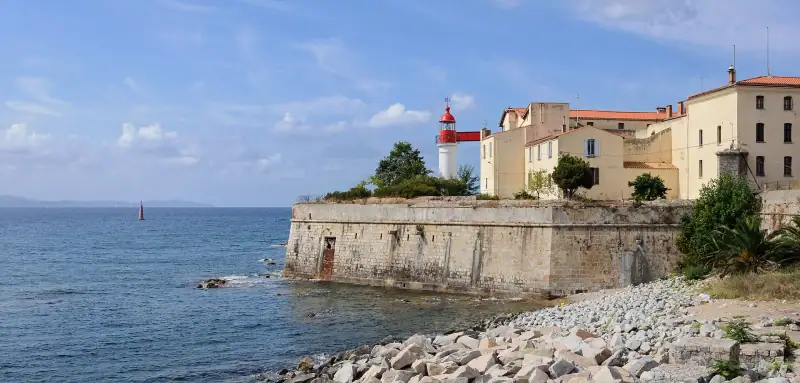
Visiting Ajaccio: a complete guide to the capital of Corsica
Everything to visit Ajaccio: Maison Bonaparte, Fesch Museum, Sanguinaires Islands, old harbor and beaches. A practical guide to Corsica's capital.
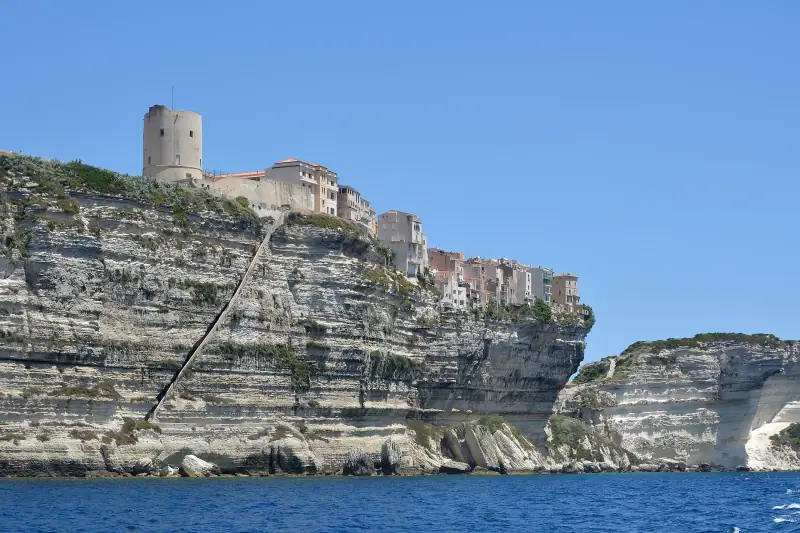
Visiting Bonifacio: a complete guide to the city of the cliffs
Genoese citadel, white cliffs, sea caves and the Lavezzi Islands: a complete guide to visiting Bonifacio, Corsica's most spectacular town.
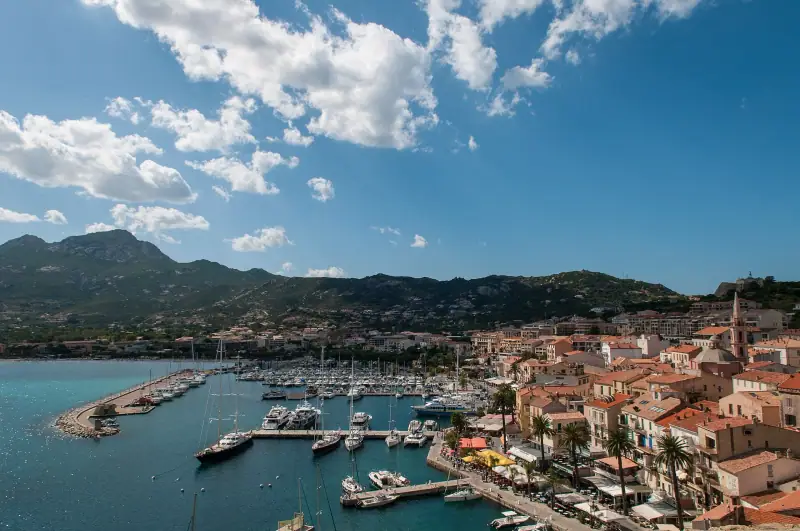
Visiting Calvi: a complete guide to the pearl of Balagne
Visit Calvi: Genoese citadel, 4.5 km beach, Revellata, the beach train and the GR20. A complete practical guide for staying in Calvi, Corsica.
Ready-made
Corsica itineraries
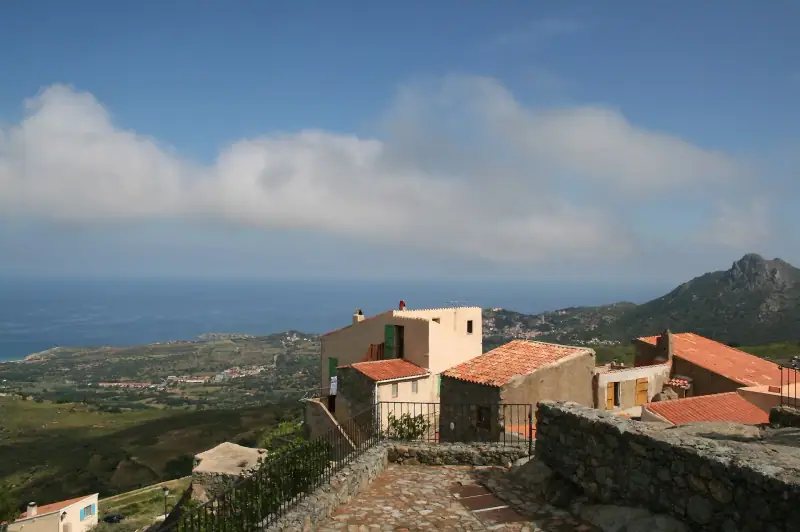
5 days
5 days in Balagne: Calvi, L'Île-Rousse and the perched villages
5-day Balagne itinerary: Calvi, L'Île-Rousse, Sant'Antonino, Pigna. Perched villages, beaches, olive oil and the beach train. A complete guide.
10 days
Corsica in 10 days: a complete itinerary around the Island of Beauty
A 10-day Corsica itinerary around the whole island: Bastia, Cap Corse, Balagne, Ajaccio, Bonifacio, Porto-Vecchio and the mountains.
14 days
Corsica road trip: a 10 to 14 day itinerary to see it all
The ultimate Corsica road trip in 10 to 14 days: the best route through the island's beaches, villages, mountains and food.