What to see
Visiting Maio: Complete Guide to Cape Verde's Wild Island
We may earn a commission when you book through links on this page, at no extra cost to you. We don't visit or try the places we cover: we summarize published sources. How we work
In short
- Maio is a flat island of about 269 km² (104 sq mi) with about 7,000 residents, long empty beaches and salt flats, and little tourist infrastructure.
- Loggerhead turtles nest on its beaches from June to October; join only guided night outings run by local associations.
- Reach Maio from Praia (Santiago) by a 20 to 30 minute flight or a ferry of 2 to 3 hours; no flights come directly from Europe.
- Best season is November to June (24 to 28 °C / 75 to 82 °F); a double room in a guesthouse runs about €25 to €60 (about $29 to $70).
In the Cape Verde archipelago, some islands shine in the brochures with all their beaches. Others, less known and less photographed, prefer to wait patiently for those who can look beyond the obvious. Maio belongs to this second category. A flat island, a wild island, a silent island, Maio is one of the last large islands of Cape Verde not to have succumbed to mass tourism, and that is precisely what makes it a treasure for the travelers who discover it.
A neighbor of Santiago across the water but so different in spirit, Maio covers about 269 km² (104 sq mi) in the Sotavento group (Leeward Islands). Its terrain is among the flattest in the archipelago: no spectacular volcanoes, no dramatic calderas. What Maio has is of another nature: dozens of kilometers of empty beaches among the most beautiful in Africa, salt flats visited by flamingos, crystal-clear waters offshore, and a Creole ease of living that the more touristy islands lost long ago.
Maio in brief
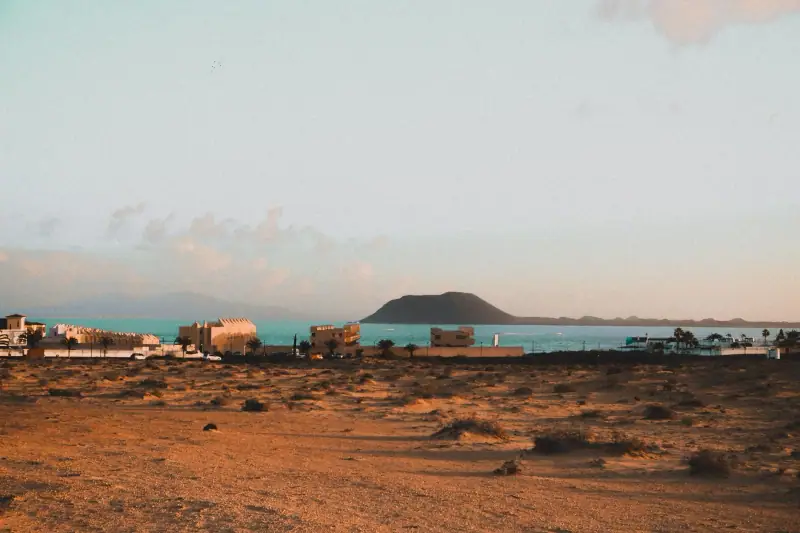
Maio was one of the first islands of the archipelago to be settled after the Portuguese discovered Cape Verde in the 15th century. Its name is said to come from the month of May, the supposed time of its discovery, although historical sources differ on this point. For centuries, the island was best known for its immense salt flats, which supplied salt to Atlantic trade routes, a decisive trade that shaped the island’s whole economy.
Today Maio has about 7,000 residents, spread between the capital Vila do Maio (also called Porto Inglês) and about ten villages scattered around the coast and in the interior. Fishing, subsistence farming and, to a lesser extent, emerging tourism are the main economic activities.
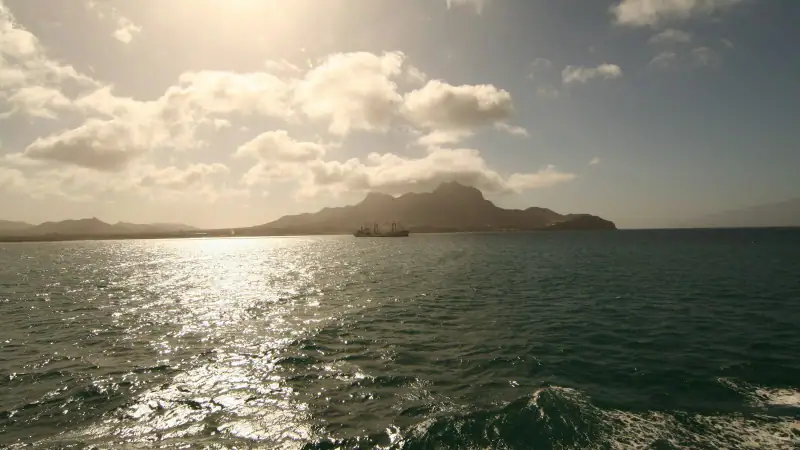
The terrain. Unlike the more rugged neighboring islands, Maio is essentially flat. The interior is occupied by a central plain of low vegetation (thorny acacias, euphorbias, dry grasses) that contrasts with the coastal edges where white sand and turquoise water reign. The island’s highest point, Monte Penoso, rises only 436 meters (1,430 ft). This modest relief gives Maio a particular character: an open island, where the sky is immense, the horizon is everywhere, and Cape Verde’s light spreads without obstacle.
The atmosphere. Maio lives to the slow rhythm of the sea and tides. Fishermen leave before dawn in their colorful boats, women sell fresh fish in the village squares, and children play soccer on the beach in the late afternoon. The atmosphere is relaxed, and time seems stretched. For travelers used to the frantic pace of the big tourist islands, adjusting to Maio sometimes takes a few hours, and then you settle in naturally.
Flights to Cape Verde and Maio
Compare flights to Praia or Sal, then the domestic connections to Maio.
Maio’s beaches, a still little-known treasure
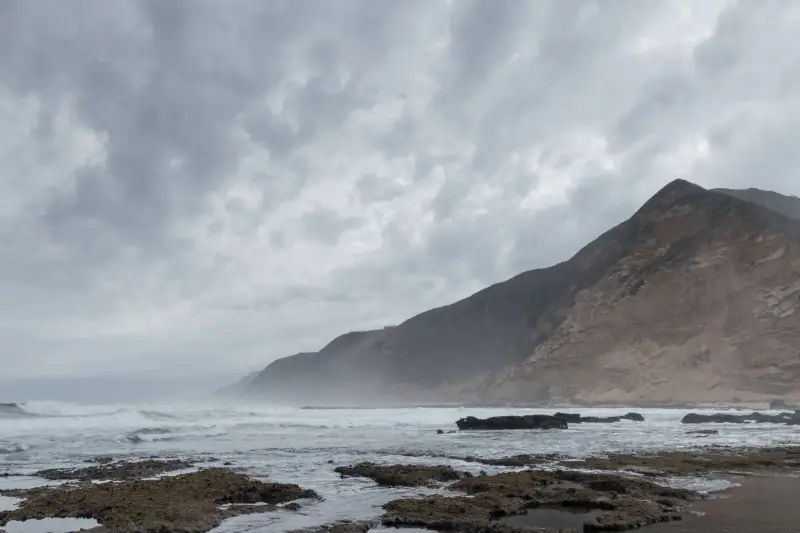
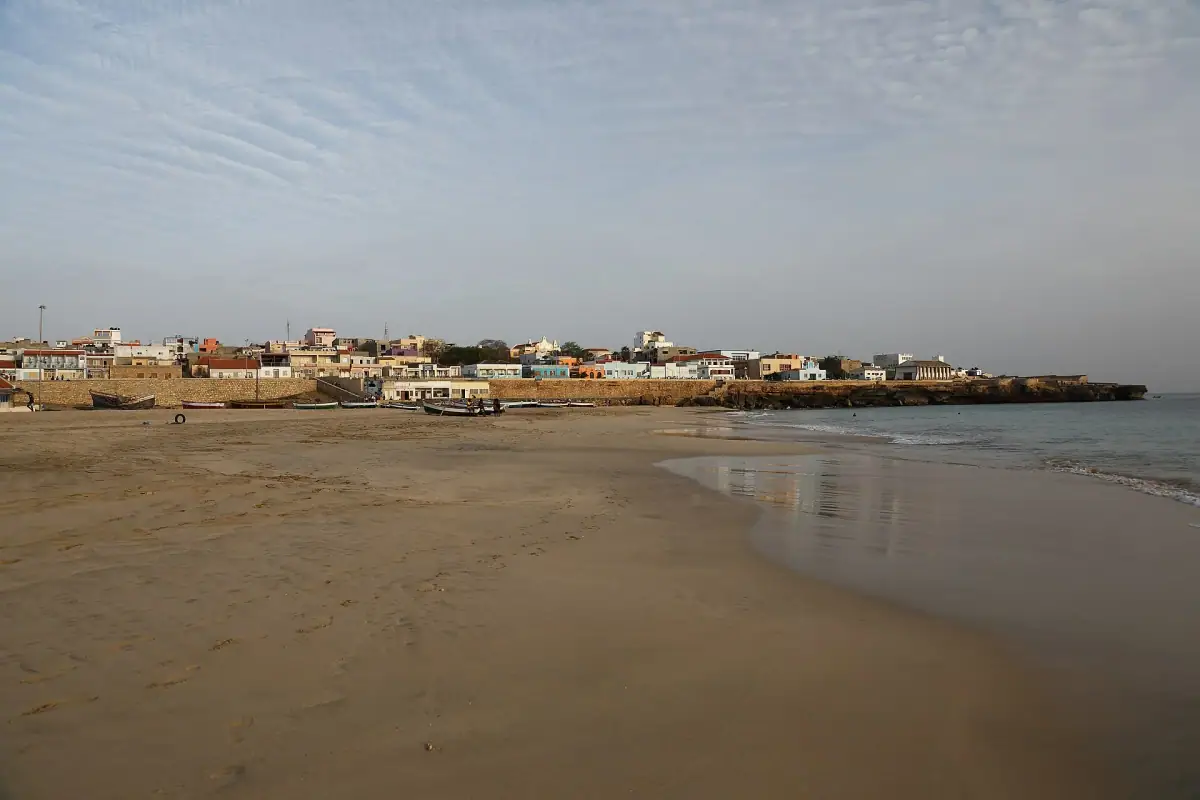
If Maio deserves a place apart in the Cape Verde archipelago, it is first for its beaches. The island has an exceptional sandy shoreline, with dozens of kilometers of fine white-sand beaches stretching along the island’s west and north coasts, most of them entirely empty.
Praia de Morro, the emblematic beach
Located a few kilometers north of Vila do Maio, Praia de Morro is the island’s best-known and most accessible beach. It is a long stretch of white sand edged by shallow water in shades of turquoise and emerald. The beach is also an important nesting site for loggerhead turtles (Caretta caretta) between June and October; at night, on guided outings, you can watch females come to lay their eggs in the sand.
The north coast, kilometers of solitude
Maio’s north coast is a succession of nearly pristine beaches, reachable on foot, by bike or by off-road vehicle from Vila do Maio. These stretches of fine sand, bathed in remarkably clear water, rarely host more than a few tourists at a time, and often no one at all. For a traveler seeking solitude and untouched natural beauty, it is a spectacle hard to match in the archipelago.
The sea on the north coast can be rougher in some seasons, with a swell driven by the trade winds. Ask locally about conditions before swimming in isolated areas.
Santana bay and fishing village
Located on the island’s northwest coast, near the village of Morrinho, Santana bay shelters an authentic fishing village. The beach is darker and the scenery less spectacular, but the atmosphere has a rare authenticity. Colorful boats pulled up on the sand, nets drying in the sun, children diving from the rocks: everything gives the impression of a Cape Verde that tourism has not yet touched.
The waters of Santana bay are relatively calm and well sheltered, a good option for family swimming or snorkeling from shore.
The salt flats: flamingos and a landscape of salt
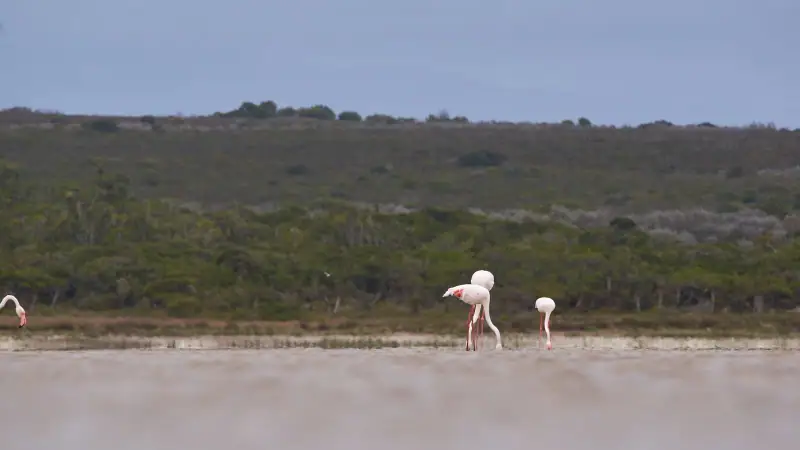
One of Maio’s most unusual sights, and perhaps in the whole Cape Verde archipelago, lies in the interior of the island. The Maio salt flats are vast naturally occurring salt expanses that take on shades from pure white to pale pink, by way of ocher and mauve, depending on salt concentration and light. A lunar, unforgettable landscape.
These salt flats are an ideal habitat for several bird species, the most spectacular of which is undoubtedly the greater flamingo (Phoenicopterus roseus). Flamingos visit Maio’s salt flats from time to time, drawn by the micro-organisms that thrive in the hypersaline water. Their presence is occasional and not guaranteed, but seeing them in this near-desert setting, with the blue of the sea in the background, is a memorable experience.
Besides flamingos, Maio’s salt flats attract many migrating shorebirds, herons, egrets and terns. For birdwatchers, Maio is among the best destinations in the archipelago.
Excursions and activities on Maio
Turtle-watching outings, birdwatching at the salt flats, boat excursions: discover the activities available on Maio and across Cape Verde.
Sea turtles, a rare natural spectacle
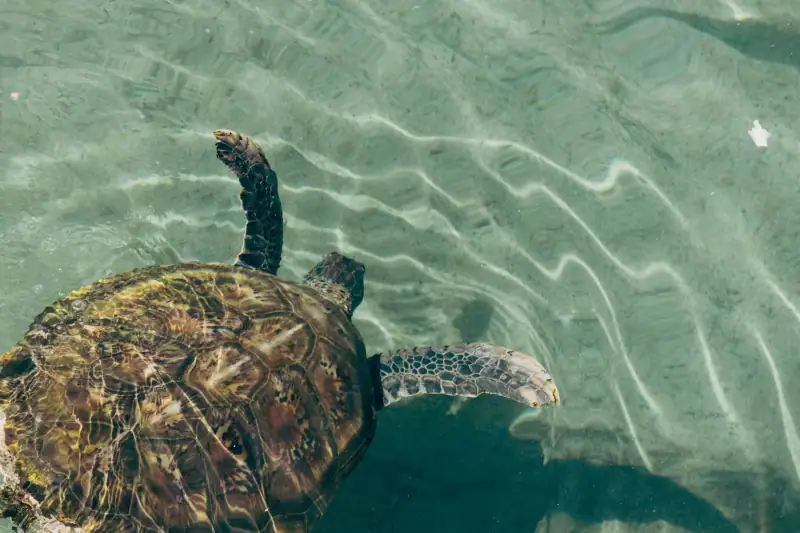
Maio is one of the archipelago’s most important nesting sites for the loggerhead turtle (Caretta caretta), a vulnerable species on the IUCN Red List. Every year, between June and October, adult females come to lay their eggs on Maio’s beaches, continuing a ritual millions of years old.
Local conservation associations work to protect these nests, in collaboration with national and international volunteer observers. These associations offer eco-responsible night observation outings that let visitors witness egg-laying or hatching with full respect for the animals: no bright artificial light, no noise, distance maintained. It is one of the most moving moments Maio can offer a traveler.
A few important rules for observing turtles:
- Join only outings led by approved associations
- Never approach nests without a guide
- Don’t use a white flashlight; red light is tolerated at low intensity and from a distance
- Don’t use camera flash
- Never touch the turtles or the eggs
- Don’t trample marked nesting areas
Ask on arrival in Vila do Maio about the associations active this season; locals can point you in the right direction.
Hikes and exploring the interior
Maio is not a high-mountain island, but it lends itself remarkably well to easy hikes, bike rides and exploring the interior. The flat topography makes getting around easy, and the tracks linking villages let you cross the island from end to end without great physical difficulty.
Hiking from village to village
One of the most popular routes is the north-south crossing (or the reverse) linking the villages of the east coast to the beaches of the west coast. This one-day walk crosses very varied landscapes: an arid inland plain dotted with acacias, small farming hamlets growing corn and legumes, salt flats, coastal wetlands, and finally the coast’s immense beaches.
Monte Penoso
For those who want a bit of elevation, climbing Monte Penoso (about 436 m / 1,430 ft) from one of the nearby villages offers a 360-degree panorama over the whole island and the sea. In clear weather, the island of Santiago is visible on the horizon (Santiago is about 49 km / 30 mi away). The climb is accessible to any walker in good condition; allow 2 to 3 hours round trip depending on the starting point.
Cycling the island’s tracks
Maio’s topography makes it an ideal destination for cycling. Laterite tracks (sometimes in poor condition) cross the interior and let you reach villages at your own pace. Bikes can be rented informally in Vila do Maio; ask at your accommodation.
Vila do Maio, the quiet capital
Vila do Maio, also known as Porto Inglês, is the island’s capital, with about 3,000 residents. Its English name recalls the British merchants who used this port as a stopover in the 18th and 19th centuries, drawn by the salt trade.
The town is pleasant to explore on foot: a few streets paved in Portuguese calçada, a central square that comes alive at the end of the day, a white colonial church, a small fishing port and a waterfront shaded by tamarisks. The pace is slow, and residents are curious and welcoming toward the few foreigners who take the time to stop.
The Vila do Maio market is the living heart of the town. You find the morning’s fish, local vegetables, fruit and Cape Verdean regional products. Saturday is the busiest day, when residents of the inland villages come for their weekly shopping.
The port. The small port of Vila do Maio is busy early in the morning when the fishing boats return. It is the ideal place to watch local life in all its authenticity, buy fish directly from fishermen and strike up conversations with residents.
Car rental on Maio
Explore Maio's beaches and villages freely with a rental car. Compare offers from the airport.
Food on Maio
Maio’s cooking is the cooking of fishermen and farmers: simple, fresh, generous. No fine dining, but family-run places where you eat well and simply.
Grilled fish (peixe grelhado) is the highlight. Tuna, grouper, snapper, wahoo, caught that same morning and grilled over embers, served with rice, milho (cornmeal) and spiced red beans. Simple and memorable.
Cachupa, the Cape Verdean national dish, is prepared here with partly local ingredients: dried corn, beans, cassava, sweet potato. The evening version (cachupa rica) is more generous, with meat or fish added. The morning version (cachupa guisada), reheated with an egg, is the island’s traditional breakfast.
Lobster and crab are Maio specialties, available in Vila do Maio at some restaurants depending on the day’s catch. If you are lucky enough to find them on the menu, don’t pass them up; Cape Verdean lobster is of rare quality.
Grogue (sugarcane spirit) and ponche (grogue with lime and cane sugar) are the traditional drinks to sip in the evening on the waterfront, watching the sunset over the Atlantic.
How to get to Maio and get around
By air
Maio Airport (IATA code: MMO) is located a few kilometers from Vila do Maio. Domestic flights operate from Praia (Santiago), Cape Verde’s main air hub, with short flight times (about 20 to 30 minutes). The operators serving this route (TACV or CVSky, the new state airline being rolled out) change regularly, so check the operating airline and availability when you book.
International flights land in Praia (Santiago) or Sal (island of Sal). Praia is the most direct connection to Maio.
By ferry
A regular ferry service links Praia (Santiago) to Vila do Maio. The crossing generally takes 2 to 3 hours depending on sea conditions and the type of boat. This option is cheaper than flying and lets you enjoy the seascape, but it can be uncomfortable in heavy weather.
Check schedules and frequency in Praia before counting on this option, as services can change.
Getting around the island
By car. Renting a car is the most practical option for exploring beaches and villages freely. The island is small, and the main paved roads link the main points of interest. To reach some isolated beaches, a vehicle with good ground clearance is preferable.
By taxi. Taxis operate from Vila do Maio and can take you to the main beaches and villages. Negotiate fares in advance; prices are generally very reasonable compared with the more touristy islands.
By aluguer. Local shared taxis serve the island’s villages on informal schedules. An economical and authentic option for travelers without a vehicle.
On foot or by bike. For short distances from Vila do Maio, walking and cycling are perfectly suited. The flat island makes non-motorized travel easy.
Where to stay on Maio
Accommodation on Maio is limited but full of personality, like the island. There are no big international resorts, only family guesthouses, bed-and-breakfasts and a few tourist residences in Vila do Maio and the main coastal villages.
Prices are generally lower than on touristy islands like Sal or Boa Vista. A double room in a decent guesthouse generally rents for 25 to 60 euros (about $29 to $70) a night, sometimes with breakfast included. For tight budgets, very basic options also exist.
A few practical tips for your accommodation:
- Book ahead in high season (December to February and July to August), since supply is limited
- Ask for a room with a view of the sea or the main square to enjoy the local atmosphere
- Your accommodation is often the best source of information on the island: owners know all the spots, the local guides and the week’s activities
- Lodgings near the port are handy for watching the fishing departures at dawn
Places to stay on Maio
Guesthouses, residences and hotels in Vila do Maio and across the island. Compare availability and prices.
Practical information
Currency. The Cape Verdean escudo (CVE) is the local currency. Maio has ATMs in Vila do Maio, but in limited numbers. Arrive with cash in euros or in CVE obtained in Praia; small businesses generally don’t accept bank cards.
Language. Cape Verdean Creole is the everyday language, and Portuguese the official language. Basic Portuguese is much appreciated. English is little spoken outside the emerging tourism sector.
Connectivity. Internet is available in Vila do Maio, but the connection can be slow. In the inland villages and on isolated beaches, plan to be offline, which on Maio is more an advantage than a drawback.
Health. A health center in Vila do Maio handles routine care. For any serious emergency, transfer to Praia is necessary. Travel insurance covering medical repatriation is essential. Protect yourself from the sun (the light is intense) and from dehydration.
Water. Don’t drink tap water. Bottled water is available in Vila do Maio’s shops. Bring a filter bottle for hikes in isolated areas.
Safety. Maio is one of the safest islands in Cape Verde. Crime there is almost nonexistent. Still, keep an eye on your belongings on isolated beaches and avoid leaving valuables unattended.
Time zone. UTC-1.
Entry requirements. Cape Verde has entry formalities that depend on your passport. Check the official Cape Verde government site before you book. For more information, see our guide to entry formalities for Cape Verde.
A 4-day itinerary on Maio
Day 1: Arrival and Vila do Maio
Arrive at Maio airport or at the port of Vila do Maio from Praia. Settle into your guesthouse. Explore the center of Vila do Maio on foot: main square, fishing port, covered market. First Cape Verdean dinner with the fish of the day and ponche on the waterfront. Sunset over the Atlantic from the port.
Day 2: North beaches and sea turtles
Morning: excursion to the north-coast beaches. Swimming, snorkeling, walking on the empty stretches. Picnic on the beach. Return to Vila do Maio in the late afternoon. If you are here between June and October: night turtle-watching outing with a local association; book as soon as you arrive.
Day 3: Salt flats and birdwatching
Morning: trip to the Maio salt flats at sunrise (the low light is ideal for photography). Watch for flamingos and migratory birds. Hike through the island’s interior to reach a central village. Lunch with a local family or at a village restaurant. Afternoon: walk or bike ride toward the northwest coast, Santana and its authentic fishing village.
Day 4: Monte Penoso and departure
Early morning: hike to Monte Penoso for the panorama of the whole island. Return to Vila do Maio. Shopping at the market: artisanal grogue, salt from the salt flats, local products. Final lunch with lobster or grilled fish. Transfer to the airport or port for the connection to Praia.
Maio is an island that doesn’t try to seduce you with artifice. It has no beach clubs or all-inclusive resorts, no disco or commercial strip. What it offers is rarer and, for those who are receptive to it, far more precious: beaches of absolute beauty, a disarmingly kind people, perhaps flamingos at dawn over the salt flats, and giant turtles that return to lay eggs each summer on the same beaches, as they have for millennia. Maio is Cape Verde as it was before the whole world discovered it.
To plan your trip in the archipelago, see our complete guide to Cape Verde, our article on island hopping and our advice on the best time to visit.
Frequently asked questions
How do you get to the island of Maio?
There are no direct flights from Europe to Maio. The island has an airport (IATA code: MMO) served by domestic flights from Praia (Santiago), Cape Verde's main gateway. Regular ferries also link Praia to Maio in about 2 to 3 hours depending on conditions. On an international trip, you land first in Praia or Sal and then take a domestic connection.
Is Maio really worth the trip?
Yes, if you are looking for an authentic, quiet, unspoiled island. Maio does not have the tourist infrastructure of Sal or Boa Vista, but in exchange it offers empty beaches of exceptional beauty, salt flats (flamingos included), wild nature and remarkably hospitable residents. It is an island for travelers who want to get away from the commercial circuits.
Are there sea turtles on Maio?
Yes, Maio is one of Cape Verde's most important nesting sites for the loggerhead turtle (Caretta caretta). The nesting season runs mainly from June to October. Conservation associations organize eco-responsible night observation outings, which let you watch this rare natural spectacle up close without disturbing the animals. It is important to join these guided outings to protect the nests.
When is the best time to visit Maio?
The best period is November to June, with dry weather, sun and temperatures between 24 and 28 °C (75 and 82 °F). The sea is generally calm and good for swimming and snorkeling. From July to October, the rainy season brings rare showers, some humidity and a rougher sea, but it is also the turtle nesting season, which attracts naturalists. Avoid August if you don't like strong heat.
Can you kitesurf on Maio?
Yes, Maio has favorable kitesurfing conditions in some coastal areas, thanks in particular to the steady trade winds that sweep the archipelago between November and June. Conditions are, however, less regular and less developed than on Sal (Kite Beach) or Boa Vista. The island suits intermediate or experienced riders who want to explore a still-wild setting. Ask about local spots in Vila do Maio.
Do you need a visa to visit Maio?
Maio is part of Cape Verde, so the national entry rules apply. Requirements depend on your passport, so check the official Cape Verde government website (including its online EASE portal) before you book. Bring a passport with sufficient validity, travel insurance and proof of accommodation. For all the details, see our guide to entry formalities for Cape Verde.
Where should you stay on Maio?
Accommodation on Maio is modest and authentic: family guesthouses, a few tourist residences and bed-and-breakfasts in Vila do Maio and the main coastal villages. No large resort has yet spoiled the island, which is precisely its charm. Rates are generally lower than on Sal or Boa Vista. Book ahead in high season (December to February), since supply is limited.
More Cape Verde guides
Keep reading
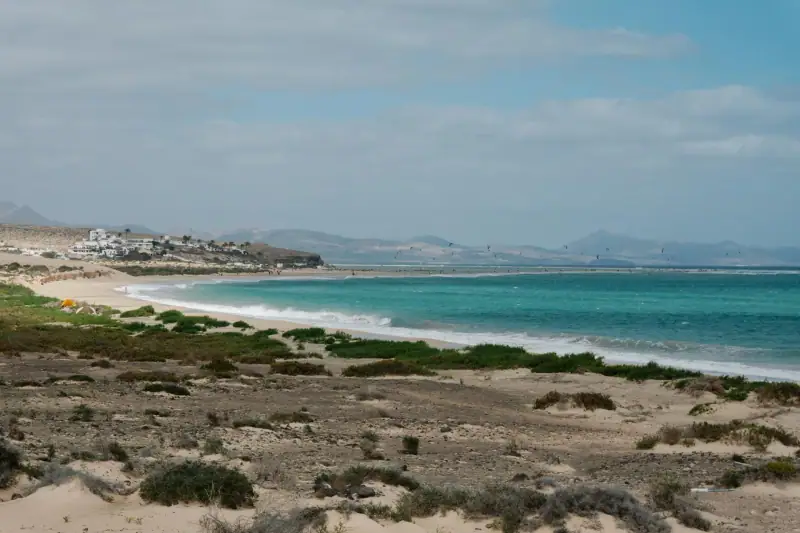
Visit Boa Vista: Complete Guide to the Island of Dunes
Everything to know about visiting Boa Vista, Cape Verde: beaches, dunes, sea turtles, kitesurfing, where to stay and how to get there.

Visiting Fogo Island: Complete Guide to Cape Verde's Volcano
Guide to visiting Fogo in Cape Verde: Pico do Fogo, Chã das Caldeiras, São Filipe, volcanic wine, hikes and practical information.
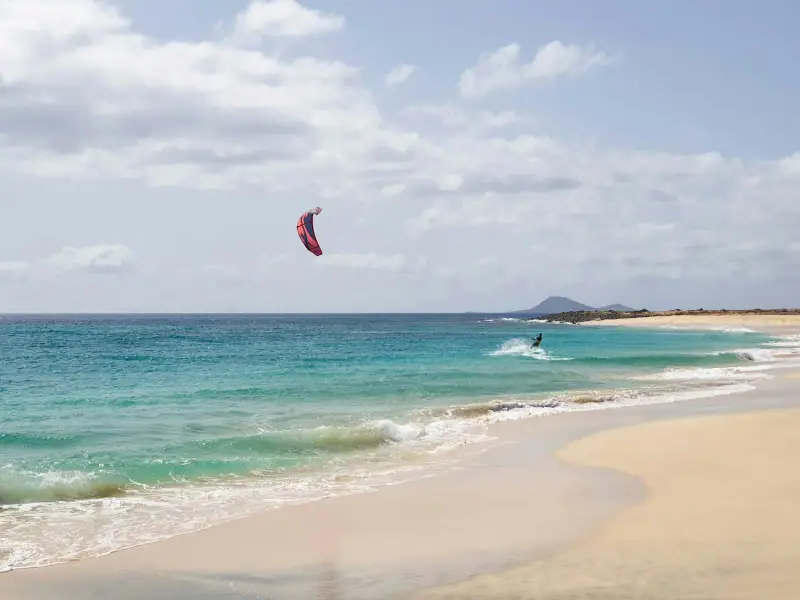
Visiting Sal Island: complete guide to the kitesurfing capital
Everything you need to visit Sal in Cape Verde: Santa Maria, Pedra de Lume, Buracona, beaches, kitesurfing, where to stay and how to get there.
Ready-made
Cape Verde itineraries
4 days
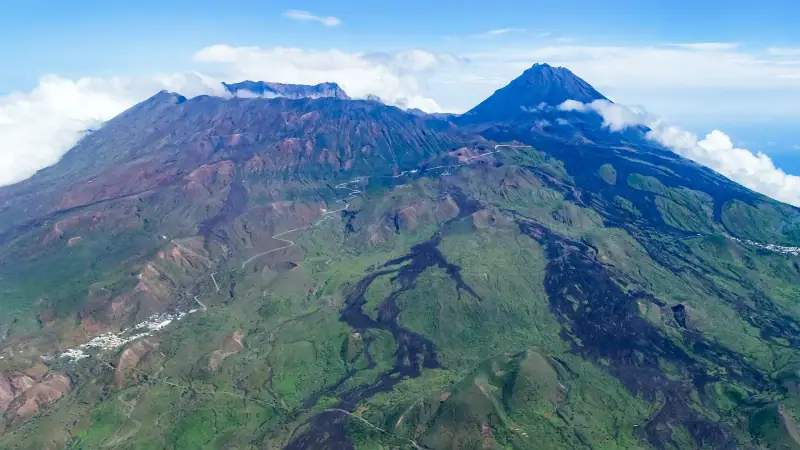
Fogo Island: complete 3-4 day itinerary (volcano, São Filipe, wine)
Detailed itinerary for 3 to 4 days on Fogo: Pico do Fogo climb, São Filipe, Chã das Caldeiras, volcanic wine and fishing villages.
7 days
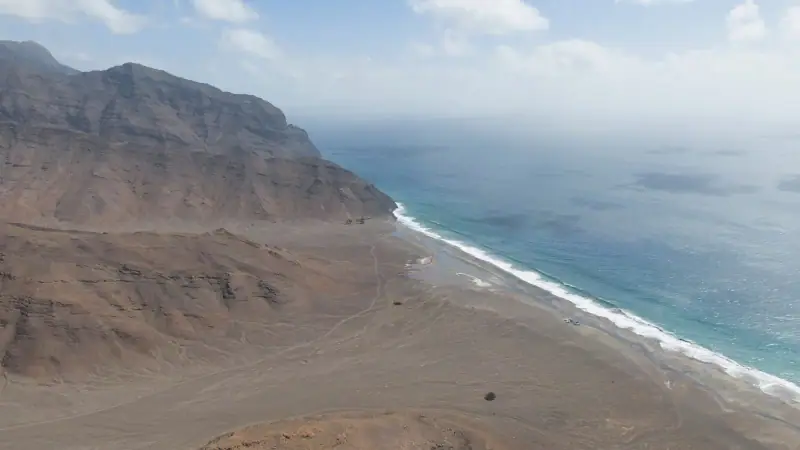
Cape Verde in 7 days: the perfect week itinerary
Cape Verde in 7 days: day-by-day plans for a great week on Sal, Santiago or São Vicente, with a detailed schedule and practical tips.
Can be adapted in the planner
14 days
Island Hopping in Cape Verde: A Guide to Visiting Several Islands
SalSantiagoSão VicenteSanto Antão