What to see
Visiting Sal Island: complete guide to the kitesurfing capital
We may earn a commission when you book through links on this page, at no extra cost to you. We don't visit or try the places we cover: we summarize published sources. How we work
In short
- High season runs November to June: dry, sunny, 25 to 28 °C (77 to 82 °F), with steady trade winds for kitesurfing and windsurfing.
- Santa Maria is the beach town, 17 km (11 mi) from Espargos. Pedra de Lume salt crater and the Buracona Blue Eye are the two big sights.
- The Blue Eye is best between 11:30 am and 1:30 pm in good weather. Buracona entry is about €3 (about $3).
- Sal is small (216 km² / 83 sq mi) and flat. A rental car is the best way to see the whole island.
Facing the coast of West Africa, about 570 km (354 mi) from the coast of Senegal and about 1,400 km (870 mi) from the Canary Islands, the island of Sal is the first contact with Cape Verde for millions of European travelers. Its international airport receives direct flights every year from Paris, London, Amsterdam and about ten other cities on the continent, making Sal the busiest entry point of the archipelago. Some only pass through on the way to more remote islands, but those who linger find an island that is both accessible and surprising: immaculate white beaches, unique natural sites like the Pedra de Lume salt crater or Buracona, a lively tourist scene in Santa Maria, and the steady winds that built the island’s worldwide reputation for kitesurfing and windsurfing.
Sal means “salt” in Portuguese. The name recalls that the island has been exploited for its salt since the 17th century, an activity that long shaped its economy before tourism took over. Today the old salt pans of Pedra de Lume have become one of the most visited tourist sites in the country, and one of the most unusual.
Sal in a nutshell
Sal is the easternmost of the three big tourist islands of Cape Verde, along with Boa Vista and Santiago. It covers about 216 km² (83 sq mi), a modest area that lets you drive around the whole island in a day. The terrain is nearly flat: a few volcanic hills in the center and north, but no significant mountain. It is the driest island in the archipelago, swept by the trade winds and the Saharan sand wind from the African continent.
Geography and population. Sal has about 35,000 to 45,000 inhabitants according to recent estimates, mainly in two urban centers: Espargos, the administrative capital, in the central part of the island, and Santa Maria, the tourist town in the south. The rest of the island is desert landscapes, basalt cliffs and nearly empty beaches.
Wind as a resource and an attraction. Sal is one of the windiest islands in Cape Verde. The trade winds blow almost constantly from November to June, creating ideal conditions for board sports (kitesurfing, windsurfing) that earned Santa Maria an international reputation in the watersports community.
The island’s identity. Sal is sometimes criticized for its fast tourist development, especially along Santa Maria beach. But the island has kept an authentic side that you find in Espargos, in Palmeira and in the bare interior landscapes. It remains the ideal gateway for a first trip to Cape Verde: practical, well equipped and full of surprises.
Flights to Sal
Compare flights to Amílcar Cabral International Airport on Sal (SID).
Santa Maria: the tourist heart of Sal
Santa Maria is the tourist town of Sal, and for many travelers it is Sal. Located at the far south of the island, about 17 km (11 mi) from Espargos, it has turned in a few decades from a small fishing village into a lively beach resort with a long white-sand beach, many hotels, restaurants and bars, and tourist activity concentrated on the waterfront.
Santa Maria beach
Santa Maria beach is the symbol of the island. It stretches about 3 to 4 km (2 to 2.5 mi) of fine white sand, facing due south at the tip of the island, with generally calm water in the central part. Exposed to southern swells, it can have waves on some days, but its gradual depth makes it one of the best beaches for family swimming in the archipelago.
The central part of the beach, in front of town, is the liveliest and best equipped: sun loungers, beach restaurants, roaming vendors, kitesurfing schools at each end. Moving east or west, the crowd quickly thins out and you find nearly empty stretches of beach only a few kilometers from the center.
Downtown Santa Maria
Downtown is organized around the Pier (the main jetty), the pedestrian street and the adjacent streets. This is where most of the restaurants, craft shops, tour agencies and bars are concentrated. The mood is relaxed, geared to fun and the sea: karaoke on the beach, live music in some bars on weekends, grilled-fish vendors in the evening.
Santa Maria’s municipal market, a bit back from the seafront, sells fruit, vegetables, fish and a few craft items at local prices. It is a welcome alternative to the tourist shops on the waterfront.
Kite Beach and water sports
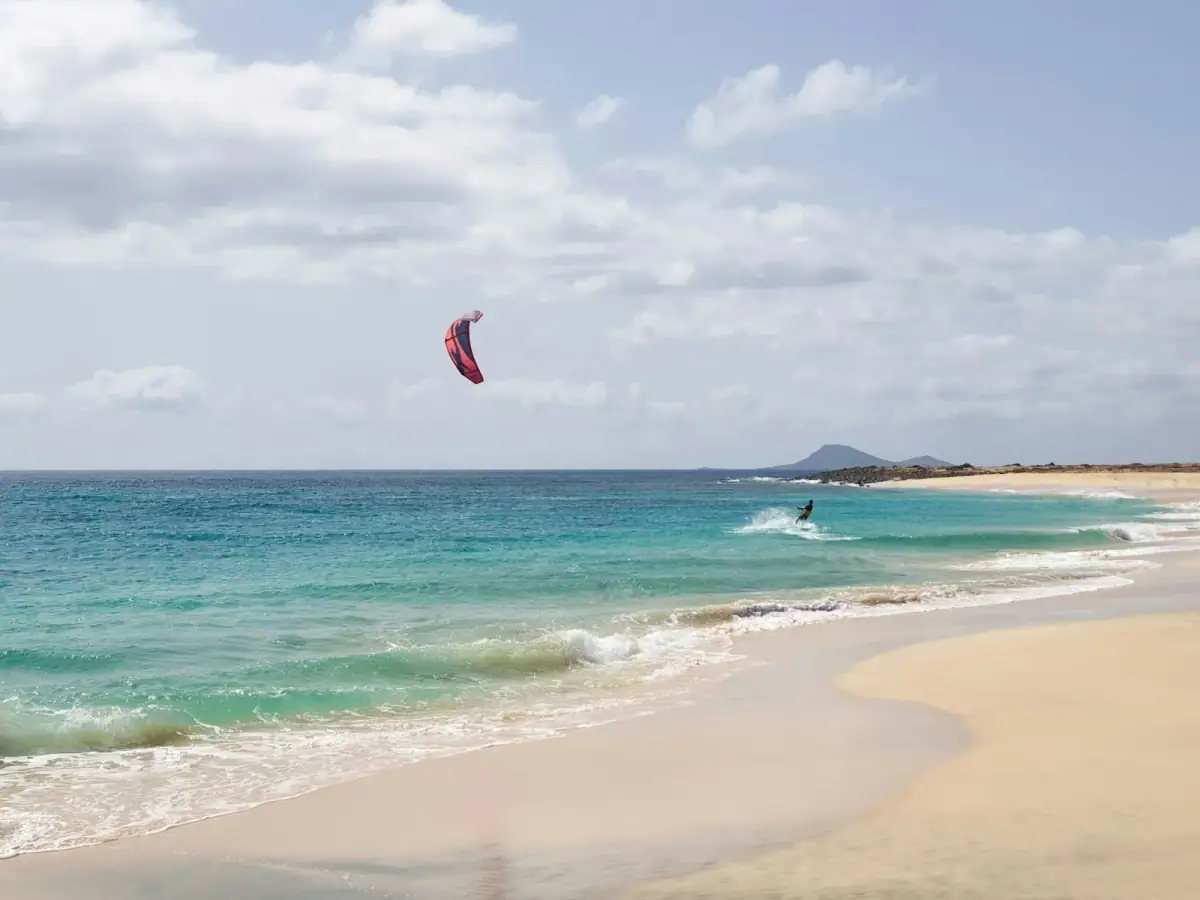
About 2 km (1.2 mi) east of central Santa Maria, Kite Beach is the headquarters of kitesurfing and windsurfing on the island. The steady trade wind, the shallow water in the lagoon and the flat sand make this place one of the best-known kitesurfing spots in Africa and Europe.
Several kitesurfing and windsurfing schools are set up right on the beach, offering lessons for all levels, equipment rental and safe supervision. Conditions are especially ideal from November to June. Do not confuse it with Ponta Preta, several kilometers northwest of Santa Maria: it is the island’s wave spot (surfing, wave kiting), reserved for experienced riders.
Car rental on Sal
Explore Pedra de Lume, Buracona and the wild beaches of the north freely. Compare offers from Sal airport.
Pedra de Lume: the salt crater
Pedra de Lume is one of the most spectacular and original natural sites in Cape Verde. Located about 22 to 25 km (14 to 16 mi) northeast of Santa Maria (about twenty minutes by car from Espargos), the site is the inside of an old volcanic crater whose floor, below sea level, was flooded by seawater over the centuries. That water gradually evaporated, leaving layers of salt that were mined industrially for centuries.
For the entry price, the shower, the taxi and how to float, see our page on the Pedra de Lume salt pans.
The history of Sal’s salt
Salt extraction at Pedra de Lume goes back several centuries and gave the island its very name. At its peak in the 19th and the first half of the 20th century, the operation employed a large workforce and the salt was exported to West Africa, Brazil and the Caribbean. Remains of this activity, including channels, ruined warehouses and storage structures, are still visible on the site.
Today industrial extraction has stopped but the crater remains a major attraction: the natural salt pools, with their pink and white tones depending on concentration and season, form a breathtaking lunar landscape.
Floating in the salt pools
The main attraction of Pedra de Lume is the chance to bathe in the salt pools and float effortlessly thanks to the very high salinity of the water. The salt concentration is comparable to that of the Dead Sea, letting anyone stay on the surface without even swimming. The experience is unusual, fun and relaxing: the silence of the crater, the pink or pearly white reflections of the salt depending on the pool, and the feeling of total weightlessness make for a unique moment.
An entry fee is charged at the site entrance. Showers are available to rinse off after the swim, which is essential because the salt concentration is very high. Do not put your head under the water, and avoid swallowing any. Bring a bottle of water to stay hydrated too, as time in the salt can dehydrate you.
Visiting tips. Arrive early in the morning or late in the afternoon to avoid organized groups and the midday heat. Morning light is ideal for photos of the pink pools. Access to the crater is through a tunnel cut into the volcanic rock, built by the historic operators to carry the salt to the boats.
Buracona: the Blue Eye of Sal
Buracona, or “Blue Eye” (Olho Azul in Portuguese), is one of the most photographed natural phenomena in Cape Verde. Located on the island’s northwest coast, about 5 to 6 km (3 to 4 mi) north of the port of Palmeira, the site owes its nickname to a particular light show: an opening in the basalt rock lets sunlight into a semi-submerged sea cave, creating an intense turquoise-blue beam that lights the bottom of the cave.
The light show
The Blue Eye phenomenon depends on several factors: the angle of the sun, the height of the waves and the weather. The best conditions are seen around 11:30 am to 1:30 pm, local time, in good weather, when the sun is high enough to project its light through the opening. In rough seas or under overcast skies, the effect is dimmed or absent.
You get there on foot from a parking lot not far from the site. The path follows the basalt coast for a few minutes, with superb views of the cliffs and the sea. There, several observation platforms let you look at the cave from above, as well as the natural pools carved into the basalt nearby.
Buracona’s natural pools
A few meters from the Blue Eye, natural pools formed in the basalt rocks offer swimming in water sheltered by the rocks. The water is clear and the bottom is visible several meters down. It is not the most comfortable swimming (no sand, access from the rocks), but conditions are often very calm in these sheltered coves, which attracts snorkelers and families with older children.
Practical note. Entry to Buracona is paid (about €3, about $3) and gives access to the viewpoint, the swimming lagoon, a small museum and a garden. A bar and a shop are at the site. The site is easier to reach by car, although some travelers cycle there from Santa Maria (about 28 km / 17 mi each way, a half day).
Tours on Sal
Pedra de Lume, Buracona, catamaran, diving and safari: find the best activities from Santa Maria.
Sal’s beaches beyond Santa Maria
Santa Maria beach is the best known, but Sal holds several other quieter beaches worth the detour.
Praia António Sousa (Morrinho)
In the north of Sal, Praia António Sousa (sometimes called Morrinho) is a long stretch of nearly pristine white sand, not far from Espargos. Getting there takes a car or a sturdy bike. The wind is generally stronger than at Santa Maria, which makes it popular with kitesurfers looking for wilder conditions, but not recommended for quiet family swimming.
Praia de Cruz Grande
Praia de Cruz Grande, on the east coast of the island, is another little-visited beach reachable by car. It is liked by locals and independent visitors looking to get away from the crowds of Santa Maria. Waves can be bigger on this exposed coast.
Calheta Funda and the northern coves
The north and northwest of the island hold several little-known coves and beaches, reachable only by car on dirt tracks. Some of these bays are true gems of solitude, with transparent water and no tourist infrastructure. Ask locally or through tour operators about which tracks are passable with your type of vehicle.
Espargos: the forgotten capital
Espargos is the administrative and demographic capital of Sal, located in the center of the island, about 17 km (11 mi) north of Santa Maria. It is often overlooked by tourists who stay on the south coast, but it deserves a visit for those who want to leave the tourist circuit.
The mood is resolutely local: busy markets, typical tascas, a central square with its vendors and residents. The architecture mixes Portuguese-style colonial buildings with newer, unpretentious construction. This is where most of the island’s residents who are not directly involved in tourism live and work.
What to see in Espargos:
- The central market, in the morning, for fruit, vegetables, fresh fish and local products.
- The main square and its cafés, to watch everyday Cape Verdean life.
- The immediate surroundings of the town, with their desert landscapes and distinctive light at the end of the day.
Amílcar Cabral International Airport (SID) is located between Espargos and Palmeira, about 3 km (2 mi) from downtown.
Palmeira: the island’s port
Palmeira is the main port of Sal, on the west coast of the island, about 5 km (3 mi) northwest of Espargos. This is where goods, inter-island ferries and fishing boats arrive. The atmosphere is that of an authentic working port, without tourist frills.
Photographers will enjoy the colors of the fishing boats, the nets drying in the sun and the morning bustle when the fishermen return. Some boat shuttles to the other islands also leave from Palmeira; check schedules locally, as connections are irregular.
Things to do on Sal
Kitesurfing and windsurfing
Sal is known among kitesurfers worldwide. The steady trade winds, the shallow lagoon at Kite Beach and the professional supervision at the schools there make it an ideal ground for beginners and experts alike. November to June are the best months. One-week courses combining lessons and lodging are offered by several operators based in Santa Maria.
Scuba diving and snorkeling
Sal’s underwater world offers good diversity: sea turtles, stingrays, barracudas, moray eels and soft corals in the clear waters of the west and south coast. Several dive centers operate from Santa Maria, offering introductory dives and guided outings for all levels. Snorkeling is also practiced around the basalt rocks north of Santa Maria beach and near the islets.
Catamaran trips
Catamaran trips from Santa Maria are a popular activity: sailing along the coast, snorkeling in clear water, and watching the dolphins and sea turtles that visit the island’s waters. Half-day and full-day outings are available from the agencies on the waterfront.
Quad and buggy
To explore the interior landscapes and the beaches of the north, quad or buggy tours are run by several operators in Santa Maria. The unpaved tracks of the island’s interior, between Espargos and the north, offer desert panoramas and viewpoints over both coasts that you would not see from the main road.
Eating on Sal
Food on Sal is authentic Cape Verdean cooking, with some influence from tourist globalization in the restaurants on Santa Maria’s waterfront.
The essentials:
- Cachupa: The Cape Verdean national stew, with corn, beans, legumes, meat and fish, served hot. The ultimate comfort dish, found in every local restaurant.
- Grilled fish (peixe grelhado): Tuna, grouper, swordfish and other Atlantic fish, grilled over embers and served with corn or vegetables. A must-try specialty in the tascas of Palmeira and in some Santa Maria restaurants near the port.
- Lagosta (spiny lobster): Local lobster is served in several Santa Maria restaurants. The price varies with the season and size, but it is generally more affordable than in Europe.
- Tascas in Espargos: In local tascas, away from tourist routes, you will find the most authentic cooking and the best prices, along with morabeza, the warm hospitality of Cape Verdeans (not to be confused with sodade, the nostalgia dear to Cesária Évora).
- Grogue: Cape Verdean sugarcane spirit, often served neat or as ponche with lime and sugar.
Tip. The Santa Maria waterfront has a profusion of restaurants of varying quality and prices set for tourists. To eat better and cheaper, venture into the side streets of the village or choose places frequented by locals, recognizable by the absence of a multilingual menu and a mostly Cape Verdean clientele.
Places to stay on Sal
Compare hotels, guesthouses, apartments and resorts in Santa Maria and across the island of Sal in Cape Verde.
Where to stay on Sal
Lodging on Sal is the most varied in Cape Verde, dominated by the big hotels and resorts of Santa Maria, but complemented by local guesthouses and rental apartments, plus a few places in Espargos. For a detailed look at the best places by area and budget, see our dedicated guide Where to stay on Sal.
In brief:
- All-inclusive resorts: Several large complexes are grouped around Santa Maria beach. Pools, buffets, entertainment, direct beach access. Ideal for an all-inclusive beach stay.
- Hotels and guesthouses in central Santa Maria: More affordable, often a few minutes’ walk from the beach. A good option for independent travelers who want to immerse themselves in local life.
- Rental apartments: Available in Santa Maria and near the beach. An economical solution for stays of more than a week or for groups.
- Lodging in Espargos: A few guesthouses for travelers passing through or wanting a more authentic experience away from the tourist bustle.
How to get to Sal
By air
Amílcar Cabral International Airport (IATA code: SID) is one of the four international airports of Cape Verde, along with Praia, Boa Vista and São Vicente (Cesária Évora). It is located between Espargos and Palmeira, about 3 km (2 mi) from Espargos and about 18 to 20 km (11 to 12 mi) from Santa Maria.
Direct flights operate from Paris, Lisbon, Amsterdam, London, Frankfurt and several other European cities, mainly with charter airlines (TUI, Condor, Jet2) and scheduled carriers (TAP Air Portugal, Transavia).
From the other islands of Cape Verde
Binter CV operates inter-island flights from Sal to Praia, São Vicente, Boa Vista and other destinations in the archipelago (Cabo Verde Airlines, formerly TACV, mainly operates international flights; other airlines, such as CVsky, opened sales of inter-island flights in 2026). Allow about 25 minutes of flight to Boa Vista and about 1 hour to Praia. Inter-island connections can be irregular, so check availability when you book.
Ferries run between Sal, Boa Vista and Santiago, but frequencies are irregular and crossings can be long depending on weather conditions. Ask locally for current schedules.
Getting around the island
Car rental: the most flexible option for freely exploring Pedra de Lume, Buracona, the northern beaches and the area around Espargos. Rental companies are at the airport and in Santa Maria.
Taxis: available in Santa Maria, at the airport and in Espargos. Always agree on the price before getting in. For an early flight, see where to sleep near Sal airport.
Aluguers (shared taxis): shared taxis run on the Santa Maria to Espargos route. Cheap, handy for trips along the main road, but less suited to remote sites.
Bike or scooter: enough for getting around Santa Maria and to the beaches near the center. Rental companies offer these options in the village.
Practical information for visiting Sal
Formalities. Entry rules depend on your passport: check the official Cape Verde government site before you book. EASE registration (ease.gov.cv) with payment of the TSA is required before departure.
Money. The Cape Verdean escudo (CVE) is the local currency. ATMs are available in Santa Maria and Espargos. Most tourist hotels and restaurants in Santa Maria accept bank cards, but bring cash for local tascas and small shops.
Language. Cape Verdean Creole and Portuguese are the local languages. In the tourist area of Santa Maria, English, Spanish and French are commonly spoken.
Safety. Sal is a safe island for tourists. Downtown Santa Maria is busy and well lit. The usual precautions apply: do not leave valuables unattended on the beach, and keep your phone safe in crowded places.
Health. There is a health center in Santa Maria. For serious emergencies, a transfer to Praia or Europe may be necessary, so travel insurance with repatriation coverage is essential.
Water. Do not drink tap water. Bottled water is available everywhere on the island.
Time zone. Cape Verde is on UTC-1.
Electricity. Type C and F sockets (European round-pin plugs), 230 V / 50 Hz. Check that your devices accept 230 V and bring an adapter (details in our guide to the electrical outlets in Cape Verde).
Temperature. Sal enjoys near-constant sunshine all year. Temperatures range from 22 to 24 °C (72 to 75 °F) in winter (December to March) to 28 to 30 °C (82 to 86 °F) in summer (August to October). The sea is mild all year (22 to 27 °C / 72 to 81 °F depending on the season).
A 5-day itinerary on Sal
Day 1: Arrival and Santa Maria
Settle in, take a first swim at Santa Maria beach, and walk the Pier and the lanes of the center. Dinner in a local tasca with cachupa or grilled fish.
Day 2: Pedra de Lume and Espargos
Early start for Pedra de Lume: visit the crater and float in the salt pools. Lunch in Espargos to see the local capital. Back to Santa Maria in the late afternoon.
Day 3: Buracona and the northwest coast
Arrive at Buracona around 11:30 am to 1 pm to see the Blue Eye in the best light. Explore the natural pools and the north coast. Lunch in Palmeira by the port. Return through the interior of the island.
Day 4: Kitesurfing, catamaran or diving
A day devoted to a water activity of your choice: a kitesurfing lesson at Kite Beach, a catamaran trip with snorkeling and dolphin watching, or a dive session. End the day on Santa Maria beach.
Day 5: Wild beaches and departure
Morning on a quieter beach of the island (Morrinho in the north or Cruz Grande in the east). Final lunch in town. Departure from Amílcar Cabral airport.
To go further in planning your Cape Verde trip, see our Sal vs Boa Vista comparison, our guide to the most beautiful beaches in Cape Verde and our complete guide to the archipelago.
Frequently asked questions
What is the best time to visit Sal?
High season runs from November to June, with dry weather, sun and temperatures around 25 to 28 °C (77 to 82 °F). It is also the ideal period for kitesurfing and windsurfing thanks to the steady trade winds. July to October is hotter and more humid, but with fewer tourists and lower prices. Sal is pleasant all year thanks to its exceptional sunshine.
Sal or Boa Vista: which island should I choose in Cape Verde?
Sal has more tourist infrastructure, nightlife and services than Boa Vista. If you want lively beach life, a variety of restaurants, bars and easy logistics, Sal is ideal. Boa Vista is wilder, less crowded and offers a more radical change of scene. For a first trip to Cape Verde focused on beaches and comfort, Sal is often recommended. Our Sal vs Boa Vista comparison guide goes into the differences in depth.
Can you float in the Pedra de Lume salt pools?
Yes, it is one of the most popular offbeat experiences on Sal. The old salt pans of Pedra de Lume, at the bottom of a volcanic crater, have such high salinity that you can float effortlessly, as in the Dead Sea. An entry fee is charged, and a shower is available after the swim. It is a great experience.
Is Sal suitable for families with children?
Sal is one of the most family-friendly islands in Cape Verde. Santa Maria beach has calm, shallow water in its central part, perfect for little ones. Tourist infrastructure (hotels with pools, restaurants with kids' menus) is well developed. The setting is safe and the activities on offer (catamaran trips, snorkeling, quad rides) suit all ages.
How do I get around Sal?
A rental car is the best way to explore the island freely, especially to reach Pedra de Lume, Buracona and the quieter beaches. Taxis are available in Santa Maria and Espargos. Aluguers (shared taxis) run on the main routes. If you stay in Santa Maria, the town is easy to get around on foot or by bike. Some rental companies also offer quads for unpaved tracks.
Do I need a visa to go to Sal?
Entry rules depend on your passport: check the official Cape Verde government site before you book. Online EASE registration on the official portal (ease.gov.cv) is required before departure: it includes payment of the airport security tax (TSA, about 3,400 CVE, around €30 or $35). Plan for a passport valid at least 6 months after your departure, travel insurance and proof of your lodging, and check the current conditions on the official portal before you go.
What is the Blue Eye (Buracona) on Sal?
The Blue Eye (Olho Azul in Portuguese, or simply Buracona) is a spectacular natural phenomenon on the northwest coast of Sal. An opening in the basalt rock lets sunlight in at certain hours of the day, creating a beam of turquoise light in a semi-submerged sea cave. The show is especially impressive between 11:30 am and 1:30 pm in good weather. You get there on foot from the Buracona parking lot.
More Cape Verde guides
Keep reading
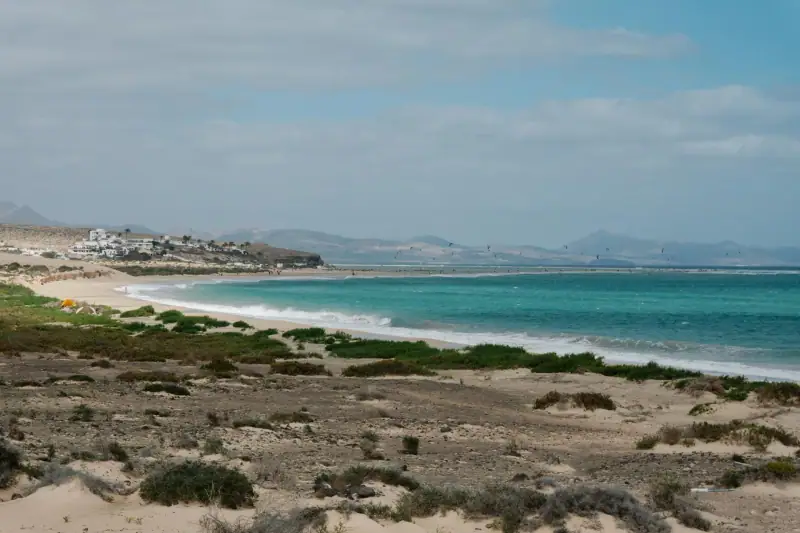
Visit Boa Vista: Complete Guide to the Island of Dunes
Everything to know about visiting Boa Vista, Cape Verde: beaches, dunes, sea turtles, kitesurfing, where to stay and how to get there.

Visiting Fogo Island: Complete Guide to Cape Verde's Volcano
Guide to visiting Fogo in Cape Verde: Pico do Fogo, Chã das Caldeiras, São Filipe, volcanic wine, hikes and practical information.
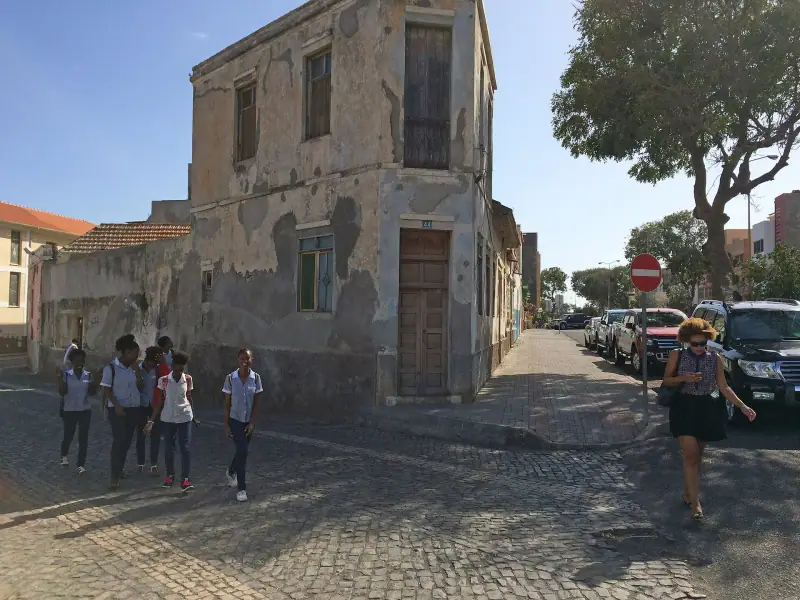
Visiting Praia: complete guide to Cape Verde's capital
Everything you need to visit Praia, the capital of Cape Verde: neighborhoods to explore, top sights, where to eat, where to stay and practical tips.
Ready-made
Cape Verde itineraries
4 days
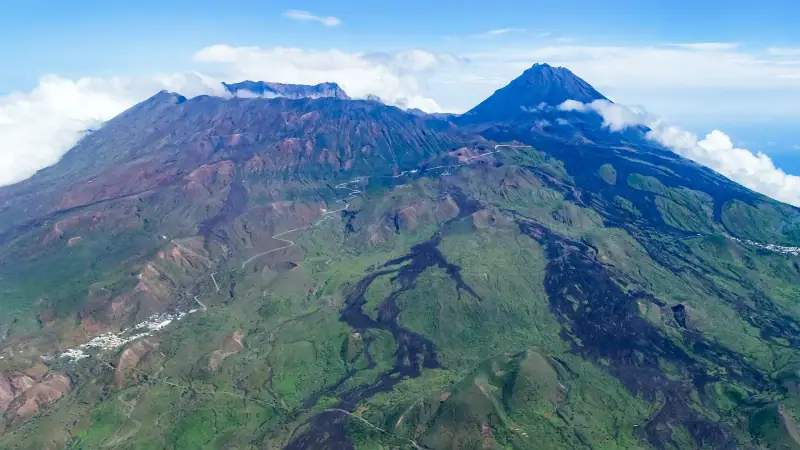
Fogo Island: complete 3-4 day itinerary (volcano, São Filipe, wine)
Detailed itinerary for 3 to 4 days on Fogo: Pico do Fogo climb, São Filipe, Chã das Caldeiras, volcanic wine and fishing villages.
7 days
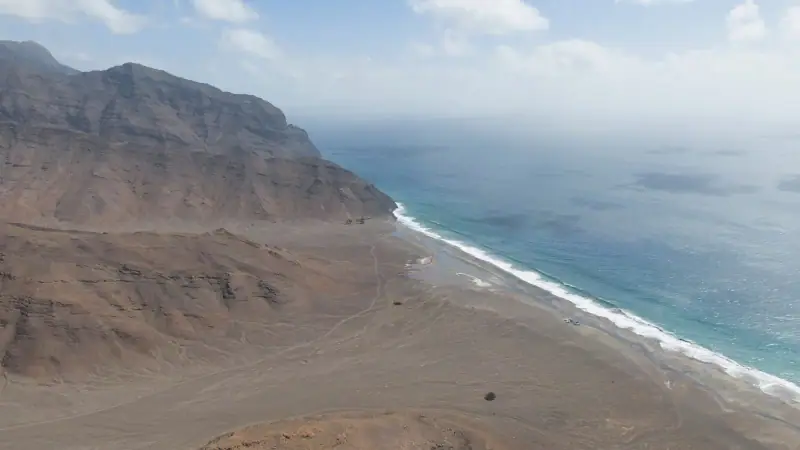
Cape Verde in 7 days: the perfect week itinerary
Cape Verde in 7 days: day-by-day plans for a great week on Sal, Santiago or São Vicente, with a detailed schedule and practical tips.
Can be adapted in the planner
14 days
Island Hopping in Cape Verde: A Guide to Visiting Several Islands
SalSantiagoSão VicenteSanto Antão