Plan your trip
Best time to visit Cape Verde: month by month
We may earn a commission when you book through links on this page, at no extra cost to you. We don't visit or try the places we cover: we summarize published sources. How we work
In short
- The best time is November to June, the dry season: pleasant temperatures (22-28 °C / 72-82 °F), plenty of sun and almost no rain.
- August-September is the hottest and wettest period (28-32 °C / 82-90 °F), with the lowest prices and fewest tourists.
- Humpback whales visit from January to May, peaking in March-April. Turtle nesting runs June to October, peaking in July-August.
- Sal and Boa Vista are the sunniest islands; Santo Antão and São Nicolau are greener and wetter.
Cape Verde is often presented as a year-round sun destination, and that is broadly true. But there are still important differences between seasons, and some periods are clearly better than others depending on your plans. This complete climate guide helps you choose the ideal time for your trip.
Cape Verde’s climate in brief
The Cape Verde archipelago has a semi-arid tropical climate, shaped by the northeast trade winds and the cold Canary Current. There are two main seasons:
- The dry season (November to June): sunny, cool and pleasant
- The rainy season (July to October): hotter, humid, with showers
Temperatures are mild all year: between 22 and 32 °C (72-90 °F) depending on the month. Sea water is also pleasant in every season: 23 °C (73 °F) in winter, 27 °C (81 °F) in summer.
Important point: the islands behave differently depending on their terrain. Sal and Boa Vista, flat and arid, get little rain even in the wet season. Mountainous Santo Antão is much greener and can be cloudy. Take your chosen island into account when assessing the expected weather.
Month by month: what to do and what to expect
January
Weather: Dry season. Cool to pleasant temperatures: 22-25 °C (72-77 °F). Moderate to strong trade winds. Slightly rough sea on the north coast of the islands.
Activities: Excellent for the beach, diving and hiking. The trade winds delight kitesurfers on Sal. Whales begin to arrive in Cape Verde’s waters.
Crowds and prices: High season (Christmas/New Year holidays through early January). High prices, book ahead. Prices drop after January 10.
Our take: An excellent period despite the sometimes strong trade winds. Ideal after January 15 for combining good prices and nice weather.
February
Weather: Dry season. Temperatures: 22-25 °C (72-77 °F). Trade winds present. Sometimes sand haze (calima) from the Sahara.
Activities: Humpback whale watching (the season is building up). The Mindelo Carnival, a major cultural event. Excellent surf/kite conditions.
Crowds and prices: Shoulder season. Reasonable prices except during the carnival (book early if you are aiming for that period).
Our take: One of the best months to visit Cape Verde. Combine beach, culture (carnival) and whales for a complete experience.
March
Weather: Dry season. Temperatures: 23-26 °C (73-79 °F). Trade winds still present but easing. The sea is gradually calming.
Activities: Peak of humpback whale watching. Perfect for hiking on Santo Antão and Fogo.
Crowds and prices: High season (European spring school holidays). Book 2-3 months ahead.
Our take: An excellent month, ideal for whale watching. Hikers will enjoy the vegetation, still green after the previous year’s brief rainy season.
April
Weather: Dry season. Temperatures: 24-27 °C (75-81 °F). Trade winds ease. Stable, sunny weather. Calm sea.
Activities: Diving (excellent visibility), beach, hiking, kitesurfing (trade winds still active on some days). End of the whale season.
Crowds and prices: Shoulder period after the holidays. Good value.
Our take: One of the best months. Ideal temperatures, a beautiful sea, fewer people than December-March.
May
Weather: Transition to the hot season. Temperatures: 25-28 °C (77-82 °F). Sun still present. Slight rise in humidity at the end of the month.
Activities: Diving and snorkeling at their best. Kitesurfing possible but the trade winds weaken. Hiking still very pleasant.
Crowds and prices: Low season is starting. Prices drop noticeably.
Our take: A very good period, less crowded, with attractive prices and reliably nice weather.
June
Weather: Start of the hot season. Temperatures: 26-29 °C (79-84 °F). Rising humidity. Some clouds but little rain.
Activities: Excellent beach and swimming (warm sea: 25 °C / 77 °F). Diving with more active marine life.
Crowds and prices: Low season. Good prices, quieter beaches.
Our take: A good month for those who like heat and want to avoid crowds. The weather is still reliable.
July
Weather: Official start of the rainy season. Temperatures: 28-31 °C (82-88 °F). Short but possible showers. Noticeable humidity.
Activities: Start of the turtle nesting season on Boa Vista and Sal. Excellent beach and swimming, with a very warm sea (26 °C / 79 °F).
Crowds and prices: Low season. The lowest prices of the year.
Our take: A good month if you accept the heat and occasional rain. Ideal for seeing turtles and avoiding crowds.
August
Weather: Full rainy season. Temperatures: 29-32 °C (84-90 °F). More frequent showers. High humidity. Risk of tropical disturbances.
Activities: Turtle nesting at its peak. Beach possible but less pleasant. Hiking is not advised in the intense heat.
Crowds and prices: Mostly local tourists (diaspora families). Prices a bit higher than July.
Our take: A difficult month weather-wise. Avoid it unless you want to see the turtles or your budget is very tight.
September
Weather: Rainy season still active. Temperatures: 28-30 °C (82-86 °F). Risk of tropical depression. Sea sometimes rough.
Activities: Beach possible in good weather. End of the turtle season. Green landscapes on the mountainous islands.
Crowds and prices: The quietest month. Very low prices.
Our take: A month to avoid for a beach trip. On the other hand, hikers will find islands like Santo Antão superbly green.
October
Weather: End of the rainy season. Temperatures: 27-29 °C (81-84 °F). Rain gradually decreasing. Sea still a bit strong.
Activities: Green landscapes on the mountainous islands. Beach becomes possible again at the end of the month.
Crowds and prices: Very low. A good opportunity for flexible travelers.
Our take: Risky early in the month, but late October can be pleasant with very attractive prices.
November
Weather: Return of the dry season. Temperatures: 24-27 °C (75-81 °F). The sun returns. The sea calms. Trade winds start again.
Activities: Kitesurfing (trade winds return). Pleasant beach and swimming. Comfortable hiking.
Crowds and prices: Start of the tourist high season. Prices rise but stay reasonable.
Our take: An excellent month, one of the best of the year. Reliable weather, perfect temperatures, still few people.
December
Weather: Dry season well established. Temperatures: 22-26 °C (72-79 °F). Trade winds present. Maximum sunshine.
Activities: Everything is possible: beach, kitesurfing, diving, hiking.
Crowds and prices: High season (Christmas, New Year). Book early, hotels fill up fast.
Our take: A magnificent but busy period. Book 4-6 months ahead for the best options.
Weather by activity
For the beach and swimming
The best periods are April to June and November to January. The water is pleasant all year, but the sea can be rough in January-February on the north and east coasts of the islands.
For kitesurfing and surfing
The trade winds blow mainly from November to July, peaking in December-March. This is the dream period for water sports. See our surf guide to Cape Verde for spots by season.
For diving
Visibility is excellent all year. The best periods are May to July (active marine life, warm water) and November to March (whale sharks possible, manta rays).
For whale watching
Humpback whales visit Cape Verde’s waters from January to May, peaking in March-April. Our whale watching guide details the best outings.
For hiking
The dry season (November to June) is ideal for hiking. Trails are dry and passable. Santo Antão is especially beautiful in March-April, after the rainy season, with lush vegetation.
For turtles
The nesting season runs from June to October, peaking in July-August. Night excursions on Boa Vista let you watch females come to lay eggs on deserted beaches.
Our recommendation by profile
| Profile | Best period | Alternative |
|---|---|---|
| Family with children | December-January, April | November, May |
| Romantic couple | February-March | November-December |
| Kitesurfer/Surfer | December-March | November, April |
| Diver | May-July | November-January |
| Hiker | November-April | October (green Santo Antão) |
| Whale watching | March-April | February |
| Turtle watching | July-August | June, September |
| Small budget | May-June, October | July |
Average temperatures by island
Temperatures vary slightly between islands:
- Sal and Boa Vista: the most stable, less rain, very sunny
- Santiago (Praia): a bit hotter in summer, more rain in the wet season
- São Vicente (Mindelo): similar to Sal but with more trade winds
- Santo Antão: cooler at altitude, fog possible on the heights
- Fogo: cooler temperatures on the volcano (down to 15 °C / 59 °F at the summit)
In short, Cape Verde is a destination you can visit almost all year. But to make the most of the beaches, water sports and hiking without the drawbacks of heat or rain, aim for November to April. You will combine guaranteed sun, ideal temperatures and, if you pick your month well, the chance to witness one of the archipelago’s most extraordinary natural spectacles.
Hotels in Cape Verde
Book at the best price for your travel dates.
Frequently asked questions
What is the best season to go to Cape Verde?
The best period is November to June, during the dry season. Temperatures are pleasant (22-28 °C / 72-82 °F), the sun is out and rain is almost absent. Avoid August-September, the hottest and wettest period.
Is it hot in December in Cape Verde?
Yes, in December temperatures range between 22 and 26 °C (72-79 °F) with plenty of sun. It is an excellent period, ideal for escaping the northern winter. It is also high season, so prices are higher.
Can you go to Cape Verde in August?
Yes, but August is the rainy season and the hottest period (28-32 °C / 82-90 °F). Showers are short but frequent. The upsides: lower prices, fewer tourists, and turtle nesting season on Boa Vista.
When can you see whales in Cape Verde?
Humpback whales are present in Cape Verde's waters from February to May (the first can arrive as early as January), peaking in March-April. It is the best time for whale-watching excursions, offered notably from Boa Vista: check which departures exist on the other islands.
Is there a hurricane risk in Cape Verde?
Cape Verde lies in the formation zone of Atlantic hurricanes, active from June to November. The islands rarely take direct hits, but tropical storms can affect the archipelago between August and October.
Which island has the best climate in Cape Verde?
Sal and Boa Vista have the most sunshine in the archipelago, with little rain even in the wet season. Santo Antão and São Nicolau are greener and therefore wetter. Santiago gets more rain in the wet season.
More Cape Verde guides
Keep reading
Cape Verde budget: how much does a trip cost in 2026?
How much to budget for a trip to Cape Verde? Hotels, meals, transport and activities: detailed daily budgets for every type of traveler.
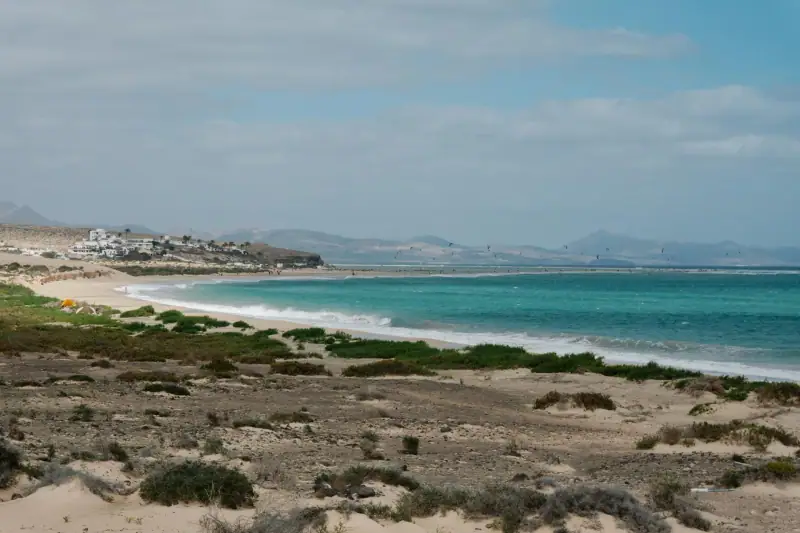
Visit Boa Vista: Complete Guide to the Island of Dunes
Everything to know about visiting Boa Vista, Cape Verde: beaches, dunes, sea turtles, kitesurfing, where to stay and how to get there.

Visiting Fogo Island: Complete Guide to Cape Verde's Volcano
Guide to visiting Fogo in Cape Verde: Pico do Fogo, Chã das Caldeiras, São Filipe, volcanic wine, hikes and practical information.
Ready-made
Cape Verde itineraries
4 days
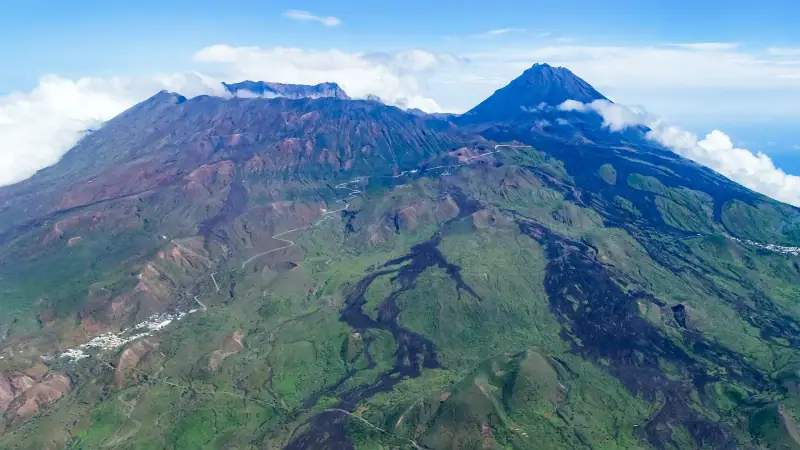
Fogo Island: complete 3-4 day itinerary (volcano, São Filipe, wine)
Detailed itinerary for 3 to 4 days on Fogo: Pico do Fogo climb, São Filipe, Chã das Caldeiras, volcanic wine and fishing villages.
7 days
Cape Verde in 7 days: the perfect week itinerary
Cape Verde in 7 days: day-by-day plans for a great week on Sal, Santiago or São Vicente, with a detailed schedule and practical tips.
Can be adapted in the planner
14 days
Island Hopping in Cape Verde: A Guide to Visiting Several Islands
SalSantiagoSão VicenteSanto Antão