Itineraries
Fogo Island: complete 3-4 day itinerary (volcano, São Filipe, wine)
We may earn a commission when you book through links on this page, at no extra cost to you. We don't visit or try the places we cover: we summarize published sources. How we work
Day by day
- Day 1São Filipe: historic center, market, Ponta Salina beach
- Day 2Road to Chã das Caldeiras, Portela, vineyards, Bordeira hike
- Day 3Pico do Fogo climb from Portela
- Day 4Optional: Mosteiros, Cova Figueira, beaches, evening in São Filipe
In short
- Plan at least 3 days: São Filipe, the Pico do Fogo climb and a night in the caldera. A 4th day covers the coastal villages.
- The Pico do Fogo climb (2,829 m / 9,281 ft) takes 3 to 5 hours up. A local guide costs about €30-50 (about $35-58) per person.
- Fly Praia to Fogo in 30-40 min for €50-80 (about $58-93), or take the ferry (about 4 hours, a few sailings a week).
- Budget about €150-250 (about $175-290) per person for 3 days, excluding international flights.
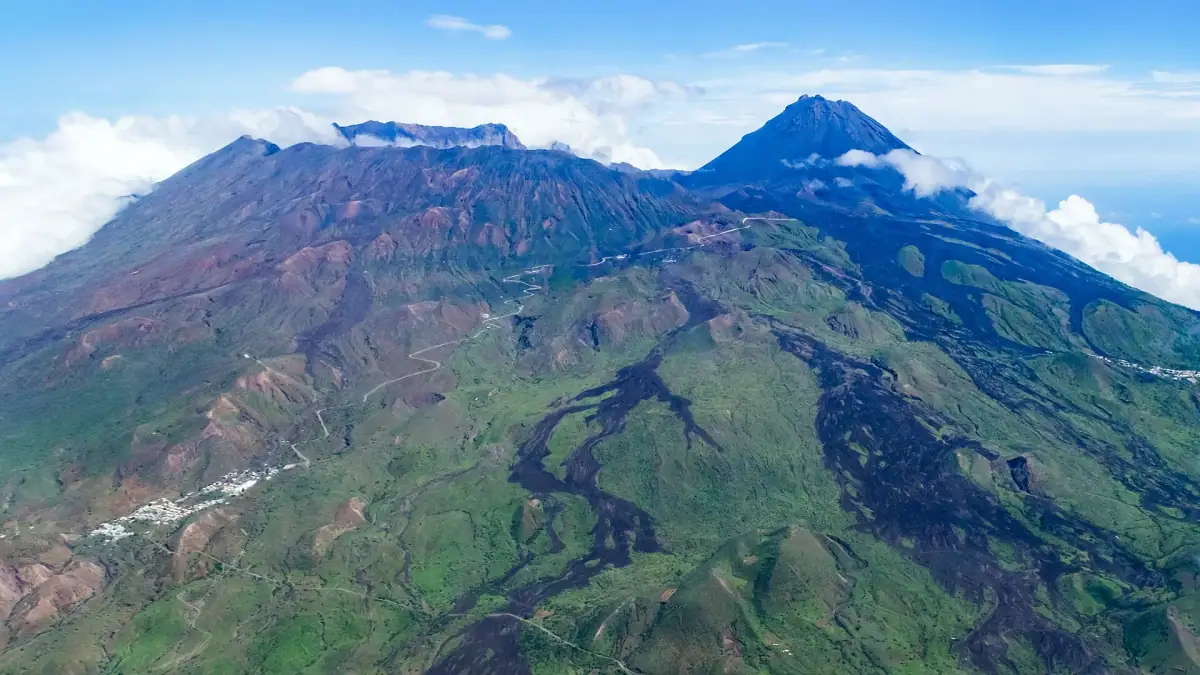
Fogo is the most dramatic island in Cape Verde. No endless beaches, no resorts, no kitesurfers. Here, raw geology rules. Dominated by Pico do Fogo (2,829 m / 9,281 ft), the highest peak in the tropical Atlantic, this volcanic island offers wild scenery and an authentic culture that few travelers dare to discover. Those who make the detour rarely regret it.
Here is an itinerary built to experience Fogo in depth in 3 to 4 days: the colonial town of São Filipe, the crater climb, a night in the caldera at the foot of the volcano, and the flavors of a one-of-a-kind volcanic wine.
Before you go: practical info on Fogo
Getting to the island
You reach Fogo from Santiago (Praia) or Sal:
- By plane: daily flights link Praia to Fogo (30-40 min, €50-80 / about $58-93), operated by the national airline TACV and/or Binter depending on the period, plus several flights a week from Sal (check schedules with the airlines). The airport is 5 km (3 mi) from São Filipe.
- By ferry: Cabo Verde Interilhas links Praia to São Filipe a few times a week (about 4 hours; check the fare on cvinterilhas.cv). Schedules change often. The ferry is less comfortable but lets you bring more luggage.
Tip: If you are staying in Praia at the start of your trip (see our 7-day Cape Verde itinerary), fly out and take the ferry back, or the other way around.
Getting around the island
There is no organized public transport on Fogo. Your options:
- Aluguer (shared taxis): from São Filipe to Chã das Caldeiras, expect €10-15 (about $12-17) per person or €40-60 (about $46-70) for a whole vehicle.
- Car rental: a few agencies in São Filipe offer 4x4s (€50-80 / about $58-93 per day). Recommended for exploring the coastal villages freely.
- On foot: São Filipe can be seen entirely on foot. Chã das Caldeiras requires a ride to get there.
Where to stay
- São Filipe: several guesthouses and charming inns in the historic center (€30-70 / about $35-81 per night).
- Chã das Caldeiras: very simple local guesthouses in the village of Portela (€20-40 / about $23-46 per night, often half board). Book ahead, as places are limited.
Places to stay on Fogo
Charming guesthouses in São Filipe and in the volcanic caldera.
Day 1: São Filipe, the colonial town
Arrival and settling in
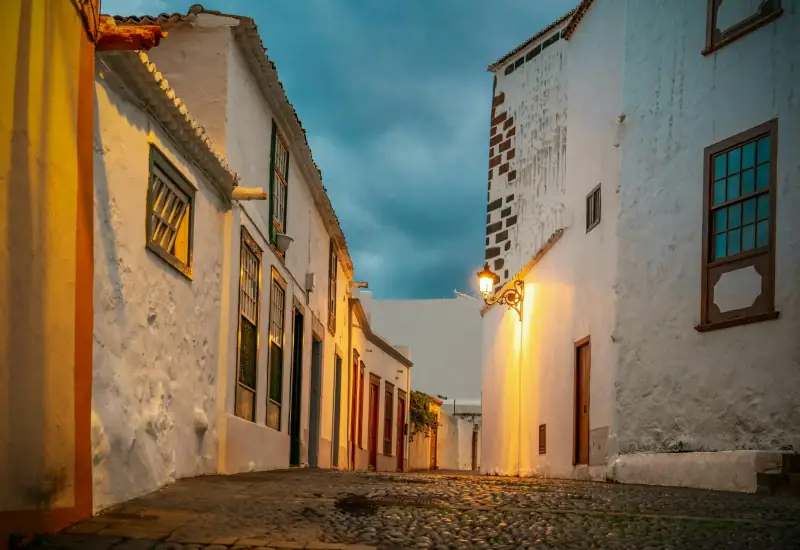
Arrive in São Filipe by plane or ferry in the morning. The town, clinging to a cliff above the sea, shows its character right away. Cobbled lanes, colorful houses with Portuguese gables, children playing in the streets, the ocean view from the heights: you are clearly not in Sal or Boa Vista.
Settle into your guesthouse and have a coffee (ideally Fogo coffee, grown on the slopes of the volcano) before exploring.
Visiting São Filipe
The historic center is easy to explore on foot in 2-3 hours. The points of interest:
Praça de Santa Catarina: São Filipe’s central square, shaded and lined with colonial buildings. It is the town’s social heart, where older men play cards in the evening and families gather.
The sobrados: these large colonial houses with an upper floor and carved wooden balconies define São Filipe’s architecture. Some have been restored as guesthouses or museums. The Sobrado da Cultura displays objects tied to the island’s history.
São Filipe market: the covered market, especially lively in the morning, sells local tropical fruit (papayas, mangoes, soursops), vegetables from the volcano and handmade crafts. This is where you will find the best papayas in Cape Verde, grown in exceptionally rich volcanic soil.
The viewpoint (miradouro): from the cliff edge at the end of the main street, the plunging view of the ocean and the black beaches below is spectacular. To the north, Pico do Fogo dominates the horizon when the sky is clear.
Lunch and afternoon
Have lunch at one of São Filipe’s local restaurants: cachupa, grilled fish, all with a glass of Chã wine (the local volcanic wine). It is a must-try experience.
In the afternoon, if you arrived around midday, head to Ponta Salina beach (15 min by taxi from the center). This dark-sand beach, almost deserted, offers swimming in clear water with a view of the volcanic cliff. The contrast between black lava and blue water is striking.
Dinner in São Filipe
In the evening, try queijo de Fogo (fresh goat cheese, a local specialty) as a starter, followed by grilled fish. The restaurants around the central praça are busy and affordable (€8-15 / about $9-17).
Day 2: Up to Chã das Caldeiras
Once there, be sure to taste the caldera’s wines: our guide to Fogo wine explains where and how.
The road to the caldera
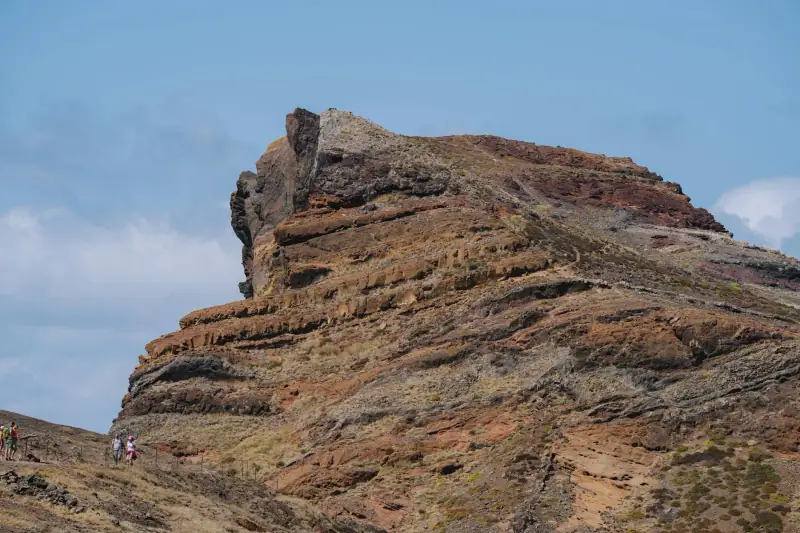
The road climbing from São Filipe to the Chã das Caldeiras caldera is an experience in itself. In 30-40 minutes by taxi or car, you pass through every vegetation zone:
- The dry coast and its sugarcane and soursop crops
- Temperate zones with pines and eucalyptus
- The approach to the caldera, where vegetation gradually disappears and gives way to black lava fields
Arriving by the northern road is spectacular: the caldera suddenly opens like an amphitheater 10 km (6 mi) across, with Pico do Fogo rising steeply at the center. The lava flows of the 2014-2015 eruption (still fresh, black and smooth) cover part of the old village.
Guided excursions on Fogo
Pico do Fogo climb with a certified guide, transfers included.
The village of Portela and the vineyards
Settle into your lodging in Portela, the main village of the caldera. Despite the partial destruction by lava in 2014, residents have rebuilt and resumed their farming.
The afternoon is perfect for exploring the caldera on foot without rushing. The vines of the Cooperativa Chã grow directly in black basalt lava soil, a surreal agricultural sight. In the cracks of the rock, the grape varieties (mainly grenache and muscat) collect rainwater and volcanic minerals. The result is a wine with character, certified under a local appellation.
Tasting at the Chã cellar: the Chã das Caldeiras cooperative offers tastings there. The red is the star, with soft tannins and a signature minerality. The white (muscat) is fruity and aromatic. Expect to pay €5-10 (about $6-12) for a tasting of 3-4 wines with Fogo cheese.
The Bordeira hike: if you have the energy, the hike around the inner rim of the old caldera (Bordeira) gives panoramic views over the whole volcanic basin, the Pico and the distant ocean. Allow 3-4 hours for the full loop (moderate difficulty).
A night in the caldera
Have dinner at the local guesthouse: the food is often simple but tasty, based on garden produce and local meat. Lodging is usually half board, and dinner in the caldera, surrounded by volcanic silence, is a lasting memory.
Day 3: Climbing Pico do Fogo
Preparation and early start
Wake up at 4-5 am. The climb must be done at night or at dawn so you reach the summit before clouds hide the view (and to avoid the heat at altitude).
What to bring:
- Water (at least 2 liters / about 2 quarts)
- Warm clothing (it is cold at the top, 5-10 °C / 41-50 °F)
- Sturdy hiking shoes (ash and rock are slippery)
- A headlamp
- Food (cereal bar, dried fruit)
A guide is strongly recommended. Local guides from Portela know the best routes and the risk areas, and can turn the climb into a lesson in volcanic geology. Expect to pay €30-50 (about $35-58) per person for a guide.
The climb (3-5 hours depending on pace)
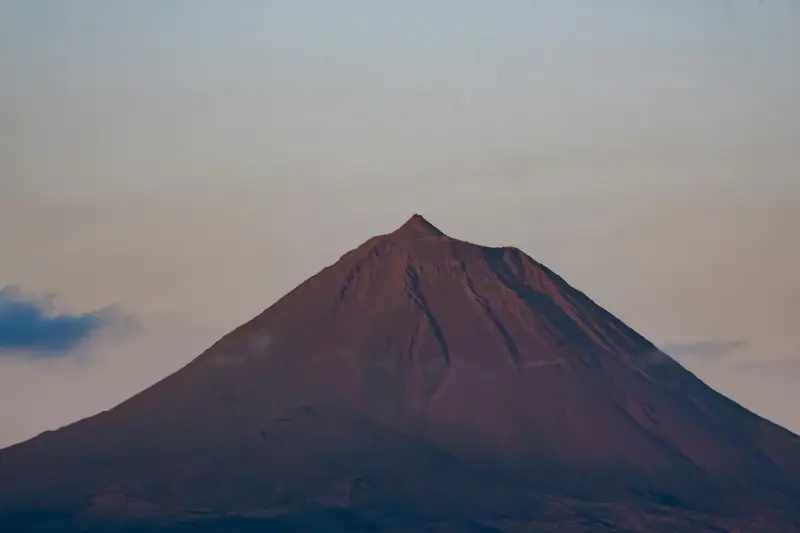
The start is from the village of Portela (1,600 m / 5,250 ft). The ascent follows a volcanic ash path that rises steadily up the flanks of the central cone.
The 3 phases:
Phase 1 (1,600-2,000 m / 5,250-6,560 ft): moderate slope on old lava terrain. The view of the caldera and the vineyards receding below is already spectacular.
Phase 2 (2,000-2,500 m / 6,560-8,200 ft): the slope steepens on fine, unstable ash. For two steps forward, you slide back half a step. This is the most physically demanding part.
Phase 3 (2,500-2,829 m / 8,200-9,281 ft): the last 300 meters (985 ft) are the steepest, on fractured volcanic rock. The air thins slightly. The summit appears above you.
At the summit
Reaching the edge of the Pico do Fogo crater is an exceptional reward. In clear weather, the panorama takes in the islands of Santiago, Brava and São Nicolau in the distance, and the Atlantic as far as the eye can see. The crater smokes lightly, a constant reminder that the volcano breathes.
The descent is faster (1 h 30 to 2 h): you slide down the ash slopes in a sort of natural volcanic skiing. Wear shoes you don’t mind getting dirty.
Day 4 (optional): Exploring the coast
If you stay a 4th day, head back down to the coast and explore the fishing villages that the usual itineraries skip.
Fogo’s coastal villages
Mosteiros: a fishing village in the north of the island, set against impressive volcanic cliffs. The morning fish market is lively and authentic. The black pebble beach is used by locals for swimming. It is one of the most authentic and least touristy villages in Cape Verde.
Cova Figueira: a farming village perched on the volcano’s slopes, known for its high-altitude coffee. The coffee plants grow in the shade of fruit trees, a tropical garden suspended between sky and lava.
Ponta Verde / Salina: south of São Filipe, several wild black sand beaches reachable by 4x4 or on foot from the cliff. Often deserted, with clear water.
Last evening in São Filipe
Head back to São Filipe for a final night. Enjoy Praça de Santa Catarina at sunset: older men play cards, children shout, and notes of morna or coladeira drift out of a nearby bar. This is quiet Cape Verde, away from the beach resort circuit.
Buy a few bottles of Chã wine and a pack of Fogo coffee to bring home: the best souvenirs of the island, and the lightest in your suitcase.
Combining Fogo with the other islands
Fogo is rarely visited on its own. Here are the most sensible combinations:
Fogo + Santiago (5-6 days minimum): the simplest circuit logistically. Praia (culture, food), then Fogo by plane or ferry. Our island hopping guide details the best island combinations.
Fogo + Brava (for adventurers): Brava, the smallest and most isolated island in Cape Verde, can be reached from Fogo by ferry (1-2 hours; the service is being reorganized, so ask locally about schedules). Very few tourists, with surprising tropical jungle landscapes in this arid region.
Fogo in a 10-day circuit: Sal (beaches, kitesurfing) → São Vicente (Mindelo, culture) → Santo Antão (hiking) → Santiago (Praia) → Fogo (volcano). A full circuit across 5 islands of very different character.
Estimated budget for Fogo
| Expense | Low budget | Mid budget |
|---|---|---|
| Flight/ferry from Santiago | €15-25 (~$17-29) | €50-80 (~$58-93) |
| Lodging (per night) | €20-35 (~$23-41) | €50-80 (~$58-93) |
| Meals (per day) | €15-25 (~$17-29) | €30-50 (~$35-58) |
| Pico do Fogo guide | €30-40 (~$35-46) | €50-70 (~$58-81) |
| Taxi São Filipe ↔ caldera | €10-15 (~$12-17) per person | €50-60 (~$58-70) per car |
| 4x4 rental (per day) | n/a | €50-80 (~$58-93) |
| Chã wine tasting | €5-10 (~$6-12) | €10-20 (~$12-23) |
Total budget for 3 days (excluding international flights): €150-250 (about $175-290) per person for moderate travel.
See our complete guide to the budget in Cape Verde to plan your stay without surprises.
What stays with you from Fogo
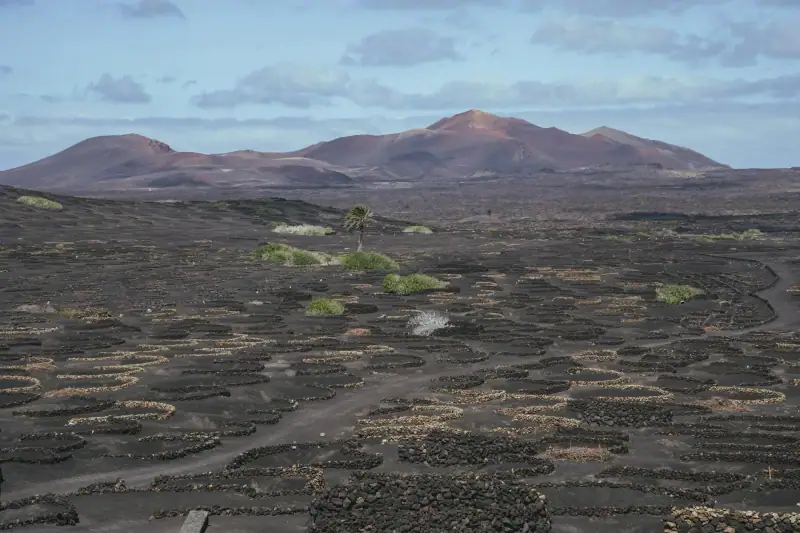
Fogo is not a beach destination. It is a destination with character, for curious and active travelers. The contrast between the gentleness of São Filipe (colonial town, warm locals, generous food) and the calm violence of the volcano (black lava, altitude, heat from the fumaroles) makes it one of the most memorable experiences in Cape Verde.
If you only have time for one volcanic island in your life, make it Fogo.
Sources
- CV Interilhas: figures checked November 2026
- CV Interilhas: figures checked November 2026
Frequently asked questions
How many days do you need to visit Fogo?
A minimum of 3 days is recommended to see the essentials: São Filipe, the Pico do Fogo climb and a night in the caldera. With 4 days, you can explore the coastal villages and add more hikes. The island is rarely visited on its own: combine it with Santiago (about 30 min by plane, or several hours by ferry).
Is the Pico do Fogo climb suitable for everyone?
The full climb (about 2,800 m / 9,190 ft) is hard and meant for hikers in good physical shape. The ascent takes 3 to 5 hours depending on your pace, on slopes of ash and volcanic rock. A local guide is strongly recommended. The hike around the crater rim (Bordeira) is accessible to everyone.
Can you sleep inside the Pico do Fogo caldera?
Yes, there are a few local guesthouses in the village of Portela, inside the Chã das Caldeiras caldera. It is the island's most unique experience: waking up at the foot of the active volcano, surrounded by vineyards and lava fields. The lodgings are simple but welcoming.
Is Fogo wine any good?
Fogo wine is a genuine surprise. Produced on the volcanic slopes of the caldera, at 1,600-2,200 m (5,250-7,220 ft), it comes from old vines grown in basalt soil. It is sold under the Chã brand, in red, white and rosé. The red is the best known, with a minerality and complexity rare for a tropical wine.
How do you get to Fogo from Santiago?
Two options: the Cabo Verde Interilhas ferry from Praia (about 4 hours, a few sailings a week, fare to confirm with the company) or a flight (30-40 min, daily, national airline TACV or Binter depending on the period, €50-80 / about $58-93). The ferry is cheaper but less frequent. Fogo airport (São Filipe) also receives flights from Sal. Check schedules in advance, as inter-island connections are sometimes full.
When is the best time to visit Fogo?
The dry season (November to June) is ideal. December to March bring pleasant temperatures (22-28 °C / 72-82 °F) and clear skies for the Pico climb. Avoid August-September (rainy season), when clouds can hide the summit and trails can get slippery.
Is there an eruption risk on Fogo?
Fogo is an active volcano. The last major eruption was in 2014-2015 and destroyed part of the village of Portela. Before you visit, check for recent volcanic activity. Outside periods of activity, the volcano is quiet and the climb goes without trouble. The National Institute of Meteorology and Geophysics (INMG) monitors the volcano around the clock.
More Cape Verde guides
Keep reading
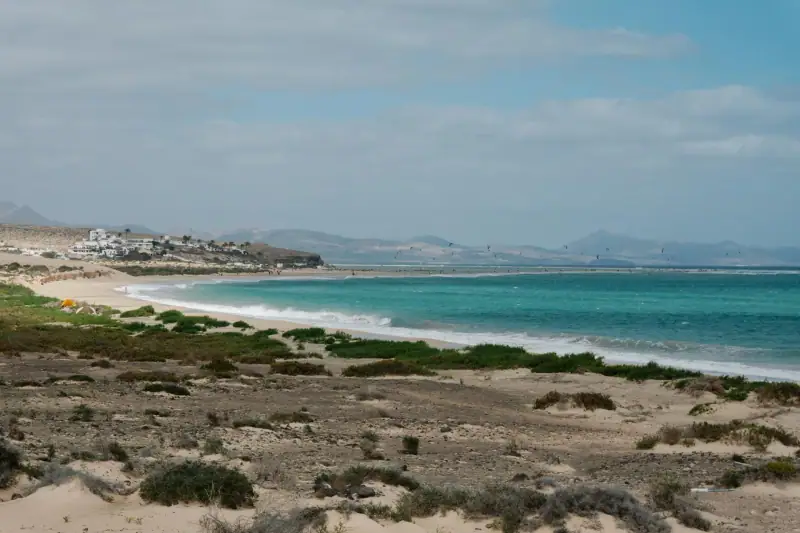
Visit Boa Vista: Complete Guide to the Island of Dunes
Everything to know about visiting Boa Vista, Cape Verde: beaches, dunes, sea turtles, kitesurfing, where to stay and how to get there.

Visiting Fogo Island: Complete Guide to Cape Verde's Volcano
Guide to visiting Fogo in Cape Verde: Pico do Fogo, Chã das Caldeiras, São Filipe, volcanic wine, hikes and practical information.
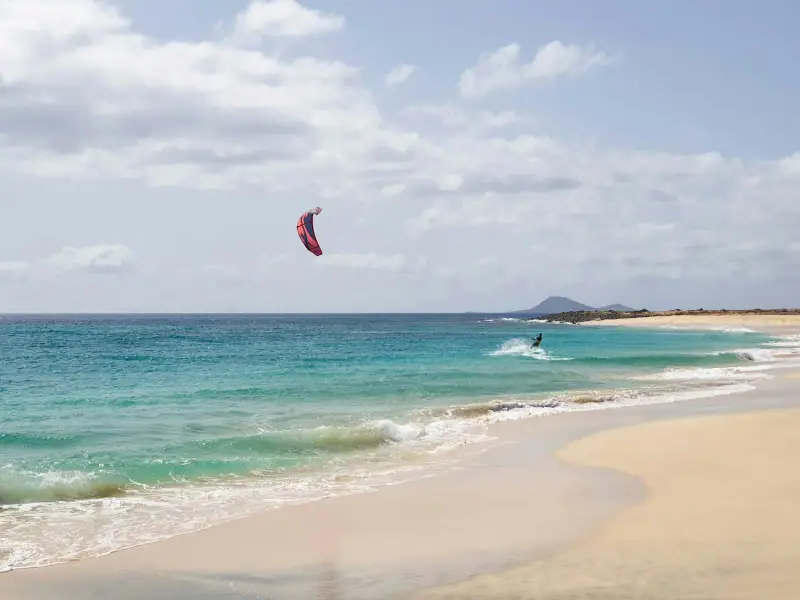
Visiting Sal Island: complete guide to the kitesurfing capital
Everything you need to visit Sal in Cape Verde: Santa Maria, Pedra de Lume, Buracona, beaches, kitesurfing, where to stay and how to get there.
Ready-made
Cape Verde itineraries
7 days
Cape Verde in 7 days: the perfect week itinerary
Cape Verde in 7 days: day-by-day plans for a great week on Sal, Santiago or São Vicente, with a detailed schedule and practical tips.
Can be adapted in the planner
14 days
Island Hopping in Cape Verde: A Guide to Visiting Several Islands
SalSantiagoSão VicenteSanto Antão
4 days
Mindelo and Santo Antão in 4 Days Without a Car: A Realistic Itinerary
São Vicente + Santo Antão in 4 days without a car: ferry, aluguers, stops, distances and travel times day by day, plus the pitfalls to avoid.