What to see
Visiting Fogo Island: Complete Guide to Cape Verde's Volcano

We may earn a commission when you book through links on this page, at no extra cost to you. We don't visit or try the places we cover: we summarize published sources. How we work
In short
- Pico do Fogo (2,829 m / 9,281 ft) is Cape Verde's only active volcano; the last major eruption ran from November 2014 to February 2015.
- A local guide is strongly recommended, and often required, for the summit climb: about 3 to 5 hours up from the caldera floor.
- Plan 2 to 3 days for the essentials (São Filipe, the caldera, one hike) and 4 to 5 days for the villages and the summit.
- The dry season, November to June, is best; avoid August and September, when clouds often hide the summit.
Fogo is a magnificent anomaly in the Cape Verde archipelago. There are no endless white-sand beaches, no all-inclusive resorts, no trade winds tamed by kitesurf schools. Here, raw geology sets the rules. The island is dominated by Pico do Fogo (2,829 m / 9,281 ft), Cape Verde’s only active volcano and one of the highest in the Atlantic. Travelers looking for authenticity regularly rank it among their strongest experiences in the archipelago.
Fogo is an island where black lava fields border vines growing in volcanic ash, where the colonial capital of São Filipe has kept its 18th-century sobrados, and where families still live inside a volcanic caldera at more than 1,600 meters (5,250 ft) of altitude. It commands respect, and it looks like nothing else in the archipelago.
Fogo in brief
Fogo is the fifth-largest of the Cape Verde islands by area (about 476 km² / 184 sq mi), with an estimated population of about 40,000. Its name, “Fire” in Portuguese, sums up its geological identity. The entire island is, in fact, the base of an immense stratovolcano rising from the Atlantic, whose summit, Pico do Fogo, reaches 2,829 meters (9,281 ft).
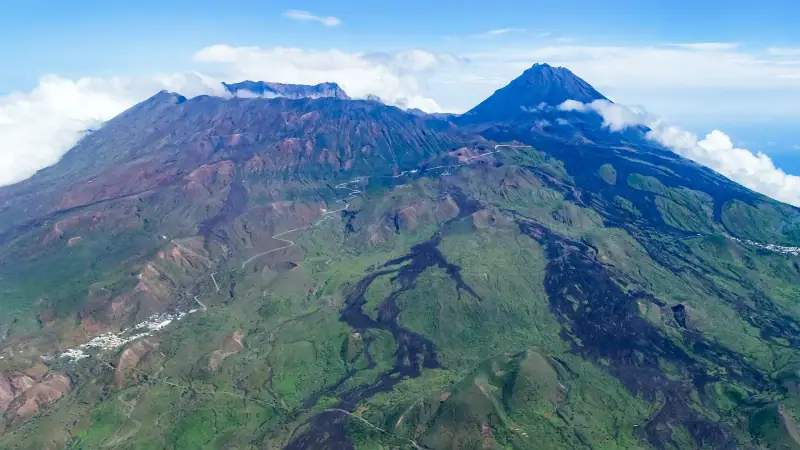
Fogo’s geology explains everything: the fertile black volcanic soils that allow vines, coffee and vegetables to grow at surprising altitudes; the rugged terrain that discourages mass tourism; and the monumental caldera, about 9 kilometers (5.6 mi) across, cut into the northeast flank of the volcano, where whole villages have lived and then returned to rebuild after each eruption.
A recent volcanic history. The last major eruption began in November 2014 and lasted until February 2015. Lava flows destroyed much of the villages of Portela and Bangaeira inside the caldera. Residents had been evacuated; many returned after the eruption to rebuild on the ash. Today the solidified lava forms a lunar landscape that coexists with the new houses, a striking testimony to the resilience of the Foguenhos.
People and culture. The people of Fogo, the Foguenhos, are known for their independent character and deep attachment to their island. The island’s culture is strongly influenced by African and Portuguese traditions. Fogo’s Creole has its own particularities. Music, notably morna and batuque, is central to social life.
Flights to Fogo
Compare flights from the other Cape Verde islands to São Filipe airport (SFL).
Pico do Fogo and the Chã das Caldeiras caldera
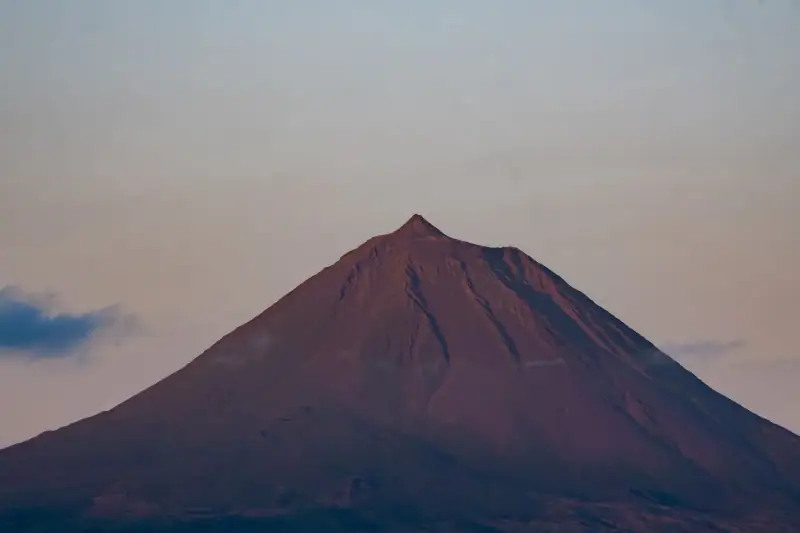
This is the heart of the island, its main attraction, and one of the most striking experiences in the whole Cape Verde archipelago. The Chã das Caldeiras caldera, literally “Plain of the Cauldrons,” is a vast volcanic depression several kilometers across, ringed by a wall of volcanic rock about 1,000 meters (3,281 ft) high called the Bordeira. At its center stands the cone of Pico do Fogo, a perfectly conical peak topped by an active crater.
Getting to the caldera
The main road from São Filipe climbs in switchbacks through landscapes that change radically with altitude. Below 1,000 meters (3,281 ft), crops are layered among banana and coffee trees. Higher up, the landscape gradually strips bare, giving way to endemic species and cooler air. The entrance to the caldera, through a gap in the Bordeira, suddenly reveals the inner panorama: the plain covered in black ash and solidified lava flows, the cone of the Pico dominating everything, and the few rebuilt houses of Portela.
The paved road ends at the caldera. The transfer from São Filipe by shared taxi (aluguer) takes about 45 minutes to 1 hour, depending on the negotiating. With a rental car, the trip is direct.
Climbing Pico do Fogo
The summit climb is the island’s signature activity and one of the most spectacular hikes in Cape Verde. From the caldera floor (about 1,700 m / 5,580 ft), the elevation gain to the summit is about 1,200 meters (3,940 ft), on volcanic ash slopes that give way underfoot with every step. The climb takes 3 to 5 hours depending on fitness and weather; the descent is fast on the ash slopes (1 to 2 hours).
The crater. At the top, the crater smokes slightly, a reminder that the volcano is dormant, not dead. In clear weather the view is extraordinary: the rest of the island spreads out below you, and in exceptional conditions you can make out Santiago and Brava on the horizon.
Practical advice. A local guide is strongly recommended, and often required to reach the summit cone: ask the natural park or your host. Guides are available in the village of Portela. Start early in the morning to avoid the clouds that usually form around midday and can hide the summit completely. Bring enough water and food; there is no infrastructure on the trail.
The Bordeira hike
For hikers who don’t want to or can’t climb to the summit, the hike along the Bordeira ridge is an excellent alternative. This loop follows the inner rim of the caldera for several hours, with plunging views of the volcanic plain and the Pico. The elevation gain is moderate and the trail is less technical than the summit route.
Staying in the caldera
Sleeping in the caldera, at the foot of an active volcano, is one of the most unusual experiences you can have in Cape Verde. Simple guesthouses exist in the village of Portela. Conditions are rustic but welcoming; at night, far from any light pollution, the starry sky over the caldera is exceptional.
Excursions and hikes on Fogo
Guided climb of Pico do Fogo, caldera excursions and island tours with experienced local guides.
São Filipe, the colonial capital
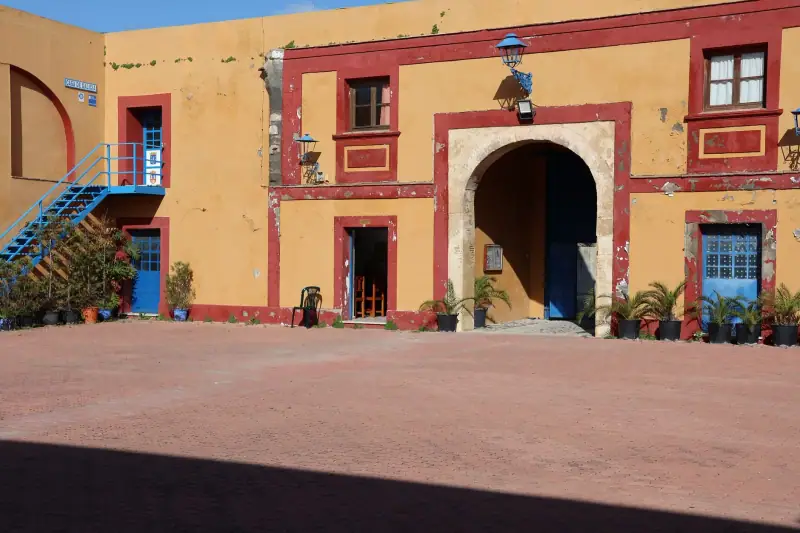
Perched on a cliff overlooking the Atlantic on the west side of the island, São Filipe is one of the most beautiful colonial towns in Cape Verde. Founded in the 16th century, Fogo’s capital has kept a remarkably intact historic center, with cobbled lanes and colorful mansions.
Sobrados, a memory of colonial architecture
São Filipe’s distinguishing feature is its sobrados, the two-story townhouses built in the 18th and 19th centuries by well-off families of Portuguese and Creole origin. Built of local volcanic stone and decorated with wrought-iron balconies and ceramics imported from Portugal, these houses reflect the island’s past prosperity, tied to the triangular trade and export agriculture.
Several sobrados have been restored in recent years and now house guesthouses, galleries or restaurants. A simple walk through the historic center around the Praça de São Filipe is enough to admire the facades.
The view from the cliffs
The promontory on which São Filipe stands is one of its most spectacular assets. From the cliff edge west of the town center, the view over the Atlantic is striking, and in good weather you can clearly see the profile of Brava, the small neighboring island, about 23 kilometers (14 mi) away. Sunset from this promontory is one of the finest in the archipelago.
The market and daily life
São Filipe’s central market, busy in the morning, is where local life converges: vegetables and fruit grown on the volcanic slopes, fish landed overnight, local crafts. It is worth a stop to soak up the island’s authentic atmosphere.
For a more detailed guide to São Filipe, see our dedicated article Visit São Filipe.
The villages of Fogo
Beyond São Filipe and the caldera, the island has several villages worth a stop for those who want to get off the beaten path.
Mosteiros, the fishing village of the north
Mosteiros, on the island’s north coast, is the second-largest settlement on Fogo. A fishing village backed against the flanks of the volcano, it shows a very different face from São Filipe: more working-class, less touristy, with an end-of-the-world atmosphere on the edge of the Atlantic. A small dark volcanic-sand beach borders the village, with often rough but remarkably photogenic water.
The road between São Filipe and Mosteiros, along the island’s west coast, passes contrasting landscapes: terraced crops on the volcano’s fertile slopes and black cliffs pounded by waves. The trip takes about 45 minutes to 1 hour by shared taxi or rental car.
Cova Figueira and the inland villages
In the fertile uplands between São Filipe and the caldera, farming villages are scattered where coffee, cassava, legumes and fruit trees grow on carefully built terraces. Cova Figueira is one of these hilltop villages, known for its high-altitude coffee. A stop in these villages helps you understand the volcanic agriculture that has fed the island for centuries.
São Jorge, vines and high-altitude crops
Halfway between São Filipe and the caldera, the village of São Jorge is surrounded by crops stacked on steep slopes. In this transition zone between the coast and the caldera, the vegetation is at its richest: mango trees, papaya trees, coffee plants and the first vines stand side by side in a landscape of surprising fertility for a volcanic island.
Car rental on Fogo
A vehicle is essential to explore Fogo's villages and different altitudes freely. Compare offers from São Filipe airport.
Fogo’s volcanic wine, a worldwide curiosity
Among Fogo’s most surprising curiosities is its volcanic wine, produced inside the Chã das Caldeiras caldera itself. This winemaking, developed during the 20th century by the caldera’s residents, is unique in Africa and rare worldwide: vines grown on soil made entirely of volcanic ash and basalt, between 1,600 and 2,200 meters (5,250 and 7,220 ft) of altitude, in an exceptional microclimate.
The Chã cooperative
The wine produced in the caldera is sold under the name Chã by the local cooperative. It comes in red, white and rosé. The red is generally the most appreciated: mineral, structured, with a complexity that is surprising for a tropical wine. These wines are produced in small quantities and are practically impossible to find outside Cape Verde, which makes them one of the most original souvenirs you can bring back from the island.
The cooperative offers tastings in the caldera (check opening hours and visiting conditions with the cooperative). The experience is all the more impressive because you are surrounded by black vines against a backdrop of solidified lava, with the Pico cone behind. A unique sensory and visual experience. To find out where to taste and buy bottles, read our guide to Fogo wine.
Fogo coffee
Less well known than the wine, Fogo coffee is nonetheless one of the best in Cape Verde. Grown at intermediate altitudes (between 500 and 1,200 meters / 1,640 and 3,940 ft), this arabica benefits from rich volcanic soil and a favorable climate. It is sold in São Filipe’s markets and in some shops on the island.
Hikes and activities on Fogo
Fogo is above all a hiking and volcanic exploration destination. Beaches are not the island’s strong point, but the mountain trails, lunar landscapes and panoramas are exceptional.
Main hikes
The climb of Pico do Fogo (see the dedicated section) is the island’s top hike. Hard, demanding, unforgettable.
The Bordeira, the circuit of the caldera rim, is an intermediate-level hike with constant views of the caldera and the Pico. Allow half a day.
The descent to the coastal villages from the heights of the caldera or the volcano’s flanks offers longer hikes that cross every vegetation level, from the black lava zone to the tropical crops of the coast.
The trails around São Filipe allow walks of a few hours through terraced gardens and surrounding villages, with regular views of the Atlantic and, in the distance, Brava.
Other activities
Visiting the 2014-2015 lava fields inside the caldera is a striking experience. The solidified flows, which swallowed part of the village of Portela, form a landscape of absolute blackness and fascinating texture.
Tasting volcanic wine and local grogue (sugarcane spirit) in the caldera or in São Filipe is a great cultural activity.
Watching the sunset from the São Filipe cliffs is one of the most memorable moments Fogo can offer, especially if the Pico is visible in the background.
Where to stay on Fogo
Accommodation on Fogo is modest but improving in quality. Most establishments are concentrated in São Filipe, with a few options in the Chã das Caldeiras caldera.
In São Filipe. Guesthouses in the historic center offer excellent value and immersion in local life. Several restored sobrados offer rooms with character. Prices are generally lower than on Sal or Santiago. Expect 25 to 60 euros (about $29 to $70) a night for a double room depending on comfort.
In the caldera. Lodging in and around the village of Portela is rustic and simple. Sleeping at the foot of an active volcano, far from any noise, is well worth the small discomfort. These rooms are in high demand in high season: book ahead.
Camping. The caldera technically lends itself to wild camping, but facilities are almost nonexistent. Ask locally about permissions.
Places to stay on Fogo
Guesthouses in São Filipe's sobrados or nights at the foot of the volcano in the caldera: find the best option for your stay.
How to get to Fogo
By air
São Filipe Airport (IATA code: SFL) receives flights from Praia (Santiago), Sal and sometimes other islands depending on the season and operators. The airlines offering inter-island links in Cape Verde have gone through significant changes in recent years, so check flight availability directly with the airlines or local agencies when you book.
By ferry
The ferry from Praia (port of Praia, on the island of Santiago) is the cheapest option. The crossing generally takes 4 to 5 hours depending on the weather and the vessel. There are also links from Brava, the neighboring island, by fast ferry (shorter crossing). Check schedules in advance, because frequencies and operators can vary by season.
Getting around the island
Shared taxis (alugueres) are the most common way to connect São Filipe with the inland villages and the caldera. They generally leave from São Filipe’s central market and run when full, so allow some flexibility in timing.
Renting a car is the most comfortable and flexible option for exploring the island at your own pace, especially for reaching more remote villages and managing the timing of the Pico climb. Several rental companies operate from São Filipe airport and in town.
On foot. São Filipe can be visited entirely on foot. The caldera can also be explored on foot once you are there, but to get from São Filipe to the caldera you need a vehicle (the road is long and steep).
Practical information
Currency. The Cape Verdean escudo (CVE) is the local currency. ATMs are available in São Filipe. In villages and the caldera, cash is often essential.
Language. Portuguese and Fogo Creole are the languages of the island. English is little spoken outside the tourism sector; a few words of Portuguese will make exchanges easier.
Climate. Fogo has a particular microclimate linked to its altitude. In the caldera, nights can be cool (below 15 °C / 59 °F in winter), even though the sun is intense during the day. Bring a warm layer for nights and early-morning climbs.
Safety. Fogo is a safe island for tourists. The only specific precautions concern volcanic activity (check INMG alerts before your trip) and mountain conditions (changeable weather, slippery slopes).
Water. Don’t drink tap water. Bottled water is available in São Filipe and in most villages.
Health. São Filipe’s hospital handles emergencies. For a serious problem, a transfer to Praia may be necessary. Travel insurance with repatriation cover is strongly advised.
Electricity. Type C and F sockets (European round plugs), 230 V / 50 Hz. Check whether your devices need a plug adapter and accept 230 V; details on outages and charging are in our guide to the electrical outlets in Cape Verde.
Time zone. Fogo, like all of Cape Verde, is on UTC-1.
A 4-day stay on Fogo
Day 1: Arrival in São Filipe
Arrive by plane or ferry and settle into a guesthouse in the historic center. Afternoon: stroll through the colonial center, visit the sobrados, and watch the sunset from the cliffs with a view of Brava. Dinner with cachupa and local fish.
Day 2: The Chã das Caldeiras caldera
Leave by aluguer for the caldera. Light lunch there, visit the 2014-2015 lava fields, volcanic wine tasting at the Chã cooperative, Bordeira hike in the late afternoon. Night in a caldera guesthouse.
Day 3: Climbing Pico do Fogo
Leave early in the morning (before 7 am) with a local guide for the climb. Back around 1 to 2 pm. Afternoon of rest in the caldera. Return to São Filipe late in the day.
Day 4: Mosteiros and fishing villages
A day exploring the north coast: the road to Mosteiros, the volcanic-sand beach, authentic village life. Grilled fish lunch. Return to São Filipe for an evening departure.
To plan your trip, see also our detailed Fogo island itinerary, our guide to island hopping in Cape Verde and our advice on the best time to visit Cape Verde.
Frequently asked questions
Is Fogo dangerous to visit because of the volcano?
Outside periods of volcanic activity, Fogo is perfectly safe to visit. Pico do Fogo is monitored continuously by Cape Verde's National Institute of Meteorology and Geophysics (INMG). The last major eruption was in 2014-2015. Always check current conditions before your trip, but in a normal season the climb and a visit to the caldera carry no particular risk.
Do you need a guide to climb Pico do Fogo?
A local guide is strongly recommended, and often required, for the summit climb. The ascent is demanding (about 1,200 to 1,400 m / 3,940 to 4,590 ft of elevation gain from the caldera), the volcanic ash slopes are slippery, and trail marking can be inadequate in the clouds. Guides are available in the village of Portela, inside the caldera. Plan on about half a day for the round trip from the caldera.
Can you buy Fogo wine on the island?
Yes. The Chã volcanic wine is produced and sold directly in the Chã das Caldeiras caldera, and in a few grocery stores and shops in São Filipe. The local cooperative offers tastings there (check opening hours with them). It is one of the most authentic souvenirs you can bring back from Fogo.
What is the best way to get to Fogo from Santiago?
The ferry from the port of Praia (Santiago) is the cheapest option. The crossing takes about 4 to 5 hours depending on the weather and the vessel (check with CV Interilhas). Flying from Nelson Mandela International Airport on Santiago (Praia, code RAI) is faster (about 30 to 40 minutes) but more expensive. Flights from Sal also exist in season.
Are there beaches on Fogo?
Fogo is not a beach island like Sal or Boa Vista. The coast is mostly rocky and volcanic. The fishing village of Mosteiros, in the north, has a small dark-sand beach with sometimes rough water. If beaches are your priority, Fogo is above all an island for hiking, culture and volcanic scenery.
How long should you plan for Fogo?
You need at least 2 to 3 days to see the essentials: São Filipe, the caldera and one day of hiking. With 4 to 5 days you can explore the coastal villages, attempt the summit climb and take in the island's unique atmosphere. Fogo combines well with Santiago on a longer stay in Cape Verde.
When is the best time of year to visit Fogo?
The dry season, from November to June, is ideal. Skies are clear for the climb, temperatures are pleasant and visibility is excellent. December to March is especially recommended. Avoid August and September (rainy season): clouds often hide the summit and some trails can be slippery or impassable.
More Cape Verde guides
Keep reading
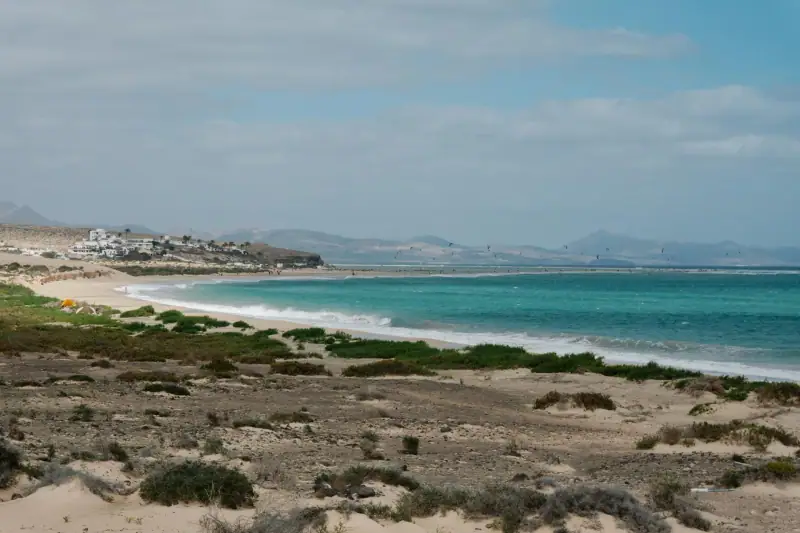
Visit Boa Vista: Complete Guide to the Island of Dunes
Everything to know about visiting Boa Vista, Cape Verde: beaches, dunes, sea turtles, kitesurfing, where to stay and how to get there.
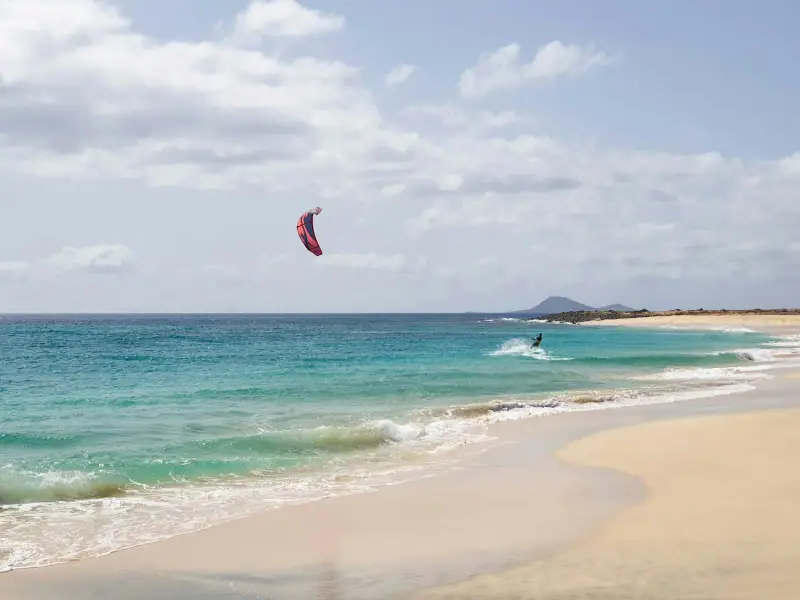
Visiting Sal Island: complete guide to the kitesurfing capital
Everything you need to visit Sal in Cape Verde: Santa Maria, Pedra de Lume, Buracona, beaches, kitesurfing, where to stay and how to get there.
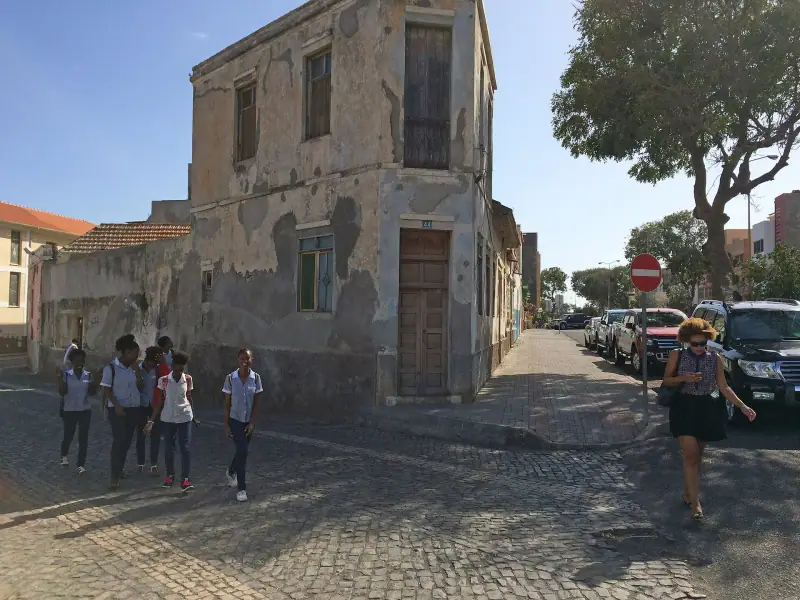
Visiting Praia: complete guide to Cape Verde's capital
Everything you need to visit Praia, the capital of Cape Verde: neighborhoods to explore, top sights, where to eat, where to stay and practical tips.
Ready-made
Cape Verde itineraries
4 days
Fogo Island: complete 3-4 day itinerary (volcano, São Filipe, wine)
Detailed itinerary for 3 to 4 days on Fogo: Pico do Fogo climb, São Filipe, Chã das Caldeiras, volcanic wine and fishing villages.
7 days
Cape Verde in 7 days: the perfect week itinerary
Cape Verde in 7 days: day-by-day plans for a great week on Sal, Santiago or São Vicente, with a detailed schedule and practical tips.
Can be adapted in the planner
14 days
Island Hopping in Cape Verde: A Guide to Visiting Several Islands
SalSantiagoSão VicenteSanto Antão