What to see
Visiting Praia: complete guide to Cape Verde's capital
We may earn a commission when you book through links on this page, at no extra cost to you. We don't visit or try the places we cover: we summarize published sources. How we work
In short
- Two full days are enough for Praia's essentials: the Plateau, the Sucupira market, the working-class neighborhoods and the beaches. Add a half day for Cidade Velha.
- Cidade Velha (UNESCO) is 15 km (9 mi) away, 20 to 30 minutes by taxi, about 1,000 to 1,500 escudos round trip.
- Best season is November to June, with dry weather and temperatures around 24 to 28 °C (75 to 82 °F). Aluguers cost 20 to 100 escudos.
- Praia is safe in tourist areas by day. Take usual precautions at the market and at night in working-class neighborhoods.
Praia is often skipped by travelers who land on Santiago just to connect to Sal or Boa Vista. That is a mistake. The capital of Cape Verde is an authentic, lively African city at the crossroads of Portuguese and African cultures, far from the artificial beach resorts of the north. This guide helps you discover everything Praia has to offer.
Praia, the capital tourists forget
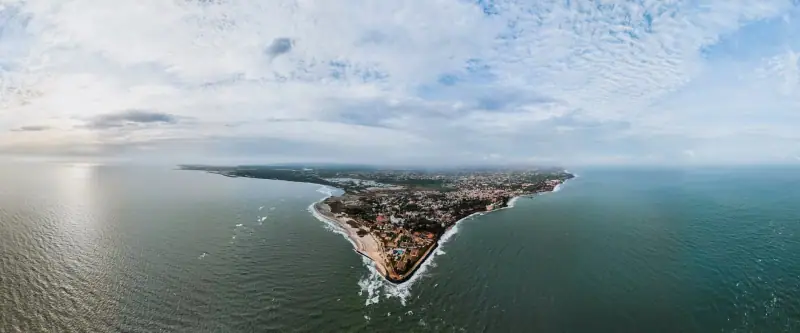
With about 205,000 inhabitants, Praia is by far the largest city in Cape Verde. As the country’s political, economic and cultural capital, it holds the ministries, universities, hospitals, embassies and the daily life of most Cape Verdeans.
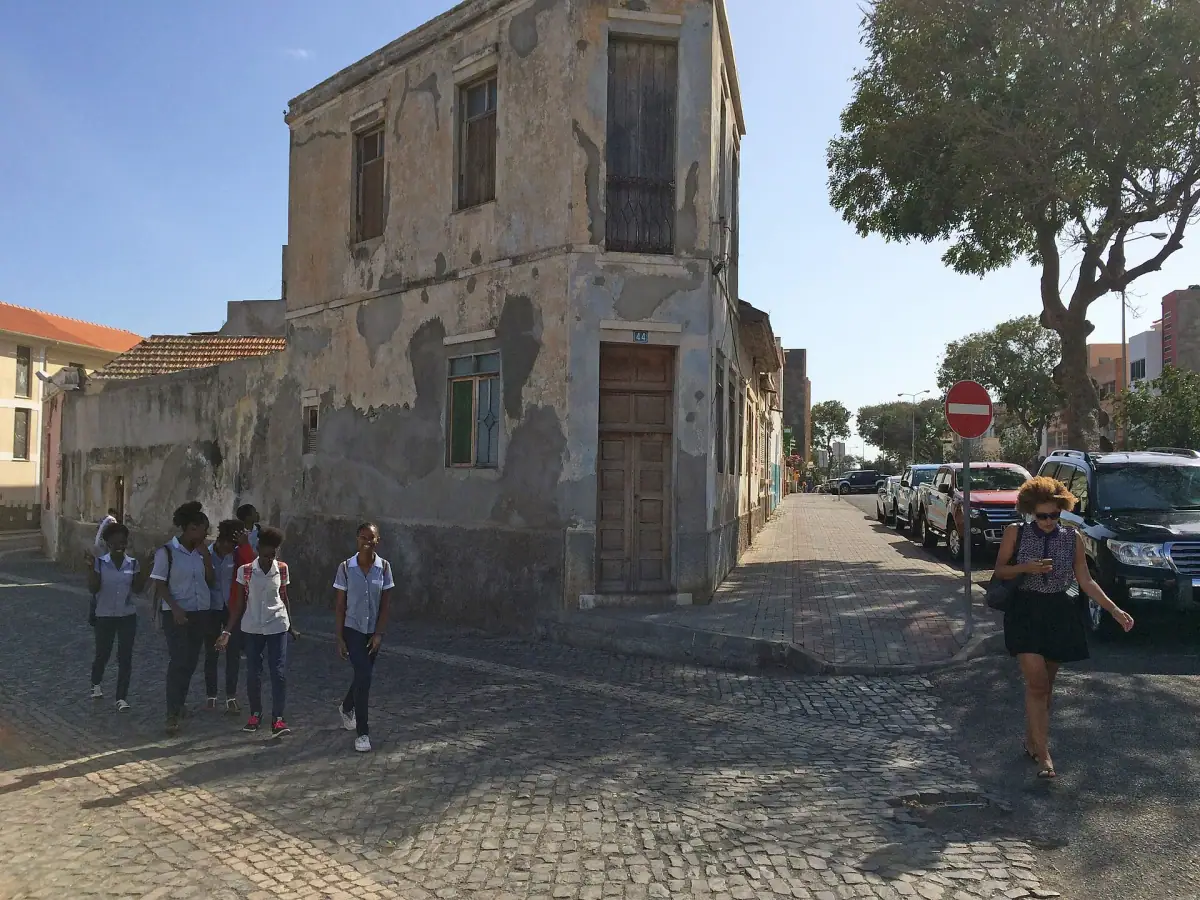
A city of contrasts. Praia is a city of striking contrasts: the historic Plateau, perched on a cliff, with its restored colonial buildings and tree-lined streets, sits next to the working-class neighborhoods below, where Creole life moves at full speed among market stalls, music kiosks and card games on the sidewalks.
Real Cape Verdean culture. If you want to understand who Cape Verdeans really are, including their food, their music and their way of life, Praia is far more revealing than the all-inclusive hotels of Sal. The capital is the melting pot of national identity: every island of the archipelago sends its sons and daughters here to study or work, creating a fascinating mix.
An ideal starting point. Praia is also an excellent base for exploring Santiago, the largest island in Cape Verde. Cidade Velha (UNESCO), Tarrafal and its beaches, the Serra Malagueta and the villages of the interior can all be reached on excursions from the capital.
Praia’s neighborhoods
The Plateau: the historic heart
The Plateau is Praia’s founding neighborhood, perched on a basalt cliff about 37 m (121 ft) above sea level. This is where you will find the main official buildings, the best-regarded restaurants and the most interesting architecture.
Praça Alexandre Albuquerque is the geographic and symbolic center of the Plateau. This large square, shaded by tamarisks and lined with ocher and white colonial buildings, is where residents meet. In the evening, families stroll, children play and elders chat on the benches.
The Cathedral of Our Lady of Grace (Igreja Nossa Senhora da Graça), facing the main square, is an early 20th-century church (built between 1894 and 1902). Its neoclassical facade in local stone deserves a look.
The National Assembly and the Government Palace line the streets of the Plateau. They are fine examples of Portuguese colonial administrative architecture, now serving Cape Verdean democracy.
The National Ethnographic Museum (Museu Etnográfico) is one of the most interesting in the archipelago: crafts, costumes, musical instruments and work tools from all the islands. A good overview of the country’s cultural diversity.
Suggested walk. Enter the Plateau by Avenida Amílcar Cabral (the main street), stroll to Praça Alexandre Albuquerque, then head down to the waterfront through the side lanes to see colonial architecture at its most authentic.
Hotels in Praia
Residences and hotels in the Plateau and the residential neighborhoods.
Quebra Canela and the waterfront
Just below the Plateau, the Quebra Canela neighborhood stretches along the waterfront. This is where you will find Praia de Quebra Canela, the capital’s city beach: a long strip of gray sand where residents come to swim, play beach soccer and enjoy the sunset.
The seaside boulevard (Avenida Cidade de Lisboa) is pleasant for an evening walk. A few restaurants and cafés have terrace tables with ocean views.
Praia de Gamboa, slightly farther north, is another popular beach reachable from the Plateau. It is smaller but often less crowded.
Achada Santo António
This upscale residential neighborhood east of the Plateau is home to the embassies, international organizations, modern supermarkets and Praia’s best restaurants. If you want a meal in a pleasant setting or need to buy supplies for a picnic, this is the place.
The Sucupira market
You cannot leave Praia without a stop at the Sucupira Market (Mercado do Sucupira), in the lower part of town. This big popular market is at once a food market, a textile bazaar, a tailoring workshop and a crafts souk.
You will find batik fabrics and Cape Verdean weaving, spices, Santiago coffee, woven baskets, souvenirs and everyday items. It is noisy, colorful, fragrant and unforgettable. Keep an eye on your belongings and be ready to bargain.
Hours: they vary by day, so check locally; the market is generally liveliest in the morning.
Top sights
Cidade Velha, a UNESCO site
For transport, duration and a half-day plan, read our guide Cidade Velha from Praia.
Located 15 km (9 mi) southwest of Praia, Cidade Velha (formerly Ribeira Grande) is the former colonial capital of Cape Verde and one of the most important sites in African history. Founded by the Portuguese in 1462, it is the first European town built in sub-Saharan Africa.
The site has been a UNESCO World Heritage Site since 2009. You can visit:
- The Real de São Filipe fortress (16th century), overlooking the bay from its cliff
- The Pillory (Pelourinho), a column of justice symbolizing the dark hours of the slave trade
- The ruins of the Sé Cathedral (construction began in 1556 and was completed in 1700)
- The present-day village with its colorful houses and its fishermen
Getting there: Taxi from Praia, 20 to 30 minutes (about 1,000 to 1,500 escudos round trip; negotiate with the driver so he waits). Some aluguers also serve Cidade Velha from the Sucupira terminal.
Museums and memorials
Praia has several museums that help you understand the complex and painful history of the archipelago. The National Archaeology Museum, in the Plateau, traces the pre-colonial and colonial eras through excavations and collections of historical objects.
The Memorial da Escravatura e do Tráfico Negreiro (Memorial to Slavery) in Cidade Velha is one of the most moving monuments in the whole archipelago: it honors the millions of Africans who passed through these islands as slaves on their way to the Americas.
Serra Malagueta: nature an hour from Praia
About 30 km (19 mi) north of Praia (about 1 hour by car), the Serra Malagueta Natural Park is one of Santiago’s natural jewels. This volcanic massif peaks at 1,063 m (3,488 ft) and offers lush vegetation, panoramic views and marked hiking trails.
Getting there requires a rental car or a taxi (500 to 800 escudos from Praia). The park is best explored in a half day, with a stop at the Vale do Pico Leão for its terraced farming.
Where to eat in Praia
Praia’s food is classic Cape Verdean cooking: generous, flavorful and inexpensive. The national dish, cachupa, is on the menu at almost every local restaurant. This stew of corn, legumes and meat (or fish), slow-cooked, is the soul of Santiago’s cuisine.
Places to eat:
- Restaurante Sol Atlântico (Achada Santo António): Quality Cape Verdean cooking in a pleasant setting, with possible sea views. Cachupa rica, grilled fish, lobster depending on the catch. Budget 1,500 to 2,500 escudos. Check that it is open and its hours before going.
- Churrasqueira Sorriso (Plateau): Local institution known for its grilled meats and frango assado (grilled chicken). Simple, hearty, tasty. Budget 700 to 1,200 escudos.
- Café Sofia (Plateau, Praça Alexandre Albuquerque): Terrace on the central square, coffee, breakfast and snacks. Ideal for watching life on the Plateau.
- Pontas do Ilhéu: Well-known seafood restaurant on the edge of Praia. Lobster, grilled octopus, swordfish. Budget 2,000 to 4,000 escudos. Check the address and opening before going.
- Mercado Central: Stalls in the central market serve local meals at rock-bottom prices: morning cachupa, grilled meats, fresh fruit juices. Lunch for under 500 escudos.
To learn more about local specialties, see our guide to Cape Verdean food.
Where to stay in Praia
Praia offers a fairly wide range of lodging for every budget. Most tourist lodging is concentrated in the Plateau and in Achada Santo António.
Boutique hotels. The Pestana Trópico is a 4-star hotel near Prainha beach, about ten minutes from the Plateau, with a panoramic terrace over the bay. A few boutique guesthouses have opened in the lanes of the Plateau, offering immersion in the restored colonial atmosphere.
Budget lodging. Guesthouses and small residences offer clean rooms for 2,000 to 4,000 escudos a night. Ask your hosts for restaurant and activity recommendations; locals are the best guides.
Tip. Book ahead if you arrive around the national holiday (July 5, Independence Day) or during local events. Praia can be packed during big cultural events.
For detailed recommendations, see our guide to lodging on Santiago.
How to get to Praia
By air. Nelson Mandela International Airport (RAI) is 3 km (2 mi) from downtown. TAP offers flights via Lisbon. Other connections exist from Europe and Africa (check airlines and frequencies with the carriers).
Inter-island. Cabo Verde Airlines (the national carrier, formerly TACV) serves the other main islands (Sal, São Vicente, Fogo, etc.); Binter CV, now Bestfly, has suspended its flights: check with the airline for current routes and schedules. Indicative prices: €40 to €120 (about $46 to $140) depending on destination and availability.
From the airport. Official taxis to the Plateau: 500 to 800 escudos (€5 to €8, about $6 to $9). Avoid unofficial drivers who approach you outside arrivals.
Practical info
Money. Cape Verde uses the Cape Verdean escudo (CVE), pegged to the euro (about 110 CVE to 1 EUR). ATMs (BCA, BCN) are plentiful in the Plateau and in Achada Santo António. Tourist hotels and restaurants often accept cards.
Language. Portuguese is the official language and the language of instruction. Cape Verdean Creole (kriolu) is the mother tongue of most residents. English is very rarely spoken; a few words of Portuguese or Spanish will be useful.
Safety. Praia is an ordinary African city: safe in tourist areas by day, more cautious at night in working-class neighborhoods. Keep your phone and camera in your bag in crowded places (market, buses).
Local transport. Aluguers (shared taxis, usually minibuses or shared cars) crisscross the city and the island at very low prices (20 to 100 escudos). Individual taxis are available everywhere. Rent a car to explore Santiago from the Plateau or the airport.
Connectivity. 4G from Alou (CVTelecom) and Unitel T+ covers Praia well. Hotels and cafés offer WiFi. A local SIM card costs a few hundred escudos (about 100 to 200 CVE for the card); expect about 700 CVE for a 5 GB plan valid for 30 days (check rates with the operators). Travel eSIMs are an alternative.
Health. Tap water is not recommended, so drink bottled water. Use mosquito repellent in the evening (dengue and malaria, low risk but present). Hospital Dr. Agostinho Neto is Praia’s main hospital.
Understanding Praia and its history
Praia was founded in the 15th century by the Portuguese as a supply port. The town gradually replaced Cidade Velha as the capital in the 18th century, for health reasons (malaria) and strategic ones (better defense against pirates).
During colonization, Santiago, and Praia, played a central role in the transatlantic slave trade. Millions of Africans were shipped from these coasts to the Americas. This painful history lives on in Cape Verdean collective memory and in the heritage sites of Cidade Velha.
The independence movement. Cape Verde gained independence on July 5, 1975, under the leadership of the PAIGC (African Party for the Independence of Guinea and Cape Verde), founded by Amílcar Cabral, an emblematic figure whose name is everywhere in the city: avenues, the airport, monuments.
Cape Verde today. The country is one of the most stable democracies in sub-Saharan Africa. Its economy relies on tourism, remittances from the diaspora (large in Portugal, the United States and France) and services. Praia holds most of the nation’s political and economic power.
To deepen your understanding of local culture, read our article on Cape Verdean culture.
A 2-day itinerary in Praia
Day 1: The Plateau and the city
- Morning: Arrive and settle into your lodging. Breakfast at Café Sofia on Praça Alexandre Albuquerque.
- Late morning: Walk the Plateau: cathedral, colonial buildings, Ethnographic Museum, residential streets.
- Lunch: Cachupa rica at a local restaurant on the Plateau (~800 escudos).
- Afternoon: Head down to the Sucupira market (1 hour of wandering), then back to the Quebra Canela waterfront for a swim.
- Evening: Dinner in Achada Santo António, live music in a bar on the Plateau.
Day 2: Cidade Velha and surroundings
- Early morning: Excursion to Cidade Velha (taxi, 20 min). Visit the fortress, the Pelourinho, the cathedral ruins and the village.
- Lunch in Cidade Velha or back in Praia.
- Afternoon: Free time: a walk on Praia de Gamboa, craft shopping at Sucupira, last photos of the Plateau at sunset.
- Evening: Seafood dinner, getting ready for the next day’s departure.
To fit Praia into a wider trip, see our 7-day Cape Verde itinerary.
Praia is a city that rewards curious travelers. Far from the clichés of postcard beaches, the Cape Verdean capital offers an authentic African and Creole experience: colonial history, generous cooking, music everywhere and warm people. Do not make the mistake of skipping it: give it at least two days, and it will surprise you.
Frequently asked questions
Is Praia worth the trip for a tourist?
Yes, Praia is an authentic, lively city that offers a Cape Verdean experience very different from the beach resorts of Sal or Boa Vista. It helps you understand the real local culture and the African and Creole history of the country, with areas like the Plateau, the Sucupira market and the Quebra Canela beaches.
How long do I need to visit Praia?
Two full days are enough to see the essentials of Praia: the historic Plateau, the market, the working-class neighborhoods and the beaches. One extra day lets you explore the surroundings (Cidade Velha, Tarrafal) on an excursion.
Which neighborhoods should I not miss in Praia?
The Plateau (the historic center on the cliff) is a must. Achada Santo António is home to embassies and upscale restaurants. Plateau Kwali and the Quebra Canela waterfront round out the visit. The Sucupira market, in the lower part of town, is a must for the atmosphere and for shopping.
Is Praia safe for tourists?
Praia is an African city with some disadvantaged neighborhoods. The usual caution applies (no visible jewelry, watch your phone), especially around markets and at night. The Plateau and tourist areas are generally safe by day. Avoid walking alone at night in less busy neighborhoods.
How do I get around Praia?
Shared taxis (aluguers) are the cheapest option (20 to 50 escudos per trip). Individual taxis are available everywhere (500 to 1,500 escudos depending on distance). Some travelers rent a car to explore the island of Santiago beyond the capital.
What is the best time to visit Praia?
November to June is the ideal season: dry weather and pleasant temperatures around 24 to 28 °C (75 to 82 °F). July to October is the rainy season (especially August and September): the island of Santiago is greener, but afternoon showers can be frequent.
Should I visit Cidade Velha from Praia?
Absolutely. Cidade Velha (or Ribeira Grande), 15 km (9 mi) from Praia, is the former Portuguese colonial capital and one of the only UNESCO World Heritage sites in Cape Verde. The taxi ride takes 20 to 30 minutes. It is an essential excursion to understand the history of the archipelago.
More Cape Verde guides
Keep reading
Visit Boa Vista: Complete Guide to the Island of Dunes
Everything to know about visiting Boa Vista, Cape Verde: beaches, dunes, sea turtles, kitesurfing, where to stay and how to get there.

Visiting Fogo Island: Complete Guide to Cape Verde's Volcano
Guide to visiting Fogo in Cape Verde: Pico do Fogo, Chã das Caldeiras, São Filipe, volcanic wine, hikes and practical information.
Visiting Sal Island: complete guide to the kitesurfing capital
Everything you need to visit Sal in Cape Verde: Santa Maria, Pedra de Lume, Buracona, beaches, kitesurfing, where to stay and how to get there.
Ready-made
Cape Verde itineraries
4 days
Fogo Island: complete 3-4 day itinerary (volcano, São Filipe, wine)
Detailed itinerary for 3 to 4 days on Fogo: Pico do Fogo climb, São Filipe, Chã das Caldeiras, volcanic wine and fishing villages.
7 days
Cape Verde in 7 days: the perfect week itinerary
Cape Verde in 7 days: day-by-day plans for a great week on Sal, Santiago or São Vicente, with a detailed schedule and practical tips.
Can be adapted in the planner
14 days
Island Hopping in Cape Verde: A Guide to Visiting Several Islands
SalSantiagoSão VicenteSanto Antão