Where to stay
Where to Stay in La Palma: Best Places and Areas
We may earn a commission when you book through links on this page, at no extra cost to you. We don't visit or try the places we cover: we summarize published sources. How we work
In short
- Puerto Naos (west coast) suits beach and relaxation; Santa Cruz de La Palma suits culture and the airport; Los Llanos de Aridane is the most central base.
- Casas rurales in El Paso and the forest areas are the best choice for nature, hiking and stargazing.
- Expect about €50-90 (~$58-105) a night for a comfortable apartment in shoulder season; La Palma is one of the most affordable Canary Islands.
- A rental car is essential: mountain roads link areas that public transport does not serve.
La Palma, nicknamed “La Isla Bonita” and “La Isla Verde”, is often described by its residents as the most spectacular of the Canary Islands. A UNESCO Biosphere Reserve since 2002 (the Bosque de los Tilos since 1983), it piles up superlatives: subtropical laurel forests protected within that Biosphere Reserve, a spectacular erosion caldera, and a night sky so well preserved that it has been, since 2012, co-first Starlight Reserve in the world alongside the Alqueva Reserve (Portugal). Yet it receives far fewer tourists than its neighbors Tenerife or Gran Canaria, which makes it especially appealing for travelers who want to avoid crowds.
Choosing where to stay in La Palma is a strategic decision, because the island is more mountainous and rugged than the other Canary Islands. The roads wind through spectacular terrain and link areas of very different character: the sunny west coast with its black sand beaches, the colonial capital in the east, the dense forests of the center and the isolated villages of the north and south. This guide helps you find the ideal base for what you want.
The main accommodation areas in La Palma
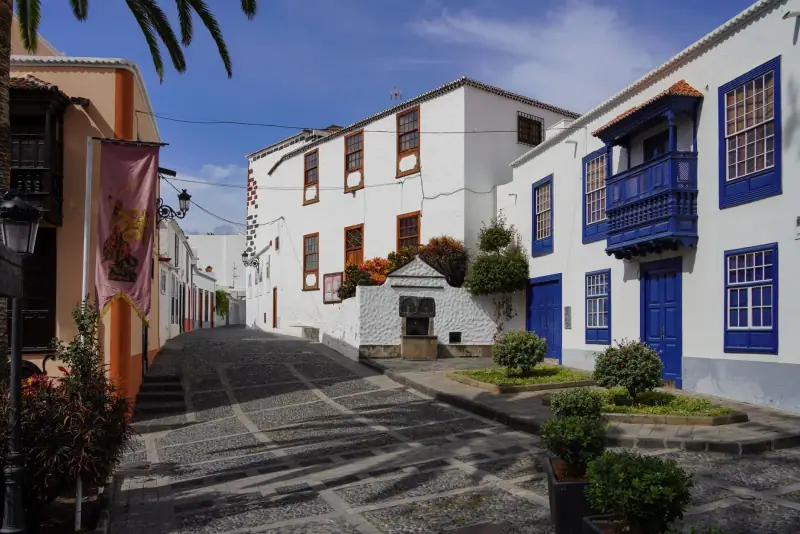
La Palma divides naturally into several tourist areas with distinct profiles. Unlike Tenerife or Lanzarote, the island has no large seaside resorts built for mass tourism; its accommodation areas remain human-scaled and well integrated into the environment.
Santa Cruz de La Palma: the authentic capital
Santa Cruz de La Palma is the island’s capital and one of the most beautiful colonial towns in the Canary Islands. Its historic center, with its colorful facades and characteristic carved wooden balconies, is listed as a National Historic and Artistic Monument. The town is nestled between the sea and the first green slopes of the central massif.
What sets Santa Cruz de La Palma apart:
The malecón (seafront promenade) concentrates cafés, fish restaurants and local shops in an authentically Spanish atmosphere. Calle Real (or Calle O’Daly), the main pedestrian street, lines up historic mansions from the 16th and 17th centuries. Plaza de España, with its Iglesia Matriz de El Salvador (Church of the Holy Savior, 16th century) and Renaissance town hall, is one of the most beautiful squares in the islands.
The airport is about 7-8 km (4-5 mi) south of the capital, which makes it the most practical area for travelers who arrive early or leave late. The beaches, however, are limited: the small black sand beach in town cannot compete with those of the west coast.
Who it suits:
- Fans of colonial architecture and culture
- Travelers who want to immerse themselves in island life
- Late arrivals or departures, thanks to the airport nearby
- Visitors who do not plan to rent a car (the center is walkable)
Average price: €55-120 (~$64-140) a night (hotels, guesthouses, apartments)
Hotels in Santa Cruz de La Palma
Compare prices and availability in the island's capital.
Los Llanos de Aridane: the commercial heart of the west
Los Llanos de Aridane is the most populous town in La Palma and the economic and commercial center of the western half of the island. Unlike Santa Cruz, which faces the sea, Los Llanos is an inland town, set on a fertile plateau surrounded by banana and avocado plantations.
It is a real Spanish town with markets, shops, tapas restaurants and an everyday-life atmosphere. Plaza de España, with its palm trees and outdoor cafés, is the social heart of the town.
Strengths of Los Llanos de Aridane:
- Central position on the west side, about 10-11 km (6-7 mi) by road from the beaches of Puerto Naos (14 min) and close to Tazacorte
- The island’s widest choice of shops, supermarkets and restaurants
- Prices generally lower than in coastal and tourist areas
- Excellent base for day trips across the western half and the center of the island
- Authentic local atmosphere without overtourism
Drawbacks:
- Not directly on the sea (allow 10-15 minutes by car to reach the beaches)
- Little appeal of its own beyond the feel of a provincial town
Average price: €45-90 (~$52-105) a night
Puerto Naos: the island’s main beach resort
Puerto Naos is La Palma’s most touristy seaside village, on the island’s west coast. Its black volcanic sand beach is one of the largest and most accessible on the island, with generally good swimming conditions.
Important recent history: In 2021, the Cumbre Vieja volcano erupted for 85 days and covered large areas of the island’s southwest; the lava reached neighborhoods near Puerto Naos. The area has gradually reopened to residents and tourists (shops and housing reopening in 2026, swimming at Playa Chica allowed in late July 2026), under continued monitoring of CO₂ levels. Some sectors remain restricted and the situation may still change, so check recent information before you book.
What draws people to Puerto Naos:
- The black volcanic sand beach, characteristic of the island
- Several well-equipped hotels and tourist complexes
- Restaurants, bars and tourist services concentrated in one place
- Access to interesting dive spots in clear waters
- Moderate nightlife, much quieter than the big resorts on the other islands
Who it suits:
- Beach and relaxation vacationers
- Families looking for lodging with a pool and services
- Divers and snorkelers
Average price: €70-160 (~$81-185) a night
Tazacorte: the fishing port and its beaches
Tazacorte is a coastal village a few kilometers north of Puerto Naos, built around an active fishing port and a long black sand beach. The atmosphere is more local than in the neighboring resort, with restaurants that also rely on local residents as customers.
The village has two parts: upper Tazacorte (on the plateau, more residential) and the port below with its beach and fresh fish restaurants. A few hotels and many apartment rentals are available at very competitive prices.
Why choose Tazacorte:
- Pleasant beach with fewer people than Puerto Naos
- Fresh fish restaurants right on the port
- Preserved local atmosphere
- Lodging prices often lower than in tourist areas
- Starting point for boat trips along the northwest cliffs
Average price: €50-110 (~$58-130) a night
Car rental in La Palma
Essential for exploring the island's mountain roads and remote villages.
Rural and forest areas: La Palma’s unique experience
One of La Palma’s great assets compared with the other Canary Islands is its network of casas rurales (country houses) scattered through the forests, on the flanks of the caldera and in mountain villages. These lodgings offer an authentic experience that is not easy to find elsewhere in the Canary Islands.
El Paso: the gateway to the Caldera de Taburiente
El Paso is a village in the central part of the island, at the foot of the Caldera de Taburiente National Park. It is the most practical access point for hikers who want to explore the park, which is part of the Spanish national parks network.
Several casas rurales and small rural hotels surround the village, offering nights in an exceptional natural setting. Evenings are cool (the village is at elevation), the silence is total and the starry sky is among the most spectacular on the island.
What you will find in El Paso:
- Casas rurales with gardens and panoramic terraces
- Immediate proximity to the national park
- A village with basic shops, local restaurants and a weekly market
- A center of Canarian silk production (sericulture unique in Europe, with the Museo de la Seda)
Fuencaliente: the volcanic end of the world
Fuencaliente is the southernmost village on La Palma, in a landscape dominated by recent volcanoes and lava flows. The Volcanes de Teneguía site (last eruption in 1971) and the Salinas de Fuencaliente (coastal salt pans) create a fascinating lunar landscape.
A few rural lodgings and vacation houses are found here for travelers who want to immerse themselves in this singular landscape. It is also an excellent base for diving, as the southern waters are known for their clarity and abundance of fish.
Who it suits: Volcanic geology fans, divers, landscape photographers, travelers seeking isolation
Average price (casas rurales): €55-120 (~$64-140) a night
The north of the island: Garafía and Barlovento
The north of La Palma, especially the municipalities of Garafía and Barlovento, is the most isolated and most authentic part of the island. The landscapes are spectacular: dizzying cliffs, dense laurel forests, small villages of white houses clinging to the slopes.
This is where the Bosque de los Tilos is found, a subtropical laurel forest listed as a UNESCO Biosphere Reserve since 1983 (municipality of San Andrés y Sauces). Lodgings are few and mostly rural, with some casas rurales and rooms in private homes.
Practical warning: The north is hard to reach, by roads that are sometimes narrow and winding. Allow 35 to 55 min from Santa Cruz de La Palma (about 35 min to Barlovento, 55 min to Garafía). This area suits only independent travelers with a vehicle and good mountain driving experience.
Recommendations by budget
Budget (under €50 / ~$58 a night)
La Palma is one of the Canary Islands where a modest budget still gets you decent lodging. The best budget options are self-catering apartments in Los Llanos de Aridane, guesthouse rooms in Santa Cruz de La Palma, and casas rurales with breakfast in the mountain villages.
Practical tips:
- Book in low season (May-June and October-November) for the best prices
- Apartments rented by private owners are often cheaper than hotels for the same level of comfort
- Christmas and New Year prices soar, so book early if you travel then
Mid-range (€70-140 / ~$81-160 a night)
This is the widest range in La Palma. The aparthotels in Puerto Naos, the charming hotels in Santa Cruz de La Palma and the casas rurales with a pool in the forest areas offer excellent value. Lodgings in this range generally include a private terrace, a fully equipped kitchen and access to a pool or garden.
Recommended areas:
- Puerto Naos for the beach and services
- Santa Cruz de La Palma for culture and authenticity
- El Paso for nature and proximity to the national park
Comfort/luxury (€140 / ~$160 and up)
La Palma’s high-end offering is limited but good. A few boutique hotels and premium casas rurales stand out for their careful architecture, fine dining and panoramic terraces. Since the island has no large international resorts, luxury here is more intimate and more authentic.
What to look for:
- Casas rurales with a private pool and a view of the Caldera
- Boutique hotels in restored colonial buildings in Santa Cruz
- Ecotourism lodges in the forest areas
Choosing by profile
Families with children: Puerto Naos has the best tourist infrastructure and the most accessible beaches. Los Llanos de Aridane is a good alternative for convenience (shops, varied restaurants).
Couples: Secluded casas rurales in the forests around El Paso or the Caldera de Taburiente offer a unique romantic experience. La Palma’s starry nights are among the finest in Europe.
Hikers and active travelers: El Paso for the Caldera de Taburiente National Park, or a casa rural in the central forest areas for direct access to the long-distance trails.
Astronomy fans: Choose lodging at elevation in the northern or central municipalities; La Palma’s Starlight map shows the areas with the best night sky quality.
Divers and water sports fans: Puerto Naos and Tazacorte for convenience, or Fuencaliente for the richest dive spots in the south of the island.
First visit: Santa Cruz de La Palma to discover the island’s soul, with a car to reach the west coast beaches and the forests of the center.
Tight budget / backpackers: Los Llanos de Aridane remains the cheapest area with the best access to services. Santa Cruz de La Palma also has reasonably priced guesthouses.
To plan your stay in detail, see our complete guide to La Palma so you don’t miss anything on this exceptional island.
When to book your La Palma accommodation
La Palma has a particular microclimate shaped by its terrain: the west coast (sheltered from the trade winds) is drier and sunnier, while the east coast and the mountain areas get more rain and cloud. That humid east side feeds the laurel forests the island is known for.
Best season for the beach (west coast): May to October, with July-August as the peak of heat and tourism. Temperatures range between 24 and 28 °C (75-82 °F) on the coast.
Best season for hiking: Spring (March-May) and fall (September-November). Vegetation is at its peak and temperatures at elevation are pleasant. Avoid summer in the high mountains, as trails can be crowded and the heat is significant.
Winter (December-February): The west coast stays pleasant (18-22 °C / 64-72 °F), but the center and east of the island can be cloudy and rainy. It is the ideal time to escape the cold while enjoying the coast.
Booking: Unlike the big tourist islands, La Palma does not get massively overbooked. It is generally possible to find quality lodging 4 to 6 weeks ahead, except in high season (July-August and Christmas), when booking 2-3 months ahead is recommended.
You can also explore the neighboring islands: our La Gomera guide and our El Hierro guide open the way to the wildest and best-preserved islands of the Canary archipelago.
Frequently asked questions
What is the best area to stay in La Palma?
For a first visit, Puerto Naos (west coast) is ideal for the beach and relaxation, while Santa Cruz de La Palma suits culture and authenticity lovers. Los Llanos de Aridane is the most central and practical area for exploring the whole island by car.
Is La Palma expensive for accommodation?
La Palma remains one of the most affordable Canary Islands. Expect €50-90 (~$58-105) a night for a comfortable apartment in shoulder season. Casas rurales in the forest areas offer an excellent experience, often at prices below Canary Islands standards.
Do you need a car to visit La Palma from your accommodation?
Yes, a rental car is essential in La Palma. Mountain roads link areas not served by public transport. A car lets you explore the Caldera de Taburiente, the laurel forests and the remote villages of the north and south.
Where should you stay in La Palma for quiet and nature?
Casas rurales in the forest areas of the Caldera de Taburiente, in El Paso or in the northern villages (Garafía, Barlovento) offer total immersion in nature. The whole island is a UNESCO Biosphere Reserve, but these areas are particularly well preserved.
Which area is closest to La Palma airport?
La Palma airport is about 7-8 km (4-5 mi) south of Santa Cruz de La Palma, so the capital is the closest area. Los Llanos de Aridane and Puerto Naos, on the west side, are about 35-40 minutes by car from the airport on the main road.
Is La Palma a good place for stargazing?
Yes, La Palma is recognized as one of the best astronomy destinations in the world. The island is home to the Roque de los Muchachos Observatory, one of the largest in the world. Rural lodgings at higher elevations offer exceptional starry nights.
More Canary Islands guides
Keep reading
Where to Stay in Lanzarote: Best Neighborhoods and Resort Areas
Choose where to stay in Lanzarote: Puerto del Carmen, Costa Teguise, Playa Blanca... Every area and budget, with typical nightly prices.
Where to Stay in Fuerteventura: Best Areas and Resorts
Choose where to stay in Fuerteventura: Corralejo, Morro Jable, Costa Calma, Caleta de Fuste... Every area by traveler profile and budget.
La Gomera: a complete guide to the island of forests and whistled language
La Gomera travel guide: Garajonay, El Silbo, Valle Gran Rey, hiking and food. Everything you need to visit the quietest of the Canary Islands.
Ready-made
Canary Islands itineraries
5 days
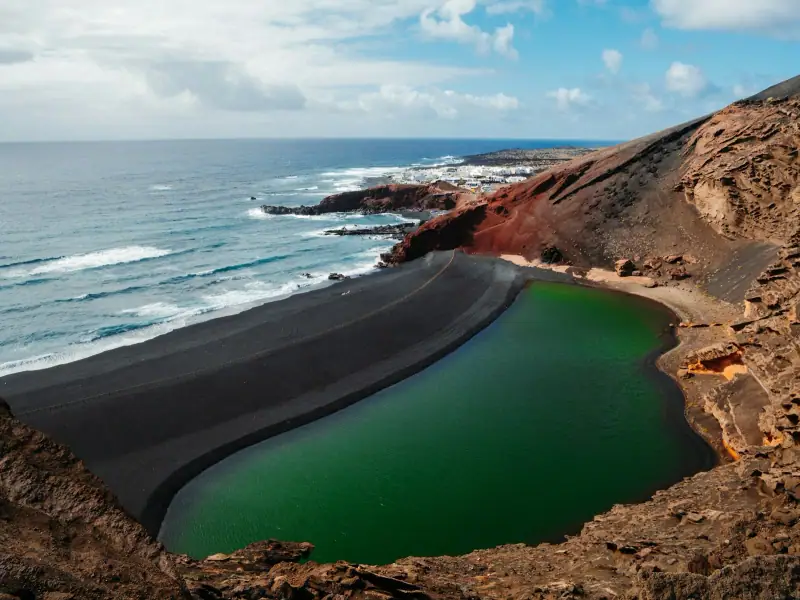
Lanzarote in 5 Days: A Complete Itinerary for the Volcanic Island
5-day Lanzarote itinerary: Timanfaya, Jameos del Agua, Playa Papagayo, César Manrique. A day-by-day plan to make the most of the volcanic island.
Can be adapted in the planner
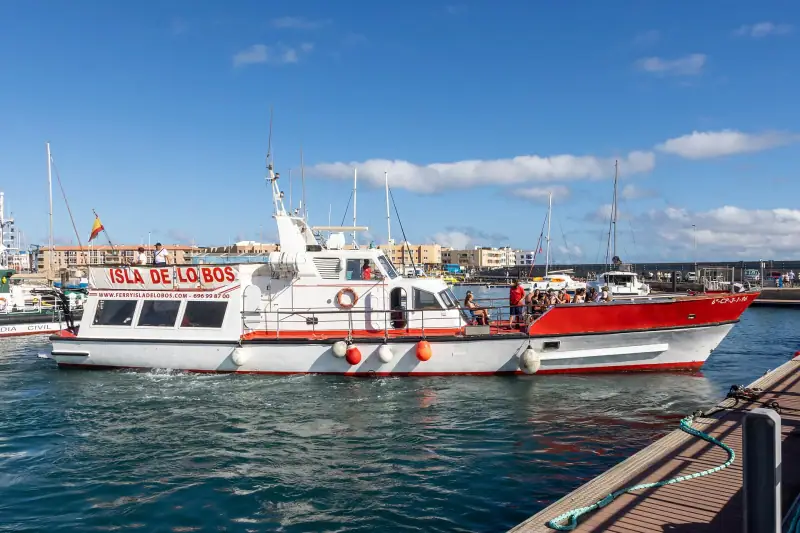
Island Hopping in the Canary Islands: Visiting Several Islands in One Trip
Island hopping in the Canary Islands: ferries, flights, multi-island itineraries and tips to combine Tenerife, Gran Canaria, Lanzarote and Fuerteventura.
5 days
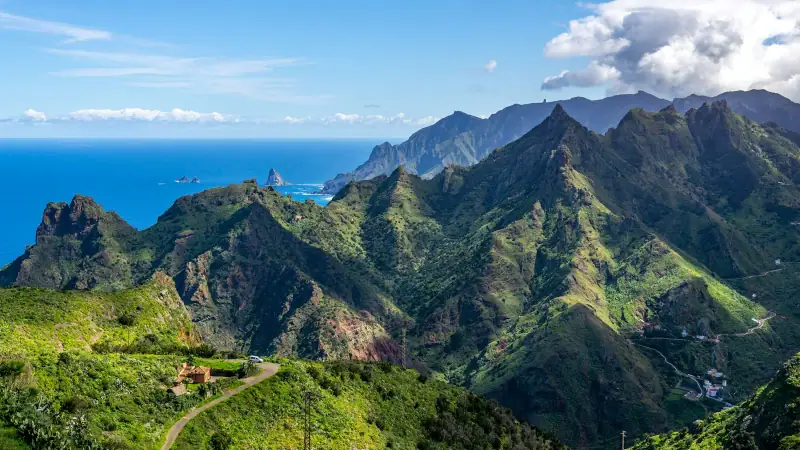
Tenerife in 5 Days Without a Car: A Realistic Bus and Tram Itinerary
Puerto de la CruzLos Cristianos