What to see
La Gomera: a complete guide to the island of forests and whistled language
We may earn a commission when you book through links on this page, at no extra cost to you. We don't visit or try the places we cover: we summarize published sources. How we work
In short
- La Gomera is 50 minutes by fast ferry from Los Cristianos on Tenerife, and has no international airport.
- Garajonay National Park (UNESCO since 1986) covers about 40 km² (15 sq mi) of laurel forest; El Garajonay peaks at 1,487 m (4,879 ft).
- Plan 3 to 4 days minimum, ideally a week for serious hiking, and rent a compact car for the winding roads.
- Budget runs about €50-70 (~$58-81) a day on a tight budget and €150-200 (~$175-230) for comfort.
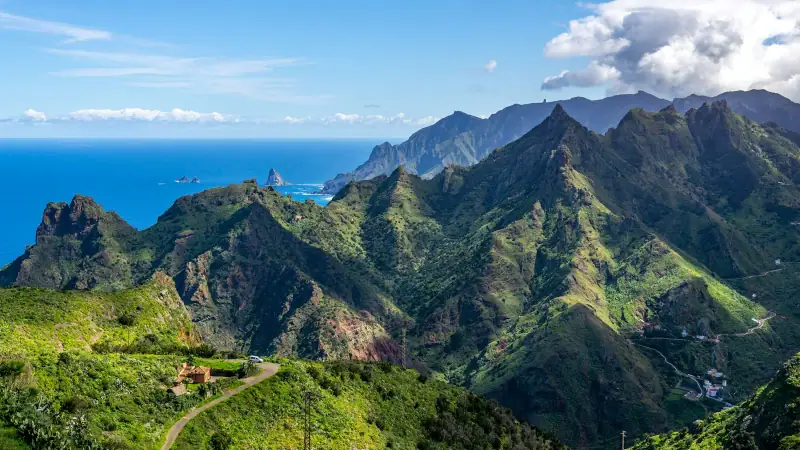
La Gomera is the Canary Island that most thoroughly contradicts the “sun and beach” cliché. Here, vegetation takes over with surprising force: misty forests wrapped in a cathedral silence, valleys so deep that people invented a language to shout from one slope to the other, and ancient laurels whose branches arch over the trails like natural vaults.
La Gomera is both one of the most accessible Canary Islands (50 minutes by ferry from Tenerife) and one of the best preserved. With about 20,000 residents spread over 369 km² (142 sq mi), it never gave in to mass tourism. There is no international airport, no big seafront hotel chains, no assembly-line resorts. What you find on La Gomera is Garajonay National Park, a UNESCO World Heritage Site and a primeval forest that has survived three million years of climate upheaval, and El Silbo, a whistled language unique in the world that locals still teach their children.
This guide gives you what you need to explore La Gomera, from its mysterious forests to its spectacular basalt cliffs, from its deep valleys to its distinctive food.
Garajonay National Park: the Canary Islands’ primeval forest
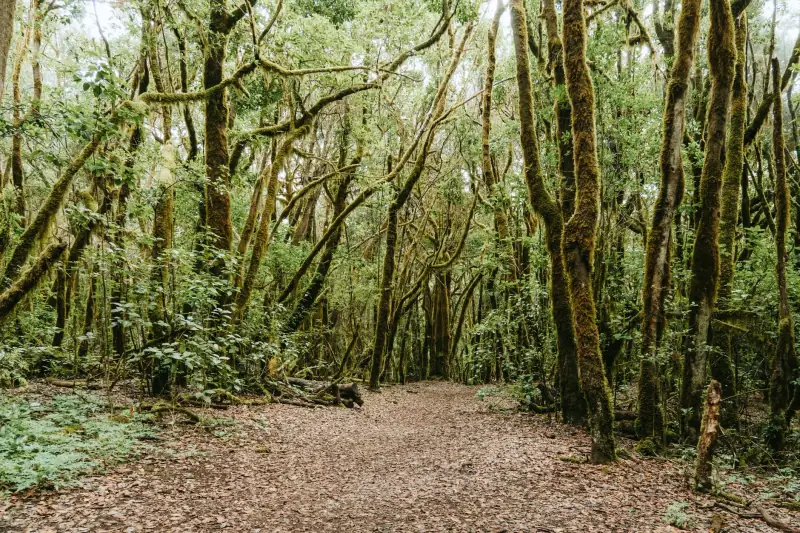
Garajonay National Park is the living heart of La Gomera and one of the most remarkable forests in Europe. A UNESCO World Heritage Site since 1986, it covers about 40 km² (15 sq mi), roughly 11% of the island, and shelters an extremely rare type of forest: laurisilva (laurel forest), a humid subtropical forest that once covered the whole Mediterranean basin and the Macaronesian islands several million years ago, before the ice ages wiped it out almost everywhere else.
The Garajonay laurel forest survived thanks to the particular microclimate of La Gomera’s high ground. Clouds carried by the trade winds get caught against the summits, creating an almost permanent mist that keeps humidity high even in midsummer. This “horizontal rain” feeds the forest even when direct rainfall is not especially heavy.
The forest’s signature species
The forest is dominated by the Canary laurel (Laurus novocanariensis), the til (Ocotea foetens), the viñátigo (Persea indica) and the barbusano (Apollonias barbujana). These trees can reach impressive sizes, with moss-covered trunks and branches heavy with lichen. Tree ferns sometimes reach 2 to 3 m (7 to 10 ft) in the dampest areas.
Wildlife includes the Bolle’s pigeon (Columba bollii) and the laurel pigeon (Columba junoniae), two Canary Islands endemics that depend entirely on the laurel forest to survive. The park also shelters birds of prey such as the Garajonay harrier, and many endemic reptiles.
El Garajonay summit (1,487 m / 4,879 ft)
The highest point on La Gomera is El Garajonay, at 1,487 m (4,879 ft). The climb from Laguna Grande is fairly accessible (about 1 h 30 each way, moderate elevation gain). On a clear day the view from the top takes in Tenerife and Teide (and with luck, La Palma, El Hierro and Gran Canaria). But even in the clouds, which are often there, the path through the misty forest has a unique atmosphere.
Marked trails and loops
The park has around twenty marked trails, from one-hour strolls to long full-day hikes. Laguna Grande is the most accessible hub, with a picnic area, a viewpoint and several loops starting from it. The GR-132, a long-distance trail that circles the island (about 120 km / 75 mi), crosses the park through its most beautiful sections.
The Garajonay Visitor Center (at Juego de Bolas, near Agulo) has an educational exhibit on the laurel forest, its wildlife, plants and geological history, an excellent place to start before you explore.
Guided hikes on La Gomera
Explore the Garajonay laurel forest and La Gomera's valleys with a local guide: forest loops, descents to Valle Gran Rey, themed hikes on wildlife and plants.
El Silbo: the whistled language of La Gomera
If La Gomera has an invisible treasure, it is El Silbo Gomero, a whistled language that goes back to the island’s first inhabitants, the Guanches. El Silbo reproduces Spanish as modulated whistles: each phoneme of Spanish corresponds to a combination of pitch, duration and intonation. An experienced whistler can send complex messages across the island’s deep valleys, over distances of 2 to 3 km (1 to 2 mi) in good acoustic conditions.
Born of practical need (how do you communicate between valley slopes that are hours apart on foot?), El Silbo nearly disappeared in the second half of the 20th century as communications modernized. The Autonomous Community of the Canary Islands responded by making it compulsory in all La Gomera schools from 1999. Ten years later, in 2009, UNESCO added it to the list of the Intangible Cultural Heritage of Humanity, alongside flamenco and the Mediterranean diet.
Today El Silbo is alive. Children on La Gomera learn to whistle at school, some restaurant owners put on demonstrations for visitors, and in remote villages you can still meet locals whistling from one terrace to another. It is one of the most unusual experiences you can have in the Canary Islands.
Valle Gran Rey: the end of the world at the end of the road
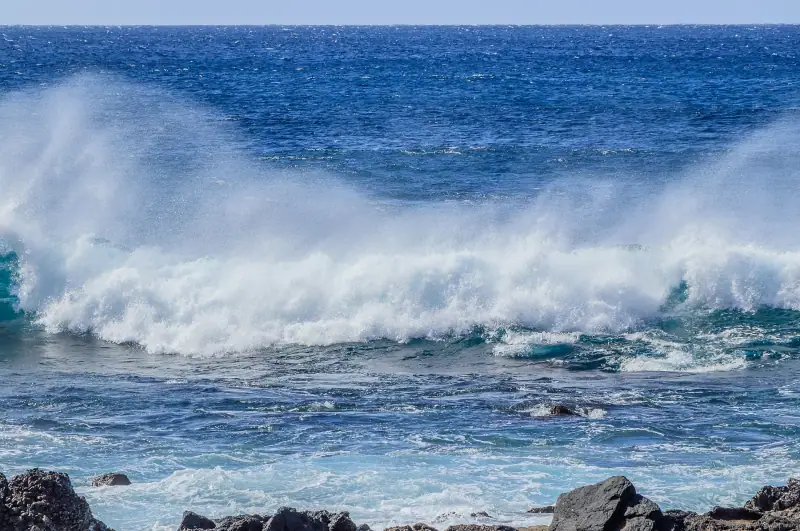
Valle Gran Rey is La Gomera’s main tourist destination, and for good reason. This dramatic valley, carved by water down to the sea in the southwest of the island, is the only place on La Gomera with good swimming conditions: a dark sand beach, calm water, and a few waves for beginner surfers.
But Valle Gran Rey is also a state of mind. Since the 1970s, alternative travelers from all over Europe have discovered this unspoiled corner and settled there, a community that kept the valley’s intimate, relaxed character well beyond the hippie era. Today the village mixes family guesthouses and a few charming hotels, fish restaurants and cafés serving fresh-pressed juices, local craft shops and tropical fruit stalls.
The drive down from the highlands: a show in itself
Arriving in Valle Gran Rey by car from the island’s high ground is one of the most striking experiences in the Canary Islands. The road drops in tight switchbacks from the Garajonay forests toward the valley, and every bend opens a different view: royal palms covering the slopes, terraced fields, white houses tucked into the rock, the Atlantic in the distance. A distance of only a few kilometers can take twenty minutes.
The beach and the harbor
The main beaches of Valle Gran Rey, Playa del Inglés and Playa de Vueltas, are black volcanic sand, typical of the island. The harbor at La Puntilla is the departure point for boat trips to Los Órganos and for whale and dolphin watching. Dolphins and pilot whales are regularly spotted in La Gomera’s waters.
Flights to Tenerife to reach La Gomera
La Gomera has no international airport. Fly to Tenerife first (TFS or TFN), then take the ferry from Los Cristianos (50 min). Compare flights to Tenerife.
The northern valleys: Hermigua, Agulo and Vallehermoso
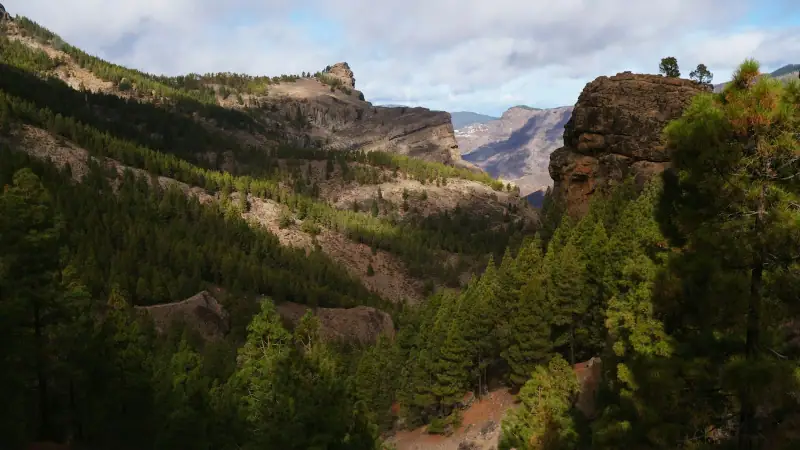
The north of La Gomera is the least touristy and the most authentic part. The three main valleys, Hermigua, Agulo and Vallehermoso, hold most of the island’s rural population and traditional farming.
Hermigua: the valley of palms
Hermigua is the island’s second-largest municipality by population and one of the most fertile. The valley is covered with Canary palms, banana plants and terraced vegetable gardens. The village is spread over several hamlets along the valley, each with its white church and shaded square. The Museo Etnográfico de La Gomera (in restored old water mills) traces the island’s crafts and farming history.
Agulo: the postcard village
Agulo is often called the prettiest village on La Gomera, even in all the Canary Islands. Set on a rock facing the sea, at the foot of the green cliffs of Garajonay park, this village of a few hundred residents is a maze of white lanes, Moorish arches and flowered little squares. The Mirador de Abrante viewpoint (reached by a marked path from the village) looks straight down on Agulo and the north coast, one of the best views on the island.
Vallehermoso: the basalt tower
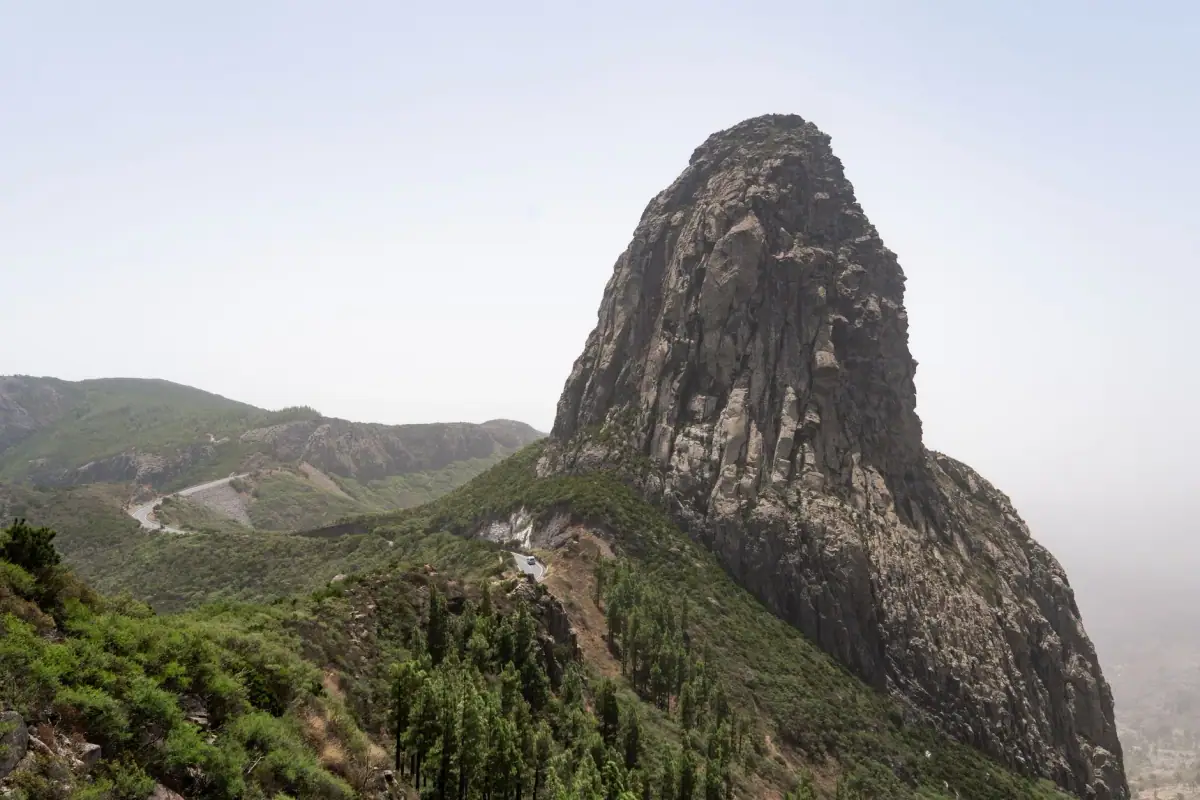
Vallehermoso (“beautiful valley” in Spanish) is dominated by Roque Cano, a basalt tower of about 200 to 250 m (650 to 820 ft) that stands over the village like a sentinel. The Vallehermoso natural pool, a series of rock basins fed by the sea, is the most spectacular swimming spot in the north of the island.
Los Órganos: the basalt cathedral
Los Órganos is the most spectacular geological formation on La Gomera, and one of the most singular in the whole Canary archipelago. This cliff in the northwest of the island is made of thousands of hexagonal basalt columns up to about 80 m (260 ft) tall, lined up so regularly side by side that they really do look like the pipes of a giant church organ.
Los Órganos can only be reached by sea: no road or trail leads to it from the coast. Boat trips leave from Valle Gran Rey and San Sebastián and run along the coast to get close to the cliff. The best light is in the morning, when the sun lights the columns directly. The same trips often include stops to watch the dolphins and pilot whales that frequent the waters between La Gomera and Tenerife.
Boat trips on La Gomera
Dolphin and pilot whale watching, a visit to Los Órganos from the sea, snorkeling in the clear waters of the island's north. Departures from Valle Gran Rey and San Sebastián.
La Gomera food: flavors of the green island
La Gomera’s cooking shares the basics of Canarian cuisine while having its own specialties, tied to the island’s particular resources.
Miel de palma: La Gomera’s treasure
The most distinctive ingredient in Gomeran cooking is miel de palma (palm honey), a thick brown syrup made by reducing the sap of the Canary palm (Phoenix canariensis). Not to be confused with bee honey, it is a sweet plant sap with notes of caramel, licorice and light smoke. Miel de palma goes with La Gomera’s fresh cheese (queso de La Gomera), traditional desserts and even some savory dishes. The cheese plus miel de palma pairing is the island’s signature pairing, and worth trying at least once.
Almogrote: the Canarian cheese spread
Almogrote is a typical Gomeran preparation: a spread made from aged cheese (often aged queso de La Gomera), olive oil, garlic and chili pepper. The texture is dense, the flavor intense and slightly spicy. Almogrote is served on toast or as a condiment, and sold in jars in every grocery on the island, an ideal edible souvenir.
Papas arrugadas and mojos
As across the Canary archipelago, papas arrugadas (potatoes cooked in a very concentrated brine until the skin wrinkles) are everywhere. They come with mojo rojo (made with chili pepper and garlic) or mojo verde (fresh herbs, garlic, and cilantro or parsley depending on the family). On La Gomera, mojo is often made with a generous amount of herbs that gives it an especially intense color.
Cherne and fish
Cherne (wreckfish), vieja (Canary parrotfish) and lapas (grilled limpets) are the stars of the fish menus. In the restaurants of San Sebastián’s harbor and Valle Gran Rey, the fish come straight from local nets, a freshness that travelers from other islands often notice.
San Sebastián de La Gomera: the island’s gateway
San Sebastián de La Gomera is the capital and main port of entry. Ferries from Tenerife land here, and most stays on La Gomera begin here. Our complete guide to San Sebastián de La Gomera covers all the sights and addresses in the capital.
San Sebastián’s history is closely tied to Christopher Columbus, who stopped here in 1492 before crossing the Atlantic to the Americas, the last European stop before the New World. The Torre del Conde (15th century), an imposing square keep by the sea, is the best-preserved monument on the island. The Casa de Colón (the house where Columbus supposedly stayed), the Iglesia de la Asunción and the Columbus Well (where the crew supposedly filled the barrels with fresh water for the crossing) make up the historic ensemble worth seeing.
Getting around La Gomera
By ferry from Tenerife
The main way to reach La Gomera is the ferry from Los Cristianos (southern Tenerife). Fred. Olsen runs several daily crossings on its fast ships in about 50 minutes. Naviera Armas also runs crossings, sometimes at different times. Booking ahead is recommended, especially on weekends and in summer, and essential if you want to bring your rental car on board.
Tip: It is usually cheaper to rent a car on Tenerife and take it on the ferry than to rent on La Gomera, where the choice is more limited.
By car on the island
A car is the most efficient way to explore the island. La Gomera’s roads are well maintained but demanding: hairpin bends, tunnels through rock, steep climbs. The drive from San Sebastián to Valle Gran Rey on the main road takes about 55 to 60 minutes depending on traffic. From San Sebastián to Vallehermoso, allow about 40 to 50 minutes.
Car rental on La Gomera
Reserve your vehicle ahead of time to explore Garajonay, Valle Gran Rey and the northern valleys. Compare the offers available in San Sebastián and the main villages.
Intercity buses
La Gomera has a public bus network (run by Guaguas La Gomera) linking San Sebastián to the main villages. Lines cover the routes to Valle Gran Rey, Hermigua, Agulo and Vallehermoso, but frequencies are limited (often a few runs a day) and schedules are not built around sightseeing. Buses work for long stays and hikers, less well for quick visits to sights.
Where to stay on La Gomera
Accommodation on La Gomera matches the island: intimate, human-scale, far from mass-market resorts. To choose between the beach and the harbor, read our comparison Valle Gran Rey or San Sebastián: where to stay on La Gomera.
Valle Gran Rey: the ideal base for hikers
Valle Gran Rey has most of the island’s tourist offerings. You’ll find rental apartments, family guesthouses, a few boutique hotels and rural houses (casas rurales). Its closeness to the beach, restaurants and the departure harbor for boat trips makes it the most practical base for exploring the island.
San Sebastián: for stopovers
The capital has practical hotels for late-ferry arrival nights or travelers in transit. San Sebastián’s historic charm justifies spending at least one night there.
Casas rurales in the valleys
For a more authentic experience, the rural houses scattered through the northern valleys (Hermigua, Agulo, Vallehermoso) let you settle into island life away from the tourist circuits. Many are in farms or restored traditional houses, ideal for hikers who want to explore the interior trails.
To compare all the options, see our guide to island hopping in the Canary Islands, which helps you plan a trip combining La Gomera and the neighboring islands.
Practical information
Budget
La Gomera is cheaper than Tenerife or Gran Canaria for accommodation, but transport costs (ferry plus car or bus) add up.
- Budget: €50-70 (~$58-81) a day (simple guesthouse, supermarkets, bus, standard ferry ticket)
- Mid-range: €90-130 (~$105-150) a day (comfortable lodging, rental car, varied restaurants, occasional tours)
- Comfort: €150-200 (~$175-230) a day (charming casa rural, car, fine food, organized tours)
Weather and best time to go
La Gomera has a marked climate contrast between the north (humid, cool, often in cloud) and the south (drier, sunnier, warmer). The north side is covered in lush vegetation thanks to the clouds. The south side (Valle Gran Rey, Playa de Santiago) is drier and hotter.
- Spring (March-May): Ideal for hiking, vegetation at its most beautiful, pleasant temperatures.
- Summer (June-Sept.): Hot in the low valleys, cool and sometimes misty in Garajonay. High tourist season.
- Fall (Oct.-Nov.): An excellent compromise, fewer people, warm sea.
- Winter (Dec.-Feb.): Mild (16-20 °C / 61-68 °F), little rain in the south, and the laurel forest is wrapped in fog and especially atmospheric.
See our guide to the best time to visit the Canary Islands to refine your planning.
5-day itinerary suggestion
Day 1: Arrive by ferry at San Sebastián, visit the Torre del Conde, the old town and the history museum. Night in San Sebastián.
Day 2: Drive north to Hermigua (Museo Etnográfico), Agulo (Mirador de Abrante), Vallehermoso (Roque Cano, natural pools). Return through the Garajonay highlands.
Day 3: A day in Garajonay National Park: hike from Laguna Grande, climb El Garajonay if the sky is clear, picnic in the forest.
Day 4: Drive to Valle Gran Rey. Afternoon at the beach, evening at the harbor restaurants. Night in Valle Gran Rey.
Day 5: Morning boat trip to see Los Órganos and watch dolphins. Back to San Sebastián in the afternoon for the ferry to Tenerife.
For a stay focused more on hiking, see our guide to hiking in the Canary Islands, which details the best trails on each island.
La Gomera, the island that holds out
La Gomera is the Canary Island that has best resisted the pressure of mass tourism, not through indifference but by choice. The lack of an international airport is no accident: it filters visitors, adds an extra step, and naturally selects those who come for the island rather than for a cheap plane ticket and a seafront hotel.
What you find on La Gomera is what the other Canary Islands have sometimes lost in their tourist growth: villages where people know each other, a forest that has outlasted the ages, a language invented out of necessity and kept alive out of love. El Silbo is not just an acoustic feat. It is proof that La Gomera has always found original ways around the geography of its deep valleys.
To plan your full trip, see how to combine La Gomera with the other islands in our guide to island hopping in the Canary Islands, or explore the island’s capital with our complete guide to San Sebastián de La Gomera.
Frequently asked questions
How do you get to La Gomera from Tenerife?
There are two options from Tenerife. The Fred. Olsen fast ferry (the Benchijigua Express) leaves from Los Cristianos in southern Tenerife and reaches San Sebastián de La Gomera in about 50 minutes. Naviera Armas also runs crossings. There is also a domestic flight from Tenerife North (TFN) with Binter Canarias, but most travelers take the ferry. Booking ahead is advised in high season.
Do you need to rent a car on La Gomera?
Yes, it is strongly recommended. La Gomera is very mountainous, with winding roads linking deep valleys. Intercity buses exist but run infrequently. A car lets you explore Garajonay, Valle Gran Rey, Vallehermoso and the viewpoints freely. Roads are well maintained but narrow, so a compact vehicle is best.
How long should you spend on La Gomera?
Plan at least 3 to 4 days to see the essentials: Garajonay, Valle Gran Rey, San Sebastián and a few viewpoints. A week is ideal if you want to hike seriously or explore the northern valleys (Hermigua, Agulo, Vallehermoso). The island is small (369 km² / 142 sq mi), but the winding roads make distances take longer than you expect.
What is El Silbo, the whistled language of La Gomera?
El Silbo Gomero is a whistled language, unique in the world, that reproduces Spanish using different pitches and modulations. It developed centuries ago so people could communicate across the island's deep valleys, and can carry 2 to 3 km (1 to 2 mi) in good conditions. It has been taught in all La Gomera schools since 1999 and was added to UNESCO's Intangible Cultural Heritage list in 2009. Demonstrations take place in restaurants and cultural centers on the island.
Is La Gomera good for beginner hikers?
La Gomera has trails for every level. Beginners can enjoy marked walks in Garajonay (the Laguna Grande loop, for example) or forest descents from the viewpoints. Experienced hikers will enjoy crossing the island or descending to Valle Gran Rey. Most trails are well marked (GR, PR, SL), and a 1:25,000 map is recommended for routes outside the main marked circuits.
Can you visit Los Órganos from the coast?
Los Órganos, the spectacular cliff of basalt columns in the northwest of the island, can only be reached by sea. There is no road. Boat trips leave from Valle Gran Rey and San Sebastián to get close to this unusual geological formation, often compared to a giant church organ. The trip usually takes half a day.
When is the best time to visit La Gomera?
La Gomera can be visited year-round. Spring (March to May) is ideal for hiking, with lush vegetation. Fall (September to November) offers good weather and fewer tourists. The mild winter (18-22 °C / 64-72 °F in the daytime) attracts those escaping the cold. Summer can be hot in the low valleys, but Garajonay forest stays cool (15-18 °C / 59-64 °F). Mist and clouds are common at altitude, especially on the north side, which adds to the mystery of the laurel forest.
More Canary Islands guides
Keep reading
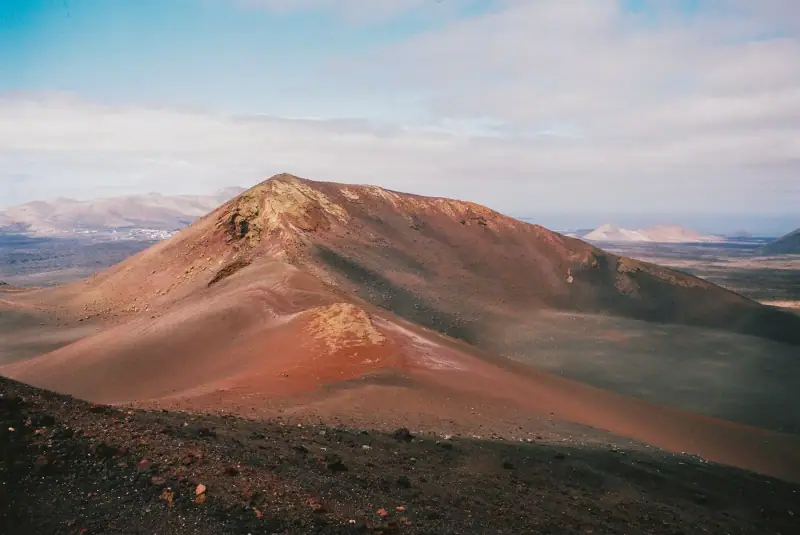
Lanzarote: a complete guide to the Canary Islands' volcanic island
Lanzarote guide: Timanfaya, César Manrique, Jameos del Agua, La Geria and Papagayo beaches. Everything you need to plan your trip to the volcanic island.
Visiting Corralejo: Complete Guide to Fuerteventura's Beach Town
Corralejo, Fuerteventura: white-sand beaches, the Corralejo dunes, water sports, where to stay and what to do. A complete guide to plan your trip.
Visiting Arrecife: A Complete Guide to Lanzarote's Capital
Arrecife, capital of Lanzarote: Charco de San Ginés, historic castles, Reducto beach and the César Manrique museum. A complete guide to visiting the city.
Ready-made
Canary Islands itineraries
5 days
Lanzarote in 5 Days: A Complete Itinerary for the Volcanic Island
5-day Lanzarote itinerary: Timanfaya, Jameos del Agua, Playa Papagayo, César Manrique. A day-by-day plan to make the most of the volcanic island.
Can be adapted in the planner
Island Hopping in the Canary Islands: Visiting Several Islands in One Trip
Island hopping in the Canary Islands: ferries, flights, multi-island itineraries and tips to combine Tenerife, Gran Canaria, Lanzarote and Fuerteventura.
5 days
Tenerife in 5 Days Without a Car: A Realistic Bus and Tram Itinerary
Puerto de la CruzLos Cristianos