What to see
Fuerteventura: Complete Guide to the Island of Endless Beaches
We may earn a commission when you book through links on this page, at no extra cost to you. We don't visit or try the places we cover: we summarize published sources. How we work
In short
- Fuerteventura is about 100 km (62 mi) long; a week is ideal, 5 days covers the essentials, and under 4 days feels rushed.
- A rental car is essential (about €25-50, or ~$29-58, a day); the Cofete track needs a high-clearance vehicle.
- Spring and fall are the best seasons (22-27 °C / 72-81 °F); May to October brings reliable trade winds for kitesurfing and windsurfing.
- Corralejo to Playa Blanca (Lanzarote) is a ferry of about 25-30 minutes, the easiest link between two Canary Islands.
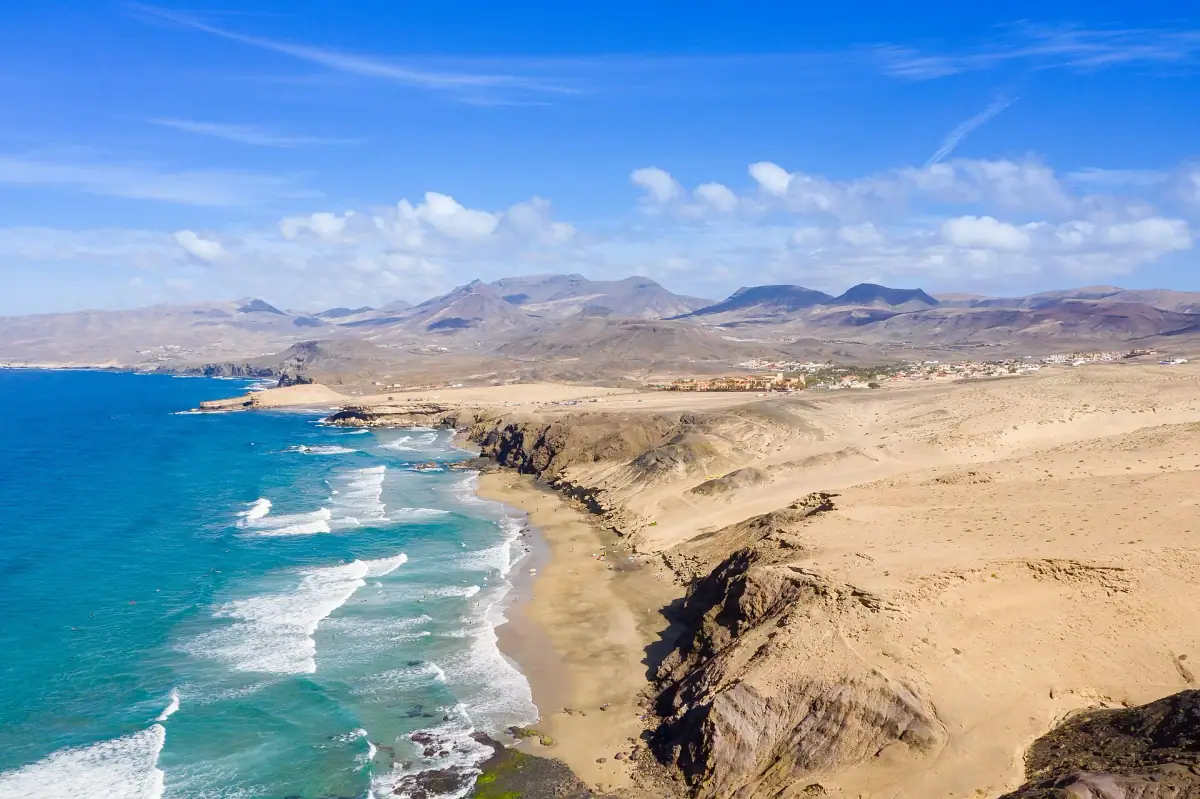
Fuerteventura is the opposite of the exotic island you might picture: no dense forests, no cloud-covered peaks, no hidden waterfalls. What it offers is more radical still: vastness. Miles of golden sand beaches that the Atlantic horizon turns into a liquid mirror, dunes that advance into the sea like a desert bent on conquering the ocean, and wild coasts where the North Atlantic swell dies with a dull roar. It is the second-largest of the Canary Islands by area, and perhaps the least populated relative to its size.
A UNESCO Biosphere Reserve since 2009, Fuerteventura is protected for its geological heritage (it is one of the oldest islands of the archipelago, with rock formations estimated at more than 20 million years old) and for its dune and marine ecosystems. That status does not make it any less accessible. It is an island you explore with total freedom, by rental car or bike, between the beaches of the north and the peninsulas of the south.
This guide gives you the keys to understanding Fuerteventura beyond the clichés of Corralejo’s resort complexes, all the way to Cofete, Betancuria and the Sotavento lagoons where the wind draws ripples of sand over calm water.
The Corralejo dunes: the Sahara facing Lanzarote
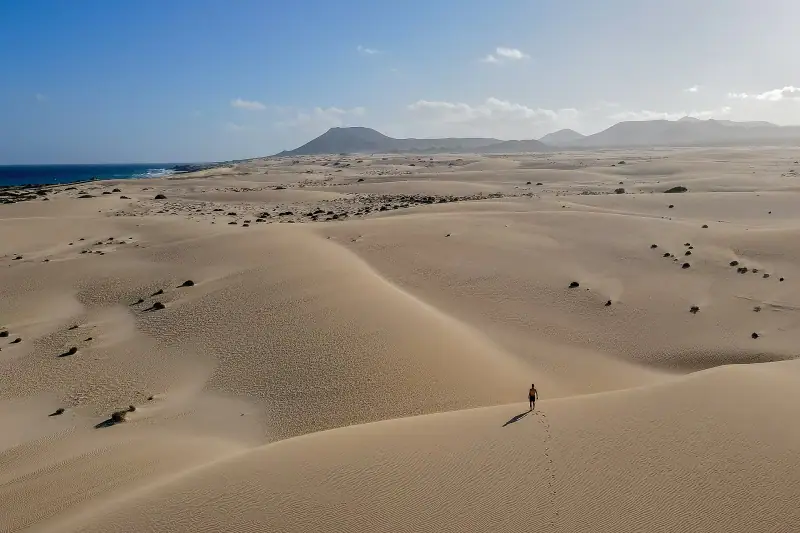
The Corralejo Dunes Natural Park is Fuerteventura’s best-known postcard, and for good reason: about 2,700 hectares (6,700 acres) of white sand dunes stretch along the island’s northeast coast, facing the turquoise waters of the strait that separates Fuerteventura from Lanzarote. The exceptionally fine sand comes from the Mauritanian Sahara, carried by the trade winds, which explains its creamy, almost golden tint.
The beaches inside the park, notably the Grandes Playas de Corralejo, are among the most beautiful in the Canary Islands. The water is shallow over a wide band, which makes it translucent and an almost unreal turquoise. The frequent northeast wind makes some areas choppier, ideal for water sports and less suited to casual swimming, but the sheltered spots between the dunes are often calm.
The road that runs along the park (FV-1) is one of the most spectacular in the archipelago: on one side the shifting dunes, on the other the Atlantic and the silhouette of Lanzarote less than 15 km (9 mi) away.
Tip: In high season (July-August), the park’s parking lots fill up early in the morning. Arrive before 9 am or choose weekdays for a quieter visit.
Excursions in Fuerteventura
Buggy rides in the dunes, boat trips to the northern islets, jeep tours to Cofete and the Jandía peninsula from Corralejo or Morro Jable.
Cofete beach: the ultimate end of the world
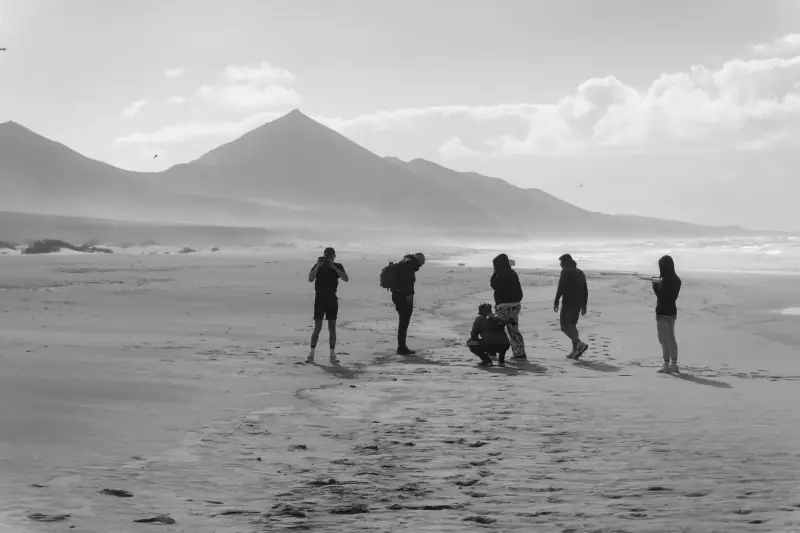
If you could remember only one place on Fuerteventura, it would be Cofete. This beach, nearly 14 km (9 mi) long on the wild west coast of the Jandía peninsula, is cut off from the rest of the island by the Jandía massif, arid hills that keep it safe from tourist development and paved roads. To reach it you take a dirt track from the Pico de la Zarza pass (the island’s highest point, around 807 m / 2,650 ft), about 15 km (9 mi) of careful driving over stones and packed earth.
What waits at the end largely justifies the effort: an immense beach, almost deserted even in midsummer, dominated by dark cliffs and swept by a powerful Atlantic swell. The sea at Cofete is strong and dangerous. Swimming is out of the question (violent currents and unpredictable waves). But for the raw beauty of the landscape, the experience is unmatched.
On the beach, an isolated villa, the Villa Winter, has fed local legends for decades. Built in the 1940s by a German engineer of the same name, it can now be visited at certain hours depending on the period. Its real history is tied to fishing and maritime trade, but the unproven rumor of a Nazi submarine base has made it a mysterious attraction.
Getting there: A high-clearance vehicle or SUV is strongly recommended for the track. Shuttles and 4x4 tours leave regularly from Morro Jable and Jandía Playa for those who prefer not to drive the track.
Sotavento: the kingdom of kitesurfing
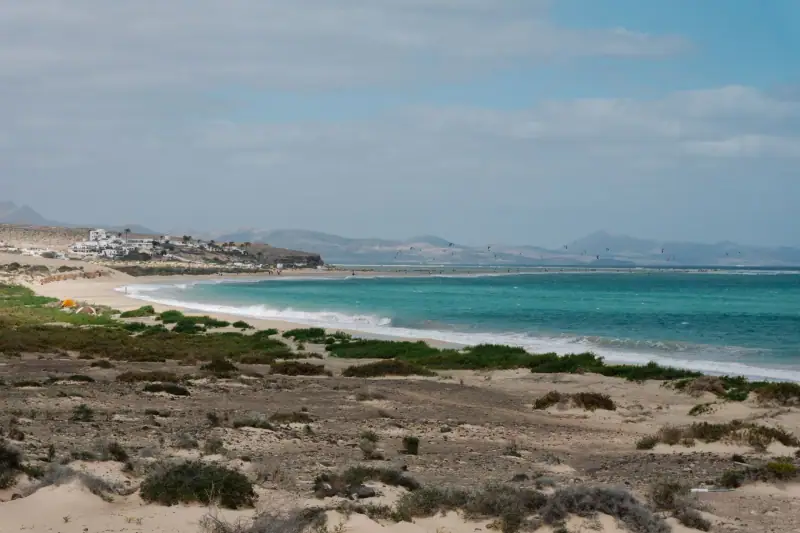
The east coast of the Jandía peninsula, called Sotavento (leeward coast), is one of the most renowned windsurfing and kitesurfing destinations in the world. The reason is simple: the northeast trade winds blow reliably here between May and October, with a steady, predictable strength that makes it a perfect playground for these sports.
Playa de Sotavento, a long golden sand beach between Jandía Playa and Costa Calma, regularly hosts the windsurfing and kitesurfing World Cup. During these competitions (usually in July-August), hundreds of colorful sails turn the sea into a living spectacle. Even outside competitions, watching a dozen kiteboarders working the lagoon is a fascinating sight.
Sotavento’s special feature is its natural lagoon, a shallow, flat stretch of water formed between the beach and an underwater sandbar. At low tide the lagoon offers ideal conditions for beginners or anyone who wants to learn without dealing with waves. Kitesurfing and windsurfing schools offer lessons at all levels in the area.
Betancuria: the island’s former capital
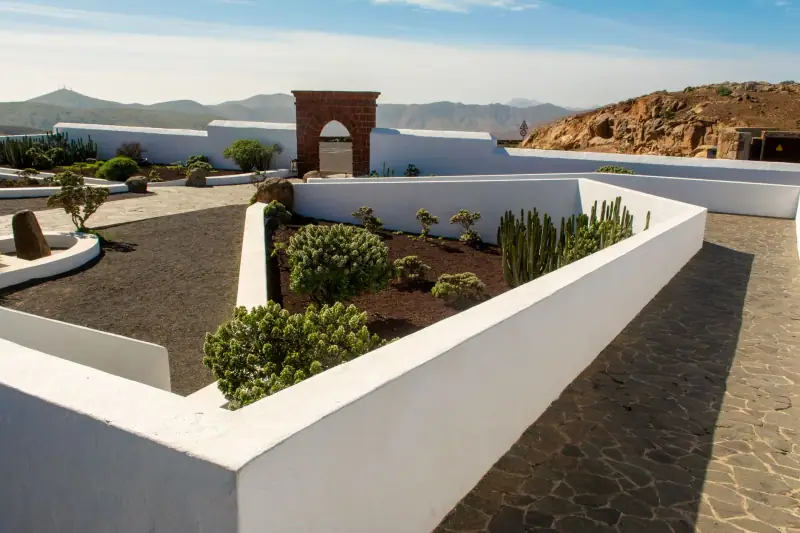
Located 25 km (16 mi) south of Puerto del Rosario, perched in the arid hills of the island’s center, Betancuria is Fuerteventura’s oldest village and for a long time the capital of the whole Canary archipelago. Founded in the early 15th century by the Norman conqueror Jean de Béthencourt, it was chosen for its inland position, safe from the pirate raids that terrorized the coasts. Its white lanes, the Santa María de Betancuria church (17th century, rebuilt after a Berber raid) and colonial houses make it the best-preserved village on the island.
A few kilometers to the north, the Mirador de Morro Velosa offers a 360-degree panorama over the valleys and ridges of the interior, with views all the way to the Atlantic on clear days. It is one of the finest viewpoints on Fuerteventura, often overlooked by tourists focused on the beaches.
Tip: Combine Betancuria with a visit to Pájara, another inland village with a remarkable baroque church (Iglesia de la Virgen de Regla), and the Mirador de Sicasumbre further north for a half day in the hills.
Flights to Fuerteventura
Compare flights to Fuerteventura (FUE) from your departure city.
El Cotillo and the wild north
Fuerteventura’s northwest coast is the least touristy and the best preserved. The fishing village of El Cotillo, about 20 km (12 mi) northwest of Corralejo, keeps an authentic atmosphere with its old harbor, its historic defensive tower (the Castillo del Tostón, 18th century) and its seafront fish restaurants.
North of El Cotillo, the natural lagoons formed between rocky reefs create pools of calm, clear water perfect for swimming and snorkeling, a striking contrast with the Atlantic swell crashing just a few meters away. These lagoons can be reached on foot from the parking lot at the end of the paved road.
South of the village, white sand beaches stretch for several kilometers toward Corralejo, some almost deserted even in high season. The village of Lajares, in the nearby interior, is known as the island’s stronghold of surfing and alternative lifestyle, with surf schools, cafés and a weekly craft market.
Where to stay in Fuerteventura
Corralejo
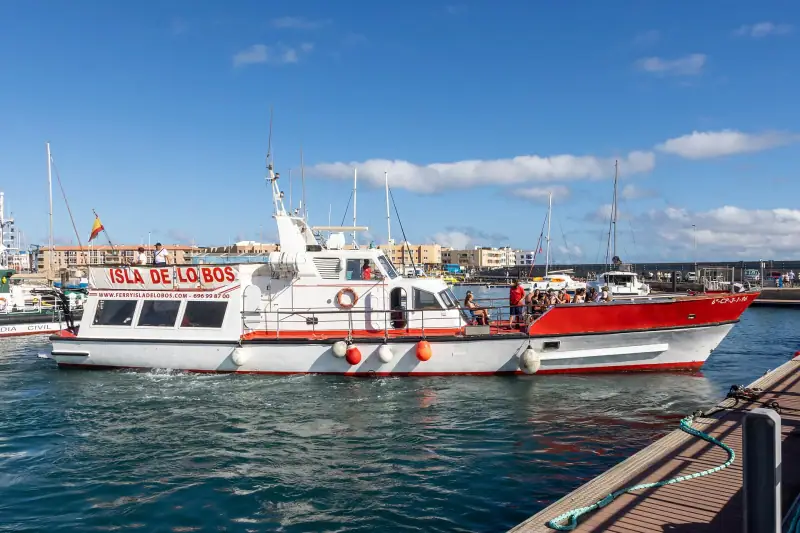
Corralejo is the most convenient base for exploring the north of the island and the dunes. The town grew quickly around tourism but keeps a lively old harbor with restaurants and bars. The main beach, facing the dunes, is spectacular. It is also the departure point for ferries to Lanzarote and boat trips to Isla de Lobos (a nature reserve about 2 km / 1.2 mi to the north, where you can only get around on foot or by bike). Our complete guide to Corralejo details all the options.
Jandía Playa and Morro Jable
On the southern peninsula, Jandía Playa and Morro Jable make up the main hotel area in the south of the island. The long white sand beach, Playa de la Cebada, which runs between the two towns, is one of the most beautiful on Fuerteventura. It is the ideal base for exploring Cofete, Sotavento and the Jandía peninsula.
Caleta de Fuste
Halfway between the airport and the north, Caleta de Fuste is a planned seaside resort, quieter and more family-oriented than Corralejo. The sheltered bay has particularly calm water, ideal for children. The marina and the many facilities (restaurants, supermarket, diving school) make it a very comfortable base.
Lodging in Fuerteventura
Compare hotels, apartments and resorts in Corralejo, Jandía Playa, Caleta de Fuste and Morro Jable to find the best base for your plans.
Food in Fuerteventura
Fuerteventura’s cooking follows the Canarian tradition, with a strong maritime slant owing to its island setting and fishing history.
Specialties to try
Papas arrugadas con mojo: The Canary Islands’ emblematic dish is found in every restaurant on the island. Small potatoes cooked in very salty water go with every dish, served with mojo rojo (garlic, tomato, chili) or mojo verde (herbs, garlic). Simple and hard to beat.
Lapas a la plancha: Limpets grilled with butter and lime are especially fresh on Fuerteventura’s coasts. Try them in harbor restaurants, notably in El Cotillo or Morro Jable.
Cherne and vieja: Cherne (Atlantic grouper) and vieja (Atlantic parrotfish) are the noble fish of Canarian cooking. Grilled a la plancha or in sancocho (a stew with mojo and sweet potatoes), they showcase the local small-scale fishing.
Queso majorero: The island’s most emblematic cheese takes its name, majorero, from the term for the island’s inhabitants since the time of the first conquistadors. Made from the milk of the Majorera goat breed, it has held a Protected Designation of Origin (PDO) since 1996, the first Spanish goat cheese to receive this distinction and one of the few Canarian cheeses to have it. It is eaten fresh, semi-cured or cured (aged), sometimes rubbed with red pepper or oil.
Gofio: Flour made of toasted grains (corn, wheat or barley depending on the region) has been a Canarian staple since the time of the Guanches. On Fuerteventura you’ll find it in breads, desserts and traditional side dishes.
Practical information for visiting Fuerteventura
Getting there
Fuerteventura airport (code FUE, at Puerto del Rosario) is the island’s main gateway. Check flight options with your airline or a flight search for your departure city.
You can also arrive by ferry from Lanzarote (Playa Blanca to Corralejo, about 25-30 minutes) or from other Canary Islands, an interesting option for multi-stop island hopping.
Getting around the island
Car rental in Fuerteventura
Compare offers at Puerto del Rosario airport (FUE) or in Corralejo to explore the dunes, Cofete, Betancuria and Sotavento freely. Essential to make the most of the island.
A rental car is the best way to explore Fuerteventura. The island is about 100 km (62 mi) from north (Corralejo) to south (Morro Jable), a drive of about 1 h 30 without stops on the FV-2 highway. The main roads are in good condition. For Cofete, an SUV or a car with high ground clearance is recommended.
TIADHE buses link the main towns (Corralejo, Puerto del Rosario, Caleta de Fuste, Gran Tarajal, Morro Jable), but their frequency and schedules limit their usefulness for sightseeing.
Budget
Fuerteventura is mid-priced among Canary Islands destinations: slightly cheaper than Tenerife or Lanzarote for lodging, but comparable for dining.
- Budget: €45-65 (~$52-75) a day (shared apartment or budget hotel, supermarket, simple restaurants)
- Mid-range: €85-125 (~$100-145) a day (3-4 star hotel, rental car, varied restaurants)
- Comfort: €140-200 (~$165-230) a day (resort, car, water activities, fine dining)
The main natural attractions (dunes, beaches, inland villages) are free. Paid activities (kitesurfing, boat trips, diving) are the main expense outside lodging.
To calibrate your budget, see our Canary Islands budget guide.
Weather and when to go
Fuerteventura has one of the most stable climates in Europe, close to desert, with very little rain (under 100 mm / 4 in a year in some coastal areas) and almost constant sunshine.
- Winter (Nov.-March): 18-22 °C (64-72 °F) by day, cool sea (about 19-20 °C / 66-68 °F). Ideal for escaping the European cold and for walking.
- Spring (March-May): 22-27 °C (72-81 °F), moderate wind, sea starting to warm up. The best period for hiking and exploring.
- Summer (June-Sept.): 27-32 °C (81-90 °F), strong, steady wind, high season for kitesurfing and windsurfing. Sea at about 23-24 °C (73-75 °F).
- Fall (Oct.-Nov.): Excellent compromise. Sea still warm, fewer people, lower prices. A few rare cloudy days.
Note on the wind: The trade wind is a constant on Fuerteventura, stronger than on Lanzarote or Gran Canaria. If you come for a restful beach stay, choose the sheltered coasts (east coast, El Cotillo lagoons) or the shoulder seasons. The east coast is naturally less windy than the west coast or the northern dunes.
To pick the best time, see our guide to the best time to visit the Canary Islands.
Fuerteventura, the island that owns what it is
There is a disarming honesty in Fuerteventura. It does not pretend to be a lush tropical island or a volcanic museum like Lanzarote. It is arid, mostly flat, swept by a wind that nothing stops between the Sahara and the North Atlantic. And that frankness is precisely what makes it unforgettable.
The best beaches in the Canary Islands, some would say in Europe, are here. The sand has the rare texture of coarse flour, and the sea has that turquoise color found only where the bottom is white sand and the water shallow. Cofete is a reminder that immense, empty spaces are not all deep in the Amazon; some are just a short flight from Europe.
The island is not for those seeking cultural density or nightlife. It is made for divers, kiteboarders, families building sandcastles, and anyone who simply wants to walk on a beach without seeing anyone for an hour. That is its identity, and it wears it well.
To prepare your plan, see our Fuerteventura 5-day itinerary or our guide to island hopping in the Canary Islands to combine Fuerteventura with Lanzarote and the other islands of the archipelago.
Frequently asked questions
How long do you need to visit Fuerteventura?
A week is the ideal length to see the island without rushing: Corralejo dunes, Cofete beach, Betancuria, Jandía and Sotavento. In 5 well-organized days you can see the essentials by focusing on the beaches and two or three inland sites. With fewer than 4 days the island will feel too big, as it is about 100 km (62 mi) from north to south.
Do you need to rent a car in Fuerteventura?
Yes, a car is essential to make the most of Fuerteventura. Buses (TIADHE) link the main towns but run infrequently and do not serve the wildest sites such as Cofete beach, the beaches north of El Cotillo or the island's interior. Rentals are affordable (about €25-50, or ~$29-58, a day for a compact car) and roads are in good condition, except the track to Cofete, which needs an off-road vehicle or one with good ground clearance.
What is the best time to visit Fuerteventura?
Fuerteventura can be visited all year thanks to its stable desert climate. Spring (March to May) and fall (September to November) offer the best balance: mild temperatures (22-27 °C / 72-81 °F), pleasant sea and fewer people than in summer. Winter attracts many northern Europeans (18-22 °C / 64-72 °F in the sun, cool sea). Summer is hot, but the northeast trade winds ease the heat; it is also high season for kitesurfing and windsurfing.
How do you get to Cofete beach?
Cofete beach is on the west coast of the Jandía peninsula, away from the tourist areas. It is reached by a dirt track of about 15 km (9 mi) from the Pico de la Zarza pass; allow 30 to 45 minutes of careful driving from Morro Jable. A high-clearance vehicle (SUV or 4x4) is strongly recommended. Shuttles and jeep tours leave regularly from Morro Jable and Jandía Playa for those who prefer not to drive the track.
Is Fuerteventura a good destination for kitesurfing and windsurfing?
Yes, Fuerteventura is one of the best destinations in the world for both sports. Sotavento beach regularly hosts the windsurfing and kitesurfing World Cup. The trade winds blow reliably between May and October, with exceptional conditions at Corralejo (Flag Beach) and on the east coast of Jandía. Schools offer lessons for all levels in the main resorts.
Can you take a ferry from Fuerteventura to Lanzarote?
Yes, and it is the easiest link between two Canary Islands. Regular ferries connect Corralejo (north Fuerteventura) with Playa Blanca (south Lanzarote) in about 25-30 minutes. There are several departures a day, generally from early morning to evening. It makes a very doable day trip or an excellent option for island hopping.
Is Fuerteventura suitable for families with children?
Yes, it is one of the most family-friendly Canary Islands. Caleta de Fuste has calm, shallow water, ideal for children. Corralejo has a large beach lined with hotels and all the facilities. Fine-sand dunes, supervised water activities and near-guaranteed weather make Fuerteventura a safe bet for a family vacation.
More Canary Islands guides
Keep reading
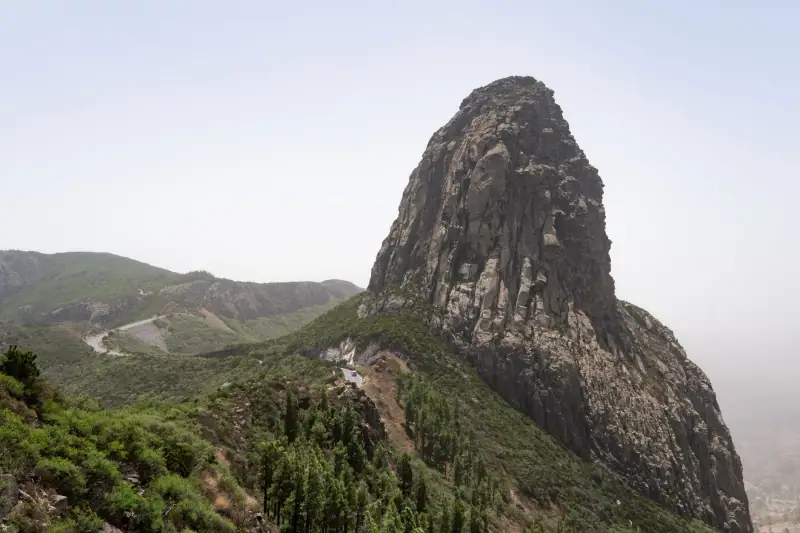
La Gomera: a complete guide to the island of forests and whistled language
La Gomera travel guide: Garajonay, El Silbo, Valle Gran Rey, hiking and food. Everything you need to visit the quietest of the Canary Islands.
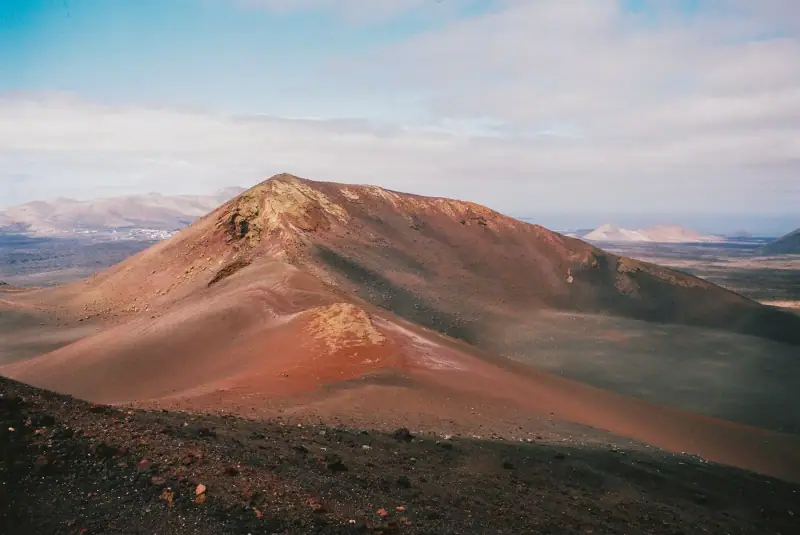
Lanzarote: a complete guide to the Canary Islands' volcanic island
Lanzarote guide: Timanfaya, César Manrique, Jameos del Agua, La Geria and Papagayo beaches. Everything you need to plan your trip to the volcanic island.
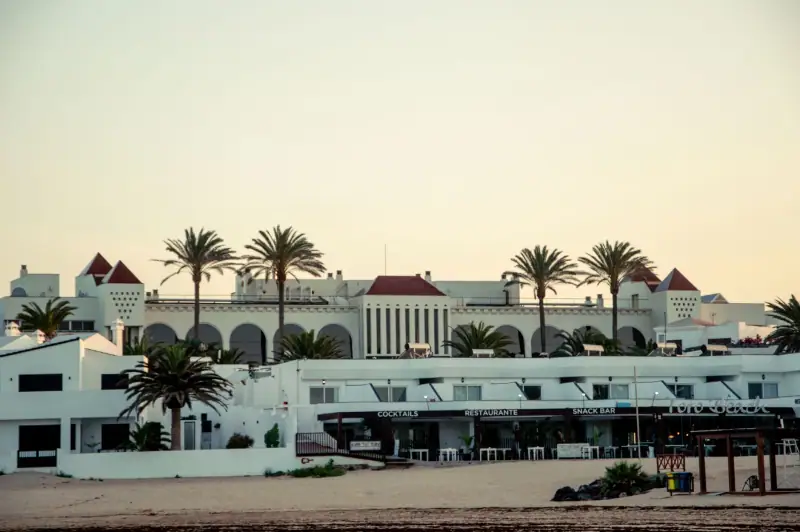
Visiting Corralejo: Complete Guide to Fuerteventura's Beach Town
Corralejo, Fuerteventura: white-sand beaches, the Corralejo dunes, water sports, where to stay and what to do. A complete guide to plan your trip.
Ready-made
Canary Islands itineraries
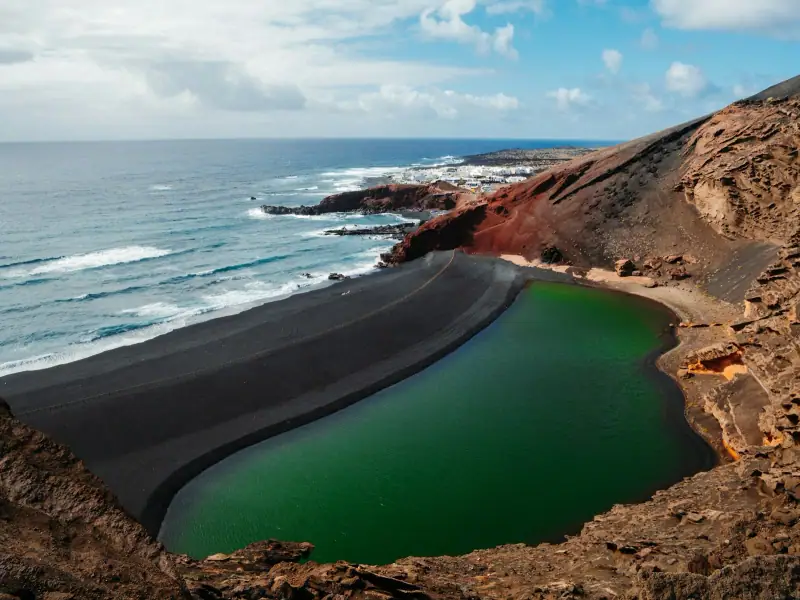
5 days
Lanzarote in 5 Days: A Complete Itinerary for the Volcanic Island
5-day Lanzarote itinerary: Timanfaya, Jameos del Agua, Playa Papagayo, César Manrique. A day-by-day plan to make the most of the volcanic island.
Can be adapted in the planner
Island Hopping in the Canary Islands: Visiting Several Islands in One Trip
Island hopping in the Canary Islands: ferries, flights, multi-island itineraries and tips to combine Tenerife, Gran Canaria, Lanzarote and Fuerteventura.
5 days
Tenerife in 5 Days Without a Car: A Realistic Bus and Tram Itinerary
Puerto de la CruzLos Cristianos