What to see
Lanzarote: a complete guide to the Canary Islands' volcanic island
We may earn a commission when you book through links on this page, at no extra cost to you. We don't visit or try the places we cover: we summarize published sources. How we work
In short
- Plan a week for Lanzarote; 5 days covers the essentials, and under 4 days will feel rushed.
- Since June 15, 2026, Timanfaya requires an online ticket for a specific date and time slot, which includes the bus on the Volcano Route.
- A rental car is practically essential: about €25-45 (~$29-52) a day for a small car, and buses skip the main natural sites.
- Budget runs about €50-70 (~$58-81) a day on a tight budget and €150-220 (~$175-255) for comfort.
Lanzarote is the island that contradicts every cliché about the Canary Islands. No lush forests or snowy peaks, no overcrowded resorts, but a landscape of radical strangeness, as if Mars had decided to settle between the Atlantic and the Sahara. Here, black lava fields stretch to the horizon, vines grow in craters dug by hand in volcanic rock, and the works of a visionary artist blend into the landscape until you can no longer tell where nature ends and human creation begins.
Lanzarote has been a UNESCO Biosphere Reserve since 1993, a rare distinction for a whole island, recognizing the exceptional harmony between its volcanic environment and the way its residents chose to live and build there. It is the only destination in the world where an architectural charter imposed by one artist, César Manrique, had the force of law for decades, banning buildings over two floors and imposing a color code (white, green, blue, black) across the island.
This guide gives you the keys to understand and explore Lanzarote beyond its “volcanic island” image, a shortcut that does justice to neither its complexity nor its beauty.
Timanfaya National Park: the memory of the volcanoes
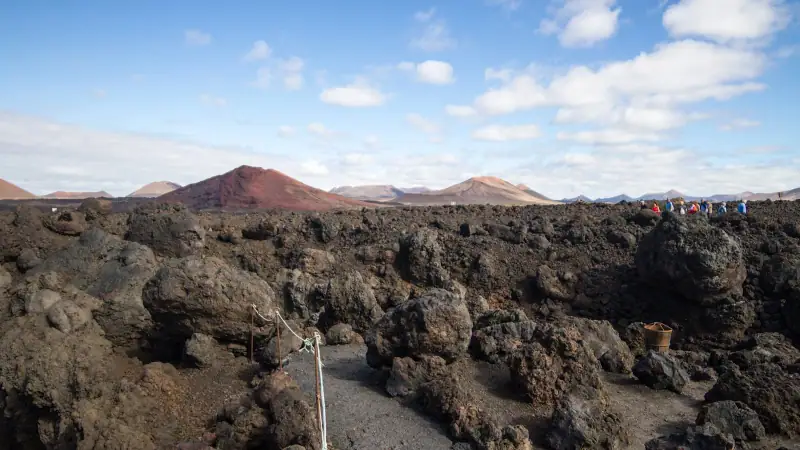
Timanfaya National Park is the geological heart of Lanzarote and its most impressive site. This is not an extinct volcano you watch from a viewpoint. It is an entire landscape shaped by one of the longest volcanic eruptions in modern history. Between 1730 and 1736, for six years without a break, dozens of volcanic fissures buried more than a quarter of the island under lava flows, burying whole villages and turning fertile land into a black rock desert. A last, shorter eruption took place in 1824.
The Volcano Route (Ruta de los Volcanes)
The main visit to Timanfaya is by bus on the Volcano Route, a 14 km (9 mi) circuit through volcanic cones, fields of red lapilli and hardened lava flows. The road is reserved for the park’s official buses: you cannot drive it in a private car. The views from the windows are breathtaking, and the moonscape atmosphere is unique.
Note: Since June 15, 2026, access to Timanfaya requires an online reservation at ventaonline.cactlanzarote.com (dated ticket with a time slot). Slots go quickly in high season, so book at least a week ahead.
The geothermal demonstrations
At the park entrance, in front of the El Diablo restaurant (designed by César Manrique), geothermal demonstrations show that the ground below is still very much alive: a branch dropped into a hole in the ground bursts into flames within seconds, and water poured into a natural conduit shoots out as a geyser moments later. Ground temperature reaches about 400 °C (752 °F) at shallow depth, which let the El Diablo restaurant design a barbecue that uses the volcanic heat of the ground directly.
The Montañas del Fuego
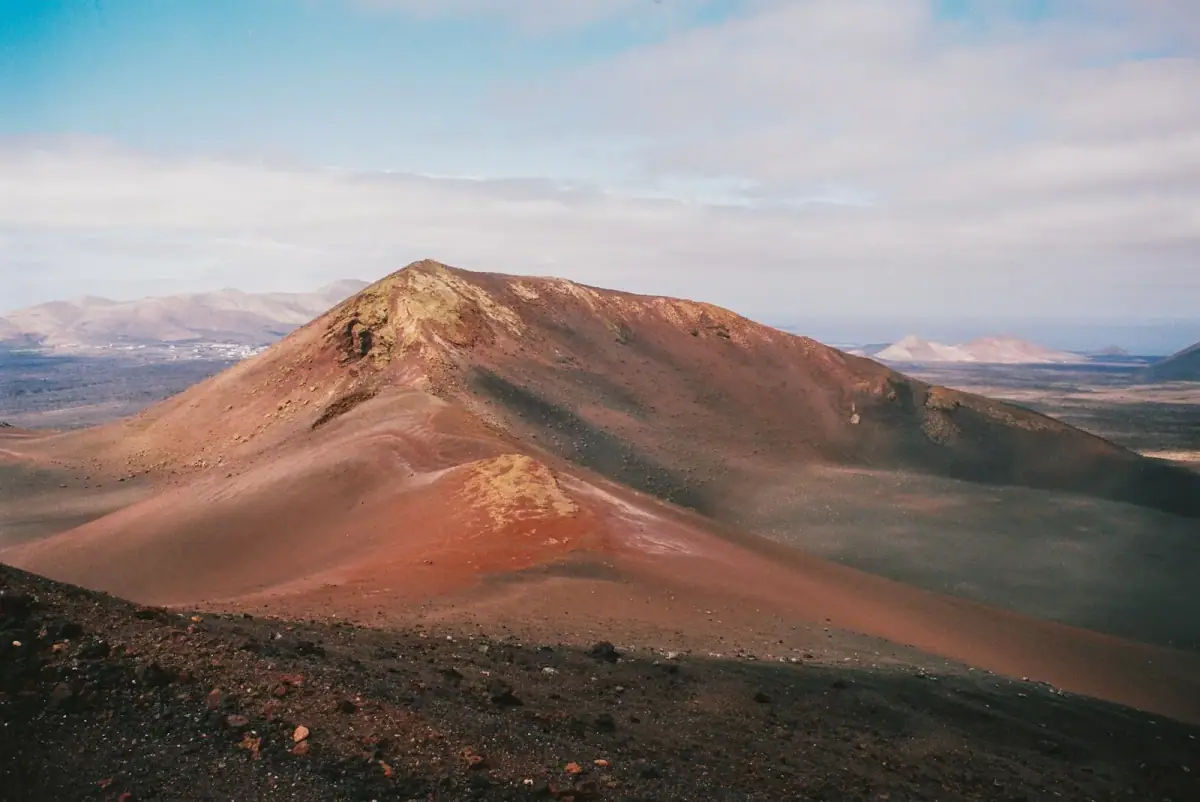
The center of the park is the Montañas del Fuego, the “Fire Mountains,” a group of volcanic cones whose colors range from black to ocher red depending on the oxidation of the minerals. The contrast with the blue sky and the Atlantic in the distance makes compositions most visitors don’t forget.
Guided tours of Timanfaya
Guided visits of Timanfaya National Park, hikes across the lava fields and camel rides from Puerto del Carmen or Arrecife.
César Manrique’s legacy: art melted into rock
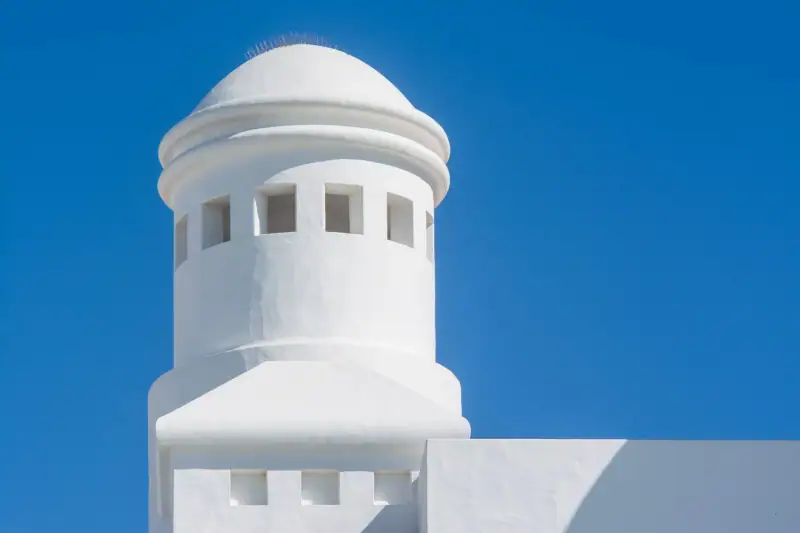
No place bears the mark of one man as much as Lanzarote bears that of César Manrique (1919-1992). This visual artist and architect, born in Arrecife, spent his life shaping his island according to a unique philosophy: total integration of architecture into the volcanic landscape, never dominating nature, always in dialogue with it.
His works are not museums or monuments. They are living spaces, viewpoints, auditoriums and gardens that emerge from the rock as if they had always been there. Thanks to Manrique’s influence, Lanzarote refused the vertical tourist development that disfigured other Canary Islands and the Mediterranean.
Jameos del Agua
The Jameos del Agua are probably Manrique’s masterpiece. A jameo is the opening of a lava tunnel onto the sea, and Manrique turned this underground space into a place of surreal beauty. Going down into the cave, you find a salt-water underground lake directly connected to the Atlantic Ocean, home to the Munidopsis polymorpha, a blind albino crab found only here on Lanzarote, the result of some 13,000 to 15,000 years of isolated evolution in total darkness (estimated age of the La Corona volcanic tubes).
Beyond the lake, Manrique built a white-water pool, a natural auditorium in the rock that hosts concerts, hanging gardens and a restaurant. It is one of the most distinctive experiences in the whole Canary archipelago.
A few kilometers away, the Cueva de los Verdes is part of the same volcanic system (the Jameo de la Corona). The guided tour covers about 1 km (0.6 mi) of stacked galleries, a rock cathedral with spectacular play of light. The same system continues under the ocean as the Túnel de la Atlántida (about 1.5 km / 1 mi underwater), closed to the public but fascinating for expert divers.
The Mirador del Río
The Mirador del Río, in the far north of the island, is Manrique’s other emblematic work. Cut into a cliff face at about 480 m (1,575 ft) above sea level, this half-moon viewpoint looks straight down on the Estrecho del Río, the strait separating Lanzarote from La Graciosa, and on the island itself with its white sand beaches and turquoise water. The interior of the mirador bears Manrique’s signature in every detail: organic shapes, local materials, porthole windows. It is one of the most photogenic panoramas in the Canary Islands.
The Jardín de Cactus
In the middle of the island, the Jardín de Cactus is a natural amphitheater cut into a former lapilli quarry where Manrique planted more than 1,400 species of cacti from around the world. The space is laid out with semicircular terraces, winding paths and a restored traditional Canarian windmill at the entrance. An often overlooked but absolutely remarkable place.
The Fundación César Manrique
The Fundación César Manrique, in Tahíche (between Arrecife and Teguise), is housed in the artist’s former home, built on and inside five bubbles of hardened lava that naturally form underground rooms. The house gives an intimate look at Manrique’s world, with its collections of contemporary Spanish and Canarian art and its outdoor gardens. On Sundays, you can combine it with the nearby Teguise market.
Flights to Lanzarote
Compare flights to Lanzarote (ACE) from your departure city.
La Geria: vines in the volcanoes
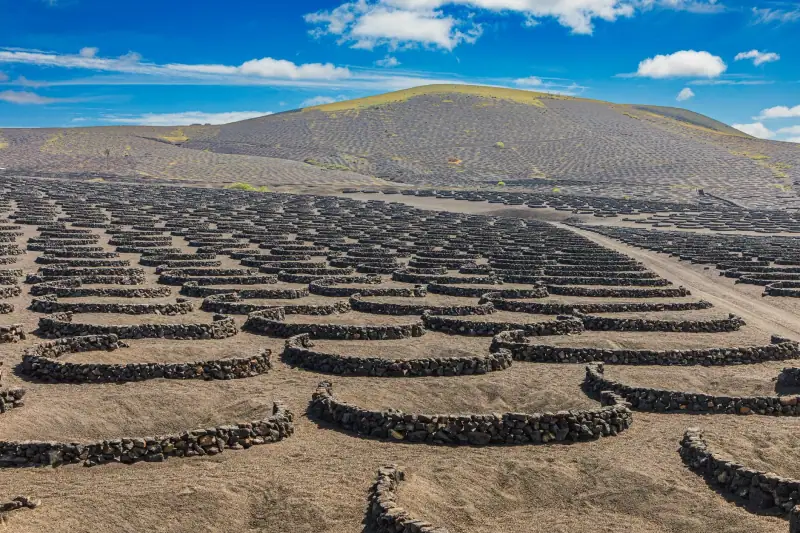
La Geria is the most astonishing wine region in Europe. In this landscape of black ash and lava, thousands of vines grow in saucer-shaped craters called zocos, dug by hand by the winegrowers into the lapilli layer. Each vine is shielded from the trade winds by a semicircular lava wall. Seen from the air (or from high ground), La Geria looks like a vast black tapestry dotted with thousands of green circles.
This unique growing method has a practical virtue: the lapilli absorbs the night moisture of the trade winds and releases it to the roots during the day, letting the vines survive in one of the driest places in Europe (less than 150 mm / 6 in of rain a year).
The dominant grape is Malvasía, an old variety that makes dry and semi-dry whites with a distinctive volcanic minerality, as well as sweet wines (malvasía dulce) sought after by enthusiasts. The DO Lanzarote designation of origin guarantees the authenticity of these wines.
The La Geria road (LZ-30) runs through the heart of the vineyard. Several bodegas open their doors to visitors for tastings, a pleasant way to understand this unique terroir while enjoying views of the landscape.
The beaches: from Papagayo to Famara
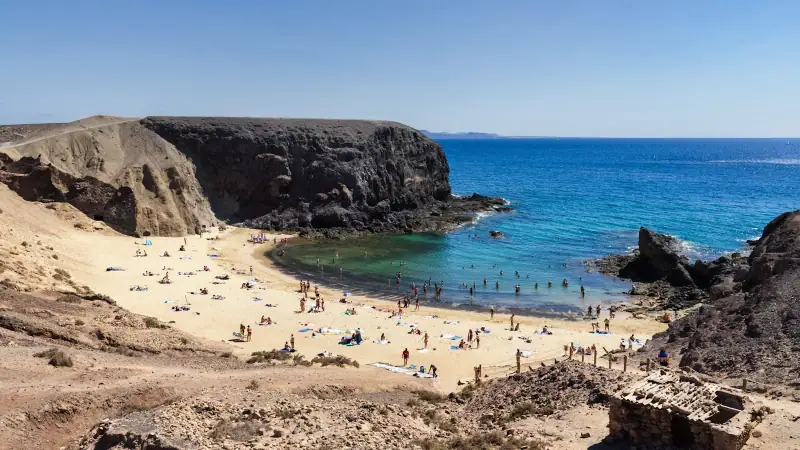
Despite its image as a volcanic desert, Lanzarote has some of the most beautiful beaches in the Canary Islands.
Playa Papagayo and the southern beaches
Playa Papagayo (or Playas de Papagayo) is a group of white sand coves and turquoise water at the far south of the island, protected by the Los Ajaches Natural Park. It is one of the most popular beaches in the Canary Islands for its wild beauty: no big facilities, no beachfront hotels, just volcanic rock and sea. Access to the protected area is paid (a few euros per vehicle; check the current rate on site) and requires a car.
Nearby, Playa Blanca is a more developed resort town with a marina, restaurants and a more family-friendly feel. It is also the departure point for ferries to Fuerteventura (Corralejo, about 25-30 minutes depending on the company).
Playa de Famara and the Risco cliffs
At the other end of the spectrum, Playa de Famara in the northwest is a long wild beach several kilometers long, overlooked by the dizzying cliffs of the Risco de Famara (up to about 600 m / 1,970 ft). Frequent winds make it a well-known spot for kitesurfing and surfing. It is much less suited to calm family swimming, but magnificent for anyone who likes dramatic landscapes.
The small village of Famara, with its colorful houses and fish restaurants, is one of the most authentic places on the island.
El Golfo and the emerald lagoon
El Golfo is a former volcanic crater, half of which was swallowed by the Atlantic. What remains forms an amphitheater of red and black rock, at the foot of which lies an emerald green lagoon. The color comes from microscopic algae. The lagoon is closed off by a strip of black sand and does not connect directly to the sea. The contrast between the green of the lagoon, the black of the lava and the blue of the Atlantic is one of the most striking images of Lanzarote.
Places to stay in Lanzarote
From the all-inclusive resorts of Puerto del Carmen to guesthouses in inland villages: all the options for your stay on Lanzarote.
Arrecife: the overlooked capital
Arrecife is the capital and the only real city on Lanzarote, with some 65,000 to 68,000 residents (2024 census). Tourists often skip it, heading straight to Puerto del Carmen or the natural sites, which is a shame, because Arrecife has a charm of its own that the resorts lack.
The Charco de San Ginés, a natural lagoon in the heart of the city, surrounded by white houses and colorful boats, is Arrecife’s emblematic image. It is a place for quiet strolls, far from mass tourism. A few steps away, the Castillo de San Gabriel (16th century) sits on a small island facing the harbor and houses a small history museum. The Castillo de San José, outside the center, was turned by Manrique into a contemporary art museum with a panoramic restaurant over the port.
Playa del Reducto, Arrecife’s city beach, is clean and pleasant for locals, even if it is not the island’s prettiest. Our complete guide to Arrecife covers all the neighborhoods and addresses in the capital.
La Graciosa: the car-free island next door
La Graciosa is technically the eighth inhabited Canary Island, and the smallest, with about 700 residents. It is reached from the port of Órzola (north Lanzarote) by a 25-30 minute ferry. On this island of sand and volcanic rock there are no cars, only sand tracks, bikes and a few quads. The main village, Caleta de Sebo, has a few fish restaurants and simple guesthouses.
The beaches of La Graciosa, Playa de las Conchas in the north and Playa Francesa in the south, are among the most beautiful and wildest in the whole archipelago. A day on the island from Lanzarote is one of the most recommended excursions. Schedules, prices and booking are covered in our guide to the Órzola - La Graciosa ferry, and to stay overnight, see where to stay on La Graciosa.
Where to stay on Lanzarote
Lanzarote concentrates its tourist lodging in a few areas.
Puerto del Carmen
Puerto del Carmen is the island’s main resort town. Convenient (about 15 minutes by car from the airport), well served with restaurants and activities, it is the most logical base for first visits. Hotels range from budget to 4-star. Playa Grande on the waterfront is clean and well equipped.
Costa Teguise
Costa Teguise, north of Arrecife, is a newer and calmer resort than Puerto del Carmen. Its pedestrian center, restaurants and marina make it a pleasant option for families. The main beach, Playa de las Cucharas, is known for water sports (windsurfing, kitesurfing).
Playa Blanca
In the south of the island, Playa Blanca is the resort closest to Papagayo and the most residential. Quieter and less lively, it suits restful stays. The Rubicón marina offers restaurants and waterfront walks.
Food on Lanzarote
Lanzarote’s cooking follows Canarian tradition, with a few local specialties.
The essentials
Papas arrugadas con mojo: The signature dish of the Canary Islands: local potatoes cooked in very salty water, served with mojo rojo (tomato, garlic, chili pepper) or mojo verde (fresh herbs, garlic). On the menu at every traditional restaurant.
Lapas a la plancha: Limpets grilled with butter and lime are an almost ritual appetizer in every port on the island. Simple and delicious.
Sancocho canario: A stew of salted fish (often cherne, wreckfish) served with sweet potatoes and mojo. The Sunday dish par excellence.
La Geria wines: Worth seeking out. The local Malvasía, dry white or slightly sparkling, goes perfectly with seafood. Malvasía dulce (sweet) is drunk as a dessert wine or aperitif.
Practical information
Getting there
Lanzarote Airport (code ACE, Arrecife) is one of the best-connected airports in the Canary Islands. Airlines and routes change from one season to the next, so check the airlines’ websites for current direct flights from your departure city.
Getting around the island
Car rental on Lanzarote
Compare offers at Arrecife airport (ACE) to explore Timanfaya, La Geria, Papagayo and the Mirador del Río freely. Essential for enjoying the island.
A rental car is the best way to explore Lanzarote. Roads are well maintained and signposted. The island is relatively small (about 57 km / 35 mi long): from Puerto del Carmen, Timanfaya is about 35-40 km (22-25 mi) away and the Mirador del Río about 65-70 km (40-43 mi). A well-organized day covers the north or the south without rushing.
Intercity buses exist but the network is limited. They cover Arrecife-Puerto del Carmen-Playa Blanca and Arrecife-Costa Teguise-Órzola, but not the inland natural sites.
Budget
Lanzarote is at the lower-middle end of Spanish destinations for tourists.
- Budget: €50-70 (~$58-81) a day (budget lodging, supermarkets, simple restaurants, bus)
- Mid-range: €90-130 (~$105-150) a day (3-4 star hotel, car, varied restaurants, a few paid visits)
- Comfort: €150-220 (~$175-255) a day (resort, car, tours, fine dining)
Entry to the Manrique sites (Jameos del Agua, Fundación, Mirador del Río, Jardín de Cactus) is paid individually. Allow about €9 (~$10) for the Mirador del Río and the Jardín de Cactus, and from €17 (~$20) for the Jameos del Agua. Combined tickets have existed; check at cactlanzarote.com whether they are available. For Timanfaya, the standard ticket includes the bus tour.
Our Canary Islands budget guide helps you size your spending.
Weather and when to go
Lanzarote is one of the driest destinations in Europe (about 150 mm / 6 in a year) and has exceptional sunshine all year.
- Winter (Nov.-March): 18-22 °C (64-72 °F), little rain, ideal for tourists escaping the cold. The sea is cool (about 19-20 °C / 66-68 °F).
- Spring (March-May): 22-26 °C (72-79 °F), ideal for hikes and sightseeing. The sea is still cool.
- Summer (June-Sept.): 25-30 °C (77-86 °F), frequent trade winds that ease the heat. High season for visitor numbers.
- Fall (Oct.-Nov.): An excellent compromise. The sea is still warm (24-25 °C / 75-77 °F), fewer people, lower prices.
Note: Wind is a permanent feature of Lanzarote; the trade winds blow from the northeast almost all year. Some beaches (Famara) can be difficult in strong wind. The southern beaches (Papagayo, Playa Blanca) are more sheltered.
For the ideal season in detail, see our guide to the best time to visit the Canary Islands.
Lanzarote, an island apart
Lanzarote unsettles travelers looking for tropical green or the pristine white of Greek villages. It answers with the black of lava, the ocher of lapilli, the red of volcanic cones. But this chromatic violence hides a surprising gentleness: that of an island that learned, thanks to one man, to talk with its nature rather than fight it.
César Manrique’s legacy is not just architectural; it is an ethic of travel. Here you don’t “consume” landscapes from a 20-story hotel. You live them by going down into the depths of a lava tunnel, by drinking a glass of Malvasía facing vines planted in craters, by letting the wind off the Famara cliffs sweep away stray thoughts.
Lanzarote is the Canary Island that asks the most of the traveler, and gives the most to take home in return.
To go further, see our 5-day Lanzarote itinerary for a day-by-day plan, or our guide to island hopping in the Canary Islands to combine Lanzarote with Fuerteventura and the other islands.
Frequently asked questions
How long do you need to visit Lanzarote?
A week is ideal for exploring Lanzarote without rushing: Timanfaya, César Manrique's works, the southern beaches (Papagayo), La Geria and the capital Arrecife. In 5 days you can see the essentials with well-planned days. With under 4 days you will be frustrated, since the island is bigger and richer than it looks.
Do you need to rent a car on Lanzarote?
Yes, a car is practically essential on Lanzarote. Public transport exists (ARRECIFE-BUS and a few intercity lines) but is limited and does not serve the most spectacular sites: Timanfaya, La Geria, Playa Papagayo, Mirador del Río. Rentals are affordable (around €25-45, about $29-52, a day for a small car) and roads are well maintained.
When is the best time to visit Lanzarote?
Lanzarote can be visited year-round thanks to its exceptional climate. Spring (March to May) and fall (September to November) are the best periods: mild temperatures (22-26 °C / 72-79 °F), fewer crowds, pleasant sea. Winter (December to March) attracts many northern Europeans with temperatures of 18-22 °C (64-72 °F), ideal for escaping the cold without suffering the heat. Summer is hot, but the trade winds ease the stuffiness.
How do you enter Timanfaya National Park?
Since June 15, 2026, entry to Timanfaya requires a ticket bought online for a specific date and time slot, on the official ticket site of Lanzarote's Art, Culture and Tourism Centers (ventaonline.cactlanzarote.com). The ticket includes the bus ride on the Volcano Route and the geothermal demonstrations. Booking several days ahead is strongly advised, especially in high season. Slots go fast.
Can you go to La Graciosa from Lanzarote?
Yes, La Graciosa is reached from the port of Órzola (north Lanzarote) by a regular ferry. The crossing takes about 25-30 minutes. Several companies run the route, with morning departures and late-afternoon returns. There are no cars on the island; you get around on foot or by bike, a total contrast with the rest of the Canary Islands.
Is Lanzarote a year-round destination?
Absolutely. It is one of the most consistent destinations for weather in the whole archipelago. Lanzarote gets very little rain (about 150 mm / 6 in a year, among the driest in Europe) and more than 300 days of sun a year. Even in January, daytime temperatures hover around 18-20 °C (64-68 °F), enough to enjoy the beach and outdoor activities.
What is special about Lanzarote wines?
Lanzarote wines (Lanzarote designation of origin) are produced in the La Geria region from vines planted in hand-dug craters in the lava, called 'zocos'. This unique method lets the vines capture the night moisture of the trade winds. The main grape is Malvasía, which makes dry, semi-dry or sweet whites with a distinctive minerality. A tasting experience unlike anywhere else.
More Canary Islands guides
Keep reading
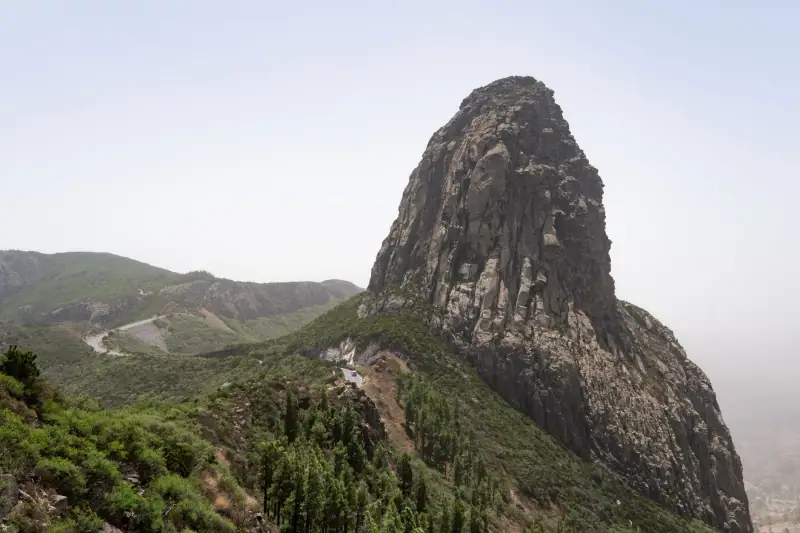
La Gomera: a complete guide to the island of forests and whistled language
La Gomera travel guide: Garajonay, El Silbo, Valle Gran Rey, hiking and food. Everything you need to visit the quietest of the Canary Islands.
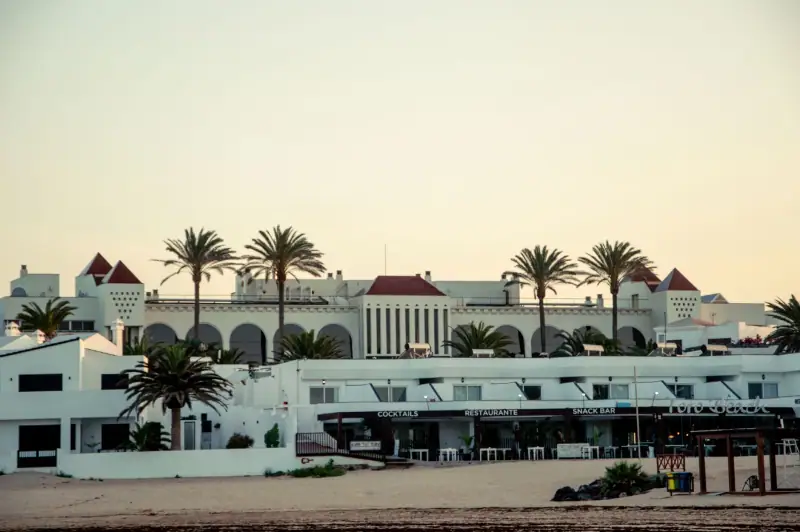
Visiting Corralejo: Complete Guide to Fuerteventura's Beach Town
Corralejo, Fuerteventura: white-sand beaches, the Corralejo dunes, water sports, where to stay and what to do. A complete guide to plan your trip.
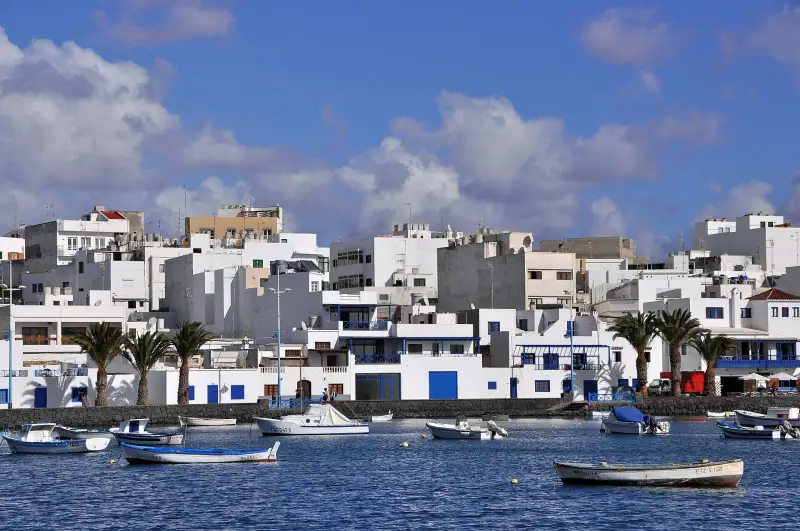
Visiting Arrecife: A Complete Guide to Lanzarote's Capital
Arrecife, capital of Lanzarote: Charco de San Ginés, historic castles, Reducto beach and the César Manrique museum. A complete guide to visiting the city.
Ready-made
Canary Islands itineraries
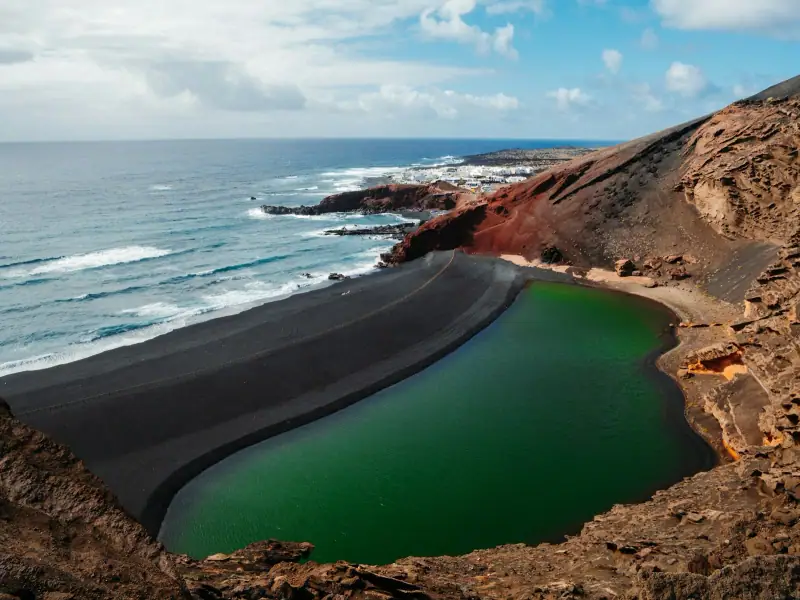
5 days
Lanzarote in 5 Days: A Complete Itinerary for the Volcanic Island
5-day Lanzarote itinerary: Timanfaya, Jameos del Agua, Playa Papagayo, César Manrique. A day-by-day plan to make the most of the volcanic island.
Can be adapted in the planner
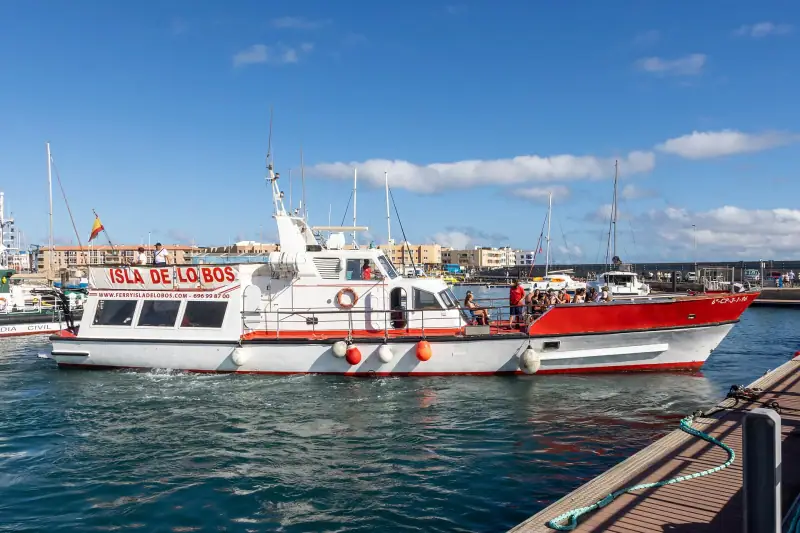
Island Hopping in the Canary Islands: Visiting Several Islands in One Trip
Island hopping in the Canary Islands: ferries, flights, multi-island itineraries and tips to combine Tenerife, Gran Canaria, Lanzarote and Fuerteventura.
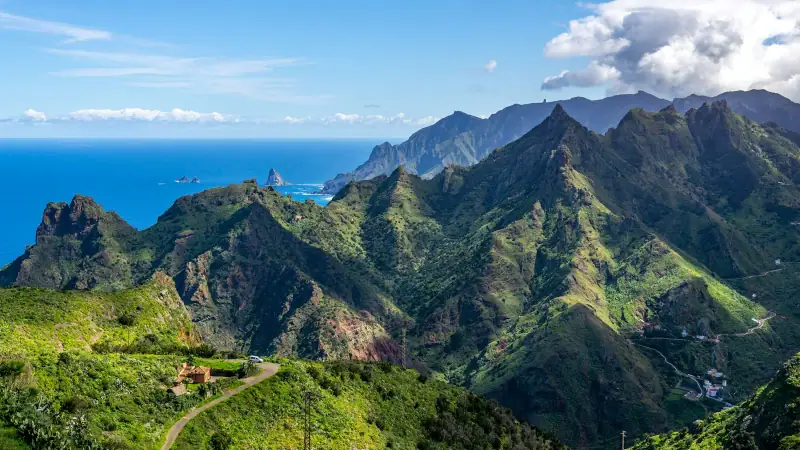
5 days
Tenerife in 5 Days Without a Car: A Realistic Bus and Tram Itinerary
Puerto de la CruzLos Cristianos