What to see
Phnom Penh essentials: the 10 things to do
We may earn a commission when you book through links on this page, at no extra cost to you. We don't visit or try the places we cover: we summarize published sources. How we work
In short
- Plan 2 days minimum for the main sites: Royal Palace, National Museum, Tuol Sleng and Choeung Ek. Three days lets you add neighborhoods, markets and cafés.
- The Royal Palace ticket is $10 and covers the Silver Pagoda; Tuol Sleng is $5 and Choeung Ek is $6 with an audio guide included.
- Cover your shoulders and knees at the Royal Palace. Sarongs are available at the entrance.
- Sisowath Quay at sunset and a Mekong dinner cruise ($15-30) are the classic ways to end a day.
Phnom Penh is one of the most complex and fascinating capitals in Southeast Asia. A city of contrasts, it combines the architectural beauty of its palaces and temples, the painful memory of the Khmer Rouge, the energy of a capital in the middle of an economic rebirth and the warmth of its people. Many travelers overlook it, in a hurry to reach the temples of Angkor, and that is a mistake. Here are the 10 essential things to do in Phnom Penh.
1. The Royal Palace and the Silver Pagoda
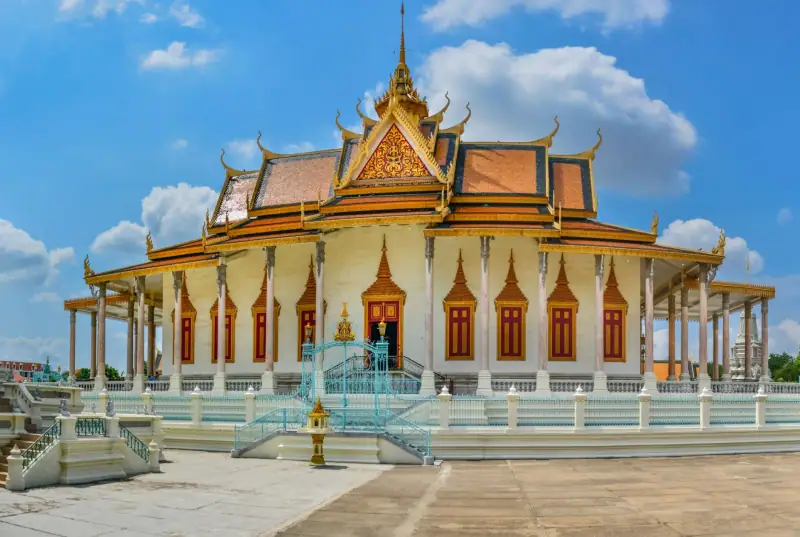
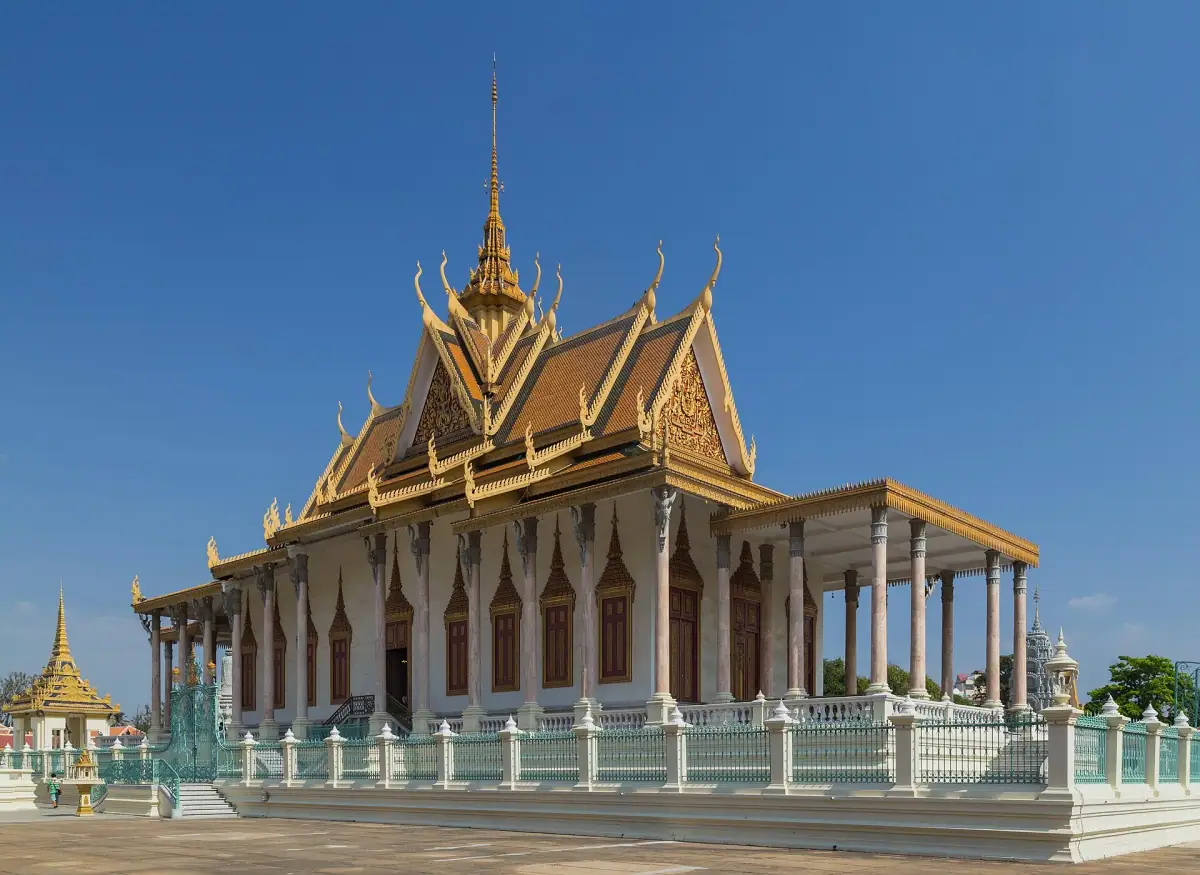
The Royal Palace is the architectural symbol of Phnom Penh. The official residence of King Norodom Sihamoni, this complex of gold-roofed buildings in classic Khmer style dominates the capital’s waterfront.
The Silver Pagoda (Wat Preah Keo Morokat): Named for its 5,000 solid silver floor tiles (much of the floor is hidden under protective carpet), it houses the famous Baccarat crystal Buddha (19th century) and a solid gold Maitreya Buddha set with 9,584 diamonds.
Practical info:
- Open: 7:30-11 am and 2-5 pm (closed during royal ceremonies)
- Admission: $10 (includes the Palace and the Silver Pagoda)
- Dress code: shoulders and knees must be covered (sarongs available at the entrance)
- Time needed: 1.5 to 2 hours
2. The National Museum of Cambodia
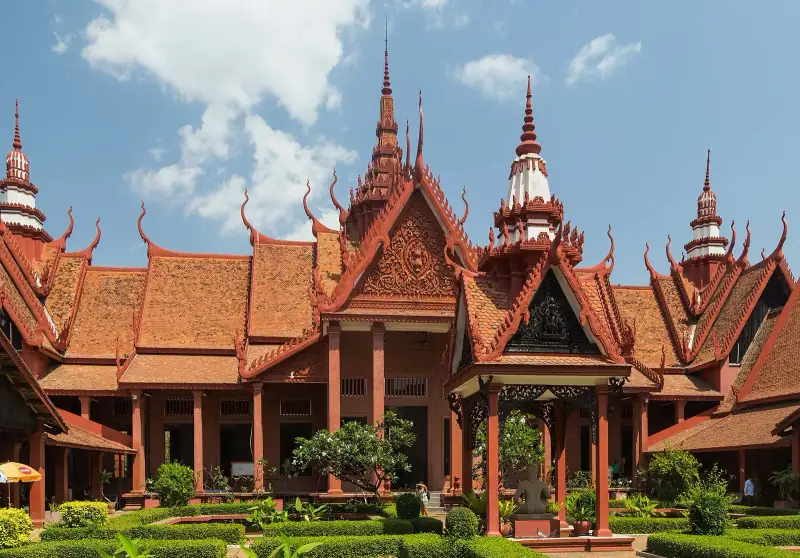
The National Museum, with its handsome red Khmer architecture and central garden, is one of the finest museums in Southeast Asia. Its Khmer art collections are priceless: hundreds of pieces from Angkor and the country’s archaeological sites, covering every period of Khmer history.
Don’t miss: The Angkorian gallery with pieces from the 9th to the 15th century, the magnificent bronze statue of Vishnu (10th century) and the central garden with its reptile pond.
Practical info:
- Open: 8 am-5 pm, every day
- Admission: $10 for foreign adults ($3 for children, 500 riels for Cambodian citizens)
- Time needed: 1.5 to 2 hours
- Audio guide available (recommended)
3. The Tuol Sleng Genocide Museum (S-21)
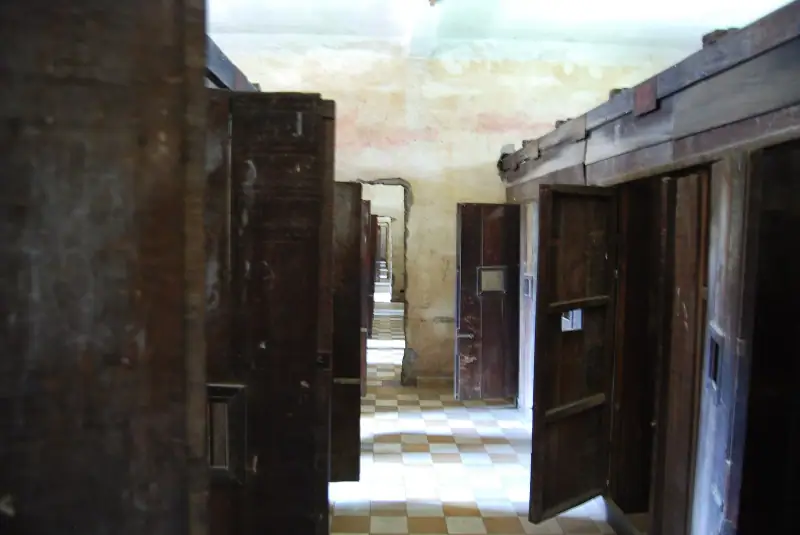
This is the most harrowing visit you will make in Phnom Penh, and perhaps in your life. S-21, a former school turned into a prison and torture center by the Khmer Rouge from 1975 to 1979, was where more than 17,000 people were detained and executed, including entire families.
The museum, open on the original site, preserves the cells, the instruments of torture, the photos of detainees and the testimonies of survivors. The black-and-white portraits of men, women and children photographed on arrival are deeply human and hard to look at.
Tips:
- Allow 2 to 3 hours
- The audio guide is excellent and essential for understanding the site
- Don’t come if you are feeling emotionally fragile
- The site includes video testimonies from survivors
Practical info:
- Open: 8 am-5 pm
- Admission: $5 for foreign adults ($3 for children age 10 and up)
- Documentation room: books and films about the genocide available
4. The Choeung Ek Killing Fields
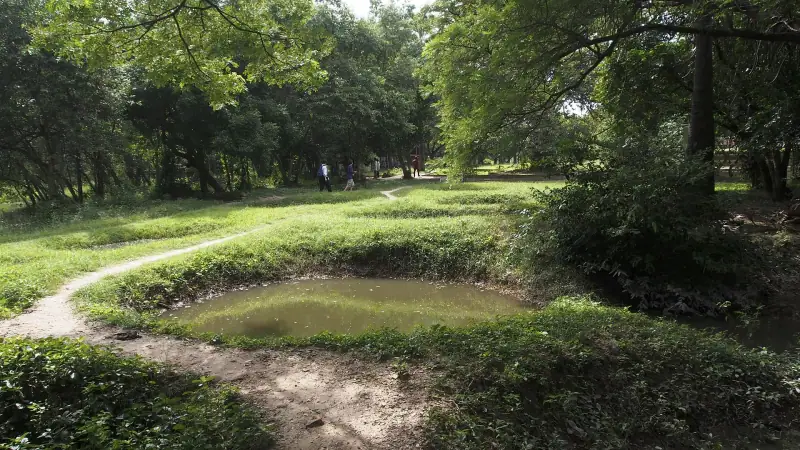
15 km (9 mi) from the city center, Choeung Ek is the main memorial site for the victims of the Khmer Rouge. On this ground, 8,985 bodies were exhumed from the 129 mass graves found after the fall of the regime. A central glass stupa holds rows of the victims’ skulls.
The audio guide (included in the admission) is remarkably well made. It takes you around the site in 2 hours, with survivor testimonies and historical context.
Practical info:
- Distance: 15 km (9 mi) from the center, 20-30 min by tuk-tuk
- Admission: $6 (audio guide included)
- Time needed: 2 hours minimum
- Combine with S-21 for a full day of remembrance
5. The Central Market (Phsar Thmei)
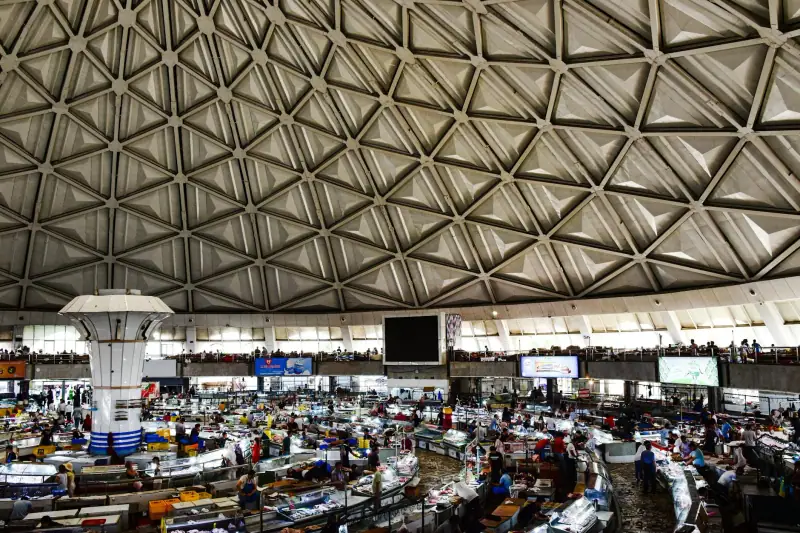
One of the most remarkable Art Deco buildings in Southeast Asia, built by the French in 1937. Its bright yellow central dome is visible from far away. Inside, four galleries radiate from the central rotunda, selling gold jewelry, watches, fabrics, clothing, food and souvenirs.
Even if you buy nothing, the Central Market is worth a visit for its architecture and atmosphere. Go early in the morning (before 10 am) to avoid the heat and to see the market at its busiest.
Hotels in Phnom Penh
Pick your neighborhood and book with free cancellation.
6. The Sisowath Quay promenade
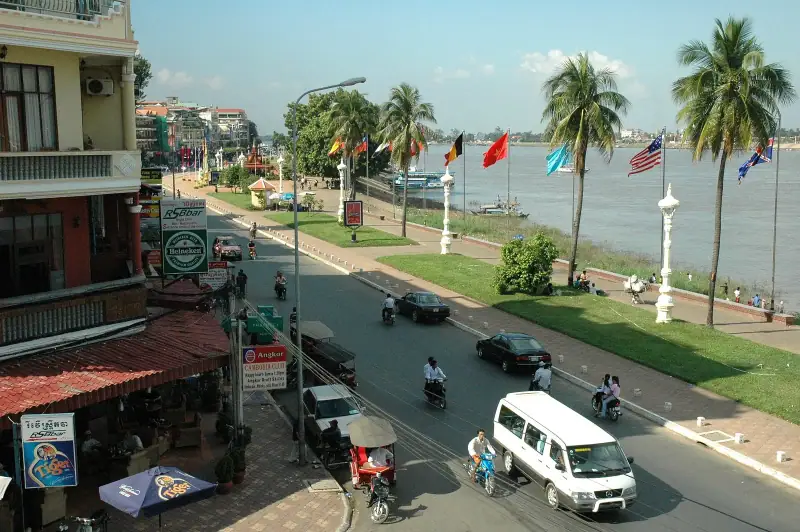
The Sisowath Quay promenade runs along the Tonle Sap for several kilometers, from the confluence with the Mekong to the north of the city. It is the favorite strolling spot of Phnom Penh residents, busy at all hours but especially magical at sunset.
Along the quay: restaurants and cafés with riverview terraces, street food vendors from 5 pm, sellers of flowers and temple offerings, and many Cambodians who come to walk, exercise or meet up with friends.
Sunset: Look for a riverview terrace table from 5:30 pm. The confluence of the Mekong and the Tonle Sap makes for spectacular sunsets.
7. The French colonial quarter
Phnom Penh’s historic center keeps many traces of French colonial architecture (1864-1953). Buildings include the former National Bank (now Cambodian Bank), the central post office, the Hotel Le Royal (now Raffles) and many colonial villas that have been converted into restaurants and hotels.
A walk or bike ride through this area (between the Royal Palace and the Central Market) is a pleasant way to see a different side of Phnom Penh, one that is less geared to mass tourism.
8. The Russian Market (Phsar Tuol Tom Poung)
The Russian Market is Phnom Penh’s shopping paradise. Cheaper and more local than the tourist shops, it offers a huge selection of clothing (including many brand-name copies), Khmer crafts, silver jewelry, spices, silk and an impressive quantity of odds and ends.
Shopping tips: Bargaining is expected (start at 50% of the posted price). Silk items, krama (traditional Cambodian scarves) and stone carvings are good finds.
9. Tasting Phnom Penh street food
Phnom Penh is Cambodia’s food capital, and street food is its soul. The best spots:
Riverside at sunset: Dozens of street food carts set up on Sisowath Quay from 5 pm. Fried Buddha’s navel, meat skewers, tropical fruit, fresh juices…
Phsar Chas (old market): During the day, local restaurants with no signs serve the city’s best kuy teav soups and lok lak for $2-4.
Mutant Tuol Tom Poung (Russian Market area): In the evening, street restaurants serve in the warmth and bustle of the alleys. A local atmosphere guaranteed.
See our guide to Cambodian street food for addresses and the dishes you should try.
10. A Mekong cruise
Ending your stay in Phnom Penh with a Mekong cruise at sunset is a perfect finish. Several restaurant boats run cruises of 1.5 to 2 hours, with dinner on board, while the sun sets over the golden banks of the Mekong.
For more options, see our guide to Mekong cruises.
Practical info:
- Departure: Riverside pier (Sisowath Quay)
- Duration: 1.5 to 2 hours
- Price: $15-30 depending on the boat and what is included
- Booking: at the pier or through hotels
Phnom Penh is a city that will surprise you with its complexity and resilience. Behind its chaotic surface and dense traffic, it hides a deep soul, marked by tragedy but carried by the hope of a people who bounced back with admirable dignity.
Frequently asked questions
How many days do you need to visit Phnom Penh?
Two days is the minimum to see the main sites of Phnom Penh: the Royal Palace, the National Museum, Tuol Sleng and Choeung Ek. With 3 days, you can explore the neighborhoods, markets and cafés, and take trips to the surrounding area.
Are the genocide memorial sites a must in Phnom Penh?
Visiting the Tuol Sleng Museum (S-21) and the Choeung Ek Killing Fields is not required, but it is strongly recommended if you want to understand Cambodia's history. The sites are moving, but they matter as a way to honor the victims and to understand the Cambodian people.
Are there free things to do in Phnom Penh?
Walking Sisowath Quay, seeing the Royal Palace from the outside, wandering through local markets and strolling the colonial neighborhoods are all free. Museums cost $3-10. Some temples in the city are free to enter.
Can you watch a sunset over the Mekong in Phnom Penh?
Yes, sunset over the Mekong from Sisowath Quay is one of the most pleasant moments in Phnom Penh. Restaurant boats run sunset cruises ($15-25). Or simply enjoy the view from a riverside café terrace.
Is it safe to visit Phnom Penh at night?
The tourist neighborhoods of Phnom Penh (BKK1, Riverside, Daun Penh) are lively and relatively safe in the evening. Stay in well-lit areas, do not show valuables, and use Grab rather than walking alone in isolated areas after 10 pm.
More Cambodia guides
Keep reading
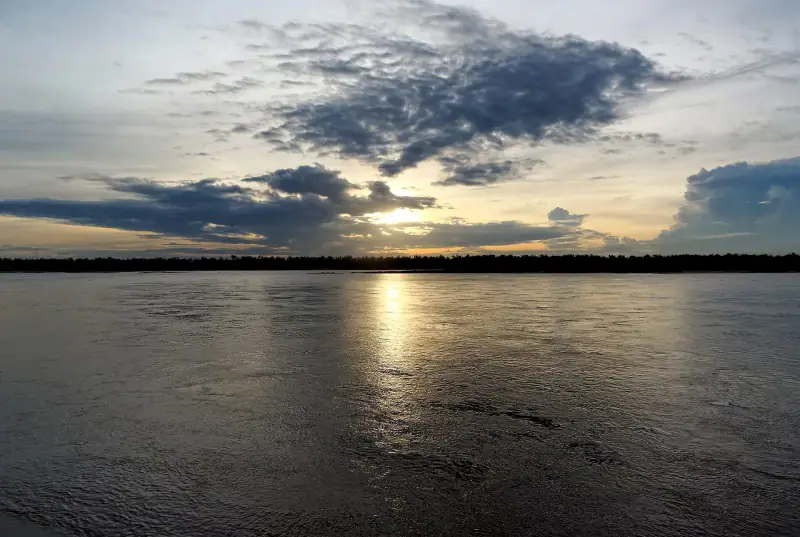
Eastern Cambodia: Kratie, Ratanakiri and Mondulkiri, the wild east
Exploring eastern Cambodia: Mekong dolphins at Kratie, Yeak Loam lake in Ratanakiri, ethical elephant experiences in Mondulkiri. A practical guide.
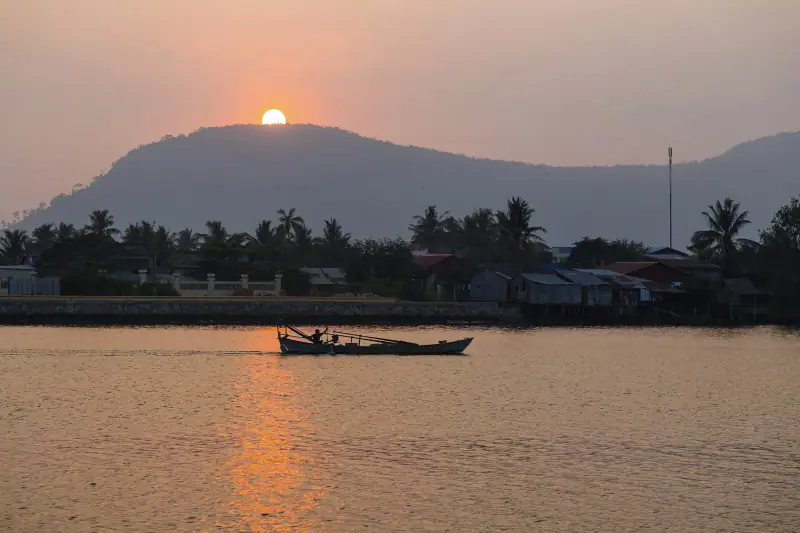
Visiting Kampot: a complete guide to Cambodia's most romantic town
Complete guide to visiting Kampot: the Kampot River, pepper, caves, kayaking, villages and where to stay. All you need to know before you go.
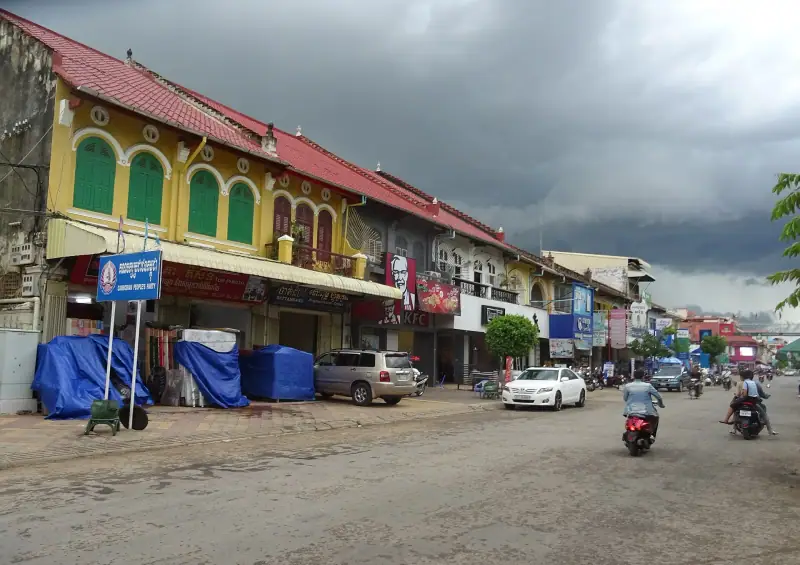
Visiting Battambang: a complete guide to Cambodia's northwest pearl
Complete guide to visiting Battambang: bamboo train, colonial architecture, Phare circus, bat cave and where to stay.
Ready-made
Cambodia itineraries
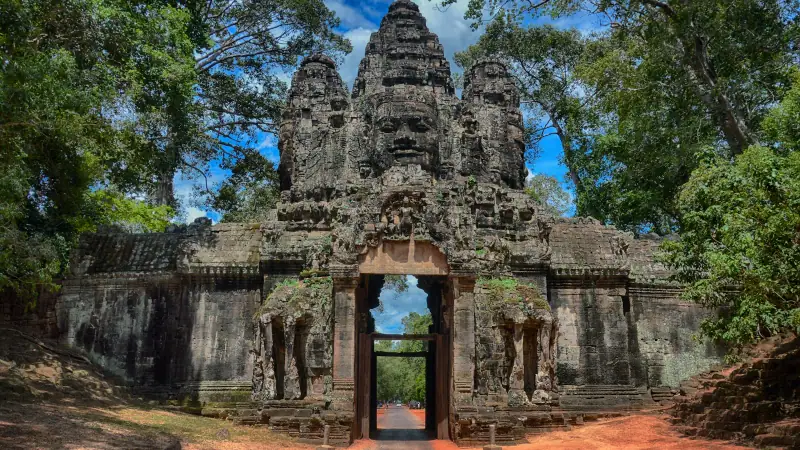
12 days
Cambodia in 12 Days with Kids: Stops, Distances and a Realistic Pace
Siem ReapPhnom PenhKampotKoh Rong Samloem
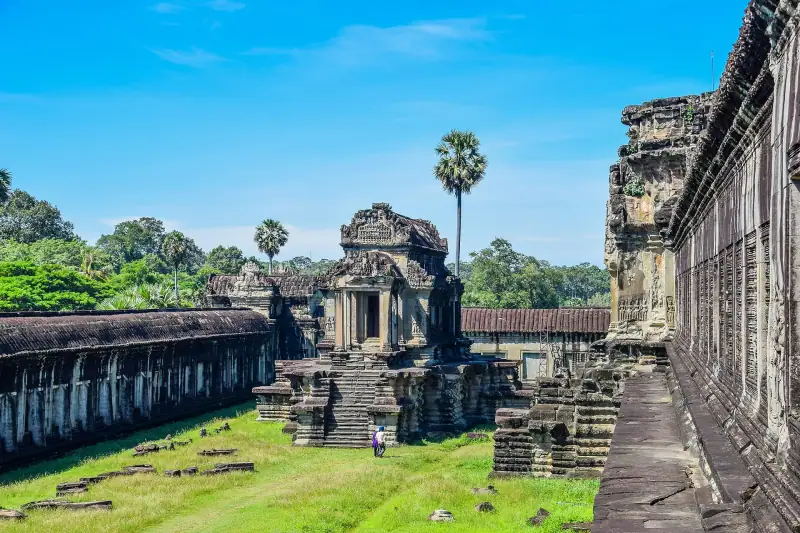
7 days
Cambodia in 7 Days: The Perfect One-Week Itinerary
Phnom PenhSiem Reap
Can be adapted in the planner

4 days
Road Trip in Northwest Cambodia: Battambang and Around in 4 Days
4-day road trip itinerary in northwest Cambodia: bamboo train, rice paddies, Phnom Sampeau bats and Angkorian temples away from the crowds.
Can be adapted in the planner