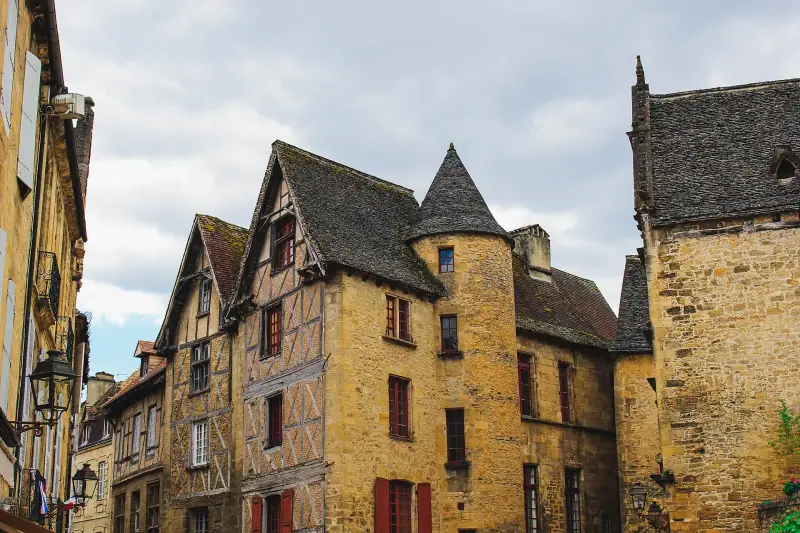
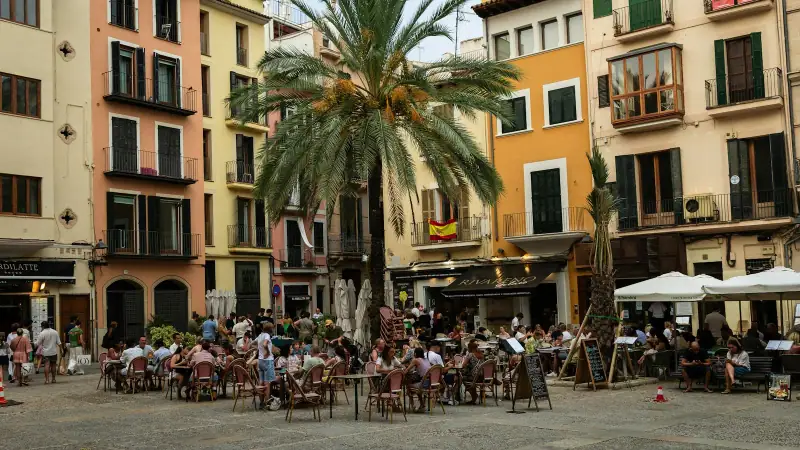
Where to stay
Where to stay in Espelette: areas and types of accommodation for your trip

We may earn a commission when you book through links on this page, at no extra cost to you. We don't visit or try the places we cover: we summarize published sources. How we work
In short
- For a first stay, sleep in the village (bourg) or a few minutes away: you see Espelette early and in the evening, after day visitors have left.
- Without a car, only the village itself is practical; with a car, Cambo-les-Bains, Ainhoa (about 6 km / 4 mi) and Itxassou are good alternatives.
- Guesthouses, gîtes and small hotels dominate; large hotel complexes are rare and rooms fill quickly in high season and in fall.
- One or two nights are enough for the village; three to five nights suit a base for exploring Labourd.
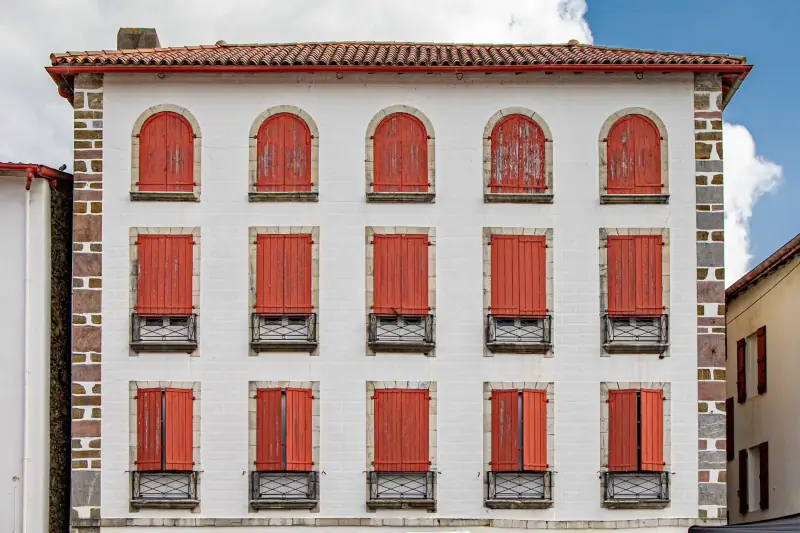
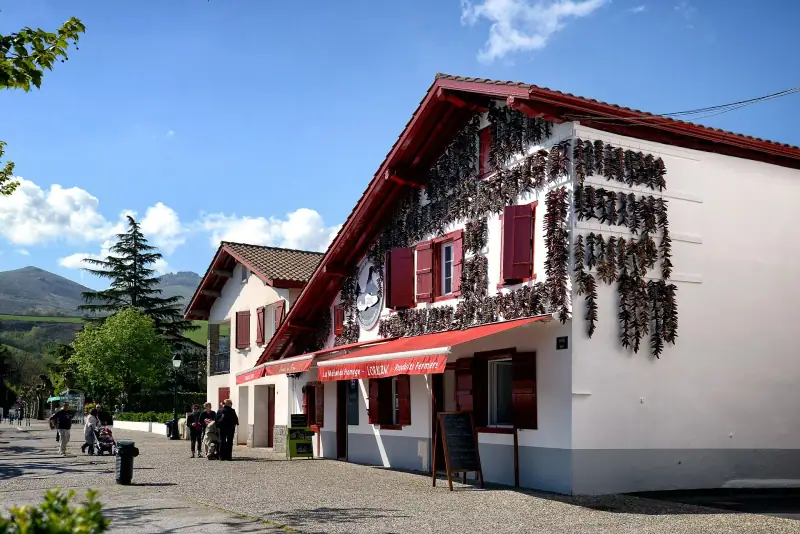
Espelette is one of the most photographed villages in the Basque Country: white houses with red shutters, garlands of chili peppers drying on the facades in fall, a peaceful main street once the tour buses have left. Many travelers come for the day from the coast. Yet sleeping in the village or nearby changes the experience: you see the village in the morning light, you have dinner without watching the clock for the trip back, and you can easily fan out across inland Labourd.
One question remains: where exactly to stay? Espelette has no “districts” in the sense of a big city. It is instead divided into areas: the village (bourg), the surrounding countryside and the neighboring villages. This guide compares them, then reviews the types of accommodation (guesthouse, gîte, hotel, apartment, campground) to help you choose according to your length of stay, budget and means of transport. It complements our guide to visiting Espelette and our comparison of where to base yourself in the Basque Country. To be safe, we do not name specific establishments: the offer changes quickly, and it is better to choose the right area and the right option before comparing prices and recent reviews.
Understanding Espelette before you book
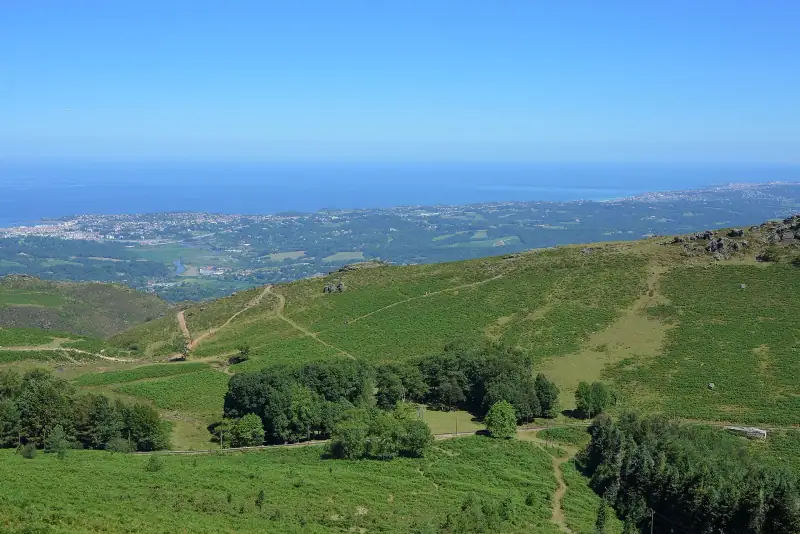
Espelette is a village of Labourd, in the inland Basque Country, about 20 km (12 mi) from Bayonne and about 25 to 30 km (16 to 19 mi) from Biarritz and Saint-Jean-de-Luz by secondary roads. Cambo-les-Bains and Ainhoa are about 6 km (4 mi) away. This in-between position is its main asset: both the coast and the mountains are reachable in under an hour.
Four criteria guide the choice of accommodation here:
- Means of transport. Without a car, only the village is really practical. With a car, the search area widens to the whole valley.
- The atmosphere you want. Village bustle by day and total calm in the evening in the center, countryside silence in the hamlets.
- The season. Summer and fall concentrate demand. In winter, some accommodation and shops slow down or close, which is worth checking before booking.
- Length of stay. For one night, proximity to the center comes first. For a week, space, garden and kitchen matter more.
To choose your dates, see our guide to when to go to the Basque Country.
Espelette village: the most practical on foot

The center of the village is concentrated around the main street, the town hall set in the former castle, the church and the shops selling local products. It is the ideal area for those who want to do everything on foot: stroll, have dinner, buy chili pepper and wander in the evening.
Who is it for? First stays, short stays, travelers without a car or with little time, and those who like the atmosphere of a living village.
Advantages.
- Access on foot to restaurants, shops and the village’s sights.
- Evening tranquility: once the day visitors have left, the village returns to a peaceful rhythm.
- The option of doing without a car during the stay, provided you do not want to explore the surroundings.
Limits. The offer is limited: few rooms, so availability fills quickly in high season. During the day, in summer and fall, the flow of visitors can be noticeable. Parking is organized around the center: check whether your accommodation has a space or a car park nearby. Old buildings do not always have an elevator, which matters with large luggage.
Types you find there. Guesthouses in traditional houses, a few small hotels or inns, and village apartments or gîtes. No large properties.
The countryside around Espelette: hamlets, farms and gîtes
A few minutes from the village, the roads head into a landscape of green hills, meadows and isolated Labourd farms. This is where many guesthouses and country houses are located, sometimes in former renovated farms.
Who is it for? Couples seeking calm, families who want a garden, hikers and everyone traveling by car.
Advantages.
- Silence and landscapes: you sleep in quiet, often with an open view of the hills.
- More space: garden, terrace, sometimes a pool in summer depending on the accommodation.
- A personal welcome: hosts know the producers and the good local walks.
Limits. A car is essential: the roads are narrow, there are no shops within walking distance and driving back at night calls for some care. Addresses are sometimes hard to locate, and GPS may hesitate on rural lanes: ask the host for arrival directions. Also plan where to eat in the evening, as restaurants are concentrated in the villages.
Tip. Read recent reviews: they tell you about access, farm animal noise, mobile coverage and the real distance to the village, criteria that photos do not show.
Places to stay in Espelette
Guesthouses, charming houses and hotels: compare availability and rates for your dates.
Neighboring villages: Cambo, Ainhoa, Itxassou
When the village is full or you want a different atmosphere, the neighboring towns are perfectly valid bases. All are reached by car in a few minutes.
Cambo-les-Bains
A former spa town, Cambo is larger and better equipped than Espelette: shops, services, more accommodation and a more varied offer. It is home to Villa Arnaga, the former residence of the writer Edmond Rostand. It is the most practical base for those who want a wider choice of lodging and restaurants. It is about 6 km (4 mi) from Espelette.
Ainhoa
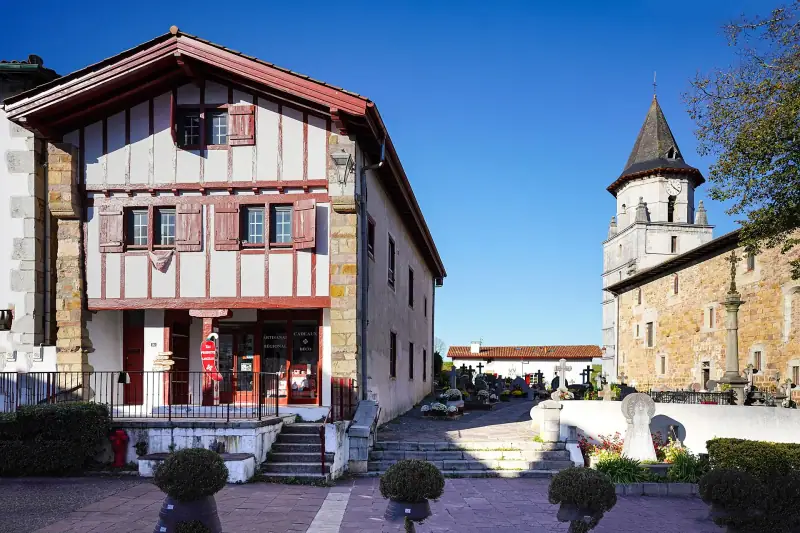
This street-village of Labourd, with stone and half-timbered houses lined up on either side of the road, is one of the most beautiful in the region. It is very close to the Spanish border. Staying in Ainhoa suits those who prefer a more low-key setting than Espelette, with guesthouses and small hotels. It is about 6 km (4 mi) from Espelette.
Itxassou
A village known for its black cherries, set in the Nive valley, Itxassou is calm and very nature-oriented. It is a good base for hikers, notably for walks around the Pas de Roland. Our guide to hiking in the Basque Country gives route ideas.
Souraïde, Larressore and other nearby villages
Even quieter villages surround Espelette. They suit those who want absolute calm and do not mind the car. The offer there is more limited, but rates can be gentler.
The guesthouse: the classic option
In the inland Basque Country, the guesthouse (chambre d’hôtes) is probably the most characteristic option. It often occupies a traditional Labourd house, with white walls and colored shutters, and serves a breakfast prepared with local products.
Who is it for? Couples, travelers who like talking with locals, those who want an authentic setting for a short stay.
Advantages.
- A personal welcome and advice from hosts who know the area.
- A breakfast that is often generous, sometimes with jams, Basque cake and sheep’s cheese.
- A charming setting impossible to find in a chain hotel.
Limits. Few rooms per establishment, so availability fills quickly. Arrival times must be arranged in advance with the host, some establishments require a minimum stay in high season, and payment or cancellation terms vary from house to house. Read the terms carefully before booking.
The gîte and vacation house: ideal from three nights
For a stay of three nights or more, or as a family, a gîte or a rented house offers the best space-to-price ratio. The inland area is full of renovated houses with a garden or terrace.
Advantages.
- A kitchen: markets and local producers let you buy sheep’s cheese, ham, vegetables and chili pepper, which lightens the food budget. To know what to taste, see our Basque specialties.
- Space: several bedrooms, a living room and a garden for the kids.
- Flexibility: free schedules, the possibility of hosting friends or family.
Points to watch.
- Extra fees: cleaning, linen, tourist tax, sometimes heating in the shoulder season. Compare the final price.
- Minimum stays: many gîtes rent by the week in summer.
- Isolation: a house lost in the countryside is charming, but needs a car for the slightest errand.
To build an overall budget, our Basque Country budget guide gives orders of magnitude by expense item. Prices vary too much by season to be quoted reliably here.
Apartments and houses inland
For a family stay or several nights, compare rentals with a kitchen between Espelette, Cambo and Ainhoa.
The hotel: a limited but useful offer
The hotel offer in Espelette itself is modest. You find small establishments with character rather than large hotels. For a wider choice, look at Cambo-les-Bains, or coastal towns such as Bayonne, Biarritz and Saint-Jean-de-Luz.
Advantages.
- Simplicity: reception, housekeeping and breakfast are taken care of.
- More flexible arrival times than in a guesthouse.
- Luggage service, useful when you arrive after a long trip.
Points to watch.
- The limited number of rooms: book early.
- Closing periods: some establishments close in winter, check before booking.
- Parking: generally easy in the countryside, more restricted in the center.
Campground and budget options
The most affordable options are most often found on the outskirts or in neighboring towns rather than in the heart of the village. Campgrounds in the region offer pitches and rental units and suit families in summer, provided you book early. Hostel-type shared accommodation is generally more common on the coast than inland: check what is available for your dates.
Points of attention. Check the real distance to the village, reception hours, quiet rules and car access. A low rate does not make up for an hour of daily travel. For tight budgets, a base on the coast or in Bayonne, with Espelette as a day trip, can prove cheaper. See our guide to where to stay in Bayonne for this option.
Pepper season, summer, winter: how to choose your period
The period profoundly changes the stay and availability.
- Fall is the signature season: red peppers dry on the facades and the pepper festival has traditionally been held at the end of October. It is also a much sought-after period: book well in advance. Our article on Espelette pepper AOP details the festival and where to buy.
- Summer attracts many visitors, with strong demand and frequent minimum stays. Days are hot, but evenings inland are pleasant.
- Spring is a good compromise: green landscapes, mild weather, wider availability.
- Winter is quiet. Some accommodation and shops close or reduce their hours: check before booking, but enjoy the tranquility and generally gentler rates.
Activities and tours around Espelette
Guided tours, tastings and day trips to discover Labourd and the Basque coast.
With or without a car: how to choose
Espelette is an inland village: a car changes everything.
Without a car. Stay in the village itself, where everything is on foot. Public transport links from the coast exist but are limited, with restricted timetables: always check the last return. Our guide to getting around the Basque Country by train, bus or car details the options. If you do not drive, a base in Bayonne or on the coast, with an excursion to Espelette, is often simpler.
With a car. You have full latitude: village, countryside, neighboring villages. Favor accommodation with parking and leave the car to stroll on foot in the village. Arrive early in high season, as the center’s car parks fill up.
For an occasional excursion. A one-day rental is enough if you stay on the coast and come to Espelette only once.
How many nights and which option for your profile?
- One night, getaway: a charming guesthouse in or near the village.
- Two-night weekend: village or neighboring village, with dinner in the village and a walk to Ainhoa or Cambo.
- Family, one week: a gîte or a house with a garden in the countryside, and beach days on the coast.
- Hikers: Itxassou or the countryside, by car, with trailheads nearby. See also our 3-day itinerary between coast and inland.
- Small budget: campground or lodging set back from the center, or a base in Bayonne with Espelette by day.
- Combined coast and countryside stay: two stages, a few nights inland then a few nights on the coast, for example in Biarritz or Saint-Jean-de-Luz.
A few ways to cut the bill
Without giving prices that vary from year to year, here is the general logic:
- Shift your dates. May, June and September offer a good compromise between weather, calm and rates.
- Stay on weekdays. Weekends and long weekends are tighter.
- Choose an option with a kitchen to limit restaurant meals.
- Widen the search area. A neighboring town can cost less than the village, for a few minutes of driving.
- Keep free cancellation. It lets you book early and watch for price drops.
Mistakes to avoid
- Booking without checking car access. Some countryside addresses are hard to find: ask for precise directions.
- Relying on public transport. It exists, but with restricted timetables.
- Ignoring off-season closing periods. Check that the accommodation and neighboring shops are open on your dates.
- Booking late in pepper season. Fall is in high demand.
- Underestimating travel times. The coast is close, but not on foot: allow a margin for the trip back in the evening.
- Choosing for the wrong goal. If the beach on foot is your priority, look instead at Biarritz or Saint-Jean-de-Luz.
Recommendations
For a first stay, the most pleasant option is a guesthouse in the village or a few minutes away, which lets you enjoy the village in the evening and morning. For a week with family or friends, prefer a gîte with a garden in the countryside, keeping a car. If the village is full, Cambo-les-Bains, Ainhoa and Itxassou offer excellent alternatives, all close by.
Whatever the option, book with free cancellation when possible, read recent reviews and check parking and the real distance to the village. To place Espelette in a broader trip, see our complete guide to the Basque Country.
Frequently asked questions
Where should you stay in Espelette for a first visit?
For a first stay, the most pleasant option is to stay in the village (bourg) or a few minutes' walk away: you enjoy the village early in the morning and in the evening, when day visitors have left. If the center is full for your dates, neighboring hamlets or nearby towns such as Cambo-les-Bains, Ainhoa or Itxassou are excellent alternatives by car.
Is it possible to stay in Espelette without a car?
It is possible only if you stay in the village itself, which is explored on foot. Public transport links from the coast exist but are limited, with restricted timetables. To explore the inland Basque Country, a car, or at least an occasional rental, remains strongly recommended.
Is it better to stay in Espelette or on the coast?
It depends on your priority. Espelette offers calm, countryside and a Basque village setting, with accommodation often more affordable than by the sea in summer. The coast (Biarritz, Saint-Jean-de-Luz) offers the beach and restaurants on foot. Both are about half an hour's drive away, so you can combine the two in one stay.
What type of accommodation dominates in Espelette?
The inland Basque Country is mostly the domain of guesthouses, gîtes, houses with character and a few small hotels. Large hotel complexes are rare. This human-scale offer is an asset, but it books up quickly in high season and in fall.
When should you book for the pepper season?
Fall is the signature period in Espelette, with peppers drying on the facades and the pepper festival traditionally held at the end of October. Book several weeks or even months ahead, and choose a rate with free cancellation when possible.
Can you stay in Espelette with children?
Yes. A gîte or a house with a garden offers space and the chance to cook, which simplifies meals. Check for a baby cot if needed, access by car and distance to shops. The inland area is calm, but the coast is still about thirty minutes away for beach days.
How many nights should you plan in Espelette?
One or two nights are enough for the village and its immediate surroundings. If you want to make it a base for exploring Labourd (Ainhoa, Cambo, Itxassou, La Rhune, the coast), three to five nights are more comfortable, ideally renting a gîte or an apartment.
More Basque Country guides
Keep reading
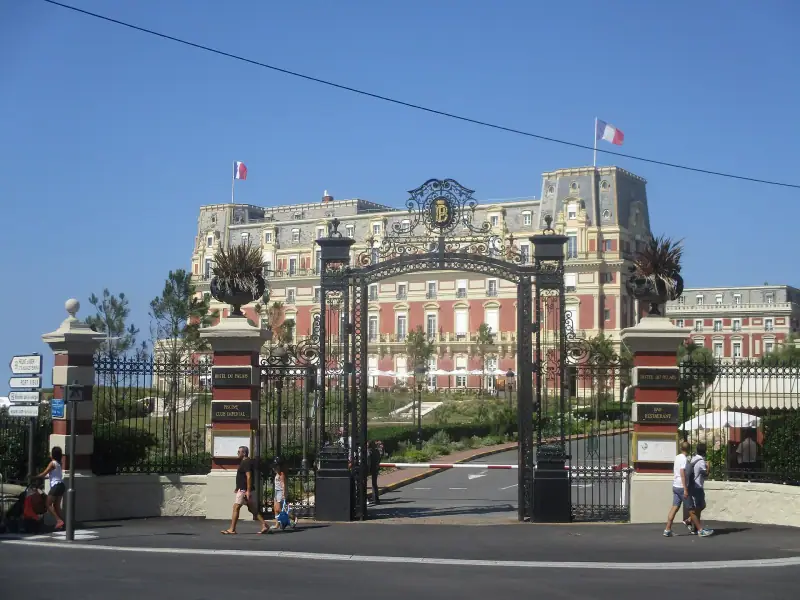
Where to stay in Biarritz: districts and types of accommodation for your trip
Palace, boutique hotel, apartment, guesthouse, campground or hostel: compare lodging types and districts to choose where to stay in Biarritz.
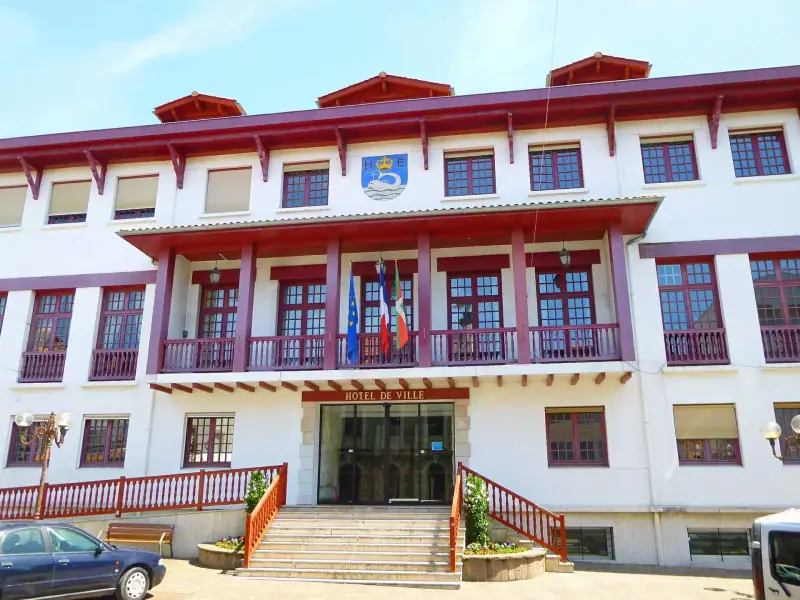
Where to stay in Hendaye: districts and types of accommodation for your trip
Hendaye-Plage, the corniche, town center, station and Txingudi bay: compare districts and lodging types to choose where to stay in Hendaye.
Where to stay in Saint-Jean-de-Luz: districts and types of accommodation for your trip
Historic center, Grande Plage, Ciboure, Socoa or Sainte-Barbe: compare districts and lodging to choose where to stay in Saint-Jean-de-Luz.
Ready-made
Basque Country itineraries
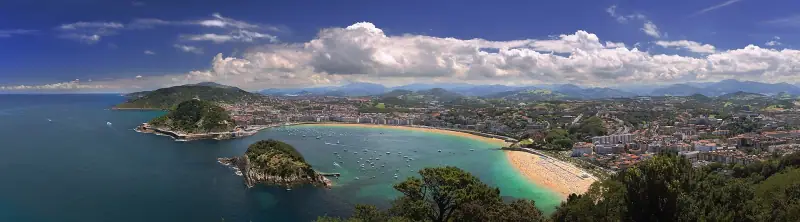
1 day
San Sebastián in 1 day from the Basque coast: itinerary and tips
One day in San Sebastián from Biarritz, Saint-Jean-de-Luz or Hendaye: how to get there, what to see and where to taste pintxos.
5 days
The Basque Country in 5 days with kids: stops and pace
The Basque Country with kids in 5 days: drive times, beaches, La Rhune cog train, Sare caves and a rainy-day plan B, at a child's pace.
3 days
3 days in the Basque Country: coast and inland itinerary
A 3-day Basque Country itinerary: Biarritz, Bayonne, Saint-Jean-de-Luz, Espelette and La Rhune, with distances, tips and good addresses.