Plan your trip
Torrent de Pareis without a guide: the real danger, guide prices and alternatives
We may earn a commission when you book through links on this page, at no extra cost to you. We don't visit or try the places we cover: we summarize published sources. How we work
In short
- The gorge is nearly 3.5 km (2.2 mi) long and is descended in 3 to 5 hours from Entreforc to Sa Calobra beach; it has no official waymarking.
- Main dangers: flash floods (even from rain miles upstream), falls on wet rocks, and disorientation or exhaustion with no side exit.
- A guided group outing is roughly €60-90 per person (about $70-105); a private guide €150-250 in total (about $174-290).
- Alternatives without the risk: see the canyon mouth from Sa Calobra beach (by road or by boat from Port de Sóller) or the Entreforc viewpoint.
Type “Torrent de Pareis” into a search engine and you quickly run into two contradictory stories: spectacular photos praising “the finest hike in Mallorca,” and hiking forums that mention rescues, even deaths. Both are true. This guide sorts out the real risk, what a guide concretely brings, its price, and the alternatives if you prefer not to enter the canyon.
The Torrent de Pareis, the largest gorge in the Balearic Islands
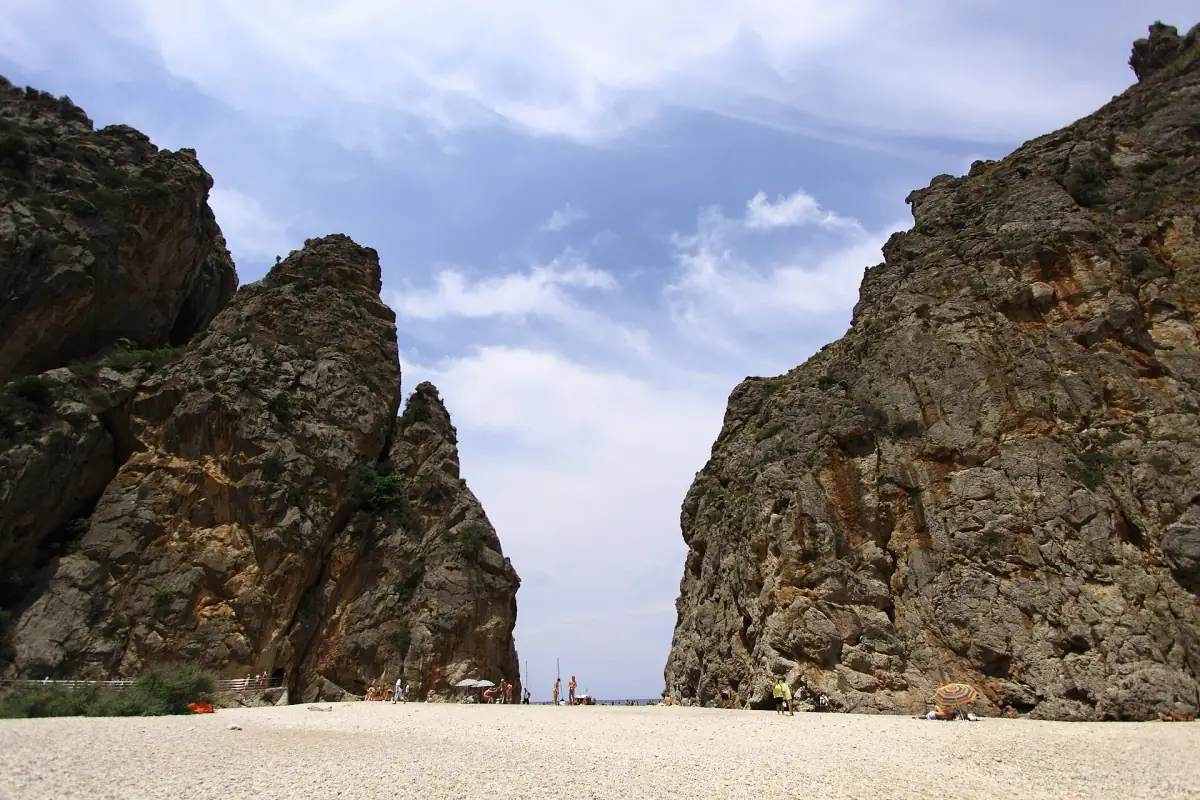
The Torrent de Pareis is the result of two torrents meeting, the Torrent de Lluc and the Torrent des Gorg Blau, which over millennia carved a limestone gorge nearly 3.5 km (2.2 mi) long in the Serra de Tramuntana, between Escorca and Sa Calobra beach. The classic descent starts from the Entreforc area (the junction of the two torrents, reached by a path from the Lluc road) and reaches Sa Calobra beach in 3 to 5 hours depending on the group’s level.
The setting is unique in the Balearic Islands: limestone walls that sometimes narrow to under two meters (6.5 ft), giant boulders to clamber over, pools to swim across or bypass depending on flow. It is precisely this chaotic terrain and the lack of a marked trail that set the route apart among the island’s hikes, and that explain why the guide question keeps coming up.
Why this hike is different from others in Mallorca
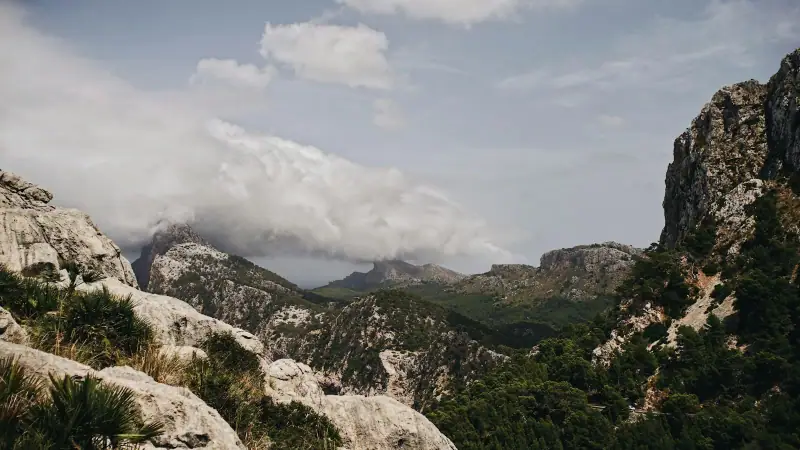
Unlike most trails in the Serra de Tramuntana, marked with GR signs and dotted with panels, the Torrent de Pareis has no official waymarking once you are in the streambed. You move from block to block, looking for the best way along the water, with no reliable GPS fix at the bottom of the gorge (the walls often block the signal).
Three concrete dangers come up repeatedly in incident reports and hiker feedback:
- Flash floods. The catchment basin feeding the torrent is vast; a storm on the Lluc plateau, several kilometers from the canyon, can raise the water level in the gorge in under an hour, without any visible rain where you are. This is the most frequent cause of helicopter evacuations.
- Falls on wet rocks. Water-polished boulders are slippery even in dry weather in shaded areas, and a sprain or fracture at the bottom of the canyon seriously complicates an evacuation, with no drivable track.
- Disorientation and exhaustion. With no side escape over much of the route (the walls are too steep to leave the streambed), a group that underestimates progress time can find itself stuck at nightfall.
These risks do not make the descent forbidden to independent hikers, but they change the nature of the decision: the question is not “am I physically fit” but “can I read mountain weather and handle the unexpected with no signal.”
Do you really need a guide? Three profiles, three answers
Experienced hiker, used to rocky terrain and the mountains. A guide adds little in safety terms if you can read an AEMET weather bulletin, leave early (before 8 am), in a group of at least two, and give up without hesitation if in doubt about the day’s weather. This is the profile for whom independence makes sense.
Occasional hiker, comfortable on trails but not used to rocky off-trail terrain. This is the gray zone. The descent is still doable, but a guide brings real value: knowledge of where the water is deep, an adapted pace, and above all the ability to decide to turn back at the right time, a decision many hikers underestimate once underway.
Family with children, someone not comfortable in water, or an improvised outing with no weather check. Here the answer is simple: do not attempt the descent without a guide, or not at all. Local agencies in fact refuse children below a certain age (varying by operator, generally 10-12 years) and do not take a group if the AEMET weather alert signals a storm risk.
Which season for hiking in Mallorca?
Our month-by-month guide: weather, heat and crowds in the Serra de Tramuntana
How much a guide costs, and what it includes
There is no single public rate, since the service is provided by private hiking or canyoning agencies based in Sóller, Pollença or Escorca, and not by an official body as for the GR221 refuges. Here are the rough orders of magnitude:
| Option | Indicative price | What is included |
|---|---|---|
| Group outing (6-12 people) with an agency | €60-90 (~$70-105) per person | Guide, helmet, sometimes harness, return by boat from Sa Calobra |
| Private guide (1-4 people) | €150-250 (~$174-290) in total | Adapted pace, flexible route depending on level, safety gear |
| On your own, no guide | €0 (excluding transport) | No supervision, no guarantee of quick rescue |
The return is generally by boat from Sa Calobra beach to Port de Sóller (a regular tourist crossing in season), which avoids climbing back up the canyon. If you go down without an agency, remember to check this return boat’s timetable before you leave: missing the last departure forces a long road trip to recover a vehicle left on the Entreforc side.
Organizing the descent on your own: what to check before leaving
- Check the AEMET weather for the area (Escorca / Serra de Tramuntana) the day before and the same morning, including forecasts on the Lluc plateau upstream, not just on the coast. Any storm risk, even slight, should cancel the outing.
- Leave early, ideally before 8 am, to have a comfortable time margin and avoid midday heat on exposed passages.
- Form a group of at least two people; never go down alone, as there is no way to alert rescuers after a fall at the bottom of the gorge, where cell signal is intermittent.
- Bring a waterproof bag, water (at least 1.5 L, or 50 oz, per person), closed shoes with non-slip soles and something to cover up: the water in the pools stays cool even in summer.
- Tell someone your route and expected return time, at your lodging or to a relative, as for any outing in an isolated area with no guaranteed signal.
- Give up without hesitation if the water level seems unusually high, if the sky clouds over along the way, or if a member of the group shows signs of significant fatigue even before entering the narrowest part.
Seeing the Torrent de Pareis without going down it
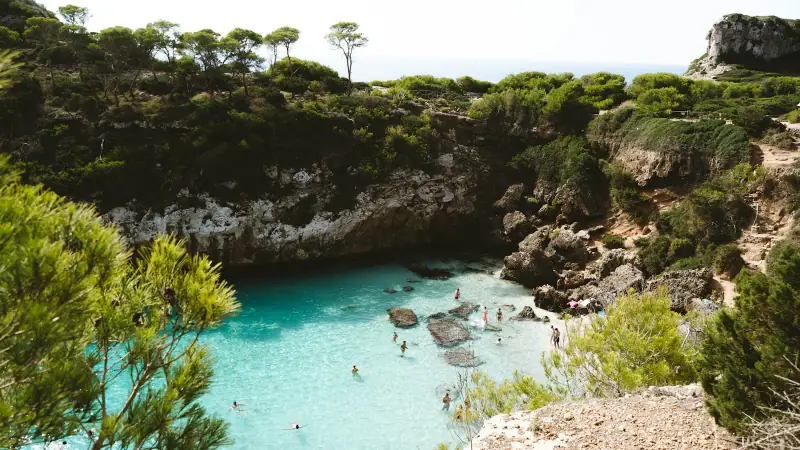
If the risk profile does not suit you, or if you travel with children or a person with reduced mobility, you can still discover the site without ever setting foot in the streambed:
- From Sa Calobra beach, reachable by car on the Ma-2141 road (very winding, expect patience in high season) or by boat from Port de Sóller. A short built tunnel leads to the canyon mouth, where you can admire the walls without moving into the gorge.
- By boat from Port de Sóller, with views of the spectacular Tramuntana coast in addition to the Sa Calobra stop, an option that combines scenery and comfort for the whole family.
- From the Entreforc viewpoint, upstream, for a glimpse of the junction of the two torrents without entering the canyon itself.
To build a full stay around the Serra de Tramuntana, our guide to hikes in Mallorca details the range’s other trails, our 7-day Mallorca itinerary shows where to fit in a stop in Sóller, and our guide to Sóller remains the best base for organizing an early start toward Entreforc or the boat back from Sa Calobra.
In summary
The Torrent de Pareis requires no permit for a descent on foot in a small group, but the Balearic government requires being accompanied by a guide or someone who knows the route well, and the danger is very real: unpredictable flash floods, slippery terrain with no escape and areas with no cell signal make it one of the most demanding hikes in Mallorca. An experienced hiker who checks the weather and leaves early in a group can manage on their own; an occasional hiker or a family will do better to go through a local agency, for €60 to €90 per person (about $70-105). In every case, the rule that overrides all others stays simple: if in doubt about the weather, do not go down.
Frequently asked questions
Is the Torrent de Pareis dangerous?
Yes, it is considered one of the most dangerous hikes in Mallorca. The lack of official waymarking, exposed rocky passages and above all the risk of a sudden flood when it rains upstream, even miles away, are responsible for serious and sometimes fatal accidents every year.
Is a guide mandatory to go down the Torrent de Pareis?
No permit is needed for a descent on foot in a small group (up to 20 people), but the Balearic government indicates you must be accompanied by a guide or someone who knows the route well, and canyoning as well as groups of 40 or more require authorization (check with the administration). A guide is strongly recommended if you have no experience of rocky terrain and of reading mountain weather.
How much does a guide for the Torrent de Pareis cost?
Allow between €60 and €90 per person (about $70-105) for a small-group outing run by a canyoning or hiking agency in Sóller or Pollença, and between €150 and €250 (about $174-290) for a private guide, depending on the season and the group size. This rate generally includes safety gear (helmet, sometimes harness) and the return transport by boat or minibus.
What is the best time to try the descent without a guide?
May, June and September offer the best compromise: reduced water flow compared with spring, less crushing heat than in July-August and a lower storm risk than in late summer. Avoid any attempt after a rainy episode in the previous 48 hours, even if the sky has turned blue again at the time of departure.
Can you see the Torrent de Pareis without going down it?
Yes. Most visitors see the canyon mouth from Sa Calobra beach, reachable by car on the winding Ma-2141 road or by boat from Port de Sóller, without setting foot in the gorge. It is the only option for families with children, people with reduced mobility or in bad weather.
Do you need special equipment for the descent?
Closed shoes with non-slip soles (ideally aqua-hiking or canyoning shoes), a waterproof bag for your things and plenty of water are essential. A helmet is not mandatory for the classic crossing but remains recommended on passages where falling rocks are possible.
More Balearic Islands guides
Keep reading
Cabrera from Mallorca: how to get there, book and what to bring
Getting to Cabrera from Mallorca: boat from Colònia de Sant Jordi, booking, national park rules, swimming, trails and what to bring.
Visiting Formentera: a complete guide to the pearl of the Balearic Islands
Formentera, the smallest Balearic island: Ses Illetes beaches, La Mola plateau, salt flats, Sant Francesc village. A complete guide.
Visiting Ibiza: a complete guide to the White Isle of the Balearics
Complete Ibiza guide: UNESCO Dalt Vila, wild beaches, nightlife, the authentic north, food and practical tips for your stay on the White Isle.
Ready-made
Balearic Islands itineraries
5 days
3 days
Formentera in 3 days: a complete itinerary, beaches and practical tips
Discover Formentera in 3 days: the best beaches, Illetes, La Mola, the salt lagoons. Day-by-day itinerary, transport and places to stay.
7 days
Mallorca in 7 days: a complete itinerary to discover the island
7-day Mallorca itinerary: Palma, Serra de Tramuntana, wild coves, picturesque villages. A practical day-by-day guide for a perfect road trip.