What to see
Graciosa Island: complete guide to the pearl of the Azores
We may earn a commission when you book through links on this page, at no extra cost to you. We don't visit or try the places we cover: we summarize published sources. How we work
In short
- Reach Graciosa by Atlânticoline ferry from Praia da Vitória (Terceira), about 3 h to 3 h 30, or by a 30 to 40 minute SATA Air Açores flight.
- The Furna do Enxofre is a volcanic cave with a sulfur lake, reached by a 183-step spiral staircase; the guided visit lasts 45 minutes to 1 hour, so book ahead.
- Two to three days is ideal: Santa Cruz da Graciosa, the caldera and Furna do Enxofre, then the Carapacho hot springs on the south coast.
- Graciosa is one of the cheapest islands: guesthouse rooms run €40 to €70 (about $46 to $81) a night; the best months are June to September.
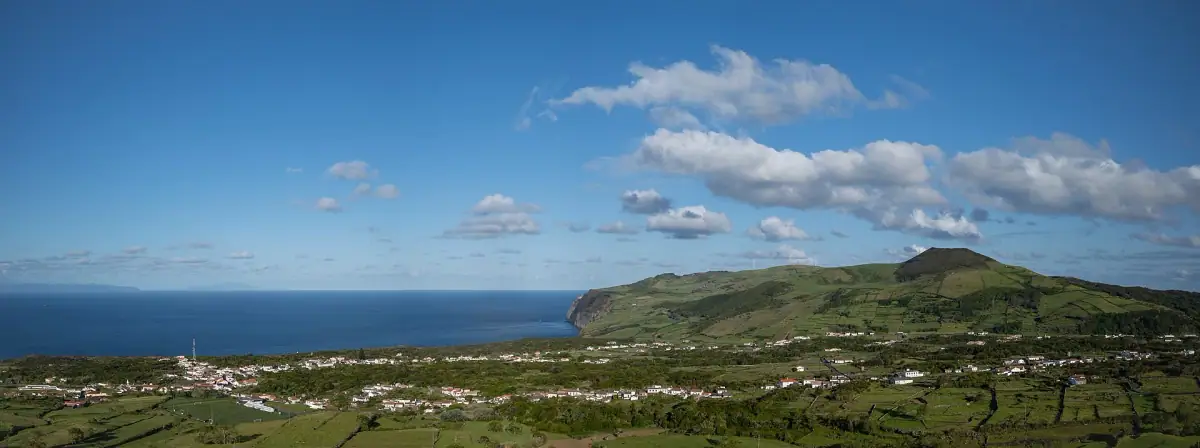
Graciosa may be the least known of the Azores. Not the most spectacular at first glance, not the liveliest, not the one whose photos circulate on Instagram. And yet that is exactly why it deserves the trip. Graciosa, whose Portuguese name means “graceful,” is a human-scale island set on the Atlantic like a parenthesis of calm and authenticity in the heart of the archipelago. A UNESCO Biosphere Reserve since 2007, it hides in its depths one of the most fascinating geological sites in all of Portugal.
Here is everything you need to know to visit Graciosa.
Furna do Enxofre: inside the volcano
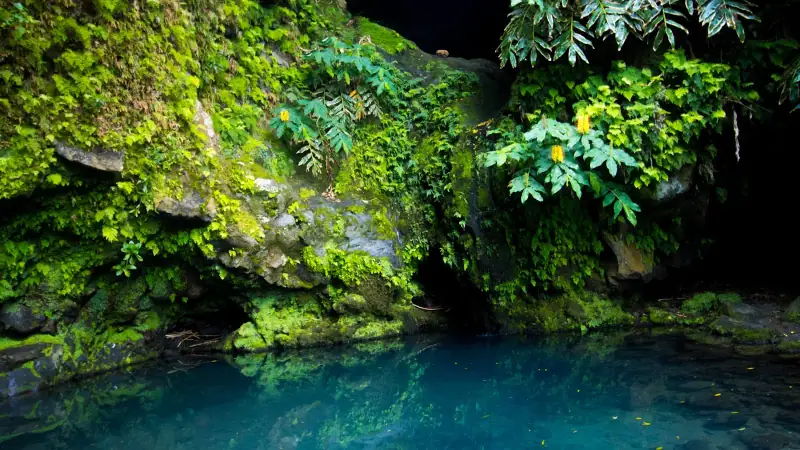
The Furna do Enxofre is Graciosa’s hidden treasure. Beneath the island’s central caldera opens a volcanic cave of impressive size, with a sulfur lake of almost unreal green-blue shades at the bottom. This unique geological formation is the result of thousands of years of volcanic activity: sulfurous gases still rise from the depths today, giving the cave air its characteristic smell, a reminder that you are inside an active volcano.
How to visit the Furna do Enxofre
To get down to the lake, a cylindrical metal tower 37 meters (121 ft) tall, built in 1939, houses a spiral staircase of 183 steps cut into the rock. Access is not suitable for people with reduced mobility. The descent itself is already a show: the basalt walls gradually widen, revealing the immensity of the cave and the lake gleaming below.
The visit is led by local guides and lasts about 45 minutes to 1 hour. Group sizes are limited to protect the site. Booking ahead is strongly recommended, especially in July and August. Admission is paid; adult and child prices are posted at the site entrance. In winter (November to March), the site is open only Tuesday to Saturday: check hours with the visitor center before heading up.
The Furna do Enxofre sits at the top of the island, in the caldera area, about twenty minutes by car from Santa Cruz da Graciosa on a road that climbs through pastures.
Tours and activities on Graciosa
Guided visits of the Furna do Enxofre, snorkeling, hikes and island discovery with local guides.
Santa Cruz da Graciosa: the white capital
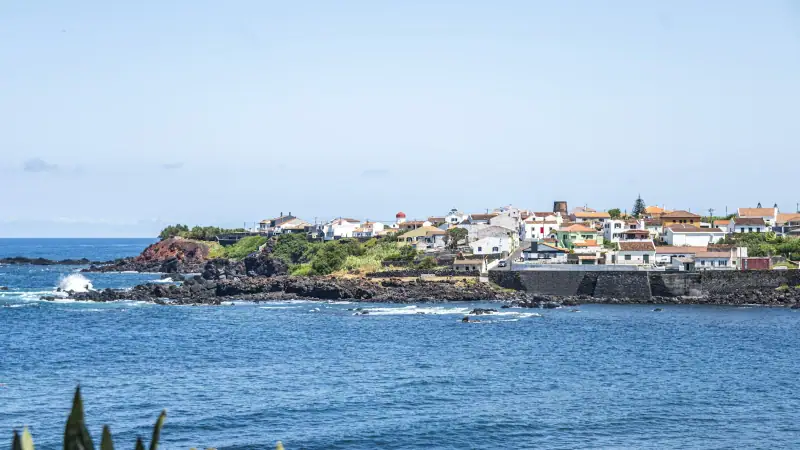
Santa Cruz da Graciosa is the island’s main town and its administrative and cultural heart. It is a typical Azorean town: white houses with black trim, narrow cobbled streets, one or two squares shaded by laurel trees, and the quiet atmosphere of small Portuguese island towns where locals greet you even if they don’t know you.
Architecture and heritage
The center of Santa Cruz da Graciosa is organized around two main axes. The main church, dedicated to Santa Cruz, dominates the town with its restrained Baroque facade and imposing tower, a characteristic silhouette visible from the port. All around, fishermen’s houses and old warehouses tell the island’s maritime history.
The Museu da Graciosa, housed in a historic manor in the town center, traces the island’s history from its settlement in the 15th century to contemporary farming and maritime traditions. The collections include old farm tools, period photographs and objects related to local winemaking. Admission is generally reduced or free outside the high season.
The port and waterfront
The port of Santa Cruz da Graciosa is one of the liveliest places on the island in summer, with ferries arriving and departing for Terceira and the other islands of the central group. From the pier, the view of Graciosa’s cliffs and coastline is especially beautiful at sunset, when Atlantic light bathes the volcanic rock in gold.
Carapacho hot springs: relaxing on the Atlantic
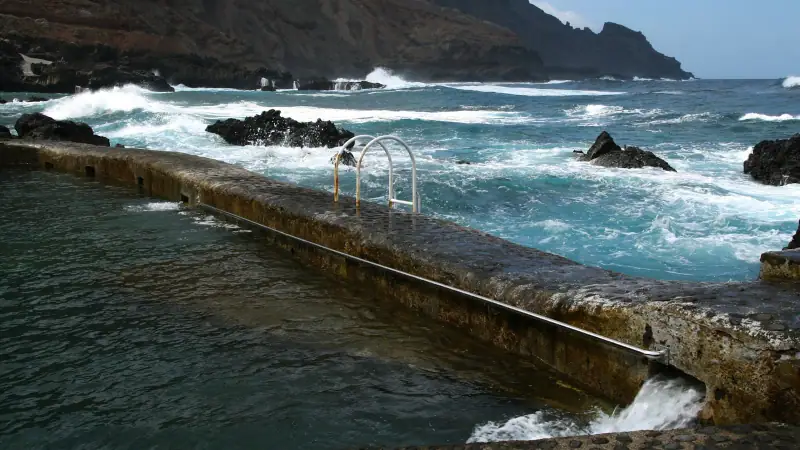
On the island’s south coast, the Termas do Carapacho are one of Graciosa’s most authentic attractions. These natural hot springs were developed into a bathing complex as early as the 19th century and remain a very popular place to relax for islanders and visitors alike.
The thermal water, slightly sulfurous and naturally lukewarm, flows into pools built by the sea. The setting is spectacular: on one side the clear volcanic seabed of the Atlantic, on the other Graciosa’s black cliffs. Outside the high season the place is almost deserted and feels like the end of the world.
The spa also offers wellness treatments (hydrotherapy, mud baths, massages) depending on the season. The heated outdoor thermal pool is open in summer. Call ahead to check hours and treatment availability.
Places to stay on Graciosa
Authentic guesthouses, sea-view hotels and country houses on one of the quietest islands in the Azores.
Graciosa wines: exceptional island winemaking
Graciosa is one of the Azores islands that produces wine under a protected designation of origin (PDO Graciosa). As on Pico, the vines grow here in demanding volcanic conditions: shallow basalt soils, steady Atlantic winds, salty spray. Growers have adapted their techniques over centuries, producing discreet, dry, mineral wines that match the island itself.
Grapes and styles
White wines dominate production, made from local grape varieties well suited to the island microclimate. The dry whites are generally light and fresh, with lively acidity and floral and citrus notes. A few producers also make fortified wines in the tradition of Macaronesian sweet wines.
Winemaking on Graciosa remains very small-scale: most producers are small and sell to the local cooperative or directly. While on the island, look for PDO Graciosa bottles in local grocery stores and minimarkets. It is a tasty, inexpensive souvenir to bring home.
Pairings and local food
Graciosa wines go especially well with local seafood: lapas grelhadas (limpets grilled with butter and lemon), fish of the day, octopus in vinaigrette. The island’s cooking is simple, generous and rooted in Azorean tradition, with some influence from Terceira, its closest neighbor.
Chouriços (smoked sausages) and the island’s fresh cheeses round out a table that stands on its own. For everything on the archipelago’s culinary specialties, see our guide to Azorean food.
Hiking and nature on Graciosa
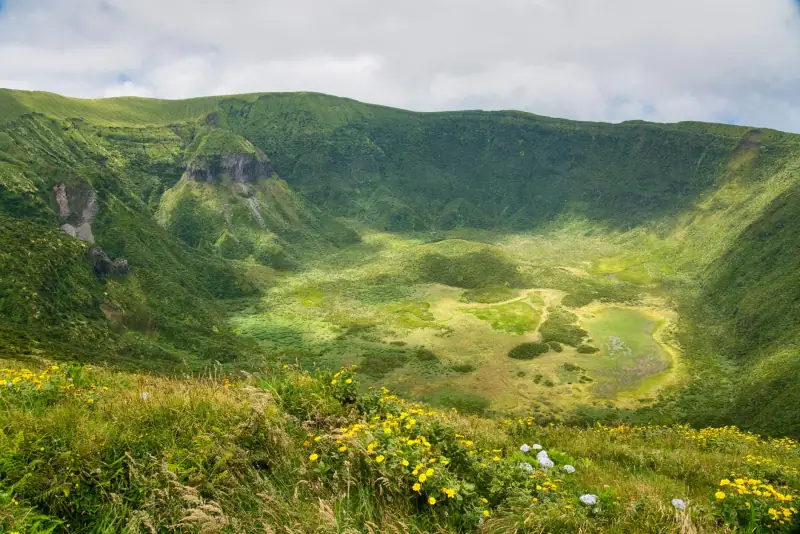
Graciosa is one of the flattest islands in the archipelago, which makes it especially accessible for hikers of all levels. The marked trails (PR) let you explore landscapes that change radically depending on the coast: a wilder north coast exposed to the winds, a gentler, sheltered south coast, and farmland inland dotted with windmills.
The caldera and Furna do Enxofre (PR1GRA)
The island’s main hike links Santa Cruz da Graciosa to the volcanic caldera, with a stop at the Furna do Enxofre. This marked trail crosses the pastures of the island’s center before climbing gently to the caldera rim, whose panorama takes in the whole island and, in clear weather, the neighboring islands of the central group. Allow about 3 to 4 hours from Santa Cruz da Graciosa depending on pace and breaks.
Cliffs and the north coast
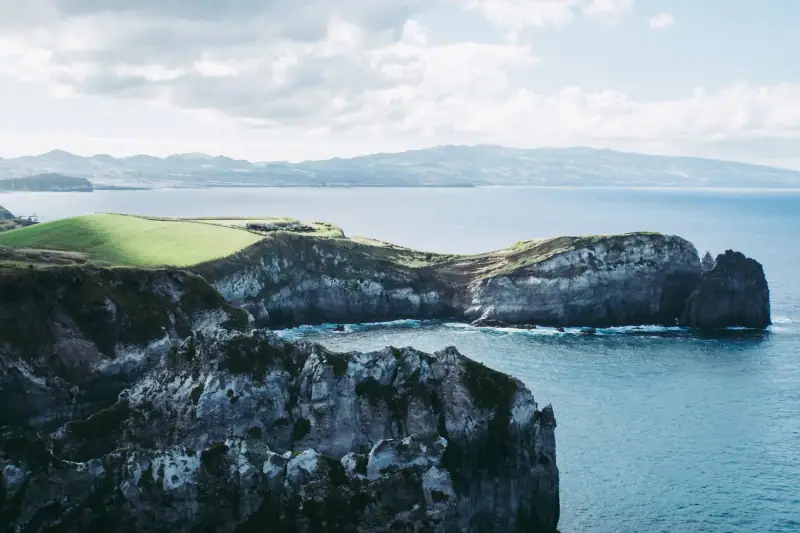
Graciosa’s north coast is the most spectacular: black basalt cliffs plunging into the Atlantic, secluded coves, a few dark-sand beaches. The coastal trails offer open views of the ocean, and on your walks it is not unusual to come across buzzards (the island’s most common raptor) or to see colonies of Cory’s shearwaters nesting in the cliffs.
The windmills
Graciosa is also nicknamed “the island of windmills” because of the many stone windmills built on the island’s heights to catch the prevailing winds. Several have been restored and some can be seen from the main road around the island. They are part of Graciosa’s characteristic architectural heritage and make excellent viewpoints over the inland farmland.
For more on hiking trails across the archipelago, see our guide to hiking in the Azores.
Flights to Graciosa and the Azores
Connections from Lisbon, Porto and neighboring islands. Compare fares for your trip.
Practical information for visiting Graciosa
How to get to Graciosa
By ferry: The main link is Praia da Vitória (Terceira) to Santa Cruz da Graciosa with Atlânticoline. The crossing takes about 3 h to 3 h 30 depending on conditions. Seasonal connections also link Graciosa to the other islands of the central group (São Jorge, Faial, Pico). Check schedules on the official Atlânticoline website, as frequencies vary by season.
By air: Graciosa Airport (IATA code: GRW) is in the north of the island, a few minutes from Santa Cruz da Graciosa. SATA Air Açores operates regular flights from Terceira (Lajes, TER) and from São Miguel (Ponta Delgada, PDL). Flights take about 30 to 40 minutes from Terceira and a little longer from São Miguel.
Getting around the island
Graciosa is small, about 60 km² (23 sq mi), and relatively flat, which makes it one of the easiest islands to explore. A car is still the most convenient way to reach the Furna do Enxofre, the Carapacho hot springs and the north coast cliffs. Car rental agencies are in Santa Cruz da Graciosa and at the airport.
Cycling is also an excellent option on Graciosa, thanks to the island’s gentle terrain and the light traffic on rural roads. A few local providers rent bikes in the summer season. If you don’t have a vehicle, local taxis cover the island’s main points of interest.
Budget for a stay on Graciosa
Graciosa is one of the least expensive islands in the archipelago, notably because tourism services are less developed than on São Miguel or Terceira.
Lodging: A room in a local guesthouse runs €40 to €70 per night (about $46 to $81) in season, a charming guesthouse €70 to €120 per night (about $81 to $140).
Meals: Lunch at a local restaurant €10 to €18 per person (about $12 to $21), dinner with local wine €18 to €30 per person (about $21 to $35).
Activities: Guided visit of the Furna do Enxofre around €5 to €10 per person (about $6 to $12); admission to the Carapacho hot springs depends on the services chosen. Hiking and cycling on coastal trails are free.
Transport: Praia da Vitória to Santa Cruz da Graciosa ferry about €15 to €25 one way (about $17 to $29) depending on the season, car rental from €35 to €45 per day (about $41 to $52).
For an overall estimate of what a trip to the archipelago costs, see our guide to the Azores budget.
Best time to visit Graciosa
June to September: The mildest weather, calm seas, hot springs and Furna do Enxofre open with full hours, maximum ferry and flight frequencies. This is high season: the island stays quiet compared with São Miguel or Terceira, but lodging should still be booked ahead.
May and October: An excellent compromise between pleasant weather and lower prices. Hiking trails are in perfect condition. The island feels even more authentic than in summer.
November to April: More uncertain weather, stronger winds, some tourist services reduced or closed. Best for travelers looking for a completely off-season Graciosa and the lowest ferry fares.
To choose the best dates for your trip to the archipelago, see our guide to the best time to visit the Azores.
Car rental on Graciosa
Essential for reaching the Furna do Enxofre and the Carapacho hot springs. Book at Graciosa airport.
Suggested itinerary: 2 to 3 days on Graciosa
Graciosa is best explored in 2 to 3 days. It is a slow-paced island that rewards a quiet approach.
Day 1: Arrival and Santa Cruz da Graciosa
- Arrive by ferry or plane. Settle into your lodging in Santa Cruz da Graciosa.
- Explore the town center on foot: white streets, main church, port.
- Visit the Museu da Graciosa in early afternoon.
- Walk along the waterfront at sunset.
- Dinner at a local restaurant: fish of the day and a PDO Graciosa white wine.
Day 2: The caldera and Furna do Enxofre
- Drive to the caldera in the morning.
- Guided visit of the Furna do Enxofre (booking ahead recommended).
- Hike the caldera trail with a panorama over the whole island.
- Light lunch or picnic on the heights.
- Afternoon: drive to the north coast, explore the cliffs and windmills.
- Back to Santa Cruz da Graciosa in the evening.
Day 3: Hot springs and the south coast
- Morning at the Termas do Carapacho: thermal bath by the sea, relaxation.
- Lunch on the south coast.
- Coastal hike or bike ride through the inland pastures.
- Leave by ferry or plane in late afternoon or the next morning.
To fit Graciosa into a wider circuit of the Azores’ central group, see our guide to the Faial-Pico-São Jorge triangle.
Graciosa delivers on its promise from start to finish. It is small, discreet and almost absent from the usual tourist circuits, and that is exactly what makes it one of the most precious experiences in the whole Azores archipelago. Going down into the Furna do Enxofre, soaking in the Carapacho hot springs facing the Atlantic, tasting a PDO white wine in a Santa Cruz guesthouse: that is Graciosa. Not a grand gesture. A place that settles into you quietly, and that you leave wondering why so few travelers talk about it.
Frequently asked questions
How do you get to Graciosa from Terceira?
Graciosa is linked to Terceira by Atlânticoline ferry, from the port of Praia da Vitória (Terceira) to Santa Cruz da Graciosa. The crossing takes about 3 h to 3 h 30 depending on conditions. Flights are also available from Ponta Delgada (São Miguel) or Terceira (Lajes) with SATA Air Açores, with a flight time of about 30 to 40 minutes. Book ahead, especially in summer.
What is the Furna do Enxofre on Graciosa?
The Furna do Enxofre is the most spectacular attraction on Graciosa. It is a huge volcanic cave under the island's caldera, with a sulfur lake of strikingly beautiful green-blue water at the bottom. You reach it by a 183-step metal spiral staircase built in 1939 inside a 37 m (121 ft) tower that descends into the cave. The visit is guided and lasts about 45 minutes to 1 hour. It is one of the most impressive geological curiosities in the whole Azores archipelago.
Is Graciosa a UNESCO site?
Yes, Graciosa was designated a UNESCO Biosphere Reserve in 2007. The recognition reflects the exceptional richness of its ecosystem: preserved farmland landscapes, Macaronesian laurisilva forests, coastal wetlands and species native to the Azores. Graciosa is also one of the flattest and most agricultural islands in the archipelago, with an old winemaking tradition that earned a protected designation of origin (PDO Graciosa) for its wines.
Are the Carapacho hot springs worth a detour on Graciosa?
Absolutely. The Termas do Carapacho are one of Graciosa's top attractions. Located on the island's south coast, these natural hot springs with slightly sulfurous water flow directly into pools by the sea. Some pools are fed by naturally hot springs, others are open-air with a view of the Atlantic. The atmosphere is authentic and not touristy. The spa is generally open in the summer season and offers wellness treatments.
What is the best season to visit Graciosa?
The best time to visit Graciosa is May to September, when the weather is most stable and ferry crossings most comfortable. June, July and August offer ideal conditions: mild temperatures (20 to 25 °C / 68 to 77 °F), calm seas for water activities, and easy access to the Furna do Enxofre and the hot springs. Outside the tourist season the island is even quieter and more authentic, but ferry and attraction schedules may be reduced.
Can you snorkel or dive on Graciosa?
Yes, the waters around Graciosa are known for their clarity and marine life. The island's rocky coast offers many snorkeling spots accessible from the shore, with volcanic seabeds covered in algae, octopus, scorpionfish and colorful fish. A few local operators offer dive trips around the island. Conditions are generally best from June to September.
More Azores guides
Keep reading
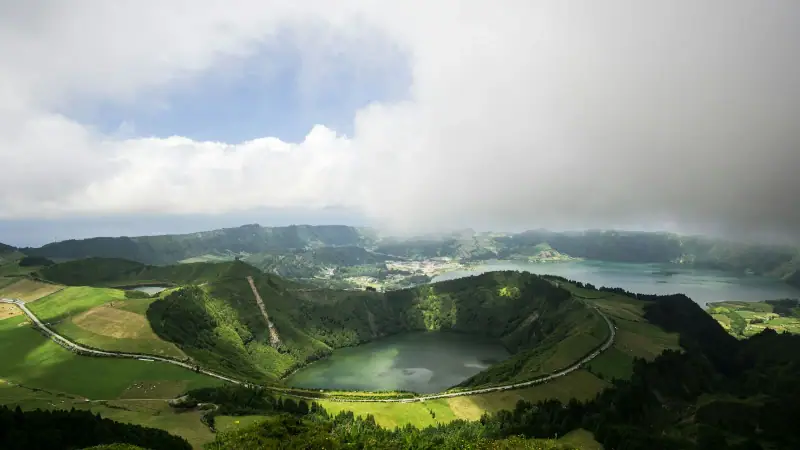
Azores Lakes and Volcanoes: The Main Natural Sites
The most beautiful volcanic lakes in the Azores. Sete Cidades, Fogo, Furnas, Algar do Carvão: the archipelago's natural wonders.
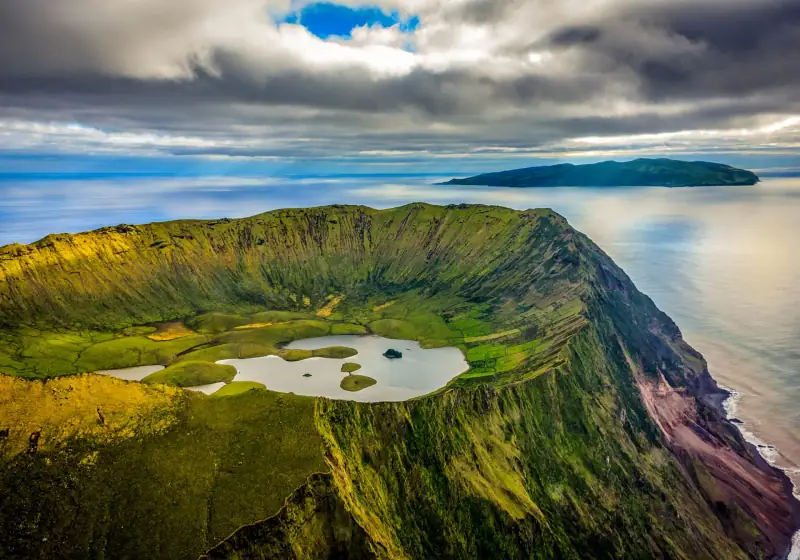
Corvo Island: A Complete Guide to the Smallest Island in the Azores
Complete guide to Corvo in the Azores: the Caldeirão, Vila do Corvo, birdwatching and practical tips for the archipelago's most remote island.
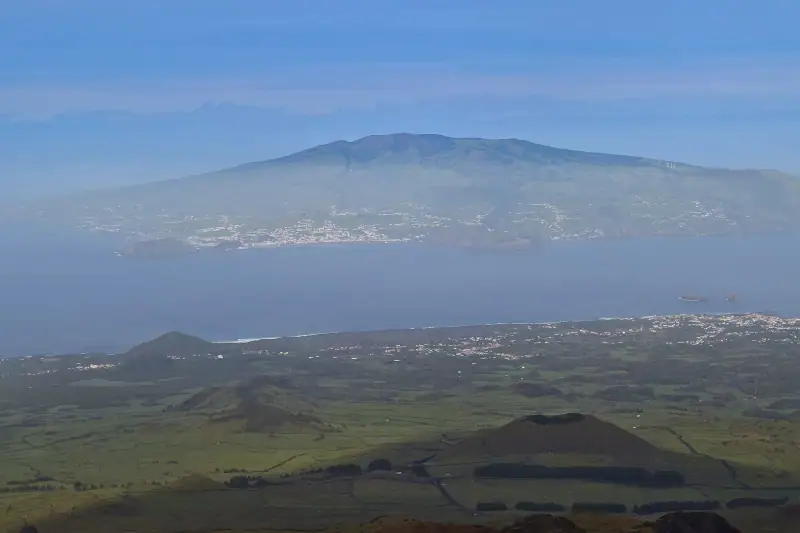
Faial Island: A Complete Guide to the Blue Island of the Azores
Complete guide to Faial in the Azores: the caldera, Capelinhos, Horta marina, beaches and hikes. Everything you need to visit the Blue Island.
Ready-made
Azores itineraries
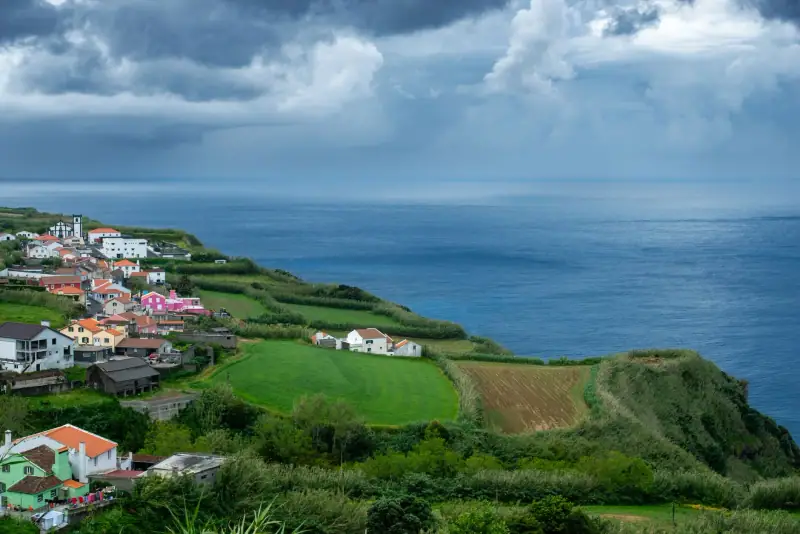
São Miguel Road Trip: Driving Around the Island
A complete guide to driving around São Miguel in the Azores: route, essential stops, road tips and lesser-known spots.
4 days
São Miguel in 4 Days Without a Car: A Realistic Itinerary by Bus and Organized Tour
Can you visit São Miguel without a rental car? A realistic 4-day itinerary with public buses, organized tours, schedules, prices and distances.
5 days
São Miguel in 5 days with kids: stops, miles and a realistic pace
5 days on São Miguel (Azores) with kids: day-by-day stops, distances and drive times, naps, swims, whales and pace pitfalls to avoid.
Can be adapted in the planner