What to see
Visiting Yerevan: complete guide to Armenia's capital
We may earn a commission when you book through links on this page, at no extra cost to you. We don't visit or try the places we cover: we summarize published sources. How we work
In short
- Two to three days cover the main sights (Republic Square, Cascade, Matenadaran, genocide memorial); add a day for Khor Virap, Garni and Geghard.
- Zvartnots airport (EVN) is about 12 km (7.5 mi) west of the center, 20-30 min away; a fixed-rate taxi costs about €5-8 (about $6-9).
- Daily budgets are estimated at €30-45 (about $35-52) tight, €60-90 (about $70-104) mid-range, €100-180 (about $116-210) comfort.
- The dram (AMD) is the local currency; cards are accepted in most hotels and restaurants in Kentron, less in small shops.
At a bend in the road, a square suddenly opens up: apricot- and salmon-colored buildings, a fountain dancing in the late-afternoon sun, cafe terraces spilling onto the sidewalk, and in the distance, in clear weather, the snowy silhouette of Mount Ararat watching over the city from across the border. Welcome to Yerevan.
The Armenian capital is a city that surprises. Neither too big (about 1.1 million residents in the metro area) nor too touristy, it combines a harmonious Soviet architecture built in local tuff, a volcanic stone with shades from cream beige to salmon pink, with a contemporary buzz of specialty cafes, art galleries and restaurants reinventing Armenian cuisine. It is sometimes nicknamed the “Pink City” (Karmir Kaghak, literally “Red City” in Armenian), an affectionate name that captures the dominant color of its facades.
Yerevan is also one of the oldest continuously inhabited cities on Earth: cuneiform inscriptions dating from 782 BCE, found at the Erebuni fortress (southeast of the present city), attest to its existence nearly 2,800 years ago. This historical depth is felt everywhere: in the museums, in the surrounding monasteries, in the way Armenians speak about their identity with rare intensity.
Why visit Yerevan?
Yerevan is often underrated in comparisons of Caucasus capitals, with Tbilisi (Georgia) and Baku (Azerbaijan) sometimes stealing the spotlight. It is a mistake that travelers who have spent a few days there never make twice.
Here is what makes the Armenian capital unique:
- Tuff architecture: the large public buildings and grand Soviet-era apartment blocks of the first half of the 20th century, designed by architect Alexander Tamanian, form a coherent and visually striking ensemble, very different from standardized Soviet concrete
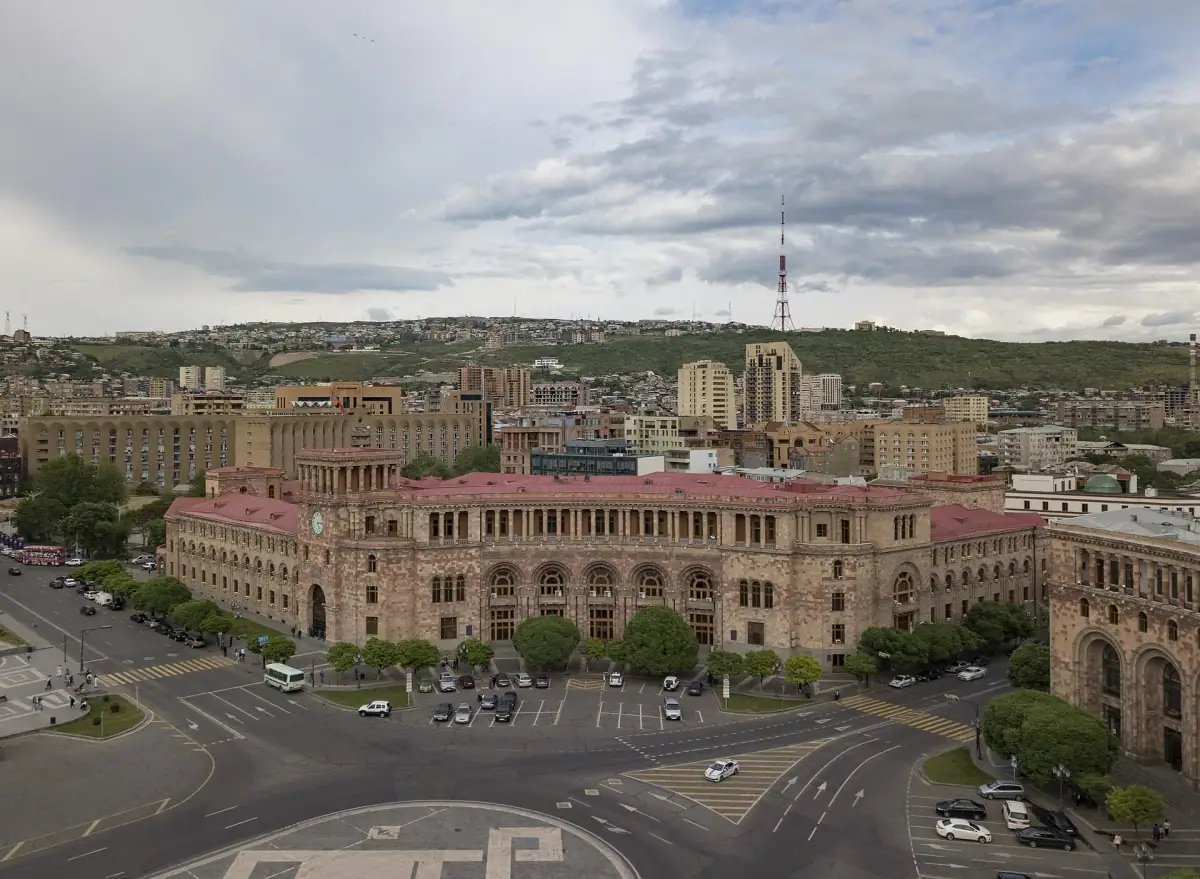
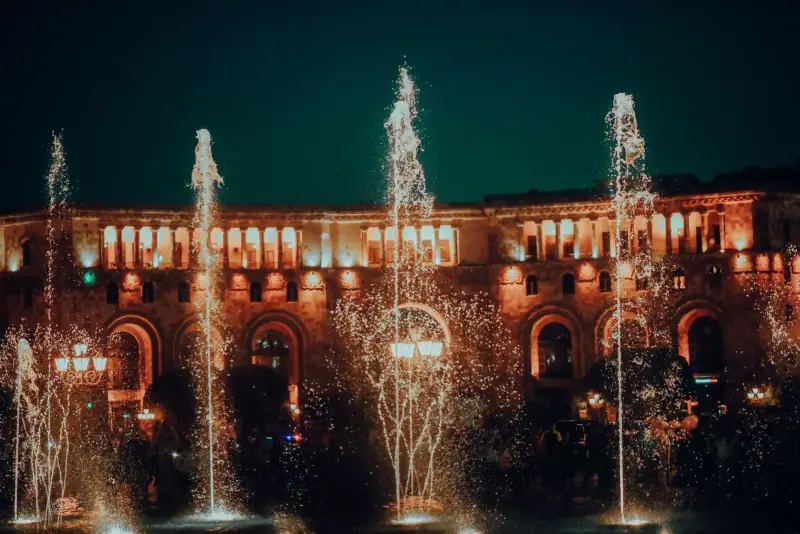
- Republic Square (Hanrapetutyan Hraparak): one of the most beautiful squares in the whole Caucasus, surrounded by government buildings and museums in pinkish tuff, enlivened every evening by musical and dancing fountains
- The Cascade: this great monumental staircase of 572 steps, linking the city center to the northern hills, has become one of the most dynamic cultural venues in the Caucasus, and one of the most Instagrammable
- The Matenadaran: a library-museum of ancient manuscripts, one of the most important repositories of medieval manuscripts in the world (more than 23,000 unique manuscripts)
- The Armenian Genocide Memorial at Tsitsernakaberd: a solemn and poignant site, essential to understanding contemporary Armenian history
- Food: a culinary scene in full renaissance, between traditional Armenian cuisine (khorovats, dolma, lahmacun, basturma) and contemporary tables revisiting ancestral recipes
- Zest for life: Yerevan is a city of terraces, lively markets, live music on weekends and night strolls; Armenians know how to enjoy public space
Stays in Yerevan
From hostels to boutique hotels in pinkish tuff, the best addresses in the center.
Where is Yerevan?
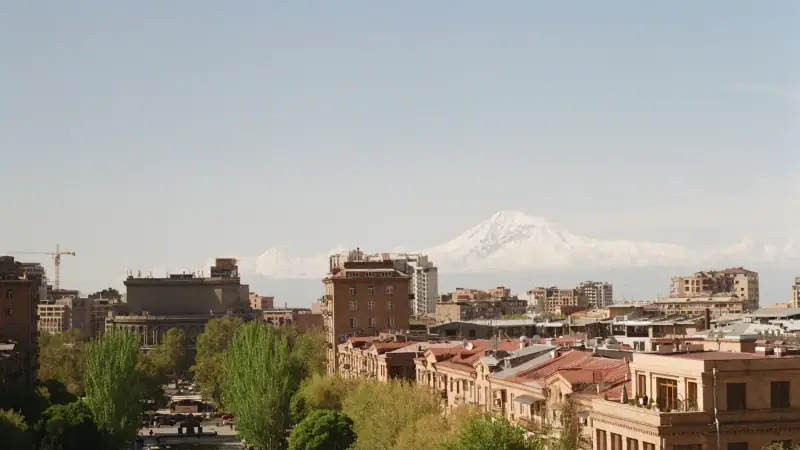
Yerevan is in central-western Armenia, at about 1,000 meters (3,280 ft) above sea level, in the Ararat plain, a sedimentary basin framed by Mount Ararat (5,137 m / 16,854 ft, on the Turkish side), Mount Aragats (4,090 m / 13,419 ft, to the northwest), and the volcanic Lesser Caucasus range to the east. The city is crossed by the Hrazdan river, whose deep gorge divides the city center in two.
Distances from Yerevan:
- Zvartnots International Airport (EVN): about 12 km (7.5 mi) west (20-30 min)
- Khor Virap (monastery at the foot of Ararat): about 35 km (22 mi) south (40 min by car)
- Garni temple: about 28 km (17 mi) east (35-40 min)
- Geghard monastery: about 40 km (25 mi) east (50 min)
- Lake Sevan: about 65 km (40 mi) northeast (1 h)
- Dilijan: about 100 km (62 mi) (1 h 30 to 2 h)
- Gyumri: about 125 km (78 mi) west (1 h 30 to 2 h)
- Tbilisi (Georgia): about 290-300 km (180-186 mi) north (4 to 5 h)
The city is the nerve center of the country: all of Armenia’s main roads converge on Yerevan. This is both an advantage (everything is easily accessible) and a drawback (almost all traffic passes through here).
How to get to Yerevan
By air
Zvartnots International Airport (IATA code: EVN) is about 12 km (7.5 mi) west of the city center. It is the main international airport of the country; check which airlines serve it from your departure city.
From the airport to the center:
- Taxi: posted fixed rate (about €5-8, about $6-9, depending on the neighborhood). Prefer official taxis at the airport counter or a mobile app (GG Taxi, Yandex)
- Bus 201: serves the city center (Mashtots Avenue) for less than €0.30 (about $0.35); slow but economical
- Minibus: frequent connections to Kilikia (south bus station) and the center
From Georgia (bus/train)
Marshrutky (shared minibuses) link Tbilisi to Yerevan several times a day, with a travel time of 5 to 6 hours depending on the wait at the Bagratashen/Sadakhlo border. Departures early in the morning from Didube bus station in Tbilisi. An overnight train also runs between Tbilisi and Yerevan, every other night depending on the season (check schedules before leaving).
By car
A car is the best way to enjoy Armenia beyond Yerevan. From Tbilisi, the M5 road (Georgia) then M1 (Armenia) is well maintained all the way to Yerevan. Rentals are available at the airport and in the city center; our comparison of agencies summarizes the options.
Yerevan’s neighborhoods
Kentron: the historic heart
Kentron (“center” in Armenian) is the main neighborhood for visitors. It includes Republic Square, the major shopping avenues (Mashtots, Abovyan, Tigranyan), the Vernissage market, and most museums, restaurants and lodgings. The architecture is coherent and imposing: five- to seven-story buildings in pink tuff or gray basalt, adorned with bas-reliefs and Armenian motifs.
The Cascade and the northern district
The area around the Cascade is Yerevan’s trendiest. Specialty cafes, art galleries, fashionable restaurants and cocktail bars cluster in the streets around the monumental complex. Saryan Street (sometimes called “restaurant street”) is particularly lively on weekends.
Maralik and the outlying neighborhoods
Farther from the center, Yerevan’s residential neighborhoods offer a glimpse of everyday Armenian life: neighborhood markets, delicatessens selling freshly baked lavash, inner courtyards hidden behind carriage gates. These neighborhoods deserve half a day of wandering for anyone who wants to leave the tourist trail.
The top sights: our selection
For details on the sites and museums not to miss, our article Yerevan’s top sights presents the key sights with hours, prices and practical tips. Here are the highlights.
Republic Square (Hanrapetutyan Hraparak)
This is the beating heart of Yerevan. Surrounded by government buildings, the History Museum of Armenia and the Marriott Hotel, this elliptical square designed by Alexander Tamanian in the 1920s-1930s is one of the most successful examples of national-style Soviet urban planning. Every evening in season, the musical and dancing fountains in the middle of the square draw families and visitors.
The Cascade (Kaskad)
Designed in 1971 by architect Jim Torosyan, with construction starting in 1980 before being suspended in the late 1980s, the Cascade is a monumental staircase of 572 steps linking Tamanyan Street to the large Victory Park (Haghtanak) on the northern hills. The full cultural complex only opened in 2009. More than a staircase, it is an open-air museum: contemporary sculptures from the Cafesjian collection line the terraces and surrounding gardens (works by Botero, Maillol, Jaume Plensa). Inside the Cascade is the Cafesjian Center for the Arts (paid admission), with temporary modern art exhibitions.
The Matenadaran
The Matenadaran (Mesrop Mashtots Institute of Ancient Manuscripts), at the end of Mashtots Avenue, is one of the most important hidden treasures of the Caucasus. Founded in medieval times and installed in the current imposing building in 1957, it holds about 23,000 manuscripts and fragments in all, mostly in Armenian (some dating from the 9th century), but also in Greek, Latin, Persian and Syriac. The museum (ground floor) presents the finest specimens with contextual explanations.
Guided visits of Yerevan
Discover the Pink City with a local guide: history, food, Soviet history and Armenian memory.
The Armenian Genocide Memorial (Tsitsernakaberd)
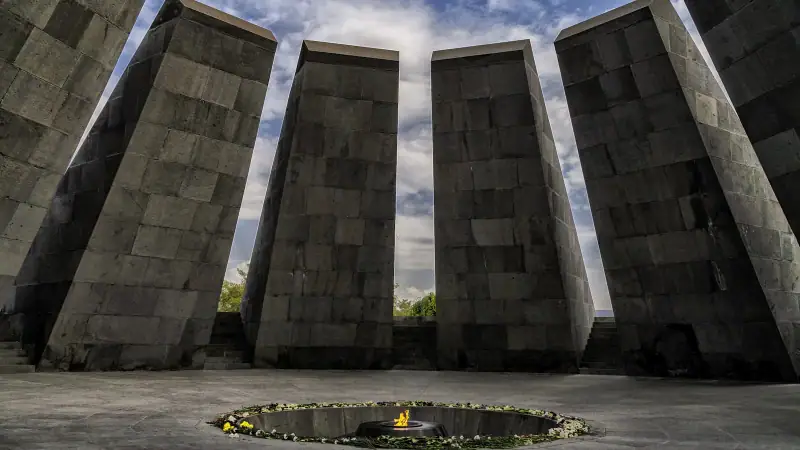
The Tsitsernakaberd memorial is a place apart in a trip to Yerevan, a site of reflection and memory dedicated to the Armenian genocide of 1915-1916, during which between 1.2 and 1.5 million Armenians lost their lives in the Ottoman Empire according to historiographical consensus. It stands on a hill west of the city center, beyond the Hrazdan gorge.
The complex consists of two main elements:
- The central stele (The Broken Heart): 12 inclined slabs forming a circle around an eternal flame; visitors lay flowers there in remembrance, especially on April 24, the national day of remembrance
- The Armenian Genocide Museum: opened in 1995 and expanded in 2015, it documents the events of 1915-1916 through photographic archives, testimonies and diplomatic documents. The visit is harrowing but essential to understanding contemporary Armenian identity.
Admission is free. Allow 1 h 30 to 2 h. Taxis or a bus from the center get you there (about 15-20 min).
The Vernissage market and neighborhood life
The Vernissage market (Вернисаж), held on weekends (Saturday and Sunday) on Aram and Buzand streets, near Republic Square metro station, is Yerevan’s big open-air market. You will find:
- Armenian crafts: miniature khachkars (carved stone crosses), antique rugs and kilims, illuminations reproduced on paper or silk, garnet jewelry (Armenia’s national stone)
- Soviet antiques: Soviet cameras, medals, posters, 1950s-1970s tableware, a paradise for vintage lovers
- Books and posters: a secondhand-book section with books in Armenian, Russian, English and French
- Local treats: jams, honey, spices, sujukh (walnuts strung in dried grape molasses), nuts of all kinds
It is one of the best markets in the Caucasus, and prices are clearly lower than in tourist shops. Allow at least an hour of wandering.
Food in Yerevan
Yerevan is the best city in Armenia to discover local cuisine. For a detailed guide to specialties and flavors, our article on Armenian cuisine is the place to start.
The capital’s culinary essentials:
Khorovats: Armenian barbecue is an institution. Pork, lamb or chicken marinated with herbs and grilled over fruitwood embers. Khorovats restaurants are everywhere, from the modest neighborhood grill to large terrace brasseries.
Dolma: vine or cabbage leaves stuffed with spiced ground meat and rice, served with matsoun (fermented yogurt). Armenian dolma differs from its Greek and Turkish cousins in its spices and texture.
Lahmacun: the “Armenian pizza”, a thin flatbread topped with spiced ground meat. Enjoy it rolled up with salad and fresh herbs.
Basturma and sujukh: Armenian cured meats, heavily spiced (fenugreek, garlic, paprika). Basturma is a staple of appetizer platters.
Armenian brandy: Armenia is one of the oldest brandy-producing countries in the world, and Ararat brandy is its world-famous ambassador. The Ararat distillery (on the banks of the Hrazdan, in Yerevan) offers visits with tasting. An interesting experience even for non-enthusiasts.
Specialty coffee: Yerevan’s coffee scene has been booming since the 2010s. Micro-roasters and coffee shops serve Armenian single-origin coffees prepared in different ways (V60, aeropress, espresso). The Cascade district is the stronghold of this contemporary coffee culture.
Food tours and tastings
Ararat brandy, street food, covered markets: the best culinary experiences in the Armenian capital.
Day trips from Yerevan
Yerevan is the best starting point for day trips to Armenia’s most important archaeological and monastic sites. To explore comfortably, a rental car or a private taxi for the day is recommended.
Khor Virap and Ararat (about 35 km / 22 mi south)
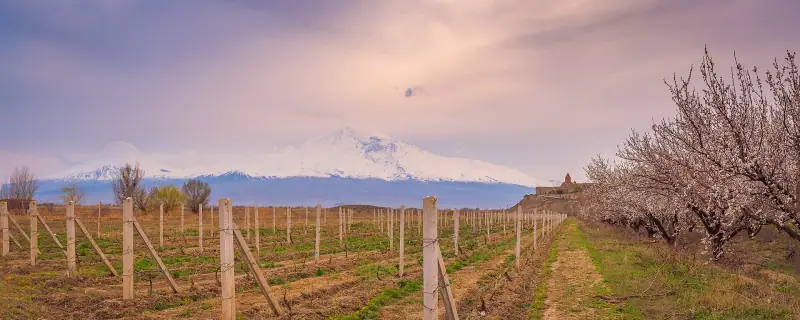
Khor Virap monastery, at the foot of Mount Ararat, is one of the most emblematic images of Armenia, and one of the most photogenic in the Caucasus. The silhouette of the medieval monastery (4th-17th century) stands out against the snowy backdrop of Ararat in clear weather. The site is tied to the legend of Saint Gregory the Illuminator, said to have been imprisoned for thirteen years in the monastery’s pit before converting King Tiridates III to Christianity in 301 CE, making Armenia the first Christian state in history.
From Yerevan, allow about 40 minutes by car. Combine with the vineyards of the Ararat region (wine route of the Ararat plain).
Garni temple and Geghard monastery (about 28-40 km / 17-25 mi east)
The Garni temple (1st century CE) is the only surviving Hellenistic temple in the former USSR, a fascinating anomaly in a Christian country. The original building collapsed in the 1679 earthquake; it was entirely rebuilt by anastylosis between 1969 and 1975. It overlooks a spectacular basalt gorge of the Azat river.
About 7-10 km (4-6 mi) farther along the same gorge, Geghard monastery (UNESCO World Heritage since 2000) is partly carved into the rock cliff. The rooms cut from living rock, the rib vaults, the khachkars and the exceptional acoustics of the underground chapels make it one of the most enchanting sites in Armenia.
These two sites can be visited in half a day from Yerevan. Allow 35 minutes to Garni, then 20 more minutes to Geghard. For the full historical context, our article on the Garni temple is a good read.
Lake Sevan (about 65 km / 40 mi northeast)
An alpine lake at 1,900 meters (6,234 ft), Lake Sevan is Armenia’s blue lung and the favorite weekend destination of Yerevan residents. Our detailed article on Lake Sevan covers everything you need to know.
Car rental in Yerevan
Essential for Khor Virap, Garni, Geghard and day trips; compare rates from the airport or the city center.
Where to stay in Yerevan
For the complete guide with comparisons by budget and neighborhood, see our article where to stay in Yerevan.
Quick overview
Kentron district (city center): the most practical for visiting on foot. All types of lodging available, from hostel to 5-star hotel.
Cascade district: calmer and residential, 15-20 min on foot from Republic Square. Preferred by travelers looking for a neighborhood feel.
Budgets:
- Hostel (dorm): €12-20 a night (about $14-23)
- Guesthouse or apartment: €30-60 a night (about $35-70)
- 3-4 star hotel in the center: €60-120 a night (about $70-139)
- Boutique or 5-star hotel: €120-250 a night (about $139-290)
Practical information
Estimated daily budget
| Profile | Budget / day |
|---|---|
| Tight budget (hostel, street food, local transport) | €30-45 (~$35-52) |
| Mid-range (3* hotel, local restaurants, taxi) | €60-90 (~$70-104) |
| Comfort (4-5* hotel, restaurants, excursions) | €100-180 (~$116-210) |
Transport in Yerevan
Metro: a single line serving about ten stations, including Republic Square and Yeritasardakan (university district). Fare: about €0.25 (about $0.29) per ride. Useful for long distances, but the line does not cover all the tourist neighborhoods.
Taxi/ride-hailing: very affordable. An in-town trip costs between €2 and €6 (about $2-7) depending on distance. Use GG Taxi or Yandex Go to avoid being overcharged as a visitor. Street taxis may charge higher rates to tourists.
On foot: the city center (Kentron) can be covered entirely on foot. From Republic Square to the Cascade: about 20 minutes on foot.
Money
The Armenian dram (AMD) is the local currency. 1 EUR ≈ 410-430 AMD (check the current rate). ATMs are numerous in the center. Bank cards are accepted in most hotels, restaurants and shops in Kentron, less in small grocery stores and from craftsmen.
Connectivity
Local SIM cards (Team, VivaCell-MTS, Ucom) are sold at the airport and in city-center shopping malls, from €5 (about $6) for a generous data plan. 4G coverage is excellent throughout Yerevan and on the country’s main roads. You can also check your carrier’s international plan or use a travel eSIM.
Language
Armenian is the official language. Russian is understood by most shopkeepers and taxi drivers of the Soviet generation. English is spoken in hotels, trendy restaurants and by younger generations.
Safety
Yerevan is a safe city for tourists. Violent crime is rare. The usual precautions are enough: avoid showing large sums of money, keep your belongings in view in crowded tourist areas (Vernissage market on weekends). Drivers are sometimes erratic, so cross at crosswalks.
Suggested itineraries
1 day in Yerevan (stopover or transit)
- Morning (9 am-12 pm): Republic Square, History Museum (the facade at least), walk through Kentron to the Matenadaran
- Lunch: Restaurant in the Kentron district or on Abovyan Street
- Afternoon (2-5 pm): Climb the Cascade (sculptures, view from the top), walk back via Saryan Street
- Evening (6-9 pm): Back to Republic Square for the night musical fountains, dinner in a traditional restaurant
2 days in Yerevan (recommended)
Day 1: City center: Republic Square, Matenadaran, Cascade, Vernissage (if weekend), Saryan Street nightlife.
Day 2: Tsitsernakaberd (genocide memorial) in the morning, then a half-day excursion to Khor Virap (monastery and Ararat view).
3-4 days (full version)
Add a day trip to Garni + Geghard, and a day to Lake Sevan. For a full circuit of Armenia from Yerevan, our 7-day Armenia itinerary offers a detailed program, and our Armenia road trip covers the options by car.
Yerevan resembles no other capital. Neither the historical depth of Rome nor the verticality of Tbilisi, but something more intimate: a human-scale city, built in a stone as warm as a sunset, inhabited by a people who have come through millennia of trials and drawn from them an uncommon hospitality and cultural pride. A few days there are enough to understand why those who come once come back.
Frequently asked questions
How long does it take to visit Yerevan?
Two to three days are enough to see Yerevan's main sights (Republic Square, Cascade, Matenadaran, genocide memorial). Add a day for day trips to Khor Virap, Garni and Geghard. A stay of 4-5 days lets you explore the city at your own pace and soak up local life.
Is Yerevan expensive for travelers?
Yerevan is very affordable compared with Western Europe. A meal in a local restaurant costs the equivalent of €5-12 (about $6-14), a specialty coffee about €2-3 (about $2-3.50). Lodging ranges from €15 (about $17) in a hostel to €80-120 (about $95-140) for a 4-star hotel in the center. Local transport (metro, taxi) is inexpensive. Expect about €50-80 a day (about $58-93) all expenses included, depending on your travel style.
How do you get around Yerevan?
Central Yerevan (Kentron) is partly pedestrian and can be covered on foot. The metro (a single line, about ten stations) serves the main arteries but does not cover all the tourist neighborhoods. Taxis are cheap: use a mobile app (GG Taxi or Yandex) to avoid inflated prices. Shared minibuses (marshrutky) crisscross the city but can be hard to use without some Armenian or Russian.
Can you see Mount Ararat from Yerevan?
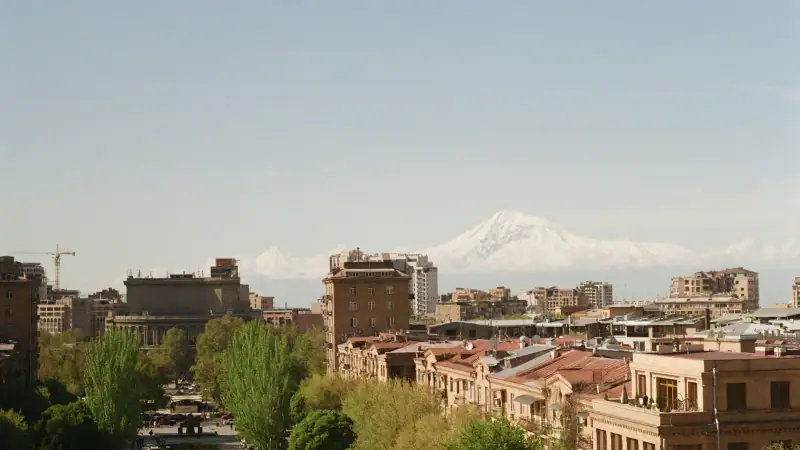
Yes, in clear weather, Mount Ararat (5,137 m / 16,854 ft) is visible from many points in Yerevan, notably from the Cascade, Republic Square and the heights of the Tsitsernakaberd district. Visibility is best in winter and spring, when the air is drier and the sky clear. In summer, heat haze can veil the summit. Mount Ararat is in Turkish territory and remains inaccessible from Armenia because of the closed border.
What is the best time to visit Yerevan?
Spring (April-June) and fall (September-October) are ideal: pleasant temperatures (15-25 °C / 59-77 °F), clear skies, Ararat visible. Summer (July-August) can be hot (35-40 °C / 95-104 °F), but the city's cultural life is in full swing. Winter (December-February) is cold (sometimes below 0 °C / 32 °F) but not very rainy, and flights are cheaper.
Do you need a visa to visit Armenia?
Entry rules depend on your passport. Check the official travel advice of your government before you book: travel.state.gov (US), GOV.UK (UK), travel.gc.ca (Canada), Smartraveller (Australia) (checked November 2026).
More Armenia guides
Keep reading
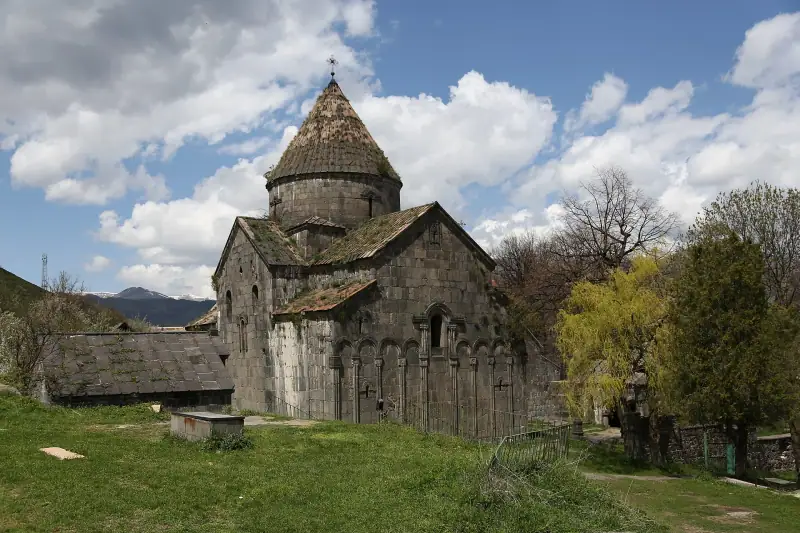
Haghpat and Sanahin without a car: getting there from Yerevan, schedules and is it worth the detour
Haghpat and Sanahin from Yerevan without a car: marshrutka via Alaverdi, schedules to check, 11 km trail between the monasteries and visit time.
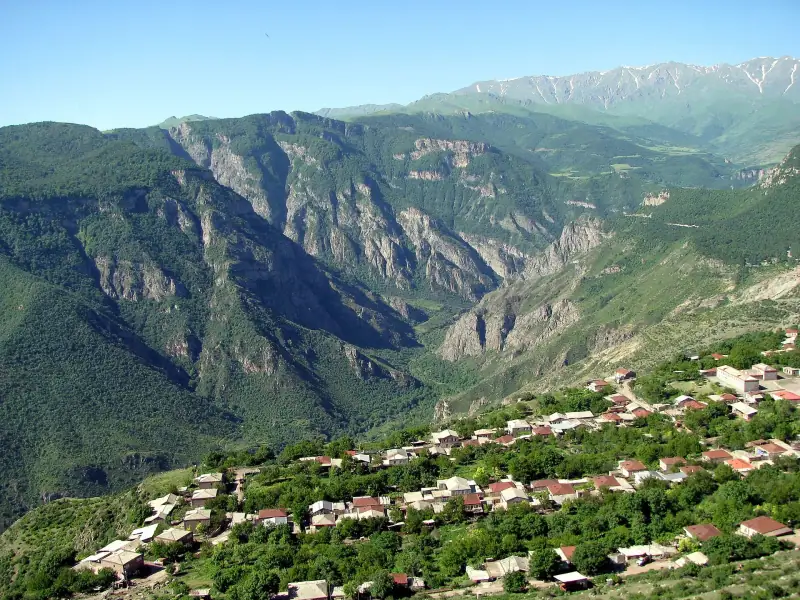
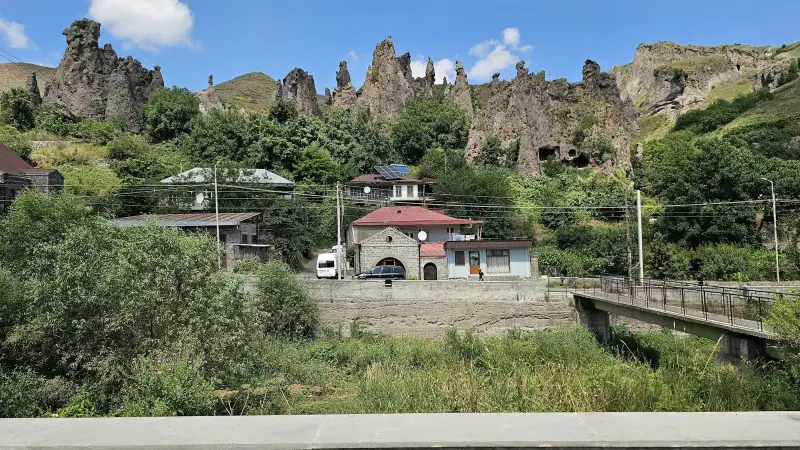
Visiting Goris: complete guide to the capital of southern Armenia
Everything to visit Goris: cave houses, Tatev monastery, Zangezur canyon, hikes and lodging in Armenia's wild south.
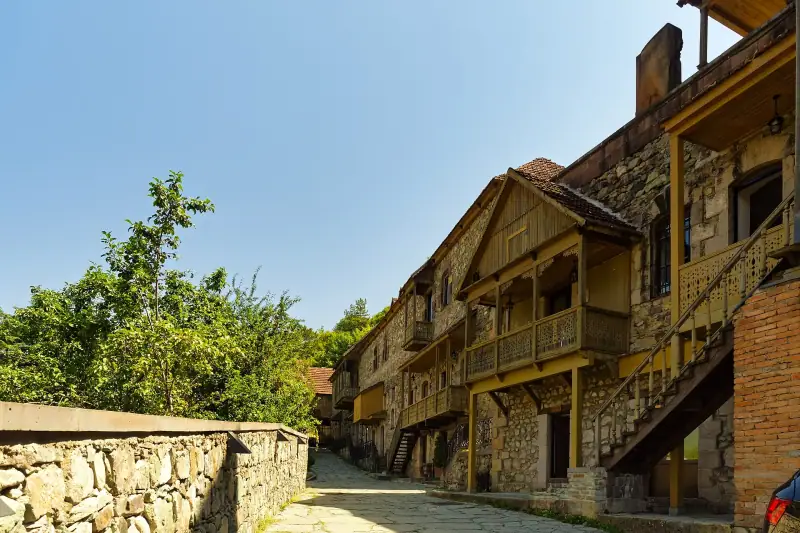
Visiting Dilijan: complete guide to Armenia's forest town
Everything for visiting Dilijan: old town, Haghartsin and Goshavank monasteries, national park, Lake Parz, hikes and lodging in the Armenian forest.
Ready-made
Armenia itineraries
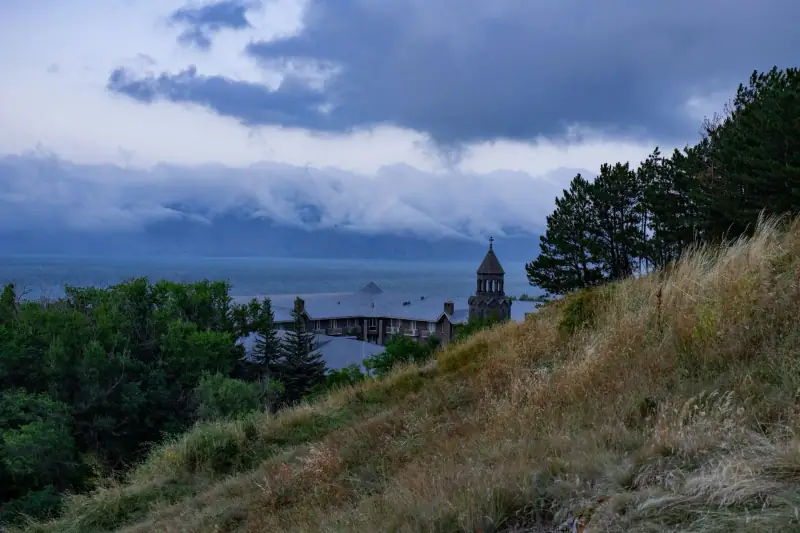
4 days
Northern Armenia: a guide to the Dilijan and Lake Sevan region
Discover northern Armenia: Dilijan's forests, high-altitude Lake Sevan, Haghartsin and Goshavank monasteries, hikes and nature. A 3-4 day itinerary.
10 days
Armenia road trip: a 10 to 14-day driving itinerary
YerevanDilijanAlaverdi or a Debed Valley guesthouseGyumriYerevanJermukSisian or GorisYerevan
5 days