Itineraries
Northern Armenia: a guide to the Dilijan and Lake Sevan region
We may earn a commission when you book through links on this page, at no extra cost to you. We don't visit or try the places we cover: we summarize published sources. How we work
Day by day: 3 to 4 days from Yerevan
- Day 1Yerevan to Lake Sevan, Sevanavank, north shore
- Day 2Noratus khachkar cemetery, then Dilijan old town
- Day 3Goshavank and Haghartsin monasteries, national park hike
- Day 4Optional: Ijevan, then return to Yerevan
Weather through the year on this route
| Jan | Feb | Mar | Apr | May | Jun | Jul | Aug | Sep | Oct | Nov | Dec | |
|---|---|---|---|---|---|---|---|---|---|---|---|---|
| High °F (°C) | 415 | 468 | 5714 | 6820 | 7725 | 8831 | 9535 | 9535 | 8429 | 7222 | 5513 | 457 |
| Low °F (°C) | 25-4 | 27-3 | 341 | 436 | 5211 | 6116 | 6619 | 6820 | 5915 | 489 | 362 | 27-3 |
| Rain in (mm) | 0.820 | 0.615 | 1.025 | 1.640 | 2.050 | 1.640 | 1.025 | 0.615 | 0.820 | 1.230 | 0.820 | 0.615 |
Normals 1991–2020 at Yerevan: averages over 30 years, not a forecast. Source: NASA POWER (MERRA-2), grid of about 50 km. Figures computed by us in November 2026.
In short
- Allow 3 to 4 days from Yerevan: Lake Sevan and Sevanavank, Noratus, Dilijan old town, then Goshavank, Haghartsin and the national park.
- Lake Sevan is about 60-65 km (37-40 mi) from Yerevan (about 1 hour on the M4); Dilijan is about 100-105 km (62-65 mi), 1 h 30 to 2 h.
- The 3-4 day budget is about €175-275 (about $205-320) tight and €285-465 (about $330-540) comfort.
- Spring and fall are the best seasons; Lake Sevan water stays cool, about 18-22 °C (64-72 °F) in July-August.
Northern Armenia is perhaps the most contrasting region of the country: on one side, Lake Sevan, a vast turquoise-blue body of water set at nearly 1,900 meters (6,234 ft), surrounded by arid mountains; on the other, the dense forests and green valleys of Dilijan, nicknamed “Armenian Switzerland” by the Soviets who sent their artists and intellectuals there to recharge. Between these two poles lie some of the best-preserved monasteries of the Caucasus, almost pristine hiking trails, and a tranquility that the rest of the more touristy country rarely offers.
This guide covers the region that Armenians themselves often call “the north”: Lake Sevan (Gegharkunik province), Dilijan and its national park (Tavush province). A 3 to 4 day itinerary from Yerevan lets you see the essentials at your own pace.
Lake Sevan: Armenia’s “blue jewel”
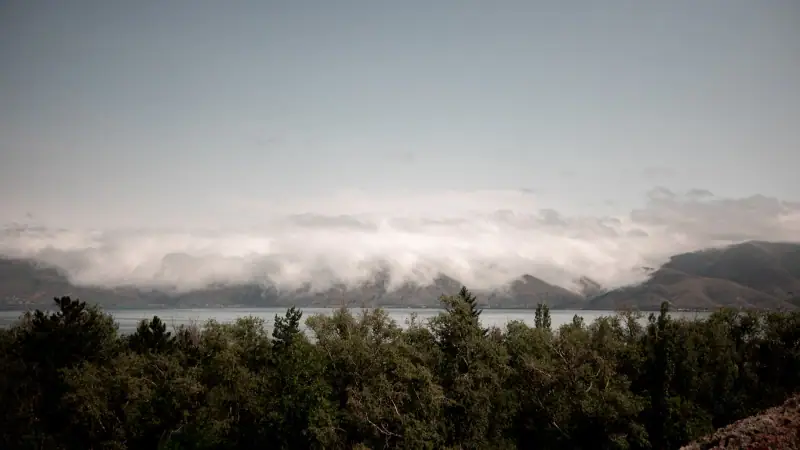
Lake Sevan is one of the largest high-altitude lakes in Eurasia, perched at about 1,900 meters (6,234 ft) above sea level. Its surface area hovers around 1,240 km² (479 sq mi), depending on seasonal variations and the effects of water pumping practiced since Soviet times. The water is a striking blue-green, sharply contrasting with the brown, arid mountains that encircle it.
The town of Sevan, the main settlement on the lakeshore (about 20,000 residents), serves as an entry point. It is not the most picturesque destination in itself, but the peninsula jutting into the lake, on which Sevanavank monastery stands, is worth the detour on its own.
Sevanavank monastery
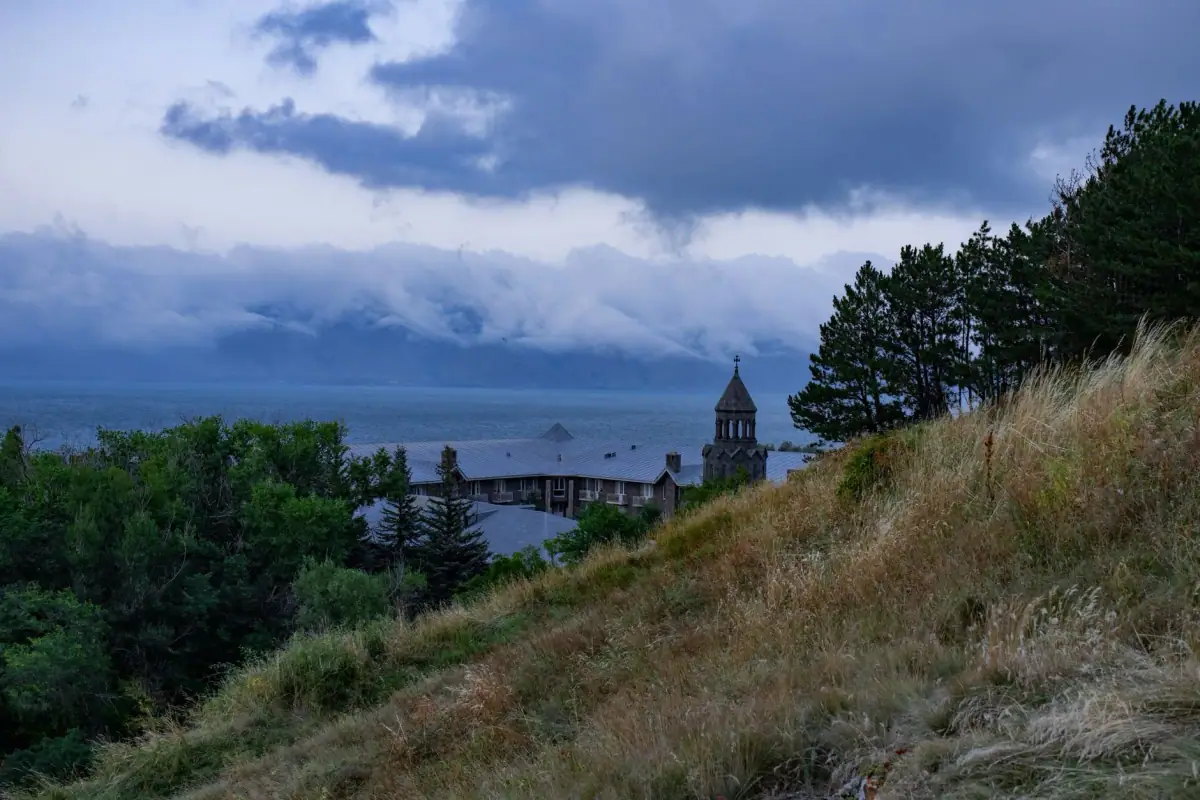
Perched on a rocky peninsula (once an island, before the lake level dropped considerably in the 20th century), Sevanavank monastery is one of the most photographed sites in Armenia. Founded in 874 according to tradition by Princess Maryam, daughter of King Ashot I, it has two main churches in pink tuff: Surb Arakelots (Holy Apostles) church and Surb Astvatsatsin (Holy Mother of God) church. The exterior walls bear remarkable bas-reliefs and khachkars (carved stone crosses).
The climb from the foot of the peninsula is on foot, up a wide staircase of about 200 steps. From the monastery forecourt, the panoramic view over Lake Sevan and the snow-capped peaks along it (several peaks exceed 3,000 meters / 9,840 ft) is spectacular in clear weather. Allow 1 h to 1 h 30 there.
Practical info: access to the monastery is free, but a small fee may be asked for some restored parts. Parking at the foot of the peninsula is paid in high season. Bring covering clothing to enter the churches.
Rental car to explore Lake Sevan
A car is ideal for following the lake shores and reaching the isolated sites of the northern region.
The lake shores and beaches
A full loop around Lake Sevan today is about 200-210 km (124-130 mi) of road (260 km / 162 mi corresponds to the historic perimeter, before the water level dropped because of Soviet pumping). The great majority of travelers only do the northwest stretch (Yerevan → Sevan → Sevanavank), but the east and south shores offer wilder, less-visited landscapes.
North shore (between Sevan and Tsovagyugh): the most developed, with several pebble and fine-sand beaches. In July-August, Armenians from Yerevan come in droves on weekends, with a lively seaside atmosphere and many fish restaurants (the ishkhan, or Sevan trout, is an endemic fish on every menu).
East shore: wilder, a few fishing villages, open panoramas of the Gegham and Vardenis summits.
Southwest shore (Gavar area): Noratus, near Gavar, is a highlight and holds the largest khachkar cemetery in the world: 728 medieval steles dating from the 9th-10th to the 16th-17th century, lined up in an open-air cemetery. A fascinating and very little-visited site.
For a detailed visit of the lake, see our complete guide to Lake Sevan.
Dilijan: the Armenian forest
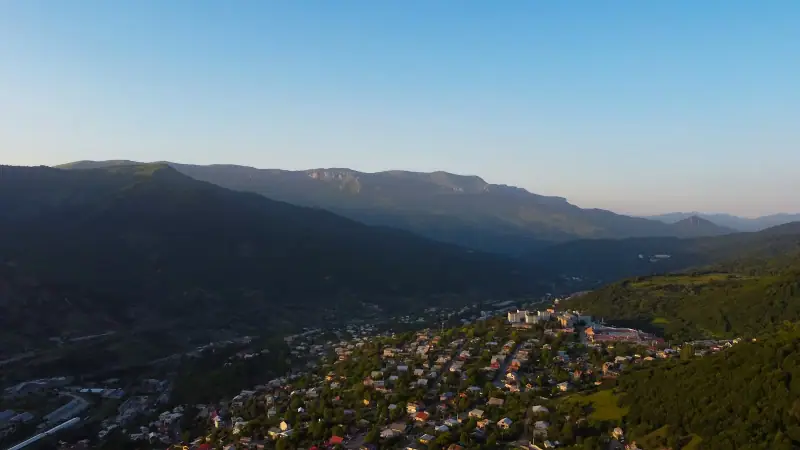
Going from Lake Sevan to Dilijan feels like entering another world. The road climbs to a pass before plunging into the wooded Aghstev valley, and suddenly the dense vegetation of oak, hornbeam and beech forests replaces the mineral landscapes of the lake. Dilijan is about 35-40 km (22-25 mi) north of the town of Sevan, about 40 to 50 minutes by road.
Stays in Dilijan
Forest guesthouses, boutique hotels in the old town and lodges in the national park, for every taste.
The restored old town
The historic heart of Dilijan, the Sharambeyan quarter, is a cobbled pedestrian street lined with stone and wooden houses restored since the 2000s. You will find craft workshops (potters, coppersmiths, painters), a few galleries and quiet cafes. The atmosphere is that of a 19th-century Caucasus mountain town, between nostalgia and authenticity. The street is linked to the Sharambeyan folk art museum; check hours and prices before coming.
Do not expect a lively city center like Yerevan: Dilijan is a town for rest, strolling and nature. That is precisely what people come here for.
Dilijan National Park
Created in 2002 (and successor to a Soviet forest reserve), Dilijan National Park covers about 338 km² (130 sq mi) of mixed broadleaf and conifer forest, much of which is considered old-growth and little disturbed. It is one of the best-preserved forest areas in the southern Caucasus.
Marked trails: several walking routes start from Dilijan or from access points around the park. Routes range from 4 to 20 km (2.5 to 12 mi), with moderate to significant elevation gain. Signage is being improved through international projects. It is a good idea to get a map or download GPS tracks before leaving.
Wildlife and flora: the park shelters deer, brown bears, lynx and many bird species (raptors, woodpecker, Caucasian nuthatch). The flora includes several dozen species endemic to the Caucasus. In fall, the broadleaf forests offer an exceptional show of colors (ochre, red, orange) that give Dilijan its reputation among photographers.
For hikers, our guide to hiking in Armenia presents several routes in the Dilijan and Tavush area.
The northern monasteries: Haghartsin and Goshavank
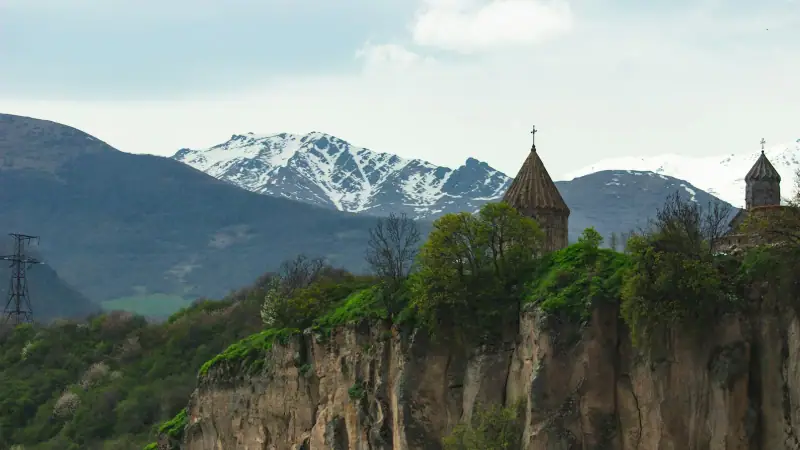
The Tavush region concentrates two of the most remarkable monasteries in Armenia, both nestled in forest clearings that amplify their mystical character.
Haghartsin
Haghartsin monastery is about 13-14 km (8-9 mi) north of Dilijan, along a forest road winding through the Aghstev valley. Founded in the 10th century, almost entirely destroyed in the 11th century by the Seljuks, then rebuilt from 1184 (12th century) and expanded in the 13th century, it has three churches (including the large Surb Astvatsatsin church, 13th century), a medieval refectory in excellent condition, several chapels and khachkars. The complex was restored thanks to funding from the Emir of Sharjah, with work starting in 2008.
What makes Haghartsin special is its setting: the buildings are surrounded by dense oak and hornbeam forests, and the atmosphere is one of rare serenity. Even in high season, visitor numbers stay moderate compared with the country’s major sites. Allow 1 h 30 to 2 h for an unhurried visit.
Access: by car from Dilijan (about 20-25 min). The road is paved and passable all year. You can also reach the monastery on foot from Dilijan by a forest trail (about 7-8 km / 4-5 mi, 2 h 30 of walking), but the directions are unclear, so check the route in advance.
Goshavank
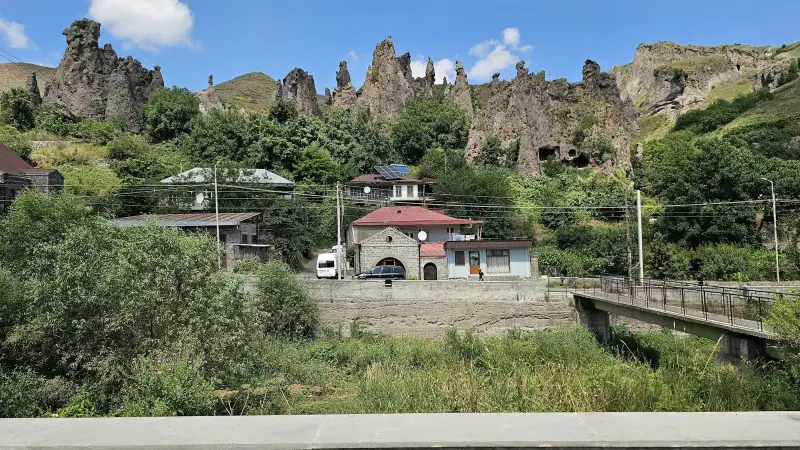
Goshavank monastery is about 15-22 km (9-14 mi) east of Dilijan, in a small mountain village (Gosh). Founded in 1181 by the monk Mkhitar Gosh, one of the greatest jurists and fabulists of medieval Armenia, it is best known for its khachkars of exceptional finesse, considered among the finest examples of this art, unique in the world.
The main church (Surb Astvatsatsin, 12th-13th century) is surrounded by a cemetery of khachkars, some of which reach a breathtaking stone lace. The adjacent museum presents manuscripts and liturgical objects. Allow 1 h there.
Tip: if you visit both monasteries on the same day, start with Goshavank in the morning (the village is quieter) and finish with Haghartsin in the afternoon.
Guided excursions from Yerevan
One- or two-day tours covering Lake Sevan, Dilijan, Haghartsin and Goshavank, transport included.
3-4 day itinerary: Yerevan → Sevan → Dilijan
Here is a typical itinerary to explore the northern region starting from Yerevan, with or without a rental car.
Day 1: Yerevan → Lake Sevan → Sevan (about 65 km / 40 mi)
Morning: leaving Yerevan Leave Yerevan on the M4 heading northeast. The road gradually follows the foothills of the Gegham massif before descending to the lake shores. Halfway, a stop at the Semyonovka pass or along the Hrazdan river is possible if you have time.
Midday: Sevanavank Arrive at the Sevanavank peninsula before the lunch groups. Climb the steps to the two churches, enjoy the panorama and walk back down at leisure. Then have lunch in one of the shoreline restaurants: Sevan fish (ishkhan or farmed trout) grilled over a wood fire is a highlight.
Afternoon: exploring the north shore Follow the north shore of the lake toward Tsovagyugh or Lchashen. If it is summer and you feel like it, the pebble beaches allow a swim; the water is cool but invigorating.
Evening: Sevan or Dilijan Option 1: overnight in Sevan (less charm, but practical for a longer exploration of the lake the next morning). Option 2: continue to Dilijan (35-40 min) and enjoy a much more pleasant setting to sleep.
For lodging by the lake, see our complete guide on where to stay in Sevan.
Day 2: Sevan → Noratus → Dilijan
Morning: Noratus (western shore) Do a partial loop of the lake along the southwest shore to reach Noratus, near Gavar, about 27 km (17 mi) southeast of the town of Sevan. The Noratus khachkar cemetery, with more than 900 medieval steles, is one of the most poignant and least-known sites in Armenia. No mass tourists, a contemplative atmosphere, khachkars from the 10th to the 17th century in an open field facing the mountains. Free access, about 45 min to 1 h there.
Midday: road to Dilijan Return toward the town of Sevan, then take the road (M6) north toward Dilijan. The climb to the pass is gradual; the descent into the forest marks the passage into an entirely different landscape.
Afternoon: Dilijan old town Settle into your lodging, then stroll along Sharambeyan Street: workshops, galleries, cafes. The afternoon light in the surrounding forest is especially beautiful in fall or spring.
Evening: Dilijan The town has a few restaurants serving traditional Armenian cuisine (dolma, khorovats, cold matsoun soup). Local craft beers are on the rise.
For the best lodging addresses, see our guide to where to stay in Dilijan.
Day 3: Haghartsin and Goshavank
This is monastery day. Leave early in the morning (before 9:30 am) to reach Goshavank before the first groups.
Morning: Goshavank About 20-25 min by road from the center of Dilijan. The morning is ideal for photographing the khachkars in slanting light. The site’s guardian will gladly explain the monastery’s history if you speak a little English or Russian.
Midday: Haghartsin Drive back down toward Dilijan, then head northeast to Haghartsin (about 20-25 min from Dilijan, a different road from Goshavank). Have lunch there or picnic in the forest clearing facing the monastery.
Afternoon: hike in the national park Depending on your level, choose a suitable trail from Dilijan. A trail open to all follows the Aghstev river for 4-5 km (2.5-3 mi) round trip and gives a good idea of the park’s forest richness. Experienced walkers can take longer routes to the wooded ridges above the town.
Day 4 (optional): Dilijan → Ijevan → back to Yerevan
If you have one more day, Ijevan (about 35-40 km / 22-25 mi north of Dilijan) is worth a morning. The town is known for its brandy and local wine production (the Ijevan wine and brandy factory offers visits with tasting; check its opening hours), and for its typically Caucasian provincial-town atmosphere. The road back to Yerevan (via the M6 then the M4) is fast, about 2 h from Ijevan.
Hikes in the northern region
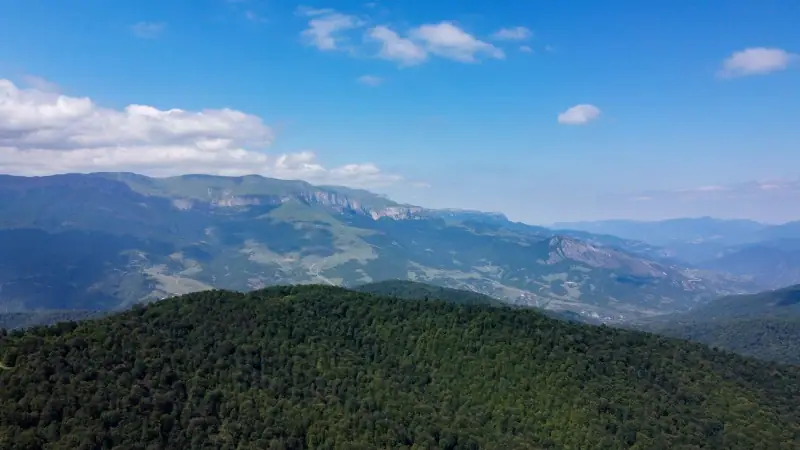
The northern region is one of Armenia’s best hiking destinations, thanks to the combination of Dilijan’s forests and the mineral heights around Lake Sevan.
Dilijan-Haghartsin trail (about 7-8 km / 4-5 mi, 3 h one way, moderate): from the center of Dilijan, the trail climbs gradually through broadleaf forests and reaches Haghartsin monastery. The elevation gain is about 400-500 meters (1,300-1,640 ft). The trail is partly marked; it is recommended to use a GPS track downloaded in advance.
Lake Parz Lich loop (about 4 km / 2.5 mi loop, 1 h 30, easy): Lake Parz (“clear lake”) lies north of Dilijan (~6 km / 4 mi by road). It is a forest walk ideal for families, with a beautiful mountain lake as reward. A zip line and a few leisure activities are available there.
Dilijan ridge trail (variable route, sporty level): for experienced walkers, several routes on the ridges above 1,800-2,000 meters (5,900-6,560 ft) give access to extraordinary panoramas over both sides of the range, with a view of Lake Sevan in clear weather. These routes require good physical condition and a detailed map.
Around Lake Sevan (various sections, easy to moderate): the lake’s north shore offers paths along the water’s edge, between beaches and archaeological sites. The Lchashen area, with its remains of Bronze Age dwellings uncovered during the lake-lowering works of the 20th century, is particularly interesting.
Practical info
How to get organized?
By rental car: by far the best option to freely explore both lake shores, reach the forest monasteries and decide spontaneously on a stop. Yerevan has many rental agencies, and the northern region is reached on well-maintained roads.
By marshrutka from Yerevan: shared minibuses serve Sevan (about 1 h to 1 h 15) and Dilijan (about 1 h 30 to 2 h) from Yerevan; frequencies and departure station (Kilikia, Northern station or a bus agency) should be checked on t-armenia.com before leaving. To reach the monasteries (Haghartsin, Goshavank) or Noratus from these towns, you need a local taxi, or a taxi from Dilijan.
By organized excursion: several Yerevan agencies offer one-day or weekend excursions covering Sevan + Dilijan + Haghartsin. A convenient option for those who prefer not to drive.
Where to stay?
- Sevan: a few hotels and guesthouses on the lake shores. See our guide on where to stay in Sevan.
- Dilijan: wide choice, from family guesthouses deep in the forest to renovated boutique hotels in the old town (generally €25-70 a night, about $29-81). See our guide on where to stay in Dilijan.
Estimated budget for 3-4 days
| Item | Tight budget | Comfort budget |
|---|---|---|
| Lodging (2-3 nights) | €40-70 (~$46-81) | €90-160 (~$105-185) |
| Rental car (3 days) | €90-120 (~$105-140) | €120-180 (~$140-210) |
| Fuel | €15-25 (~$17-29) | €15-25 (~$17-29) |
| Meals (3-4 days) | €25-45 (~$29-52) | €50-80 (~$58-93) |
| Admissions and activities | €5-15 (~$6-17) | €10-20 (~$12-23) |
| Total | €175-275 (~$205-320) | €285-465 (~$330-540) |
Prices are indicative and may vary by season.
When to visit the northern region?
Spring (May-June): Dilijan’s forests are an intense green, Lake Sevan begins to warm slightly, and the monasteries are beautiful in June’s soft light. Tourist numbers are reasonable. Ideal for hikes.
Summer (July-August): high season at Lake Sevan, lively beaches, restaurants open. Dilijan is cooler than the rest of the country (altitude and forest cover). Prefer visiting the monasteries early in the morning.
Fall (September-October): the best period for Dilijan’s forests. The red and gold foliage makes the region one of the most beautiful in Armenia. The lake regains its tranquility. Fall light is ideal for photography.
Winter (November-March): Dilijan is snowy and the forests take on a fairytale look. Roads are passable but can be slippery. Lake Sevan may partly freeze along its shores. Some lodgings close off season; check before leaving.
Going further
Northern Armenia fits perfectly into a global circuit of 7 to 10 days. For an overview, see our 7-day Armenia itinerary, which combines north and south. Hiking fans will find other routes in our guide to hiking in Armenia. And to manage your overall budget, our Armenia budget guide will give you all the benchmarks. Farther north, in the Lori region, the UNESCO monasteries of Haghpat and Sanahin have their own guide to getting there without a car.
Sources
- Armenian Geoportal (armgeo.am): figures checked November 2026
- Armenian Geoportal (armgeo.am): figures checked November 2026
Frequently asked questions
How many days do you need to visit northern Armenia?
Allow 3 to 4 days to enjoy the region comfortably: one day for Lake Sevan and Sevanavank monastery, one day for Dilijan and the national park, one day for the Haghartsin and Goshavank monasteries, and half a day to get lost in the stone lanes of Dilijan's old town. A 2-day weekend is possible but leaves little time for hiking.
How do you get to Lake Sevan from Yerevan?
Lake Sevan is about 60-65 km (37-40 mi) east of Yerevan, about 1 hour by car on the M4 highway. Marshrutky (shared minibuses) serve Sevan and Martuni from Yerevan; check the departure point and current schedules (Kilikia bus station or the Northern station) on t-armenia.com or with the operators. A rental car is the most flexible option for exploring the lake shores.
Can you swim in Lake Sevan?
Yes, but the water stays cool even in midsummer: around 18-22 °C (64-72 °F) in July-August, as the lake sits at about 1,900 meters (6,234 ft). Pebble and sand beaches are mainly on the northwest shore, near the town of Sevan. Swimming is most pleasant from late June to late August.
Is Dilijan worth the trip?
Yes. Dilijan is often called 'Armenian Switzerland' for its dense broadleaf forests, green hills and clean air. The restored old town with its stone houses and craft workshops is charming, and the surrounding monasteries (Haghartsin, Goshavank) are among the most beautiful in the country. It is also the ideal base for hikes in Dilijan National Park.
How do you get to Dilijan from Yerevan?
Dilijan is about 100-105 km (62-65 mi) northeast of Yerevan, about 1 h 30 to 2 h by road on the M4 then the M6. Marshrutky and buses serve Dilijan from Yerevan, but frequencies are limited: check schedules and departure point with the operators. The road crosses the Sevan pass and follows the lake before climbing to Dilijan, so the drive is a lovely discovery in itself.
When should you visit northern Armenia?
Spring (May-June) and fall (September-October) are the best periods: mild temperatures, beautifully colored forests, fewer people on the lake beaches. Summer (July-August) is high tourist season around Lake Sevan, with lively beaches but also more crowds. Winter is cold and snowy, but gives the monasteries and Dilijan's forests a special charm.
More Armenia guides
Keep reading
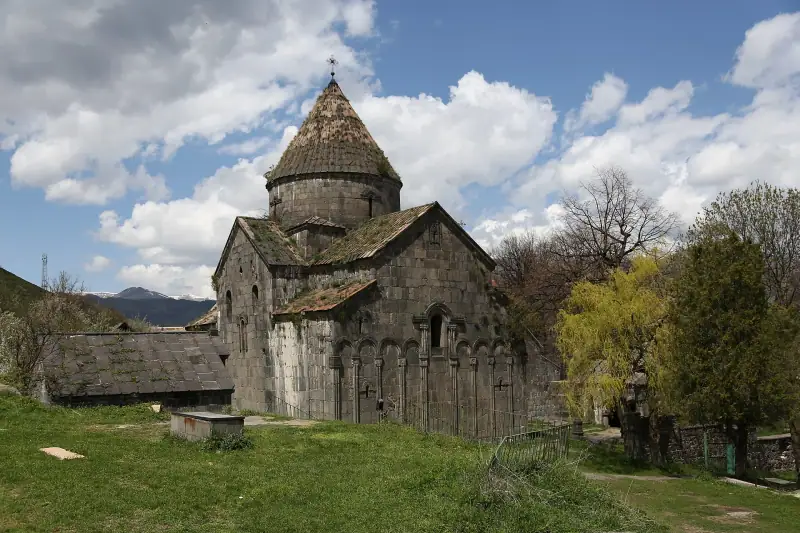
Haghpat and Sanahin without a car: getting there from Yerevan, schedules and is it worth the detour
Haghpat and Sanahin from Yerevan without a car: marshrutka via Alaverdi, schedules to check, 11 km trail between the monasteries and visit time.
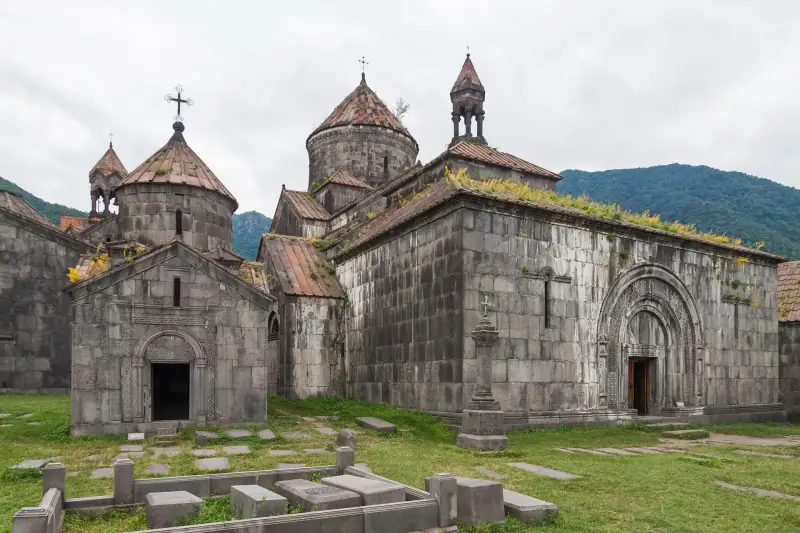
Where to stay near Haghpat and Sanahin: Alaverdi, Sanahin or Haghpat?
Alaverdi, Sanahin or Haghpat: which base for the two UNESCO monasteries, with or without a car? Transport, lodging types and tips.
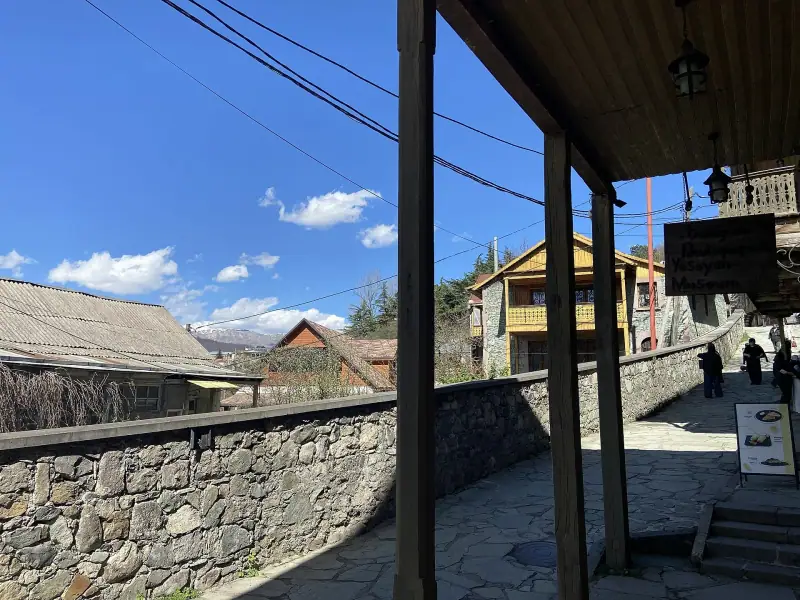
Where to stay in Dilijan: lodging in Armenia's little Switzerland
The best places to stay in Dilijan: hotels, guesthouses and lodges in the forests of northern Armenia. Guide by budget.
Ready-made
Armenia itineraries
10 days
Armenia road trip: a 10 to 14-day driving itinerary
YerevanDilijanAlaverdi or a Debed Valley guesthouseGyumriYerevanJermukSisian or GorisYerevan
5 days