What to see
Visiting Dilijan: complete guide to Armenia's forest town
We may earn a commission when you book through links on this page, at no extra cost to you. We don't visit or try the places we cover: we summarize published sources. How we work
In short
- Dilijan is about 100 km (62 mi) northeast of Yerevan, 1 h 30 to 2 h by car through the Dilijan tunnel; marshrutky take about 2 hours for 1,000-1,500 AMD.
- Haghartsin (18 km / 11 mi) and Goshavank are free to enter; a car or a negotiated taxi makes them far easier.
- Plan at least two nights; spring (May-June) and fall (September-October) are the best seasons.
- Guesthouses cost about €15-35 a night (about $17-41); a full local meal costs 2,000 to 4,000 AMD.
About 100 km (62 mi) northeast of Yerevan, Dilijan feels like another world. After the aridity of the Armenian plateaus and the dried-up shores of Lake Sevan, the town suddenly appears around the bend of the mountain tunnel, nestled in a setting of dense forest. Armenians often call it “the Switzerland of Armenia”. While the alpine comparison is flattering, it reflects a reality: in a mostly dry and mountainous country, Dilijan is a green, cool and silent anomaly, surrounded by oaks, beeches and ash trees that change color with every season.
The town (about 15,000 residents) is the center of Dilijan National Park, one of the largest protected natural areas in Armenia. It has a restored old town with carved wooden houses, two major medieval monasteries in the surrounding forests, a turquoise mountain lake and dozens of hiking trails. For travelers looking for a break in their Armenian circuit (clean air, nature, culture and regional cuisine), Dilijan is an essential stop.
Why visit Dilijan?
Dilijan is not a mass destination. Not yet. Organized tours rarely stop more than two hours, just long enough to photograph Sharambeyan Street and leave. That is a mistake. The town deserves at least two nights to grasp its essence: morning forests in the mist, craft workshops open to the street, deserted monasteries at dawn.
Here is what makes Dilijan a stop apart in any trip to Armenia:
- The restored old town: Sharambeyan Street, with its wooden Armenian houses and active workshops, is one of the most beautiful cobbled streets in the Caucasus
- Dilijan National Park: 24,000 hectares (240 km² / 93 sq mi) of primary forest, mountain lakes and marked hiking trails
- Haghartsin monastery (10th-13th century): nestled in a forest dell 18 km (11 mi) to the north, one of the most harmonious monastic complexes in Armenia
- Goshavank monastery: founded by the famous jurist and fabulist Mkhitar Gosh, 19 km (12 mi) from town
- Lake Parz: a pocket-sized lake inside the park, reachable by car from Dilijan (about 14 km / 9 mi by road)
- Air and silence: at 1,000-1,500 meters (3,280-4,920 ft) above sea level, Dilijan is cool even in summer, and its nights are silent
Stays in Dilijan
Family guesthouses and charming hotels in the Armenian forest.
Where is Dilijan?
Dilijan is in Tavush province (northeastern Armenia), at the intersection of two major geographic zones: the Lesser Caucasus mountain range to the west and the wooded foothills descending toward the Ararat plain to the east.
Distances from Dilijan:
- Yerevan: about 100 km (62 mi), 1 h 30 to 2 h by car through the tunnel
- Lake Sevan: about 26 km (16 mi), 25 min
- Gyumri: about 100 km (62 mi), about 2 h by car
- Tbilisi (Georgia): about 180-190 km (112-118 mi), 3 to 4 h depending on the border wait
The town is reached from the south through the Dilijan tunnel (2,257 m / 7,405 ft), opened around 2003-2004, which pierces the mountain range separating the Lake Sevan basin from the Aghstev valley. This tunnel considerably cut the travel time from Yerevan and the central region of the country. From the north, the road follows the Aghstev river from Ijevan.
Dilijan lies at the crossing of the routes linking Yerevan to Tavush and to Georgia, which makes it a natural stop for travelers doing the Yerevan-Dilijan-Georgia circuit or the full tour of northern Armenia.
How to get to Dilijan
By car (best option)
A car is the best way to explore Dilijan and the surroundings, because Haghartsin and Goshavank monasteries, as well as several park trails, are hard to reach without a vehicle. From Yerevan, take the M4 highway toward Lake Sevan, then the Dilijan tunnel; the road is well maintained all the way. Allow about 1 h 30.
For car rental in Armenia, see the comparison in our complete guide to Armenia.
By marshrutka (shared minibus)
Marshrutky (shared minibuses) link Yerevan (Northern bus station, not Kilikia) to Dilijan several times a day, from morning to mid-afternoon. The trip takes about 2 hours and costs around 1,000 to 1,500 AMD per person (check fares locally). Departures are not guaranteed at fixed times: minibuses leave when full. Ask your Yerevan accommodation the day before.
From Lake Sevan
If you come from Lake Sevan, Dilijan is about 26 km (16 mi) away via the M4 road and the tunnel. By car, allow about 25 minutes. Shared taxis link the two towns, but less frequently than with Yerevan.
By taxi
From Yerevan, a private taxi to Dilijan costs about €25-40 (about $29-46) depending on the vehicle. It is a comfortable option, especially if you travel in a group or with luggage. Many drivers also offer to stay for the day and take you to Haghartsin and Goshavank for a negotiated fee.
The old town: Sharambeyan Street
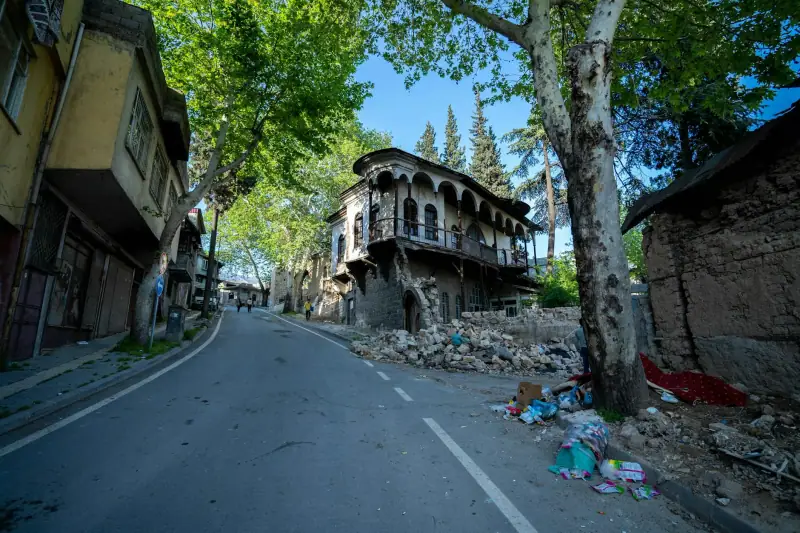
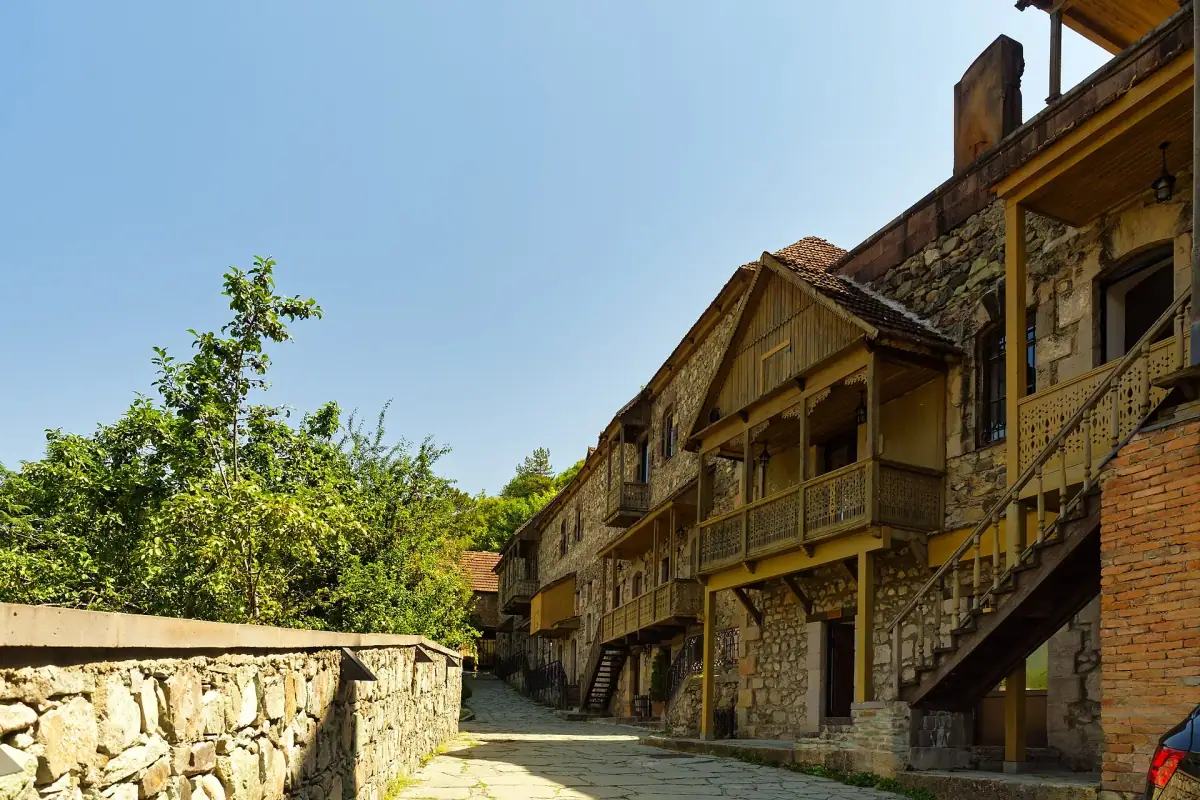
Sharambeyan Street is the historic heart of Dilijan and one of the most beautiful walks in the whole Caucasus. Paved in stone and lined with 19th-century Armenian houses in dark wood with carved relief, this short but dense lane concentrates all of Dilijan’s character.
The quarter was carefully restored in the 2000s-2010s, with the support of the IDeA foundation and Armenian diaspora patrons. The restoration was done with care: the facades regained their wooden window frames, their projecting balconies, their carved-lintel doors. But the street is not an empty set, as craftsmen still work there, in workshops open to the street.
The active workshops
Along Sharambeyan Street and in the side lanes, you will find:
- Pottery workshops: Armenian ceramics, with floral and geometric patterns inspired by medieval illuminations, make some of the finest souvenirs to take home
- Carpet weavers: the Armenian carpet tradition is thousands of years old, and some workshops welcome you for a weaving demonstration on the horizontal loom
- Wood carvers: the art of wood carving is at the heart of Dilijan’s identity, as the surrounding facades show
- Calligraphers: the Armenian alphabet (invented in the 5th century by Mesrop Mashtots) is an art form in its own right; several craftsmen offer personalized calligraphic works
The shops sell original pieces at negotiable prices, far from Yerevan’s tourist prices. Take the time to talk with the craftsmen, who are often curious and welcoming toward foreign visitors.
The local history museum
A small museum devoted to the history of Dilijan and the Tavush region is set up in one of the restored houses of the old town. The collections cover vernacular architecture, traditional trades and the town’s history in the Soviet era, when Dilijan was a resort destination popular with artists and intellectuals from across the Caucasus.
Haghartsin monastery
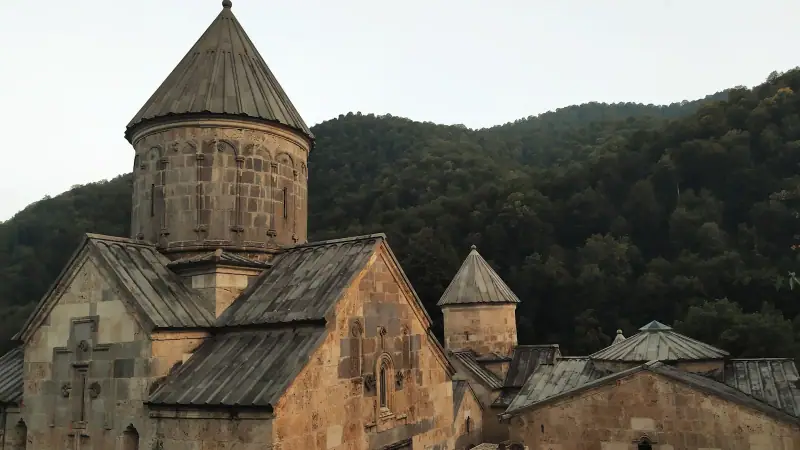
Eighteen km (11 mi) north of Dilijan, Haghartsin monastery is one of the jewels of medieval Armenian architecture. It does not try to impose itself: it nestles at the bottom of a densely wooded dell, appearing suddenly around the bend of the forest road as if it had grown there naturally among the oaks and ash trees.
History and architecture
Founded in the 10th century and expanded in the 12th and 13th centuries under the Bagratid and Zakarid dynasties, Haghartsin comprises three main churches (including Surb Grigor church, 10th c., restored in 1184, Surb Stepanos church, 1244, and Surb Astvatsatsin church, 1281), a remarkable gavit (covered columned narthex), and the ruins of several conventual buildings.
The monastic dining hall (the refectory) is particularly well preserved: its rib vaults and columns decorated with carved foliage evoke, across the centuries, the best contemporary European Gothic achievements. A coincidence that reminds us the Middle Ages were a more interconnected world than we imagine.
For a complete introduction to Armenian monasteries and their historical context, read our guide to Armenia’s monasteries.
Practical information
- Distance from Dilijan: 18 km (11 mi), 20-25 min by car on a well-maintained forest road
- Access: Vehicle strongly recommended. The road is paved up to the monastery parking lot.
- Admission: Free
- Visit time: 1 h 30 to 2 h
- Best time: Early morning (before 10 am) or late afternoon for a peaceful atmosphere and beautiful light in the trees
- Tip: The dell around the monastery is ideal for a picnic under the trees. Several stone tables are available.
Getting there on foot (hiking option)
For experienced hikers, a forest trail links Dilijan to Haghartsin through the national park. The trip takes about 4 hours one way and follows the wooded ridges above the road. It is not a well-marked trail: ask at the national park center in Dilijan before undertaking this hike.
Guided visits from Dilijan
Haghartsin, Goshavank, national park: small-group excursions with a guide.
Goshavank monastery
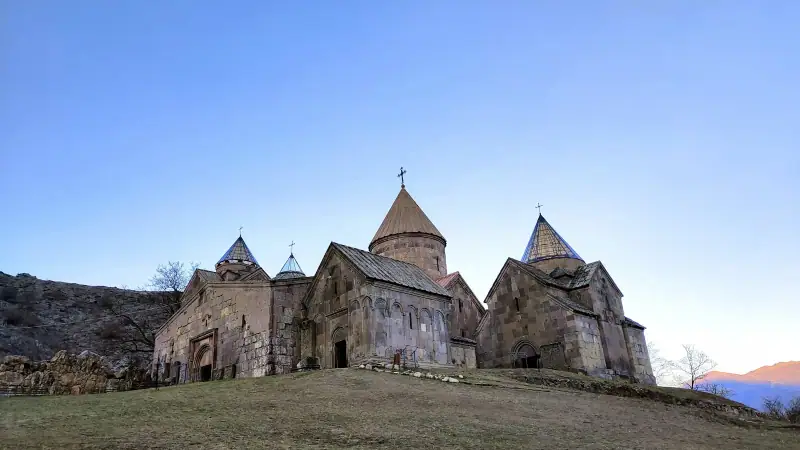
About 23 km (14 mi) east of Dilijan, in the village of Gosh, Goshavank monastery is the second great medieval site of the region. Its history is inseparable from that of Mkhitar Gosh (c. 1120-1213), an Armenian jurist, writer and fabulist who founded the monastery in 1181 and wrote there the first law code of Armenia (the Datastanagirk) as well as a collection of fables that earned him comparison with Aesop.
The monastic complex includes two main churches (including the Holy Virgin church, 1191-1196, adorned outside with a remarkable khachkar, an openwork stone cross), a gavit, a library and several outbuildings. The khachkar stone of Goshavank is considered one of the most finely carved in all of medieval Armenia: its interlaced vine scrolls and geometric patterns reach a precision and depth that have not been equaled.
Practical information
- Distance from Dilijan: 19 km (12 mi), 25 min by car
- Access: Paved road to the village of Gosh and the monastery
- Admission: Free
- Visit time: 1 h to 1 h 30
- Possible combination: Haghartsin and Goshavank can be visited the same day in a loop from Dilijan (allow a full day, with a lunch break in Dilijan between the two)
Lake Parz: a walk in the national park
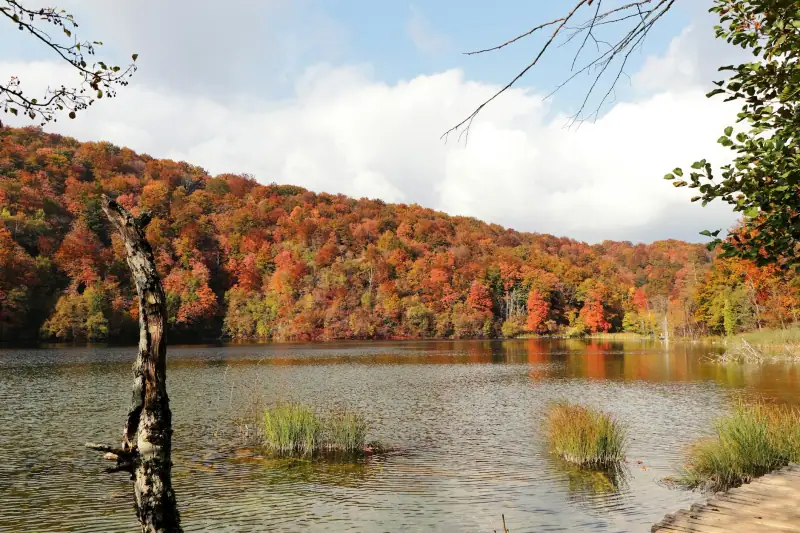
Parz Lich (“Clear Lake” in Armenian) is a small natural lake about 14 km (9 mi) from Dilijan by road, inside the national park. Most visitors go by car (parking by the lake); walking from the town center is a whole day round trip.
The hike
From the parking lot by the lake, marked trails let you follow the shores and explore the surrounding forests. The lake itself is surrounded by vegetation, with remarkably clear water reflecting the nearby trees. The shore has a few picnic tables.
Information:
- Elevation gain: about 200 m (656 ft) of climbing
- Round-trip time: 2 h 30 to 3 h 30
- Difficulty: easy to moderate
- Accessible by car from the park’s main road (parking by the lake)
A zip line is installed above the lake for thrill seekers; it is a paid activity, and its hours and season should be checked with the adventure park.
Dilijan National Park
Dilijan National Park, founded in 1958, extends over about 28,000 hectares of temperate forest and shelters remarkable biodiversity: 107 recorded bird species, brown bears, wildcats, deer, and varied flora including centuries-old oaks and wild orchids. The network of marked trails from the park visitor center (located in the center of Dilijan) offers routes from 2 hours to several days.
Hikes around Dilijan
Dilijan is the best starting point for hikes in northern Armenia. For an overview of Armenian hiking routes, our guide to hiking in Armenia details the options by level.
The main trails from Dilijan
Lake Parz (14 km / 9 mi from Dilijan by road, then trails from the parking lot): The classic. Dense forests, turquoise lake. Access by car recommended. See above.
Getazat ridge trail (12-15 km / 7-9 mi, moderate): From the northern outskirts of Dilijan, this trail climbs to the wooded ridges of the national park. Panoramic views over the Aghstev valley and surrounding forests. Allow 5-6 h round trip. Not advised without a map or GPS.
Dilijan-Haghartsin crossing (about 18 km / 11 mi, difficult): The hiking version of the road to the monastery, along the forest ridges. A full day for experienced hikers. Guide recommended.
Tip: The national park visitor center (Dilijan Visitor Center), in the town center, issues trail maps, weather information and contact details for approved local guides. Ask there or at your lodging about its hours, which vary by season.
Car rental in Armenia
Total freedom for Haghartsin, Goshavank, Lake Sevan and the north of the country from Dilijan.
Food in Dilijan
Dilijan’s cuisine is Armenian mountain cooking, generous and rooted in local produce. The surrounding forest provides mushrooms, aromatic herbs, honey and wild fruit that go into many dishes. For a dive into Armenian gastronomy more broadly, our complete guide is a good starting point.
Local specialties
Khorovats (barbecue): A staple of Armenian cooking. In Dilijan, lamb and pork grilled over fruitwood embers are particularly tasty. Most restaurants serve khorovats in summer and fall.
Mountain soups: Spas (a sour soup of fermented matsoun and cracked wheat) and khashlama (mutton stew with herbs) are the cold-weather staples. In summer, fresh-herb soups dominate.
Local matsoun: Armenian fermented yogurt is made here from the milk of cows grazing in alpine meadows. Its dense texture and characteristic tang make it one of the best in all of Armenia.
Forest honey: Dilijan honey, produced by local beekeepers from the nectar of forest flowers (acacia, linden, clover), is renowned across the country. It is found in local markets and at the craftsmen’s shops on Sharambeyan Street.
Nuts and dried fruit: Walnuts, hazelnuts, dried apricots, plums: the Tavush region is one of the most fertile in Armenia. These products make excellent souvenirs.
Where to eat
Dilijan’s restaurants are concentrated in the town center and around the old town. Most guesthouses serve home-cooked meals on request, often the most authentic and cheapest tables in town. Expect 2,000 to 4,000 AMD for a full meal with drinks.
Where to stay in Dilijan
For the complete guide to lodging with comparisons by budget, see our dedicated article where to stay in Dilijan.
Overview of the options
Family guesthouses: The typical Dilijan lodging. A few rooms in a private home, Armenian breakfast included (lavash, matsoun, honey, cheese, homemade jam), family atmosphere. Expect €15-35 a night (about $17-41) per double room. Quality varies, but the welcome is generally remarkable.
Boutique hotels: Several charming hotels have opened in Dilijan in recent years, often in carefully renovated old buildings. Rates: €40-80 a night (about $46-93). Ideal for travelers who want comfort without sacrificing authenticity.
Hostels: A few hostels in Dilijan offer dorm beds at €10-15 a night (about $12-17). An excellent option for solo travelers and small budgets.
Forest eco-lodges: A few lodgings in the forest or at the edge of the national park offer rooms or bungalows in a natural setting. Fewer in number, to be booked well ahead in season.
Practical information
When to go to Dilijan
| Season | Conditions | Atmosphere |
|---|---|---|
| April-May | Spring, forests budding, cool | Ideal for hikes, few people |
| June-August | Temperature 18-26 °C (64-79 °F), long days | Best period, busier |
| September-October | Colorful fall (red, gold, ochre), clear skies | Photographers, hikers |
| November-March | Snow possible, cold (-5 °C / 23 °F at night) | Absolute calm, snowy landscapes |
Budget to plan
- Lodging: €15-80 a night (about $17-93) depending on standard
- Meals: 1,500-4,000 AMD per meal (about €3-9 / $3-10)
- Monastery visits: Free (Haghartsin and Goshavank)
- Lake Parz hike: Free (zip line: modest fee)
- Dilijan-Haghartsin round-trip taxi: €15-25 (about $17-29) depending on negotiation
- Bike rental: Some lodgings offer bikes to explore the area
Money and services
The Armenian dram (AMD) is the local currency. 1 EUR ≈ 410-430 AMD (variable rate: check it before exchanging). Dilijan has ATMs in the town center. Card payments are accepted in modern hotels, more rarely in guesthouses and local restaurants, so bring cash.
Connectivity
Mobile coverage (Team, formerly Beeline, Viva, formerly VivaCell, and Ucom) is good in the town center. In the national park and on the trails, coverage may be absent or intermittent. Wi-fi is available in all lodgings. Check your carrier’s international plan, or consider a travel eSIM or a local SIM card.
Getting around Dilijan
The town center is small and easily covered on foot (less than 2 km / 1.2 mi end to end). For the monasteries and the park, you need a vehicle. Local taxis are available and affordable: ask your lodging to call one or negotiate a day rate (€20-40, about $23-46, for a monasteries day).
Flights to Yerevan
Zvartnots International Airport (Yerevan) is 1 h 30 from Dilijan. Compare flights.
Suggested itineraries in Dilijan
1 day in Dilijan (stop on a circuit)
- Morning (9 am): Drive to Haghartsin monastery (18 km / 11 mi, 20 min), arriving early to avoid the crowds
- Late morning (10 am-12 pm): Visit Haghartsin (1 h 30) and stroll in the forest dell
- Midday: Back to Dilijan, lunch in a town-center restaurant or a guesthouse
- Afternoon (2-4 pm): Stroll through the old town (Sharambeyan Street, craft workshops)
- Late afternoon: Leave for Sevan or Yerevan (or first night in Dilijan)
2 days in Dilijan (recommended)
Day 1:
- Morning: Haghartsin monastery (18 km / 11 mi)
- Afternoon: Goshavank (19 km / 12 mi to the east), or the old town if only one car is available
- Evening: Khorovats dinner in Dilijan, night in a guesthouse
Day 2:
- Morning (8 am): Hike to Lake Parz (2 h 30 round trip)
- Midday: Old town, craft workshops, souvenir shopping
- Afternoon: Departure or free exploration of the national park
3 days (immersive version)
Add a day of hiking in the national park (ridge trail or the crossing to Haghartsin on foot), as well as a visit to Jukhtak Vank monastery (about 3 km / 2 mi northwest of town, in the national park, less spectacular but historically interesting; check the condition of the access path before leaving).
To fit Dilijan into a full northeast circuit, our Armenia road trip and our 7-day itinerary offer variants with Dilijan, Sevan and Georgia.
Dilijan is not a town you describe; you breathe it. The air of its forests, the gentle afternoons in the Sharambeyan Street workshops, the light filtering between the beech trunks toward Haghartsin at early morning: none of this fits into a sightseeing program. That is precisely why you should spend at least two nights here, and leave reluctantly. Armenia is a country of striking contrasts, and Dilijan is its green, gentle and silent exception.
Frequently asked questions
Why is Dilijan nicknamed the 'Switzerland of Armenia'?
Dilijan is surrounded by hills densely wooded with oak, ash and beech, a rare vegetation in a mostly arid country. Its fresh air, mineral springs and national park have made it a resort destination popular with Armenians since Soviet times. The nickname reflects this striking contrast with the rest of the country.
How do you get to Dilijan from Yerevan?
The fastest road from Yerevan takes the M4 highway toward Lake Sevan, then the Dilijan tunnel (opened around 2003-2004) through the mountain range. Allow about 100 km (62 mi) and 1 h 30 by car. Marshrutky (shared minibuses) link Yerevan to Dilijan several times a day from the Yerevan Northern bus station (about 2 hours, 1,000-1,500 AMD).
What to see in Dilijan in one day?
In one day, visit the old town (Sharambeyan Street and its craft workshops), hike to Lake Parz in the national park (reachable by car from Dilijan, about 14 km / 9 mi by road), and have lunch in a local restaurant. If you have a car, add Haghartsin monastery (18 km / 11 mi) at the end of the day.
Is Haghartsin monastery near Dilijan?
Yes, Haghartsin is about 18 km (11 mi) from Dilijan, in a wooded dell reachable by car (20-25 min). It is one of the best-preserved monasteries and best integrated into nature in Armenia. Walking from Dilijan is possible on a forest trail (about 4 hours one way) for experienced hikers.
Can you hike in Dilijan without a guide?
Yes, several marked trails start directly from the town or from the national park visitor center. The Lake Parz trail is accessible to everyone. For longer routes in the park (Getazat, wooded ridges), a local guide is recommended for hikers with little mountain experience.
What is the best time to visit Dilijan?
Spring (May-June) and fall (September-October) are the best seasons: the forests are lush in spring and turn red and gold in fall. Summer (July-August) is pleasant with temperatures around 20-25 °C (68-77 °F). Winter is cold and snowy, but the town under snow is magical for anyone seeking absolute calm.
Is Dilijan expensive for travelers?
Dilijan is very affordable. Expect €20-40 a night (about $23-46) in a family guesthouse with breakfast, €10-25 (about $12-29) in a hostel. Meals in local restaurants cost 1,500-3,500 AMD. It is cheaper than Yerevan and one of the best values in Armenia.
More Armenia guides
Keep reading
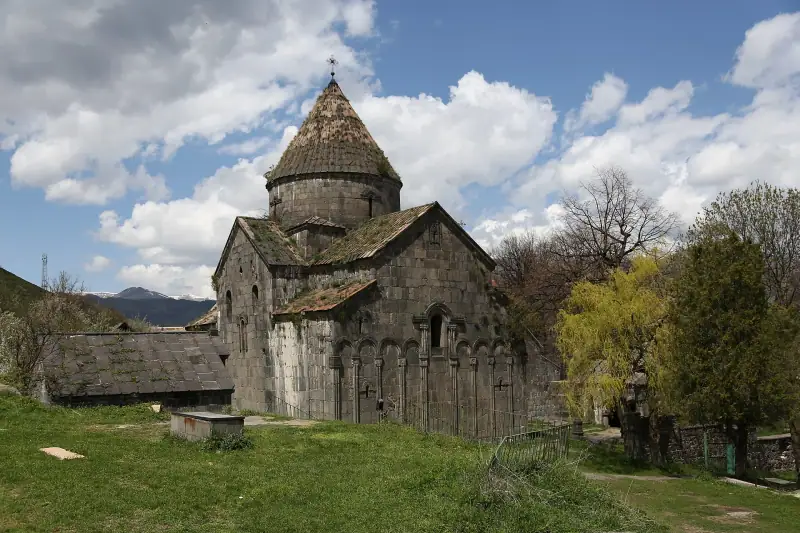
Haghpat and Sanahin without a car: getting there from Yerevan, schedules and is it worth the detour
Haghpat and Sanahin from Yerevan without a car: marshrutka via Alaverdi, schedules to check, 11 km trail between the monasteries and visit time.
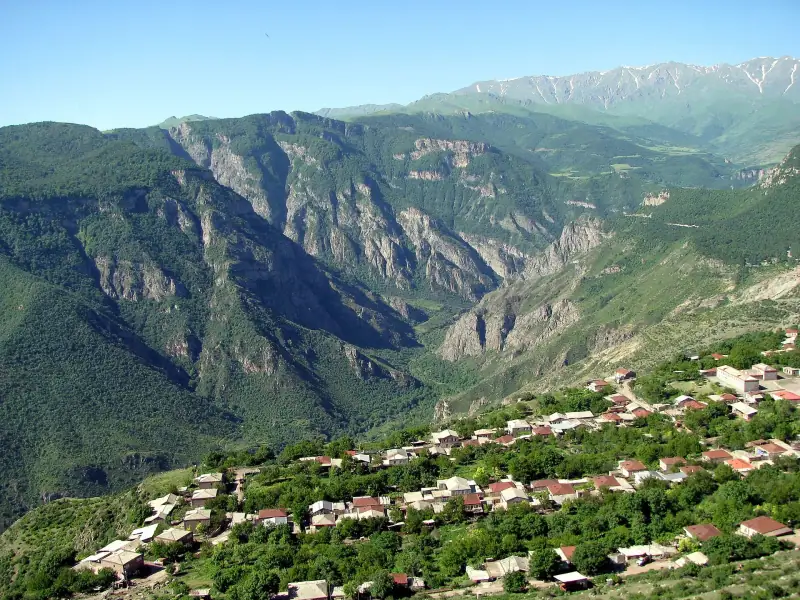
Visiting Goris: complete guide to the capital of southern Armenia
Everything to visit Goris: cave houses, Tatev monastery, Zangezur canyon, hikes and lodging in Armenia's wild south.
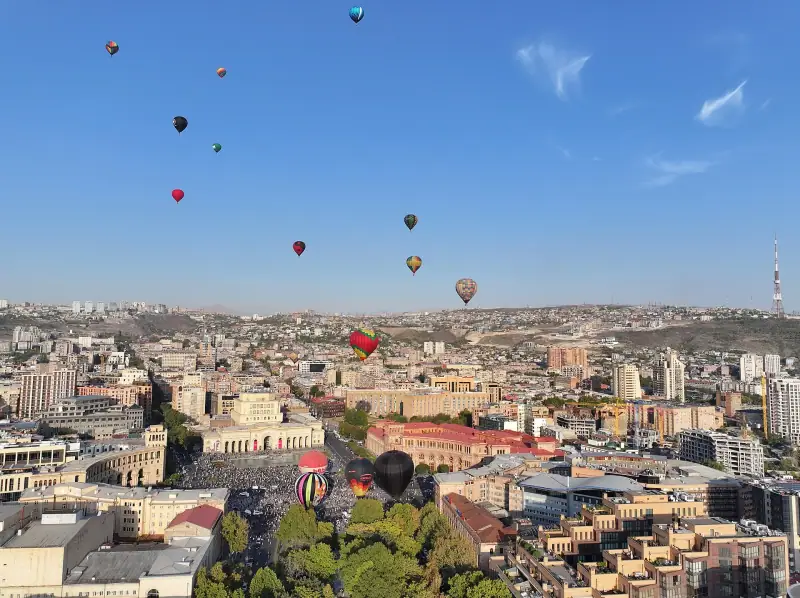
Yerevan's top sights: 15 things to see and do in the capital
Yerevan's highlights: Republic Square, the Cascade, Genocide Museum, Matenadaran, markets. A practical guide to the Pink City's top sights.
Ready-made
Armenia itineraries
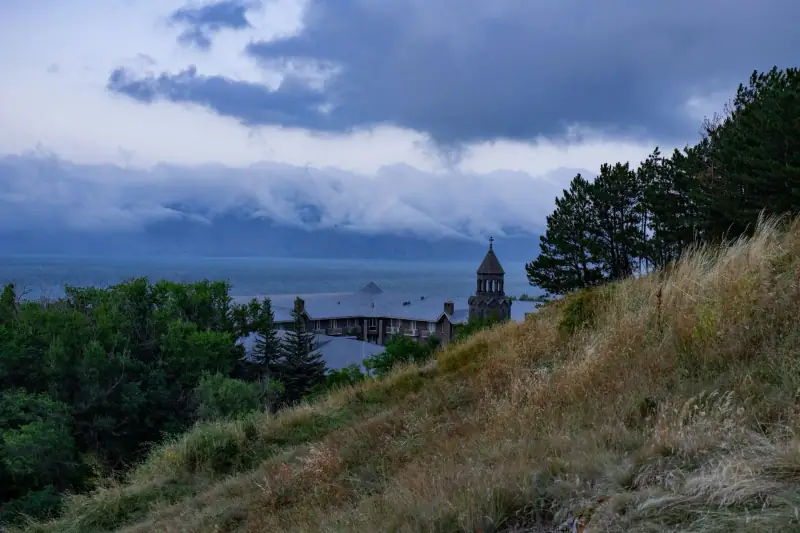
4 days
Northern Armenia: a guide to the Dilijan and Lake Sevan region
Discover northern Armenia: Dilijan's forests, high-altitude Lake Sevan, Haghartsin and Goshavank monasteries, hikes and nature. A 3-4 day itinerary.
10 days
Armenia road trip: a 10 to 14-day driving itinerary
YerevanDilijanAlaverdi or a Debed Valley guesthouseGyumriYerevanJermukSisian or GorisYerevan
5 days