What to see
Yerevan's top sights: 15 things to see and do in the capital
We may earn a commission when you book through links on this page, at no extra cost to you. We don't visit or try the places we cover: we summarize published sources. How we work
In short
- Two days cover the main sights; three allow museums and neighborhoods; four to five add day trips to nearby monasteries.
- Most sights lie within 2-3 km (1.2-1.9 mi) of Republic Square, so the center is pleasant on foot.
- The musical fountains on Republic Square run from spring to about October; museum fees are low (about €2-5 / $2-6) and there is no official museum pass.
- The Genocide Museum is free and closed Monday; the Matenadaran costs about €4 (about $5) and is closed Sunday and Monday.
Yerevan is a city that surprises. You expect a gray ex-Soviet capital and discover a pink, lively city, with sidewalk cafe terraces, fascinating museums and an intense cultural life. The “Pink City” (its rosy tuff buildings earned it the nickname) concentrates Armenia’s greatest riches within walking distance. Here are the 15 top sights.
The top sights
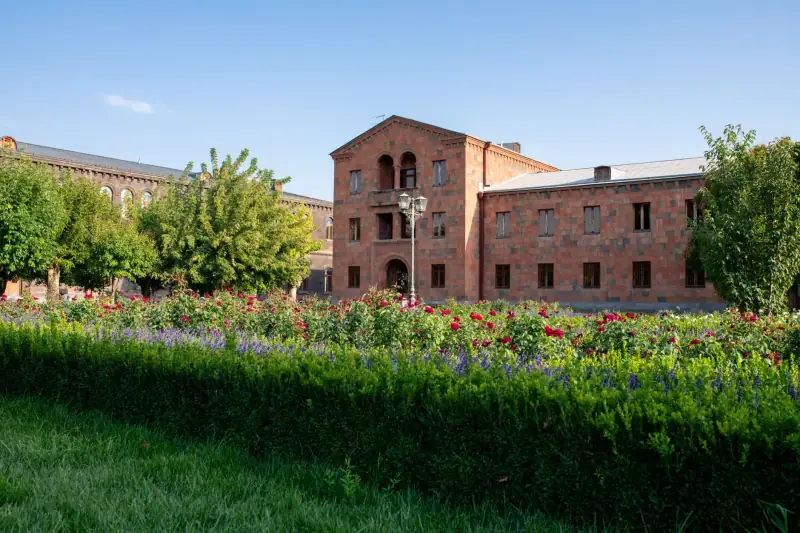
1. Republic Square (Hanrapetutyan Hraparak)
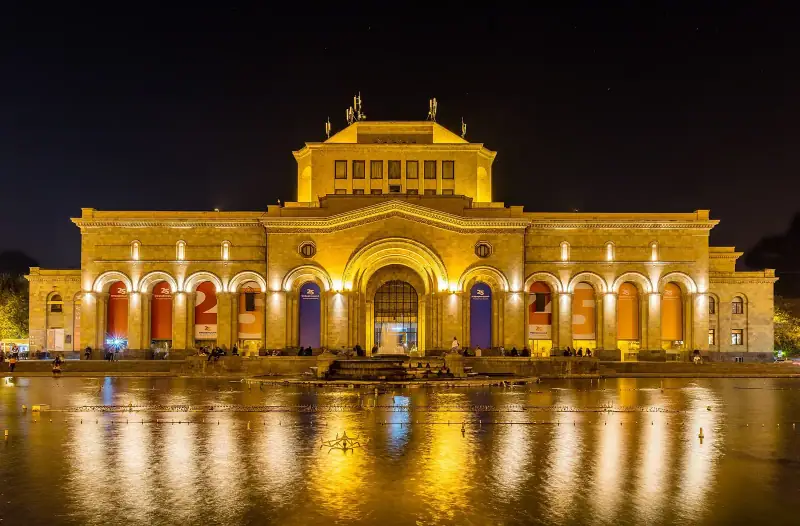
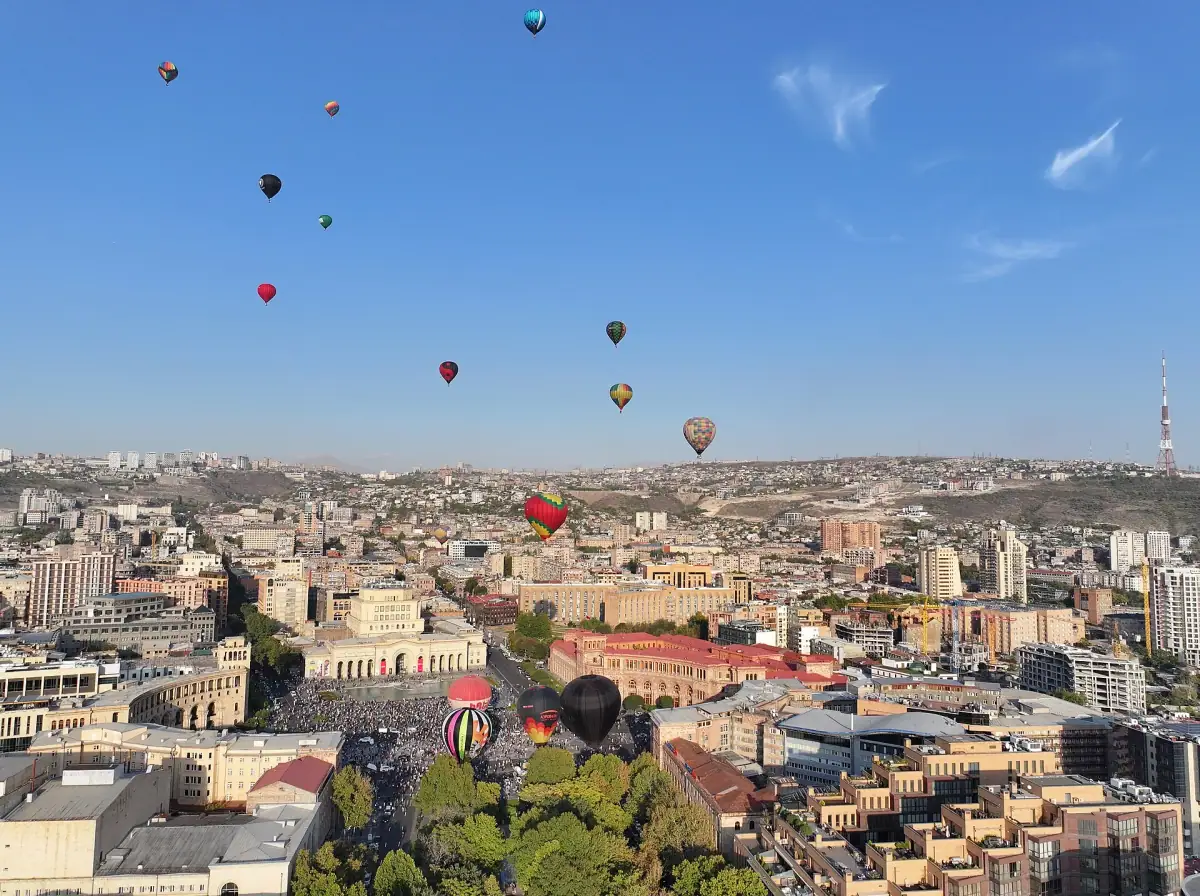
The heart of the capital. This monumental square is surrounded by neoclassical pink tuff buildings whose plan architect Alexander Tamanian drew up in 1924, but whose construction ran from the 1930s to the 1950s-70s. The musical fountains (running from spring to October, dates vary by season) create a colorful show in the evening. The cafe terraces around the square are among the liveliest in the city.
Tip: Come back in the evening for the show of the illuminated musical fountains, a Yerevan classic.
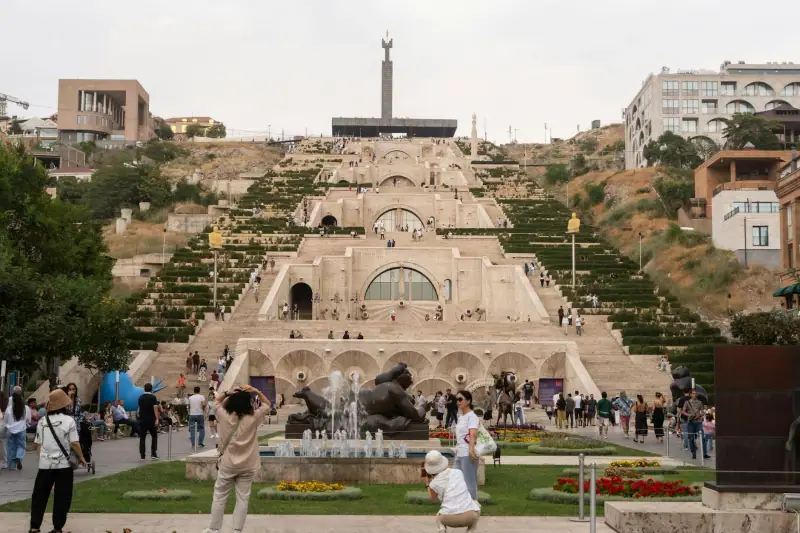
2. The Cascade
The monumental Cascade staircase (about 78 meters / 256 ft of accessible vertical drop, 572 steps over 302 meters / 991 ft) is at once a promenade, an open-air museum and a viewpoint. The intermediate terraces host international contemporary sculptures (Fernando Botero, Lynn Chadwick…). The view from the top takes in the whole city and, in clear weather, Mount Ararat.
Inside the Cascade, the Cafesjian Center for the Arts houses a very good international contemporary art collection (check opening days and exhibition prices before going up).
Tip: Walk up to enjoy the sculptures, and take the interior escalators for the descent.
3. Genocide Museum: Tsitsernakaberd
The Armenian Genocide memorial and museum is an essential place to understand modern Armenia. The memorial complex was inaugurated in 1967, with its eternal flame surrounded by 12 inclined slabs (representing the 12 lost provinces) and a 44-meter (144 ft) obelisk symbolizing the rebirth of the Armenian people. The underground museum documenting the 1915 Genocide was added and opened in 1995 for the 80th anniversary.
Visit time: 1 h 30 to 2 h. Free admission. Closed Monday; check hours and opening days on the museum’s official website.
Note: This is a place of remembrance. Behave respectfully.
4. Matenadaran (Institute of Ancient Manuscripts)
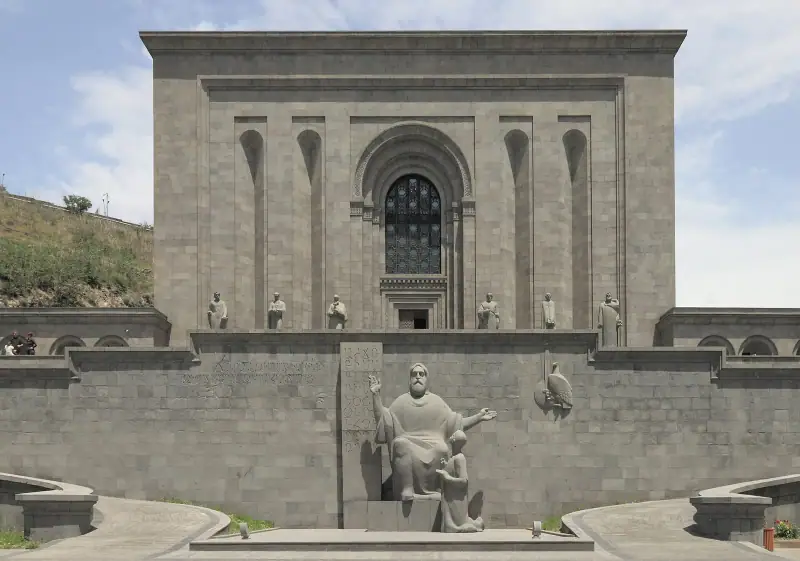
The Matenadaran houses one of the most important collections of ancient manuscripts in the world: more than 23,000 manuscripts and more than 500,000 archived documents. These illuminated medieval parchments, some dating from the 9th century, are of immense beauty and value. The building itself, designed and built between 1945 and 1957 by architect Mark Grigorian, then inaugurated in 1959, is a remarkable work of neo-Armenian architecture.
Visit time: 1 h to 1 h 30. Admission: about €4 (about $5; 2,000 AMD). Closed Sunday and Monday; for audio guides and guided tours, ask the museum.
5. Vernissage Market
The Vernissage market (open on weekends) is where all Yerevan residents and tourists meet on Sunday morning. Hundreds of vendors offer Soviet antiques, Armenian jewelry, paintings, miniature khachkars, tapestries, pottery, old books and… anything and everything.
Tip: Always haggle (a 20-30% discount is usually accepted). Sunday morning is the best time for the finest pieces.
6. GUM central market
Yerevan’s Soviet covered market is a total sensory experience. Dozens of stalls offer spices, dried herbs, dried fruit, traditional lavash, cheeses (matsoun, tvorog), honey, nuts, smoked sausages and fresh fruit. A dive into everyday Yerevan life.
Tip: Go in the morning (9 am-12 pm) when it is liveliest. Taste everything you are offered.
7. Kond district
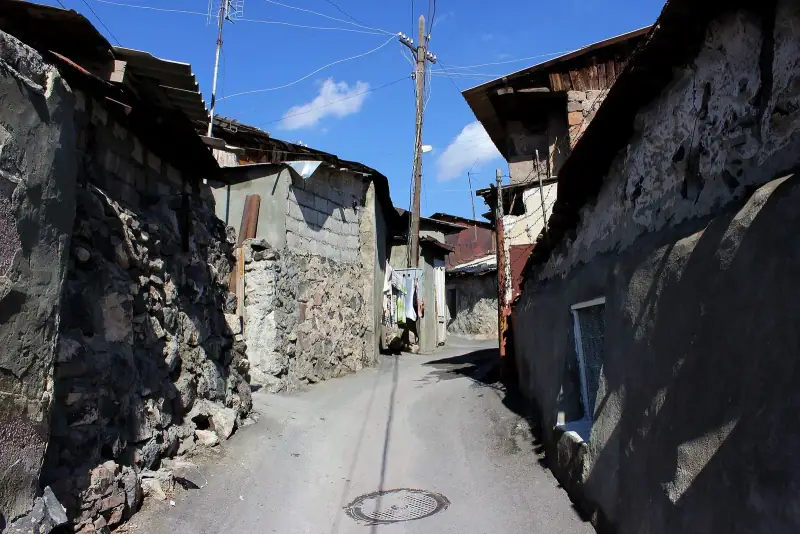
The oldest neighborhood of Yerevan, perched on a hill above the Hrazdan ravine. Irregular lanes, wooden houses slowly collapsing, children playing, old men on benches: Kond is the Yerevan from before Soviet urban planning, preserved in spite of everything. A striking contrast with nearby Northern Avenue.
Watch out: Some lanes are in poor condition. Wear good shoes.
8. History Museum of Armenia
On Republic Square, this museum covers Armenian history from prehistory to today. The archaeological collections (Urartu, Bronze Age, Hellenistic) and the rooms on medieval architecture are particularly rich.
Time: 1 h 30 to 2 h. Audio guides available; ask the museum which languages.
Hotels in Yerevan
Lodging in the center to see everything on foot.
9. Abovyan Street and the trendy district
Abovyan Street and its side lanes concentrate Yerevan’s trendiest cafes, bars, galleries and shops. In the evening, it is the beating heart of nightlife. Armenian wine bars, craft beer bars and fusion restaurants liven up the terraces until after midnight.
10. Ararat Distillery (Cognac Museum)
The Ararat distillery has produced the country’s best-known Armenian brandy since 1887. The museum traces the history of production with old stills, century-old barrels and a collection of rare vintages. The visit ends with a tasting.
Time: 1 h 30 with tasting. Booking advised in high season; check visit and tasting hours with the distillery.
11. Opera Theater and its park
The Armenian National Opera and Ballet Theater is a masterpiece of classical Soviet architecture, opened in 1933, with construction continuing until 1953. Its tree-lined park and pools make it a pleasant place for a stroll. In the evening, the opera and ballet performances are worth booking (affordable tickets: about €10-60, about $12-70, depending on the show and the seat).
12. Saint Gregory the Illuminator Cathedral
The largest cathedral in Armenia (inaugurated in 2001), built for the 1,700th anniversary of the country’s Christianization. Its interior is imposing and its forecourt lively on weekends.
13. Museum of Modern Art
A collection of Soviet and Armenian 20th-century art in an Art Deco building. Less well known than the big museums, but fascinating for understanding contemporary Armenian art.
14. Lovers Park
Yerevan’s most popular park for evening strolls, with its pink tuff benches, fountains and flowers. A romantic and family atmosphere. Ideal for a break between two visits.
15. Night view from a rooftop terrace
Yerevan is magnificent at night, with its illuminated pink tuff buildings, the colorful Cascade and, sometimes, the silhouette of Ararat under the moon. Several terrace bars offer this view: a last glass of Armenian brandy or local wine to close a fine day.
Suggested 2-day itinerary
Day 1:
- Morning: Republic Square, Cascade (walk up)
- Lunch: Mashtots area
- Afternoon: Genocide Museum, Matenadaran
- Evening: Musical fountains of Republic Square
Day 2:
- Morning: GUM market, Vernissage market (Sunday) or History Museum
- Lunch: Abovyan area
- Afternoon: Kond district, Ararat Distillery
- Evening: Opera or Armenian fine dining
For the best restaurant addresses, see our guide to restaurants in Yerevan. To choose your lodging, see where to stay in Yerevan.
Frequently asked questions
How many days do you need to visit Yerevan?
2 days are enough for the top sights. 3 days allow a deeper exploration with the museums and neighborhoods. 4-5 days if you want to include day trips to the surrounding monasteries.
Is Yerevan pleasant to explore on foot?
Yes, central Yerevan is very pleasant on foot. Most of the top sights are within 2-3 km (1.2-1.9 mi) of Republic Square. The streets are wide, with many green spaces.
What to see in Yerevan in 1 day?
Republic Square in the morning, a climb up the Cascade, lunch in the Mashtots area, the Genocide Museum in the afternoon, dinner on Northern Avenue. You will have seen the essentials.
Do the Republic Square fountains run all year?
No, the musical fountains of Republic Square run from spring to autumn, until about October (dates vary by season). They are lit up in the evening. In winter, the square is beautiful but the fountains stop.
Is there a museum pass in Yerevan?
There is no official museum pass in Yerevan. But admission fees are very modest (€2-5, about $2-6), so there is no need to look for a combination ticket; the museums are affordable on any budget.
More Armenia guides
Keep reading
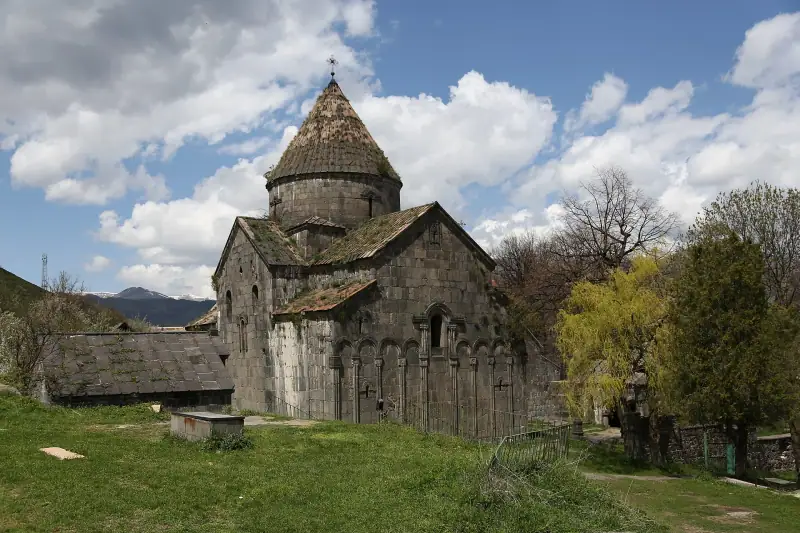
Haghpat and Sanahin without a car: getting there from Yerevan, schedules and is it worth the detour
Haghpat and Sanahin from Yerevan without a car: marshrutka via Alaverdi, schedules to check, 11 km trail between the monasteries and visit time.
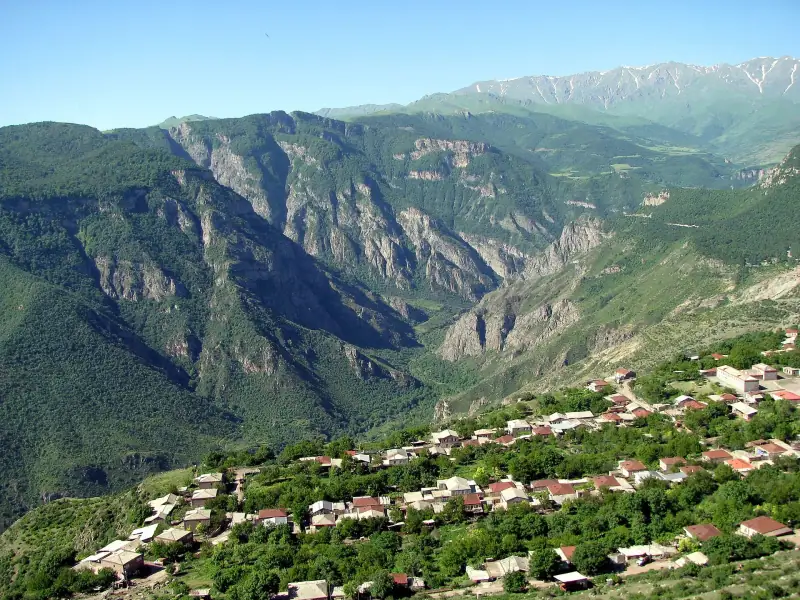
Visiting Goris: complete guide to the capital of southern Armenia
Everything to visit Goris: cave houses, Tatev monastery, Zangezur canyon, hikes and lodging in Armenia's wild south.
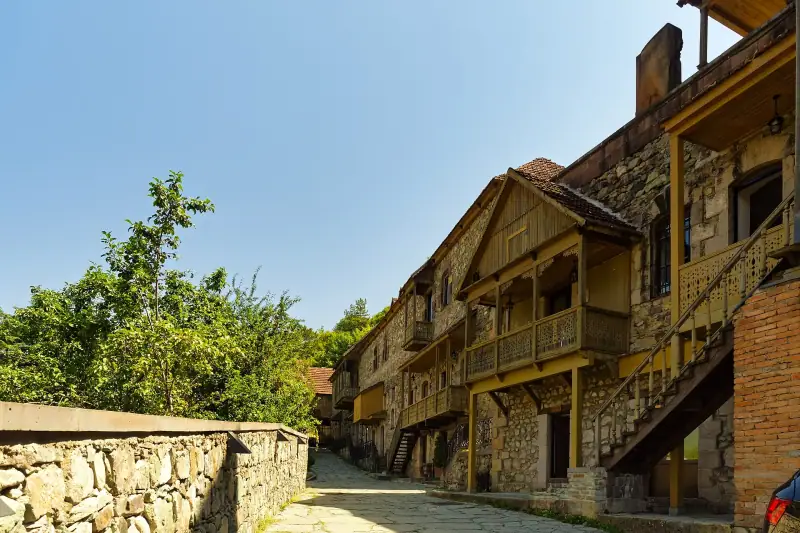
Visiting Dilijan: complete guide to Armenia's forest town
Everything for visiting Dilijan: old town, Haghartsin and Goshavank monasteries, national park, Lake Parz, hikes and lodging in the Armenian forest.
Ready-made
Armenia itineraries
4 days
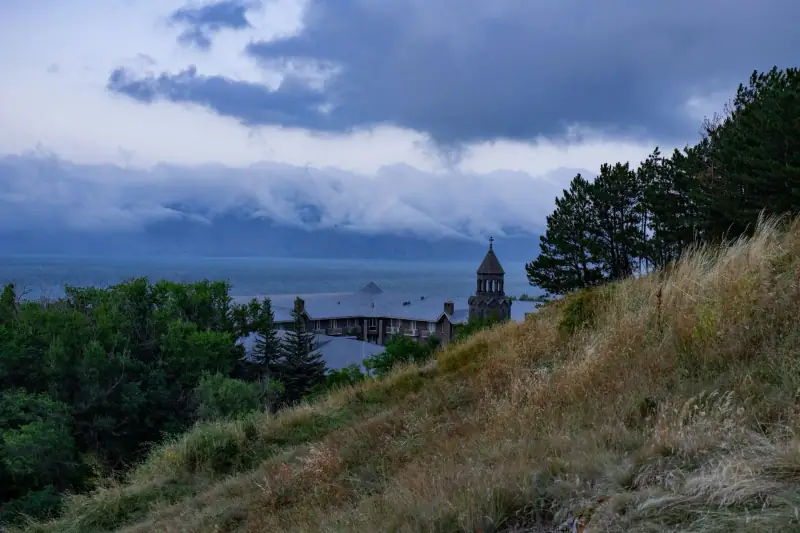
Northern Armenia: a guide to the Dilijan and Lake Sevan region
Discover northern Armenia: Dilijan's forests, high-altitude Lake Sevan, Haghartsin and Goshavank monasteries, hikes and nature. A 3-4 day itinerary.
10 days
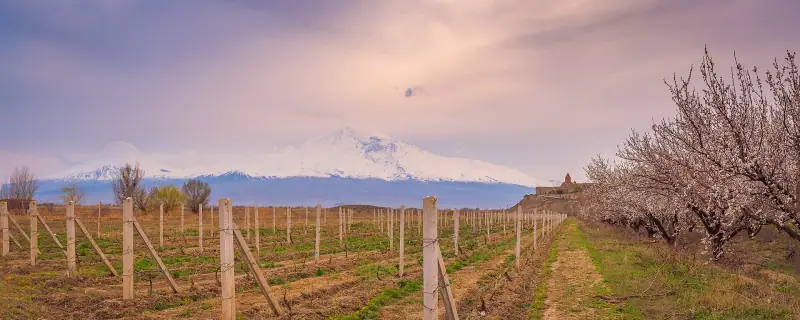
Armenia road trip: a 10 to 14-day driving itinerary
YerevanDilijanAlaverdi or a Debed Valley guesthouseGyumriYerevanJermukSisian or GorisYerevan
5 days