What to see
Visiting Goris: complete guide to the capital of southern Armenia
We may earn a commission when you book through links on this page, at no extra cost to you. We don't visit or try the places we cover: we summarize published sources. How we work
In short
- Goris is about 250 km (155 mi) from Yerevan, 3 h 30 to 4 h by car on the M2; marshrutky from Kilikia take 4-5 hours for about 2,500-3,000 AMD.
- Plan at least 2 nights: cave houses, Tatev (tramway station at Halidzor, 23 km / 14 mi away) and Khndzoresk.
- Cave-house access is free on foot from the center (20-30 min); the Wings of Tatev tramway round trip costs 2,500-3,000 AMD.
- Syunik lies near sensitive borders: check your government's travel advice before leaving; Goris itself is described as safe for tourists.
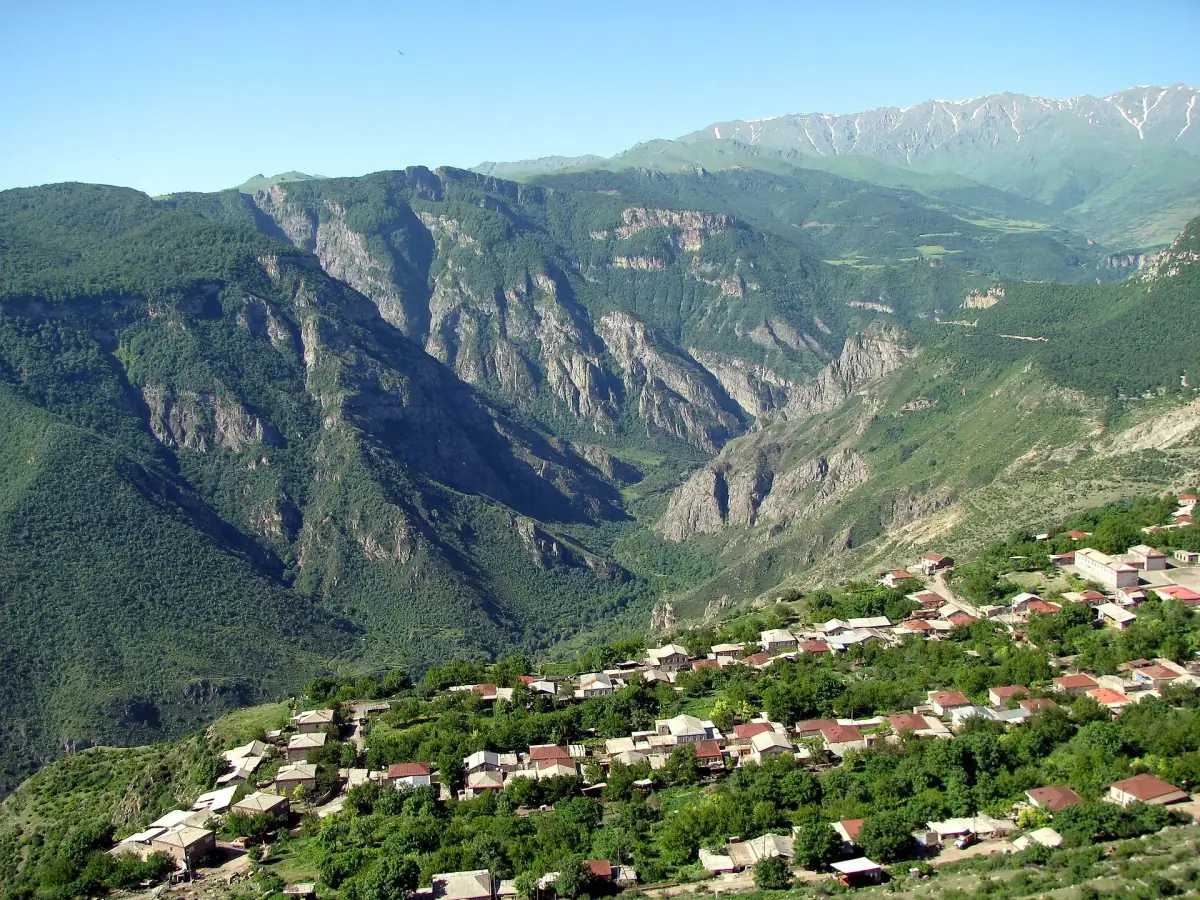
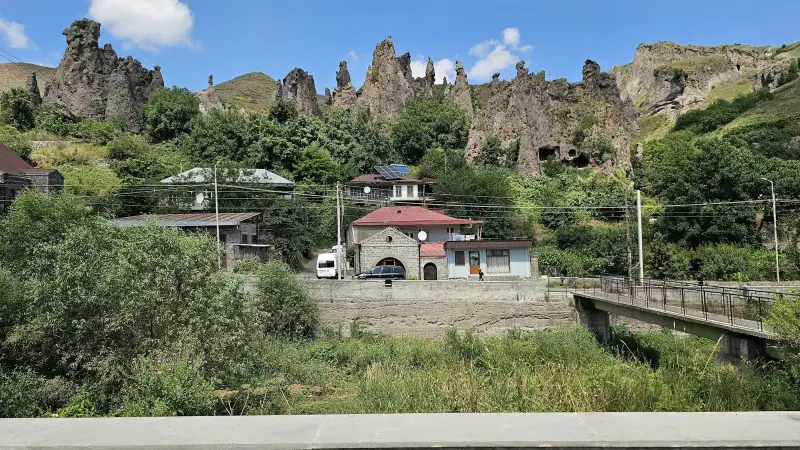
Nestled at 1,375 meters (4,511 ft) in the Zangezur gorges, Goris is the most fascinating town in southern Armenia, and one of the least known to travelers in a hurry. Surrounded by volcanic rock formations sculpted by erosion, this small regional capital of 17,113 residents holds one of the most spectacular cave-dwelling heritages in the Caucasus, and is the natural gateway to Tatev monastery. If you are looking for deep Armenia, far from the standard circuits, Goris is your base.
Why go to Goris?
Goris is nothing like a packaged tourist site. The town lives at its own pace, that of an Armenian provincial city that has come through history without trying to please visitors. That is precisely what makes it unforgettable.
Here is what awaits travelers who make the trip:
- The cave houses: dozens of caves and semi-rock dwellings carved into volcanic tuff cones, some still partly inhabited in the last century
- Tatev monastery: 23 km (14 mi) away, one of the most impressive monasteries in the Caucasus, reached by the longest tramway in the world (5.7 km / 3.5 mi)
- The Zangezur gorges: dizzying canyons that would make many Mediterranean destinations envious
- Khndzoresk: the former cave village hanging in the cliffs, about 13 km (8 mi) from Goris, with its vertiginous suspension bridge
- Authentic atmosphere: Goris is a genuine Armenian town, with its markets, lavash bakeries, neighborhood cafes and welcoming residents
Stays in Goris
Family guesthouses and charming hotels in Goris' historic center.
Where is Goris?
Goris is the capital of Syunik province (or Zangezur), in the far south of Armenia, a few kilometers from the border with Iran and close to the Azerbaijani enclave of Nakhchivan. Its geographic position gives it the character of a border town, with all that implies in dense history and cultural diversity.
Distances from Goris:
- Yerevan: 250 km (155 mi), 3 h 30 to 4 h
- Tatev: 23 km (14 mi) to the tramway (35 min)
- Jermuk: 87 km (54 mi), about 1 h 30 to 2 h
- Kapan: 65 km (40 mi), 1 h
The town is crossed by the Vararak river and surrounded on three sides by cliffs and formations of gray-beige volcanic tuff. This particular geology, a quickly cooled magma carved by millennia of erosion, is the origin of the unique cave formations that characterize Goris and its surroundings.
How to get to Goris
By car (strongly recommended)
A car is the ideal means of transport for Goris and the Syunik region. The M2 road from Yerevan is well maintained for most of the trip, with splendid mountain sections after Sisian.
Recommended route from Yerevan: Yerevan → M2 highway → Areni (optional stop for winery and Noravank) → Yeghegnadzor → Sisian → Goris. About 250 km (155 mi), 3 h 30 to 4 h depending on stops.
Warning: In winter (December-March), some mountain passes on this route may be temporarily closed during heavy snowfall. Check conditions before leaving.
By marshrutka (shared minibus)
Shared minibuses link Yerevan (Kilikia station) to Goris 2 to 3 times a day, mainly in the morning. Expect about 2,500-3,000 AMD per person and a 4 to 5 hour trip. Schedules change with the season; ask the day before at the bus station or at your Yerevan accommodation.
By shared taxi
Shared taxis also run Yerevan-Goris, often faster than marshrutky (3 h 30 to 4 h). They leave when full (4 passengers), also from Kilikia.
The cave houses of Goris
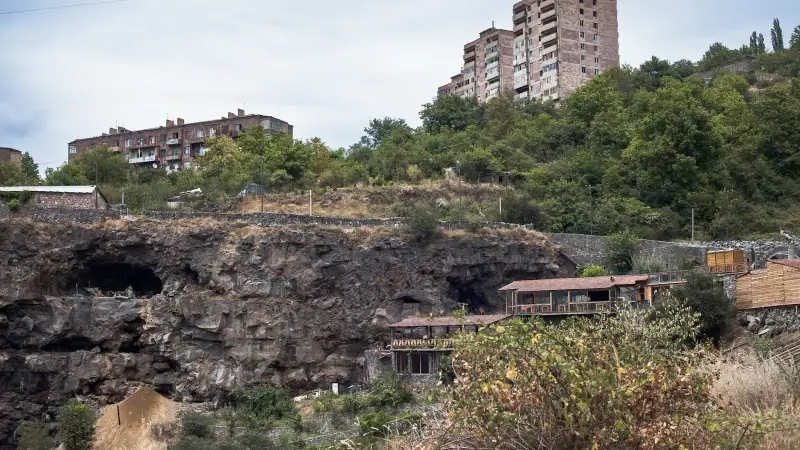
This is the town’s most emblematic site, and one of the most singular in all of Armenia. On the slopes of the old quarter (Hin Goris, “Old Goris”), dozens of volcanic tuff cones and spires were carved out by generations of residents to shelter cellars, stables, then full dwellings.
History of the caves
The first excavations date back several centuries, some to the Middle Ages. Initially used as cellars to keep food and shelter livestock in winter, these spaces were gradually enlarged and fitted out as living rooms. At the beginning of the 20th century, several hundred families still lived in these cave homes during the winter months, taking advantage of their natural thermal inertia.
The gradual move to the modern city center (built in the 19th century by the Russians) emptied the caves during the 20th century. Today most are abandoned, but some still serve as cellars or sheds for residents of the old quarter.
How to visit them
The cave houses are reached on foot from the town center, climbing toward the Hin Goris district. Allow 20-30 minutes’ walk from the central square. Access is free and open. Trails (sometimes loosely marked) wind between the rock formations.
Practical tips:
- Wear walking shoes, as the terrain is uneven
- Visit early in the morning or late in the afternoon for the golden light on the rock formations
- Some caves can be explored inside (a flashlight is useful)
- Respect private property, as some areas still belong to residents
The late-day light
Photographers already know: Goris’ cave formations captured at sunset, when the orange light strikes the tuff cones, produce exceptional images. Allow at least an hour before sunset for this walk.
Guided excursions in Syunik
Hikes and guided visits to Tatev, Khndzoresk and the Zangezur gorges.
Tatev monastery and the tramway
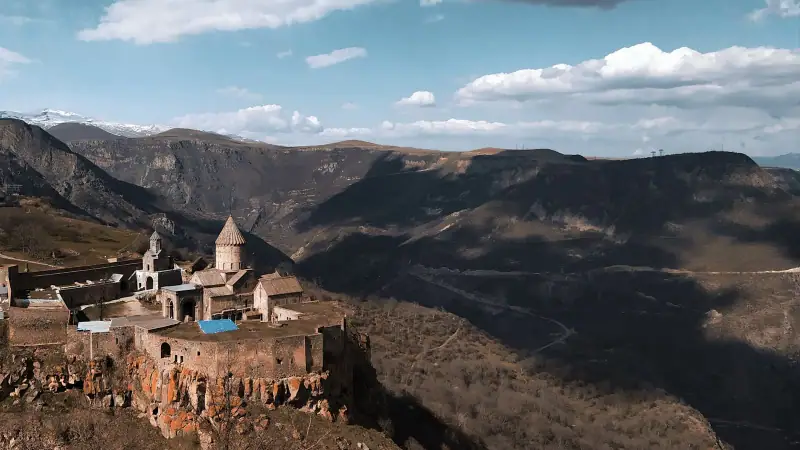
You can’t talk about Goris without mentioning Tatev. Tatev monastery (9th-10th century) is one of the most impressive monastic complexes in the Caucasus, perched on a rocky spur 850 meters (2,789 ft) above the Vorotan river gorge. And to reach it from the village of Halidzor, Armenians built the longest continuously operating tramway in the world: 5.7 km (3.5 mi), a 12-minute crossing through the air, with a breathtaking view.
From Goris, the tramway departure (Wings of Tatev) is 23 km (14 mi) away. By car or taxi, allow 30 to 40 minutes. The tramway runs all year except occasional maintenance. The monastery itself deserves several hours of exploration: the 9th-century main church, the seismic pendulum tower (a masterpiece of medieval engineering), the conventual buildings and the panoramas over the gorge.
For all the practical details (hours, prices, what to see), see our complete guide to the Tatev tramway and monastery.
Khndzoresk: the hanging village
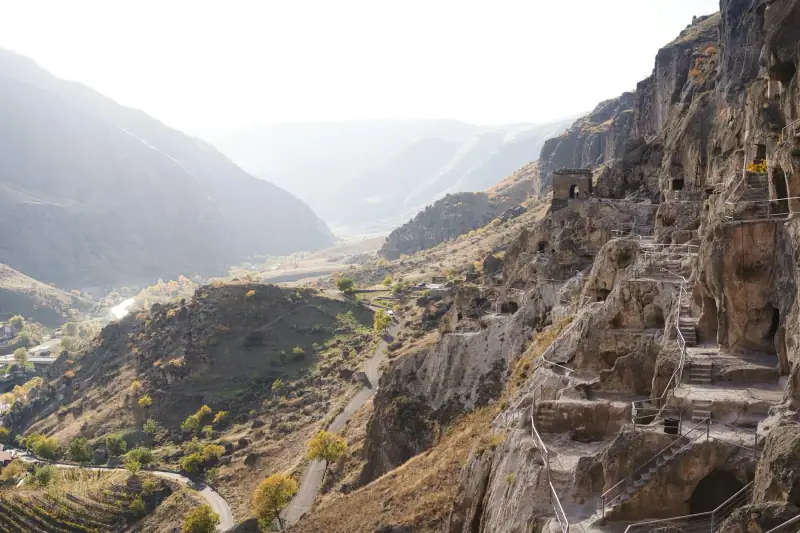
About 13 km (8 mi) from Goris, the village of Khndzoresk is another wonder of Syunik that deserves half a day. Clinging to vertiginous cliffs, this cave village was still inhabited by several hundred families until the 1950s. Today the caves are empty, but a 160-meter (525 ft) suspension bridge crosses the canyon and gives access to the old dwellings from the modern village.
Practical information:
- Access by car from Goris: 15-20 minutes
- Free admission
- Visit time: 1 h 30 to 2 h
- Best season: spring and fall for the vegetation
- Beware of the suspension bridge: it sways! People prone to vertigo should be careful
The combination of Goris (cave houses) + Khndzoresk (hanging village) + Tatev (monastery) makes one of the strongest 2-day circuits in all of Armenia. If you have one more morning, the megalithic site of Zorats Karer is about 35 minutes away by road: hours, prices and access in our guide to Zorats Karer (Karahunj) from Goris.
Hikes and nature around Goris
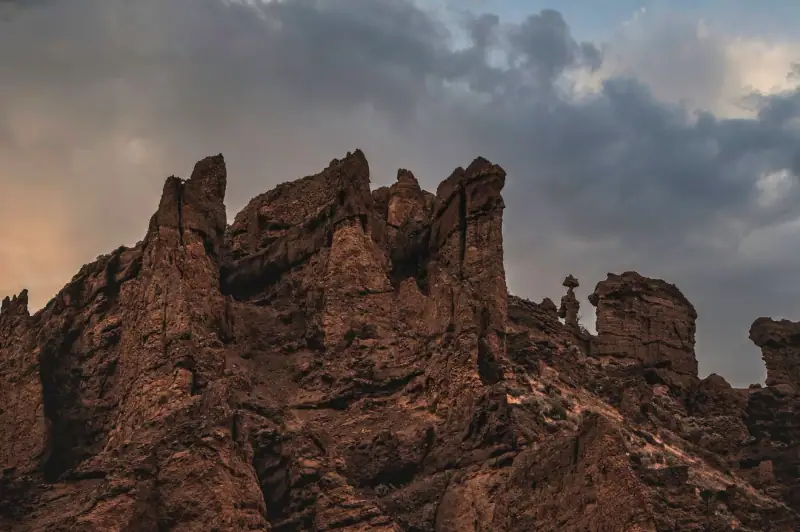
The Syunik region offers some of the wildest hikes in Armenia, in volcanic landscapes that low tourist numbers have left almost untouched.
The Vorotan gorges
Over the millennia the Vorotan river has carved gorges 800-850 meters (2,625-2,790 ft) deep into the Syunik basalt plateau, the largest gorge in Armenia. Several trails run along these gorges, with vertiginous views. The path to Tatev partly follows these gorges, and is doable on foot for experienced hikers (20-25 km / 12-16 mi from Goris to the monastery, a full day).
The Vorotnavank canyon
12 km (7.5 mi) from Goris, a small 10th-11th century monastery (Vorotnavank), with its main church Surb Stepanos dating from 1000, is perched in a narrow canyon. The approach hike from the main road takes 1 hour round trip on a well-marked trail. A little-visited site, mysterious atmosphere guaranteed.
The Syunik plateaus
Above Goris, the basalt plateaus peak at 2,000-2,500 meters (6,560-8,200 ft). Hikes of 2 to 6 hours reach these near-desert expanses dotted with glacial lakes. A local guide is recommended for routes off marked trails.
Tip: The local tourism agency Goris Tourism Center (central office, near the town hall) can recommend guides for hikes.
Food in Goris
Goris cuisine is authentic Armenian mountain food: generous, unfussy, at very accessible prices. For a complete introduction to national specialties, read our guide to Armenian cuisine.
The essentials in Goris
Khorovats (Armenian barbecue): Syunik lamb is renowned across the country for its quality. Several Goris restaurants offer khorovats prepared over charcoal. It is the essential dish.
Zhingalov hats: Flatbread stuffed with about fifteen finely chopped local wild herbs. This specialty originating from Karabakh is everywhere in Syunik. Enjoy it hot, straight from the oven.
Cabbage dolma: Cabbage leaves stuffed with rice and ground meat, simmered in a slightly sweet-and-sour broth. The Goris version is renowned throughout the region.
Local matsoun: Armenian fermented yogurt, produced locally from the milk of cows grazing on the surrounding plateaus, has an incomparable texture and tang.
Syunik apricots and walnuts: The region produces excellent dried apricots and walnuts in quantity. Local markets overflow with them in summer and fall.
Where to eat in Goris
Most good restaurants are concentrated in the town center, around the main street (Mashtots Avenue). Guesthouses often serve home-cooked meals by reservation, often the best tables in town. Expect 2,000-4,000 AMD for a full meal with drinks. Prices are much lower than in Yerevan.
Car rental in Armenia
Exploring Syunik and its gorges by car is hard to beat, with total freedom for Tatev, Khndzoresk and the plateaus.
Where to stay in Goris
Family guesthouses (recommended)
The typical lodging in Goris is the family guesthouse: a few rooms in a private home, breakfast included and evening meals often offered. The welcome is warm, prices modest (4,000-8,000 AMD per person per night) and the immersion in local life complete.
Several guesthouses are in the old quarter, with views of the cave formations. Book ahead in July-August and during Armenian holidays.
Hotels (moderate to good comfort)
Goris has a few hotels of decent standing, generally modern and well kept. Rates run between €25 and €60 a night (about $29-70) for a double room, depending on the comfort level. The Mirhav and Old Goris hotels are often well rated by travelers.
Camping and bivouac
For self-sufficient hikers, camping is possible around Goris, notably on the plateaus. There is no developed campground as such; guesthouse lodging remains the most comfortable and best integrated solution.
Practical information
When to go to Goris
| Season | Conditions | Who for |
|---|---|---|
| May-June | Flowering spring, ideal temperature | Hikers, cultural visitors |
| July-August | Hot (~20-28 °C / 68-82 °F), Tatev tramway very busy | Families, all audiences |
| September-October | Sumptuous fall colors, calm returns | Photographers, hikers |
| November-March | Cold (sometimes -5 °C / 23 °F at night), snow possible at altitude | Intrepid travelers, winter landscapes |
Budget to plan in Goris
- Lodging: 4,000-12,000 AMD per person per night (guesthouse to hotel)
- Meals: 1,500-4,000 AMD per meal
- Tatev tramway (round trip): 2,500-3,000 AMD
- Khndzoresk admission: Free
- Car rental (from Yerevan): €30-60 a day (about $35-70) depending on the vehicle
Money and services
The Armenian dram (AMD) is the local currency. 1 EUR ≈ 430-450 AMD. Goris has several ATMs in the center. Card payments are accepted in hotels, more rarely in restaurants. Bring cash for guesthouses and small shops.
Connectivity
Mobile coverage (Beeline, VivaCell, Ucom) is good in the town center. In the mountains and the gorges, it may be absent. Wi-fi is available in all hotels and most guesthouses. Check your carrier’s international plan, or consider a travel eSIM or a local SIM card.
Safety and geographic situation
The Syunik region is close to sensitive borders (Azerbaijan, the Lachin corridor). Since 2023, the situation has evolved after the events in Karabakh. Before you go, check the official travel advice of your government: travel.state.gov (US), GOV.UK (UK), travel.gc.ca (Canada), Smartraveller (Australia) (checked November 2026). The town of Goris itself is safe and welcoming for tourists.
Flights to Yerevan (Zvartnots)
Zvartnots International Airport is the main gateway to Armenia and the south of the country.
Suggested itinerary: 3 days in Goris and Syunik
Day 1: Arrival and old quarter
- Morning: leave Yerevan by car (3 h 30 to 4 h), stop in Sisian for lunch
- Afternoon: settle in, stroll through Goris’ old quarter and the cave houses
- Evening: khorovats dinner in a local restaurant, sunset over the rock formations
Day 2: Tatev and the gorges
- Morning (9 am): drive to Halidzor (30 min), tramway to Tatev
- Late morning: visit Tatev monastery (2-3 h), panoramas over the Vorotan gorge
- Afternoon: return, stop in Tatev village, hike in the gorges
- Evening: back to Goris, zhingalov hats dinner
Day 3: Khndzoresk and departure
- Morning: excursion to Khndzoresk (8 km / 5 mi), suspension bridge and abandoned caves
- Midday: Goris market, shopping for local products (dried apricots, walnuts, Syunik brandy)
- Afternoon: drive to Yerevan or to Jermuk (87 km / 54 mi, about 1 h 30 to 2 h)
To fit Goris into a full circuit, our Armenia road trip and 7-day itinerary will guide you step by step.
Goris is one of those towns that do not try to seduce, and which, for precisely that reason, leave an indelible mark. Its caves dug into volcanic tuff, its vertiginous gorges, its Tatev monastery reached from the clouds, and the unforced hospitality of its residents make up an experience of rare authenticity. In a country already off the beaten track, Goris is a notch further, and that is all its charm.
Frequently asked questions
What is there to do in Goris?
In Goris you can visit its famous cave houses carved into the rocks, set off for Tatev monastery (via the Wings of Tatev tramway), explore the Zangezur gorges and hike in a striking volcanic landscape. It is also an excellent base camp for the Syunik region.
How do you get to Goris from Yerevan?
The road from Yerevan is about 250 km (155 mi), 3 h 30 to 4 h by car via the M2 highway through Yeghegnadzor and Sisian. Shared minibuses (marshrutky) leave the Kilikia bus station in Yerevan, with 2 to 3 departures a day (4-5 h, about 2,500-3,000 AMD).
How long should you spend in Goris?
Plan at least 2 nights in Goris to explore the cave houses, visit Tatev and enjoy the surroundings. With 3 nights, you can add hikes in the Zangezur gorges, Khndzoresk and an excursion to Shaki or Khndzoresk.
What are the cave houses of Goris?
They are semi-rock dwellings carved into the volcanic tuff cones surrounding Goris' old quarter. Inhabited until the middle of the 20th century, they served as cellars, stables, then main homes in winter. Some can still be visited from the old quarter's trails.
Can you visit Tatev monastery from Goris?
Yes. The Wings of Tatev tramway starts from the village of Halidzor, 23 km (14 mi) from Goris, and descends to the monastery in 12 minutes. It is the most spectacular way to reach Tatev. With your own car or a taxi from Goris, allow 30 to 40 minutes to the tramway departure.
What is the best time to visit Goris?
Spring (May-June) and fall (September-October) are the best seasons: mild temperatures, colorful landscapes and reasonable tourist numbers. Summer (July-August) is hot but pleasant at altitude. Winter can be harsh and some mountain roads close in case of snow.
More Armenia guides
Keep reading
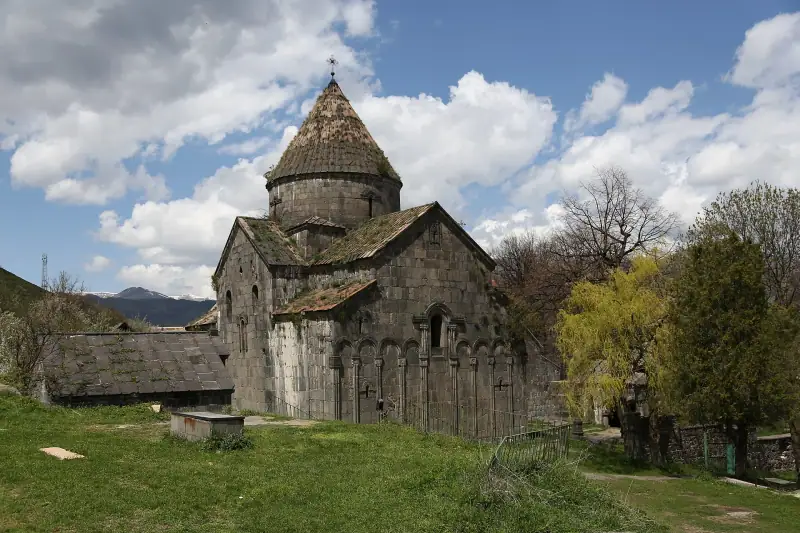
Haghpat and Sanahin without a car: getting there from Yerevan, schedules and is it worth the detour
Haghpat and Sanahin from Yerevan without a car: marshrutka via Alaverdi, schedules to check, 11 km trail between the monasteries and visit time.
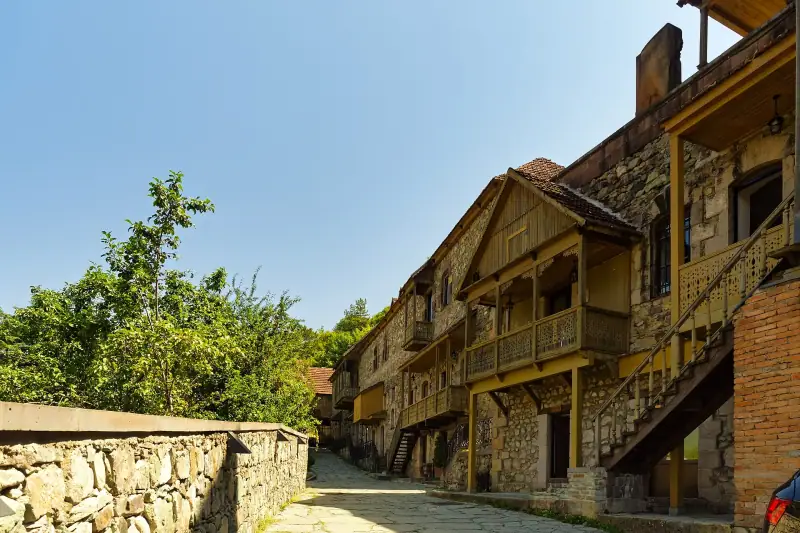
Visiting Dilijan: complete guide to Armenia's forest town
Everything for visiting Dilijan: old town, Haghartsin and Goshavank monasteries, national park, Lake Parz, hikes and lodging in the Armenian forest.
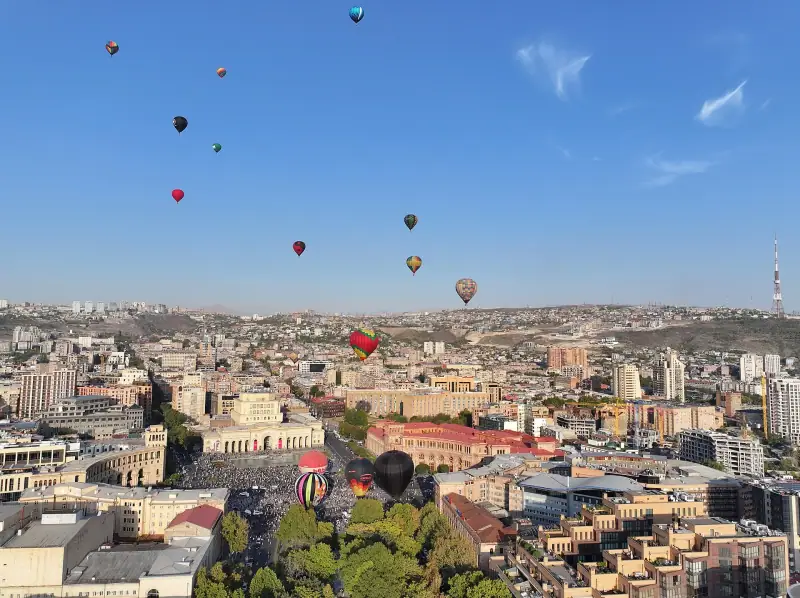
Yerevan's top sights: 15 things to see and do in the capital
Yerevan's highlights: Republic Square, the Cascade, Genocide Museum, Matenadaran, markets. A practical guide to the Pink City's top sights.
Ready-made
Armenia itineraries
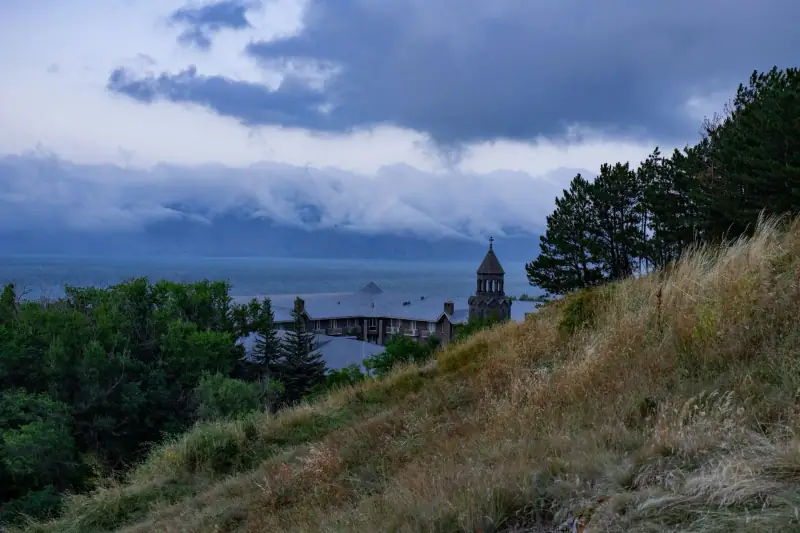
4 days
Northern Armenia: a guide to the Dilijan and Lake Sevan region
Discover northern Armenia: Dilijan's forests, high-altitude Lake Sevan, Haghartsin and Goshavank monasteries, hikes and nature. A 3-4 day itinerary.
10 days
Armenia road trip: a 10 to 14-day driving itinerary
YerevanDilijanAlaverdi or a Debed Valley guesthouseGyumriYerevanJermukSisian or GorisYerevan
5 days