Things to do
Hiking Aconcagua without an agency: permits, prices and difficulty
We may earn a commission when you book through links on this page, at no extra cost to you. We don't visit or try the places we cover: we summarize published sources. How we work
In short
- Three levels of outing: walk to Laguna Horcones, trek to Confluencia and Plaza Francia, long trek to Plaza de Mulas.
- A park permit is required as soon as you go beyond the short walk; for the 2026-2027 season, the long Horcones trek was announced at $450 for a foreigner.
- The season runs roughly from November to March; the park requires insurance covering search, rescue, evacuation and medical assistance.
- From Mendoza, allow about three hours by road to the Horcones valley entrance.
Aconcagua, which reaches nearly 7,000 m (22,970 ft), is the highest peak in the Americas. Good news: you do not need to be a mountaineer to get close to it. Marked trails lead to the foot of the south face and the north face, and many hikers walk them alone. You just need to decide which route to take, which permit to buy and when to go.
In short:
- Three levels of outing: walk to Laguna Horcones, trek to Confluencia and Plaza Francia, long trek to Plaza de Mulas
- A park permit is required as soon as you go beyond the short walk
- The season runs roughly from November to March
- Altitude is the real danger, much more than technical difficulty
Aconcagua Provincial Park: what to know
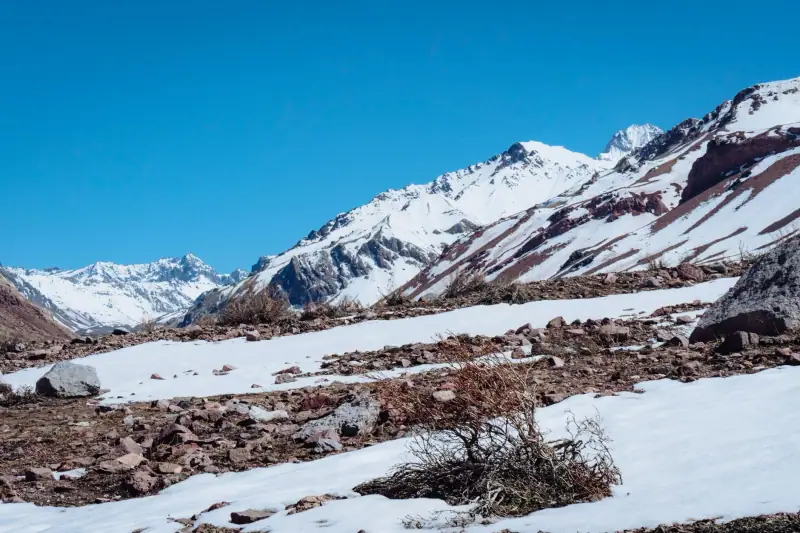
Aconcagua Provincial Park is in Mendoza Province, along the road that climbs toward Chile. From the city of Mendoza, allow about three hours by road to reach the entrance of the Horcones valley. The park is open during the day, so enter early enough to avoid walking at nightfall.
Park management is entrusted to operators under the authority of the province. Rules, rates and purchase methods change from one season to another: the park recently introduced advance online permit sales. Treat the prices in this article as orders of magnitude, to confirm before buying.
Three possible outings, without going through an agency
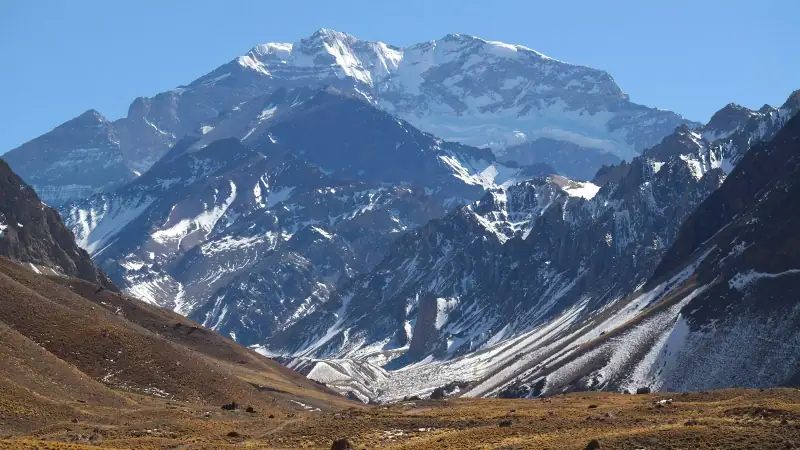
The walk to Laguna Horcones
This is the simplest option: a short walk of low difficulty, at about 2,950 m (9,680 ft) of altitude. It offers a first view of Aconcagua’s south face and a small lagoon, with no real physical effort. The entrance fee is modest. It works well for half a day from Mendoza or when traveling with family.
The trek to Confluencia and Plaza Francia
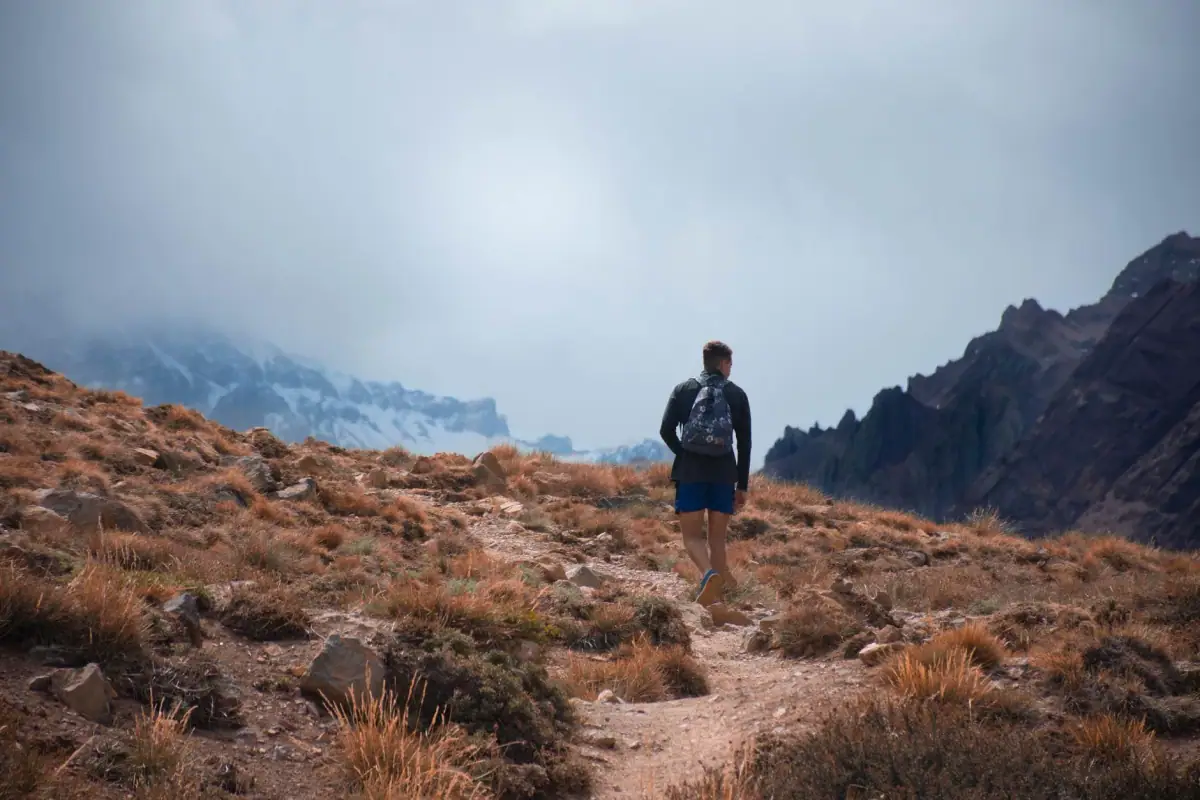
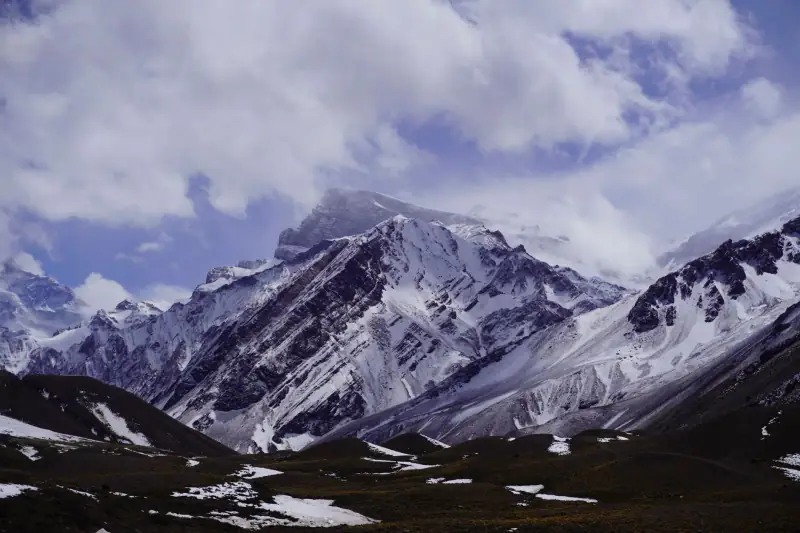
The trail goes up the Horcones valley to the Confluencia camp, at about 3,400 m (11,150 ft). Allow three to six hours depending on your pace. The next day, a round trip to Plaza Francia, at the foot of the impressive south face, takes about five hours of walking. Many hikers do this route in three or four days, with nights in a tent or in a refuge at the camp.
The trail is well marked and the slope regular, but altitude makes the difference. Cold, wind and dry air wear you out quickly, even when you are in good shape.
The long trek to Plaza de Mulas
To go farther, you continue from Confluencia to Plaza de Mulas, the main base camp, at about 4,300 m (14,110 ft). The full trek lasts about a week. It requires good physical condition, mountain gear and real experience of walking at altitude. For the 2026-2027 season, the long trek via Horcones was announced at $450 for foreigners, versus 130,000 pesos for Argentines: the gap shows how much rates differ by nationality.
A base before heading up?
Compare lodging in Mendoza, to leave early and recover on your return.
Permits, prices and booking
The permit is required for treks of several days. Here are the benchmarks to keep in mind:
- Walk to Laguna Horcones: modest entrance fee, payable at the entrance
- Long trek via Horcones: $450 announced for a foreigner for the 2026-2027 season
- Summit climb via Horcones: $950 announced for a foreigner, with expedition logistics
Permits are now booked online, before the season, for a given entry date. A purchase is not refundable, and a named permit is not transferable. An unused permit can, however, be carried over to a following season, as long as you provide new insurance.
For an overall trip budget, see our guide to the budget in Argentina and plan a margin for price increases, which are frequent in the country.
Insurance: the point that blocks many travelers
The park requires insurance covering search, rescue, evacuation and medical assistance up to 5,500 m (18,040 ft). Many standard policies do not include high mountain, or even exclude it. Before buying your permit, read the conditions: look for the mention of a maximum altitude and of trekking.
When to go: the park season
Aconcagua is hiked during the austral summer. The official season runs roughly from November to March:
- November: conditions still cool, possible snow at altitude, few people
- December to February: midsummer, best conditions, but maximum attendance
- March: the cold returns, it is quieter, and the weather is less predictable
Outside these months, the park is closed to hikers: snow, wind and very low temperatures make the trails dangerous. To place this trek in your trip, see our guide when to go to Argentina.
Altitude and preparation: what makes the real difficulty
On these trails, technique is not an obstacle. Altitude is the limit. Ask your doctor or a travel clinic, and see the official travel health pages (CDC in the US, TravelHealthPro in the UK). Mendoza is at about 750 m (2,460 ft). A few simple practical rules:
- Start early, as winds often rise in the afternoon
- Check the weather and park conditions before setting out
- Keep enough water and food for the length of the trek
For gear, plan warm, windproof layers, well broken-in boots, a hat, gloves, sunglasses, high-SPF sunscreen and something to cover up with at night in camp.
How to get there from Mendoza
Several options exist, from the cheapest to the most comfortable:
- Regular bus to Uspallata or Puente del Inca, then a stop at the park entrance: cheap but not very flexible
- Rental car: the road is beautiful and lets you stop at viewpoints, but you must anticipate a possible closure of the pass in case of snow
- Day excursion: practical if you have no vehicle and only want to see Aconcagua
Day excursions often cost barely more than independent travel, especially when you travel alone.
A day excursion to Aconcagua?
Guided outings to the high cordillera from Mendoza, transport included.
When an agency is really worth it
Hiking alone to Confluencia is entirely doable. An agency becomes useful in three cases: you want the long trek to Plaza de Mulas without carrying your gear, you have never walked above 3,000 m (9,840 ft), or you prefer someone to handle the permit, transport and meals. Agencies also offer mules to carry bags.
If you simply want to see Aconcagua and then taste a good malbec, combine a day excursion with a stay in Mendoza: our guide to Mendoza and its vineyards will help you organize the rest.
Where to stay before and after the trek
Staying in Mendoza is the simplest choice: wide choice of hotels, restaurants and services. To limit travel, Uspallata or Potrerillos are closer to the mountain. Our article where to stay in Mendoza details the neighborhoods and zones to favor by budget.
Staying near the mountain?
Lodging in Uspallata, Potrerillos or town, for a stop before or after the trek.
A sample three-day itinerary
- Day 1: Mendoza – Uspallata, night there, scouting walk
- Day 2: park entrance at Horcones, walk to Confluencia, night there
- Day 3: round trip to Plaza Francia, then back to the park entrance and Mendoza
This program leaves little margin. If time allows, add a reserve day: weather at altitude can force you to shift your departure.
Mistakes to avoid
A few mistakes recur among hikers who prepare this trek on their own, and almost all can be fixed before departure. Here are the main ones, to reread the day before you leave.
- Buying your permit without checking the dates and the season’s conditions
- Leaving without insurance covering altitude
- Underestimating the altitude
- Arriving late at the park entrance
- Carrying too little water and food for the length of the trek
With these points in mind, both the walk to Laguna Horcones and the trek to Confluencia remain very accessible to anyone who has prepared a little.
Frequently asked questions
Can you hike Aconcagua without an agency or guide?
Yes, for the walk to Laguna Horcones and the trek to Confluencia, the trails are marked and open to independent hikers with the park permit. Climbing the summit, however, is mountaineering and requires very different preparation.
How much does the Aconcagua trekking permit cost?
For the 2026-2027 season, the rates announced for the long trek via Horcones were $450 for a foreigner. The simple walk to Laguna Horcones is much cheaper. Rates change each season: check with the park before you go.
What is the best time to hike Aconcagua?
The park season corresponds to the austral summer, roughly November to March. December to February offers the best conditions, but also the highest attendance. Out of season, snow and cold make the trails dangerous.
How high is Confluencia?
Confluencia is at around 3,400 m (11,150 ft). Ask your doctor or a travel clinic about high altitude before you go, and see the official travel health pages (CDC in the US, TravelHealthPro in the UK).
Is insurance mandatory?
The park requires insurance covering search, rescue, evacuation and medical assistance at altitude. Check that your policy explicitly mentions high-mountain hiking, as many standard policies exclude it.
Can you do Laguna Horcones with children?
Yes, it is a short and easy walk, accessible to families. The trek to Confluencia is however too long and too high for young children.
More Argentina guides
Keep reading
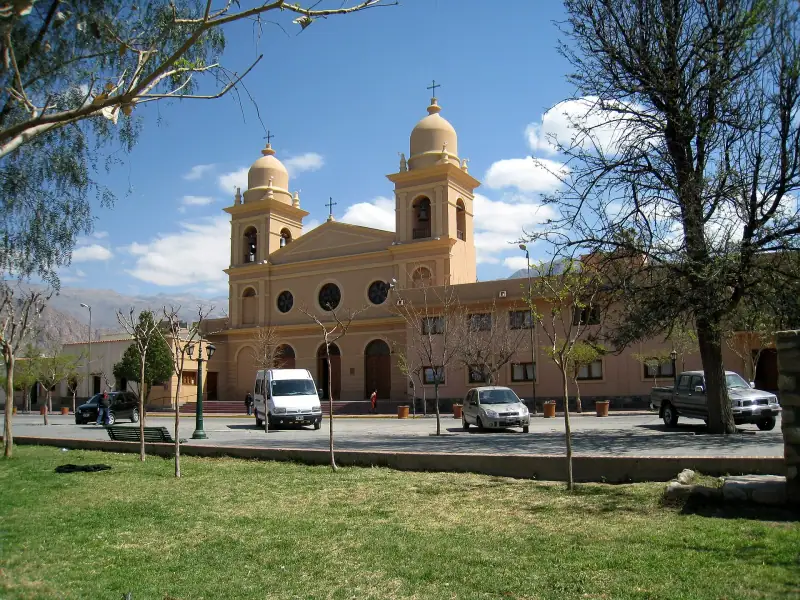
Cafayate without a car: bus, excursion or bike to see the wineries and the Quebrada de las Conchas
Getting to Cafayate without renting a car: bus from Salta, day excursion or a night in town, wineries on foot or by bike. What to choose and how to book.
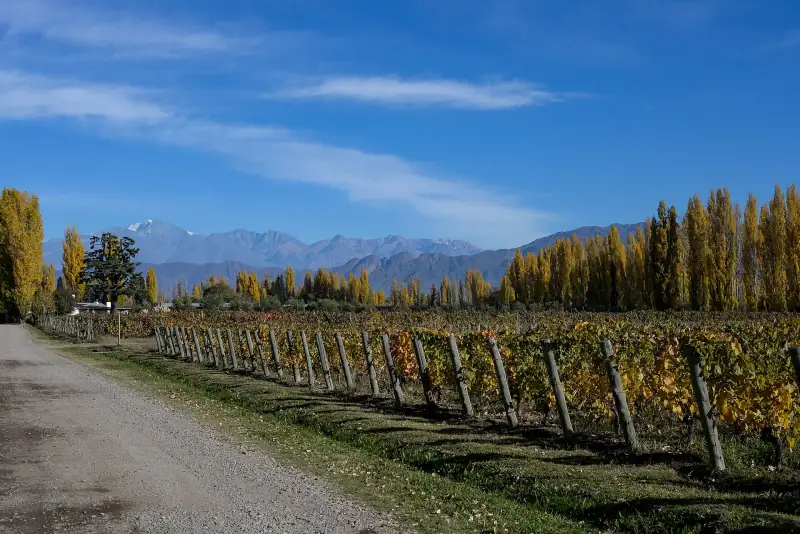
Visiting Mendoza and its vineyards: a guide to a successful wine route
Luján de Cuyo, Uco Valley, Maipú: how to plan your stay in Mendoza, choose wineries, taste malbec, get around and enjoy the Andes.
Argentina budget: real costs by item and 3 travel profiles
What budget for Argentina? Real costs by item (lodging, transport, meals, activities), three profiles priced per day and tips to spend less.
Ready-made
Argentina itineraries
14 days
Argentina in 2 weeks: Buenos Aires, Iguazú, Salta and Mendoza
Buenos AiresPuerto IguazúSaltaMendoza
22 days
Argentina in 3 weeks: Buenos Aires, Iguazú, Northwest, Mendoza, Córdoba and Valdés
Buenos AiresPuerto IguazúSalta and the NorthwestMendozaCórdobaPuerto MadrynBuenos Aires
8 days
Northwest Argentina road trip: Salta, Cafayate, Cachi and Humahuaca in 8 days
SaltaCafayateCachiSaltaPurmamarcaTilcara