Where to stay
Where to Stay in Michamvi: Best Places to Sleep on the Peninsula
We may earn a commission when you book through links on this page, at no extra cost to you. We don't visit or try the places we cover: we summarize published sources. How we work
In short
- Michamvi has limited but good lodging: family guesthouses (€20-60, about $23-70), boutique lodges (€80-200) and eco-lodges (€100-250) by the lagoon.
- Book 2 to 3 months ahead for July-August and December-January; the peninsula has very few rooms.
- There is no ATM on the peninsula. Bring USD or Tanzanian shillings for 3 to 5 days.
- Prices run 20 to 30% below Nungwi. Choose Paje instead if kitesurfing or nightlife matters more.
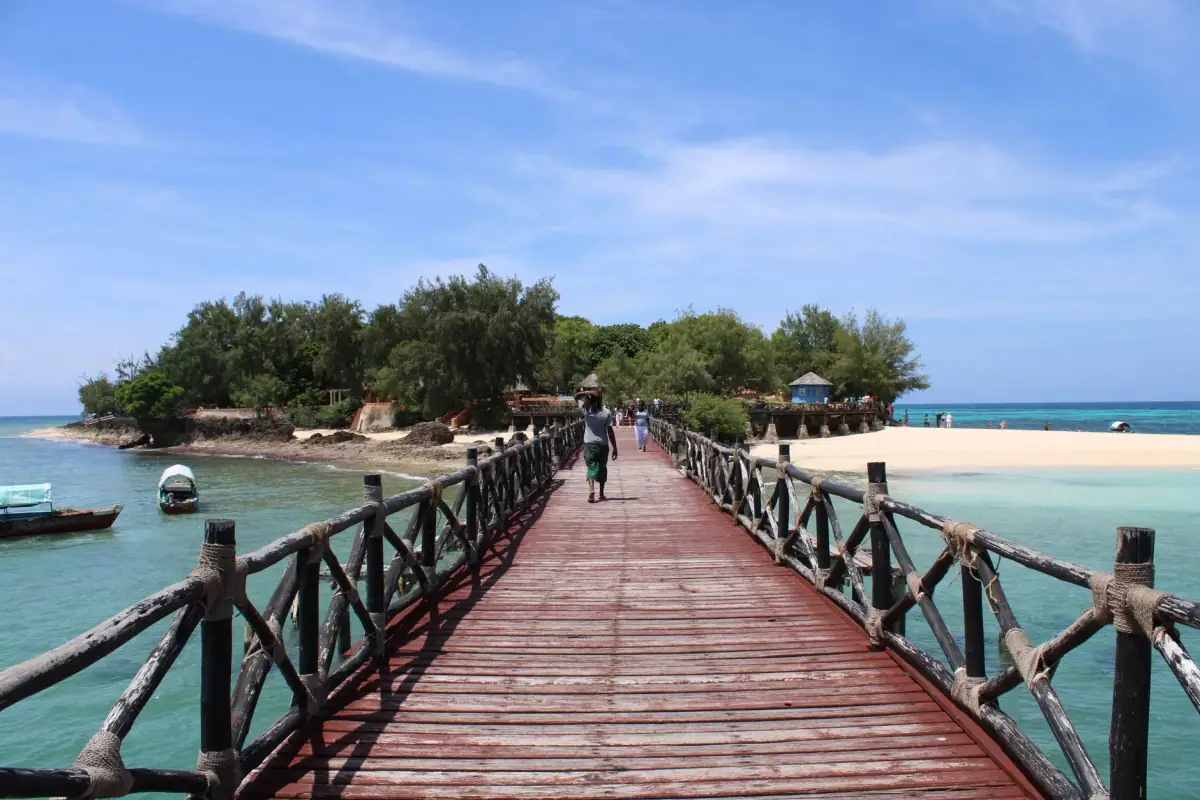
Michamvi is one of the few peninsulas in Zanzibar where tourist development stopped at a comfortable distance. Tucked at the tip of a spit of land between Chwaka Bay and the Indian Ocean, about 65 km (40 mi) southeast of Stone Town, this preserved peninsula offers what the island’s big resort areas can no longer really promise: empty beaches, an untouched turquoise lagoon, and Swahili village life that keeps its own rhythm, indifferent to mass-tourism trends.
Choosing where to sleep in Michamvi commits you to a particular style of travel. It is not about finding the best value in an area packed with hotels. It is about finding the place that lets you blend into the landscape, live by the tides and go home feeling you discovered something few people really know.
This guide covers the types of lodging available in Michamvi, the areas of the peninsula, the essential practical tips, and everything you need to know to pick your base on this preserved east coast.
Types of lodging in Michamvi
Michamvi’s hotel scene is deliberately modest. There are no international chains and no resorts with hundreds of rooms. The peninsula has managed (or been lucky enough) to escape the overdevelopment that transformed other Zanzibar beaches. What you will find is often authentic and has a location that is hard to match elsewhere.
Family guesthouses (€20 to 60 per night, about $23-70)
Several families on the peninsula rent rooms in Swahili-style buildings: stone or brick walls, wooden shutters, tin or coconut-leaf roofs. The atmosphere is family-run in the literal sense. You share daily life with your hosts, meals are cooked at home from whatever the market or the sea provided that day, and the family’s children greet you in the morning with a heartfelt “Jambo!”
What you get:
- Simple room with mosquito net and fan (air conditioning is less common at this price)
- Private or shared bathroom depending on the place
- Breakfasts of chapati, eggs, tropical fruit and chai
- Beach access, often less than a 5-minute walk away
- Direct, warm contact with local life on the peninsula
Best for: Solo travelers looking for immersion, backpackers curious about Swahili life, tight budgets that do not want to give up authenticity.
Charming boutique lodges (€80 to 200 per night, about $93-230)
This category best defines Michamvi’s hotel identity. These small places, generally 6 to 20 bungalows, were built with care on the peninsula, often by local operators or expats who know the area well. Bungalows of local stone, coconut wood or with makuti roofs (woven coconut-leaf thatch) blend into the tropical vegetation rather than dominating it.
What you get:
- Individual bungalow with a private terrace facing the lagoon or the ocean
- Air conditioning and ceiling fan
- Beach restaurant serving fresh seafood, Swahili cooking and a few international dishes
- Direct beach access with sun loungers and lounge furniture
- Sometimes a small natural or infinity pool
- Local staff and attentive service
Best for: Romantic couples, families who want comfort and calm, repeat visitors to Zanzibar looking for something different from Nungwi or Paje.
Lodging in Michamvi
Compare and book the best lagoon-side lodges and guesthouses in Michamvi, Zanzibar.
Eco-lodges (€100 to 250 per night, about $115-290)
A few Michamvi properties have adopted a genuine ecotourism approach, in response to the obvious fragility of the peninsula’s ecosystems: coral reef, the mangroves of Chwaka Bay, seagrass beds. These places generally run on solar power, collect rainwater, manage their waste locally, hire only people from the peninsula and enforce strict rules on driving near the reef.
What you get:
- Bungalow or charming villa with bioclimatic design (natural shade, optimized ventilation)
- Cooking built on local producers: fish from Michamvi fishermen, vegetables from village gardens, Zanzibar spices
- A program of responsible activities (snorkeling with a naturalist guide, mangrove kayaking, meeting farmers)
- Certification or partnership with local marine wildlife protection groups
- A stay that contributes directly to the peninsula’s economy
Best for: Travelers mindful of tourism’s impact, families who want to pass on respect for nature, couples looking for a romantic stay with an ethical dimension.
Which area of Michamvi to stay in
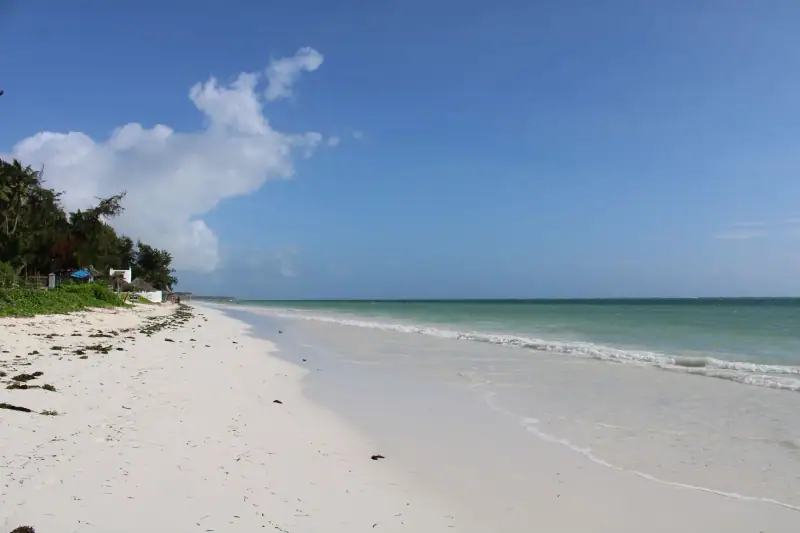
The Michamvi peninsula is a strip of land surrounded by water on three sides, which creates very different exposures depending on the area. Where you stay really shapes your daily experience.
The lagoon side (west coast of the peninsula)
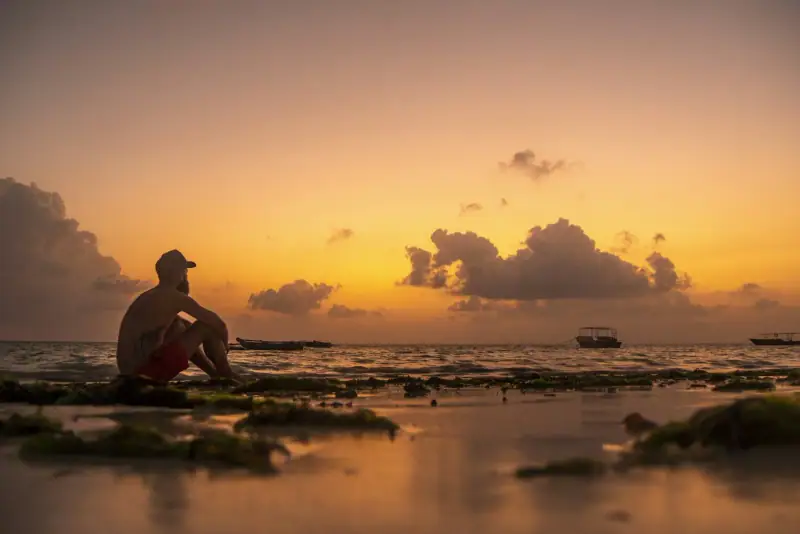
The side facing the inner lagoon has calmer water, a horizon of coconut groves and fishing dhows, and spectacular sunrises over the water. At high tide, the lagoon is a turquoise natural pool of exceptional gentleness. At low tide, the reef flat is exposed, but the natural pools that form in the coral make a fascinating place to explore for children and adults alike.
Who it suits: Families with young children (very calm water), travelers who want easy swimming at high tide, fans of sunrise photos over the water.
The tip of the peninsula
At the far end of Michamvi, a few places have a 180° view of the Indian Ocean. It is the most spectacular spot but also the most exposed to wind and swell. Swimming can be harder depending on the season and conditions. On the other hand, the feeling of being at the end of the world, with the ocean on every side, is unmatched.
Who it suits: Travelers seeking the absolute, photographers, people who want the most isolated beach possible.
The heart of the peninsula, village side
Set back from the beach but closer to Michamvi village, this area allows a more authentic immersion in everyday life on the peninsula. You hear the muezzin at sunrise, you see fishermen hauling in their nets, and you can buy fruit directly from residents.
Who it suits: Travelers looking for cultural immersion, solo travelers who want to meet locals rather than other tourists.
Car rental in Zanzibar
Reach Michamvi on your own schedule with a 4x4 or a car from Zanzibar airport.
When to book and when to come
High season: July-August and December-January
These are the most popular periods along the whole east coast of Zanzibar. In July-August, the dry Kusi season is in full swing: blue skies, mild temperatures (25 to 28 °C / 77 to 82 °F), clear sea and excellent underwater visibility. In December-January, year-end holidays and honeymoons push demand even higher. In Michamvi, where total lodging capacity is particularly small, the most popular places are sometimes full as early as April or May for July-August.
Tip: Book 2 to 3 months ahead in high season, without hesitating.
Good time: September-October and February-March
The winds begin to ease after the Kusi high season (September-October) or pick up before the Kaskazi season (February-March). The sea is still beautiful, prices are slightly below high season, and crowds are lighter. Booking 4 to 6 weeks ahead is usually enough.
Low season: November and April-May
November is the short rainy season (Vuli): brief showers occur but generally do not last all day. Prices are very attractive (20 to 40% cheaper than in high season) and the village atmosphere is especially authentic. April-May, however, is the long rainy season (Masika): tropical rain can be intense, the sea gets rough, and some lodgings close or cut back. Avoid it for a beach stay.
For a full guide to the seasons, see our article on the best time to visit Zanzibar.
Practical tips for choosing your lodging in Michamvi
Check for direct beach access. Michamvi is a beach and lagoon destination. Being within walking distance of the water, ideally less than 2 minutes on foot, changes daily life radically. Places that charge for beach access, or that are more than 500 meters (1,640 ft) away, offer a less satisfying experience.
Ask about the tides. On Zanzibar’s east coast, tides can swing by 3 meters (10 ft). At low tide the lagoon partly empties and swimming is not always possible. Ask your lodging for a tide table covering your stay. Good lodges routinely give you one on arrival.
Plan ahead for transport and cash. Michamvi is isolated: no ATM on the peninsula, and local transport (bajaj, motorbike taxis) is often unavailable in the evening. Withdraw USD or TZS before arriving, and plan on at least 3 to 5 days of cash. Also arrange your transfer from Stone Town or Paje with your lodging before you arrive.
Choose lodging with a restaurant. Dining options outside the lodges are limited to a few village eateries. If you arrive late or have young children, a place with an on-site restaurant is strongly recommended.
Read recent reviews. Tourism in Michamvi is changing slightly. Places open, close or change in quality. Reviews from the last 6 to 12 months are more reliable than descriptions in travel guides published several years ago.
Ask whether snorkeling is accessible from the beach. Some parts of Michamvi allow you to snorkel straight from the shore at high tide, others do not. If it is a priority, check with the lodging that its stretch of beach is suitable for snorkeling from shore. For the best conditions, see our guide to snorkeling in Zanzibar.
Activities and excursions from Michamvi
Snorkeling, mangrove kayaking, spice safari, Stone Town excursions: book your activities from the east coast.
Eating from your lodging in Michamvi
One of Michamvi’s particularities is that food is almost entirely tied to your lodging. This is not a gap. It comes from the peninsula’s relative isolation and its roots in village life.
The catch of the day. Each morning, the dhows of Michamvi’s fishermen come back with their catch: snapper, grouper, barracuda, octopus. Lodge cooks buy directly on the beach and cook whatever the sea gave that day. This very short supply chain guarantees freshness that is hard to find elsewhere. Dishes are charcoal-grilled, cooked in spicy coconut curry, or simply served with lemon, cilantro and a few Zanzibar spices.
Home-cooked Swahili food. In family guesthouses, meals resemble what the family eats itself: white rice scented with local spices, lentils in sauce, soft chapati, fried plantains, garden vegetables. It is simple, filling and genuinely good. These meals are often included in the room price or offered at a very affordable rate.
Tropical fruit. Street vendors sometimes pass along the beach or by lodgings with mangoes, papayas and fresh coconuts. Make the most of it: Zanzibar fruit, picked ripe, tastes far better than the export fruit found elsewhere. To explore the full range of Zanzibari cooking, read our guide to food in Zanzibar.
What you can do from your lodging
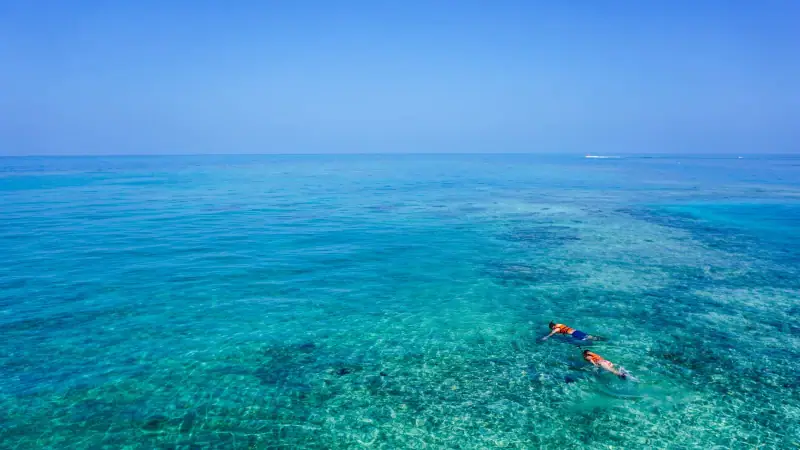
Choosing Michamvi as a base also means accepting a certain style of activity: contemplative, natural, not spectacular in the commercial sense, but lastingly memorable.
Snorkeling from the beach. At high tide, depending on your lodging’s area, you can often swim out to the reef from the beach. Marine life is varied: parrotfish, surgeonfish, juvenile groupers, starfish, and with luck green turtles grazing on the seagrass. Bring your own mask and fins, since rental gear in Michamvi is rare.
Kayaking in Chwaka Bay. To the west and northwest of the peninsula, Chwaka Bay is ideal for exploring by kayak among mangrove forests. Some lodgings lend or rent kayaks. This outing shows a completely different face of Zanzibar: no tropical beach, but a lagoon ecosystem of remarkable ecological richness.
Walks through the village. Michamvi is small and can be covered entirely on foot. Follow the sand paths, watch the women drying coral, greet the children playing in front of their houses, and see the fishermen return in the morning. A local guide from the peninsula (available through your lodging for a few dollars) can enrich the visit considerably.
Excursions from Michamvi. Paje is 13-16 km (8-10 mi) to the south, an easy trip for a day of kitesurfing or a wider choice of restaurants. Stone Town is about 65 km (40 mi) to the west, ideal for a cultural day in the UNESCO-listed old town. Read our guide to the east coast of Zanzibar between Paje and Jambiani to plan your excursions from Michamvi.
Total budget for a stay in Michamvi
Here is an estimate of the daily budget in Michamvi by travel style, based on lodging for 2 people.
Budget traveler (€40 to 80 per day per person, about $46-93):
- Family guesthouse: €20-35 per night per person (~$23-41)
- Meals at the lodge restaurant or a village eatery: €5-12 per meal (~$6-14)
- Independent activities from the beach (snorkeling, kayak if included): free to a few dollars
- Bajaj transport for occasional excursions: €5-15 (~$6-17)
Mid-range traveler (€90 to 160 per day per person, about $105-185):
- Charming boutique lodge: €60-110 per night per person (~$70-130)
- Meals at the lodge restaurant: €12-25 per meal (~$14-29)
- Guided snorkeling trip by dhow: €20-40 per person (~$23-46)
- Scooter rental for an excursion to Paje or Jambiani: €15-25 per day (~$17-29)
Comfort / eco-minded traveler (€160 to 280 per day per person, about $185-325):
- Eco-lodge or upscale lodge with breakfast: €100-200 per night per person (~$115-230)
- Fine-dining dinners at the lodge: €25-45 per meal (~$29-52)
- Private guided excursions (Chwaka Bay, snorkeling, kayak): €40-80 per person (~$46-93)
- Private transfer from Stone Town or the airport: €50-70 (~$58-81), to be shared
To plan your overall budget for Zanzibar, see our article on the Zanzibar budget.
Michamvi or Paje: what is the difference for lodging?
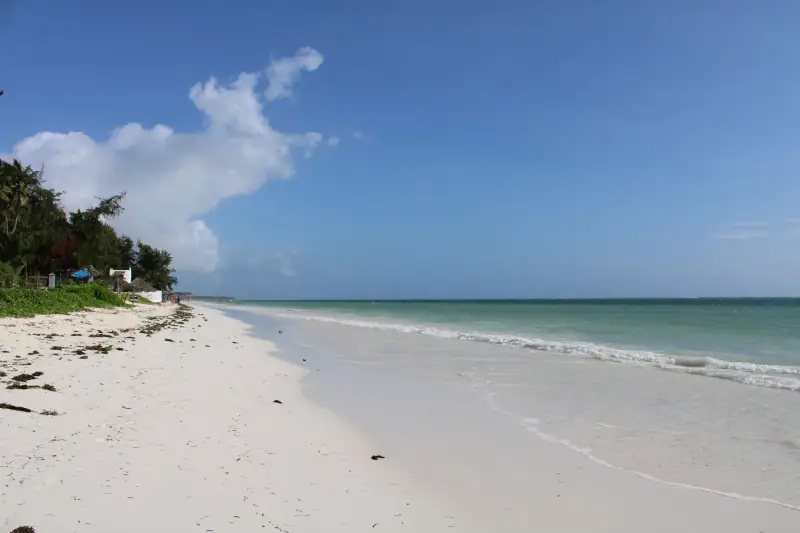
This is a question travelers planning a stay on Zanzibar’s east coast often ask. The two destinations are neighbors (13-16 km / 8-10 mi apart), but their lodging identities are very different.
| Criterion | Michamvi | Paje |
|---|---|---|
| Number of places to stay | Very limited (about 15-25) | Many more (50+) |
| Atmosphere | Calm, nature, isolated | Relaxed but livelier |
| Prices | Slightly lower for the same category | East coast standard |
| Kitesurfing | Not well suited (less steady winds) | ⭐⭐⭐⭐⭐ The best base |
| Snorkeling | ⭐⭐⭐⭐ Excellent, little-visited reef | ⭐⭐⭐⭐ Very good |
| Nightlife | Very limited | A few beach bars |
| Independent restaurants | Rare | Several |
| Local authenticity | ⭐⭐⭐⭐⭐ | ⭐⭐⭐⭐ |
Our recommendation: If kitesurfing is your main activity or you want more restaurants and activity, choose Paje. If you want the empty beach, the intact lagoon, authentic immersion and total tranquility, Michamvi is the obvious choice, and one of the most fitting on the whole east coast of Zanzibar. See also our guide to visiting Michamvi for everything the peninsula has to offer.
Michamvi is unlike any other destination in Zanzibar, and that is precisely its strength. On an island where tourism has deeply transformed some once-wild beaches, the Michamvi peninsula has kept something irreplaceable: space, silence, slowness and the dignity of a village life that has not staged itself for visitors. Choosing to sleep in Michamvi means trusting what the island offers at its most honest. The beaches are long and often empty, the lagoon is turquoise and alive, the people are warm and genuine, and the nights under the stars above the Indian Ocean are among the finest anywhere.
Frequently asked questions
Is Michamvi a good base for staying in Zanzibar?
Yes, as long as you want calm, nature and authenticity rather than nightlife. Michamvi is one of the best-preserved spots on the east coast. Lodging is limited but good, with very good local guesthouses and charming boutique lodges right on the lagoon.
How much does lodging in Michamvi cost?
Family guesthouses offer rooms for €20 to 60 (about $23-70) per night. Charming boutique lodges run €80 to 200 (about $93-230), and upscale eco-lodges €100 to 250 (about $115-290). Prices are generally 20 to 30% lower than in Nungwi, often with a better setting.
Do you need to book far in advance in Michamvi?
Yes, absolutely. The peninsula's total lodging capacity is very small. In high season (July-August and December-January), book 2 to 3 months ahead. The best places are often full several weeks before the season. Outside the peak, booking 2 to 4 weeks ahead is usually enough.
Is there an ATM in Michamvi?
No. Michamvi has no ATM. The nearest ones are in Paje (13-16 km / 8-10 mi), Jambiani or Stone Town. Withdraw USD or Tanzanian shillings (TZS) before heading to the peninsula and keep a reserve for 3 to 5 days.
How do you get from Stone Town to Michamvi?
Michamvi is about 65 km (40 mi) southeast of Stone Town. A private taxi takes 1.5 to 2 hours and costs 50 to 70 USD. From Paje (13-16 km / 8-10 mi), a bajaj or taxi takes 20 to 30 minutes for 10 to 20 USD. A daladala from Stone Town exists but involves several connections and takes more than 2.5 hours.
Is Michamvi lodging suitable for families?
Yes, boutique lodges and guesthouses with lagoon access suit families with children who can swim. At high tide the lagoon is calm and shallow. Just check that the place has extra beds and an on-site restaurant, since food options outside the lodges are limited.
Can you find last-minute lodging in Michamvi?
In low season (November, April-May) it is possible but risky: some small places close during the long rains. Outside those periods, book ahead because total capacity is small. Your host can often point you to another place on the peninsula if they are full.
More Zanzibar guides
Keep reading
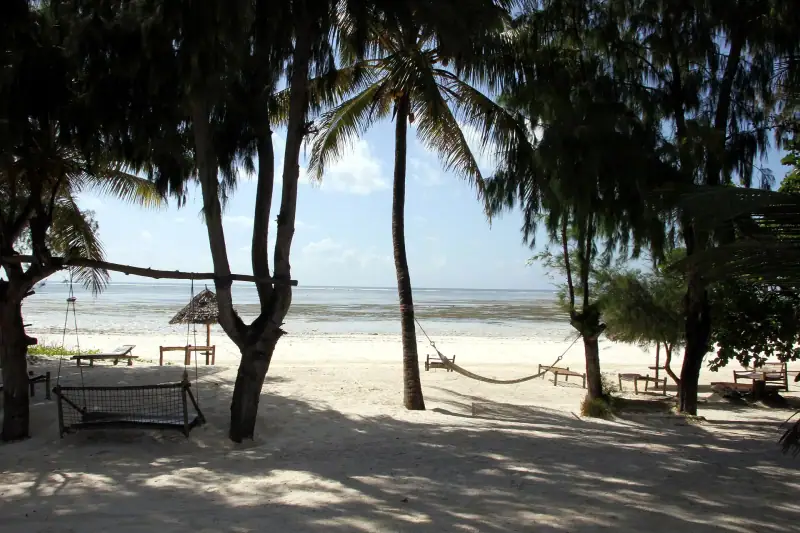
Where to Stay in Bwejuu, Zanzibar: Village, Beach and East Coast Hotels
Bwejuu, between Paje and Michamvi: which lodging to pick, what it costs, which beach, and how to handle the tides, cash and transport without a car.
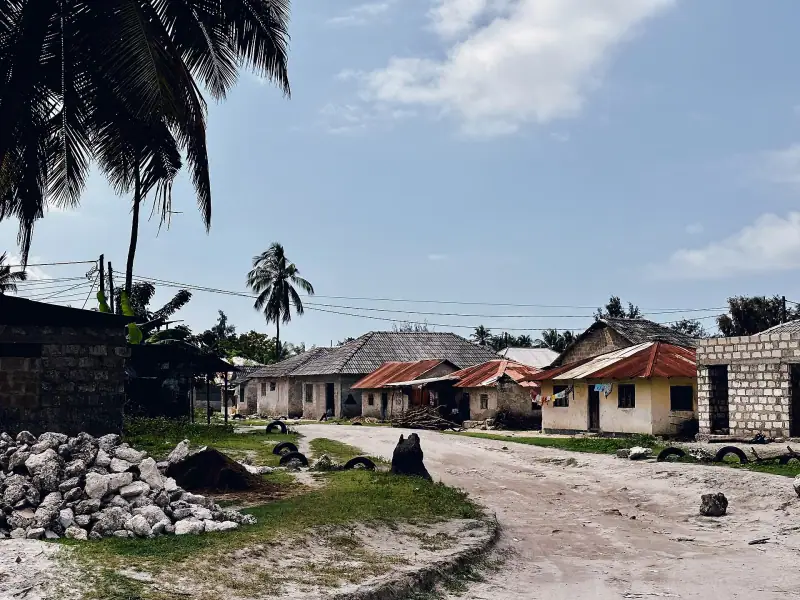
Where to Stay in Matemwe: The Best Lodging Near Mnemba Atoll
Where to stay in Matemwe, Zanzibar: dive lodges, charming bungalows, guesthouses. Areas, budget and tips for the northeast coast.
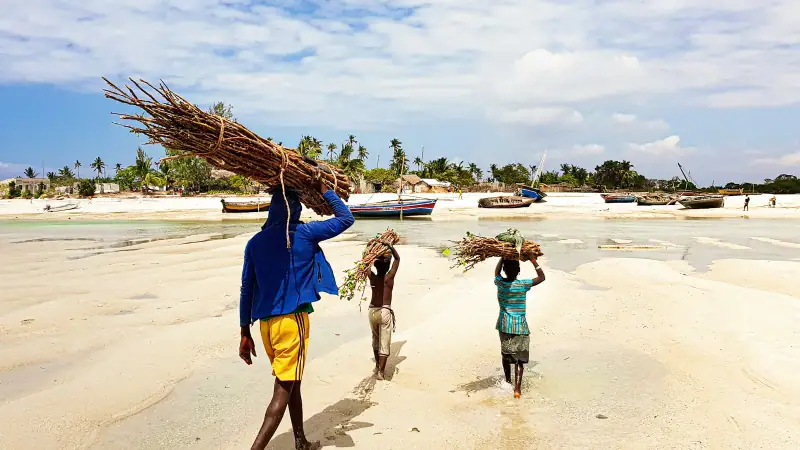
Where to Stay in Jambiani: The Best Places to Stay
Where to stay in Jambiani, Zanzibar: local guesthouses, boutique lodges and beachfront resorts. Area tips, budget and when to book.
Ready-made
Zanzibar itineraries
5 days
Zanzibar in 5 Days Without a Car: A Realistic Itinerary With Transport
Zanzibar in 5 days without a car: Stone Town, Nungwi and Paje with distances, travel times, taxi and daladala prices, and pitfalls to avoid.
10 days
Zanzibar Island Tour: Complete 10 to 14-Day Itinerary
Stone TownNungwi and KendwaMatemwePaje and JambianiStone Town
3 days
Zanzibar's East Coast: A Complete Guide to Paje and Jambiani
Paje, Jambiani, kitesurfing and Swahili villages: a guide to Zanzibar's east coast, with beaches, dramatic tides and authentic village life.