Things to do
Things to do in Khiva: the best activities and must-see visits
We may earn a commission when you book through links on this page, at no extra cost to you. We don't visit or try the places we cover: we summarize published sources. How we work
In short
- Two full days cover Itchan Kala, the minaret climb, craft workshops and museums; a third day adds an excursion to the Khorezm desert fortresses.
- The Islam Khodja Minaret (56.6 m / 186 ft, about 175 steps) is the only one open for climbing; a separate ticket of around 100,000 UZS in 2026 is needed, to confirm at the west gate.
- The Khorezm fortresses (Ayaz Kala, Toprak Kala) are 70 to 100 km (43 to 62 mi) north, depending on the route; a day with a car and driver costs about €60-100 (~$70-116) for the whole vehicle.
- Walking Itchan Kala's lanes, the ramparts at sunset and the Dishon Kala bazaar are free.
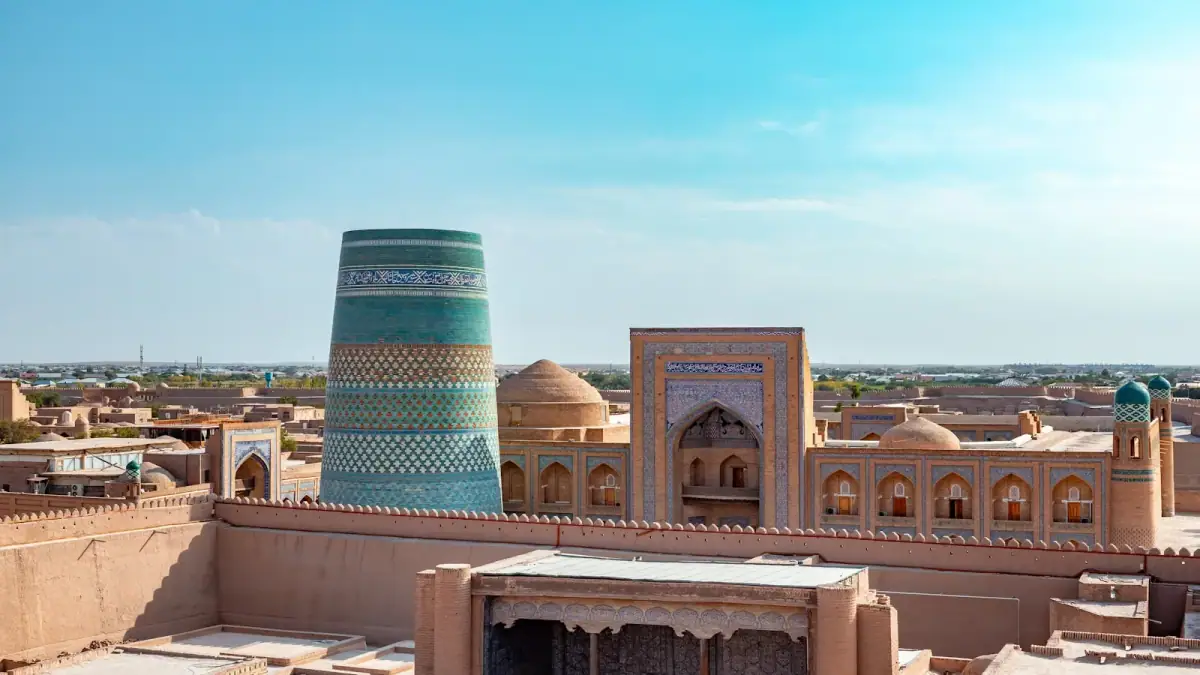
Khiva is a city to experience as much as to admire. Behind the adobe walls of Itchan Kala, the museum city of the Silk Road holds much more than a simple walk between monuments: a dizzying climb to the top of the Islam Khodja Minaret, immersion in workshops where carvers and embroiderers carry on age-old gestures, excursions into the Kyzylkum desert to the ghost fortresses of Khorezm, and night walks under the stars once the tour groups have left the city.
This guide lists the best things to do in Khiva, free and paid, cultural and adventurous, to build a dense and memorable stay in one of the most extraordinary destinations in Central Asia.
Climb to the top of the Islam Khodja Minaret
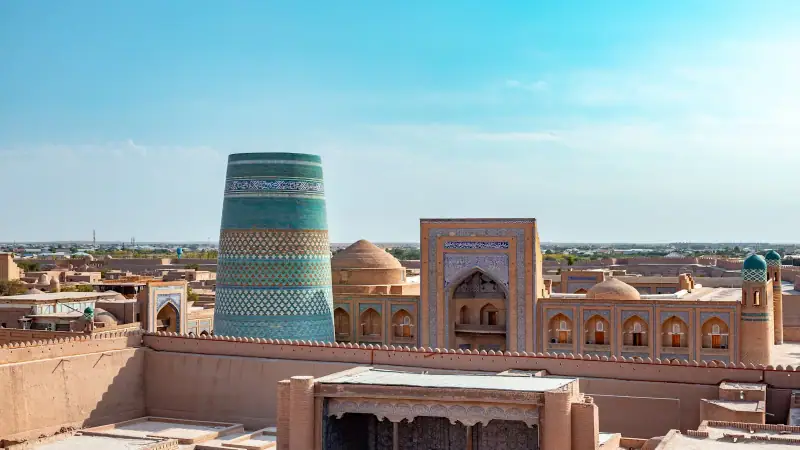
This is activity no. 1 in Khiva, and for good reason: the view from the top of the Islam Khodja Minaret is one of the finest in Uzbekistan. At 56.6 meters (186 ft), it is Khiva’s tallest minaret and the only one open for climbing.
The inner spiral staircase has about 175 narrow, steep steps, in almost total darkness. The climb takes five to ten minutes and requires some effort, but the reward is worth it: from the top platform, Itchan Kala spreads out beneath you like a model, with its flat roofs, its dozens of minarets, the turquoise domes of the madrasas and, on the horizon, the arid plains of Khorezm.
Practical tips:
- A separate ticket (about 100,000 UZS in 2026, to confirm at the west gate ticket office) is required, in addition to the general pass
- Climb in the late afternoon (5-6:30 pm in summer) for the low light and the sunset
- Access is limited to one group at a time on the stairs, so expect to queue in high season
- Avoid smooth-soled shoes: the steps are worn and slippery
Next to the minaret is the Islam Khodja Madrasa, which houses a museum of Khorezm applied arts (ceramics, textiles, everyday 19th-century objects). Entry is included in the minaret ticket.
Guided tours of Khiva
Explore Itchan Kala with a guide: monuments, crafts, the history of Khorezm.
Explore Itchan Kala on foot: the secret route
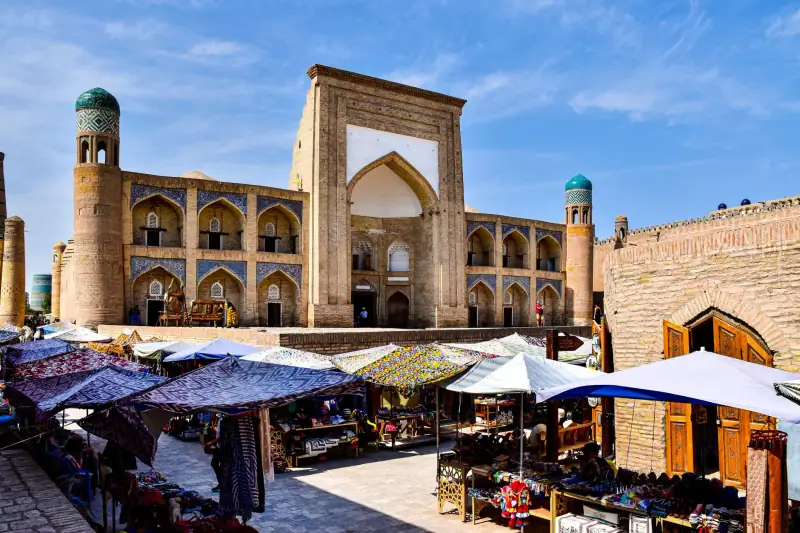
Hurried tourists all follow the same path: west gate → Kalta Minor → Tosh-Hovli Palace → east gate. But Itchan Kala holds plenty of side lanes and secondary monuments that the great majority of visitors never see.
The northern district: authentic Itchan Kala
Start from the north gate (Bakcha Darvaza) and head toward the heart of the city along the lanes to the right of the main axis. You will cross residential districts where families still live: children playing in courtyards, women carrying water, cats dozing on adobe walls. The atmosphere here is light-years from the tourist shops of the main street.
The Ak Mosque (white mosque)
Less known than the Juma Mosque, this small whitewashed neighborhood mosque is still active and rarely visited. Its modest minaret and shaded inner courtyard make it a peaceful stop, far from the bustle of the great monuments. Enter with respect; modest dress is required.
The ramparts: the panoramic walk
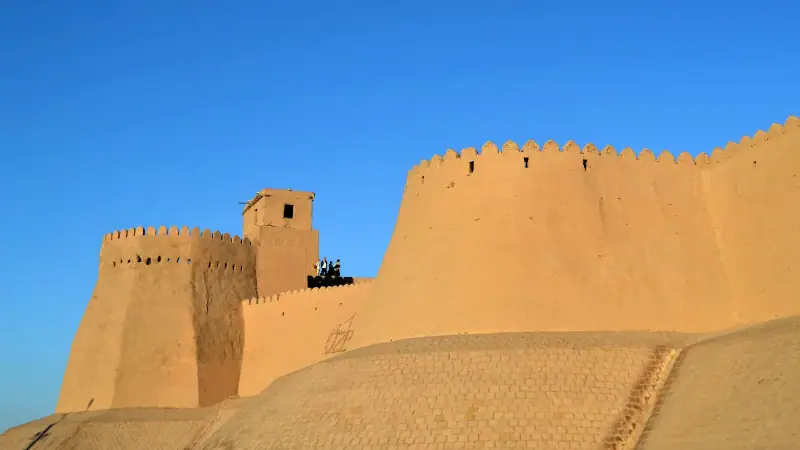
Itchan Kala’s ramparts can be partly walked. From the north gate, a path runs along the walls for several hundred meters with a plunging view of the old town on one side and the rooftops of Dishon Kala on the other. At the end of the day, the low light turns the ocher adobe to gold.
Length of the free stroll: Allow 3 to 4 hours to explore the side lanes without rushing, notebook or camera in hand.
Visit the craftsmen’s workshops
Khiva is one of the Uzbek cities where traditional crafts are most alive. Unlike Samarkand or Tashkent, where production has often been industrialized for the tourist market, Khiva’s workshops still host craftspeople who work the old way, piece by piece.
Wood carvers
The tradition of carved wood is intimately tied to Khiva: the arabesque-adorned wooden columns that support the awnings of madrasas and palaces are the work of local master cabinetmakers. You will find several workshops in Itchan Kala’s eastern district where you can watch the craftsmen at work, buy pieces directly (panels, boxes, figurines) and discuss custom orders.
Miniature painters
Miniature painting is a tradition inherited from the Persian and Timurid courts. Khiva painters reproduce in fine ink on paper, silk or vegetable ivory scenes of the Silk Road, Khorezm life or floral compositions. A small miniature (10 x 15 cm / 4 x 6 in) represents several hours of work and sells at a price varying with the artist and quality: ask for the price at the workshop before buying.
Suzani embroiderers
Suzani is Central Asia’s great traditional embroidery, and Khorezm produces some of the finest designs. Floral and geometric patterns are hand-embroidered on raw cotton, thread by thread. In some workshops you can try embroidery yourself under the guidance of a craftswoman, a 30-minute to 1-hour experience available in a few old-town workshops.
Hotels in Itchan Kala
Sleep inside the walled old town to experience Khiva at dawn, before the tourists.
Excursion to the Khorezm fortresses
This is the most spectacular activity from Khiva, and one of the least known to travelers. 90-110 km (56-68 mi) north of Khiva, lost in the Kyzylkum desert, stand the ruins of fortresses built between the 4th century BCE and the 8th century: the Khorezm fortresses, witnesses of a forgotten civilization older even than the Silk Road.
Ayaz Kala: the fortress of the salt lake
Ayaz Kala is the most accessible and most photographed. The site actually groups three separate fortresses dating from the 4th century BCE to the 7th century: Ayaz Kala 1 at the top of a steep hill, Ayaz Kala 2 on a conical mound below, and Ayaz Kala 3 on the plain. The climb to the upper fortress (15-20 minutes on foot) offers a 360° view over the rolling desert; below lies the salt lake Ayazkol, nestled in the Kyzylkum depression, and sometimes tourist yurts offering nights in the open desert.
The evening light on the adobe walls is absolutely extraordinary. If you can stay until sunset, the sight of the golden fortress against a purple desert is worth the trip.
Toprak Kala: the kings’ citadel
Toprak Kala (1st-5th centuries, peak 2nd-3rd centuries) was the capital of the Khorezm kingdom. The royal palace reached about 40 meters (131 ft) in height and the defensive ramparts 8 to 9 meters (26 to 30 ft); excavations revealed terracotta sculptures and wall paintings of exceptional quality (now in the Hermitage Museum in Saint Petersburg). The ruins are less impressive from afar but fascinating to explore up close.
How to organize the excursion:
- Hire a car with driver from Khiva (one day, about €60-100 / ~$70-116 for the whole vehicle)
- Join a small organized group from your accommodation (often cheaper per person; check the fare with your accommodation)
- Take plenty of water, a hat and sunscreen: the desert offers very little shade
- The track to the fortresses is not always paved: a 4x4 or a high-clearance vehicle is preferable
The Ayaz Kala + Toprak Kala combination is easy to do in a day, leaving in the morning from Khiva and returning in the late afternoon.
Attend a traditional music performance
Khiva is one of the Uzbek cities where classical Khorezm music (Khorezm maqom) and traditional dances are still alive as authentic cultural practice, not just as a tourist product.
In high season (April-May and September-October), local troupes often perform in some Itchan Kala courtyards, generally in the evening (variable schedule: check with your accommodation). The instruments used (dutar, a two-string lute, doira, a tambourine, and sato, a fiddle) have a bewitching sound, and the dancers wear Khorezm’s embroidered costumes.
Ask your accommodation: Itchan Kala guesthouses generally know the week’s show schedule. Some accommodations also organize small private concerts in their courtyard, especially for groups.
Tip: even without an official show, musicians sometimes play spontaneously in cafés or guesthouse common areas. Stay open to impromptu encounters.
Photographing Khiva: the best spots
Khiva is one of the most photogenic destinations in Central Asia, and knowing where and when to shoot makes all the difference between a dull postcard and a memorable image.
The blue hour from the (north) ramparts
Just after sunset, for 20-30 minutes, the blue twilight light bathes the minarets in an absolutely unique violet tint. Lit monuments stand out against a cobalt sky. It is the favorite light of travel photographers, and to get there you just need to climb the northern section of the ramparts.
Dawn on the Kalta Minor
If you sleep in Itchan Kala, get up before 6 am to station yourself in front of the Kalta Minor. Dawn light makes the blue and green tiles glitter like precious stones, and you will be nearly alone. By 9 am the groups arrive and corners to shoot without tourists become rare.
The residential-district lanes
Itchan Kala’s non-touristy lanes offer authentic frames: children playing, women in traditional dress, donkeys loaded with wood. These images call for respect and discretion; always ask before photographing people.
Tosh-Hovli Palace: the ceramic tiles
The harem courtyard of Tosh-Hovli Palace is a photographic paradise: finely carved wooden columns, lattices that filter light and ceramic panels in intense blues and turquoises create extraordinary graphic compositions. Come mid-morning when light enters the courtyard from the east.
Shopping and crafts: what to bring home from Khiva
Shopping in Khiva is an activity in its own right. The old town concentrates Uzbekistan’s finest crafts, and prices, though negotiable, stay reasonable for the quality on offer.
Khorezm carpets and kilims
Carpets of the Khiva region are recognizable by their geometric patterns in red, ocher, burgundy and brown. The wools used are naturally dyed. A large hand-knotted carpet can cost several hundred euros; kilims (flat, unknotted rugs) are more affordable (€50-150 / ~$58-174).
Tips: Check whether the carpet is handmade (look at the slightly imperfect regularity of the knots on the back) or machine-made (perfectly regular pattern, lower value). Ask for a certificate of authenticity for major pieces.
Fabrics and traditional dresses
Khorezm fabrics, atlas (iridescent silk with changing reflections) and bekasam (mixed silk and cotton), are among the most beautiful in all of Uzbekistan. Dresses made from these fabrics are sold in Itchan Kala dressmakers’ shops for €30 to 80 (~$35-93).
Ceramics and pottery
Khiva pottery uses a palette of cobalt blue and turquoise characteristic of the Khivan tradition. Bowls, plates, teapots and decorative tiles are available at all prices. For small pieces (bowl, cup), plan €5 to 20 (~$6-23).
Car rental in Urgench
Explore the Khorezm fortresses and the region at your own pace from Urgench airport.
Khiva at night: the most beautiful free activity
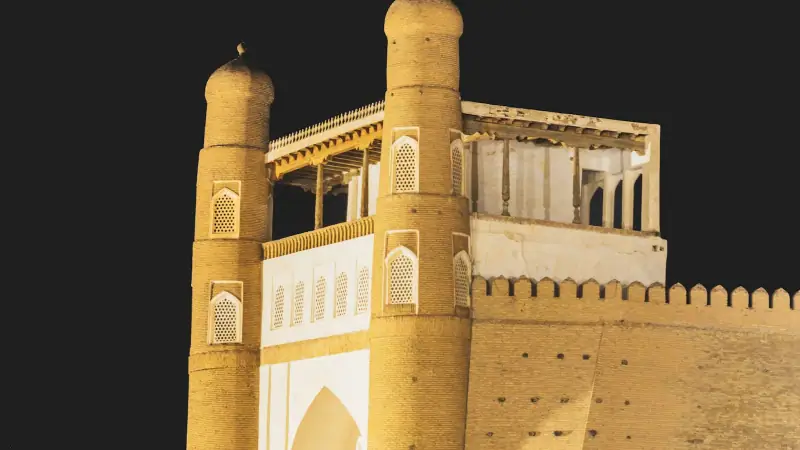
Staying one or two nights in Itchan Kala is not only a question of comfort: it is gaining access to a radically different Khiva from the one daytime tourists see.
Around 8 pm in summer (6:30 pm in winter), the last groups leave for Urgench. The lanes recover their age-old calm. The monuments light up softly, the minarets glow under spotlights, shadows dance on the adobe walls. Local families stroll, students play guitar in the courtyards.
What you can do at night in Khiva:
- Walk freely through all of Itchan Kala’s lanes without a crowd
- Sit on the ramparts and watch the stars (light pollution is low)
- Take night photos of the lit monuments (tripod recommended)
- Have dinner on a terrace with a view of the lit Kalta Minor
- Meet residents in the old town’s cafés
For this nighttime atmosphere, it is systematically recommended to sleep inside Itchan Kala rather than in Urgench, and to book at least two nights.
A typical 2-day activity program in Khiva
Day 1: Itchan Kala in depth
Morning (7 am-12 pm)
- 7 am: Early rise, photos of the Kalta Minor at dawn (exceptional light)
- 8 am: Climb the Islam Khodja Minaret (before the queue)
- 9 am: Free visit of the northern district’s lanes (off the tourist circuits)
- 10:30 am: Tosh-Hovli Palace: harem courtyard, painted ceilings, ceramic tiles
- 12 pm: Juma Mosque (forest of carved wooden columns)
Afternoon (2 pm-7 pm)
- 2 pm: Visit a wood-carvers’ or miniature painters’ workshop
- 4 pm: Shopping in the craft shops (carpets, suzani, atlas)
- 5:30 pm: Climb the north ramparts for sunset
- 7 pm: Dinner on a terrace with a view of the lit Itchan Kala
Day 2: Khorezm fortresses and bazaar
Morning (8 am-1 pm)
- 8 am: Leave by car with driver for the Khorezm fortresses
- 9:30 am: Toprak Kala (ruins of the royal citadel, 2nd century)
- 11 am: Ayaz Kala (climb the upper fortress, desert view)
- Picnic in the desert
Afternoon (2 pm-6 pm)
- 2 pm: Return to Khiva
- 3 pm: Dishon Kala bazaar (spices, dried fruit, textiles, bustle)
- 4:30 pm: Khorezm State Museum (archaeology, ancient pottery)
- 6 pm: Free walk through Itchan Kala’s side lanes
Khiva is not a passive destination. The walled city is discovered on foot, at dawn and dusk, in the craftsmen’s workshops as on the endless plains of the Khorezm desert. To prepare your visit, see our complete guide to Khiva and our article on where to stay in Khiva. If you are building a wider circuit, our guide to the Silk Road will help you link Khiva, Bukhara and Samarkand.
Frequently asked questions
How long does it take to visit Khiva and its activities?
Two full days cover the essentials: Itchan Kala, the minaret climb, the craft workshops and the museums. A third day lets you add an excursion to the Khorezm fortresses in the desert. If you have less time, a well-planned day covers the major sites, but you will miss the nighttime atmosphere of Itchan Kala.
Can you take an excursion to the Khorezm fortresses from Khiva?
Yes, it is the most popular excursion from Khiva. The Ayaz Kala and Toprak Kala fortresses are about 70 to 100 km (43 to 62 mi) north of Khiva, depending on the route (1 h 30 to 2 hours by road depending on the site). It is best to hire a car with driver or join an organized tour from Khiva, as these sites are hard to reach without a vehicle. Plan a full day with a picnic to enjoy the desert.
Are there traditional music performances in Khiva?
Yes. Traditional Uzbek music and dance performances are regularly organized in some Itchan Kala courtyards, especially in high season (April-May and September-October), on a schedule that changes from year to year. Ask your accommodation or the main Itchan Kala ticket office for dates and times. These performances generally last 1 hour and combine singing, belly dance and traditional instruments (dutar, doira).
Can you visit craftsmen's workshops in Khiva?
Absolutely. It is one of the most authentic activities in Khiva. Several workshops in Itchan Kala open their doors to visitors: wood carvers, miniature painters, suzani embroiderers and weavers. Hours vary by workshop and season (generally during the day): check with the craftsmen or your accommodation. Look for the small signs in the lanes of Itchan Kala's eastern district; craftsmen appreciate you watching their work even without buying.
What is there to do in Khiva in the evening?
In the evening, Itchan Kala empties of day-trippers and regains a magical atmosphere. Walk the lanes at nightfall: the monuments are lit and shadows play on the blue tiles. Climb the ramparts for dusk. Some restaurants offer terraces with views of the minarets, ideal for an evening dinner. The Dishon Kala bazaars generally close in the late afternoon: check hours there.
What free activities can you do in Khiva?
Entry into Itchan Kala is free: you can stroll the lanes, admire the monuments' facades from outside, climb some sections of the ramparts and visit the mosques (outside prayer times, modest dress required). The Dishon Kala bazaar is also free and very lively in the morning. Sunsets from the ramparts are among the most beautiful in Central Asia, and entirely free.
More Uzbekistan guides
Keep reading
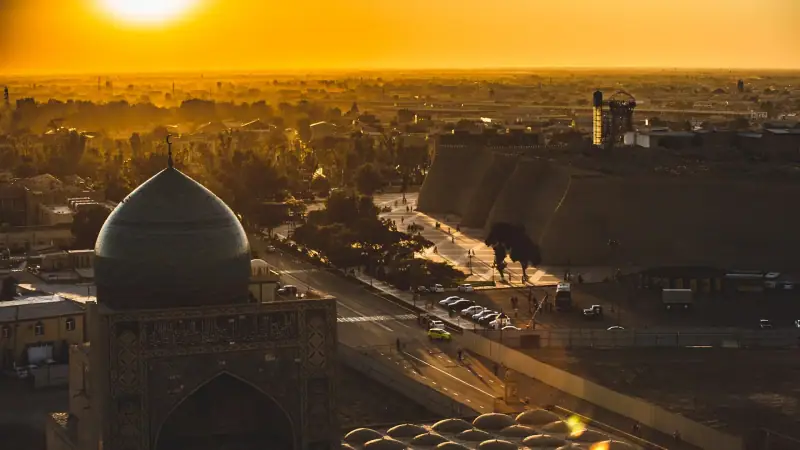
Things to do in Bukhara: the best activities and must-see visits
What to do in Bukhara? The Ark, Kalon minaret, covered bazaars, craft workshops, evenings in the old town. A complete guide to the best activities.
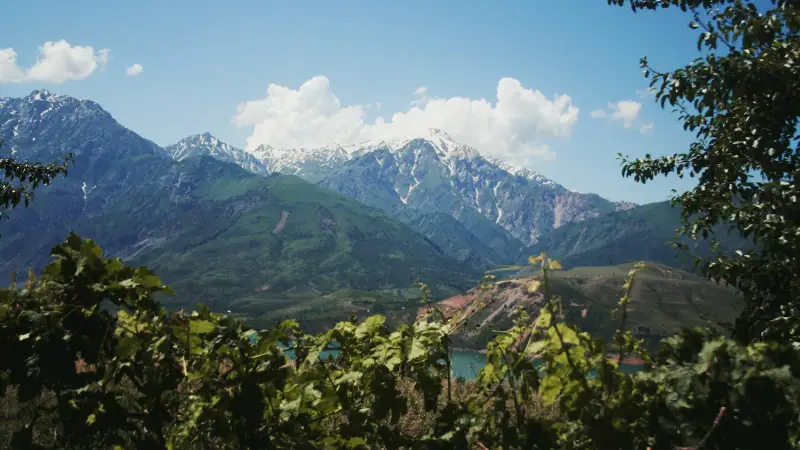
Chimgan and Beldersay from Tashkent without a tour: transport, cable car and a day's budget
Getting to Chimgan and Beldersay from Tashkent without a tour: taxi, minibus, cable car, trails, season and budget for a day in the mountains.

Arriving in Tashkent in the middle of the night: where to sleep, near the airport or downtown?
Flight landing at 2 am or 4 am in Tashkent? Hotel near the airport or in town, early check-in, night taxi and prices: a guide to choosing well.
Ready-made
Uzbekistan itineraries
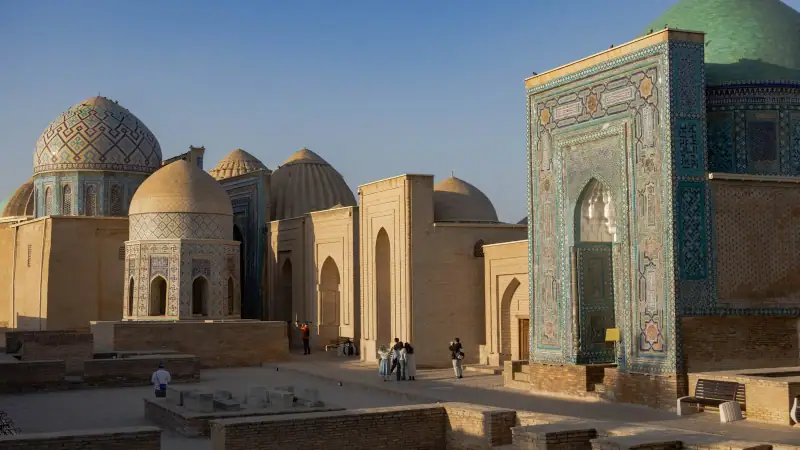
10 days
Uzbekistan in 10 days: a complete itinerary with the Ferghana Valley
TashkentFerghanaSamarkandBukharaKhiva
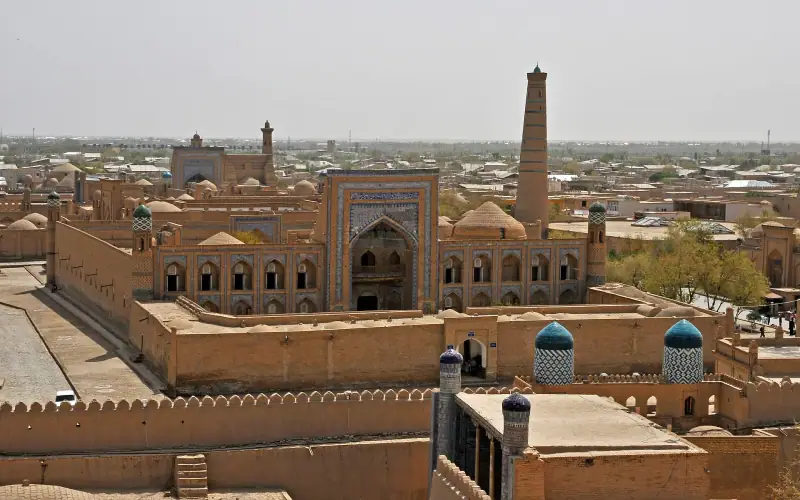
7 days
Uzbekistan in 7 days: the ideal Silk Road itinerary
TashkentSamarkandBukharaKhiva
9 days
Uzbekistan in 9 days with kids: stops and a family-friendly pace
TashkentSamarkandBukhara