Itineraries
Ferghana Valley road trip: 3 days on the Silk Road
We may earn a commission when you book through links on this page, at no extra cost to you. We don't visit or try the places we cover: we summarize published sources. How we work
Day by day
- Day 1Ferghana, then Margilan: Yodgorlik silk factory and bazaar
- Day 2Rishtan ceramic workshops, Kumtepa Bazaar in Margilan
- Day 3Kokand: Khudayar Khan Palace, Jami Mosque, bazaar
Where to sleep
- Ferghana2 nights
In short
- Three days cover Ferghana and Margilan (silk), Rishtan (blue ceramics) and Kokand (Khudayar Khan Palace), with two nights in Ferghana.
- From Tashkent, the flight takes about 1 hour; the train takes about 4 to 6 hours and a shared taxi 4 to 5 hours.
- Estimated budget is €150-300 (about $175-350) per person, excluding flights.
- Spring (April to June) and fall (September to October) are the best seasons; July and August go above 38 °C (100 °F).
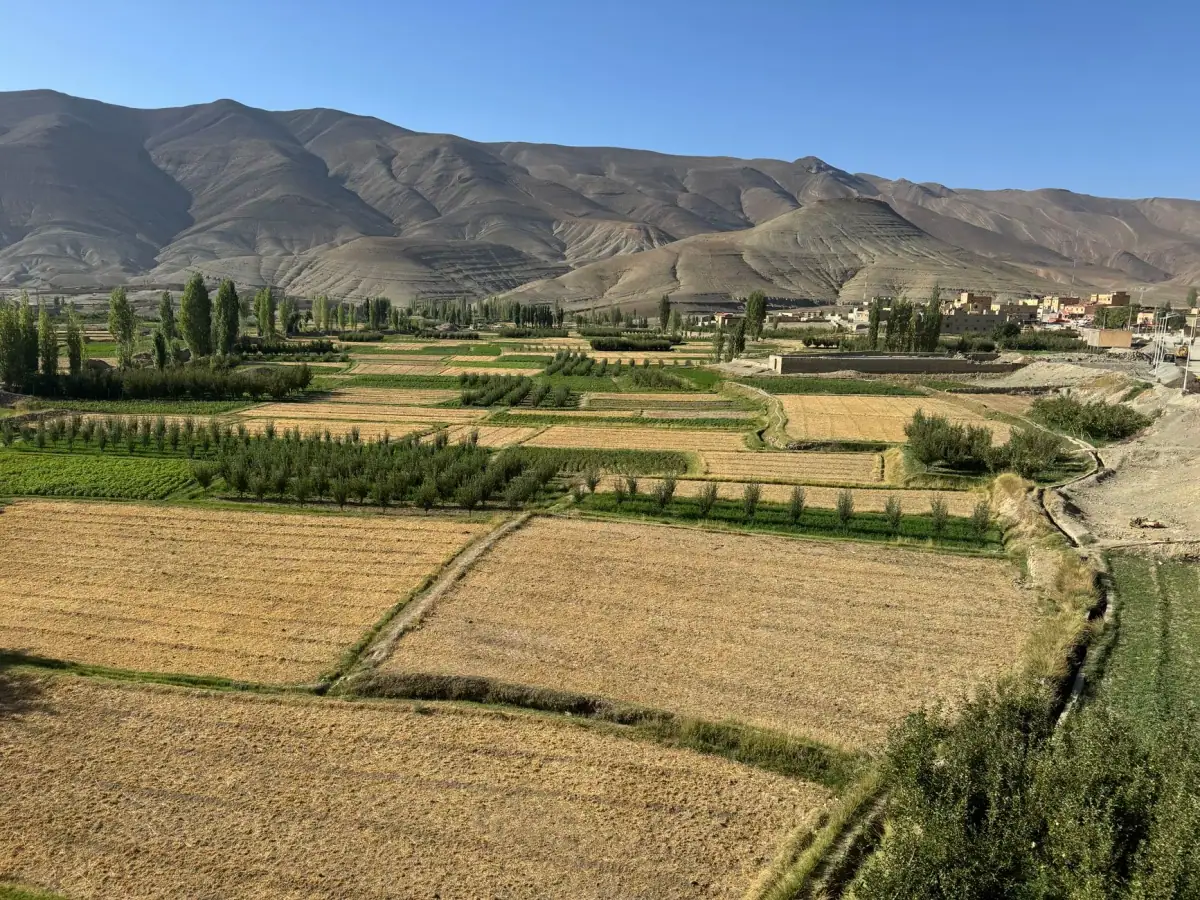
The Ferghana Valley is one of Uzbekistan’s best-kept secrets. While travelers crowd into Samarkand and Bukhara, this fertile valley set between the Tian Shan and Pamir mountains has lived at its own pace for thousands of years. This is where Uzbek silk is made, where the blue ceramics of Rishtan carry on an ancient art, and where the palace of the khans of Kokand recalls the splendor of a forgotten empire.
This 3-day road trip takes you away from the tourist crowds, into an authentic, craft-focused Uzbekistan.
Practical information before you go
How to get to the Ferghana Valley
From Tashkent, you have several options.
By plane (recommended to save time): Uzbekistan Airways and other airlines run regular flights between Tashkent and Ferghana airport (frequencies vary, so check schedules before booking). The trip takes about 1 hour. It is by far the most comfortable option.
By train: The railway line crosses the Kamchik Pass, a railway tunnel opened in 2016 that passes through the Kurama range. The trip takes about 4 to 6 hours depending on the train (check schedules with Uzbekistan Railways). It is a pleasant option through spectacular mountain scenery.
By shared taxi: Shared taxis leave regularly from Tashkent’s bus station for Ferghana. Allow 4 to 5 hours on the road depending on traffic at the pass.
Getting around the valley
The Ferghana Valley is relatively compact: Ferghana, Margilan, Rishtan and Kokand are all linked by good roads. Hiring a car with a driver for the day is the most practical and most common solution. Local agencies and your guesthouse can arrange it easily for a reasonable daily rate.
Marshrutkas (shared minibuses) also link the main towns, but with variable schedules and limited comfort.
Car rental in Uzbekistan
Explore the valley at your own pace with a rental vehicle.
Budget
For 3 days in the Ferghana Valley, plan for:
- Lodging: €20-50 (~$23-58) a night depending on comfort (guesthouse to 3-star hotel)
- Meals: €5-15 (~$6-17) a day (local food is very affordable)
- Sightseeing and entry fees: €10-25 (~$12-29) for the whole stay
- Local transport: €30-60 (~$35-70) depending on the mode you choose
- Crafts and souvenirs: depends on your personal budget
Estimated total budget: €150-300 (about $175-350) per person, excluding flights, for a decent to comfortable stay.
Day 1: Ferghana and Margilan, the silk capital
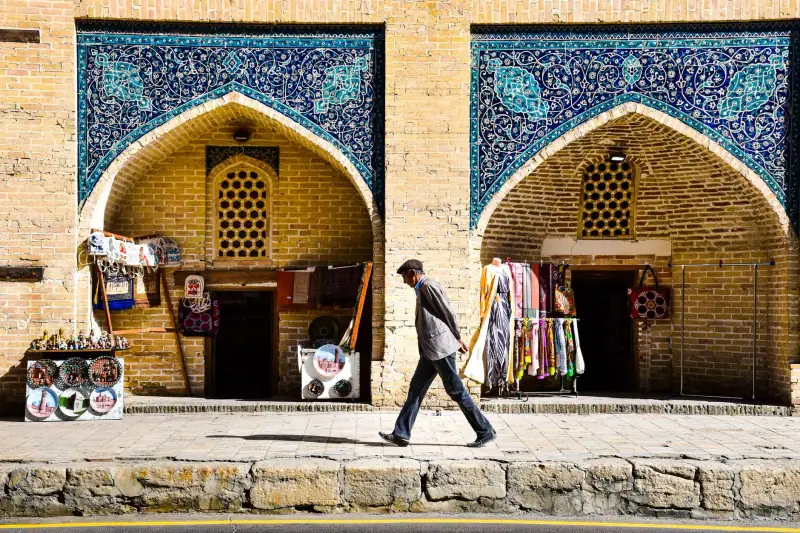
Arriving in Ferghana
Whether you arrive by plane or by train, start your stay with a tour of the city of Ferghana. Unlike historic cities such as Samarkand or Bukhara, Ferghana is a relatively modern town founded by the Russians in the late 19th century. Its center, with wide tree-lined avenues and shady parks, has a particular charm, far from the tourist bustle.
Visit the Ferghana Regional Museum, which presents the history, ethnography and arts of the valley, including a fine collection of traditional silks. The pedestrian street in the center is pleasant for a walk at the start of your stay.
Afternoon: Margilan, the heart of Uzbek silk
Only about ten kilometers (6 mi) from Ferghana, Margilan is the silk town of the valley. This is where the famous Uzbek ikat fabrics are made, silks with bright geometric patterns that have survived the centuries.
The highlight is the Yodgorlik Silk Factory, the largest silk factory in the valley, still in operation. Guides explain (and show) every stage of production: raising silkworms, unwinding cocoons in large basins of hot water, natural dyeing and weaving on traditional wooden looms. It is a fascinating sight and a rare chance to see this age-old know-how at work. The shop next door sells scarves, shawls and lengths of fabric at fair prices.
Beyond the factory, wander through the Margilan bazaar, more authentic and less touristy than those of Samarkand or Tashkent. You will find stalls of silks, spices, dried fruit and local products.
Evening in Ferghana
Go back to Ferghana for the night. In the evening the central park comes alive and Uzbek families gather in the chaikhanas (teahouses) with their shaded terraces. It is the ideal moment to try an osh ferghani, the local version of plov, known across the country for the quality of its ingredients: long pink-grain rice grown in the valley, lamb, yellow carrots and onions.
Lodging: Guesthouse or hotel in Ferghana (€25-60 / ~$29-70) — see our recommendations
Day 2: Rishtan, the village of the blue potters
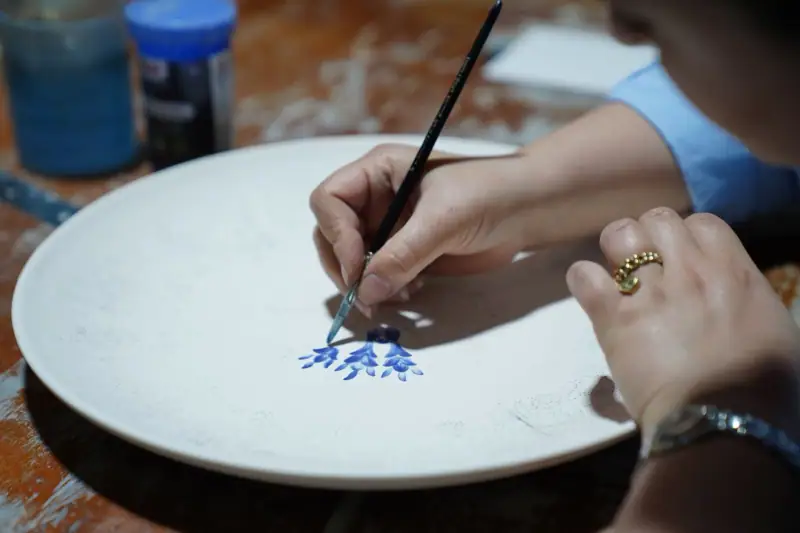
Rishtan ceramics, an ancient art
Rishtan, about 50 to 55 kilometers (31 to 34 mi) west of Ferghana, is famous throughout the Islamic world for its traditional ceramics with blue and turquoise glazes. The potters of Rishtan carry on an art passed down from generation to generation for more than 2,000 years, using local clays and minerals for their characteristic glazes.
What makes Rishtan especially endearing is that ceramics here are not a staged tourist attraction but a living craft that supports hundreds of families. Walking through the village lanes, you see courtyards where freshly thrown pieces are drying, wood-fired kilns smoking gently and open workshops where artisans are busy.
Visiting a pottery workshop
The best way to discover Rishtan’s art is to visit a family workshop. Your guesthouse in Ferghana or a local guide can point you to workshops that welcome visitors. You will see throwing on the foot-powered wheel and hand-painted decoration (floral and geometric patterns of astonishing precision), and you will learn about the different stages of firing.
Most workshops have a shop where you can buy directly from the maker: plates, bowls, teapots, ornamental vases. Prices are much lower than in the bazaars of the big cities for equivalent pieces, and you can be sure you are buying an authentic work.
The Rishtan bazaar
The local market in Rishtan is particularly lively on market days (days vary, so ask your accommodation). It is a purely local bazaar, almost free of tourists, where farmers from the valley come to sell their produce: vegetables, fruit, meat, dairy and of course local ceramics.
Back via Margilan
On the way back to Ferghana, make a second stop in Margilan to visit the Kumtepa Bazaar, one of the region’s most important covered markets, held on Thursdays and Sundays. Miles of stalls of silks, traditional clothing and textiles spread out under the domes.
Lodging: Back to your guesthouse in Ferghana
Day 3: Kokand, the khans’ palace
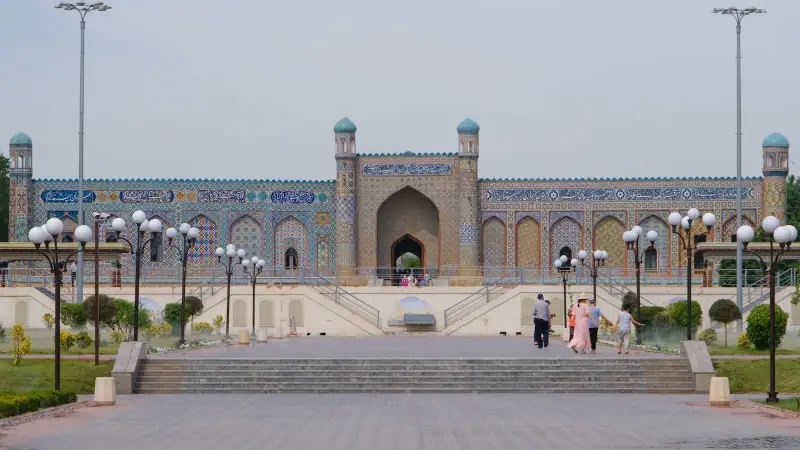
Kokand, forgotten capital of an empire
About 80 to 85 kilometers (50 to 53 mi) west of Ferghana, Kokand was the capital of the powerful Kokand Khanate, which dominated the valley and a large part of Central Asia in the 19th century before being annexed by the Russian Empire in 1876. This glorious history left the city a few remarkable monuments that contrast with its look of an ordinary provincial town.
Leave early in the morning to have time to explore the city in depth before you depart.
Khudayar Khan Palace
Kokand’s essential monument is the Khudayar Khan Palace, also called the Urda. Built in 1871, it is one of the last great palaces of Central Asia and the only one to have survived the Soviet era more or less intact. Its seven inner courtyards, its 114 to 119 original rooms and its facades decorated with polychrome tiles give an idea of the khanate’s past splendor. The palace now houses a regional museum with collections of local crafts, weapons, coins and historical documents.
Entry is easy and the visit takes 1 to 2 hours depending on your interest.
The Jami Mosque
A few hundred meters from the palace, the Jami Mosque (or Dzhami) is Kokand’s main historic mosque. Its large shaded inner courtyard, carved wooden columns and brick minaret are typical of the valley’s religious architecture in the 19th century. The mosque is still active, so respect prayer times and dress modestly.
The Modari Khan Mausoleum
Not far from the palace, the Modari Khan Mausoleum is the burial place of the mother of Kokand’s last khan. The simple, elegant building reflects the funerary style of the region before Russian influence.
Activities and excursions in Uzbekistan
Guided visits, craft workshops and tours in the valley.
The Kokand bazaar
To end your stay in the valley, do not miss Kokand’s central bazaar, one of the largest and liveliest in the region. Unlike markets heavily visited by tourists, Kokand’s keeps a deeply local character: clothing, food, spices, fabrics and ceramics mingle in a busy, colorful atmosphere.
Back to Tashkent or onward
In the late afternoon you have several options:
- Return to Tashkent from Kokand by shared taxi or train (4-5 hours)
- Return to Ferghana to catch a flight to Tashkent the next morning
- Continue west if you extend your circuit toward Samarkand
Practical tips for your road trip
Dress
The Ferghana Valley is more religiously conservative than Tashkent or the tourist cities. Women are advised to cover their shoulders and knees, especially in villages and near mosques. For men, short shorts are best avoided in places of worship.
Language
Very few people in the valley speak English. Uzbek is the main language, and Russian is still widely used. Learning a few words of Uzbek (rakhmat = thank you, salom = hello) is always much appreciated. A translation app with an offline function can be valuable.
Internet
Mobile coverage exists in the main towns but can be patchy in villages. Buy a local SIM card in Tashkent or at Ferghana airport on arrival, or check your carrier’s international plan or use a travel eSIM.
Money
The Ferghana Valley still runs largely on cash (Uzbek som). ATMs exist in the main towns (Ferghana, Kokand) but are less common in villages. Bring cash for craft purchases and for small local restaurants.
Itinerary recap
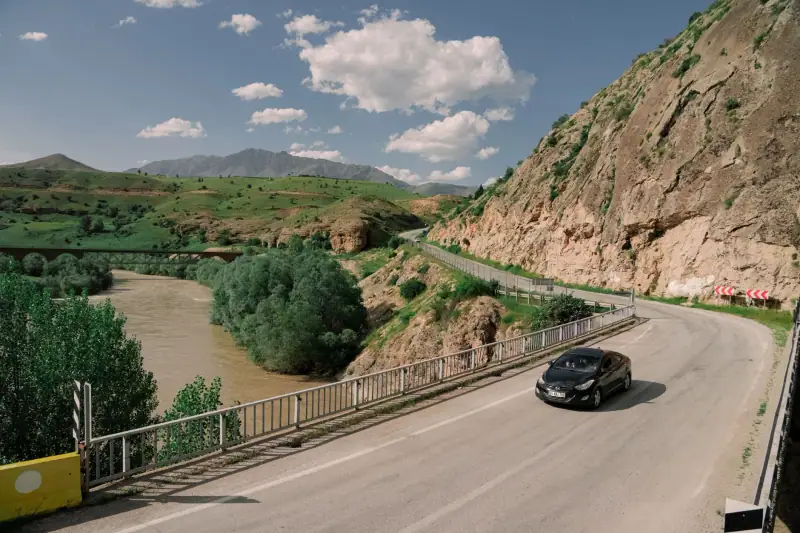
| Day | Stops | Night |
|---|---|---|
| 1 | Ferghana → Margilan (silk, Yodgorlik factory, bazaar) | Ferghana |
| 2 | Rishtan (ceramics, workshops) → Kumtepa Bazaar (Margilan) | Ferghana |
| 3 | Kokand (Khudayar Khan Palace, Jami Mosque, bazaar) → Departure | — |
Fitting the Ferghana Valley into a bigger circuit
The Ferghana Valley fits well into a wider Uzbekistan circuit. A popular format for a 10 to 12-day stay:
- Tashkent (1-2 days): capital, Chorsu Bazaar, old town
- Ferghana/Margilan/Rishtan/Kokand (3 days): the craft valley
- Return to Tashkent by train or plane
- Samarkand (2-3 days): the Registan, Shah-i-Zinda
- Bukhara (2 days): Lyabi-Hauz, the Ark citadel
- Khiva (1-2 days): Itchan Kala
For a detailed Silk Road itinerary, see our guide to Uzbekistan in 7 days and our article on the Silk Road.
If you are looking for where to sleep in Ferghana, see our guide to accommodation in Ferghana for recommendations at every budget.
The Ferghana Valley rewards curious travelers who step off the beaten track. In three days you leave with silk scarves bought directly from the weaver, unique blue ceramics picked up in the potter’s workshop, and an image of an authentic Uzbekistan, far from the crowds, one that few travelers bring home.
Frequently asked questions
How do you get to the Ferghana Valley from Tashkent?
The fastest option is the Tashkent to Ferghana flight (about 1 hour, several flights a week; check schedules with the airlines). By train, the trip takes about 4 to 6 hours via the Kamchik Pass through the Tian Shan mountains. By shared taxi or rental car, allow 4 to 5 hours from Tashkent via the pass road.
Is it better to rent a car or use local transport in the valley?
Renting a car, or hiring a local driver for the day, is strongly recommended to explore the valley at your own pace. Distances between Ferghana, Margilan, Rishtan and Kokand are short (10 to 120 km / 6 to 75 mi) and the roads are in good condition. Marshrutkas (minibuses) exist but are less practical with luggage and have unpredictable schedules.
What is the best time to visit the Ferghana Valley?
Spring (April to June) is ideal: orchards are in bloom, silk production is in full swing and temperatures are pleasant (20 to 30 °C / 68 to 86 °F). Fall (September to October) is also excellent, with harvests and mild temperatures. Avoid July and August, when it is very hot (above 38 °C / 100 °F), and winter, which can be cold and foggy.
How many days do you need for the Ferghana Valley?
Three days cover the essentials: Ferghana/Margilan, Rishtan and Kokand. With 5 days, you can explore the craft villages in more depth and venture toward the Kyrgyz border. A weekend (2 days) is possible from Tashkent if you focus on Margilan and Rishtan only.
Is the Ferghana Valley safe for travelers?
The article describes the Ferghana Valley as a safe destination for tourists. Despite the region's historical reputation in the 1990s and 2000s, the situation is described as having stabilized considerably, and locals are very welcoming to foreign visitors. Respect local customs (modest dress, religious sensitivity). For current conditions, check your government's official travel advice.
Can you combine the Ferghana Valley with the rest of Uzbekistan?
Yes. The Ferghana Valley fits a Silk Road circuit well. A classic 10 to 14-day itinerary combines Tashkent (1-2 days), Ferghana/Margilan/Rishtan (3 days), a return to Tashkent, then Samarkand (2-3 days), Bukhara (2 days) and Khiva (1-2 days). The valley adds a craft and village dimension that the big monument cities lack.
More Uzbekistan guides
Keep reading
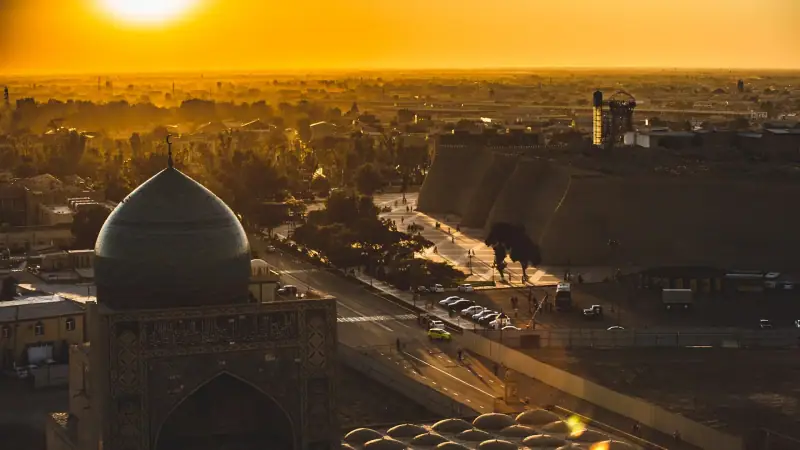
Things to do in Bukhara: the best activities and must-see visits
What to do in Bukhara? The Ark, Kalon minaret, covered bazaars, craft workshops, evenings in the old town. A complete guide to the best activities.
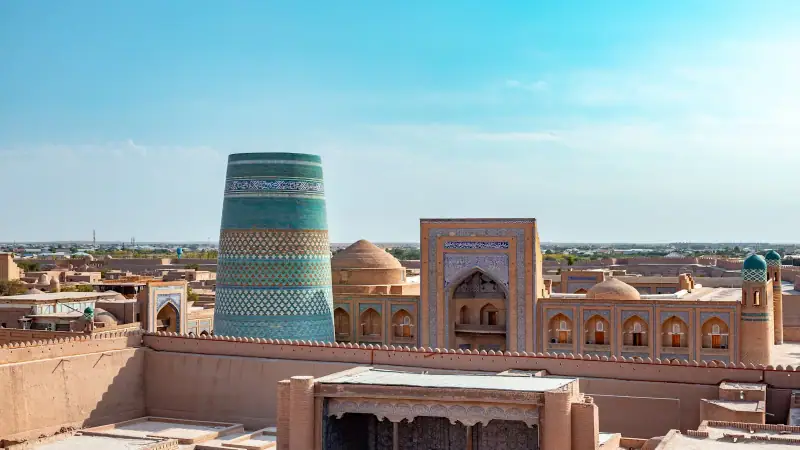
Things to do in Khiva: the best activities and must-see visits
What to do in Khiva? Minaret climb, craft workshops, desert fortresses, night walks... A complete guide to the activities not to miss in Khiva.
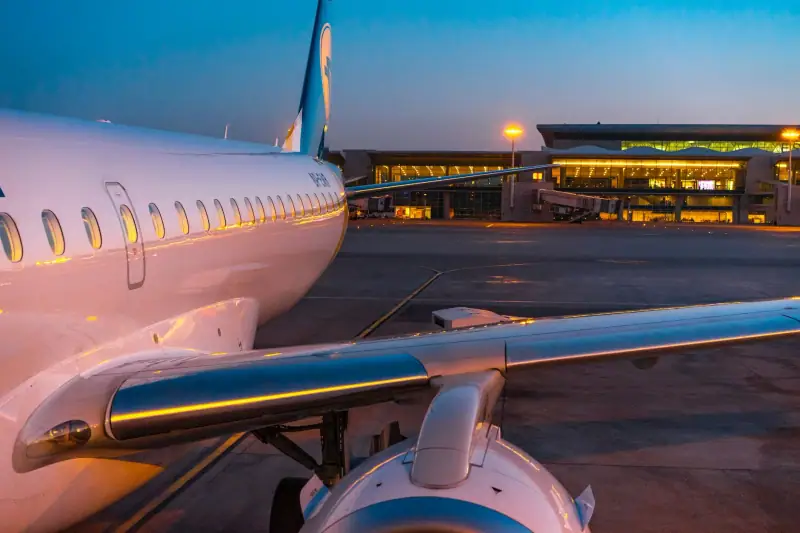
Arriving in Tashkent in the middle of the night: where to sleep, near the airport or downtown?
Flight landing at 2 am or 4 am in Tashkent? Hotel near the airport or in town, early check-in, night taxi and prices: a guide to choosing well.
Ready-made
Uzbekistan itineraries
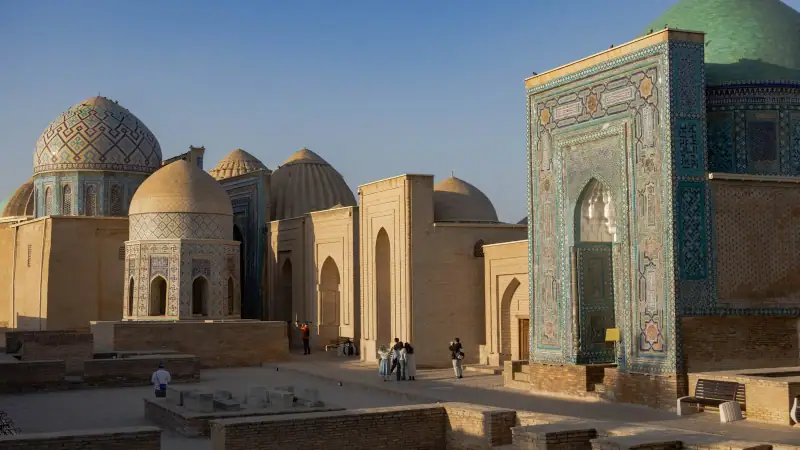
10 days
Uzbekistan in 10 days: a complete itinerary with the Ferghana Valley
TashkentFerghanaSamarkandBukharaKhiva
7 days
Uzbekistan in 7 days: the ideal Silk Road itinerary
TashkentSamarkandBukharaKhiva
9 days
Uzbekistan in 9 days with kids: stops and a family-friendly pace
TashkentSamarkandBukhara