Plan your trip
Best time to visit Uzbekistan: a month-by-month guide
We may earn a commission when you book through links on this page, at no extra cost to you. We don't visit or try the places we cover: we summarize published sources. How we work
In short
- April-May and September-October are the best windows: 15 to 30 °C (59 to 86 °F), blooming gardens in spring and harvest markets in fall.
- July and August are extremely hot, 35 to 45 °C (95 to 113 °F), with Bukhara often hitting 42-45 °C (108-113 °F) in the shade.
- Winter (December to February) is cold, from -5 to 8 °C (23 to 46 °F) in Tashkent and Samarkand, with few visitors and the lowest prices.
- Navruz on March 21 is the most important festival; for a first visit, the article recommends April or October.
Uzbekistan is a country of extreme climate contrasts. Located in the heart of Central Asia, far from any maritime influence, it has scorching summers above 40 °C (104 °F) and icy winters with snow. Choosing the right time to go is therefore crucial to enjoy your stay fully.
The good news: there are two ideal windows, spring and fall, which offer perfect weather for exploring the Silk Road sites without suffering from heat or cold.
Spring (March-May): the golden period
Spring is the best season to visit Uzbekistan. Temperatures are mild, vegetation is lush and popular festivals punctuate the trip.
March
March marks the start of spring in Uzbekistan. Temperatures stay cool, between 10 and 18 °C (50 to 64 °F) by day, with nights still cold (0 to 5 °C / 32 to 41 °F). Nature starts to wake up and the first flowers adorn the gardens.
The highlight: Navruz (March 21)
Navruz, the Persian New Year, is the most important holiday in Uzbekistan. On March 21, celebrations take place across the country: folk dances, traditional music, long tables of plov cooked outdoors in giant kazans. It is a unique chance to immerse yourself in Uzbek culture.
- Temperatures: 8-18 °C (46-64 °F)
- Rainfall: moderate (a few spring showers)
- Crowds: low to moderate
- Prices: low to mid-range
April
April is the ideal month. Temperatures range between 15 and 25 °C (59 to 77 °F), the sky is an intense blue, and parks and gardens are in bloom. Apricot, apple and cherry trees in blossom create postcard settings around the Silk Road monuments.
It is also the period when markets overflow with fresh strawberries and cherries, delicious after a day of sightseeing in the spring sun.
- Temperatures: 15-25 °C (59-77 °F)
- Rainfall: low
- Crowds: moderate (growing toward late April)
- Prices: mid-range
May
May is the other great reference month. Temperatures rise slightly (22-30 °C / 72-86 °F), and days are long and bright. It is the best period for hiking in the Tian Shan mountains and around Ferghana.
Note: the first half of May can see significant crowds. Prefer the second half of the month.
- Temperatures: 22-30 °C (72-86 °F)
- Rainfall: low to very low
- Crowds: moderate to high
- Prices: mid-range to high
Summer (June-August): the season of extreme heat
Uzbek summers are brutally hot. If you choose this period, you need to be thoroughly prepared.
June
June is still bearable early in the month (25-32 °C / 77-90 °F), but temperatures climb quickly. From mid-June, Silk Road cities such as Bukhara and Khiva regularly exceed 38-40 °C (100-104 °F).
- Temperatures: 28-38 °C (82-100 °F)
- Rainfall: very low
- Crowds: low (the heat discourages many tourists)
- Prices: falling
July and August
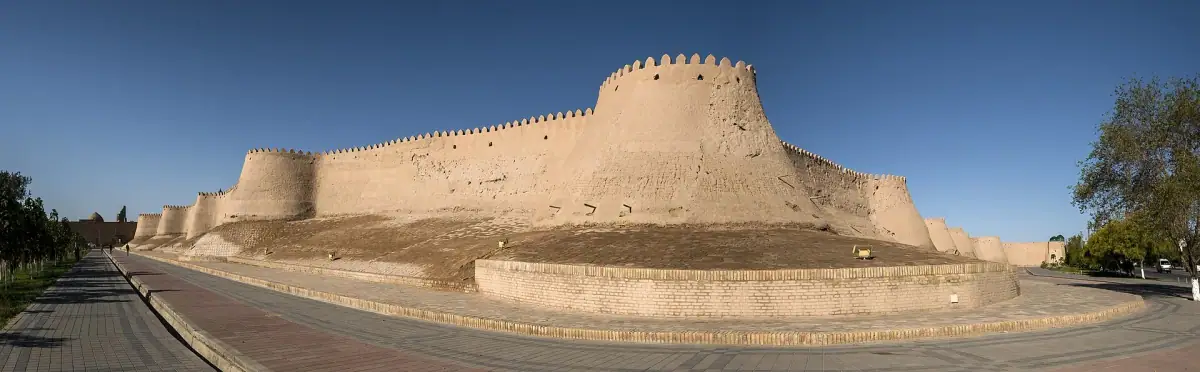
July and August are the hottest months of the year. In Bukhara, the thermometer regularly reaches 42-45 °C (108-113 °F) in the shade. The stones of the monuments get scorching hot, and visiting sites between 11 am and 5 pm becomes almost impossible.
Paradoxically, it is the best period for higher-elevation regions such as the Ferghana Valley (temperatures of 25-32 °C / 77-90 °F) or mountain areas.
Tips for coping with the heat:
- Get up at dawn and visit sites between 7 and 10 am
- Take a siesta during the hottest hours (noon-5 pm)
- Resume sightseeing from 5 pm until sunset
- Drink at least 2-3 liters (about 2 to 3 quarts) of water a day
- Wear loose, light-colored clothing and a wide-brimmed hat
- Temperatures: 35-45 °C (95-113 °F)
- Rainfall: almost none
- Crowds: very low
- Prices: the lowest of the year
Fall (September-November): the second ideal window
Fall is just as splendid as spring, with an extra advantage: the markets overflow with harvest fruit and vegetables.
September
September is magnificent. Temperatures come down gradually from 35 °C (95 °F) at the start of September to 22-28 °C (72-82 °F) at the end of the month. Vines carry sun-swollen grapes, Uzbek melons (dastarbhan) are at their peak, and pomegranate trees bend under the weight of fruit.
It is also the best period for hiking in the western Pamir mountains, which are generally passable until mid-October.
- Temperatures: 22-35 °C (72-95 °F)
- Rainfall: low
- Crowds: moderate to high early in the month
- Prices: mid-range
October
October is the favorite month of many seasoned travelers. Temperatures are perfect (15-25 °C / 59-77 °F), fall light brings out the blue tiles of the monuments, and the markets are at the height of their abundance.
The red pomegranates of Ferghana, fresh walnuts from the Tian Shan and the colorful spices of the bazaars create an unforgettable feast for the senses.
- Temperatures: 15-25 °C (59-77 °F)
- Rainfall: low (some rain possible)
- Crowds: moderate to low late in the month
- Prices: mid-range
November
November marks the start of the cold season. Temperatures drop quickly (5-15 °C / 41-59 °F), nights get cool and the first frosts appear in the north of the country. Tourists thin out and an authentic atmosphere settles over the cities.
It is a good option for travelers who want to avoid crowds and enjoy good prices.
- Temperatures: 5-15 °C (41-59 °F)
- Rainfall: moderate
- Crowds: low
- Prices: low
Hotels in Uzbekistan
Riads, guesthouses and boutique hotels in the best seasons.
Winter (December-February): for adventurers
Winter in Uzbekistan is cold and often snowy, but it is a unique experience for intrepid travelers.
Features of the Uzbek winter
- Temperatures: -5 to +8 °C (23 to 46 °F) in Tashkent and Samarkand, can drop to -15 °C (5 °F) in the north
- Snow: possible from December to February
- Daylight: short (sunrise at 8 am, sunset at 5 pm)
- Crowds: almost none
- Prices: the lowest of the year
Advantages of winter travel
- Tourist sites are empty, and you can walk around the Registan without meeting a single tourist
- Accommodation prices are at their lowest
- Snow on the blue tiles creates extraordinary photo settings
- The authentic atmosphere of the cities takes over again
- Locals have more time to chat and share their culture
Drawbacks
- Some guesthouses close in winter
- A few sites are less accessible if snow is heavy
- Short days and winter light that is not favorable for architectural photography
- Khiva and the Aral Sea region can be hard to reach in snowy weather
Month-by-month summary table
| Month | Temperature | Crowds | Prices | Note |
|---|---|---|---|---|
| January | -5 to 5 °C (23-41 °F) | ⭐ | € | Cold winter, few tourists |
| February | 0 to 8 °C (32-46 °F) | ⭐ | € | End of winter |
| March | 8 to 18 °C (46-64 °F) | ⭐⭐ | €€ | Navruz (March 21) |
| April | 15 to 25 °C (59-77 °F) | ⭐⭐⭐ | €€€ | Ideal |
| May | 22 to 30 °C (72-86 °F) | ⭐⭐⭐ | €€€ | Ideal |
| June | 28 to 38 °C (82-100 °F) | ⭐⭐ | €€ | Hot late in the month |
| July | 35 to 45 °C (95-113 °F) | ⭐ | € | Extremely hot |
| August | 35 to 45 °C (95-113 °F) | ⭐ | € | Extremely hot |
| September | 22 to 35 °C (72-95 °F) | ⭐⭐⭐ | €€€ | Ideal |
| October | 15 to 25 °C (59-77 °F) | ⭐⭐⭐ | €€€ | Ideal |
| November | 5 to 15 °C (41-59 °F) | ⭐⭐ | €€ | Pleasant coolness |
| December | -2 to 8 °C (28-46 °F) | ⭐ | € | Winter, snow possible |
Climate differences between regions
Tashkent (northeast)
Tashkent has a slightly cooler climate than the southern cities in summer, and more snow in winter. Winters are harsh there, but summers stay very hot (38-40 °C / 100-104 °F maximum).
Samarkand and Bukhara (center-south)
These two cities have very hot summers (up to 42-45 °C / 108-113 °F) and moderately cold winters. Bukhara, more arid, is generally hotter in summer.
Khiva and Karakalpakstan (northwest)
Khiva and the Aral Sea region have an extreme continental climate: very hot summers (42-45 °C / 108-113 °F) and harsh winters (-10 to -15 °C / 14 to 5 °F). The Kyzylkum and the Aralkum (the former Aral Sea bed) amplify the extremes.
Ferghana Valley (east)
The Ferghana Valley is greener and slightly more humid than the rest of the country. Summers are more bearable there (32-35 °C / 90-95 °F) thanks to the elevation and irrigation. It is a good option for summer trips.
Final recommendation
For a first visit: choose April or October. These two months combine the best climate conditions, reasonable crowds and mid-range prices.
For culture lovers: visit in March for Navruz or in August for the Sharq Taronalari festival in Samarkand (biennial, check the dates of the edition).
For tight budgets: opt for July-August or January-February. Prices are at their lowest, but be ready for climate extremes.
For photographers: April (golden light, flowers) or October (fall light, warm colors of the markets) are ideal.
Whichever month you choose, Uzbekistan holds unforgettable experiences. The key is to prepare well and adapt to local conditions.
Frequently asked questions
What is the best month to visit Uzbekistan?
April and May are generally considered the best months. Temperatures are ideal (20 to 28 °C / 68 to 82 °F), parks and gardens are in bloom, and tourist sites are busy but not yet packed. September and October are also excellent for the same climate reasons.
Can you visit Uzbekistan in summer?
Yes, but you need to prepare. Uzbek summers are very hot, with temperatures that can exceed 45 °C (113 °F) in Bukhara and Khiva. Plan visits early in the morning (before 10 am) and late in the afternoon (after 5 pm), rest during the hottest hours and keep drinking.
Is Uzbekistan possible in winter?
Winter (December to February) is cold, with subzero temperatures at night and sometimes snow in Tashkent and Samarkand. Sites are nearly deserted, prices very low and the atmosphere unique. It is an interesting option for travelers who want to avoid crowds, as long as they are equipped for the cold.
When are Uzbek bazaars at their liveliest?
Bazaars are liveliest in fall (September-October) when the harvest season is in full swing. Grapes, pomegranates, figs, walnuts and herbs overflow the stalls. It is the best time to discover the country's culinary richness.
Are there festivals in Uzbekistan?
Navruz (the Persian New Year) on March 21 is the most important holiday. Celebrations take place across the country with music, dance and giant plov cooked outdoors. The Sharq Taronalari festival in Samarkand (every two years, late August; the last edition was in August 2024, so check the dates of the next one) is a large gathering of traditional music from around the world.
When should you buy plane tickets to Uzbekistan?
Book 2 to 3 months ahead for spring and fall (high tourist season). In summer and winter, prices are lower and tickets stay available later. Uzbekistan Airways direct flights have limited capacity, so book early.
More Uzbekistan guides
Keep reading
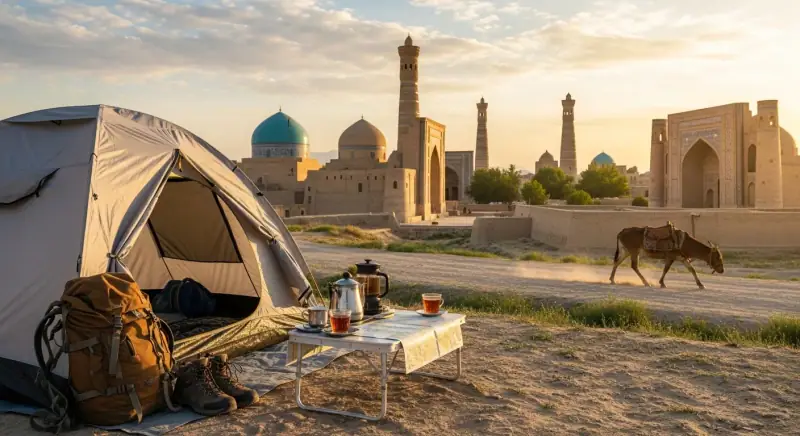
Uzbekistan budget: how much to plan for your trip
How much does a trip to Uzbekistan cost? Lodging, meals, transport, site entry fees: a complete budget guide to avoid surprises.
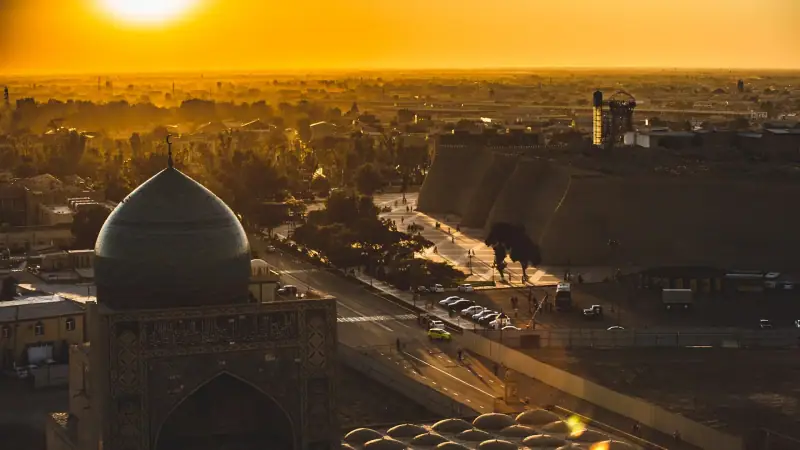
Things to do in Bukhara: the best activities and must-see visits
What to do in Bukhara? The Ark, Kalon minaret, covered bazaars, craft workshops, evenings in the old town. A complete guide to the best activities.
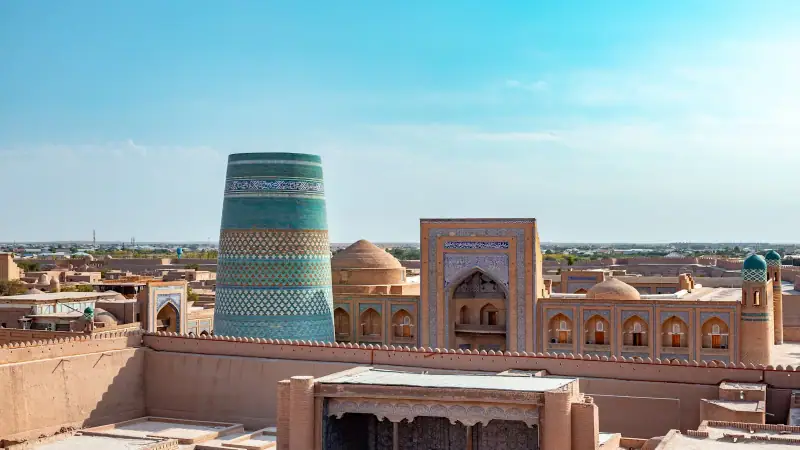
Things to do in Khiva: the best activities and must-see visits
What to do in Khiva? Minaret climb, craft workshops, desert fortresses, night walks... A complete guide to the activities not to miss in Khiva.
Ready-made
Uzbekistan itineraries
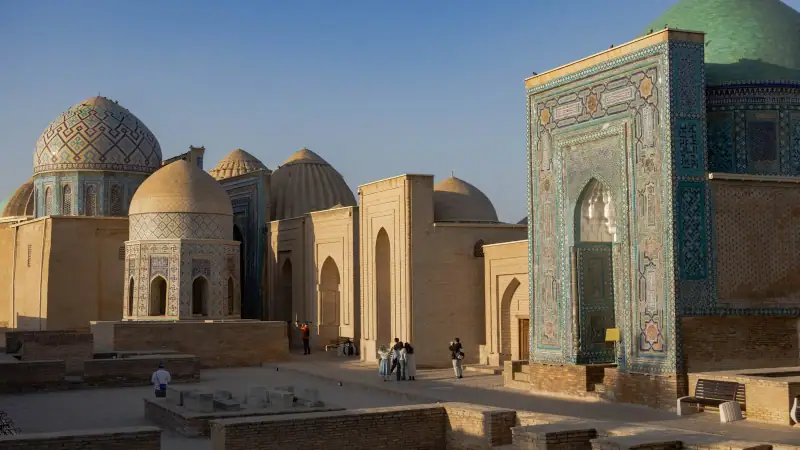
10 days
Uzbekistan in 10 days: a complete itinerary with the Ferghana Valley
TashkentFerghanaSamarkandBukharaKhiva
7 days
Uzbekistan in 7 days: the ideal Silk Road itinerary
TashkentSamarkandBukharaKhiva
9 days
Uzbekistan in 9 days with kids: stops and a family-friendly pace
TashkentSamarkandBukhara