What to see
Visiting Kandy: complete guide to Sri Lanka's cultural capital
We may earn a commission when you book through links on this page, at no extra cost to you. We don't visit or try the places we cover: we summarize published sources. How we work
In short
- Two full days cover Kandy's essentials: Temple of the Tooth, Peradeniya Botanical Garden, the lake and markets; allow 3 days to add day trips and a Kandyan dance show.
- Temple of the Tooth entry is 3,000 LKR for foreigners (about €8 / $9); daily pujas at 5:30 am, 9:30 am and 6:30 pm. Cover shoulders and knees, remove shoes.
- The Esala Perahera festival runs 10 days in July or August; hotels book out months ahead and prices triple.
- Check with Sri Lanka Railways that the Colombo and Ella lines have reopened after the damage from Cyclone Ditwah before counting on a train.
Kandy is much more than a stop on the road to the Hill Country. Sri Lanka’s second city and the former capital of the last independent Sinhalese kingdom, it keeps a soul that Colombo, absorbed by modernity, has largely lost. Nestled at 500 m (1,640 ft) in the green hills at the center of the island, Kandy is a crossroads between the tropical coast and the tea mountains, between Buddhist history and contemporary Sri Lankan urban life.
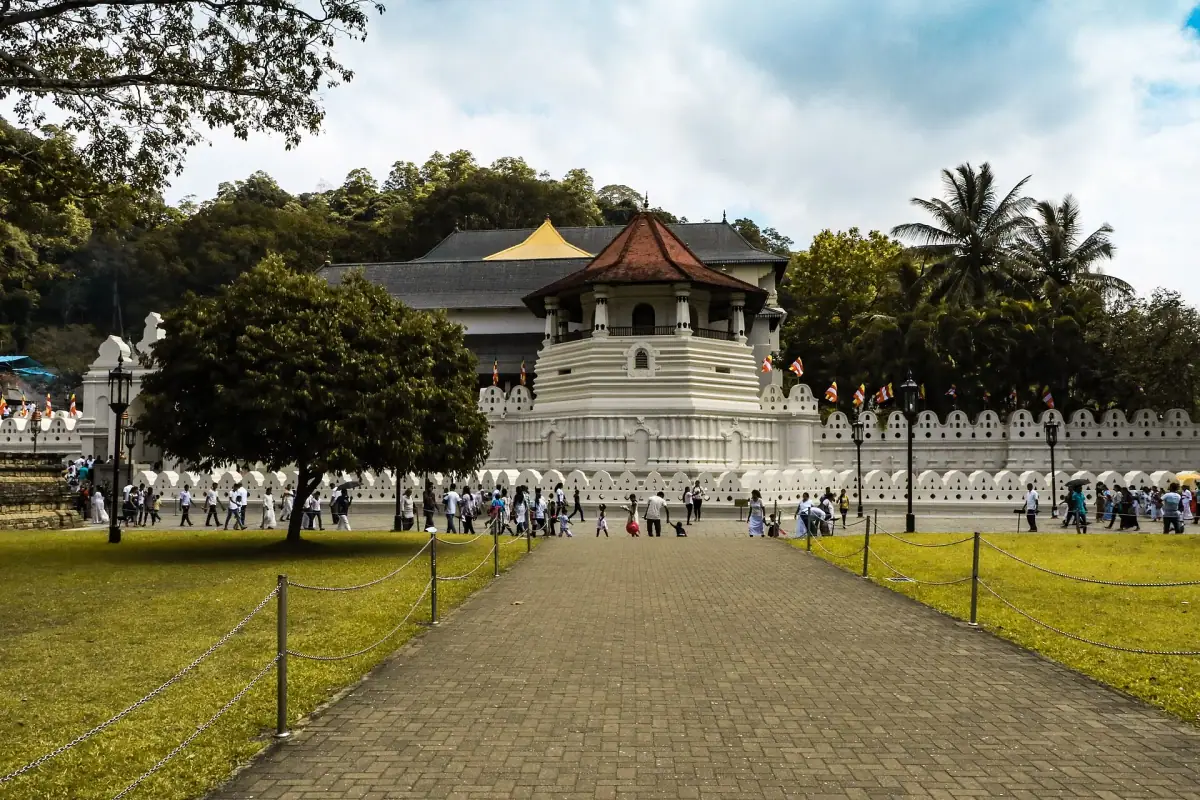
The heart of the city is organized around its artificial lake, built in the early 19th century by the last Kandyan king. On its banks stands the Sri Dalada Maligawa, the Temple of the Tooth, which houses the most sacred relic of Theravada Buddhism: a tooth of the Buddha. Around this sacred core revolve lively markets, ancient temples, spice and batik shops, and a distinctly Kandyan buzz found nowhere else on the island.
The Temple of the Tooth: the essential visit
The Sri Dalada Maligawa is the main reason most travelers come to Kandy. This complex of golden temples houses the Buddha’s tooth, brought from northern India in the 4th century CE and considered ever since the symbol of legitimate power in Sri Lanka. For centuries, the ruler who held the relic ruled the island.
Today, the tooth is kept in a series of nested caskets, on top of a golden altar that pilgrims sometimes wait hours to glimpse. The main temple is flanked by two museums, a royal elephant (yes, there is an elephant in residence) and an exhibition of historic offerings.
Practical tips:
- Arrive early in the morning (before 8 am) or in the evening to avoid the crowd of pilgrims
- Three daily ceremonies (puja) at 5:30 am, 9:30 am and 6:30 pm; attending a puja is an unforgettable experience
- Proper dress required: shoulders covered, knees covered, shoes removed
- Entry: 3,000 LKR (about €8 / $9) for foreigners
- Recommended time: 1 h to 1 h 30
Excursions in Kandy
Guided tours of the Temple of the Tooth, dance shows and city tours.
Peradeniya Botanical Garden
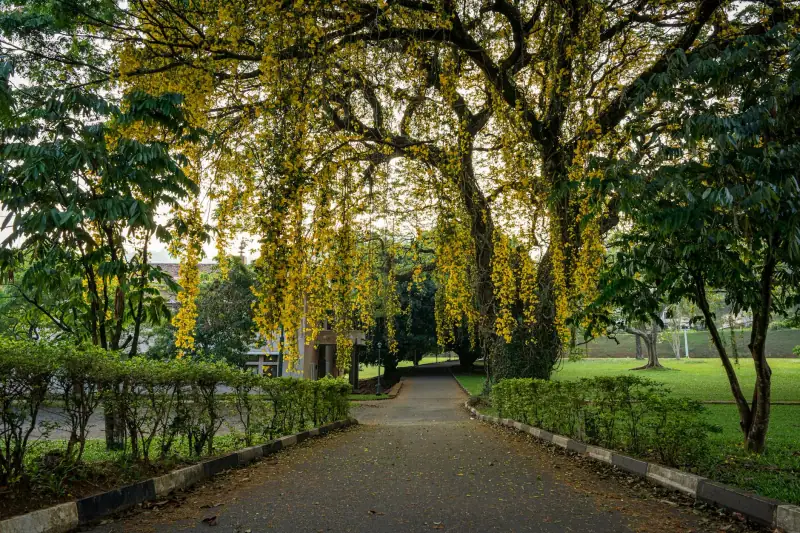
Only 6 km (4 mi) from central Kandy, the Royal Botanical Garden of Peradeniya is one of the most beautiful botanical gardens in Asia. Founded in 1821 by the British on the banks of the Mahaweli, Sri Lanka’s longest river, it covers 60 hectares (148 acres) of carefully arranged tropical vegetation.
What strikes you first is the diversity: avenues of royal palms 30 m (98 ft) tall, an avenue of giant bamboo whose stems form a natural vault, a collection of tropical orchids, a two-century-old Mexican butter tree, and a colony of flying foxes that permanently roost in the treetops. In the late afternoon, when these giant bats stir and take flight by the thousands, the sight is striking.
Highlights of the garden:
- The avenue of Cannonball trees, with their unique flowers
- The Ceylon fig tree planted in 1901, whose aerial roots form a forest on their own
- The orchid house and the medicinal plants section
- The view over the Mahaweli River from the central lawn
Allow 2 to 3 hours for a full visit. Entry about 3,000 LKR for foreigners. Take a tuk-tuk from central Kandy (15-20 minutes, 300-400 LKR).
Kandy Lake and the city center
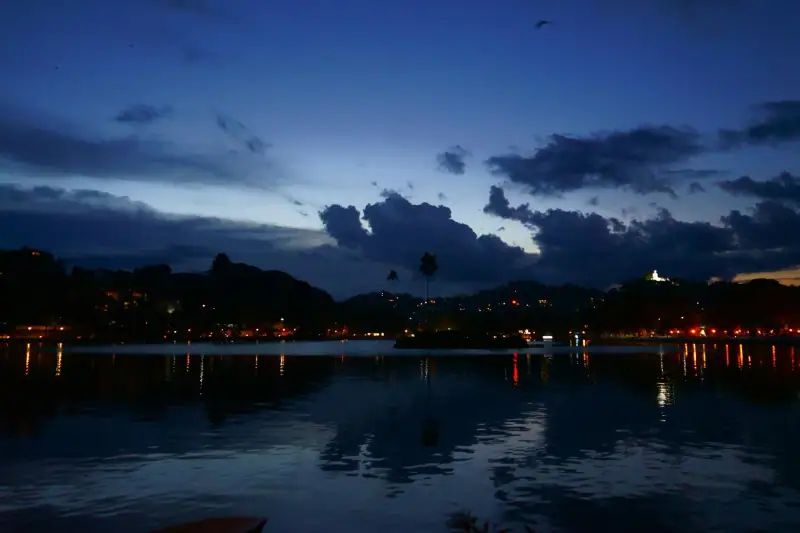
Kandy Lake is the beating heart of the city. Built in 1807 by King Sri Wikrama Rajasinha by diverting the Natha river, it was a colossal project that cost hundreds of lives. Today, its banks are a promenade much enjoyed by locals and travelers. The view from the water’s edge, with the golden temples as a backdrop and the wooded hills on the horizon, is the iconic image of Kandy.
Walking all the way around the lake takes about 45 minutes. On the north bank, the Malwatte Maha Vihara is one of the two most revered Buddhist temples in Sri Lanka. On the south bank, a few cafés and restaurants offer tables with a direct view of the water.
The Kandy central market also deserves an hour of wandering. You find tropical fruit, spices, textiles and unfiltered local life. Dried-fish stalls sit next to jewelers’ storefronts and sellers of fresh lotus flowers for temple offerings. It is noisy, smelly, alive: the real Kandyan pulse.
Hotels in Kandy
From lake-view guesthouses to colonial hotels in the hills.
Kandyan dance
In the evening in Kandy, you should attend a traditional Kandyan dance show. This classical dance style, developed in the royal courts of the Kingdom of Kandy, is on UNESCO’s intangible heritage list. The dancers wear costumes decorated with silvered metal, beads and elaborate headdresses, and perform a series of ritual dances to the rhythm of Ves drums.
Several halls offer daily shows for tourists, generally at 5:30 or 6 pm. The performance lasts about 1 hour and ends with the fire ceremony (Kandy fire show). Entry is about 1,500-2,000 LKR.
The main venues for this show are the YMBA Cultural Hall and the Kandy Lake Club. The shows are designed for tourists but remain authentic in content: the dancers are trained from childhood and the traditions have been passed down in Kandyan families for generations.
Exploring around Kandy
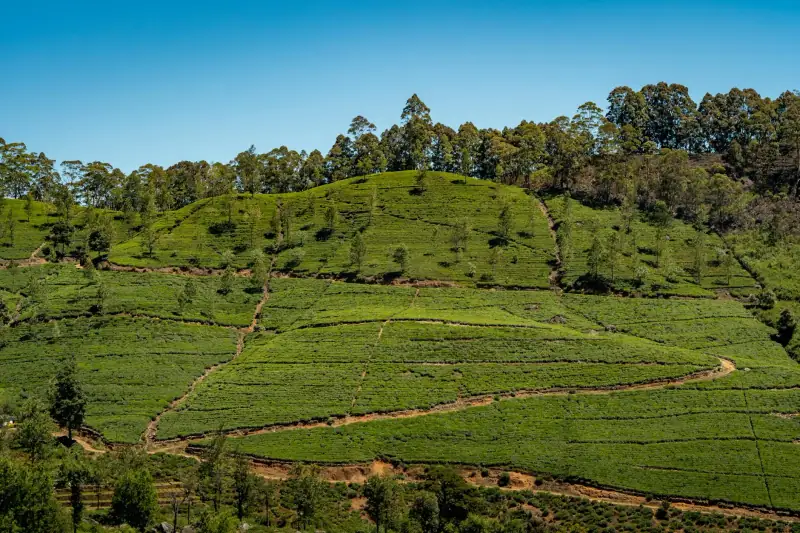
Kandy is an ideal starting point for several day trips in Sri Lanka’s central hills.
Nuwara Eliya and the tea plantations
About 75 km (47 mi) from Kandy, Nuwara Eliya, nicknamed “Little England”, is the center of the Ceylon tea industry. The road from Kandy crosses magnificent landscapes of hills covered in tea bushes. You can visit a tea factory, taste the different varieties and understand how the process goes from picking to the cup. To learn all about this crop, read our guide to Sri Lankan tea.
Sigiriya and the Cultural Triangle
Seventy km (43 mi) north of Kandy, the rock fortress of Sigiriya is one of the archaeological wonders of Asia. This 5th-century palace built on top of a 180 m (590 ft) volcanic rock pinnacle is a UNESCO World Heritage Site. The climb takes 45 minutes and rewards you with spectacular views of the surrounding jungle. Kandy is an excellent base for a day trip to Sigiriya or to the other Cultural Triangle sites (Anuradhapura, Polonnaruwa).
The Hill Country circuit
Kandy marks the entrance to the Hill Country, the mountainous region with the most dramatic landscapes on the island. Our Sri Lanka road trip recommends taking the iconic Kandy to Ella train across these hills, a 3 h 30 ride among the most beautiful in the world, with colonial viaducts, tunnels and tea plantations as far as the eye can see.
Rent a car in Kandy
Explore the Hill Country, Sigiriya and the plantations at your own pace.
Getting to Kandy
From Colombo
By train: Several daily trains link Colombo Fort to Kandy (2 h 30 to 3 h). InterCity Express trains are the fastest and most comfortable. Reserved second class costs about 1,300-1,400 LKR (about €4 / $5). First class about 2,000-2,100 LKR. Book ahead on railway.gov.lk in high season, and check with Sri Lanka Railways that the Colombo-Kandy link has reopened (the line was damaged by Cyclone Ditwah; status as of October 2026 to be confirmed with the railway).
By bus: Frequent buses leave from the Bastian Mawatha terminal in Colombo. About 3 hours, very low price (100-150 LKR), but less comfortable than the train.
By tuk-tuk or private car: If you arrive at Colombo airport and want to go straight to Kandy, a private van transfer is the simplest solution (about €15-25 / $17-29, 3 hours on the road).
From Ella
The train remains the star. From Ella, allow about 6 to 7 h via Nanu Oya (Nuwara Eliya). Book ahead, especially in December-March.
From Sigiriya
No direct train. By bus, the link goes through Dambulla (1 h 30 plus a 1-hour connection). By car or with a private driver: 1 h 30 directly on the central road.
Where to stay in Kandy
Kandy offers a wide range of accommodation for all budgets.
Budget (€10-25, ~$12-29): Family guesthouses abound in the hills around the lake. A more authentic atmosphere than chain hotels, hearty rice and curry breakfasts, and often a nice view as a bonus.
Mid-range (€30-80, ~$35-93): Boutique hotels are particularly well represented in Kandy. Look for places on high ground, in the hills above the lake, for terraces with panoramic views.
Luxury (€100+, ~$115+): A few British colonial hotels renovated to their former splendor, notably the large properties on the surrounding tea estates. The experience of sleeping in a villa in the middle of a tea plantation is worth the detour.
For a selection of accommodation by budget in Sri Lanka, see our guide to cheap hotels in Sri Lanka.
When to visit Kandy
Kandy can be visited practically all year thanks to its moderate altitude (500 m / 1,640 ft), which tempers the tropical heat. Temperatures range between 20 °C (68 °F) at night and 30 °C (86 °F) by day, with little seasonal variation.
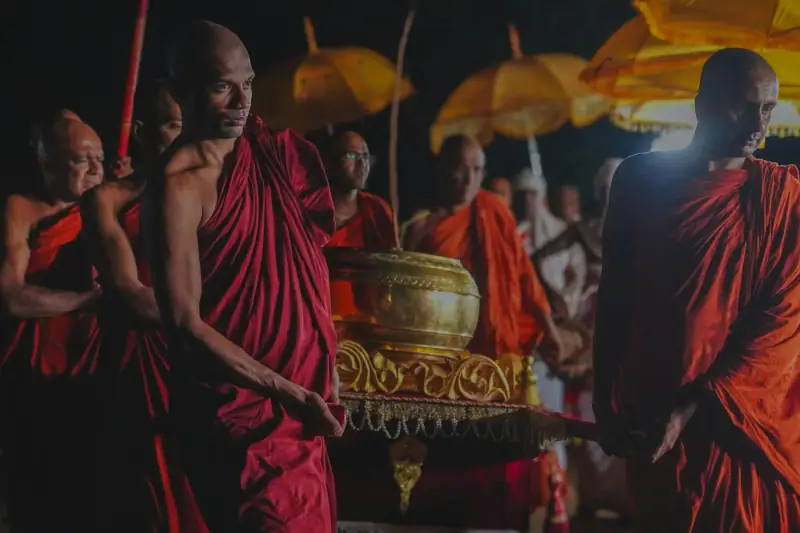
July-August is the liveliest period: the Esala Perahera festival takes place over 10 days in July or August (depending on the lunar calendar). This night procession is one of the most spectacular in Asia: caparisoned elephants carrying replicas of the sacred relic, dancers in glittering costumes, fire jugglers and musicians parade around the lake for hours. The show is unforgettable but hotels are booked months in advance and prices triple.
December-March is Sri Lanka’s general high tourist season. The weather is mild on the south coast and in the center. It is the best time to combine Kandy with Galle, Mirissa and the Hill Country. Our guide to the best time to visit Sri Lanka will help you plan your stay according to your priorities.
April-May is marked by the Sinhala and Tamil New Year in early April, a great chance to observe local traditions, though transport is packed.
Kandyan food
Kandy is an excellent introduction to authentic Sri Lankan cooking. Local rice and curry differs from what you find in Colombo or in tourist hotels: spicier, more varied, with about ten small dishes accompanying the rice: dal (lentils), mallung (chopped greens), coconut sambols, dried-fish fry or jackfruit curry.
A few places to look for: local restaurants around the central market (full meals for 200-300 LKR), food courts in the shops around the lake (excellent vegetarian food), and family guesthouses, which often serve the best curry of the trip.
In the morning, hoppers (appa), those bowl-shaped pancakes made of rice flour and coconut milk, are a classic, plain, sweet or with an egg. String hoppers (idiappa, rice vermicelli cakes) and kiribath (rice in coconut milk, a festive dish) complete the range of traditional breakfasts.
Flights to Sri Lanka
Bandaranaike International Airport (CMB) near Colombo is the main gateway. Compare prices.
Practical information for Kandy
Currency: The Sri Lankan rupee (LKR). ATMs are plentiful in the center. Remember to withdraw cash, as many small guesthouses and restaurants do not accept cards.
Getting around town: The tuk-tuk is the most practical way. Negotiate the price before getting in (allow 200-500 LKR for trips in town). The PickMe app (the Sri Lankan equivalent of Uber) lets you avoid haggling and offers fixed prices.
Languages: Sinhala and Tamil are the official languages. English is widely spoken in tourist areas.
Phone: Local SIM cards (Dialog, Mobitel) are available at the airport and in Kandy shops. 30-day data plan: about 500-1,000 LKR. You can also check your carrier’s international plan or use a travel eSIM.
Safety: Kandy is a safe city. Stay alert in very touristy areas (around the temple), where gem and “school” scams are common. If someone offers to take you to visit a school or an orphanage, it is most often a tourist scam.
Dress: In temples and religious sites, cover shoulders and knees. Remove shoes and socks before entering any sacred space.
Kandy is often the third or fourth stop of a 7-day Sri Lanka itinerary, between Colombo and the Hill Country. But the city deserves some time: two nights at least so as not to miss sunrise over the lake, the evening puja at the temple and a full tour of the market. Kandy is timeless Sri Lanka, the one that has existed for centuries, and still does, with a vitality and cultural pride that command admiration.
Frequently asked questions
How long does it take to visit Kandy?
Two full days are enough to see the essentials: the Temple of the Tooth, Peradeniya Botanical Garden, the lake, the markets and a few secondary temples. Allow 3 days if you want to explore the surroundings and see a Kandyan dance show.
Is Kandy dangerous for tourists?
Kandy is a very safe city for tourists. The most common scams involve tuk-tuks that raise prices or take you to unsolicited souvenir shops. Always negotiate the price before getting in, or use an app like PickMe.
How much is the entrance fee to the Temple of the Tooth?
Entry to the Sri Dalada Maligawa (Temple of the Tooth) costs 3,000 LKR for foreigners (about €8 / $9), and 2,500 LKR for nationals of South Asia (SAARC), Thailand and Myanmar. You must remove your shoes and cover your shoulders and knees. The visit takes about 1 to 1 h 30.
How do you get from Kandy to Ella by train?
The Kandy to Ella train is one of the most beautiful rail journeys in the world. It takes about 6 to 7 h depending on the train. Book online on the official Sri Lanka Railways site (railway.gov.lk) or at Kandy station, and first check that the line has reopened after the damage from Cyclone Ditwah. In high season, first-class seats go weeks in advance.
What is the best time to visit Kandy?
Kandy can be visited all year thanks to its altitude (about 500 m / 1,640 ft), but the July-August high season is particularly lively with the Esala Perahera festival, one of the largest religious processions in Asia. December to March is ideal for the rest of the country.
Are there tea plantations to visit near Kandy?
Yes, the area around Kandy marks the entrance to the Hill Country. The road to Nuwara Eliya passes the first plantations. Peradeniya Botanical Garden (6 km / 4 mi from Kandy) is next to cultivated areas. For more impressive plantation visits, continue to Ella or Nuwara Eliya.
More Sri Lanka guides
Keep reading
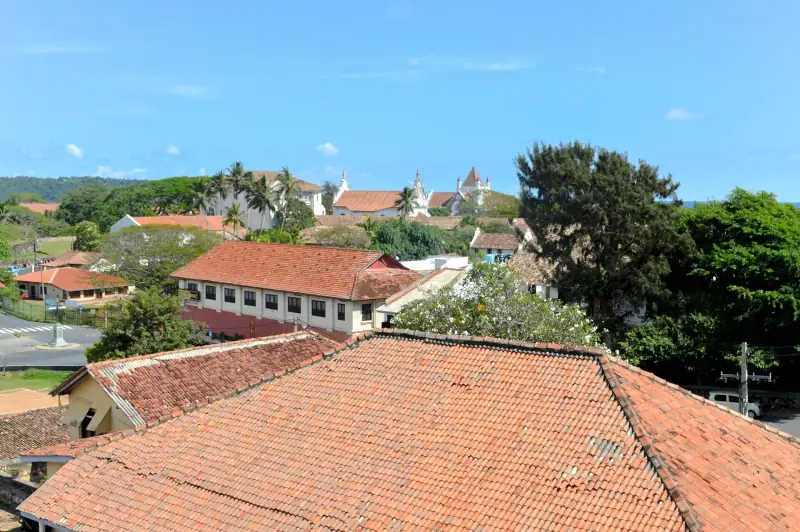
Visiting Galle: complete guide to Sri Lanka's Dutch fort
Everything to visit Galle: the UNESCO Fort, Unawatuna's beaches, restaurants, where to stay and how to get there from Colombo. 2026 guide.
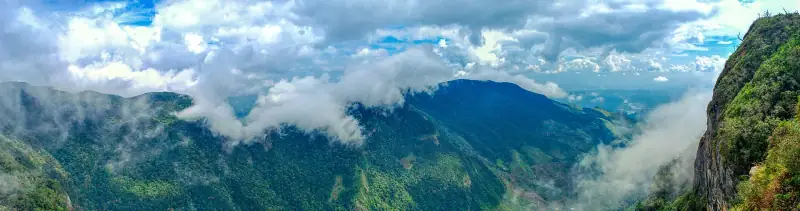
Horton Plains and World's End: hours, ticket price and getting there without a car
Horton Plains and World's End: opening hours, ticket, when to see the cliff before clouds, and how to get there without a car from Nuwara Eliya or Ella.
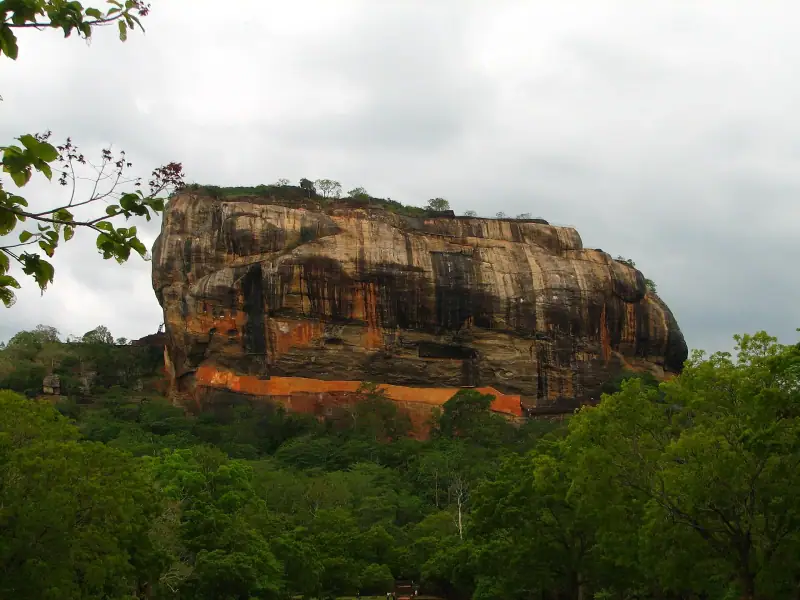
Sigiriya and the Cultural Triangle: complete guide to the sites
Complete guide to Sigiriya and the Cultural Triangle: Dambulla, Anuradhapura, Polonnaruwa. Practical tips, hours, prices and an optimized route.
Ready-made
Sri Lanka itineraries
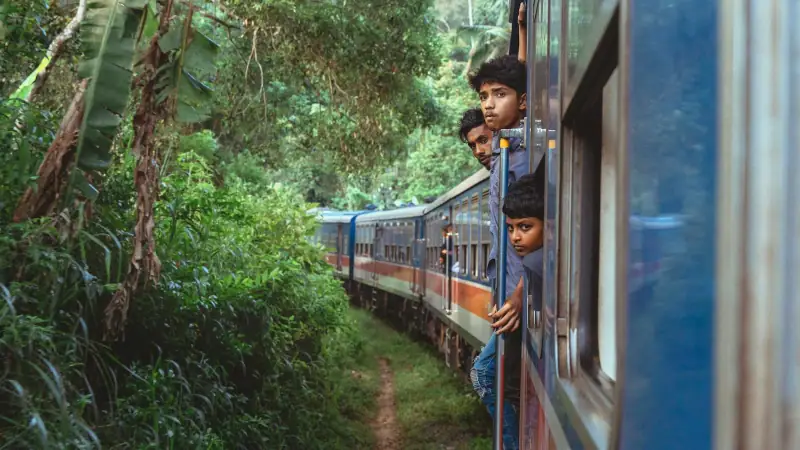
10 days
Sri Lanka in 10 days with kids: stops and pace
NegomboSigiriyaKandyHikkaduwa
Can be adapted in the planner
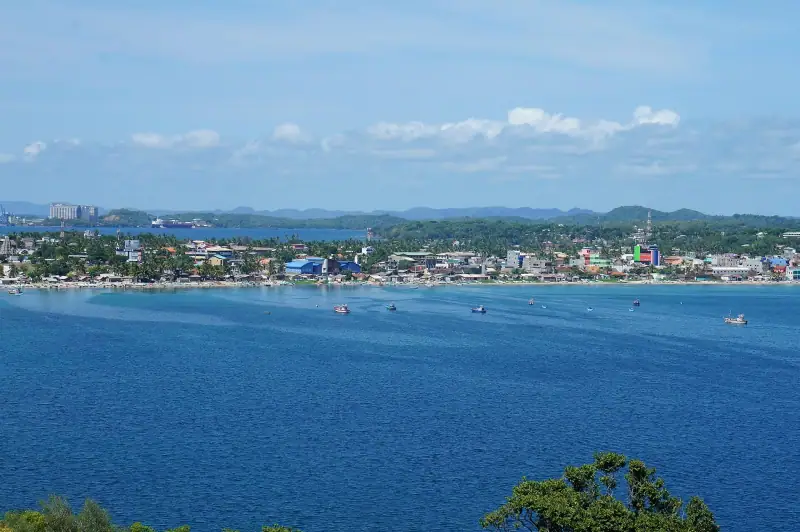
10 days
Sri Lanka east coast road trip: from Trincomalee to Arugam Bay
Sri Lanka east coast road trip itinerary: Trincomalee, Batticaloa, Arugam Bay in 7 to 10 days. Wild beaches, surf, nature and Tamil culture.
14 days
Sri Lanka road trip: a 2-week itinerary by car
14-day Sri Lanka road trip: complete itinerary with the Cultural Triangle, Hill Country and south coast. By car, with or without a driver.