What to see
Sigiriya and the Cultural Triangle: complete guide to the sites
We may earn a commission when you book through links on this page, at no extra cost to you. We don't visit or try the places we cover: we summarize published sources. How we work
In short
- Sigiriya takes 3 to 4 hours and costs 35 USD per foreign adult. Arrive at opening (7 am) to avoid crowds and heat.
- There is no combined Cultural Triangle pass any more: Anuradhapura and Polonnaruwa are 30 USD each, Dambulla about 3,000 LKR. Allow about 100 USD for the four sites.
- Dambulla and Sigiriya can be done in the same day (Dambulla caves in the morning, Sigiriya in the afternoon). Sleep nearby to visit Polonnaruwa the next day.
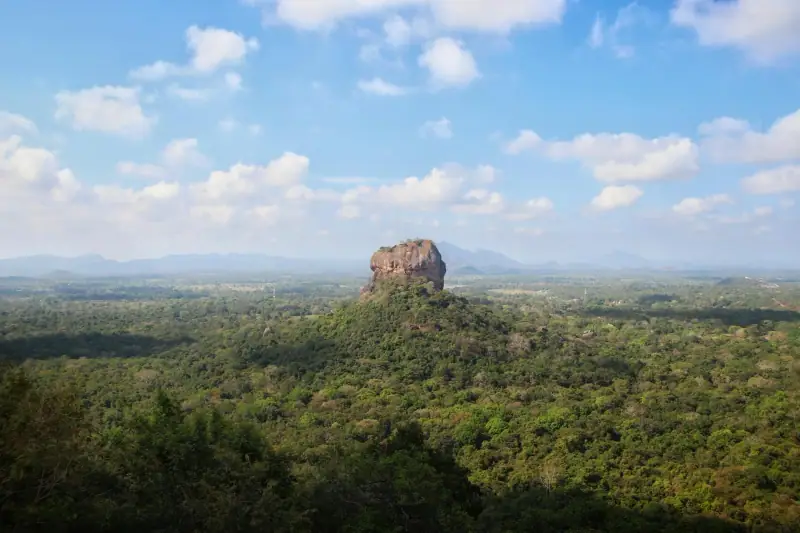
- Pidurangala rock (about 1,000 LKR, 3 USD) gives a front view of Sigiriya with fewer crowds, ideal at sunrise or sunset.
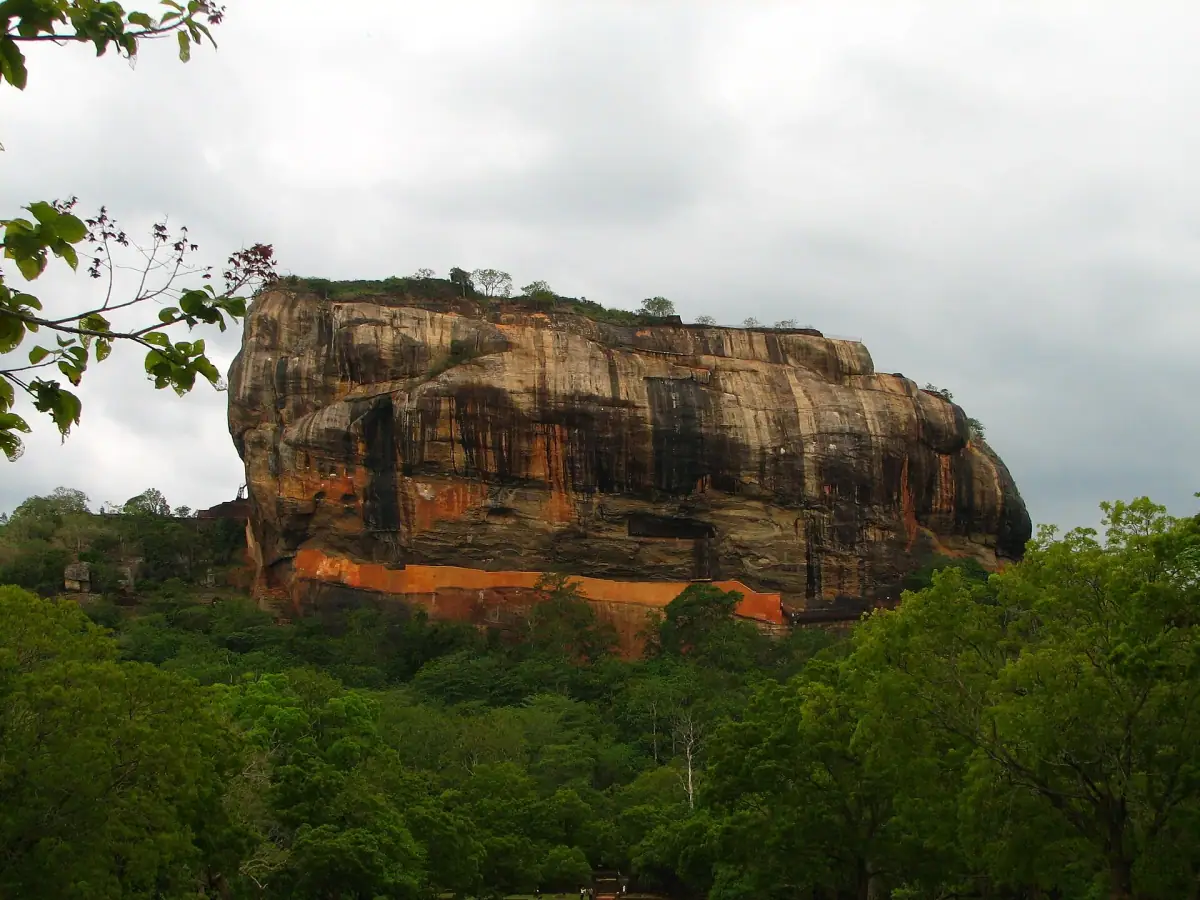
The Cultural Triangle of Sri Lanka is the island’s richest region for archaeological sites. Bounded by the ancient capitals of Anuradhapura, Polonnaruwa and Kandy, it includes sites among the most impressive in Asia. At the geographic heart of this triangle stands Sigiriya, the Lion Rock, the symbol of Sri Lanka and one of the most extraordinary archaeological sites in the world.
Sigiriya: the Lion Rock
The fascinating history
Sigiriya (in Sinhala: “Sinha Giri”, the Lion Rock) is a royal fortress built in the 5th century CE by King Kassapa I (477-495 CE). The story around it is worthy of a novel: Kassapa, illegitimate son of King Dhatusena, murders his father (by having him walled in alive, according to legend) and usurps the throne. Fearing the revenge of his legitimate half-brother Moggallana, he turns this 200 m (656 ft) monolithic rock into an impregnable fortress, with palaces hanging in the clouds.
After Kassapa’s death (defeated in battle by Moggallana in 495), the fortress became a Buddhist monastery for centuries, before being abandoned and forgotten until its rediscovery by British archaeologists in the 19th century.
The visit step by step
The water gardens (entrance): On arrival at the site, you first cross the landscaped water gardens of the 5th century, considered among the oldest planned gardens in the world. Gravity-fed fountains and symmetrical pools show extraordinary hydraulic genius.
The fresco gallery (100-150 m): Halfway up the climb, a glazed gallery shelters the famous frescoes of apsara women (called the “Cloud Maidens”). These 21 paintings (out of the original 500) show bare-breasted women carrying flowers and offerings. Dating from the 5th century, they are remarkably fine.
The Lion’s Paws (middle of the climb): The two monumental lion paws (all that remains of the colossal head that marked the palace entrance) indicate that only a third of the climb remains. The metal staircases follow from there, often very crowded and sometimes dizzying.
The summit: The royal palace at the top has almost entirely disappeared, but the foundations, the stone pools cut into the rock and above all the 360° panoramic view over the jungle and the plains of the island fully justify the effort of the climb. On a clear day, you can see the white stupas of Anuradhapura to the north.
Practical information:
- Opening: 7 am-5:30 pm
- Price: 35 USD (foreign adults), reduced rate for children
- Recommended time: 3-4 h
- Accessibility: not wheelchair accessible, not recommended for people with severe vertigo
- Gear: hat, water (2 L / about half a gallon minimum), closed shoes
The Golden Temple caves of Dambulla
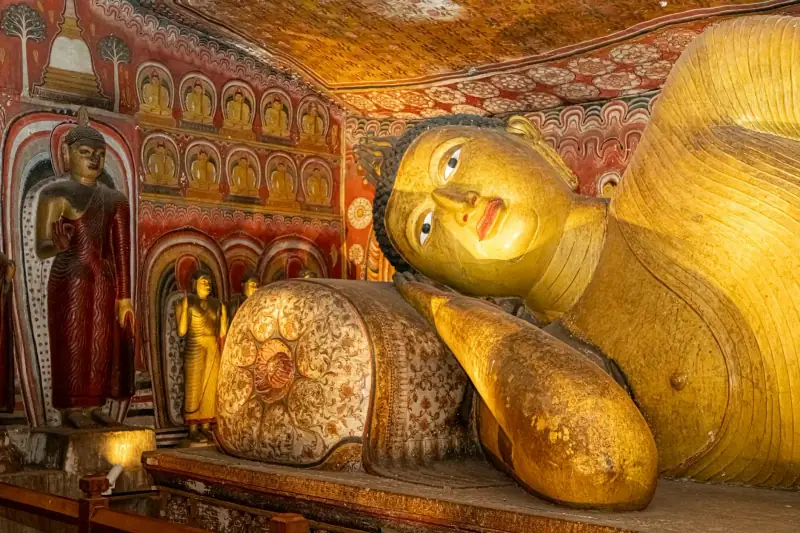
Seventeen km (11 mi) south of Sigiriya, the Golden Temple caves of Dambulla are one of the most important Buddhist sites in Sri Lanka and a highlight of the Cultural Triangle.
These 5 natural caves (cut into a granite cliff) were turned into temples 2,000 years ago. Together they hold 157 Buddha statues and 2,000 m² (21,500 sq ft) of wall paintings covering the walls and ceilings. The main entrance to cave 2 (the largest) shows Sri Lankan Buddhism in all its ornamental splendor.
What impresses:
- The 15 m (49 ft) reclining Buddha in cave 1
- 600 years of paintings layered on the same walls
- The devotional atmosphere of Buddhist pilgrims
- The view from the plateau over the Matale plain
Practical information:
- Price: about 3,000 LKR (around 10 USD)
- Time: 1 h 30-2 h
- Note: remove shoes and socks at the entrance, cover up
Anuradhapura: the thousand-year city
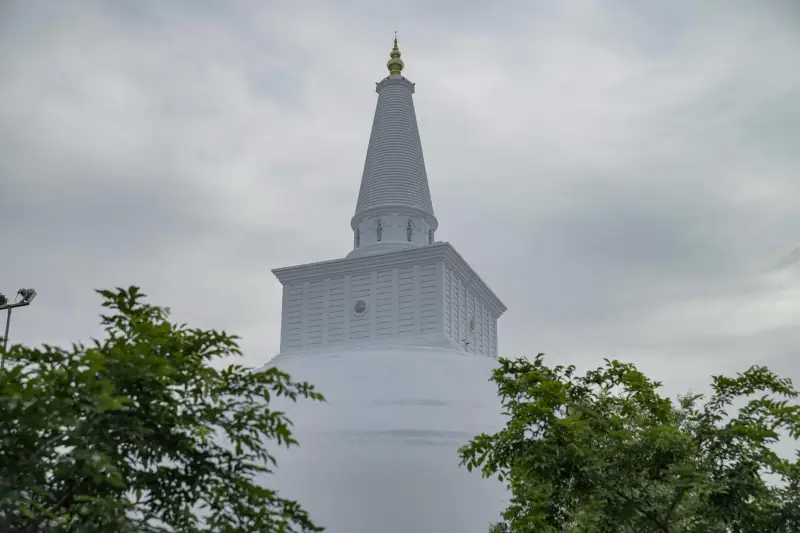
Anuradhapura is one of the oldest continuously inhabited cities in the world, founded in the 4th century BCE. Capital of the kingdom of Lanka for more than 1,000 years (4th century BCE to 11th century CE), it is today an immense archaeological site and a holy place of world Buddhism.
The highlights
Sri Maha Bodhi: The sacred Bodhi tree, a sacred fig planted in 288 BCE, is the oldest tree in the world with a documented history. It grew from a cutting of the original tree under which the Buddha awakened at Bodh Gaya. Thousands of pilgrims come to pray every day.
Ruwanwelisaya: This monumental white stupa (height 55 m / 180 ft, diameter 90 m / 295 ft) is one of the largest and most impressive structures in Sri Lanka. Built in the 2nd century BCE, it has been restored several times. Pilgrims walk in procession around its immense base.
Jetavanaramaya: The largest stupa in Anuradhapura (height 70 m / 230 ft) was, when it was built, the third tallest structure in the world after the pyramids of Egypt.
Abhayagiri: A monastic complex of the 2nd century BCE, with 5,000 monks at its peak. The ruins spread over several kilometers.
Practical information:
- Price: 30 USD
- Recommended time: 5-6 h (renting a bicycle or tuk-tuk is recommended, the site is very large)
- Best time: sunrise over the stupas (arrive at 6-6:30 am)
Polonnaruwa: the medieval city
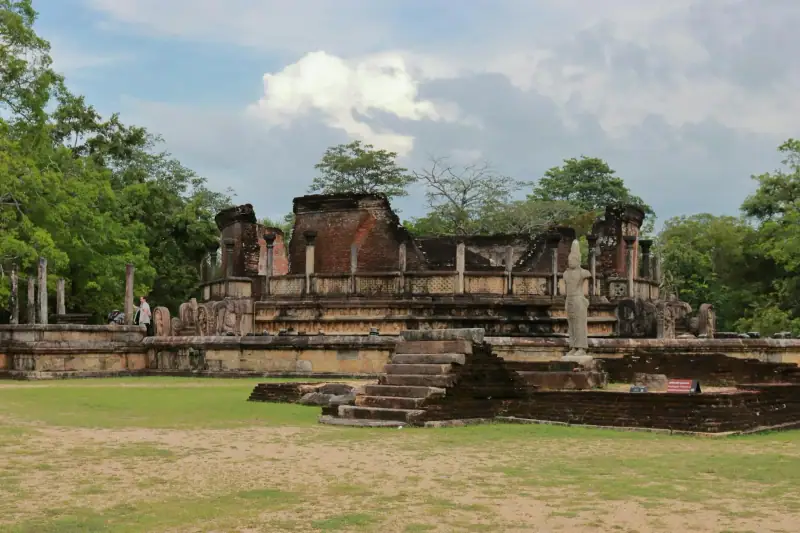
Polonnaruwa, capital of the kingdom of Lanka from the 11th to the 13th century, is the best-preserved archaeological site in Sri Lanka. Unlike Anuradhapura, which spreads over dozens of km², Polonnaruwa is more compact and can be visited in one full day by bicycle.
The jewel: Gal Vihara
The Gal Vihara (stone temple) is the main reason to visit Polonnaruwa. Four colossal Buddha figures are carved directly into a face of pink granite:
- A seated Buddha in meditation (5 m / 16 ft high)
- A standing Buddha (7 m / 23 ft, arms crossed), the most moving of the four
- A 15 m (49 ft) reclining Buddha in the state of parinirvana
- A seated Buddha in a chamber hollowed out of the rock
The precision of the carving and the expressiveness of the faces are striking, all the more so as they are 900 years old.
Other highlights of Polonnaruwa:
- The Royal Palace of King Parakramabahu (1153-1186)
- The Vatadage: a circular temple on four levels
- The Lotus Mandapaya: an altar decorated with stone lotuses
- Rankot Vihara: the largest stupa in Polonnaruwa
Practical information:
- Price: 30 USD
- Time: 4-5 h
- Bicycle rental: available at the entrance (~300 LKR)
Hotels in the Cultural Triangle
Sigiriya, Habarana, Anuradhapura: well placed for the visits.
Cultural Triangle tickets
The combined “Cultural Triangle Ticket” pass no longer exists: each site is paid separately. Indicative prices for a foreign adult:
- Sigiriya: 35 USD
- Anuradhapura: 30 USD
- Polonnaruwa: 30 USD
- Dambulla: about 3,000 LKR
So allow about 100 USD for the four sites. These rates change regularly: check them with the Central Cultural Fund before you leave.
Where to buy: on site at the entrance of each site, or online on the official Central Cultural Fund portal.
Car rental for the Cultural Triangle
Ideal for visiting all the sites at your own pace.
The Cultural Triangle of Sri Lanka is a 2,500-year journey through time. These sites are not mere archaeological ruins: they are alive, filled with thousands of Buddhist pilgrims who come every day to pray. This omnipresent spiritual dimension gives the visits a depth that goes far beyond the spectacle of thousand-year-old stones.
Frequently asked questions
How long does it take to visit Sigiriya?
Allow 3 to 4 hours for Sigiriya: 30 to 45 min up, 20 to 30 min at the top, 30 to 45 min down, plus the water gardens at the foot of the rock. Arrive at opening (7 am) to avoid the crowds and the heat.
What is the entrance fee for Sigiriya?
35 USD per foreign adult (reduced rate for children aged 6 to 12, free below). It is one of the most expensive sites in Sri Lanka, but the experience is well worth the price. There is no longer a combined pass for the Cultural Triangle: each site is paid separately (check rates with the Central Cultural Fund).
Can you visit Sigiriya and Dambulla on the same day?
Yes, it is the classic program. Leave Colombo or Kandy early in the morning, visit the Dambulla caves in the morning (2 h), then Sigiriya in the afternoon (4 h). Sleep nearby to visit Polonnaruwa the next day.
Are there wasps at Sigiriya?
Yes, wasps (hornets) have nested in the cliffs of Lion Rock. Incidents occasionally happen. Guides are trained to react. Avoid sudden movements halfway up and follow the guards' instructions.
Is it worth climbing Pidurangala?
Absolutely. Pidurangala rock (next to Sigiriya, entrance fee about 1,000 LKR, or 3 USD) offers a front view of Sigiriya that is perhaps even more beautiful. The climb is similar but without the crowds. Ideal for sunrise or sunset.
More Sri Lanka guides
Keep reading
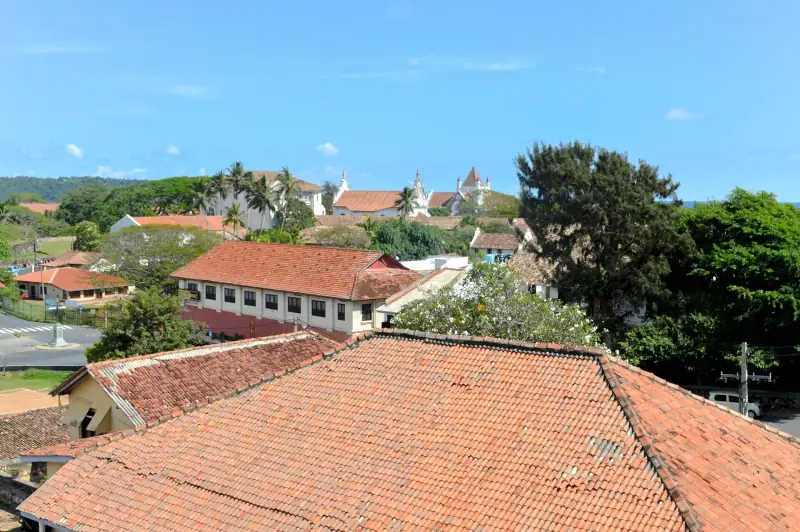
Visiting Galle: complete guide to Sri Lanka's Dutch fort
Everything to visit Galle: the UNESCO Fort, Unawatuna's beaches, restaurants, where to stay and how to get there from Colombo. 2026 guide.
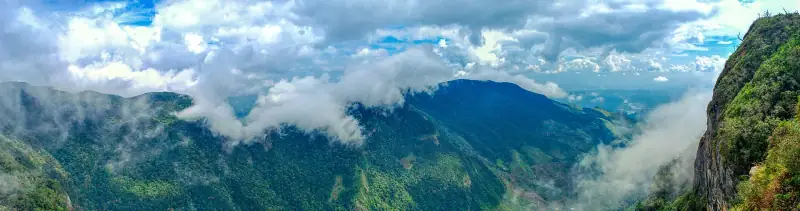
Horton Plains and World's End: hours, ticket price and getting there without a car
Horton Plains and World's End: opening hours, ticket, when to see the cliff before clouds, and how to get there without a car from Nuwara Eliya or Ella.
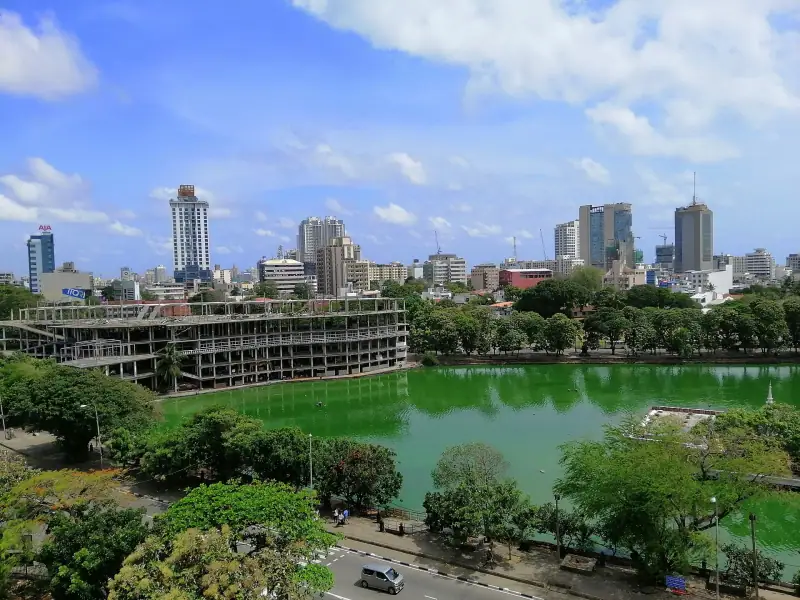
Visiting Colombo: complete guide to Sri Lanka's capital
Complete guide to visiting Colombo: Fort, Pettah, Gangaramaya, Galle Face Green, Cinnamon Gardens. What to see and do, where to stay and how to get there.
Ready-made
Sri Lanka itineraries
10 days
Sri Lanka in 10 days with kids: stops and pace
NegomboSigiriyaKandyHikkaduwa
Can be adapted in the planner
10 days
Sri Lanka east coast road trip: from Trincomalee to Arugam Bay
Sri Lanka east coast road trip itinerary: Trincomalee, Batticaloa, Arugam Bay in 7 to 10 days. Wild beaches, surf, nature and Tamil culture.
14 days
Sri Lanka road trip: a 2-week itinerary by car
14-day Sri Lanka road trip: complete itinerary with the Cultural Triangle, Hill Country and south coast. By car, with or without a driver.