What to see
Visiting Colombo: complete guide to Sri Lanka's capital
We may earn a commission when you book through links on this page, at no extra cost to you. We don't visit or try the places we cover: we summarize published sources. How we work
In short
- One to two days are enough for Colombo's essentials: the Fort, Pettah, Gangaramaya Temple, Galle Face Green and Cinnamon Gardens; three days if you add museums and markets.
- Bandaranaike International Airport (CMB) is in Katunayake, about 30 km (19 mi) north of the center: 45 min to 1 h 30 by car or taxi depending on traffic.
- Use PickMe or tuk-tuks with a price agreed in advance; avoid rush hours (8-9 am and 5-7 pm). Visit Pettah in the morning, before 11 am.
- The driest and most pleasant season on the west coast is December to March; April-May is very hot and June-September brings frequent southwest monsoon showers.
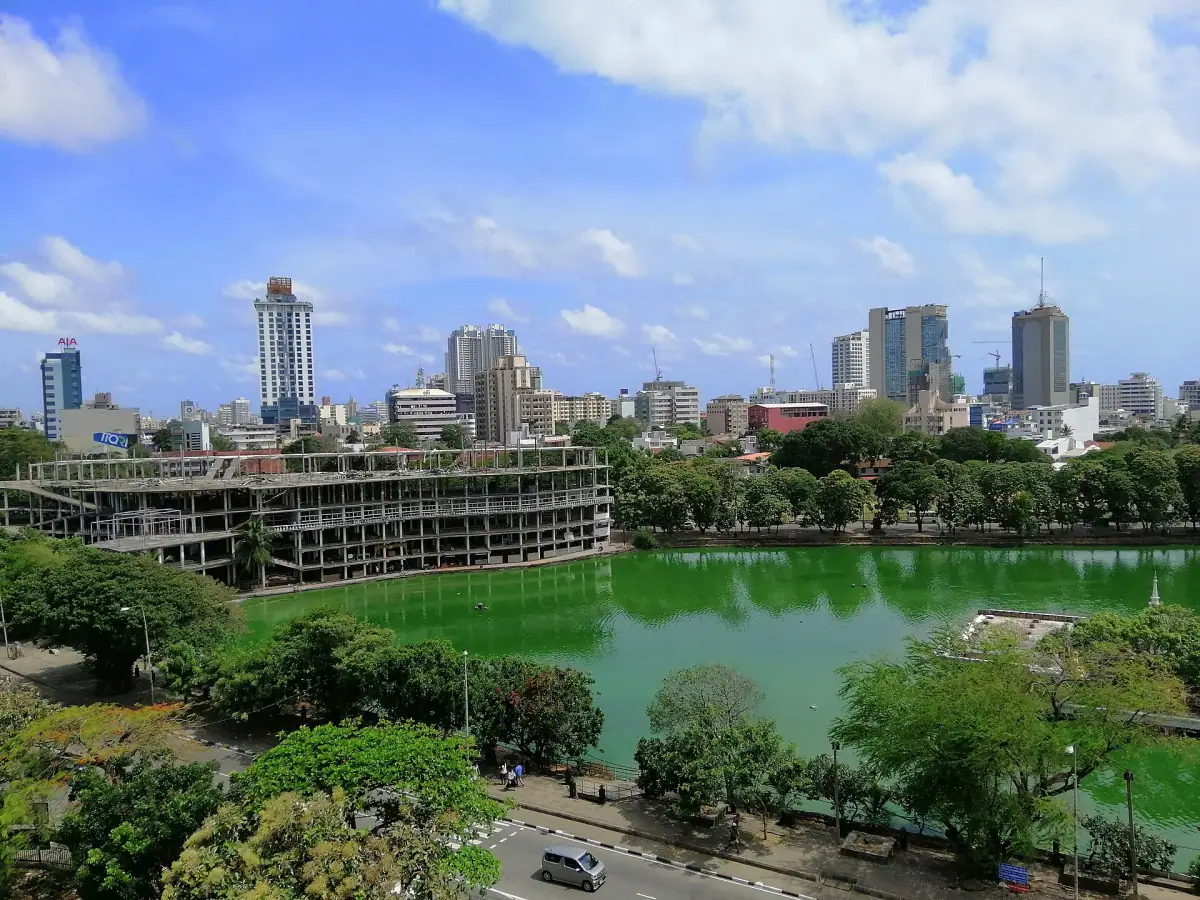
Colombo is often the first and last city travelers see in Sri Lanka, an almost unavoidable stop before plunging into the Hill Country, the south coast or the archaeological sites of the Cultural Triangle. Yet it deserves far more than a transit. Sri Lanka’s commercial capital is a dense, noisy tropical metropolis, crowded with tuk-tuks and scented with spices, incense and bus exhaust. It is also a city in the midst of change, where glass towers rise between British colonial villas, where fine-dining restaurants sit next to street food stalls, and where Buddhism, Islam, Hinduism and Christianity peacefully share the urban space.
The city is organized in district numbers, from Colombo 1 (the historic Fort) to Colombo 15 (the northern port), a legacy of colonial administration. For the traveler, the essentials are concentrated in districts 1 to 7: the Fort, Pettah, the Galle Face seafront, and the elegant residential district of Cinnamon Gardens. A well-planned day lets you cover them; two days give you time to savor them.
The Fort: colonial Colombo
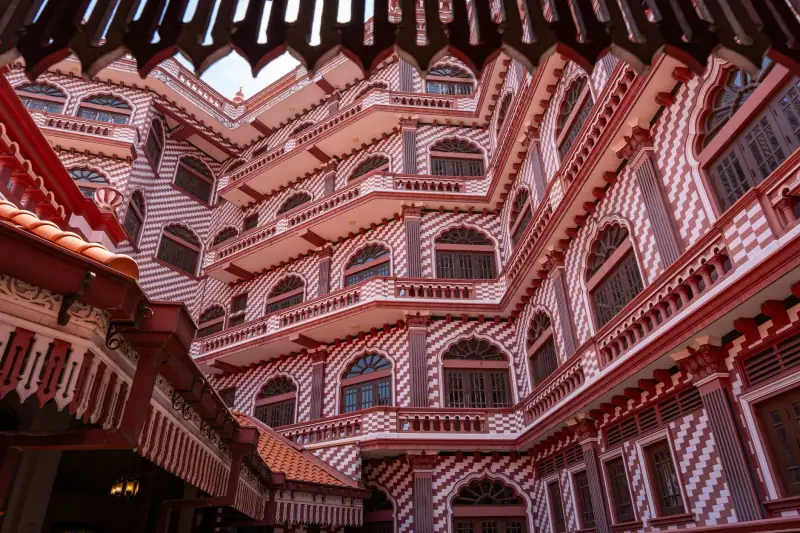
The Fort district (Colombo 1) is the historic and commercial center of the city. Originally fortified by the Portuguese in the 16th century, then extended by the Dutch and finally the British, it has lost its ramparts but kept its colonial grid and some of its finest period buildings.
Along Janadhipathi Mawatha (formerly Queen Street), the white facades of the Bank of Ceylon, the GPO and the former government buildings form a setting reminiscent of British Bombay or Singapore. The Colombo Lighthouse, one of the oldest in South Asia, stands at the end of the port, visible from the seafront.
Highlights of the Fort:
- Dutch Hospital: a fully restored 17th-century Dutch colonial building, converted into a dining area with restaurants, local designer shops and art galleries. It is the best place for lunch in a restrained colonial atmosphere, around the central courtyard.
- Colombo Fort Clock Tower: a 19th-century clock tower, an emblem of the city.
- World Trade Center: the twin trade towers, a symbol of modern Colombo.
- Beira Lake: the artificial lake in the heart of the Fort, surrounded by gardens. In the evening, the lights of the surrounding buildings reflect in the water.
The Fort is also the transport hub: Colombo Fort station serves every railway line in the country, and the main bus stops are concentrated in the area.
Flights to Colombo
Bandaranaike International Airport is the main gateway to Sri Lanka. Compare fares.
Pettah: Colombo’s great bazaar
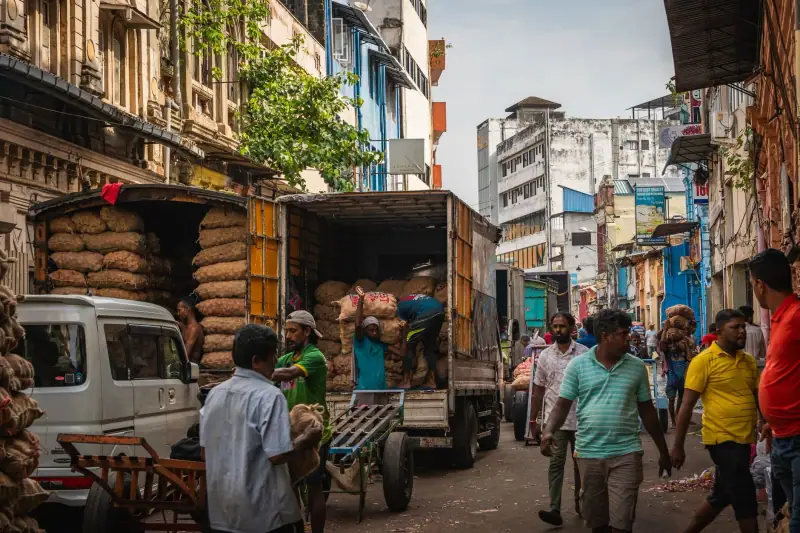
Just east of the Fort, the Pettah district (Colombo 11) is the popular commercial heart of the city, and probably the most chaotic and authentic place in all of Sri Lanka. Its streets are organized by specialty: one street for textiles, one for spices, one for mobile phones, one for building materials, one for saris. Together they form an immense open-air market that runs Monday to Saturday.
Pettah is also a microcosm of Sri Lankan diversity. Colombo’s Jumma Mosque (Grand Mosque), Hindu temples with their richly carved towers (gopurams), Sikh shops and Buddhist street vendors coexist within a radius of a few hundred meters. On Friday at noon, the streets around the mosque turn into a remarkable scene of collective devotion.
Tips for exploring Pettah:
- Go in the morning (before 11 am) to avoid the afternoon heat and the most crowded lanes.
- Do not take a tuk-tuk inside: walk, it is the only way to really see it.
- Do not be afraid to get lost: the inner lanes hide real treasures, such as spice shops with floors covered in colored powders, flower sellers for offerings, and wicker basket makers.
- Always negotiate: prices quoted to foreigners usually start two to three times higher than the real price.
Gangaramaya Temple
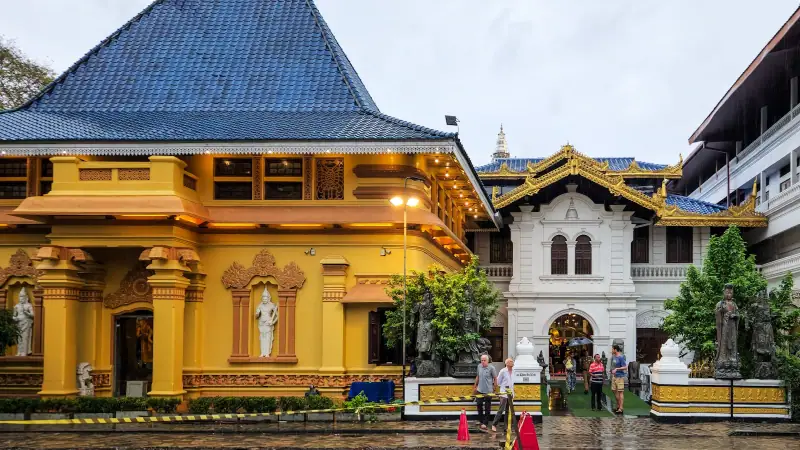
On the edge of Beira Lake, the Gangaramaya Buddhist temple is one of the most important and distinctive places of worship in Colombo. Founded in the late 19th century, it has kept growing ever since and today mixes Sri Lankan, Thai, Indian and Chinese architectural elements in a teeming and sometimes bewildering whole.
What strikes the visitor is the density of the collections: thousands of religious objects given by worshippers from around the world pile up in the temple’s halls, with Buddha statues in jade, wood, marble and bronze, caparisoned elephants, and images of deities from every corner of Buddhist Asia. There is even a museum inside the complex with vintage cars, royal robes and other curiosities bequeathed to the temple over the decades.
The Vesak ceremony (May, celebrating the birth, enlightenment and death of the Buddha) turns the temple and the whole neighborhood into a festival of lights and lanterns that draws tens of thousands of pilgrims.
Practical information:
- Open daily, generally from 6 am to 10 pm.
- Paid entry for foreigners: about 300-500 LKR (a tip may come on top).
- Proper dress required: shoulders and knees covered, shoes removed at the entrance.
- Next to the temple, a flower market sells lotus, jasmine and garlands for offerings.
Guided tours of Colombo
Walking tours, tuk-tuk excursions and half days to discover the Fort, Pettah and the temples.
Galle Face Green: the city’s seaside lung
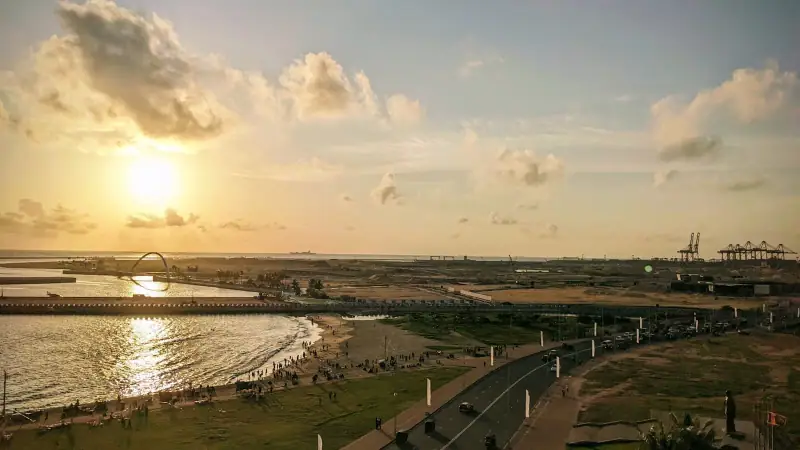
Galle Face Green is the large esplanade running along the Indian Ocean beside Galle Road, in the heart of Colombo. Its 500 m (1,640 ft) of seafront lawn make it one of the locals’ favorite places to stroll. They gather there in the late afternoon and evening to enjoy the sea breeze, fly kites, play cricket or simply sit facing the waves.
For the traveler, Galle Face Green offers:
- The best sunset view from Colombo, with the Indian Ocean ablaze on the horizon and the skyscrapers of the Fort as a counterpoint.
- Street food vendors who set up in the evening: isso vadai (prawn fritters), isso rotti (rice flatbreads with prawns), lunu miris (spicy sambol), sliced tropical fruit. It is one of the best introductions to Sri Lankan street food in Colombo.
- The popular atmosphere: whole families arrive on weekends, teenagers play ball, couples enjoy the evening cool. The place is inclusive, lively and relaxed, the opposite of the stiff atmosphere of the luxury hotels that line it.
Right across from Galle Face Green is One Galle Face Mall, the city’s newest upscale shopping center. For travelers looking for an air-conditioned café, a pharmacy or a supermarket at affordable prices, it is a good address.
Cinnamon Gardens and the museums
The Cinnamon Gardens district (Colombo 7) is Colombo’s upscale residential area: colonial villas hidden behind lush tropical gardens, embassies, designer shops and fine-dining restaurants. Its name comes from the former cinnamon plantations that occupied this land in Dutch times.
In the heart of Cinnamon Gardens, two major sites are worth a visit:
Colombo National Museum
The Colombo National Museum is the largest museum in Sri Lanka. Founded in 1877, it traces 2,500 years of the island’s history: collections of Buddhist and Hindu art, weapons and armor of the Sinhalese kingdoms, royal jewelry, demon masks, reconstructed colonial rooms and a section devoted to Sri Lanka’s endemic wildlife.
It is the best cultural introduction to the island for a traveler starting a circuit. Allow 2 to 3 hours for a full visit. Entry is paid for foreigners (about 500-1,000 LKR depending on the source; check the rate with the museum). Open Tuesday to Sunday from 9 am to 5 pm, closed Monday and public holidays.
Independence Memorial Hall
Independence Square and the Independence Memorial Hall commemorate Sri Lanka’s independence in 1948. The central structure, a colonnaded hall inspired by Kandyan temples, sits in the middle of a well-kept park with fountains and shaded paths. It is more symbolic than a museum, but a walk in the park early in the morning or in the evening is very pleasant.
Hotels in Colombo
From a friendly guesthouse in Colombo 7 to large hotels facing the Indian Ocean.
Getting to Colombo
From the international airport (CMB)
Bandaranaike International Airport is in Katunayake, about 30 km (19 mi) north of central Colombo. By car or taxi, the trip takes between 45 minutes and 1 h 30 depending on traffic; rush hours (7-9 am and 5-7 pm) can double that time. A private taxi booked in advance through your hotel or through Uber/PickMe is the simplest way. The official meters at the arrivals exit display the regulated fares.
A public bus service also links the airport to Colombo Fort, but schedules are irregular and the experience with luggage is exhausting.
From Kandy
By train: This is the best option. Normally, several daily trains link Kandy to Colombo Fort in 2 h 30 to 3 h, but the line was damaged by Cyclone Ditwah and service to Kandy is disrupted (as of October 2026): check the status of the line with Sri Lanka Railways before booking. InterCity Express trains are the fastest. Book online or at Kandy station.
By bus: Frequent buses (every 20-30 minutes) link Kandy to Colombo in about 3 hours. Cheaper than the train but less comfortable.
By car: The road between Kandy and Colombo is about 117-123 km (73-76 mi) via the A1 (national road) and partly the E03 (Outer Circular Expressway). Allow 2 to 3 hours depending on traffic. The E01 (Southern Expressway) serves Galle to the south, so do not confuse them.
From Galle and the south coast
By express bus: Air-conditioned buses regularly link Galle to Colombo in about 2 h to 2 h 30 via the southern expressway. This is often faster than the train on this line.
By train: The coastal line runs along the ocean from Colombo to Galle and beyond. It is a scenic ride (the track brushes the beach in places) but slower than the express bus (2 h 30 to 3 h). Our complete guide to Sri Lanka in 7 days will help you organize your travel between towns.
From Sigiriya and the Cultural Triangle
There is no direct rail link from Sigiriya. By bus, the trip goes through Dambulla and Kurunegala and takes 5 to 6 hours. A private taxi or driver does the trip in 3 h 30 to 4 h 30 depending on traffic. See our article on the Sri Lanka road trip to optimize your circuit.
Where to stay in Colombo
Colombo offers the widest range of accommodation in Sri Lanka.
Budget (€15-30, ~$17-35): Guesthouses and hostels are concentrated in Colombo 6 (Wellawatta) and Colombo 3 (Kollupitiya). Less touristy atmosphere but well connected to the rest of the city.
Mid-range (€40-90, ~$46-105): Boutique hotels in Colombo 7 (Cinnamon Gardens) or Colombo 3 (facing Galle Road) offer good value with shops, restaurants and transport within reach.
Luxury (€150+, ~$175+): Several large international chains occupy the Galle Road waterfront with pools, luxury restaurants and views of the Indian Ocean. Competition is strong and prices remain affordable compared with regional capitals.
For a full selection by area and budget, see the dedicated guide where to stay in Colombo.
Food: tasting Colombo
Colombo is Sri Lanka’s food capital, with a culinary scene that blends local, colonial and international influences.
Street food not to miss:
- Isso vadai (prawn fritters): on Galle Face Green in the evening, the classic snack.
- Kottu roti: roti flatbread chopped with a spatula along with vegetables, eggs and curry, the street dish Sri Lankans love most after dark. The metallic chopping noise on the hot plate is the nighttime sound of Colombo.
- Hoppers (appa): bowl-shaped pancakes made of rice flour and coconut milk, ideal for breakfast with an egg or mel (honey) and coconut sambol.
- Short eats: small fried or steamed bites sold in local bakeries: isso cutlets (prawn croquettes), patties, fish rolls.
Where to eat: Local bakeries are the best spots for a quick, cheap meal (100-200 LKR per dish). Rice and curry restaurants outside tourist areas serve the most authentic meals at unbeatable prices. The Pettah Floating Market near the canal is now largely abandoned (most stalls are closed): for fresh fruit, prefer the Pettah markets. For a more upscale experience, the Dutch Hospital district in the Fort has a concentration of restaurants in a restored colonial setting.
To go further, our guide to Sri Lankan food details the essential dishes, ingredients and regional specialties to try along the circuit.
Practical information for Colombo
Currency: Sri Lankan rupee (LKR). ATMs are plentiful in the Fort, Pettah and Cinnamon Gardens. Bank cards are accepted in hotels and large restaurants, but bring cash for tuk-tuks, markets and small restaurants.
Getting around town: The tuk-tuk remains the most practical way for short trips. Use PickMe (the local ride-hailing app) to avoid haggling and get transparent prices. Uber is also present. Public buses cover the whole city but are hard to use without knowing the routes.
Internet: Local SIM cards (Dialog, Mobitel) can be bought at the airport or in many shops in town. A 30-day data plan costs about 1,000 to 2,500 LKR depending on the operator and data volume. Wi-Fi is available in nearly all hotels and in many cafés. You can also check your carrier’s international plan or use a travel eSIM.
Safety: Colombo is a safe city overall. Be alert in Pettah (pickpockets in crowded lanes) and beware of fake “tourist guides” who offer to take you to partner jewelry shops. At night, stay in well-lit areas.
Language: Sinhala and Tamil are the official languages; English is very widely spoken in commercial and tourist areas. Colombo is one of the most English-speaking cities in South Asia.
Electricity: Sri Lanka uses type D (three round pins) and type G (British) sockets. Bring a universal adapter.
Colombo is the logical starting point of any circuit in Sri Lanka, and this position often gets it sacrificed on the altar of “we don’t have time”. That is a mistake. In two days the capital offers a palette of experiences (colonial, religious, culinary, popular) that lays the foundation for everything you will discover next on the island. The Fort will tell you the history, Pettah will plunge you into everyday reality, Galle Face Green will give you the best sunset of your stay, and Gangaramaya Temple will remind you that behind the megacity lies a thousand-year-old Buddhist civilization.
To plan your whole trip, see our complete guide to Sri Lanka and our article on the best time to visit the island.
Frequently asked questions
How long does it take to visit Colombo?
One to two days are enough to see the essentials: the Fort district, Pettah, Gangaramaya Temple, Galle Face Green and Cinnamon Gardens. If you want to explore the museums, markets and residential districts in more detail, allow three days. Most travelers include Colombo at the start or end of a circuit.
Is Colombo worth the detour?
Yes, as long as you do not expect a peaceful city. Colombo is dense, noisy, chaotic, but fascinating. It combines the best of Sri Lankan modernity (renovated colonial architecture, creative restaurants, museums) and raw Asian bustle in Pettah. It is an ideal gateway to the island and a useful counterpoint to the rural landscapes of the rest of the circuit.
How do you get around Colombo?
The tuk-tuk remains the most practical and cheapest way for short trips in the city. Negotiate the price before getting in or use the PickMe app (the Sri Lankan equivalent of Uber, with fixed prices). For longer trips, PickMe Car and Uber are available. Avoid rush hours (8-9 am and 5-7 pm), when traffic is very heavy.
When is the best time to visit Colombo?
Colombo can be visited all year. The dry season on the west coast (December to March) is the most pleasant: moderate heat, less rain. Avoid April-May (oppressive heat and the growing monsoon) and June-September (southwest monsoon with frequent showers). The capital is active all year, though, and museums and covered sites remain accessible even in the rain.
Is Colombo dangerous for tourists?
Colombo is generally safe for tourists. The most common scams involve tuk-tuks that inflate prices for foreigners and unsolicited "guides" in Pettah. Use PickMe for trips, always negotiate in advance, and be wary of overly insistent approaches around tourist sites. In the evening, stay in busy areas (Fort, Cinnamon Gardens, One Galle Face).
How do you get to the airport from central Colombo?
Bandaranaike International Airport (CMB) is in Katunayake, about 30 km (19 mi) north of central Colombo. By car or private taxi, allow 45 minutes to 1 h 30 depending on traffic (the road can be very congested in the morning). There is also a train from Colombo Fort station to Katunayake station (about 1 h 10, a few departures a day; check times with Sri Lanka Railways), but the station is not at the foot of the terminal. Take an Uber or PickMe to avoid fare surprises.
More Sri Lanka guides
Keep reading
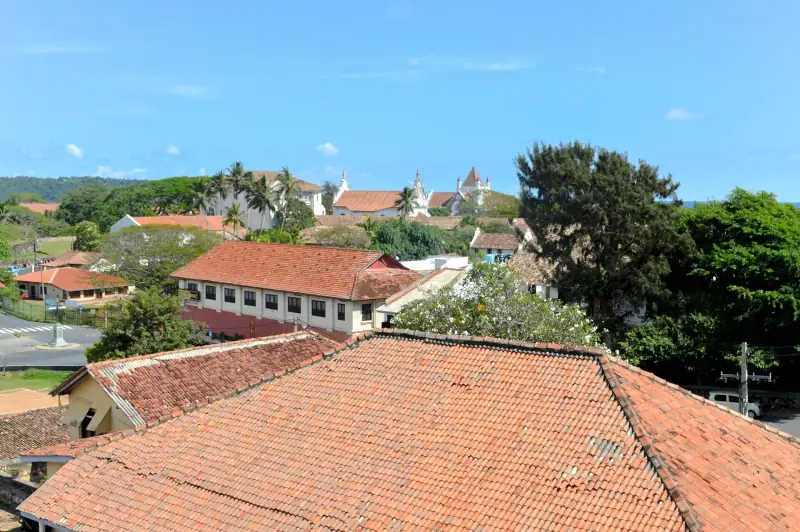
Visiting Galle: complete guide to Sri Lanka's Dutch fort
Everything to visit Galle: the UNESCO Fort, Unawatuna's beaches, restaurants, where to stay and how to get there from Colombo. 2026 guide.
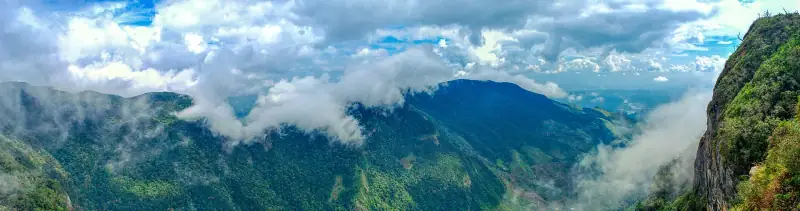
Horton Plains and World's End: hours, ticket price and getting there without a car
Horton Plains and World's End: opening hours, ticket, when to see the cliff before clouds, and how to get there without a car from Nuwara Eliya or Ella.
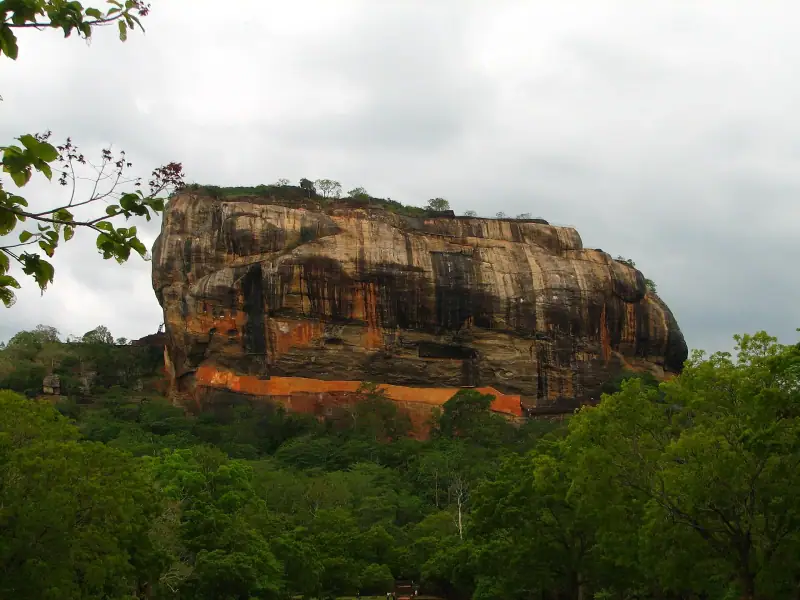
Sigiriya and the Cultural Triangle: complete guide to the sites
Complete guide to Sigiriya and the Cultural Triangle: Dambulla, Anuradhapura, Polonnaruwa. Practical tips, hours, prices and an optimized route.
Ready-made
Sri Lanka itineraries
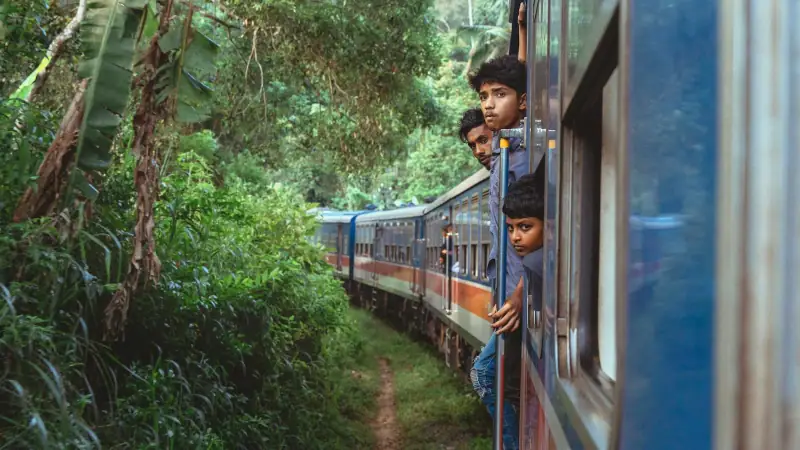
10 days
Sri Lanka in 10 days with kids: stops and pace
NegomboSigiriyaKandyHikkaduwa
Can be adapted in the planner
10 days
Sri Lanka east coast road trip: from Trincomalee to Arugam Bay
Sri Lanka east coast road trip itinerary: Trincomalee, Batticaloa, Arugam Bay in 7 to 10 days. Wild beaches, surf, nature and Tamil culture.
14 days
Sri Lanka road trip: a 2-week itinerary by car
14-day Sri Lanka road trip: complete itinerary with the Cultural Triangle, Hill Country and south coast. By car, with or without a driver.