Plan your trip
Climbing Triglav without a guide: is it allowed, budget and required gear?
We may earn a commission when you book through links on this page, at no extra cost to you. We don't visit or try the places we cover: we summarize published sources. How we work
In short
- Climbing Triglav (2,864 m / 9,396 ft) without a guide is legal and common; the constraint is technical: the last 300 m (984 ft) are a cabled via ferrata.
- A harness, a via ferrata lanyard with an energy absorber and a helmet are essential; rental costs about €15 to €25 (~$17 to $29) for 2 days.
- Solo costs about €90 to €115 (~$105 to $135) per person for 2 days, versus about €150 to €420 (~$175 to $490) with a guide.
- Best period: mid-July to mid-September; book the mountain hut 1 to 2 months ahead, as huts are full weeks ahead in July-August.
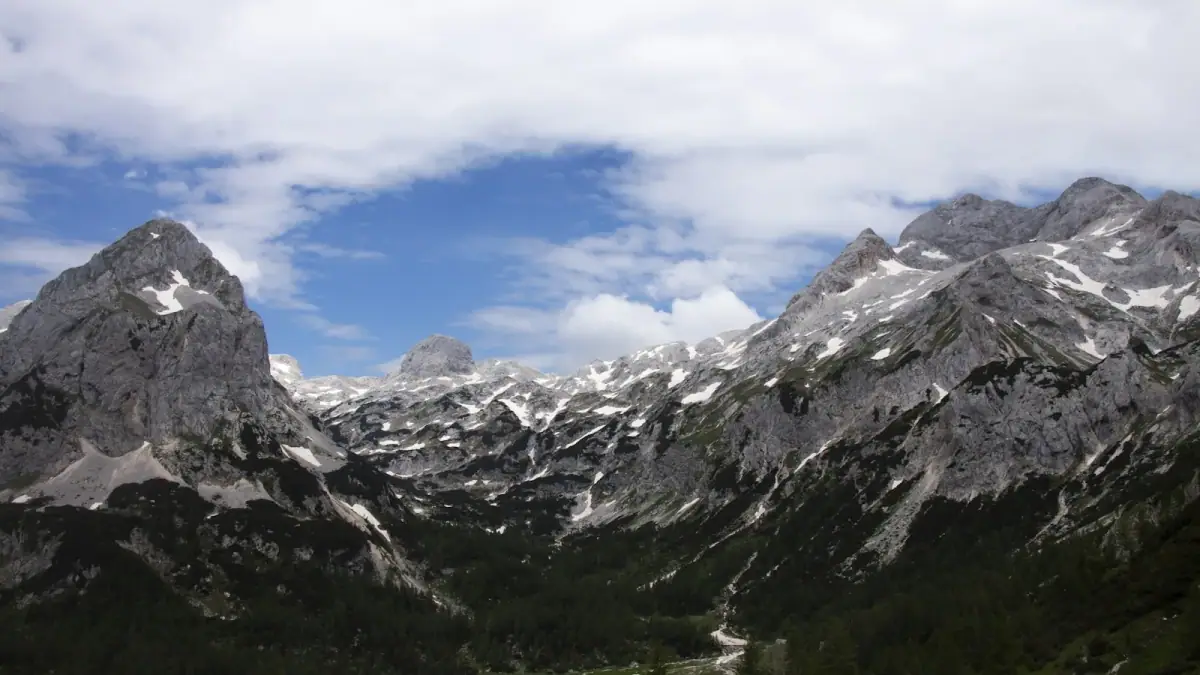
Mount Triglav, the highest point in Slovenia at 2,864 m (9,396 ft), is much more than a summit: it is a national symbol that almost every Slovene dreams of climbing at least once. Every summer the question comes up again and again in hiking forums: can you do it on your own, without going through an agency, and if so with what gear and what budget? The short answer is yes, as long as you take the summit via ferrata seriously. Here is everything you need to know before setting off.
Is Triglav without a guide really allowed?
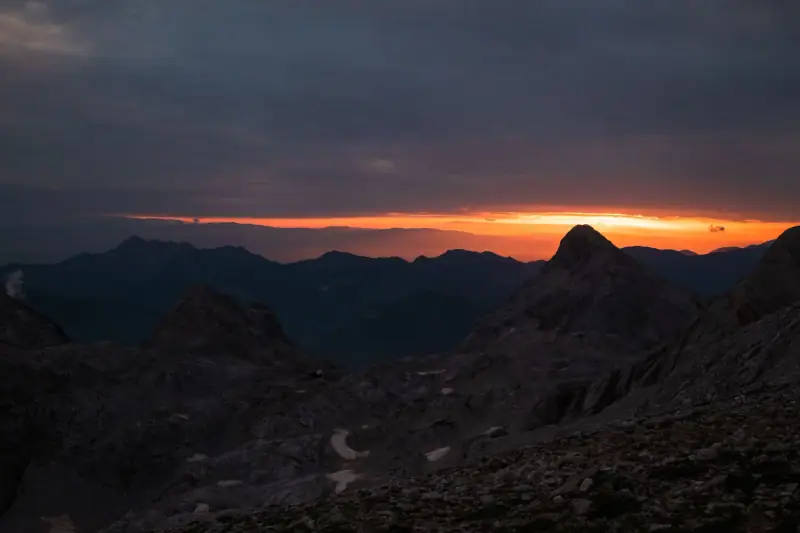
Unlike some regulated Alpine summits, no permit and no compulsory guide are required to climb Triglav. Triglav National Park (Triglavski narodni park), which encompasses the mountain, does not restrict access for independent hikers: you can buy your hut booking, rent your gear and set off without ever meeting an agency.
What changes the game is not legal but technical. On the last 300 m (984 ft) of elevation, the path turns into a via ferrata: a succession of cables fixed in the rock above very exposed slopes. This section, known locally as “Mali Triglav” to “Veliki Triglav”, requires safety equipment, not a guide. Many Slovenian and foreign hikers do it every day completely independently, clipping themselves to the cable with their own kit.
Via ferrata gear: non-negotiable
Three items make up the minimum kit, available for rent in most sports shops in Bled, Bohinj or Kranjska Gora, as well as at some huts:
- A climbing or via ferrata harness: worn at the waist, it lets you attach the lanyard.
- A via ferrata lanyard with an energy absorber: never a simple sling or an improvised carabiner, which would not slow a fall and could snap.
- A helmet: falling rocks are frequent on this busy section in summer, especially when several groups progress at the same time.
Allow €15 to €25 (~$17 to $29) to rent the complete kit for 2 days. Buying a new kit costs €80-150 (~$93-175), an investment that makes sense if you plan other via ferrata in Slovenia or in the Dolomites later (see our guide to accessories for Slovenia for the rest of the hiking equipment).
Guide or solo: budget comparison
| Item | On your own (solo) | With a guide |
|---|---|---|
| Guiding | €0 | €120-400 (~$139-465) per person (depending on group size) |
| Night in a hut (half board) | €65-70 (~$75-81) | Often included in the guide package |
| Via ferrata kit rental | €15-25 (~$17-29) | Usually included |
| Mountain repatriation insurance | €10-20 (~$12-23) (strongly recommended) | Often included or offered as an option |
| Estimated total for 2 days | €90-115 (~$105-135) | €150-420 (~$175-490) |
A guide remains relevant if you have never set foot on a via ferrata, if the weather is uncertain, or if you are traveling alone and looking for a supervised group. For hikers already comfortable in the mountains and on easy via ferrata, climbing on your own is both cheaper and just as safe, provided you follow the preparation described below.
Typical 2-day route (the most used solo)
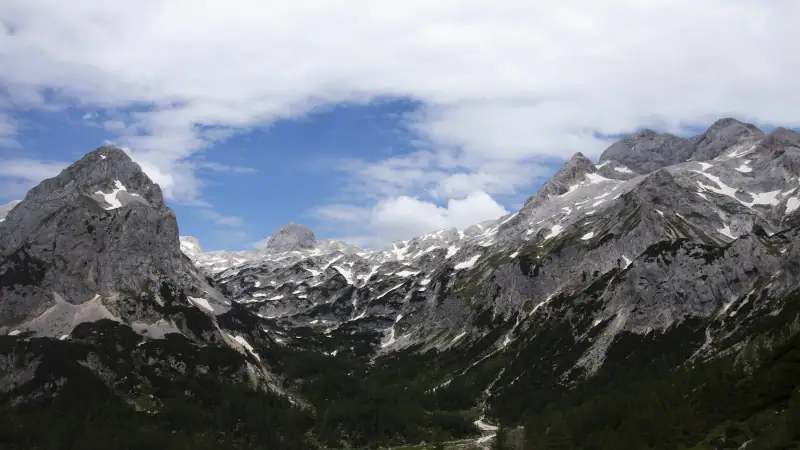
Day 1: Rudno polje → Triglavski dom hut (5-6 h, 1,000 m / 3,280 ft of elevation gain) Start from the Rudno polje parking lot (Pokljuka), reachable by car. A steady climb via the Vodnikov dom hut, then the Konjsko sedlo pass (2,020 m / 6,627 ft), up to the Triglavski dom na Kredarici hut (2,515 m / 8,251 ft). Night in a hut booked in advance.
Day 2: Hut → summit → hut → descent (7-9 h, 800 m / 2,625 ft of elevation gain then the full descent) Start early (5-6 am) to enjoy still-stable weather and avoid the crowd on the cables. The summit via ferrata begins after the Kredarica hut: allow 1 h 30 to 2 h for the last 300 m (984 ft) depending on traffic, often slowed by queues at the narrow passages. Come back down by the same route or a variant (Vrata) if a second vehicle or a shuttle has been arranged.
Other starting points exist (Pokljuka, Vrata, Bohinj), with varying durations and difficulty levels. Our guide to hiking in Slovenia details less demanding alternatives if Triglav on your own seems too demanding for this trip.
Safety: what makes the difference between a good and a bad memory
- Check the weather the evening before and the morning of: a storm on the summit ridge is one of the most serious dangers of the massif, and the huts post up-to-date forecasts.
- Start early: Slovenian summer storms typically form in the early afternoon. Being back down from the via ferrata before noon greatly reduces the risk.
- Never overtake without unclipping from the cable: the line can be dense in high season; waiting is safer than forcing a pass.
- Bring something to cover up: the temperature at the summit can be 15 to 20 °C (27 to 36 °F) lower than in the valley, with steady wind even in midsummer.
- Take out mountain/repatriation insurance before you leave: check that it covers mountain rescue, including helicopter evacuation, as costs and coverage vary by country and by situation.
Should you take a guide after all?
If you tick these boxes, going on your own is realistic: you have done via ferrata (even easy), are comfortable with 7-9 hours of mountain walking, have no marked fear of heights, and you set off in a group of at least 2 people (never alone on this section). If one of these conditions is missing, or if you simply prefer to enjoy the summit without handling the logistics and weather yourself, a guide remains a reasonable choice and will give you more peace of mind for an extra cost of €100 to €300 (~$116 to $350) depending on group size.
Either way, book your hut early: it is often the real limiting factor of the Slovenian summer, well before the guide question.
Frequently asked questions
Is it legal to climb Triglav without a guide?
Yes, it is perfectly legal and it is even the most common way to go: no Slovenian law requires a guide to climb Triglav. The only constraint is technical, not administrative: the last meters before the summit follow a via ferrata equipped with cables, and you need to know how to secure yourself with suitable gear.
Do you really need a via ferrata kit for Triglav?
Yes, on the summit section between the Triglavski dom hut and the top, the path is a continuous cable above significant drops. A harness, a via ferrata lanyard with an energy absorber and a helmet are essential, even for hikers comfortable in the mountains. Many of the accidents recorded each summer involve people who went up without this equipment.
How much does a guide for Triglav cost if I prefer company?
A certified mountain guide generally charges between €250 and €400 (~$290 to $465) for two days (ascent, night in a hut, summit, descent), for a group of 1 to 4 people. Some agencies offer group outings from €120-150 (~$139-175) per person when the group is full, via ferrata gear included.
How much does the climb cost on your own, without a guide?
Allow about €90 to €115 (~$105 to $135) per person: a half-board night at the Triglavski dom na Kredarici hut (€65-70 / ~$75-81), rental of the via ferrata kit if you do not have one (€15-25 / ~$17-29 for 2 days), plus gas and parking. That is 2 to 4 times cheaper than with a guide.
What physical and technical level do you need for Triglav without a guide?
You need very good fitness (7 to 9 hours of walking a day with 1,500 to 1,800 m / 4,920 to 5,900 ft of elevation gain depending on the route) and no fear of heights. Prior experience of high-mountain hiking or easy via ferrata is strongly recommended before tackling Triglav on your own.
What is the best period to try Triglav without a guide?
From mid-July to mid-September, when the cables are clear of snow and the huts are open with full service. Before or after this window, leftover snow makes the via ferrata much more dangerous and many independent hikers are caught by icy patches in the morning.
Do you need to book the hut in advance?
Yes, absolutely. The huts on the Triglav circuit, such as Triglavski dom na Kredarici, are full weeks ahead in July-August. Book online as soon as your date is set, ideally 1 to 2 months ahead, especially for a weekend.
More Slovenia guides
Keep reading
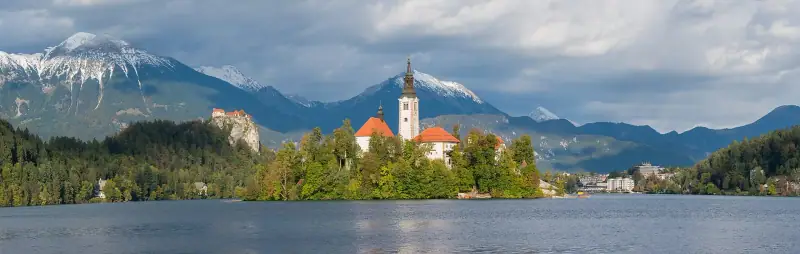
Best time to visit Slovenia: month by month
When to go to Slovenia? Find the best season for your activities: hiking, Lake Bled, water sports or Christmas markets.
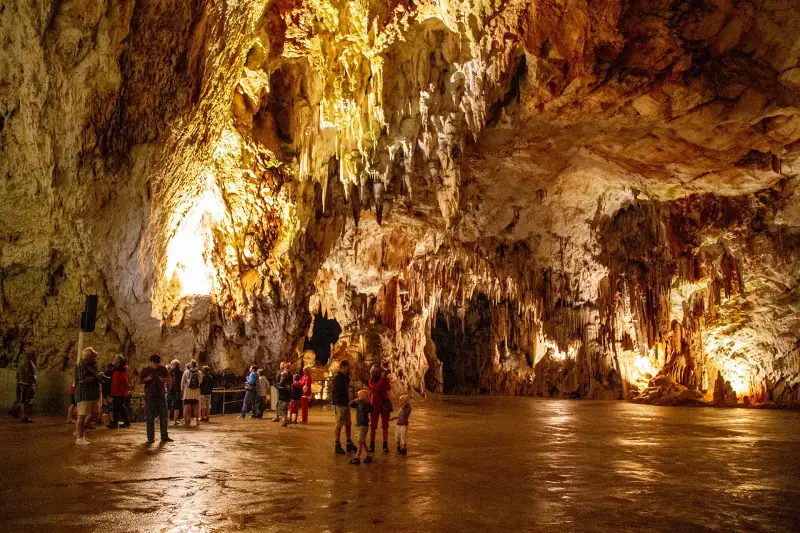
Caves in Slovenia: Postojna, Škocjan and the other underground wonders
Complete guide to the caves of Slovenia: Postojna, Škocjan (UNESCO), Predjama. Prices, tips and advice to plan your visit.
Visiting Bovec: a complete guide to Slovenia's adventure capital
Discover Bovec and the Soča: rafting, canyoning, Julian Alps hikes, Boka Waterfall and practical tips for an unforgettable stay.
Ready-made
Slovenia itineraries
10 days
Slovenia in 10 days: the complete itinerary to see it all
LjubljanaBledBovecPiran or KoperLjubljana
5 days
Slovenia road trip: the complete guide to driving the country
Plan your Slovenia road trip: itineraries, scenic roads, practical tips and the highlights you should not miss by car.
6 days