What to see
Ljubljana's top sights: the 15 things to see and do
We may earn a commission when you book through links on this page, at no extra cost to you. We don't visit or try the places we cover: we summarize published sources. How we work
In short
- The historic center is entirely pedestrian, so every main sight can be reached on foot in one to two days.
- Ljubljana Castle costs €15 (~$17) for entry only, or €19 (~$22) with the round-trip funicular.
- The central market, designed by Plečnik, is liveliest in the morning and on Saturday; most museums are closed on Monday.
- The Ljubljana Card (24, 48 or 72 hours) covers public transport, several museums and discounts at partner restaurants.
Ljubljana is a human-scale capital, perfect for strolling. Its historic center can be covered entirely on foot, from the Ljubljanica River to the cobbled lanes of the old town, from the medieval castle to the lively squares. Here are the 15 top sights so you miss nothing.
1. Ljubljana Castle (Ljubljanski Grad)
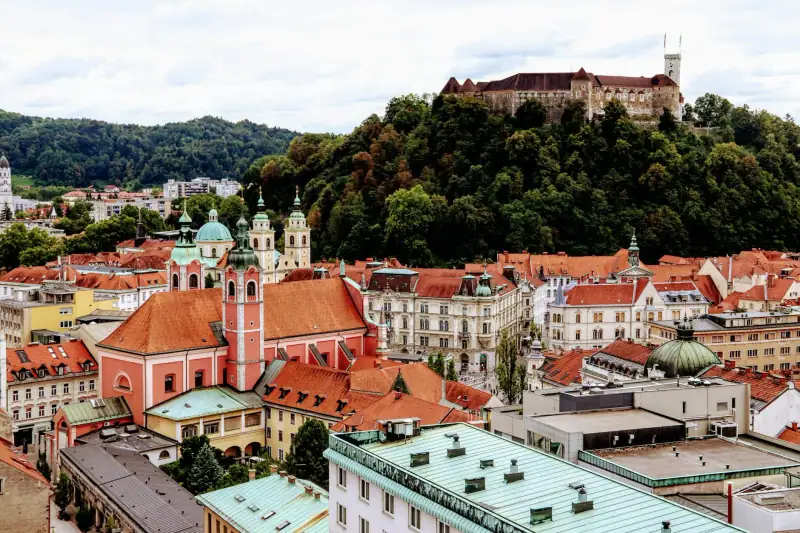
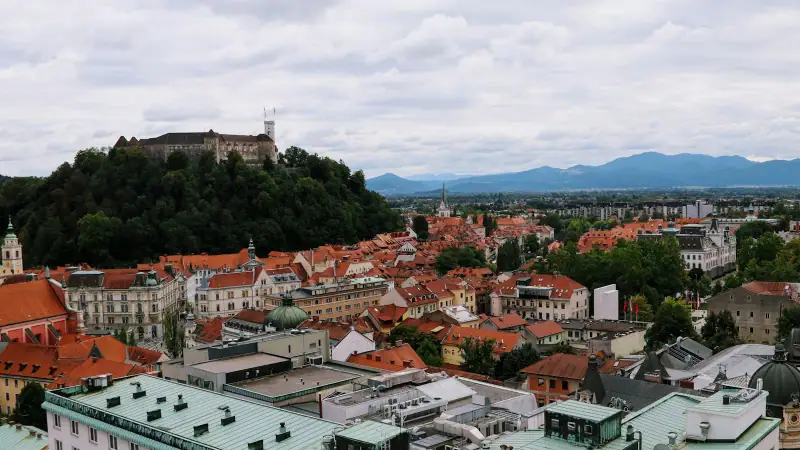
Perched on a 77 m (253 ft) hill above the old town, Ljubljana Castle is the symbol of the capital. The first fortifications date from the 12th century, but the current complex dates mainly from the 15th and 16th centuries.
What to see inside:
- The Lookout Tower and its 360° panorama over Ljubljana and the Alps
- St. George’s Chapel with its painted heraldic coats of arms
- The dungeons and underground galleries
- The museum of the history of Ljubljana
Getting there: on foot (path from the central market, 15 min) or by funicular from the old town (€6 / ~$7 round trip).
Castle admission: €15 (~$17) for entry only, €19 (~$22) with the round-trip funicular (ticket-office prices, slightly cheaper online).
2. The Triple Bridge (Tromostovje)
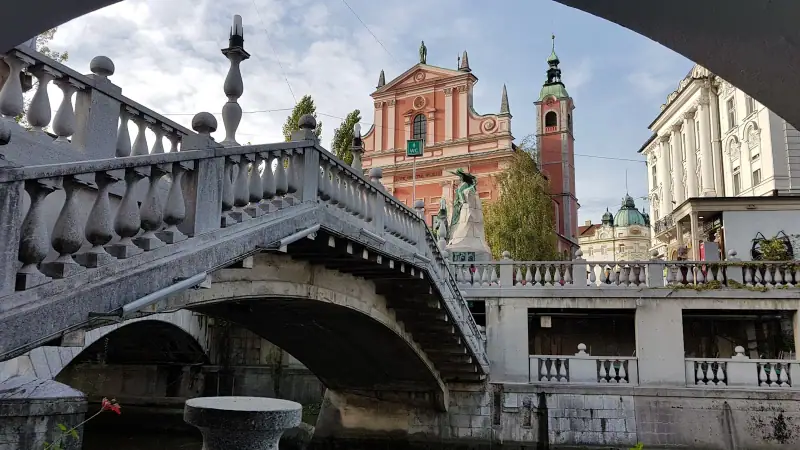
The most famous of Ljubljana’s bridges. It is actually three parallel bridges linking Prešernov trg square to the old town. Designed by the architect Jože Plečnik in the 1930s, it has become the symbol of the city.
Tip: come in the evening, when the bridges are beautifully lit and the terraces are at their liveliest.
3. The Dragon Bridge (Zmajski most)
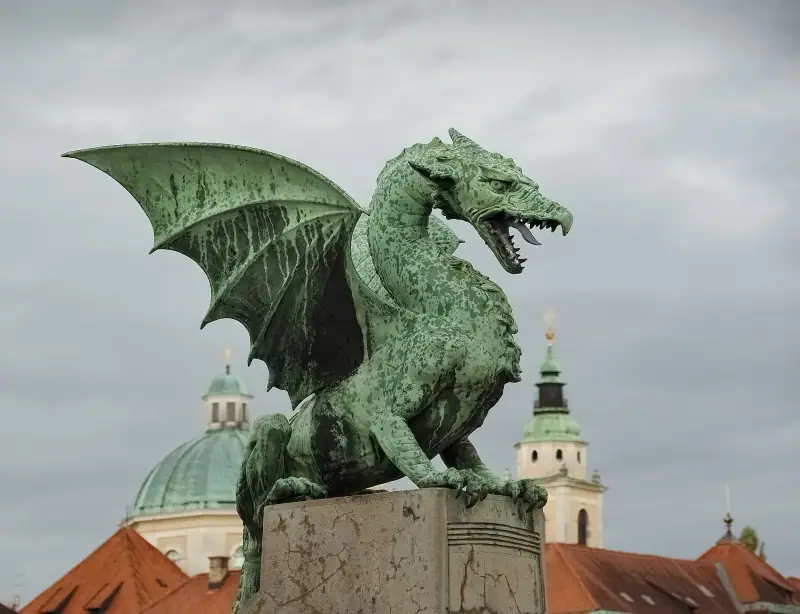
This 1901 bridge is decorated with four bronze dragons, one at each corner, symbols of Ljubljana. Legend has it that Jason and the Argonauts killed a dragon that lived in the marsh where the city stands. The dragon appears on Ljubljana’s flag and coat of arms.
Fun fact: the dragons’ tails wag when a virgin crosses the bridge, at least according to local legend.
4. The central market (Tržnica)
Ljubljana’s big open-air market is one of the finest fruit and vegetable markets in central Europe. It stands on both banks of the Ljubljanica canal, under the arcades designed by Jože Plečnik.
Hours: Monday to Saturday, from 6 or 7 am until late afternoon on weekdays and earlier on Saturday (liveliest in the morning; check the hours of the day, they vary by season)
Do not miss:
- The cheese stalls (edamski, beli sir…)
- The honey producers (Slovenia is the country of honey par excellence)
- The charcuterie and salami stands
- The Saturday flower market
5. The riverside cafés
Both banks of the Ljubljanica (between the Triple Bridge and the Cobblers’ Bridge) are lined with dozens of cafés and restaurants whose terraces almost meet. This is the beating heart of Ljubljana’s social life, especially on summer evenings.
Tip: sit down at lunchtime instead to enjoy the light and the bustle of the nearby market.
6. Prešernov trg square
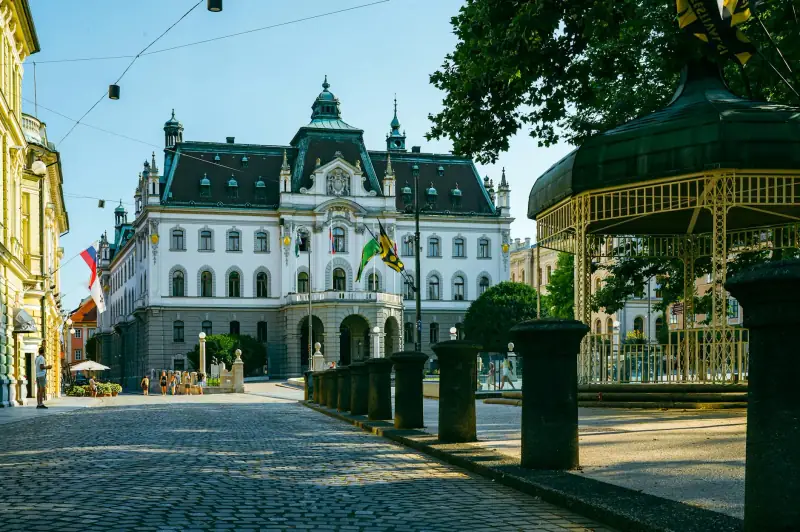
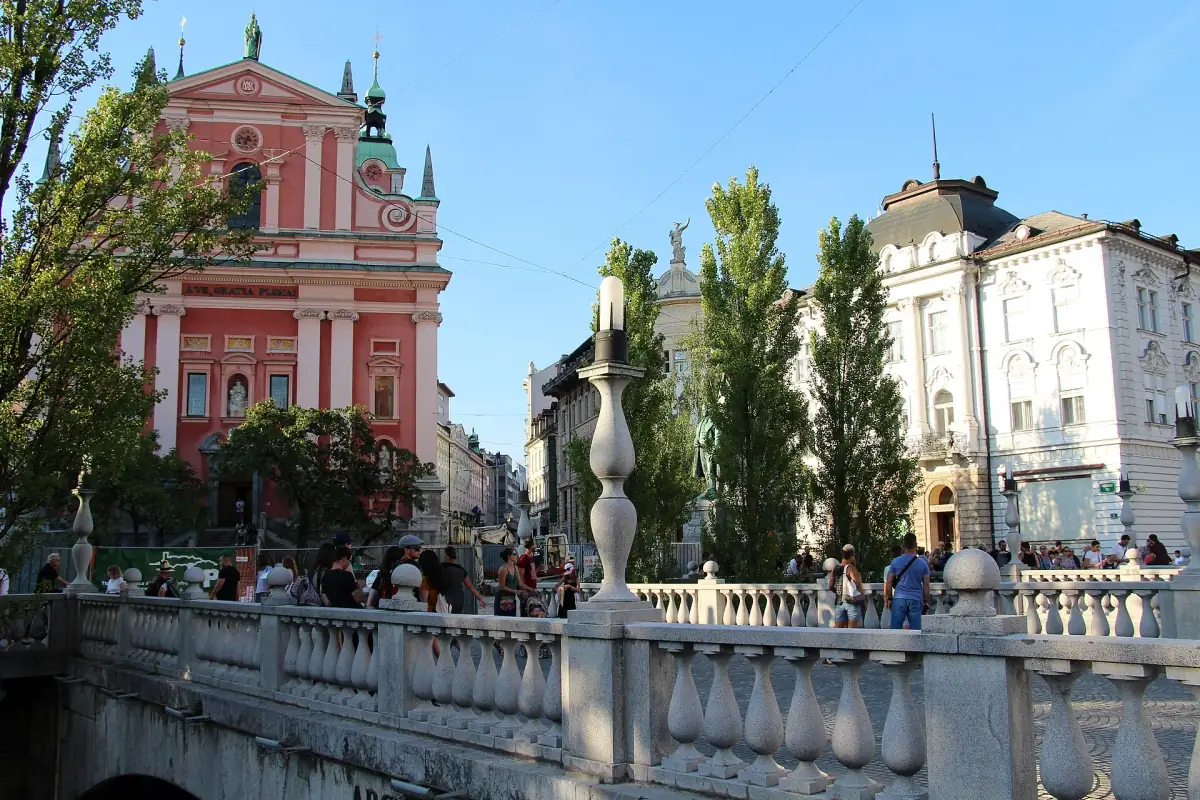
Ljubljana’s biggest square, at the foot of the Triple Bridge. It is dominated by the statue of the poet France Prešeren (author of the Slovenian national anthem) and the red Franciscan Church of the Annunciation.
This is where big events and celebrations are concentrated: Christmas markets, concerts, national holidays.
7. The Metelkova district
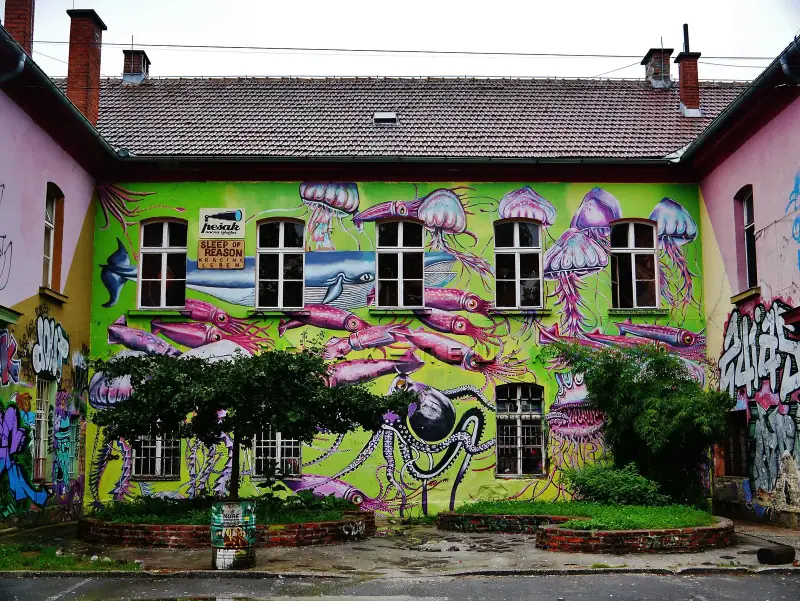
A former Austro-Hungarian military barracks turned alternative cultural center. Since the 1990s, artists and associations have transformed the buildings into studios, galleries, clubs and museums.
Metelkova today:
- The National Museum of Ethnography and the Museum of Contemporary Art in the renovated buildings
- Alternative clubs (Gala Hala, Channel Zero) on weekend nights
- Street art and permanent art installations
8. Tivoli Park
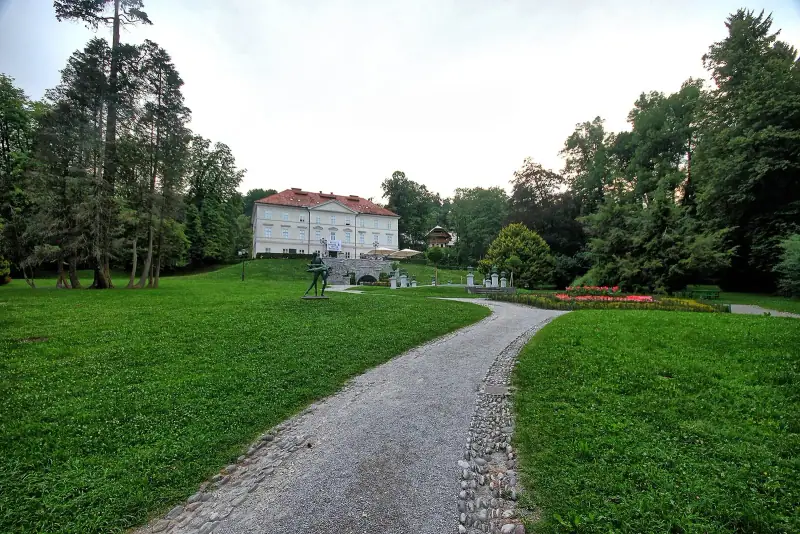
A 10-minute walk from the center, Tivoli Park is Ljubljana’s green lung. Its tree-lined paths, well-kept gardens and sports grounds welcome residents for their daily walk.
In the park: Tivoli Castle (home of the International Centre of Graphic Arts) and historic fountains.
9. The works of Jože Plečnik
Ljubljana is inseparable from its most famous architect, Jože Plečnik (1872-1957). A student of Wagner, he transformed the city between the two world wars, giving it its unique character.
How to spot Plečnik:
- The Triple Bridge and the market arcades
- The red-brick National and University Library (NUK)
- The Fountain of the Three Carps on Novi trg square
- The portico of Congress Square
- The Žale Cemetery (an architectural masterpiece)
10. The Butchers’ Bridge and the Cobblers’ Bridge
These two small pedestrian bridges decorated with love padlocks (like the Pont des Arts in Paris) span the Ljubljanica and offer fine views of the banks.
11. The Ljubljana National Opera
The Slovenian National Opera (Slovensko narodno gledališče) offers excellent opera, ballet and concerts in a neo-baroque building from 1892. Tickets are surprisingly affordable (€20 to €60 / ~$23 to $70) for international-level quality.
12. The National Museum of Slovenia
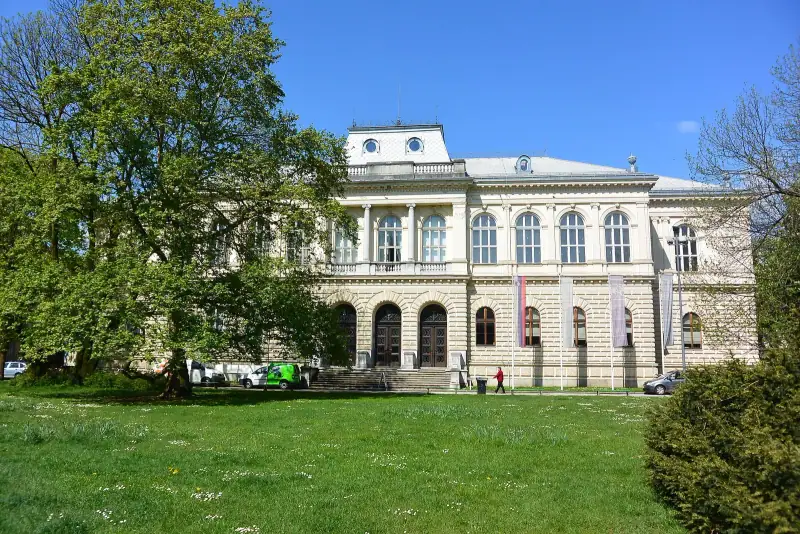
The country’s main museum presents the history of Slovenia from prehistory to the present day. The permanent collection includes Celtic, Roman, medieval and modern objects. Essential for understanding the history of the region.
Admission: about €8 (~$9) for adults
13. The Trnovo district
This residential district south of the old town is a favorite of artists, students and expats. The Trnovo Bridge (another Plečnik) spans the Gradaščica canal, and the national botanical garden is there.
What to do in Trnovo: small authentic restaurants, bohemian cafés, independent art galleries.
14. A boat ride on the Ljubljanica
Small, silent electric boats offer rides on the Ljubljanica River. It is a pleasant way to see the historic center from a different angle.
Duration: 45 min to 1 h. Price: about €15 (~$17) (free with the Ljubljana Card).
15. The view from the Moderna galerija rooftop
Several rooftop bars in Ljubljana offer an unbeatable view of the castle and the old town rooftops. The rooftop of the modern art museum (MG+MSUM) is one of the finest.
Hotels in central Ljubljana
Within walking distance of all the top sights.
Practical tips for visiting Ljubljana
- The free walking tour: several agencies offer free guided tours (tip at the end). Ideal for getting started and picking up local tips.
- The Ljubljana Card: worthwhile if you visit several museums.
- BicikeLJ bike sharing: handy for getting from the center to Trnovo or Tivoli.
- The Saturday morning market: the liveliest of the week, with regional producers in addition to the usual stalls.
- Museum hours: most are closed on Monday. Plan accordingly.
For restaurants, see our Ljubljana food guide and for accommodation, our where to stay in Ljubljana guide.
Frequently asked questions
How many days do you need to visit Ljubljana?
One to two days are enough to see the main attractions. Two days let you visit the historic center, the castle and the market, and make excursions in the surroundings. Three days give a more relaxed pace with the museums.
Is Ljubljana a touristy city?
Ljubljana attracts more and more tourists but is still far less crowded than Prague, Vienna or Budapest. The center is touristy, but the city keeps its authenticity and local residents are very present.
Is the center of Ljubljana walkable?
Yes, the historic center is entirely pedestrian. You can see all the main attractions on foot, without ever taking transport. The two banks of the river and the castle make up the tourist heart.
What is there to do in Ljubljana in the evening?
Ljubljana has a lively nightlife for its size. The bars and restaurants along the river stay open until midnight and later. The Metelkova district has alternative clubs. The illuminated Dragon Bridge is beautiful at night.
Is the Ljubljana Card worth it?
Yes, the Ljubljana Card (24, 48 or 72 hours) gives unlimited access to public transport, free entry to several museums and monuments, and discounts at partner restaurants. It is available at tourist offices.
More Slovenia guides
Keep reading
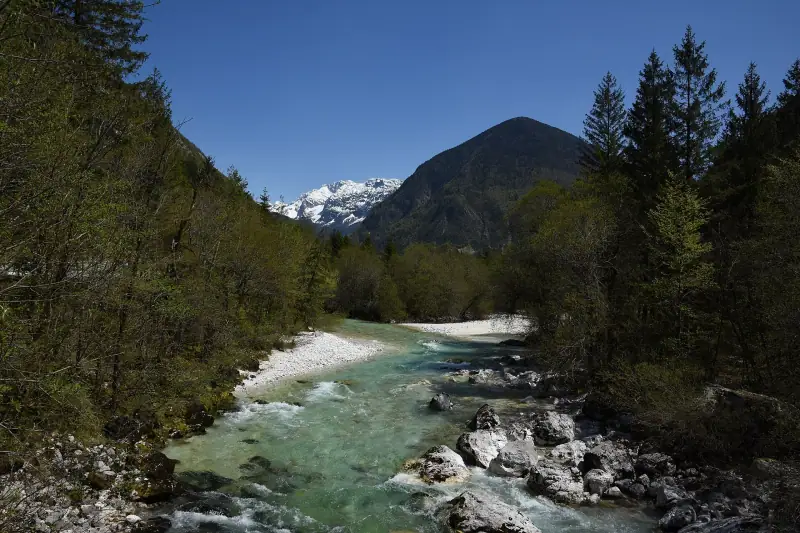
Visiting Bovec: a complete guide to Slovenia's adventure capital
Discover Bovec and the Soča: rafting, canyoning, Julian Alps hikes, Boka Waterfall and practical tips for an unforgettable stay.
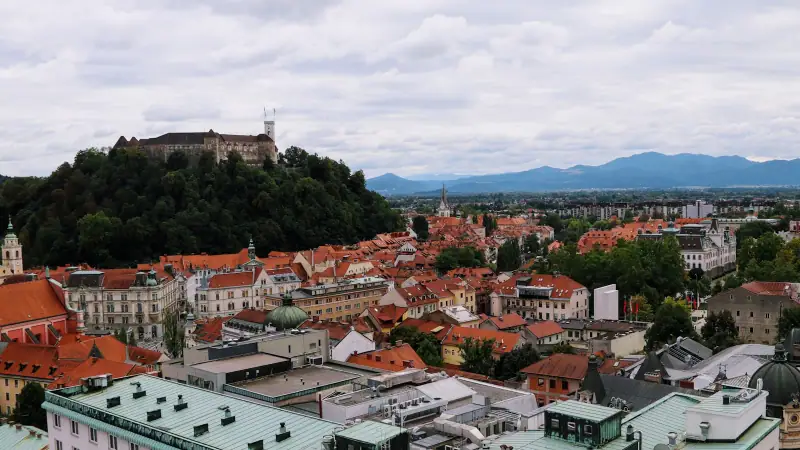
Visiting Ljubljana: a complete guide to Slovenia's capital
Complete guide to visiting Ljubljana: castle, old town, districts, food, where to stay and practical tips for the capital of Slovenia.
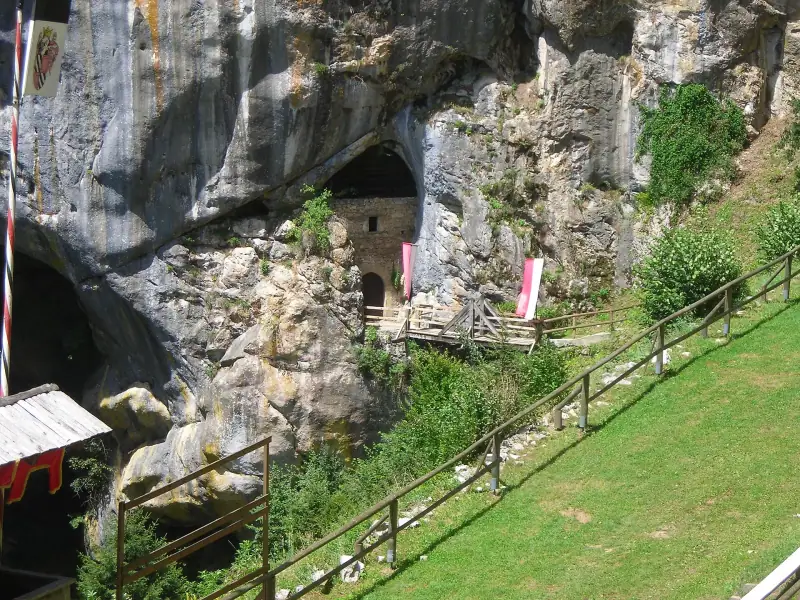
Visiting Postojna: a complete guide to the caves and Predjama Castle
Discover Postojna, capital of the Slovenian Karst: Postojna Cave, Predjama Castle, hikes and practical tips to plan your stay.
Ready-made
Slovenia itineraries
10 days
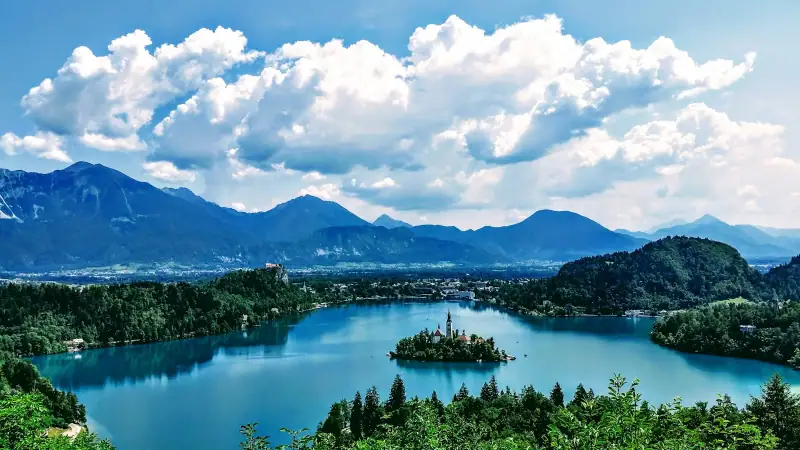
Slovenia in 10 days: the complete itinerary to see it all
LjubljanaBledBovecPiran or KoperLjubljana
5 days
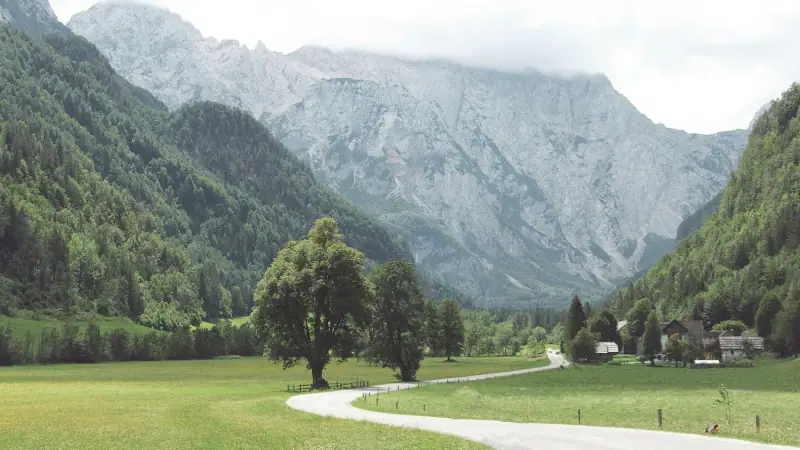
Slovenia road trip: the complete guide to driving the country
Plan your Slovenia road trip: itineraries, scenic roads, practical tips and the highlights you should not miss by car.
6 days