What to see
Visit Palermo: A Complete Guide to the Capital of Sicily
We may earn a commission when you book through links on this page, at no extra cost to you. We don't visit or try the places we cover: we summarize published sources. How we work
In short
- Two to three days cover the essentials: the Arab-Norman center, the markets, a Monreale excursion and a few museums.
- Buy Cappella Palatina tickets online in advance, especially in high season; entry is limited and lines can be long.
- The historic center is fully walkable; Monreale (8 km / 5 mi away) is reached by bus 389 from Piazza Indipendenza in about 30-40 minutes.
- The airport train takes about 50 minutes (around €6, ~$7); a taxi costs about €40-50 (~$46-58).
Palermo is one of the most singular cities in the Mediterranean. The capital of Sicily, a city of 670,000 inhabitants, it has piled up layers of civilizations for three millennia (Greeks, Carthaginians, Romans, Arabs, Normans, Spaniards), each visible in its lanes, palaces and cathedrals. Nowhere else in Europe do golden Byzantine mosaics sit so naturally beside Arab domes and Spanish Baroque facades. Add some of Italy’s liveliest markets, an extraordinarily rich street food scene and a noisy, generous street energy: Palermo is unlike any other city.
Palermo in a few words
Founded by the Phoenicians in the 8th century BC under the name Ziz (“flower”), Palermo had its period of greatest influence between the 9th and 12th centuries. Under the Arab emirs (831-1072), the city became one of the most populous in Europe, with about 200,000 inhabitants and irrigated gardens renowned across the Mediterranean world. Roger I of Sicily and his brother Robert Guiscard took Palermo on January 10, 1072 and, far from destroying this heritage, took it over to create a hybrid architectural style, Arab-Norman art, which exists nowhere else: mosques turned into chapels, palaces with Arab arcades decorated with Byzantine mosaics, cathedrals where Gothic sits beside arabesques.
This heritage (the Cappella Palatina, the cathedral, La Zisa, San Giovanni degli Eremiti, Monreale) has been a UNESCO World Heritage site since 2015.
1. The Cappella Palatina: the Arab-Norman jewel
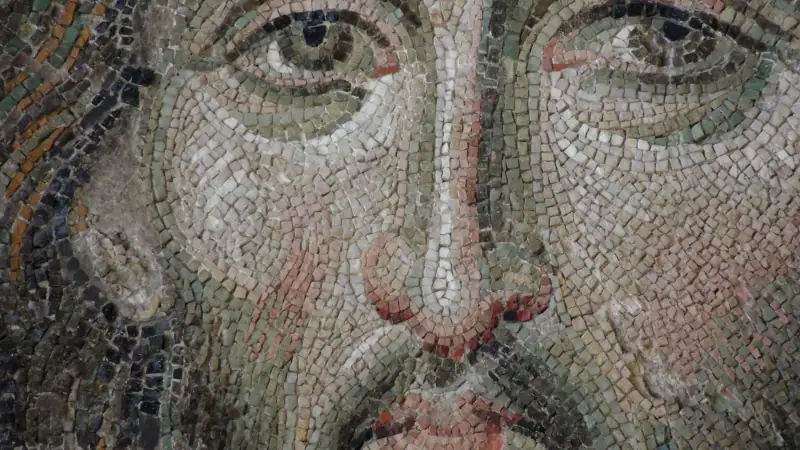
Palermo’s most extraordinary monument, and perhaps that of all medieval Italy, is a palace chapel barely larger than a ballroom. Built between 1132 and 1143 (consecrated in 1140) by the Norman king Roger II inside the Palazzo dei Normanni, the Cappella Palatina combines in a tiny space the three great artistic traditions of its time: the Byzantine structure with a dome and apses, the muqarnas ceilings (carved and painted wooden stalactites) inherited from Fatimid Islamic art, and gold glass mosaics of breathtaking finesse.
The golden Pantocrator in the apse half-dome, in deep blue, looks at the visitor from the central apse with an almost hypnotic serenity. The floor is in opus sectile of colored marbles. The muqarnas ceiling is the only intact Islamic ceiling in a Christian church in the world.
Practical information: The Cappella Palatina is visited with a combined ticket that includes the Palazzo dei Normanni. Buy your ticket online in advance, especially in high season: entry is limited in number and lines can be long. Visits run in a continuous flow, with time slots.
Guided tour of Arab-Norman Palermo
Cappella Palatina, cathedral and historic districts with a guide. Skip-the-line ticket included.
2. Palermo Cathedral: five centuries of history in one facade
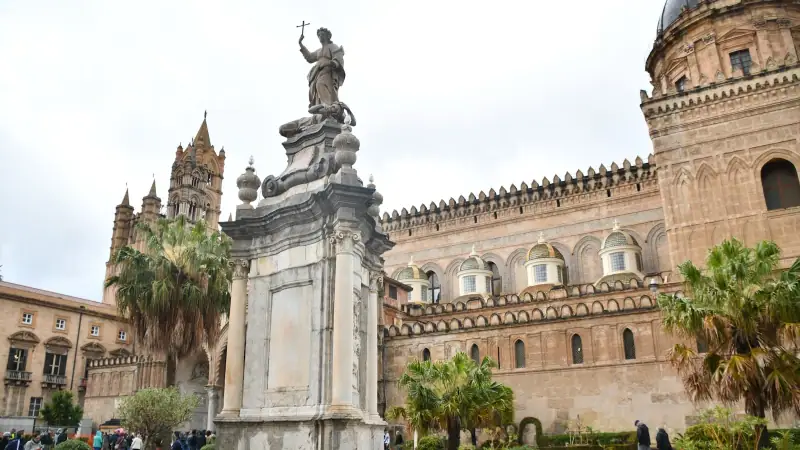
Palermo Cathedral is a magnificent architectural paradox: begun in 1185 on the foundations of an old Arab mosque (itself built on a Byzantine basilica), it was reworked and enlarged over five centuries, successively accumulating Norman, Catalan Gothic, Aragonese and Baroque elements, up to the neoclassical dome added by the architect Fernando Fuga in the late 18th century.
From the outside, it is splendid: its north apse still shows the Koranic inscriptions of the original mosque, integrated rather than erased by the Normans. The facade is decorated with interlaced arches, turrets and mosaics. The interior, less impressive than the Cappella Palatina, holds the porphyry tombs of the Norman kings and the Hohenstaufen emperors (including Frederick II), as well as a treasury with the crown of Constance of Aragon.
Practical information: The cathedral is largely free. The treasury, the royal tombs and the roofs are paid (a combined ticket is available).
3. The markets: Ballarò, Vucciria, Capo
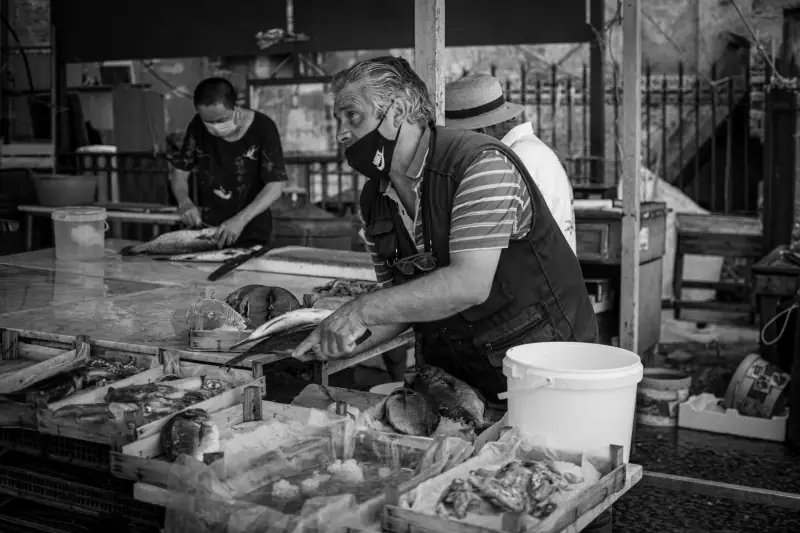
Palermo is a city of markets. Its three big open-air markets are local institutions inherited from the Arab period and are the most vivid experience the city can offer.
Ballarò is the largest and liveliest. Set in the working-class Albergheria district, south of the Palazzo dei Normanni, it stretches over several streets and spills in every direction with fruit, vegetables, fish, meat, spices, clothing and hardware. Vendors shout their prices in Sicilian dialect with infectious energy. This is where you will find the best prices and the most authentic local atmosphere. The market runs Monday to Saturday, from dawn until about 1 to 2 pm.
The Vucciria, in the Loggia district, was long Palermo’s main food market. It has lost part of its daytime trade to Ballarò, but it is reborn every evening as the epicenter of the city’s nightlife: the old lanes become an open-air bar, and fish stalls give way to improvised tables. The mix of authenticity and youth is unique.
Il Capo, between Via Volturno and the cathedral, is the third big market. Calmer than Ballarò, more food-oriented than the nighttime Vucciria, it is where you find the best selection of Sicilian cured meats and cheeses.
Where to stay in Palermo
Hotels and B&Bs in the historic center, near the markets and Arab-Norman monuments. Areas and prices compared in our guide.
4. Piazza Pretoria and the Quattro Canti
The geometric heart of Palermo’s historic center is formed by two adjacent spaces.
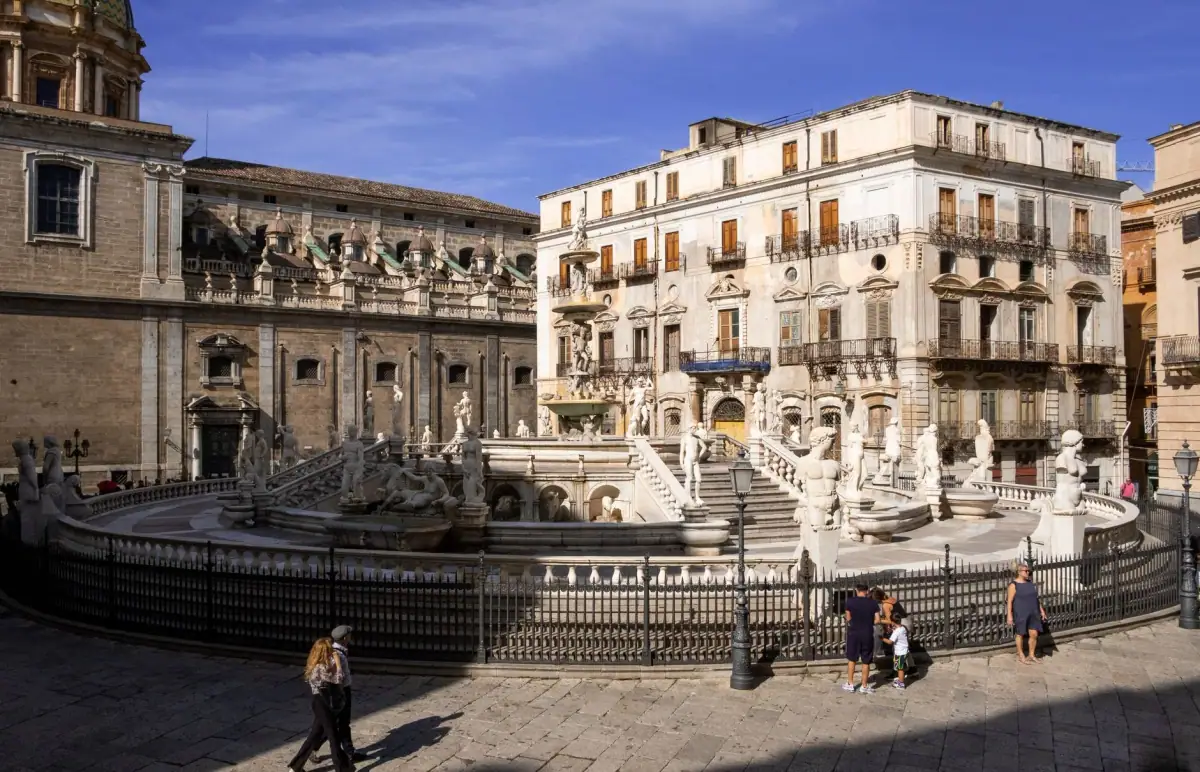
Piazza Pretoria is dominated by a monumental 16th-century fountain, nicknamed Fontana della Vergogna (fountain of shame) by locals when it was installed in 1574, as Palermo’s middle class was scandalized by the nudity of the marble statues that adorn it. The fountain, with its dozens of mythological figures, tritons, nymphs and animals, is surrounded by the Palazzo delle Aquile (the town hall) and two large Baroque churches. It is one of the most photogenic squares in Sicily.
A few meters away, the Quattro Canti (Piazza Vigliena) form the intersection of the two main arteries of the historic center. Four strictly symmetrical 17th-century Baroque palaces, decorated with fountains and statues of the seasons, Spanish kings and the patron saints of the city’s four districts, create a theatrical setting. It is the ideal starting point for exploring the center on foot.
5. La Kalsa and the Arab-Norman palaces
The Kalsa district is Palermo’s oldest Arab quarter, founded in the 9th century as a fortress and residence of the emir. Its name comes from the Arabic Al-Khalisa (“the chosen”). Long run-down, it is now partly restored and is one of the most interesting districts of the city.
San Giovanni degli Eremiti is one of Palermo’s most photographed monuments: an old Arab mosque converted into a Norman church in the 12th century, recognizable by its five characteristic red domes. The garden planted with palm, orange and lemon trees adds an Eastern atmosphere. Closed on Monday, paid entry.
La Zisa (from the Arabic Al-Aziz, “the splendid”) is an Arab-Norman palace built for the kings of Sicily in the 12th century as a hunting and resting pavilion. Its great central hall (the Fontana Iwan) is decorated with mosaics, stucco stalactites and an interior fountain that created an evaporative cooling system. It is the best-preserved example of Arab-Norman palatial architecture outside the Near East.
La Martorana (Santa Maria dell’Ammiraglio), on Piazza Bellini, is a 12th-century Norman church whose Byzantine mosaics are among the finest in Palermo. On the same square, the small Baroque church of San Cataldo with its three red domes completes a striking architectural picture.
6. Monreale: the essential excursion
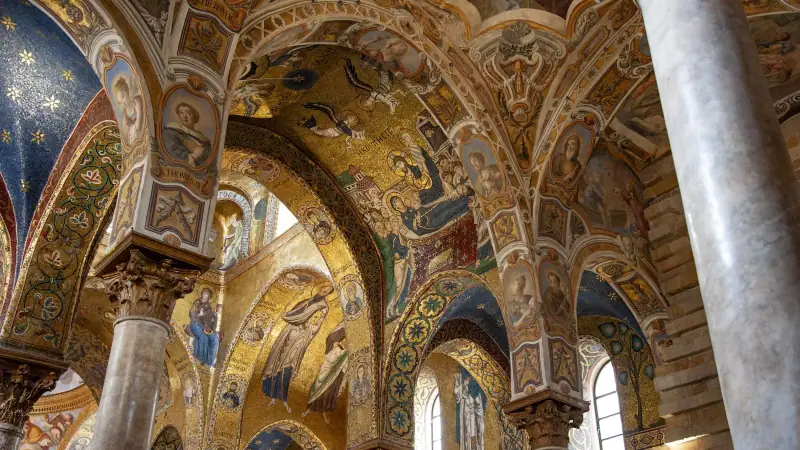
Just 8 km (5 mi) from the center of Palermo stands what many consider the most beautiful Norman cathedral in the world. Built by William II between 1172 and 1189, Monreale Cathedral is a masterpiece of synthesis between Norman, Arab and Byzantine art.
The interior is entirely covered with golden mosaics over a surface of more than 6,000 m² (64,600 sq ft), the largest surface of Byzantine mosaics in the world after Hagia Sophia in Istanbul. The iconographic cycle is complete, from Genesis to the Gospels, culminating in the immense Pantocrator of the central apse (7 m / 23 ft high). The effect is one of absolute magnificence.
The adjoining cloister (12th century) with its 228 paired columns, none identical, some decorated with mosaics, others with spiral carvings, is one of the most beautiful cloisters in Europe.
Practical information: Bus 389 from Piazza Indipendenza (a stop 5 minutes’ walk from the Palazzo dei Normanni), trip of about 30-40 minutes. The cathedral and the cloister have separate tickets. Allow 2-3 hours in Monreale.
Rental car in Palermo
Essential for exploring Monreale, Cefalù and the north coast at your own pace. Compare the best offers.
7. The Teatro Massimo and cultural life
The Teatro Massimo, opened in 1897, is the largest opera house in Italy and one of the largest in Europe. Its monumental neoclassical facade, with a double-flight staircase guarded by two bronze lions, dominates Piazza Verdi. The interior is sumptuous, with a hall of five galleries decorated in red and gold.
The Teatro Massimo is famous among film fans as the setting of the final scene of The Godfather Part III (1990), filmed on its staircase. Guided tours of the opera house are offered outside performances, an excellent way to see the inside if you are not attending a show.
A short walk away, Piazza Castelnuovo and Viale della Libertà make up Palermo’s elegant district, with its historic cafés, shops and early-20th-century Liberty (Art Nouveau) palaces.
Street food in Palermo: Sicily’s street capital
Palermo is one of Europe’s great street food capitals. Its specialties are hearty, generous and mostly very cheap.
The essentials
The arancina (feminine in Palermo!): In Palermo, unlike Catania, the rice arancina is feminine and shaped like a ball, round, not conical. Filled with ragù, with butter and mushrooms, or with pistachio depending on the variant. Price: €1.50-2.50 (~$2-3).
Panelle and crocché: Panelle are fried chickpea-flour patties, crisp and light. Crocché are potato croquettes. They are eaten in a vastedda (a small round loaf), often together, with salt and sometimes lemon juice. Palermo’s quintessential street snack.
Pane ca’ meusa: The most iconic and most disconcerting specialty: a vastedda filled with boiled veal (or lamb) spleen and lung fried in fat, with lemon juice and cacioricotta. You order it maritata (with cheese) or schietta (without). A dish of ancient, down-to-earth popular tradition, sold for centuries near the port and the Vucciria.
Sfincione: Palermo’s Sicilian pizza, a thick, spongy dough topped with tomatoes, caramelized onions, anchovies, oregano and caciocavallo. It is eaten at room temperature, sold by the slice in bakeries and at markets.
To learn all about Sicilian specialties, see our guide to street food in Sicily.
Practical information
How to get to Palermo
By air: Palermo Falcone-Borsellino Airport (PMO, also called Punta Raisi) is the main airport in Sicily. The Trinacria Express train links the airport to Palermo central station in about 50 minutes (fare around €6 to 7 / ~$7-8, to check with Trenitalia). A taxi costs about €40-50 (~$46-58).
By ferry: Palermo is linked to Civitavecchia (Rome), Genoa, Naples and Cagliari by regular ferries (Grimaldi Lines, GNV). The Rome-Palermo crossing takes about 11-13 hours overnight.
By train: From Messina (about 3 h), Catania (about 3 h to 5 h depending on the train), Syracuse (about 4 h 30 to 6 h depending on connections). The service is slower than by car because of the route around the island.
Getting around Palermo
The historic center (Cappella Palatina, cathedral, markets, Piazza Pretoria, Quattro Canti) can be covered entirely on foot in 20-30 minutes through its lanes. La Kalsa and San Giovanni degli Eremiti are also reachable on foot from the center in 10-15 minutes.
AMT buses cover the farther districts and suburbs. For Monreale, bus 389 from Piazza Indipendenza is the most practical way. To explore the north coast (Cefalù, Bagheria, Termini Imerese), a rental car is recommended; see our guide to car rental in Sicily.
The historic center has ZTL zones (limited traffic zones): if you have a car, find out before entering the restricted area.
Where to stay in Palermo
Historic center (recommended): The districts around the Quattro Canti, Piazza Pretoria and La Kalsa offer the best immersion in the historic city. B&Bs in renovated palaces, rental apartments, small charming hotels.
Libertà-Politeama district: More residential and middle-class, slightly off the historic heart but very pleasant. Good dining, shops, calmer atmosphere.
Indicative budget: Double B&B in the center €55-90 (~$64-105) a night, 3-star hotel €90-150 (~$105-175), charming boutique hotel €150-280 (~$175-325). For the best addresses by budget and area priorities, see our complete guide on where to stay in Palermo.
Palermo in 2-3 days: suggested itinerary
Day 1: the Arab-Norman heart
Morning:
- 9 am: Cappella Palatina and Palazzo dei Normanni (book your ticket in advance)
- 11:30 am: San Giovanni degli Eremiti and its red domes
- 1 pm: Lunch at Ballarò market: panelle, crocché, arancina
Afternoon:
- 2:30 pm: Palermo Cathedral (outside and inside)
- 4 pm: Quattro Canti and Piazza Pretoria (fountain of shame)
- 5 pm: La Martorana and San Cataldo (Piazza Bellini)
- 6:30 pm: Aperitif in the Kalsa district
- 8 pm: Dinner in the historic center
Day 2: markets, Teatro Massimo and nighttime Vucciria
Morning:
- 7:30 am: Ballarò market at its peak
- 9:30 am: Sicilian breakfast (granita, brioche, cappuccino)
- 11 am: La Zisa (Arab-Norman palace)
- 1 pm: Lunch with local specialties
Afternoon:
- 3 pm: Teatro Massimo (guided tour)
- 5 pm: Viale della Libertà and Piazza Castelnuovo
- 8 pm: Vucciria in nighttime mode
Day 3: excursion to Monreale
Full day:
- 9 am: Bus 389 from Piazza Indipendenza to Monreale
- 10 am to 12:30 pm: Monreale cathedral and cloister
- 1 pm: Lunch in Monreale (view over the Palermo plain and the sea)
- 3 pm: Back to Palermo
- 4 pm: Capo market and its cheeses and cured meats
- 6 pm: Pane ca’ meusa at the port or at the Vucciria
To fit Palermo into a wider circuit of the island, see our Sicily road trip with the best stops from the capital.
Palermo vs Catania: which to choose?
Sicily’s two big cities are often presented as rivals. In reality, they are complementary, and ideally both deserve a stop on a trip of 10 days or more.
| Palermo | Catania | |
|---|---|---|
| Strong point | Cappella Palatina, markets, street food | Mount Etna within reach, Pescheria, uniform Baroque |
| Atmosphere | Large, lively and diverse capital | Young, compact university town |
| Architecture | Arab-Norman + Spanish Baroque | Black-and-white Baroque after 1693 |
| Size | 670,000 inhabitants (Sicily’s largest city) | 300,000 inhabitants |
| Airport | Yes (PMO, many direct flights) | Yes (CTA, also well served) |
If you must choose a single base for eastern Sicily (Mount Etna, Syracuse, Taormina), Catania is more practical. For western Sicily (Trapani, Agrigento, Cefalù), Palermo is unbeatable.
Palermo is a demanding city at first sight (noisy, dense, sometimes anarchic) but generous with those who give it time. Its Arab-Norman monuments, ranked among the most important of the medieval world, have no equal in Europe. Its markets, its street food and its everyday street life are an invitation to slow down and immerse yourself. Give it two days, at the very least.
Frequently asked questions
How many days do you need to visit Palermo?
Two to three days let you see the essentials: the Arab-Norman center, the markets, an excursion to Monreale and a few museums. With two days, focus on the Cappella Palatina, the cathedral, Ballarò and Piazza Pretoria. With one more day, add Monreale, La Kalsa and the Noviziato district.
How do you get from the airport to the center of Palermo?
Falcone-Borsellino Airport is about 35 km (22 mi) from the center. The Trinacria Express train links the airport to Palermo central station in about 50 minutes (around €6 / ~$7). A taxi costs around €40-50 (~$46-58) depending on traffic. Private shuttles offer in-between rates (€15-25 / ~$17-29 per person).
Is Palermo a safe city for tourists?
Palermo is a safe city for tourists. As in any large Mediterranean city, stay alert against pickpockets in crowded areas (markets, transport). The historic tourist districts are lively and safe by day and by night. Avoid poorly lit lanes outside tourist areas after 10 pm.
Can you visit Monreale from Palermo in half a day?
Yes, absolutely. Monreale is about 8 km (5 mi) from Palermo. Bus 389 leaves from Piazza Indipendenza and takes about 30-40 minutes. Allow 2-3 hours in Monreale for the cathedral and the cloisters. Half a day (morning or afternoon) is ideal for combining Monreale with a morning in Palermo.
What is the best time to visit Palermo?
April to June and September-October offer the best conditions: pleasant weather (20-28 °C / 68-82 °F), good sea from May, moderate crowds. July-August are very hot (35-40 °C / 95-104 °F) and very busy. Winter (November to March) is mild (12-18 °C / 54-64 °F) and quiet, ideal for museums and monuments without waiting.
Do you need a car to visit Palermo?
No, Palermo's historic center can be covered entirely on foot. Public transport (AMT buses) covers the farther districts. However, a rental car is recommended if you plan excursions to Cefalù, the north coast or the interior of the island from Palermo.
More Sicily guides
Keep reading
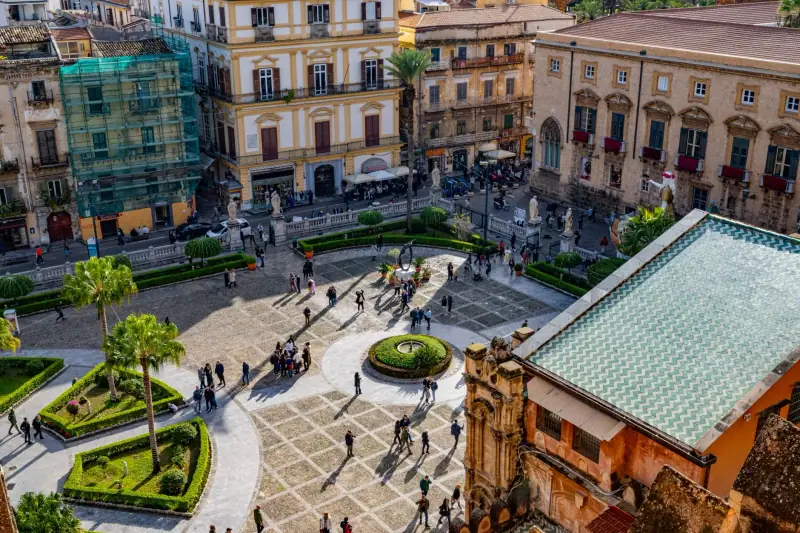
Palermo Highlights: The 12 Sights Not to Miss
What to see in Palermo? Our selection of 12 highlights: Cappella Palatina, markets, cathedral, Kalsa, Monreale. Practical guide with hours and tips.
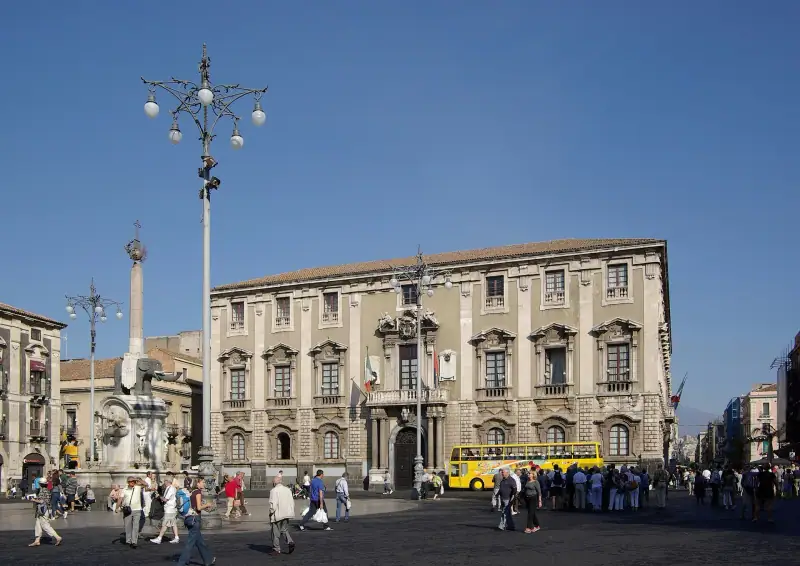
Visit Catania: A Complete Guide to the City of Mount Etna
What to do in Catania? Pescheria, Piazza del Duomo, a Baroque stroll, Mount Etna within reach. Complete guide with practical tips and good addresses.
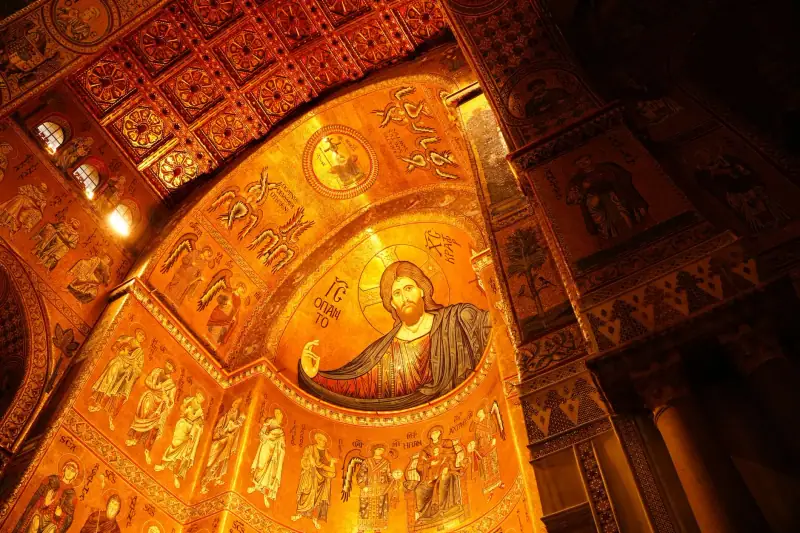
Monreale from Palermo Without a Car: Bus 389, Hours and Prices
How to get from Palermo to Monreale by bus without a car: AMAT line 389, a €1.40 ticket, cathedral hours, cloister, terraces and how long to allow.
Ready-made
Sicily itineraries
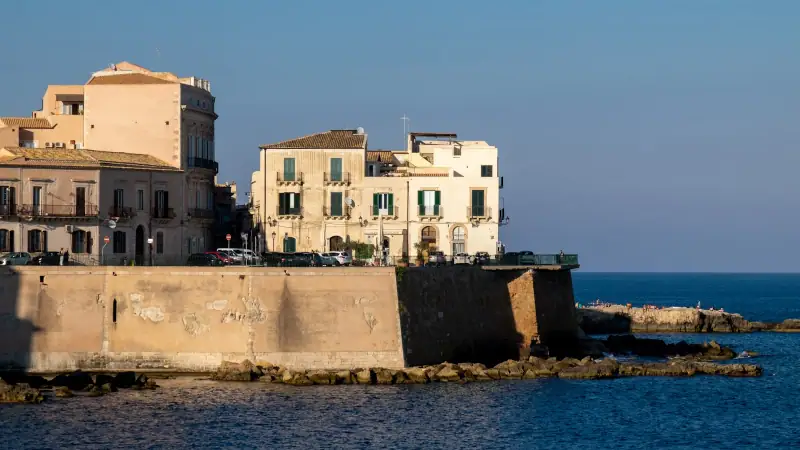
6 days
Southeast Sicily Itinerary: Syracuse, Noto, Ragusa and Agrigento in 6 Days
SyracuseRagusa or NotoAgrigento
5 days
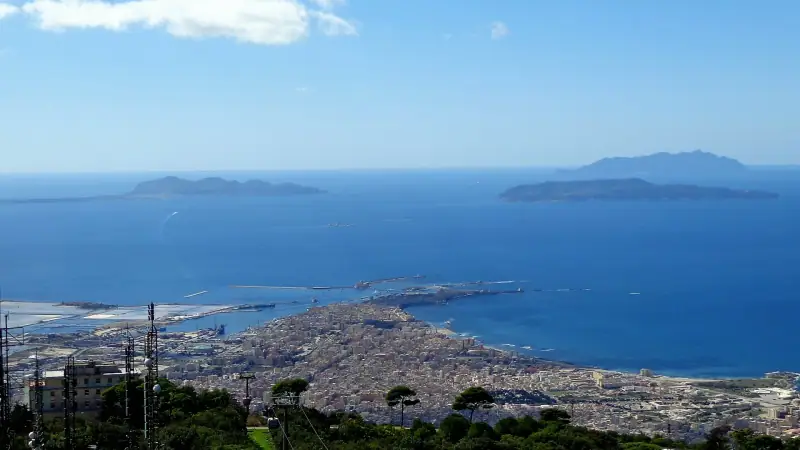
Western Sicily in 5 Days: Trapani, Marsala and the Aegadian Islands
A 5-day itinerary in western Sicily: Trapani and its salt pans, Marsala and its wine, Segesta, the Aegadian Islands. Practical tips for 2026.
14 days
Sicily Road Trip: The Full Island Loop in 14 Days
A 2-week Sicily road trip itinerary: full loop of Palermo, Mount Etna, Syracuse, Agrigento and Trapani, with practical tips for driving the island.