What to see
Palermo Highlights: The 12 Sights Not to Miss
We may earn a commission when you book through links on this page, at no extra cost to you. We don't visit or try the places we cover: we summarize published sources. How we work
In short
- Two full days cover Palermo's main sights; three days leave room for Monreale (about 8 km / 5 mi away) and the markets.
- Book the Cappella Palatina online, especially April to October, to avoid waits of 30 to 60 minutes.
- Everything is within 2-3 km (1-2 mi) of the historic center, so Palermo is easy to visit on foot without a car.
- Ballarò market is open Monday to Saturday morning, and closed on Sunday.
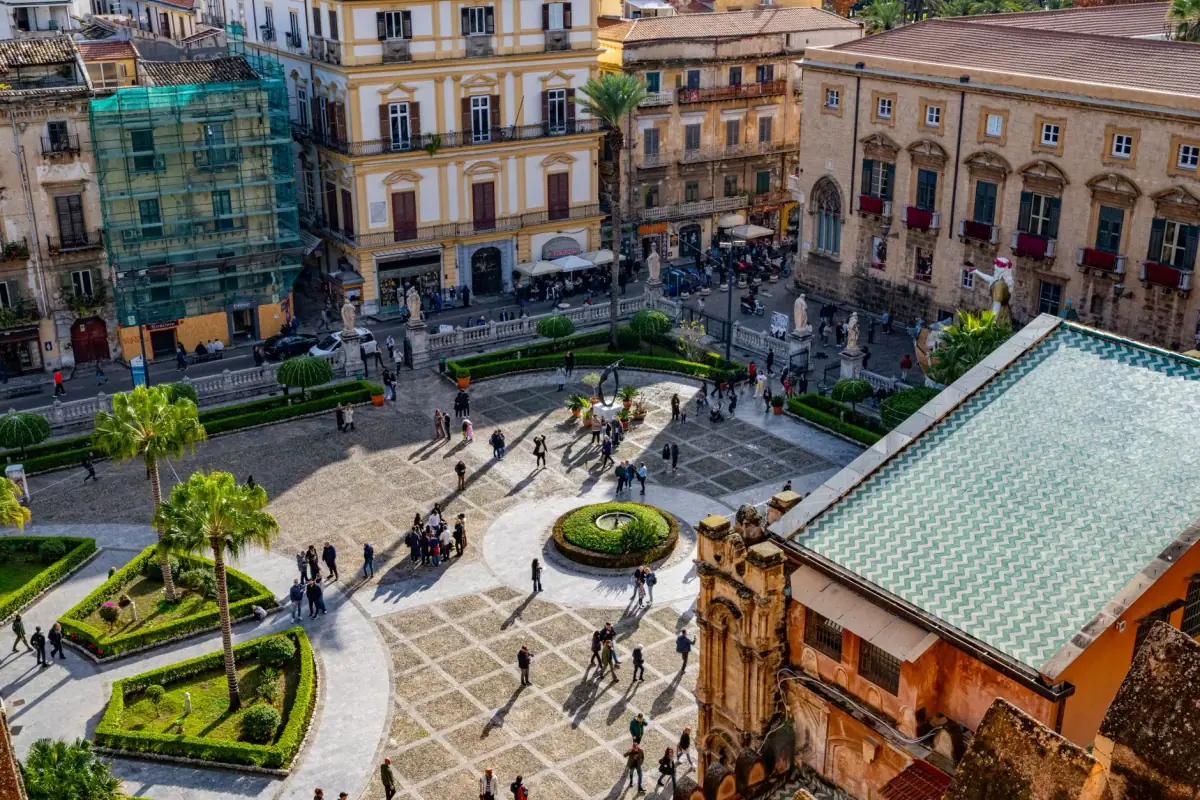
Palermo is a bewildering city. Its streets can go within a few meters from grand to dilapidated, from splendid to chaotic. That contradiction is precisely what makes it unique among Italy’s big cities. To get the most from it, here are the 12 sights you should not miss.
1. The Cappella Palatina: an absolute masterpiece
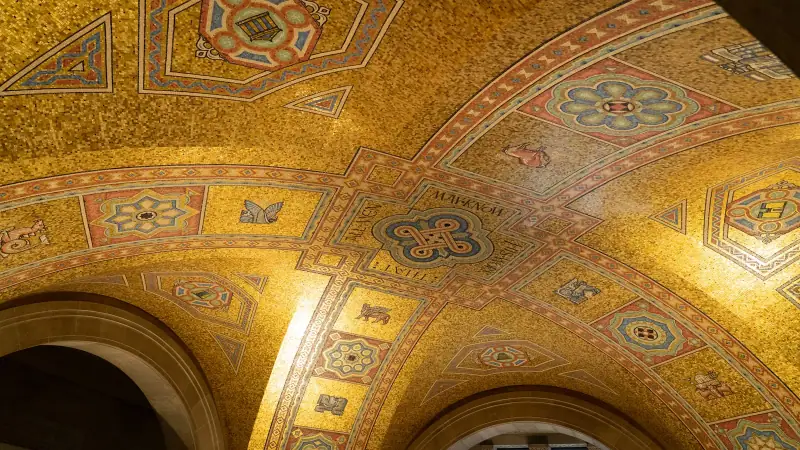
The palatine chapel of the Palazzo dei Normanni is probably the most extraordinary monument in Sicily, and one of the most beautiful in Europe. Built by the Norman king Roger II between 1132 and 1140, it is a masterpiece of cultural syncretism: Norman architecture, Byzantine gold mosaics covering every wall, and an Islamic stalactite ceiling in cedar wood.
What to see:
- The mosaics of the central nave: scenes from the Old Testament, of dazzling detail and beauty
- The muqarnas ceiling (painted Islamic stalactites) of the central nave, unique in the West
- The Pantocrator (Christ in Majesty) in the apse: one of the most powerful images of Byzantine mosaic
Practical information:
- Online booking required in high season
- Price: €14.50 (~$17) Thursday to Monday (includes the Palazzo dei Normanni); €10 (~$12) on Tuesday and Wednesday (chapel and gardens only)
- Hours: Monday-Saturday 8:30 am to 4:30 pm (last entry), Sunday 8:30 am to 12:30 pm (chapel closed on Sunday from 9:30 to 11 am); check the official website
- Proper dress required (shoulders and knees covered)
- Recommended time: 1 h 30 minimum
2. Ballarò Market
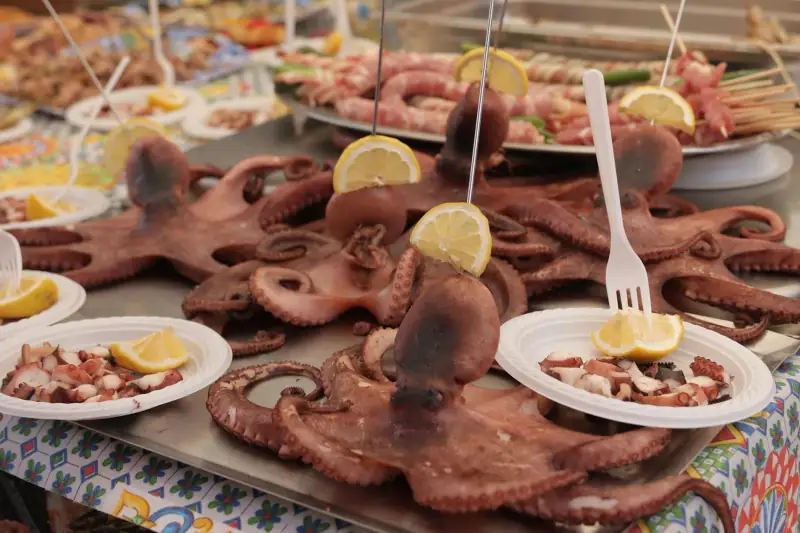
The largest and liveliest of Palermo’s markets. Born in the Arab period (9th century), this market in the Albergheria district is a festival of colors, smells and sounds. Vendors shout their prices with an oratory art that is close to theater.
What you find there:
- Seasonal Sicilian fruit and vegetables (citrus from December to April, peaches and figs in summer)
- Fresh fish and seafood
- Street food: arancine, fried fish, schiacciate (focaccias)
- Clothing, utensils, hardware (the “popolare” part of the market)
Practical information:
- Hours: Monday-Saturday 7 am to 1 pm (a few stalls in the evening)
- Free entry
- Best time: 8 to 10 am for the crowd and the show
3. Palermo Cathedral
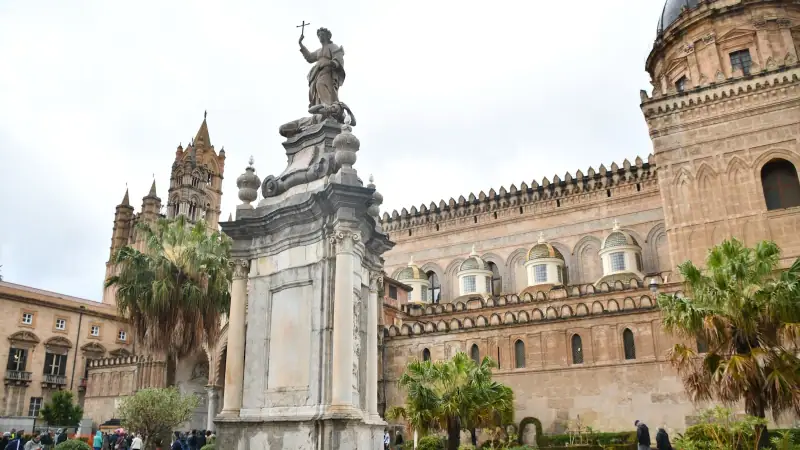
The outside of the cathedral is an open book of architecture spanning 1,000 years of history. Founded in 1185 by the Norman archbishop Walter Ophamil on a mosque (itself built on a Christian basilica), it was enlarged and modified in Catalan Gothic style in the 15th century, then topped with a Baroque dome in the 18th.
What you find there:
- The sarcophagi of the Norman kings (in the side chapels), including Roger II, founder of the Kingdom of Sicily, and Emperor Frederick II of Hohenstaufen
- The treasury (paid) with the crown and Norman royal jewels
- The view from the roof (paid): a panorama over the domes and rooftops of Palermo
Practical information:
- Cathedral entry: free
- Access to the royal chapels and treasury: €3-5 (~$3-6)
- Hours: Monday-Saturday 9:30 am to 5:30 pm, Sunday after Mass
4. Piazza Quattro Canti
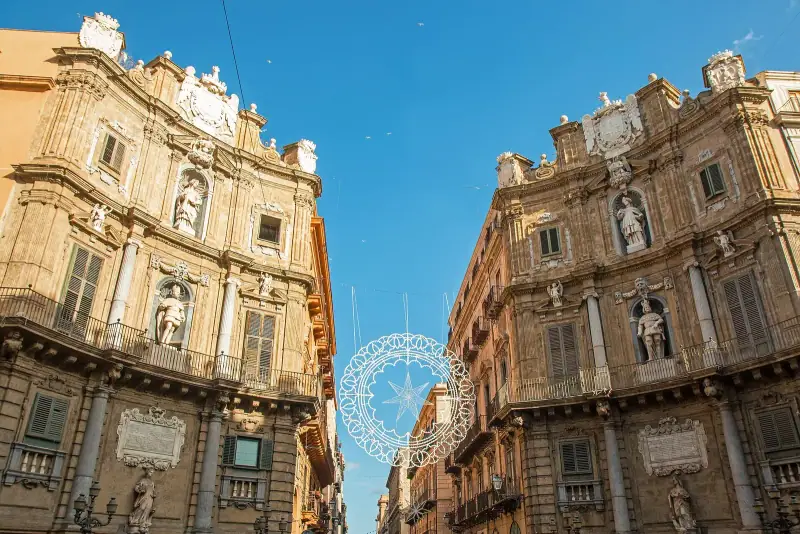
At the crossing of Corso Vittorio Emanuele and Via Maqueda, Piazza Quattro Canti (also called “Ottagono del Sole” or “Teatro del Sole”) is Palermo’s emblematic Baroque crossroads. Four monumental palaces form each corner, each decorated with fountains stacked on three levels (seasons, kings of Spain, patron saints of Palermo).
Built in 1608-1620, it is the perfect illustration of Mediterranean Baroque urban planning.
5. The Palazzo dei Normanni
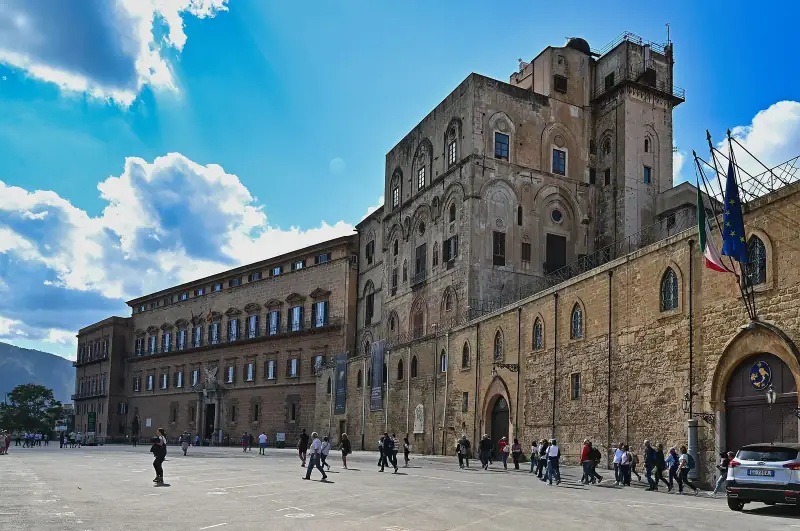
The oldest royal palace in Europe still standing (founded on a 9th-century Arab fortress, enlarged by the Normans in the 12th). It now houses Sicily’s regional parliament, but the historic parts can be visited: the Cappella Palatina (see no. 1), the Sala di Ruggero (King Roger II’s bedroom with its mosaics) and the royal apartments.
6. La Martorana and San Cataldo
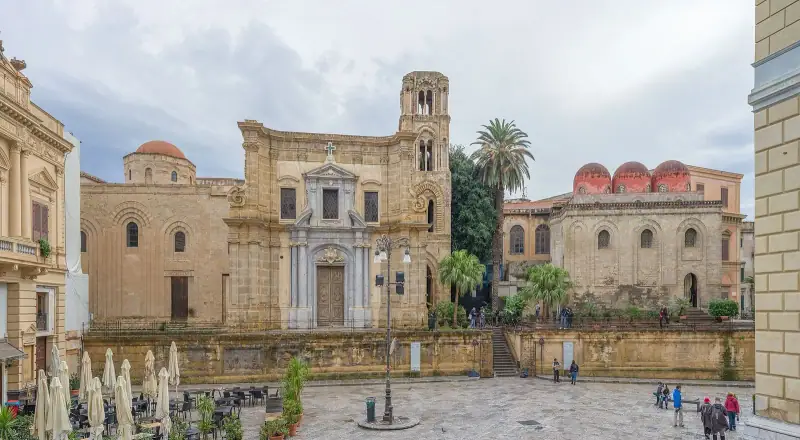
These two small churches, facing each other on Piazza Bellini, are gems of the Norman period.
La Martorana (Santa Maria dell’Ammiraglio): Founded in 1143 by the Norman admiral George of Antioch, it keeps its original 12th-century mosaics. The mosaic showing King Roger II crowned by Christ is particularly remarkable.
San Cataldo: A small church in Norman-Arab style with three small pink domes that seem to have sprung from Cairo. A sober interior of perfect geometric harmony.
Guided tours of Palermo
Markets, street food, monuments: discover Palermo with a local guide.
7. The Antonio Salinas Archaeological Museum
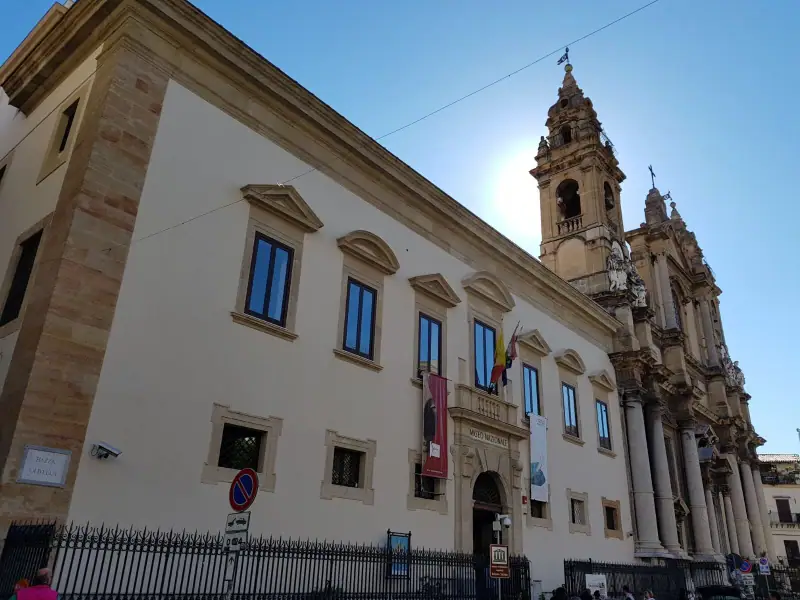
One of the richest archaeological museums in Europe, housed in a former convent. Its collection covers 5,000 years of Sicilian history: prehistory, Phoenicians, Greeks, Romans.
The masterpieces:
- The metopes of Selinunte (carved reliefs from the Greek temples of Selinunte, 4th-5th centuries BC), among the finest sculptures of the Greek world
- The Youth of Mozia: a statue of a young man in a tunic, of uncertain attribution (Greek or Phoenician), with an unsettling sensuality
- Greek bronzes and Roman marbles
Practical information: Price €8 (~$9). Free on the first Sunday of the month. Closed on Monday.
8. La Kalsa: the bohemian district
The Kalsa district (from the Arabic al-Khalisa, “the pure”) is the former quarter of the Arab emirs and then of Norman nobles. Long neglected and then occupied by disadvantaged populations, it has been gradually rehabilitated since the 1990s.
What to do in the Kalsa:
- Get lost in its lanes and admire the palaces under restoration
- Palazzo Abatellis: the regional museum of Sicilian arts, in a 15th-century Catalan-Gothic palace
- The Garibaldi garden with its enormous banyan figs (the largest in Europe)
- The trendy cafés and restaurants of Piazza Kalsa
9. The Capo Market
Less touristy than Ballarò, the Capo market (in the Capo district, near Via Sant’Agostino) has an atmosphere that is perhaps even more authentic. Its main street, covered with colorful tarpaulins, looks like an Eastern souk.
Specialties: Sicilian cured meats and cheeses, marinated olives, artisan breads, spices.
10. The Chiesa del Gesù (Casa Professa)
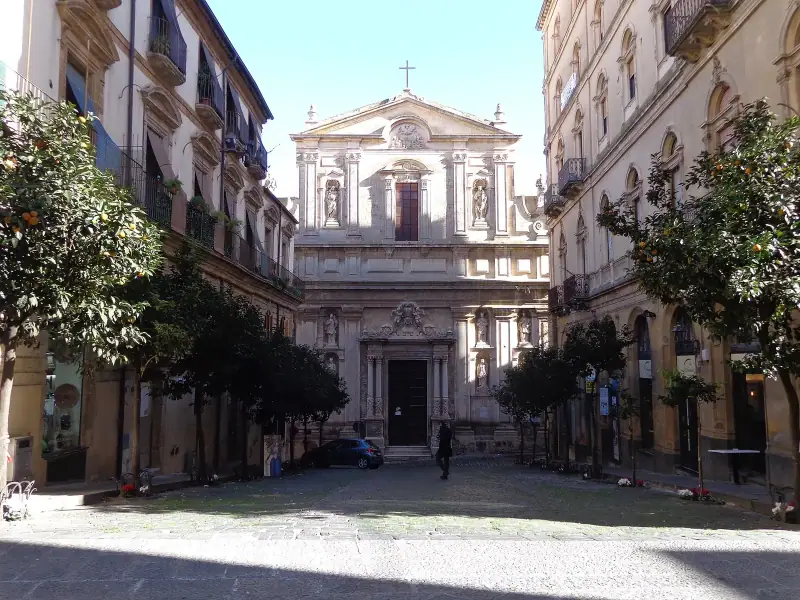
The masterpiece of Jesuit Baroque in Palermo. Built from 1564, it is entirely covered with polychrome marbles, gilded stuccoes and paintings. An excess of decoration that ends up reaching a form of dizzying harmony. A short walk from Ballarò market.
11. The Capuchin Catacombs
One of the strangest and most memorable sites in Sicily. The Capuchin catacombs hold about 8,000 mummified bodies dressed in their finest clothes. Priests, nobles, artisans, children… The wealthiest Sicilians from the 17th to the 19th century wanted to be displayed here for “eternity”.
Practical information: Via Cappuccini. Price €3 (~$3). Not allowed under 12 (depending on the parents). A unique atmosphere.
12. Monreale: the cathedral of golden mosaics (excursion)
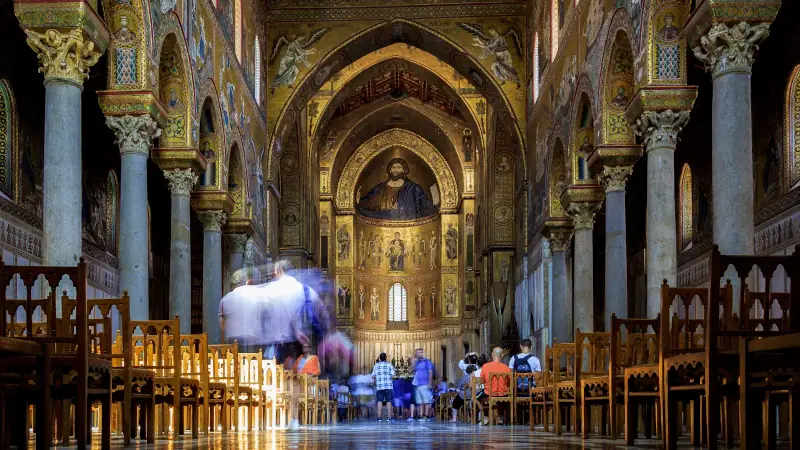
About 8 km (5 mi) from Palermo, Monreale holds one of the largest and most beautiful Norman cathedrals in Europe. Its 130 m (427 ft) nave is entirely covered with 6,340 m² (68,240 sq ft) of 12th-century gold mosaics, more than any other church in the world.
Practical information: AMAT bus from Palermo (30 min, €1.40 / ~$2). Cathedral about €6 (~$7), full ticket (cloister, terraces, museum) about €13 (~$15): check rates on the official website. Half a day is enough.
To organize your two days in Palermo, see our 7-day Sicily itinerary and our guide to Palermo’s restaurants.
Frequently asked questions
How many days do you need to visit Palermo?
Two full days let you see the main sights. Three days are ideal to include an excursion to Monreale (about 8 km / 5 mi away) and to explore the markets and neighborhood life at your own pace.
Do you need to book Cappella Palatina tickets in advance?
Yes, strongly recommended, especially from April to October. Online tickets (on the official website) let you avoid waits of 30 to 60 minutes. In low season, buying tickets at the door is still possible without a long line.
Are Palermo's markets open every day?
Ballarò market is open Monday to Saturday morning (about 8 am to 1 pm). The Capo market also runs on weekdays. On Sunday, the markets are closed but the city stays lively.
Can you visit Palermo without a car?
Yes, absolutely. Palermo is very good to visit on foot. All the main sights are within 2-3 km (1-2 mi) on foot from the historic center. Buses and taxis help for longer distances.
Is the Cappella Palatina accessible to people with reduced mobility?
Partly. The Palazzo dei Normanni can be reached by elevator. Some parts of the complex (notably the upper floors) remain hard to access for wheelchair users.
More Sicily guides
Keep reading
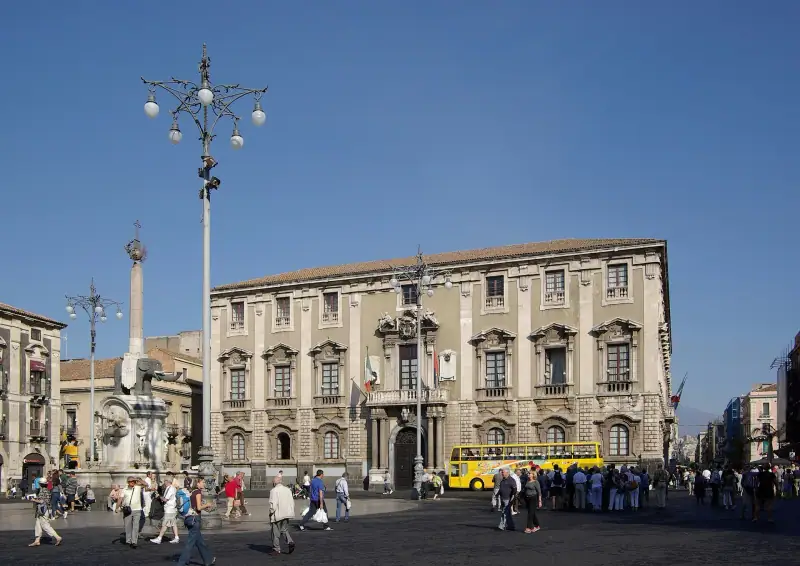
Visit Catania: A Complete Guide to the City of Mount Etna
What to do in Catania? Pescheria, Piazza del Duomo, a Baroque stroll, Mount Etna within reach. Complete guide with practical tips and good addresses.
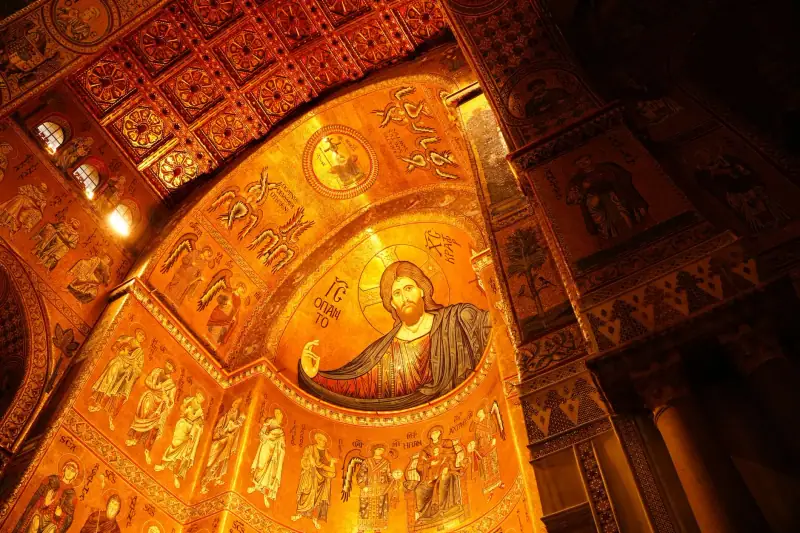
Monreale from Palermo Without a Car: Bus 389, Hours and Prices
How to get from Palermo to Monreale by bus without a car: AMAT line 389, a €1.40 ticket, cathedral hours, cloister, terraces and how long to allow.
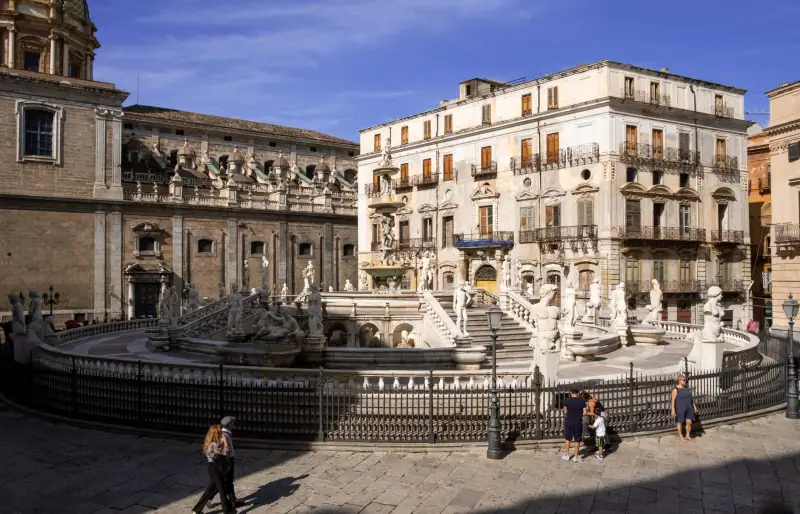
Visit Palermo: A Complete Guide to the Capital of Sicily
What to do in Palermo? Cappella Palatina, Ballarò and Vucciria markets, street food, Monreale. Practical guide, 2-3 day itinerary and FAQ.
Ready-made
Sicily itineraries
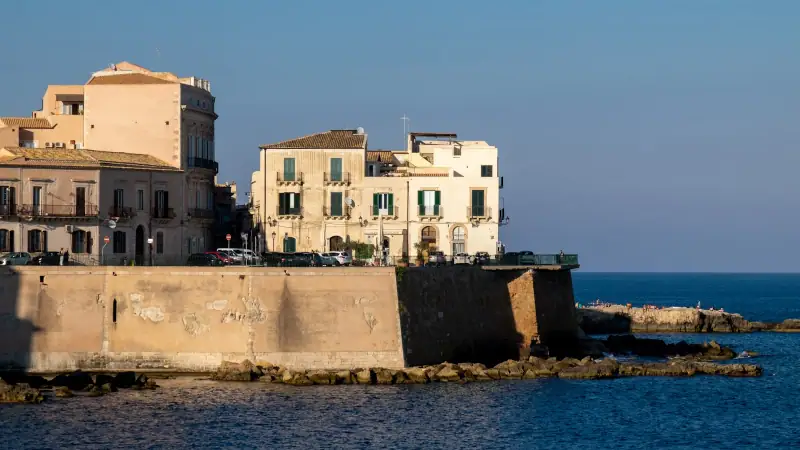
6 days
Southeast Sicily Itinerary: Syracuse, Noto, Ragusa and Agrigento in 6 Days
SyracuseRagusa or NotoAgrigento
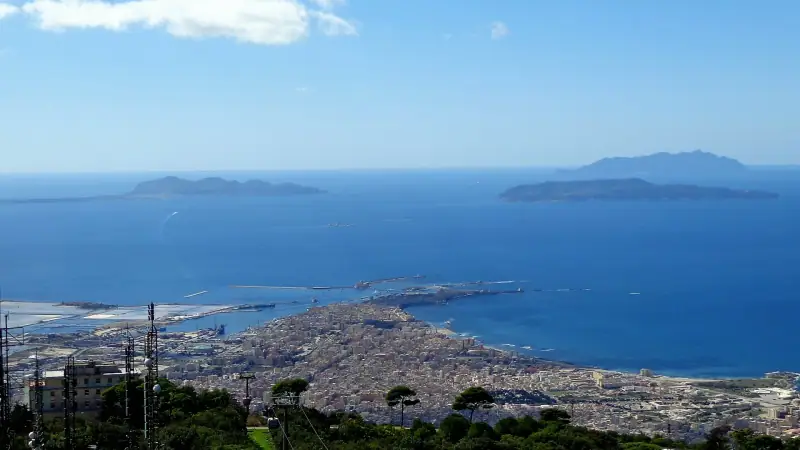
5 days
Western Sicily in 5 Days: Trapani, Marsala and the Aegadian Islands
A 5-day itinerary in western Sicily: Trapani and its salt pans, Marsala and its wine, Segesta, the Aegadian Islands. Practical tips for 2026.
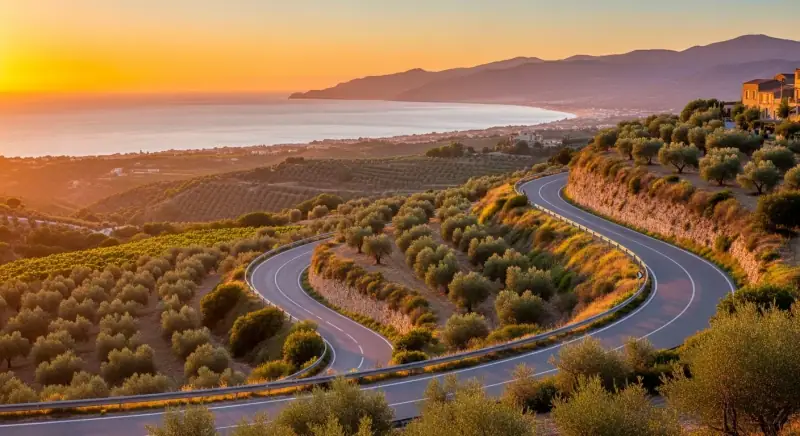
14 days
Sicily Road Trip: The Full Island Loop in 14 Days
A 2-week Sicily road trip itinerary: full loop of Palermo, Mount Etna, Syracuse, Agrigento and Trapani, with practical tips for driving the island.