Itineraries
Southeast Sicily Itinerary: Syracuse, Noto, Ragusa and Agrigento in 6 Days
We may earn a commission when you book through links on this page, at no extra cost to you. We don't visit or try the places we cover: we summarize published sources. How we work
Day by day
- Day 1Ortygia: Piazza del Duomo, Arethusa Fountain, Castello Maniace, Giudecca
- Day 2Neapolis archaeological park, Greek theater, Paolo Orsi museum
- Day 3Baroque Noto and the ruins of Noto Antica
- Day 4Ragusa Ibla, then Modica and its chocolate
- Day 5South coast drive to Agrigento, Valley of the Temples
- Day 6Agrigento old town, Pietro Griffo museum, Scala dei Turchi
Where to sleep
- Syracuse2 nights
- Ragusa or Noto2 nights
- Agrigento2 nights
In short
- Six days: Syracuse (2 nights), the Noto-Ragusa area (2 nights) and Agrigento (2 nights), about 350 km (217 mi) in total.
- A rental car is essential; Catania airport (CTA) is the most practical entry point, about 60 km (37 mi) north of Syracuse.
- The Val di Noto Baroque towns have been UNESCO-listed since 2002, Syracuse since 2005 and the Valley of the Temples since 1997.
- In summer, visit open-air sites (Neapolis, Valley of the Temples) early or late; midday heat can reach 40 °C (104 °F).
Southeast Sicily is one of the most extraordinary regions of the Mediterranean, and one of the least overhyped. Where the north concentrates the crowds on Palermo and Taormina, the triangle formed by Syracuse, Noto, Ragusa and Agrigento unfolds its treasures with a quiet generosity: 2,700-year-old Greek ruins, UNESCO-listed Baroque towns, spiced dark chocolate from Modica, turquoise sea between limestone cliffs.
Three successive civilizations, Greek, Arab and Spanish Baroque, carved these towns into the blond stone of the Val di Noto, creating a unique cultural landscape. This 6-day itinerary takes you to the heart of Sicily at its finest, away from the tourist highways and closest to the island’s deep soul. If you are looking for a seaside stop near Noto, see whether Marzamemi is worth the detour.
The route at a glance
Starting point: Catania (CTA airport) or Comiso (CIY airport)
End point: Agrigento or Palermo (return via SS640 or SS189)
Total distance: about 350 km (217 mi)
Recommended transport: a rental car is essential
Recommended bases: Syracuse (2 nights), Ragusa or Noto (2 nights), Agrigento (2 nights)
Rental car in Sicily
Essential for this circuit. Compare from Catania or Comiso airport.
Days 1-2: Syracuse, the greatest city of ancient Greece
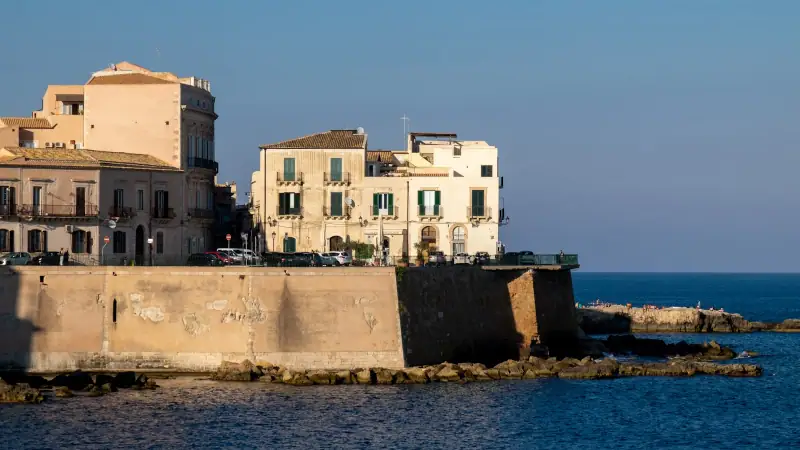
At its peak in the 5th century BC, Syracuse was the most powerful and most populous Greek city of the western world, larger than Athens. Archimedes was born here, Plato taught here, Aeschylus had his tragedies performed here. Today, the city still vibrates with this past grandeur, between the island of Ortygia suspended above the Ionian Sea and the Neapolis archaeological park, which holds one of the largest Greek theaters of the ancient world.
Day 1: Ortygia, the suspended island
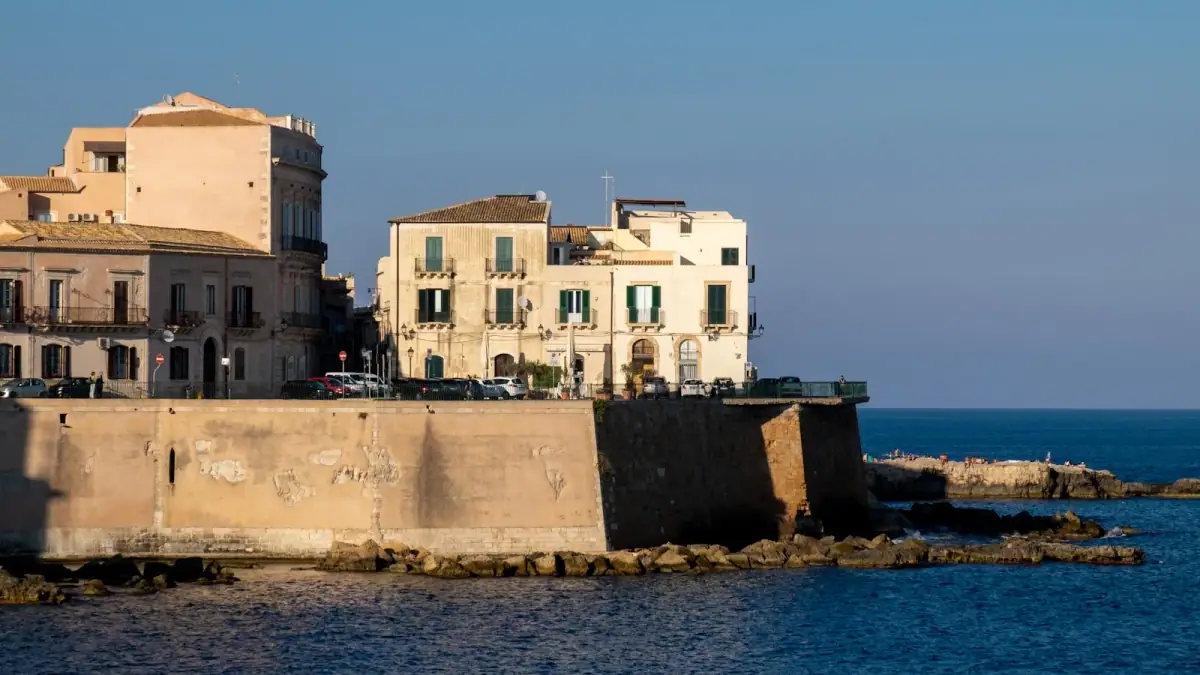
Ortygia is the historic heart of Syracuse: a small island linked to the mainland by two bridges, whose entire urban fabric dates from Antiquity or the Middle Ages. Its narrow lanes, ochre Baroque palaces and terraces over the sea make it one of the most bewitching historic centers in Sicily.
Start with Piazza del Duomo, considered by many the most beautiful Baroque square in Italy. The cathedral itself is an extraordinary architectural palimpsest: its Doric columns of the 5th century BC, belonging to the ancient temple of Athena, are still visible inside and outside the building, embedded in the 17th-century Baroque nave.
Then head down to the Fontana Aretusa, a freshwater spring welling up by the sea, surrounded by papyrus, one of the rare natural stands of papyrus in Europe, along with other Sicilian sites such as the Ciane river. For the ancient Greeks the fountain was a sacred place: the Arethusa spring, the mythological nymph pursued by the river god Alpheus, was said to have crossed the sea to spring up here.
In the afternoon, explore Castello Maniace, a 13th-century Norman-Hohenstaufen fortress built by Frederick II between 1232 and 1240 at the tip of the island, with a panoramic view of the harbor and the coast. In the evening, wander the lanes of the giudecca (the old Jewish quarter), among the most authentic and best preserved in Sicily, before dining facing the harbor.
Day 2: the Neapolis, Greek theater and latomias
The morning of the second day is entirely devoted to the Neapolis Archaeological Park, a few kilometers from the center. Allow at least 3 hours and arrive early (opening around 8 am) to avoid the midday heat.
The park’s highlight is the Greek Theater (Teatro Greco), cut directly into the limestone in the 5th century BC. With 67 rows of seats holding some 15,000 spectators, it is one of the best preserved in the ancient world. Every summer, Greek tragedies are still performed there; if your stay coincides with these performances (generally May-June), book ahead.
Right next to it, the Latomias, old limestone quarries dug 20 meters (66 ft) deep, served as a prison for the 7,000 Athenian soldiers captured after the disastrous Sicilian Expedition (413 BC). The most impressive is the Latomia del Paradiso, which contains the Ear of Dionysius (Orecchio di Dionisio): an ear-shaped cave 23 meters (75 ft) high, whose exceptional acoustic resonance reportedly allowed the tyrant Dionysius the Elder to overhear his prisoners’ conversations.
The Roman Amphitheater (Anfiteatro Romano) completes the visit: imposing in size, it dates from the 1st-2nd century AD and was used for gladiator fights and naval shows.
In the afternoon, visit the Paolo Orsi Archaeological Museum, one of the richest museums of Greek civilization outside Greece, with a collection spanning prehistory to the Roman era, including the famous Venus Landolina, a Hellenistic statue of moving beauty.
For a complete guide to the city, see our article on Syracuse.
Where to stay in Syracuse
Ortygia is the ideal district. Compare the B&Bs and charming hotels facing the sea.
Days 3-4: Noto and Ragusa, the Baroque jewels of the Val di Noto
Between Syracuse and Agrigento lies the Val di Noto, a region whose towns were entirely rebuilt after the catastrophic earthquake of January 11, 1693, one of the most devastating quakes in Sicilian history, which razed about thirty towns in a few seconds. The 18th-century reconstruction gave rise to a unique Baroque style, flamboyant and coherent, inscribed on the UNESCO World Heritage list in 2002.
Day 3: Noto, “the stone garden”
About 38-40 km (24-25 mi) southwest of Syracuse, Noto is often described as the most beautiful Baroque town in the world. It is no exaggeration. The whole historic center, built of luminous golden local limestone, forms an architectural symphony of rare coherence: over 800 meters (2,625 ft), the Corso Vittorio Emanuele unrolls a line of palaces, churches and gardens of absolute grace.
The Cattedrale di San Nicolò dominates the town from the top of its monumental staircase. Rebuilt after the dome collapsed in 1996 (weakened by the 1990 earthquake), it shines again in full splendor. The Palazzo Ducezio (town hall), right opposite, illustrates Sicilian Baroque in its lightest version: curved facade, slender columns, a loggia open onto the piazza.
A few steps away, the Palazzo Villadorata, also called Palazzo Nicolaci, shows off on its facade the famous balconies supported by brackets carved with fantastic figures: winged horses, sirens, lions, Moors, cherubs. It is Baroque ornament pushed to its paroxysm, and one of the most photographed features in all of Sicily.
In May, Noto holds the Infiorata, a festival during which an entire section of the corso is covered with a carpet of flowers forming pictures in petals. If you can time your visit for this period, it is a unique sight.
End the day at Noto Antica, the site of the old town ruined by the earthquake of 1693, perched on a limestone plateau 8 km (5 mi) from the present center. Only ruins overgrown with vegetation remain, but the atmosphere is striking and the view of the Sicilian countryside exceptional.
Day 4: Ragusa and Modica
Ragusa (Ragusa in Italian) is perhaps the most astonishing town of the Val di Noto. It is in fact made up of two distinct entities: Ragusa Superiore, the modern town on the heights, and Ragusa Ibla, the old Baroque city rebuilt after 1693 in a bowl of hills, reached by a monumental staircase or by a winding road. It is Ibla that holds the attention.
Wander the steep lanes of Ibla, among hanging gardens, decrepit palaces and laundry drying at Baroque windows. The Chiesa di San Giorgio, with its concave three-level facade that seems to dance in the morning light, is the masterpiece of the architect Rosario Gagliardi, the undisputed master of late Sicilian Baroque. The square in front of it, shaded by palm trees, is the ideal place for lunch in one of the small local restaurants before getting back on the road.
In the afternoon, head to Modica, about 14-16 km (9-10 mi) from Ragusa. This Baroque town built in a canyon is famous for one thing above all: its chocolate (cioccolato di Modica). It is a chocolate prepared cold using a technique inherited from the Aztecs via the 16th-century Spaniards, with no added cocoa butter or lecithin: the texture is grainy, almost sandy, and the purity of the cocoa comes through exceptionally. Specialty shops follow one another in Modica’s center: black pepper, cinnamon, chili and bitter orange are the traditional flavors.
For sleeping, stay in Ragusa or Noto; both towns are well supplied with charming places to stay for all budgets.
Sicily activities and excursions
Guided tours of the Val di Noto, Modica chocolate tastings, discovery of the Sicilian countryside.
Days 5-6: Agrigento and the Valley of the Temples
From Ragusa or Modica, reach Agrigento along the south coast. The road is long (about 150 km / 93 mi, allow 2 hours) but the drive along the Mediterranean coast, between limestone cliffs and deserted beaches, is worth the detour. You can stop at the beaches of the Sicilian south coast (Punta Secca, Marina di Ragusa, Donnalucata) for a swim before getting back on the road.
Day 5: the Valley of the Temples
The Valle dei Templi is one of the most impressive archaeological sites of the ancient world and the absolute symbol of Sicilian Magna Graecia. Agrigento, the ancient Akragas founded around 582 BC, was one of the richest and most populous Greek cities in the Mediterranean. The philosopher Empedocles was born here. The poet Pindar described it as “the most beautiful of the cities of mortals”.
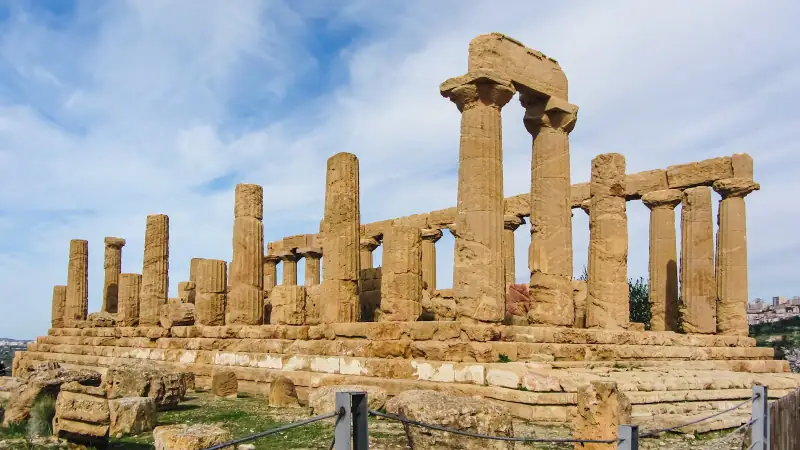
On a limestone ridge overlooking the sea, seven Doric temples stand in a landscape of Mediterranean vegetation: olive trees, almond trees, agaves. Most date from the 5th and 6th centuries BC.
The Temple of Concordia is by far the best preserved of all Greek antiquity: its 34 Doric columns are almost intact, standing for 2,500 years. Its exceptional preservation is due to its conversion into a Christian church in the 6th century AD: the columns were joined by walls, turning the peristyle into a nave.
The Temple of Hera (or Juno Lacinia) perhaps offers the most dramatic view, perched at the eastern end of the ridge with the Sicilian countryside and the sea in the distance. The Temple of Hercules is the oldest on the site (late 6th century BC); 8 columns were re-erected in 1924, but its mass is impressive. The ruins of the Temple of Olympian Zeus evoke the enormity of what would have been, if completed, the largest temple of ancient Greece.
Allow at least 3 hours to cover the site. Arrive at opening (around 8:30 am) to avoid the heat and have the site almost to yourself. Sunset over the Valley of the Temples is memorable; the site is lit in the evening.
To learn more about Sicily’s Greek temples, read our article on Sicilian Greek temples.
Day 6: Agrigento’s historic center and the descent to the sea
Agrigento’s upper town has a medieval historic center often neglected by visitors in a hurry to reach the Valley of the Temples. Via Atenea, the main artery, deserves an hour of morning strolling for its adjacent lanes with colorful-facaded houses.
The Pietro Griffo Regional Archaeological Museum is essential to complete the visit of the Valley of the Temples: it holds notably the famous Ephebe of Agrigento (a statue of the 5th century BC) and a collection of ceramics and ancient coins attesting to the wealth of ancient Akragas.
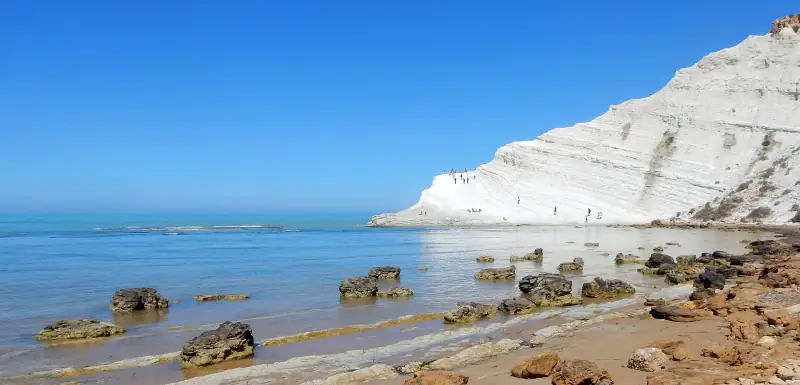
Located near Realmonte, about 14-16 km (9-10 mi) west of Agrigento, the Scala dei Turchi is one of Sicily’s most photographed natural formations: a white limestone marl cliff, sculpted by the sea into natural steps, overlooking a white-sand beach. The site is easily reachable by car from Agrigento, but access to the cliff is now paid (about €5-6 / ~$6-7) and limited by time slots and number of visitors: check the rules with the municipality of Realmonte before you go. It is an ideal end to the stay, with a swim before getting back on the road.
For our complete guide to Agrigento, see our dedicated article.
Accommodation in Agrigento
Stay in the historic center or near the Valley of the Temples. Compare the options.
Practical tips for this circuit
Renting your car in Catania is the most practical solution: the airport has many rental companies and you can return the car in Palermo or Agrigento if you are not doing a loop. In summer (July-August), book your car several weeks ahead: rates soar and stock runs out quickly.
Driving in Sicily is demanding in the towns (anarchic parking, narrow lanes, surprising right-of-way rules) but pleasant on country roads. The secondary roads (SP, SS) between the towns of the Val di Noto cross a magnificent countryside of carob trees, olive trees and vines; prefer them to the fast roads when the weather allows.
In summer, plan your visits to open-air sites (Neapolis, Valley of the Temples) for the first hours of the morning or late afternoon: midday heat (40 °C / 104 °F in July-August) can be exhausting on exposed sites with no shade. Always carry water, a hat and sunscreen.
Wi-Fi in accommodation is generally decent. For navigating and using Google Maps between towns, check your carrier’s international plan or use a travel eSIM; offline maps also help.
What you will not regret
- A granita di mandorla (almond granita) on the terrace of a Sicilian bar at 7 am, with a brioche and pistachio butter
- The golden-hour light on the columns of the Temple of Concordia, from the ridge of the Valley of the Temples
- A plate of pasta con le sarde (pasta with sardines, wild fennel and pine nuts) in a trattoria in the Sicilian interior
- The silence of the streets of Ragusa Ibla at dawn, before the tourists and residents arrive
- The smell of cocoa drifting out of Modica’s chocolate shops as you walk up the main corso
Southeast Sicily is not a destination you visit; it is a region you feel. Take your time.
Sources
- Parco Valle dei Templi Agrigento: figures checked November 2026
Frequently asked questions
Do you need a car to explore southeast Sicily?
Yes, a car is essential for this itinerary. Public transport exists but is slow, infrequent and does not cover the archaeological sites well. Rent your car at Catania airport (the ideal entry point) and return it in Palermo or at Palermo airport if you do a loop.
Which airport should you start this itinerary from?
Catania-Fontanarossa Airport (CTA) is the most practical entry point: Syracuse is only about 60 km (37 mi) to the south. You can also arrive via Comiso airport (CIY), closer to Ragusa, which has fewer connections.
How many days do you need for southeast Sicily?
Six days is a comfortable pace to cover Syracuse (2 nights), the Noto-Ragusa area (2 nights) and Agrigento (2 nights). With 4 days, you can do Syracuse and Agrigento by sacrificing Noto and Ragusa, a hard choice since these two Baroque towns are exceptional. With 8 days, you can add excursions to Scicli, Ispica or the Madonie Natural Park.
What are the UNESCO sites in southeast Sicily?
The southeast is one of the densest areas of UNESCO World Heritage in the Mediterranean. The Val di Noto (including Noto, Ragusa, Modica, Scicli, Caltagirone and other Baroque towns) has been listed since 2002. Syracuse and the Necropolis of Pantalica have also been on the UNESCO list since 2005. The Valley of the Temples of Agrigento has been since 1997.
What is the best time to visit southeast Sicily?
April to June and September-October offer the best conditions: pleasant temperatures (22-28 °C / 72-82 °F), few crowds, swimmable sea from June. Summer (July-August) is very hot (35-40 °C / 95-104 °F) and sun-exposed archaeological sites are exhausting at midday. Winter is mild and quiet, ideal for museums and historic centers, but some coastal accommodation closes.
Can you combine this itinerary with eastern Sicily (Catania, Taormina, Mount Etna)?
Yes, the two circuits combine naturally into a grand tour of eastern Sicily. Allow at least 10 to 12 days to do eastern Sicily (Catania, Taormina, Mount Etna), then come back down to Syracuse and the Val di Noto, finishing in Agrigento. You can then head back up to Palermo via the SS640 or SS189 for a complete loop of the island.
What budget should you plan for 6 days in southeast Sicily?
Accommodation costs €70-150 (~$80-175) per night depending on type (hostel, charming hotel, B&B). Site entry fees range from €10 to 16.50 (~$12-19) per site (Neapolis, Valley of the Temples). Meals cost €15-30 (~$17-35) per person in a local restaurant. A rental car costs about €150-250 (~$175-290) for 6 days.
More Sicily guides
Keep reading
The Best Beaches in Sicily: A Selection by Region
Discover Sicily's best beaches: Cefalù, Taormina, Scopello, Agrigento, the Aegadian Islands. White sand, turquoise water, hidden beaches: our selection.
Hiking Mount Etna: A Complete Guide to Climbing the Volcano
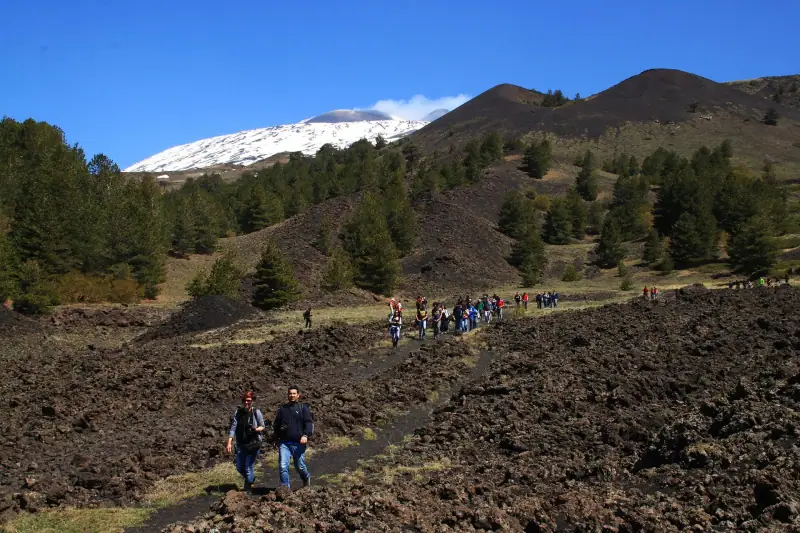
Mount Etna hiking guide: cable car, trails, access, altitude, prices, season, gear. Everything to visit Europe's largest volcano safely.
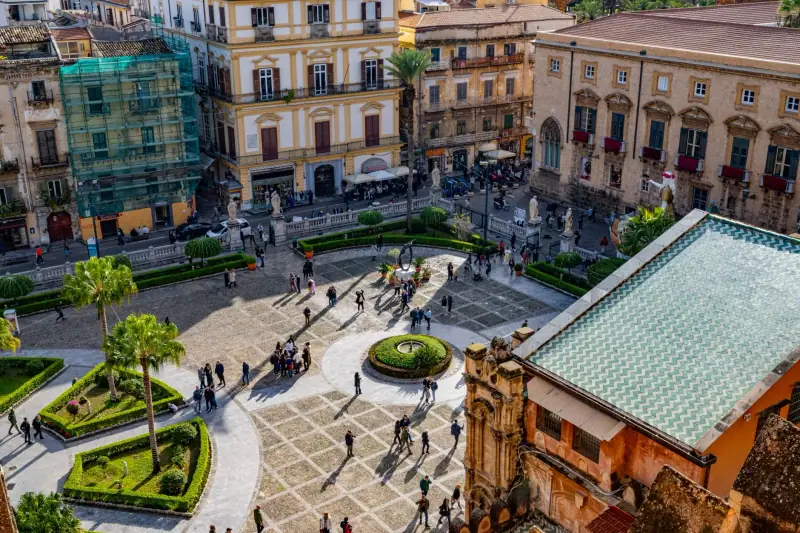
Palermo Highlights: The 12 Sights Not to Miss
What to see in Palermo? Our selection of 12 highlights: Cappella Palatina, markets, cathedral, Kalsa, Monreale. Practical guide with hours and tips.
Ready-made
Sicily itineraries
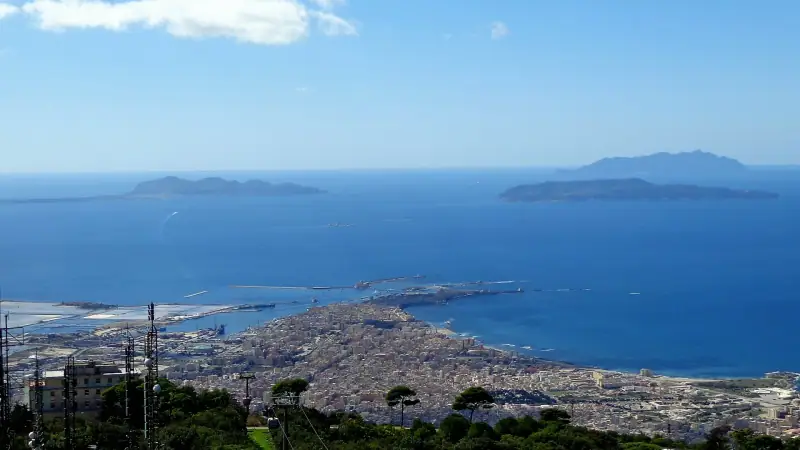
5 days
Western Sicily in 5 Days: Trapani, Marsala and the Aegadian Islands
A 5-day itinerary in western Sicily: Trapani and its salt pans, Marsala and its wine, Segesta, the Aegadian Islands. Practical tips for 2026.
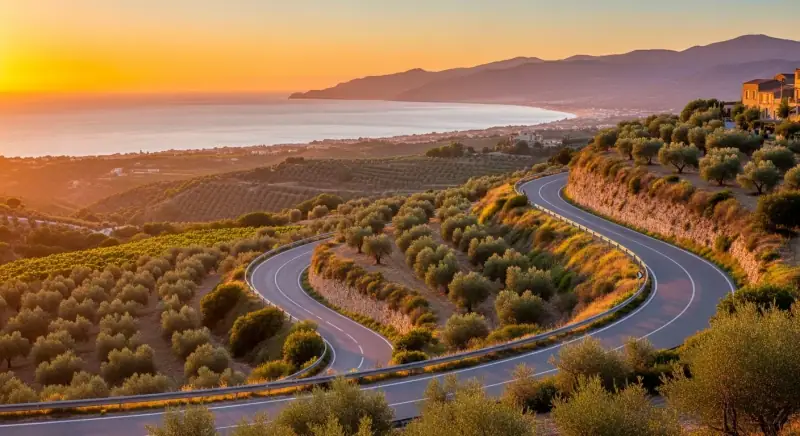
14 days
Sicily Road Trip: The Full Island Loop in 14 Days
A 2-week Sicily road trip itinerary: full loop of Palermo, Mount Etna, Syracuse, Agrigento and Trapani, with practical tips for driving the island.