Things to do
Hiking Mount Etna: A Complete Guide to Climbing the Volcano
We may earn a commission when you book through links on this page, at no extra cost to you. We don't visit or try the places we cover: we summarize published sources. How we work
In short
- The south side (Rifugio Sapienza, 1,917 m / 6,290 ft) is the classic access; a guide is mandatory above 2,900 m (9,515 ft).
- The cable car + 4x4 + guide package costs about €80-95 (~$93-110); the cable car alone is about €54 (~$63) round trip.
- April to October is the best period; start early (before 8 am) to avoid heat and the clouds that often cover the volcano at midday.
- Check volcanic activity with INGV (ingv.it) before you go; authorities can close the upper zones without notice.
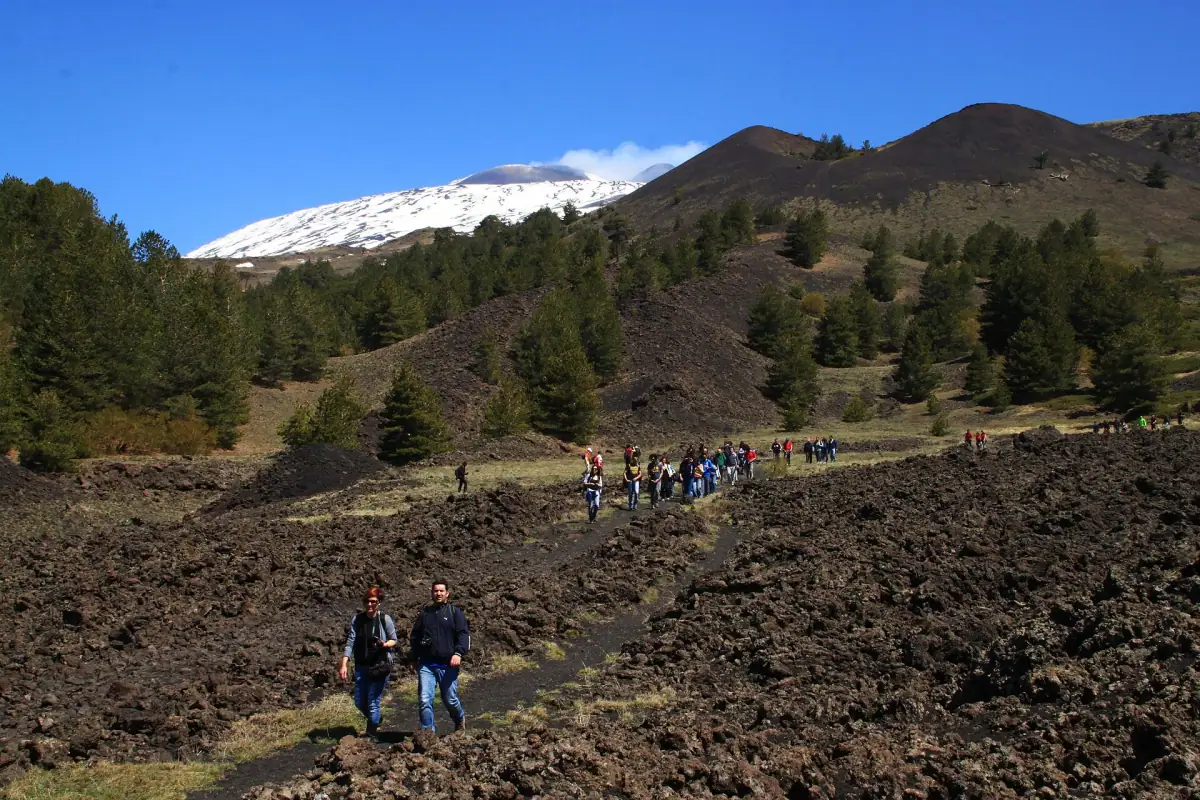
Mount Etna. The roof of Sicily. Europe’s largest active volcano. A mountain of about 3,350 meters (10,990 ft) whose black flanks cover 1,250 km² (483 sq mi) and whose eruptions, frequent and sometimes spectacular, have shaped the geography and the imagination of all eastern Sicily.
Hiking on Mount Etna is one of the most striking experiences the island offers. This practical guide gives you everything you need to know to organize your excursion, whatever your level.
Understanding Mount Etna before you go
Mount Etna is a stratovolcano that has been active for about 600,000 years. It now peaks at about 3,350 meters (10,990 ft; Voragine crater; the altitude varies slightly after each major eruption, as lava flows change the summit profile). Etna has four main summit craters, plus hundreds of adventive cones on its flanks.
Permanent activity. Unlike volcanoes that erupt only occasionally, Etna is in almost continuous activity. Gas emissions, lava flows and explosions are regular. This activity is generally predictable and presents no immediate danger to visitors in the authorized zones. But the authorities can close the upper zones without notice when activity rises.
Check the status before you go. The INGV website (ingv.it) publishes daily bulletins on Etna’s activity. Local guides and cable car operators will also inform you of trail conditions.
The two sides of Mount Etna
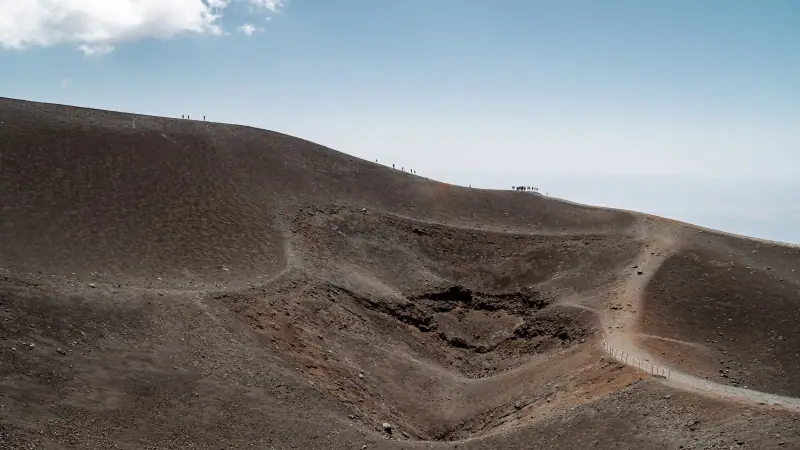
The south side: the classic access
This is the busiest and easiest side to reach, from the village of Nicolosi and Rifugio Sapienza (1,917 m / 6,290 ft).
How to get there:
- From Catania: 45 minutes by car (SP92 then SP276)
- From Taormina: 1 h by car via the A18 and Nicolosi
- By bus from Catania: AST bus to Nicolosi (then a taxi or an 8 km / 5 mi walk to the Rifugio)
Options from Rifugio Sapienza:
Option 1: Cable car + guided 4x4 (recommended):
- Cable car up to 2,500 m / 8,200 ft (10 minutes)
- Off-road 4x4 + guide up to 2,900 m / 9,515 ft
- Guided hike around the summit craters
- Total duration: 3-4 hours from the Rifugio
- Price: about €80-95 (~$93-110) per person for the cable car + 4x4 + guide package (the cable car alone, to 2,500 m, costs about €54 / ~$63 round trip); check rates on funiviaetna.com
- Booking recommended in July-August
Option 2: Independent hike up to 2,900 m:
- Climb on foot from Rifugio Sapienza
- Distance: 8 km (5 mi) one way, elevation gain +990 m (3,250 ft)
- Duration: 3-4 h up, 2-3 h down
- Level: intermediate to difficult (unstable terrain, steep slope)
- Free (no entry fee for the zone up to 2,900 m)
Option 3: Guided excursion from Catania or Taormina:
- Transport from your accommodation included
- Certified Etna guide for the whole day
- Price: about €90-115 (~$105-135) per person depending on the organizer
- Ideal if you have no car
Guided Mount Etna excursions
Departure from Catania or Taormina, certified guide included.
The north side: the wild option
Less busy, the north side is explored from Piano Provenzana (1,800 m / 5,910 ft), reachable from Linguaglossa.
Advantages of the north side:
- Fewer tourists
- Spectacular landscapes (the flows of the great 2002 eruption are very impressive)
- Access to the most recent lava flows
Drawbacks:
- Farther from Catania and Taormina
- Less infrastructure (no cable car on the north side since the 2002 eruption destroyed the installations)
- Trails sometimes less well marked
Trails by level
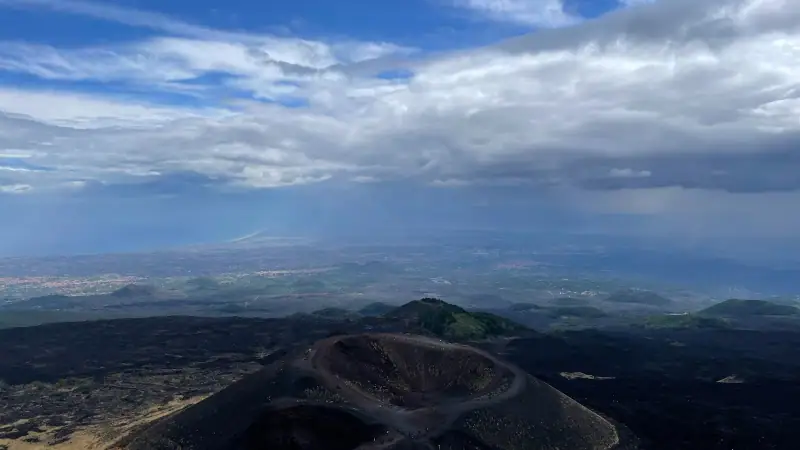
Easy level: the lower slopes
The chestnut trail (altitude 700-1,200 m / 2,300-3,940 ft): The lower slopes of Etna are covered with magnificent forests: century-old chestnut trees, oaks, pines. Marked trails cross these forests for walks of 2-3 hours.
Ragalna/Zafferana, east side: Etna’s east side, between Zafferana and Milo, is covered with vineyards producing the famous Etna wines (Etna Rosso, Etna Bianco). A walk among the vines with a tasting in a local winery is an excellent alternative for those who do not want to climb to altitude.
Intermediate level: the 20th-century craters
Valle del Bove (starting from Zafferana Etnea): The Valle del Bove is a collapsed caldera on the east side, covering 40 km² (15 sq mi). From the edges of the caldera, you discover a striking, moonlike panorama: solidified lava flows, basalt walls 900 meters (2,950 ft) high, and the Ionian Sea at the bottom. A hike of 3-4 hours, moderate elevation gain.
Montagnola and the 1892 craters: From Rifugio Sapienza, several trails let you discover the side craters formed during the great eruptions of the past century. These adventive cones, often covered with lovely vegetation in contrast to the black lava, make excellent hiking goals.
Advanced level: the hike to the summit
To reach the roughly 3,350 meters (10,990 ft) and the summit craters, you must be accompanied by an authorized guide above 2,900 meters (9,515 ft). The full climb on foot from Rifugio Sapienza (south side) is about 1,500 m (4,920 ft) of elevation gain for a full day (8-10 hours round trip).
This level is reserved for experienced hikers who are well equipped and in good physical shape.
Essential gear
Mount Etna is a volcano, not an ordinary mountain. Even in summer, conditions can change radically.
Be sure to bring:
- Thick-soled hiking shoes (essential: lava is sharp and the ground unstable)
- Warm clothing (even in summer, it is 10-15 °C / 50-59 °F above 2,500 m, with the wind)
- Windbreaker or rain jacket
- Cap/hat and sunglasses (intense glare off the black lava)
- Water (at least 1.5 liters / 50 oz per person)
- SPF 50 sunscreen
- Respirator mask (sulfurous gases can be bothersome near active vents)
Avoid:
- Sneakers or sandals (dangerous on lava)
- White clothing (Etna ash stains irreparably)
- Underestimating the descent time
Timing and organization
Mornings are best. In summer, clouds often cover the volcano between 11 am and 3 pm, blocking the views. Start early (7-8 am at the latest) to enjoy clear skies.
The descent is quick. On powdery lava, you can run down (“lava skiing”). What takes 3 h to climb can be descended in 1 h.
Check activity the day before. INGV publishes bulletins. Local guides are also a good source of real-time information.
Mount Etna beyond the craters
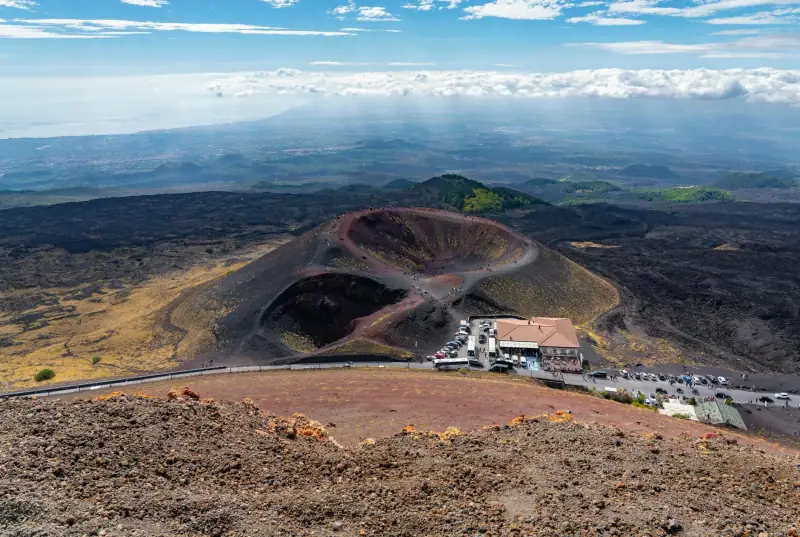
Mount Etna is not only a volcano. It is also:
Etna wines: Since the 2000s, wines produced on Etna’s volcanic slopes have gained worldwide renown. The mineral-rich volcanic soils and century-old vines (some ungrafted, very rare) give wines of remarkable complexity. Several wineries offer tastings with a view of the volcano.
Bronte pistachios: The village of Bronte, on Etna’s northwest flank, produces the best pistachios in the world. The harvest (alternate-year, every other year) takes place in September. The pistachio trees grow on solidified lava flows, a unique sight.
Century-old chestnut trees: The chestnut forest of Sant’Alfio, with trees several centuries old (some with a circumference of 20 meters / 66 ft), is an impressive sight.
To organize your stay in the region, see our guide to places to stay in Taormina and our 7-day Sicily itinerary.
Frequently asked questions
Can you climb Mount Etna on your own, without a guide?
The area up to 2,900 meters (9,515 ft; Rifugio Torre del Filosofo on the south side) is freely accessible. Above 2,900 meters, an authorized guide is mandatory to reach the summit craters (about 3,350 m / 10,990 ft). This is for safety reasons, as volcanic activity can be unpredictable.
Which side is best for visiting Mount Etna, north or south?
The south side (from Rifugio Sapienza at Nicolosi) is the busiest and most accessible: cable car + guided 4x4 up to 2,900 m (9,515 ft). The north side (Piano Provenzana) is wilder and less touristy, ideal for experienced hikers.
Is Mount Etna active right now?
Mount Etna is one of the most active volcanoes in the world and has been in near-permanent eruption for centuries. Minor eruptions (lava and ash emissions) are frequent. Check the activity status on the website of INGV (Istituto Nazionale di Geofisica e Vulcanologia) before your visit.
What is the best time to hike Mount Etna?
April to October is the best period. In winter, snow can close access to the upper trails. In summer, you need to leave very early (before 8 am) to avoid the heat and the clouds that often cover the volcano in the middle of the day.
What can you see on Mount Etna without going to the summit?
The solidified lava flows of the Valle del Bove, the 2001 and 2002 side craters, the lava tubes (Grotta del Gelo), and the vineyards and chestnut trees of the lower slopes offer unforgettable experiences even without reaching the summit.
More Sicily guides
Keep reading
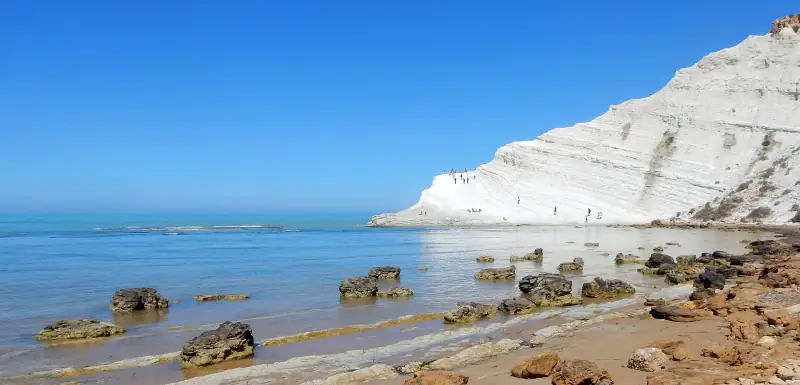
The Best Beaches in Sicily: A Selection by Region
Discover Sicily's best beaches: Cefalù, Taormina, Scopello, Agrigento, the Aegadian Islands. White sand, turquoise water, hidden beaches: our selection.
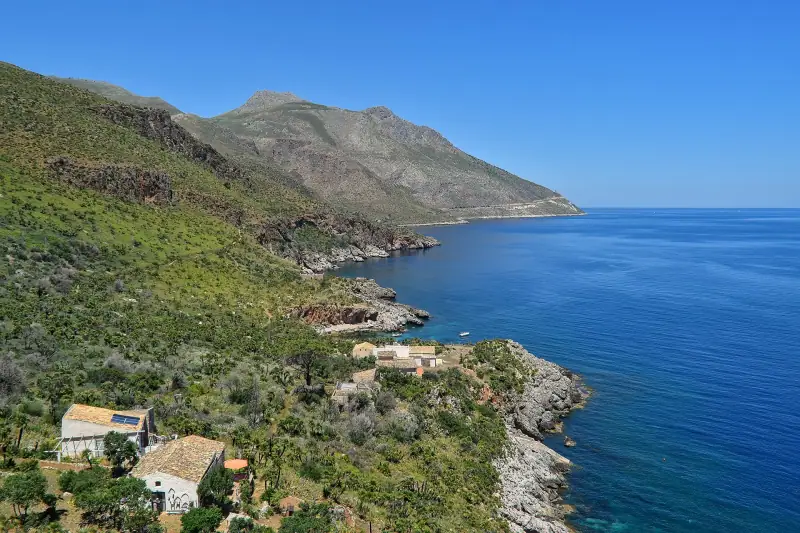
Zingaro Reserve: Which Entrance, Trail and Coves for a Day on Foot?
Zingaro in Sicily: Scopello or San Vito entrance, coastal trail, coves, duration, water to bring, 8 am to 4 pm hours and payment. A day-on-foot guide.
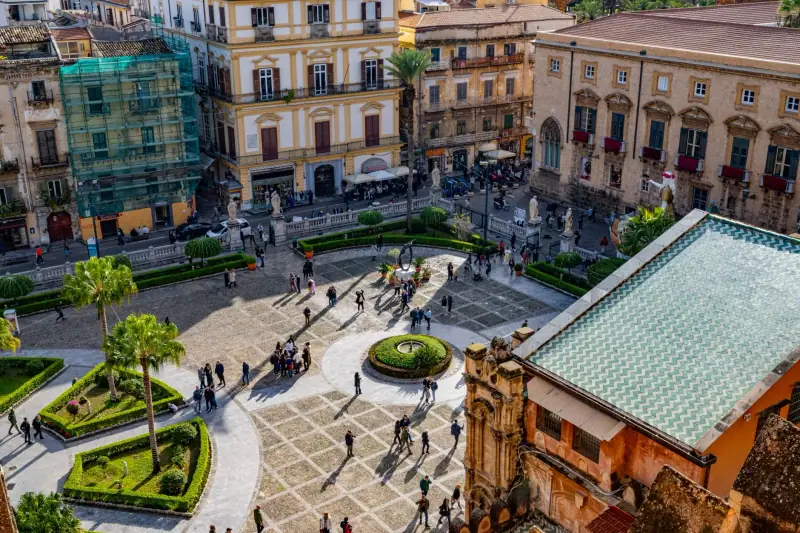
Palermo Highlights: The 12 Sights Not to Miss
What to see in Palermo? Our selection of 12 highlights: Cappella Palatina, markets, cathedral, Kalsa, Monreale. Practical guide with hours and tips.
Ready-made
Sicily itineraries
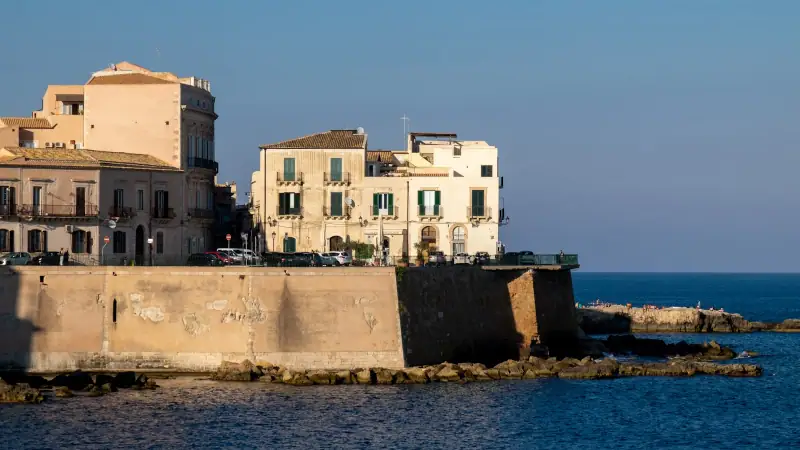
6 days
Southeast Sicily Itinerary: Syracuse, Noto, Ragusa and Agrigento in 6 Days
SyracuseRagusa or NotoAgrigento
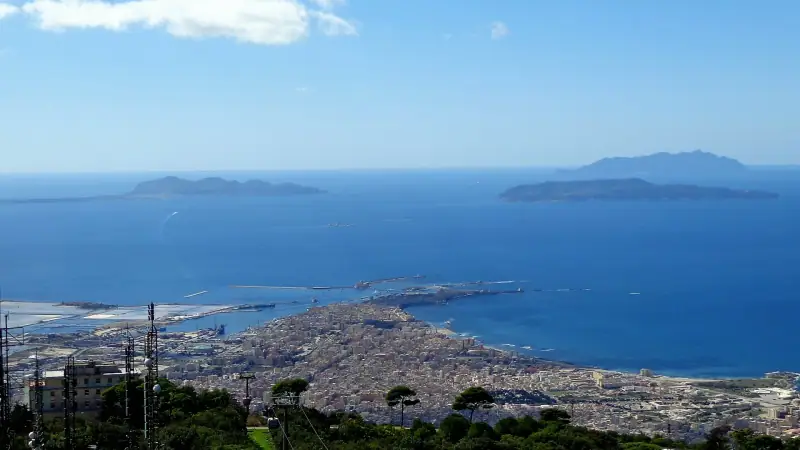
5 days
Western Sicily in 5 Days: Trapani, Marsala and the Aegadian Islands
A 5-day itinerary in western Sicily: Trapani and its salt pans, Marsala and its wine, Segesta, the Aegadian Islands. Practical tips for 2026.
14 days
Sicily Road Trip: The Full Island Loop in 14 Days
A 2-week Sicily road trip itinerary: full loop of Palermo, Mount Etna, Syracuse, Agrigento and Trapani, with practical tips for driving the island.