What to see
Visiting Nuoro: A Complete Guide to the Capital of the Barbagia
We may earn a commission when you book through links on this page, at no extra cost to you. We don't visit or try the places we cover: we summarize published sources. How we work
In short
- Two days cover the town itself: one for the museums and historic center, one for Monte Ortobene (955 m / 3,133 ft). Add two or three days for the Barbagia and the Ogliastra coast.
- Nuoro has no airport: Olbia is about 100 km (62 mi), Cagliari about 175 km (109 mi) and Alghero about 123 km (76 mi) away. A car is strongly recommended.
- Cala Gonone is about 45 km (28 mi) away, a 45-minute drive, and the departure point for boat trips to the east-coast coves.
- Gorropu gorge entry costs about €6 (about $7), paid in cash on site; the hike takes about 4 to 6 hours round trip.
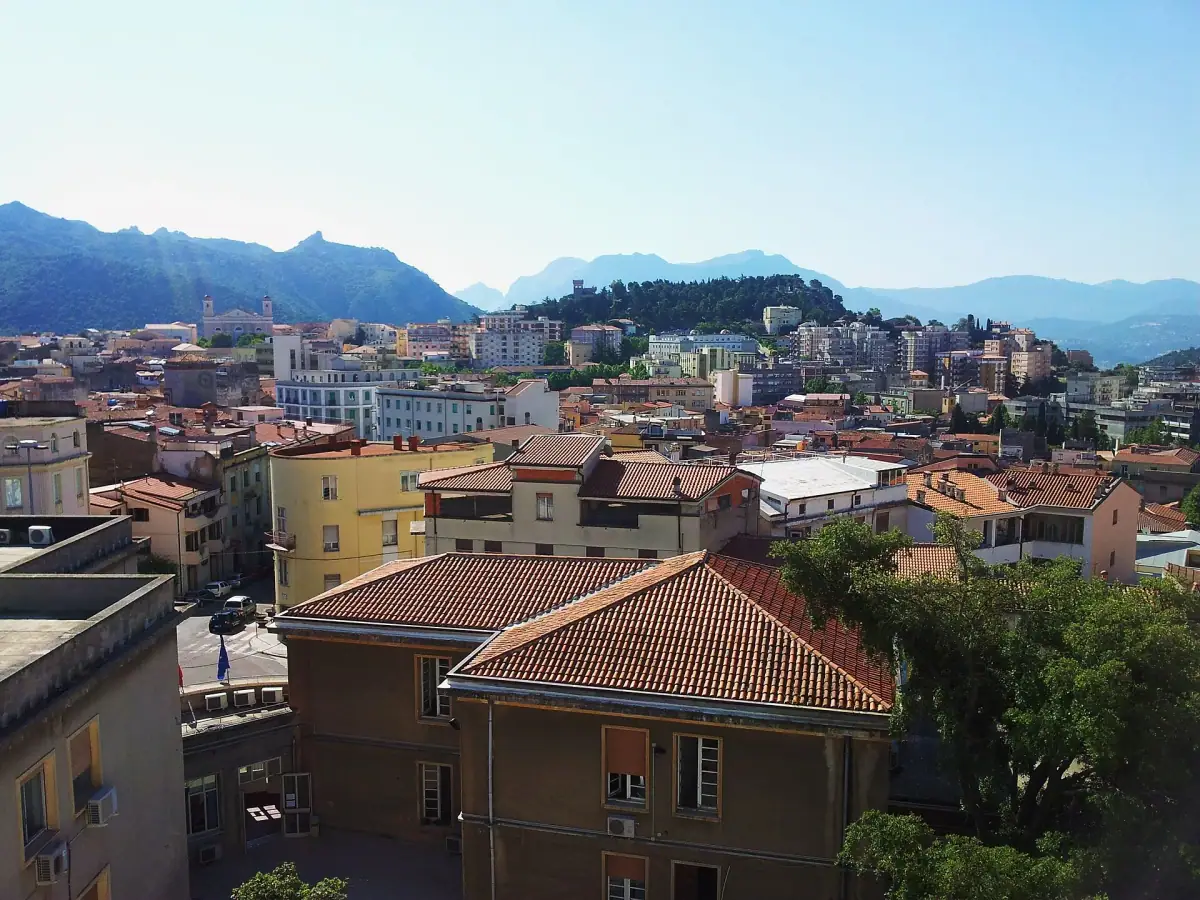
Nuoro is a surprise. In a country obsessed with its turquoise beaches, its flashy Costa Smeralda and its secret coves, this town of thirty-five thousand souls set 548 m (1,798 ft) above sea level in the center of Sardinia represents something else: the island as it was before mass tourism. Capital of the Barbagia, the most mountainous and isolated region of Sardinia, Nuoro is the town of Grazia Deledda (Nobel Prize in Literature, 1926), the keeper of the island’s best ethnographic museum, and the starting point for wild landscapes that have not changed in centuries. It has no beach. That is precisely what makes it an exceptional destination for anyone who wants to understand deep Sardinia.
Monte Ortobene: Nuoro’s sacred mountain
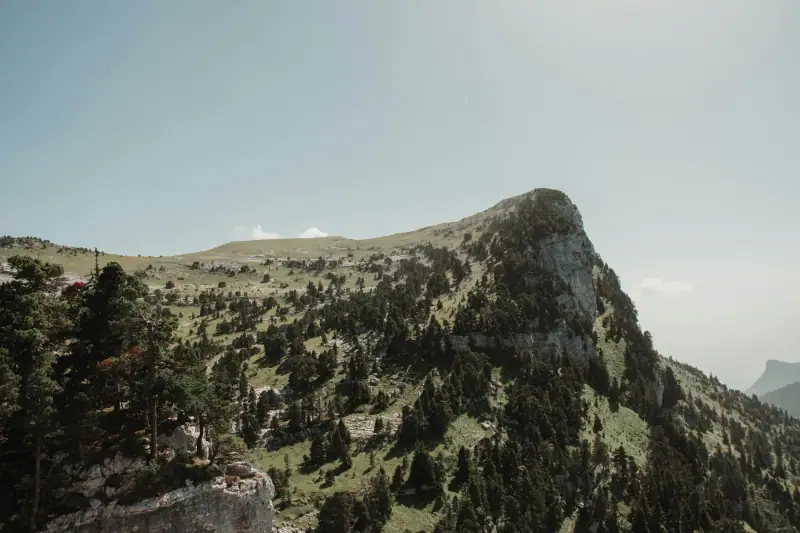
Only 7 km (4 mi) from the town center, Monte Ortobene peaks at 955 m (3,133 ft) and has overlooked Nuoro since time immemorial. The Nuoresi have climbed it on foot, by car or by mountain bike for generations, and the mountain holds a central place in the town’s identity.
The Cristo Redentore
At the summit of Monte Ortobene stands the Cristo Redentore, a bronze statue more than 4 m (13 ft) high (not counting the rocky base) inaugurated in 1901 by the sculptor Vincenzo Jerace. Each August 29, a solemn procession climbs from Nuoro to the statue: it is Nuoro’s patron saint’s festival, one of the most important in the whole Barbagia, with hundreds of the faithful in traditional costume. The view from the base of the statue takes in the valleys of the Barbagia as far as the mountains of the Ogliastra in clear weather.
Hikes in the holm oak forest
Monte Ortobene is covered with a dense forest of holm oaks and granite rocks of strange shapes, carved by erosion into silhouettes that look like animals or faces. The Redentore trail (a loop of about 4 km / 2.5 mi, modest elevation gain) starts from the main parking lot and passes through the most spectacular rocks. Picnic tables are set up under the oaks, and the place is very popular with Nuorese families on weekends.
For more ambitious walkers, the panoramic trail that circles the massif (about 10 km / 6 mi) offers successive viewpoints over the town, the plain and the surrounding mountains.
Hikes in the Barbagia
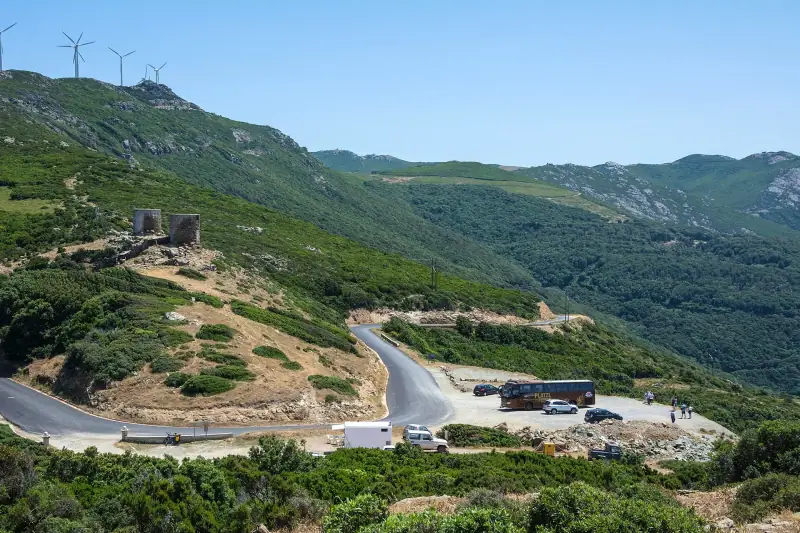
Guided excursions on Monte Ortobene, in the Gorropu gorge and on Barbagia trails.
The museums: Nuoro’s cultural heart
Nuoro has a remarkable concentration of museums for a town of its size. They are grouped in and around the historic center and can all be visited in one well-organized day.
The Museo Etnografico Sardo (Costume Museum)
The Museo della Vita e delle Tradizioni Popolari Sarde, commonly called the Museo del Costume, is the most important museum institution in all of Sardinia for understanding Sardinian culture. Housed in a neo-Sardinian building of sober architecture, it gathers an extraordinary collection of traditional costumes in silk, velvet and gold thread from every region of the island, along with silver filigree jewelry, ceramics, musical instruments (launeddas, a multi-reed instrument unique to Sardinia), shepherds’ tools and a reconstruction of the interior of a Barbagia peasant house.
The room of Barbagia costumes is particularly striking: the men’s and women’s ceremonial outfits of Orgosolo, Oliena, Dorgali and Mamoiada, hand-embroidered over several generations, are among the finest expressions of Mediterranean textile craft. Allow at least 2 hours to go around.
The MAN (Museo d’Arte della Provincia di Nuoro)
Devoted to modern and contemporary Sardinian art, the MAN is one of the most active art museums in Sardinia. Its permanent collection brings together works by 20th-century Sardinian artists (painting, sculpture, photography) that explore the island’s identity and landscapes. The museum also stages temporary exhibitions by national and international contemporary artists. Its interior architecture, bright and well designed, contrasts pleasantly with the dark granite of the town center.
The Casa Natale di Grazia Deledda
On Via Grazia Deledda, in the historic Santu Predu district, the birthplace of Grazia Deledda has been turned into a museum devoted to the only Italian woman writer to have received the Nobel Prize (1926). The rooms recreate the atmosphere of a 19th-century Nuorese middle-class family, and the display cases show manuscripts, first editions and photographs of the novelist. If you do not read Italian, get Canne al vento (Reeds in the Wind) in translation before your visit: it is Deledda’s most accessible novel for discovering the Barbagia through literature.
Hotels in Nuoro
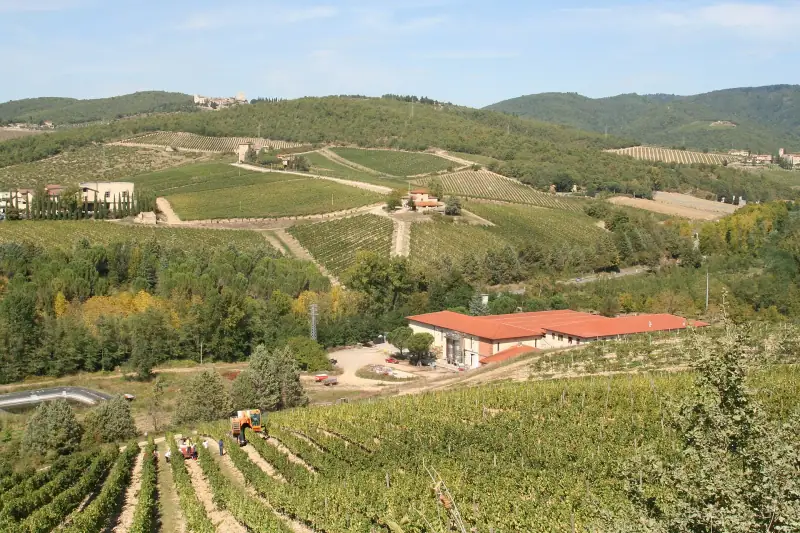
Charming hotels and authentic lodging in the heart of the Barbagia.
Nuoro’s historic center
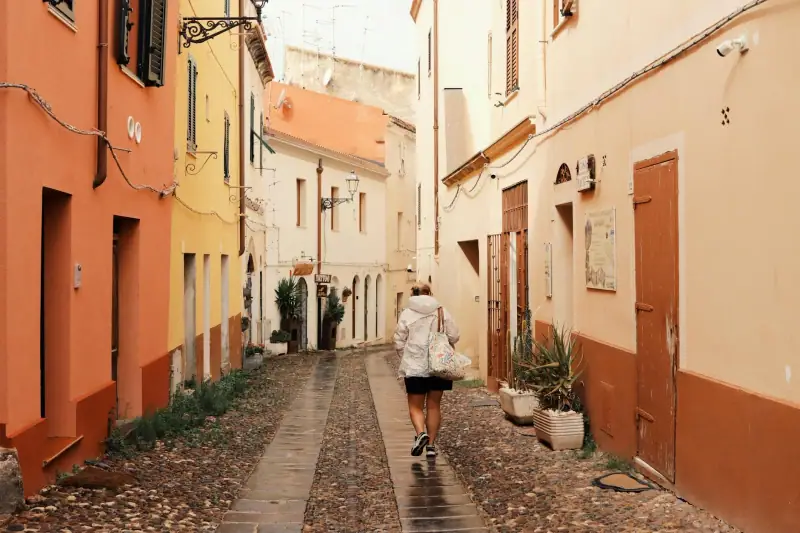
Corso Garibaldi, Nuoro’s main artery, is lined with 19th-century palaces, cafés and local shops. It links Piazza Italia (with the statue of the Sarda Rivoluzione and the Palazzo della Provincia) to Piazza San Giovanni, where the Santa Maria della Neve cathedral stands.
The cathedral and the Seuna quarter
The Cattedrale di Santa Maria della Neve, rebuilt in the 19th century in neoclassical style, is Nuoro’s main church. Its interior is more bright than sober, with marble decorations and a crypt. Nearby, the working-class Seuna quarter is one of the oldest in the town: its granite lanes, its kitchen gardens enclosed by low walls and its low one-story houses give a glimpse of what Nuoro was like at the start of the 20th century, when Grazia Deledda spent her childhood there.
Piazza Sebastiano Satta
In the center of the historic quarter, Piazza Satta is adorned with monumental granite sculptures by Costantino Nivola, a Sardinian artist of international renown (he collaborated with Le Corbusier in the United States, among others). These abstract forms integrated into the paving of the square are a rare work of public art in Sardinia.
The Barbagia: living traditions
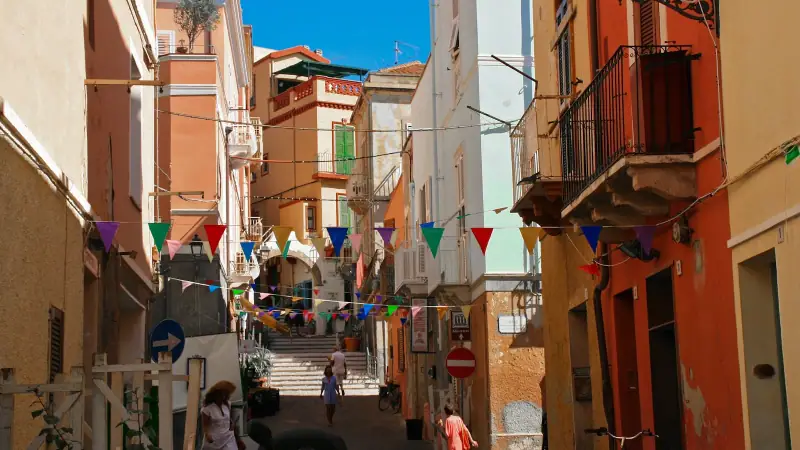
The Nuoro region is the Barbagia, and the Barbagia is first of all a culture. The traditions that survive there are not reenactments for tourists but living practices, handed down from generation to generation in villages where modern secularization has had far less hold than elsewhere.
Mamoiada and the Mamuthones (17 km / 11 mi)
About 17 km (11 mi) from Nuoro, the village of Mamoiada is famous worldwide for its Mamuthones, masked figures wearing heavy bronze bells on their backs, who parade each year during the February carnival. These figures, in wood painted black and among the most archaic in Europe, are on show all year at the village’s Museo delle Maschere Mediterranee. Even outside carnival, the museum and the village itself are worth the stop.
Orgosolo and its murals (about 20 km / 12 mi)
Orgosolo is known throughout Italy for its political murals, hundreds of paintings on house walls since 1969 that tell the story of the village, the social struggles of the Barbagia and Sardinian cultural resistance. They form an open-air art gallery unique in Italy. The village itself, with its granite lanes and its women in traditional dress, is especially lively on market days.
As our guide to hiking in Sardinia explains, Orgosolo is also the starting point for trails to the Supramonte highlands.
Oliena and the Su Gologone spring (about 12 km / 7 mi)
Twelve km (7 mi) from Nuoro, Oliena is a village of about 6,400 inhabitants known for its Cannonau di Sardegna red wine and for the Su Gologone spring, a karst resurgence whose transparent waters gush out at the foot of a limestone cliff in a landscape of great beauty. The spring feeds the Cedrino river. Not far away, a hotel-restaurant of regional renown has made use of this exceptional site for decades; the natural setting is a spectacle in itself.
Car rental in Nuoro
Essential for exploring the Barbagia: compare rental company prices.
From Nuoro to the coast: the pearl of the Ogliastra
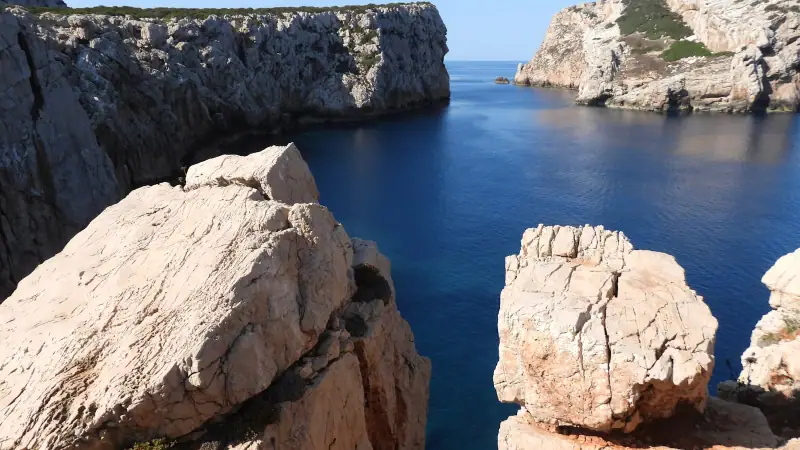
One of Nuoro’s great strengths is its position as a base for exploring the Ogliastra coast, reputed to be among the wildest and most beautiful in the whole Mediterranean.
Cala Gonone (about 45 km / 28 mi)
Cala Gonone is the seaside resort closest to Nuoro, reached in about 45 minutes by a spectacular mountain road (bend after bend, with views of limestone cliffs plunging into the sea). It is the boarding point for the coves not reachable by road: Cala Luna, Cala Mariolu and Cala Sisine, whose turquoise waters and white pebble beaches are among the most photographed in Sardinia.
Boat excursions leave Cala Gonone for these coves in season (booking advised; access conditions can vary, so check with the operators and the Gulf of Orosei National Park). In one day from Nuoro, you can enjoy a cultural morning in town and an afternoon on one of the island’s most beautiful beaches.
The Gorropu gorge (about 60 km / 37 mi)
Often described as the “European Grand Canyon”, the Gorropu gorge is a limestone gorge 500 m (1,640 ft) deep whose walls narrow to 4 m (13 ft) at the tightest point. Reached on foot from the Rio Flumineddu, the hike into the gorge (moderate level, about 4 to 6 hours round trip; paid entry ticket, about €6 / $7, to be bought on site in cash, entry between 10 am and 4:30 pm) is one of the most spectacular in Sardinia. In our guide to hiking in Sardinia, it is one of the ten must-do experiences.
Tiscali: the prehistoric village in the cave (about 25 km / 16 mi)
The Nuragic village of Tiscali is an exceptional archaeological site: a Bronze Age village (about 15th to 8th century BC) built inside a collapsed cavity at the top of a mountain. Its inhabitants lived in a natural “bubble” several hundred meters in diameter, hidden from view and from invaders. The access hike (about 2 hours round trip, moderate level) crosses a spectacular landscape of limestone and Sardinian scrub.
Barbagia cuisine
The cooking of Nuoro and the Barbagia is among the richest and most authentic in Sardinia. Far from the sea and rooted in a thousand-year pastoral tradition, it is based on kid and lamb meat, pecorino cheese, carasau bread and handmade pasta.
The emblematic dishes
Porceddu (roast suckling pig): The king of the Sardinian table. Roasted whole on a spit or in an oven dug into the earth (fossa), with wild myrtle. The result, crispy skin and tender meat scented with herbs, is incomparable. It is eaten at festivals and in Barbagia agriturismi.
Culurgiones d’Ogliastra: These braid-shaped ravioli (a unique handmade fold, symbol of the old woman’s hand that drives away evil) are filled with potatoes, pecorino and mint. A popular dish throughout Sardinia, but particularly good in this region, where the making tradition is liveliest.
Malloreddus: Sardinian “little gnocchi”, small ridged saffron tubes, served in tomato-sausage sauce or lamb ragù. An everyday dish on the Nuorese table.
Seadas: The essential dessert of the Barbagia. A fried ravioli filled with fresh pecorino cheese and lemon peel, drizzled with strawberry-tree (corbezzolo) honey: a unique sweet-salty combination that embodies the whole soul of Sardinian cooking.
Cannonau di Sardegna: The red wine of the Barbagia, made from the Grenache grape (locally called Cannonau), is full-bodied and tannic. To learn all about Sardinian wines, see our guide to the wines of Sardinia.
Food experiences in the Barbagia
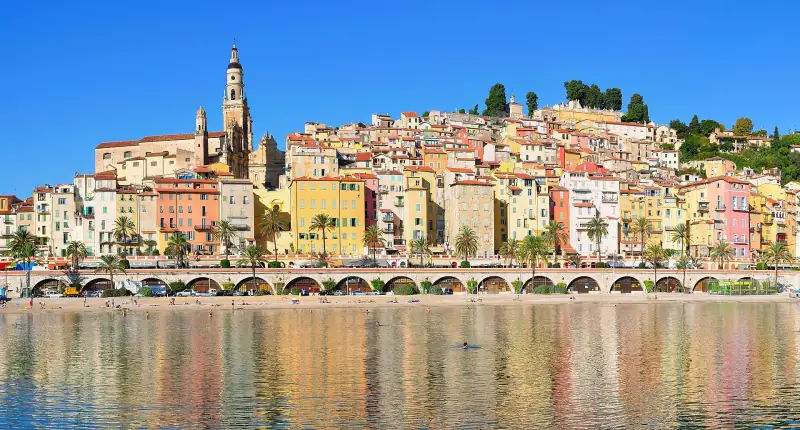
Sardinian cooking classes, Cannonau tastings, visits to authentic agriturismi.
Where to stay in Nuoro
In the historic center
Several small hotels and B&Bs sit in the streets of the historic center, within walking distance of Corso Garibaldi and the museums. Comfort is generally simple, but the owners are often Nuorese families who know the region perfectly and can advise you on the best excursions. Expect to pay €60 to 100 a night (about $70 to 115) for a double room in season.
Barbagia agriturismi
The most authentic way to stay around Nuoro remains the agriturismo. These farm inns offer rustic but comfortable rooms, a dinner based on farm produce (porceddu, pecorino, local wines, seadas), and total immersion in the pastoral daily life of the Barbagia. Expect to pay €70 to 100 a night (about $81 to 115) with half board. Essential: book ahead in summer, because the best places are full several weeks in advance.
In Cala Gonone (coastal base)
If you want to alternate inland culture and beaches, Cala Gonone, 45 km (28 mi) away, is an ideal alternative base. The resort has hotels for every budget, from family campsites to residences with a pool. From there, you head to the coast in the morning and to Nuoro and the Barbagia in the afternoon.
Nuoro in practice
Essential information
- How to get there: By car from Olbia (about 100 km / 62 mi), Cagliari (about 175 km / 109 mi) or Alghero (about 123 km / 76 mi). ARST bus from Cagliari (about 2 h 30, check timetables with ARST). No airport.
- Language: Italian and Sardinian (Barbagia dialects). Little English spoken outside hotels.
- Currency: Euro. ATMs on Corso Garibaldi.
- Parking: Free outside the strict center. Paid car parks near the Museo del Costume.
- Phone: Decent 4G coverage in town, variable in Barbagia villages.
Indicative budget
| Item | Indicative price |
|---|---|
| Lodging (double) | €60-120/night (~$70-140) |
| Museo del Costume | approx. €5-7/person (~$6-8) (check on site) |
| MAN (art museum) | approx. €5/person (~$6) (check with the museum) |
| Trattoria meal | €20-35/person (~$23-41) |
| Agriturismo dinner | €25-40/person (~$29-46) |
| Car rental (day) | €35-60/day (~$41-70) |
| Boat excursion (Cala Gonone) | €25-45/person (~$29-52) |
Best time to go
Spring (April-June) is the ideal season for Nuoro: the Barbagia meadows are green, temperatures pleasant (15 to 22 °C / 59 to 72 °F), the museums can be visited without waiting, and hiking on Monte Ortobene and in the Gorropu gorge is especially beautiful. September-October offers similar conditions after the summer heat, with the grape and olive harvests in the countryside.
August is hot and lively: the Redentore folk festival (August 29) is a unique experience, but lodging must be booked several months ahead.
To fit Nuoro into a full circuit of the island, see our road trip in Sardinia and our complete guide to Sardinia.
Nuoro is the Sardinia that travel guides too often forget. No yacht marina, no waterfront nightclubs, no crowded beaches. Instead: one of the most moving ethnographic museums in the Mediterranean, the wild mountain of Monte Ortobene at your back, the deepest gorges in Europe an hour’s drive away, and a pastoral cuisine like nothing else. Those who make the effort to come understand why Grazia Deledda, who left to live in Rome at 28 in 1900, spent her whole life writing about the Barbagia. There are places you never get over.
Frequently asked questions
How do I get to Nuoro from Sardinia's airports?
Nuoro has no airport of its own. The closest are Olbia (about 100 km / 62 mi, ~1 h 15 by car), Cagliari (about 175 km / 109 mi, ~2 h) and Alghero (about 123 km / 76 mi, ~2 h). Buses link these airports to Nuoro (connections are sometimes needed; check timetables with ARST), but a car is strongly advised to explore the region.
How many days do you need to visit Nuoro?
Two days are enough for the town itself: one for the museums and historic center, another for Monte Ortobene. Add two or three more days if you want to explore the Barbagia, Orgosolo and the Ogliastra coast from Nuoro.
Is Nuoro an accessible tourist destination?
Yes, but it is an authentic destination far from mass-tourism routes. The museums are well signposted, the locals welcoming, and several restaurants and hotels offer a quality experience. Nuoro is not a beach town and suits travelers looking for the real cultural and mountain Sardinia.
What is the Barbagia?
The Barbagia is a historic region of central Sardinia, corresponding to the highlands and mountains around Nuoro. The most isolated region of the island for centuries, it has kept unique traditions: an archaic Sardinian language, embroidered costumes, pastoral cooking and a strong sense of identity. It is also the region of centenarians, studied by longevity researchers.
What is the best time to visit Nuoro?
April-June and September-October are ideal: mild temperatures (15 to 22 °C / 59 to 72 °F), green vegetation, open museums and easy access to the Monte Ortobene trails. Summer (July-August) is hot (30 to 35 °C / 86 to 95 °F) but lively with local festivals. Winter is cold but lets you discover the town without any tourists.
Can you visit Nuoro by public transport?
Nuoro is linked by ARST bus to Cagliari (about 2 h 30) and Olbia, but connections are infrequent: check timetables with ARST. Within town, the major sites can be reached on foot or by taxi. For excursions in the Barbagia and to the coast, a rental car is essential.
More Sardinia guides
Keep reading
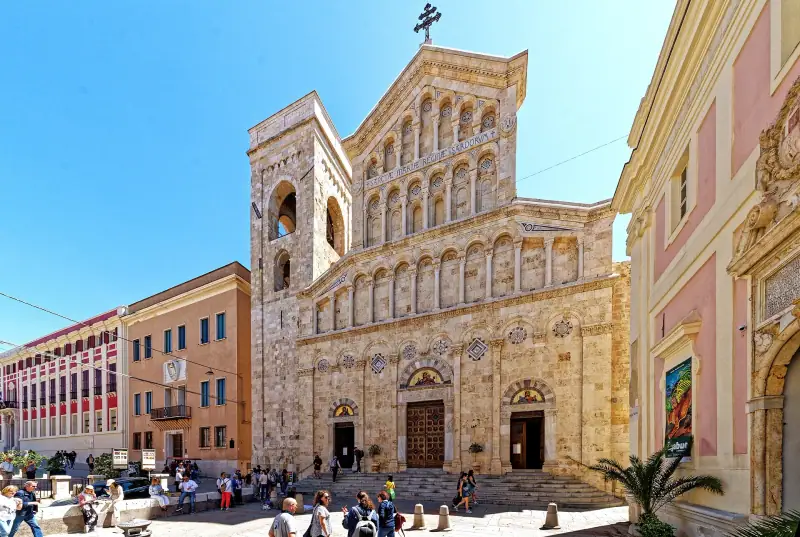
Cagliari Highlights: What to See and Do in Sardinia's Capital
The highlights of Cagliari: Castello, Poetto, museums, markets, food. A complete guide to visiting the capital of Sardinia in 2 days.
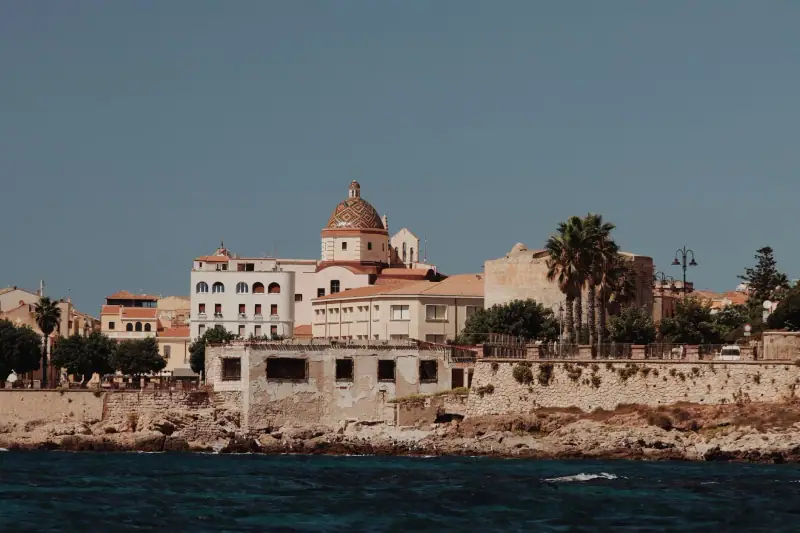
Visiting Alghero: A Complete Guide to Sardinia's Catalan Pearl
Visiting Alghero: Catalan old town, Neptune's Grotto, beaches. A 2026 practical guide to the pearl of northwest Sardinia.
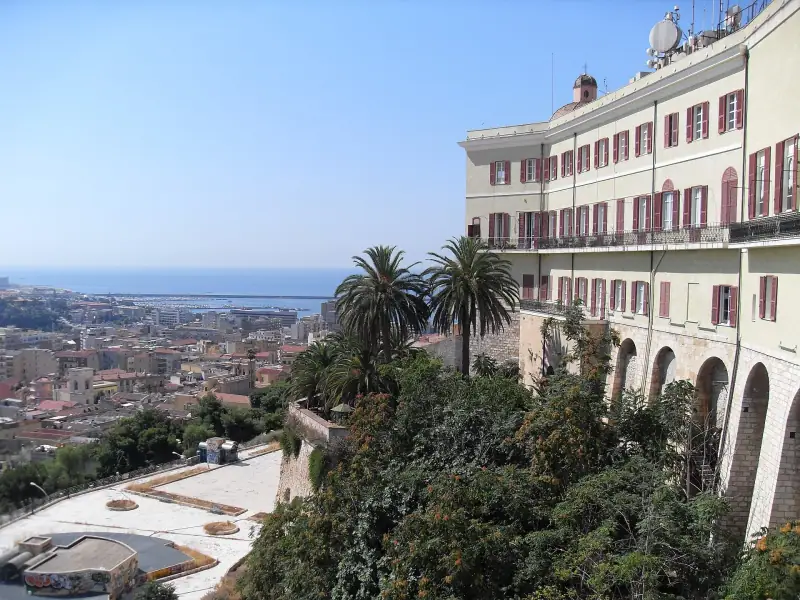
Visiting Cagliari: A Complete Guide to Sardinia's Capital
A complete guide to visiting Cagliari in 2026: neighborhoods, Castello, Poetto beach, museums, food, hotels, transport and practical tips.
Ready-made
Sardinia itineraries
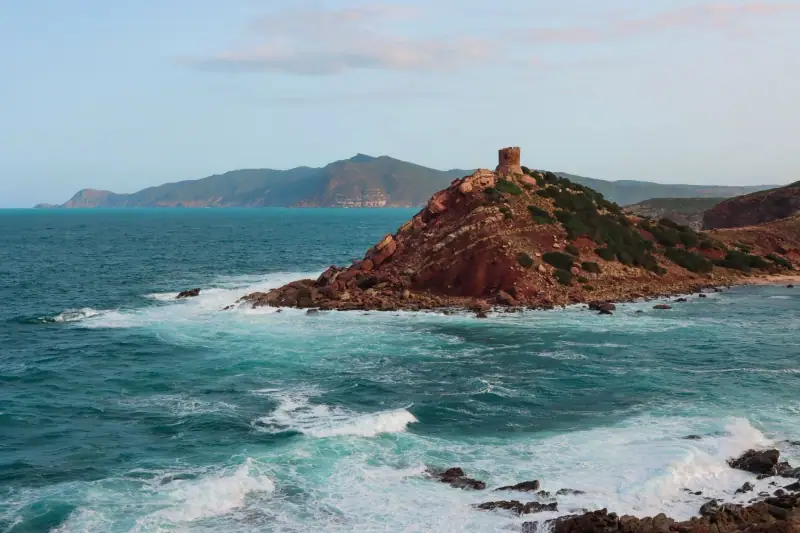
14 days
Sardinia Road Trip: The Complete Island Loop in 10-14 Days
Plan your Sardinia road trip: a complete 10 to 14 day itinerary, scenic roads, essential stops and driving tips.
7 days
Sardinia in 7 Days: A Complete Itinerary for an Unforgettable Week
7-day Sardinia itinerary: Cagliari, Chia, Ogliastra, nuraghi and Costa Smeralda. A day-by-day plan with practical tips.
5 days
Sardinia in 5 Days by Car: A Realistic Itinerary (Distances and Drive Times)
PalauCastelsardoAlghero