What to see
Visiting Akagera: complete guide to Rwanda's safari (Big Five, Lake Ihema, tips)
We may earn a commission when you book through links on this page, at no extra cost to you. We don't visit or try the places we cover: we summarize published sources. How we work
In short
- Akagera is Rwanda's only savanna park and hosts the Big Five; it lies about 100 km (62 mi) east of Kigali, 2 h to 2 h 30 by road.
- Park entry is USD 100 per adult per day; a ranger guide is USD 25 (half day) or 40 (full day); the Lake Ihema boat safari is about USD 35.
- Dry seasons (June to September, December to January) are best; game drives at dawn and late afternoon are the most productive.
- A day trip from Kigali is possible but very long (leave before 5:30 am); at least one night in or near the park is advised.
In the east of Rwanda, where the country’s thousand repeated hills give way to a vast savanna crossed by the meanders of the Akagera, lies the little-known gem of African safaris: Akagera National Park. Rwanda’s only savanna park, the only place in the country where the sky opens over grassland as far as the eye can see, dotted with baobabs and acacias, Akagera is a radically different experience from the Virunga gorillas or the Nyungwe chimpanzees.
Here you track the Rwandan Big Five from a 4x4, glide by boat over Lake Ihema at sunrise while hippos snort at the surface, and listen to lions roar, back in this savanna after decades of absence, in the African night. It is a Rwanda few travelers know, and that is exactly why it is worth the trip.
This complete guide gives you everything you need to plan your visit to Akagera National Park: the animals to see, the activities available, lodging, practical tips and the best strategies for maximizing your chances of seeing the big animals.
Akagera National Park at a glance
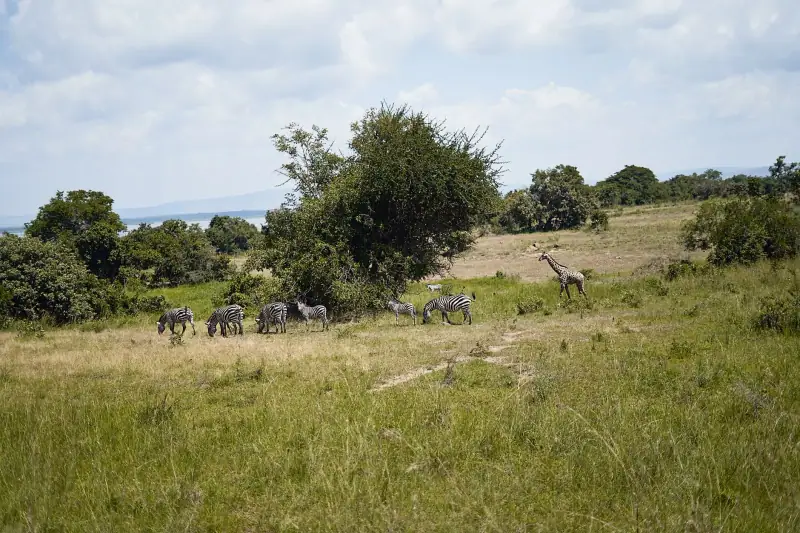
Akagera National Park covers about 1,122 km² (433 sq mi) in Rwanda’s Eastern Province, along the border with Tanzania. It is Rwanda’s largest national park and the only one with a savanna ecosystem, a striking contrast with the mountain forests that dominate the rest of the country.
The park takes its name from the Akagera River, which forms its eastern boundary along its whole length. The river feeds a string of shallow lakes (Ihema, Shakani, Hago, Gishanju) that form the backbone of the park’s wetlands and the heart of its biodiversity. The park’s altitude is relatively low for Rwanda, between 1,250 and 1,825 meters (4,100 to 5,990 ft), giving it a hotter, drier climate than the rest of the country.
Akagera’s history is closely tied to Rwanda’s. Founded in 1934 under Belgian colonial rule, the park went through a difficult period after the 1994 genocide: part of its territory was cleared to settle returning refugees, and poaching decimated animal populations. In 2010, African Parks, a South African conservation organization, took over management of the park in partnership with the Rwanda Development Board. Since then Akagera has seen a spectacular revival, notably with the reintroduction of lions in 2015 and black rhinos from 2017. Today the park is considered one of the great successes of African conservation.
Safaris and activities at Akagera
Game drives, boat safari, night in the bush: book your experiences at Akagera National Park with certified guides.
The Big Five in Rwanda: Akagera’s emblematic animals
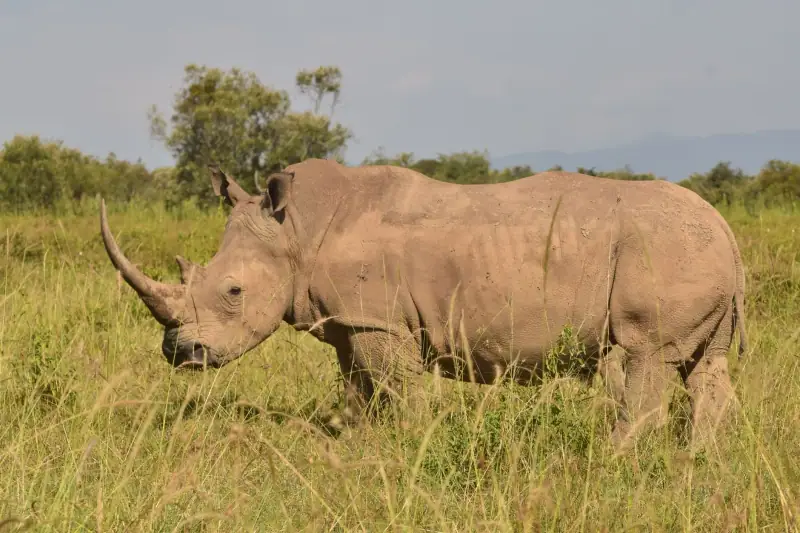
Akagera is the only place in Rwanda where you can see the Big Five, the quintessence of the African safari. Here is a portrait of each species and the best strategies for seeing them.
Lions: the return of the king
The story of Akagera’s lions is one of the finest conservation stories on the continent. Hunted to local extinction in the 1990s, seven lions from South Africa (five females from Phinda Private Game Reserve and two males from Tembe Elephant Park, in KwaZulu-Natal) were reintroduced to the park in July 2015. Since then the population has grown steadily: the lions breed, form new prides and gradually occupy the whole park.
Seeing a lion in Akagera is possible but takes patience and a little luck. This is nature, not a zoo. Lions are active mainly at dawn and late in the afternoon. Morning game drives (leaving before sunrise) and night drives are the best slots. The park rangers, in constant radio contact, know the movements of the groups and steer visitors to the best viewing areas.
Black rhinos: a historic revival
In May 2017, Akagera welcomed the first black rhinos (Diceros bicornis) in Rwanda’s history: 18 animals from South Africa (Thaba Tholo Game Ranch). In June 2019, a second translocation added five black rhinos from European zoos (Dvůr Králové in the Czech Republic, Flamingo Land in the United Kingdom and Ree Park Safari in Denmark). In November 2021, a group of 30 white rhinos (Ceratotherium simum) joined the park from South Africa, another species that is also threatened. The black rhino remains one of the most endangered mammals on the planet, and seeing these animals roam freely in the Rwandan savanna is a moving experience.
Rhinos are discreet and solitary, tending to move through dense vegetation. Sightings are not guaranteed on every visit, but the park rangers know their favorite areas. To maximize your chances, choose a guided game drive rather than a tour in your own car.
Akagera’s elephants
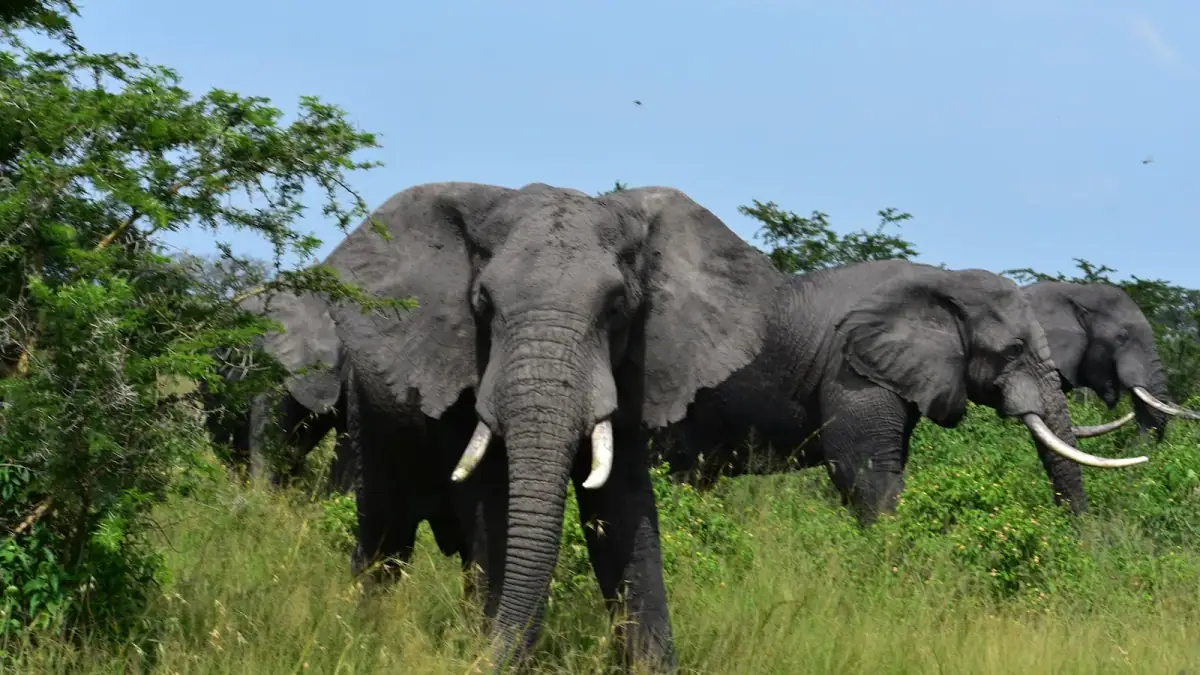
Savanna elephants (Loxodonta africana) are the easiest animals to see in Akagera. Their population, healthy and growing, is frequently found near the lakes and wetlands. Family herds, led by an old matriarch, go to water points in the cool hours of the morning and evening. Lone elephants and excitable young males can be seen at any hour of the day.
The shores of Lake Ihema in particular are a prime viewing ground: it is not rare to spot a group of elephants coming down to drink directly from the bank, only a few meters from the boat on a lake safari.
Buffalo and leopards
The African buffalo (Syncerus caffer) is the most abundant member of the Big Five in Akagera. Herds, sometimes of several hundred animals, move across the grassy plains and the transition zones between savanna and gallery forest. Impressive in mass and relatively predictable, they are often the first large mammals visitors meet around a bend in the track.
The leopard (Panthera pardus) is the most discreet of the five. Nocturnal and a master of camouflage, it is only occasionally spotted on night drives or at dawn. Its presence in the park is confirmed by camera traps, but seeing one in the wild is a privilege.
Wildlife beyond the Big Five
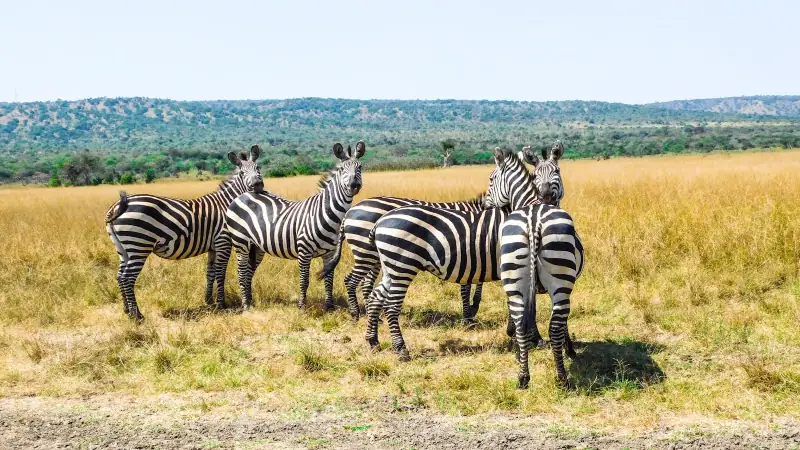
Akagera is much more than the five emblematic species. The richness of its wildlife makes it a park to see again and again.
Hippos and crocodiles of Lake Ihema
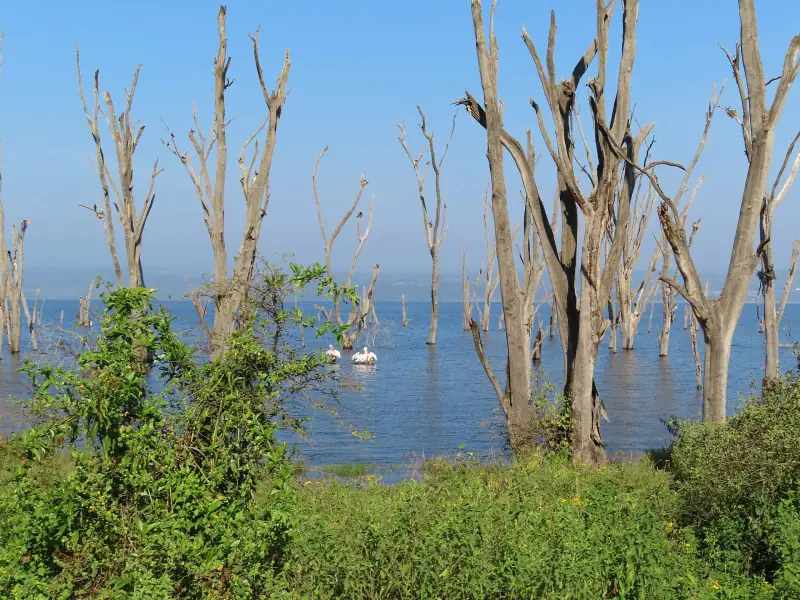
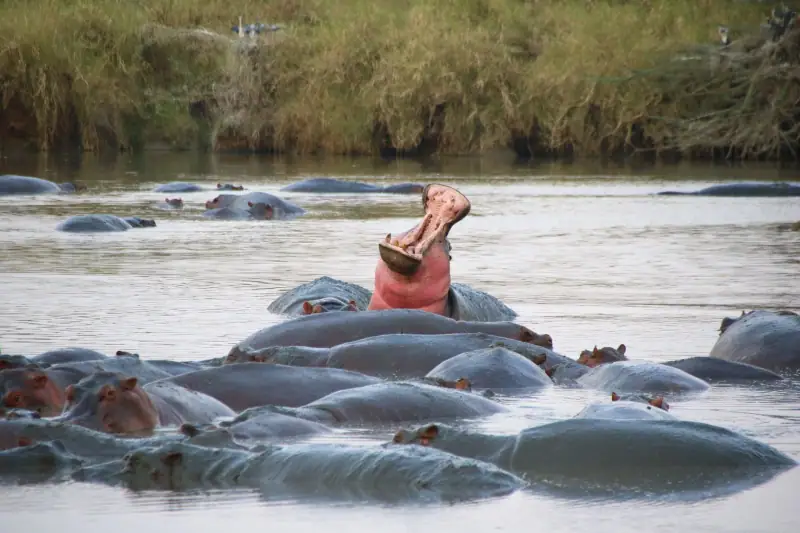
Lake Ihema, the park’s largest lake, has one of Rwanda’s highest densities of hippos (Hippopotamus amphibius). These semi-aquatic giants spend their days snorting and grumbling at the lake’s surface, coming out only at night to graze the shoreline vegetation. A boat safari at dusk or sunrise lets you approach them within a few meters in their natural habitat, a strikingly close experience.
Nile crocodiles (Crocodylus niloticus), which can exceed 5 meters (16 ft) in length, are also present in and around the lake. Perfectly still on the sandy banks, they wait patiently for prey, practically invisible until you are very close.
Zebras, giraffes and antelopes
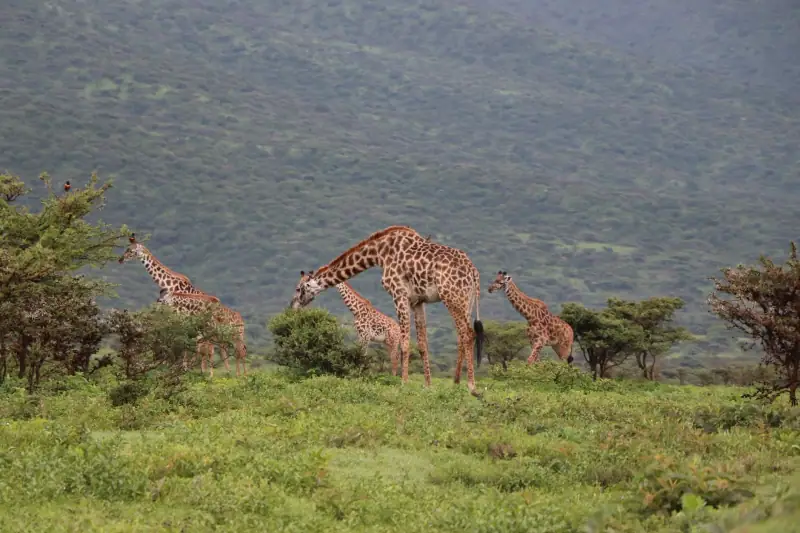
The vast plains of the central part of the park are the domain of plains zebras (Equus quagga), Masai giraffes (Giraffa camelopardalis tippelskirchi) and a great variety of antelopes: impalas (in very large numbers), kobs, topis, duikers and oribis. These herbivores form sometimes spectacular herds on the grassy plains, recalling the great savannas of East Africa, an unexpected sight in a country usually associated with mountain forests.
Birdwatching: more than 500 species
Akagera is a paradise for birders. More than 500 bird species have been recorded in the park, an exceptional figure that makes it one of the best birdwatching sites in East Africa. The wetlands attract an extraordinary concentration of water species: goliath herons, ospreys, intermediate egrets, sacred ibis, woolly-necked storks, gray crowned cranes (Rwanda’s national emblem), giant kingfishers and many more.
The gray crowned crane (Balearica regulorum), the symbol of the country and the nation’s emblematic bird, is regularly seen in the marshes on the edge of Lake Ihema. Its gray-white plumage and crest of golden feathers make it one of the most photogenic birds in Africa.
For serious birders, the park can be explored with a guide specialized in birdwatching. Dawn is the best time: the treetops and the lake shores come alive with a symphony of song that rivals any tropical forest.
Stays at Akagera National Park
From eco-lodge to tented camp in the middle of the savanna, sleep in the heart of the park to enjoy the dawn and dusk game drives.
Activities in Akagera National Park
Game drives: the backbone of the safari
The game drive is the park’s main activity. It is done in a 4x4, yours or the lodge’s, on a network of well-maintained tracks crisscrossing the park’s different zones. Akagera’s rangers and guides are particularly skilled: they know the lions’ territories, the leopard trees and the pools where elephants gather at fixed times.
The morning game drive (leaving around 5:30 to 6 am) is the most productive: lions return from their night hunt, elephants go down to water points before the heat of the day, and the low light of the rising sun turns every frame into a photograph. The late-afternoon game drive (leaving around 3:30 to 4 pm) is the second-best slot, with sunset over the savanna as a bonus.
A park ranger guide who rides in your vehicle costs USD 25 for a half day or USD 40 for a full day (rate per guide, not per person). If you come with your own vehicle, you can drive the tracks on your own, but a ranger guide is strongly recommended for locating the big predators.
Night drive: the savanna after sunset
The night drive is a unique experience that Akagera is one of the few Rwandan parks to offer. In a 4x4 fitted with powerful spotlights, rangers sweep the tracks at night looking for nocturnal animals: genets, servals, pangolins, pottos, owls and above all lions on the prowl. The chorus of frogs, the cry of hyenas and the heavy silence of the African bush create an atmosphere daytime game drives cannot offer.
The night drive generally leaves around 5:30 pm from your lodging, in the south of the park or at Karenge Bush Camp, and lasts about 2 h 30. Allow USD 40 per adult. Times and availability vary, so ask when you book.
Boat safari on Lake Ihema
The boat safari on Lake Ihema is one of the most distinctive experiences Akagera offers, and one of the least known to visitors. In a quiet motorboat you glide over the calm waters of the park’s largest lake at sunrise or sunset, within sight (and earshot) of hippos, crocodiles, egrets, kingfishers and elephants that sometimes bathe at the water’s edge.
The contrast with a land game drive is total: you are on the water, gliding quietly, surrounded by floating water lilies and papyrus. The morning light on the lake is exceptional for photography.
The boat safari lasts about 1 hour (1 h 30 for the sunset trip, at USD 45) and leaves from the jetty inside the park, not far from Akagera Game Lodge. Indicative rate: about USD 35 per person. Booking is possible through the park lodges or at the park office at the entrance.
Guided walks and rhino tracking
For a close experience of the savanna, guided walks are organized in certain secure zones of the park. Accompanied by an armed ranger, you leave the 4x4 and immerse yourself in the bush on foot, a way to perceive the park differently, at ground level, with every sense alert.
These walks are also one of the best ways to try to see black rhinos in their natural habitat, with rangers following their tracks and activity zones with a precision that sharpens over the seasons.
Car rental for Akagera
A rental 4x4 gives you the freedom to leave Kigali at dawn and drive to the park at your own pace. Compare offers.
Where to stay in Akagera National Park
Sleeping in the park or right on its edge is the key to enjoying the dawn and dusk game drives, the two best viewing slots. The guide to lodging in Akagera gives the full list. Here are the main categories.
Lodges inside the park
Akagera Game Lodge, set as a lookout above Lake Ihema, is the park’s historic lodging, renovated and modernized under African Parks’ management. Comfortable rooms, a restaurant, a pool overlooking the lake and direct access to game drives organized from the lodge. It is the most central option for exploring the whole park.
Ruzizi Tented Lodge, on the shore of Lake Ihema about 6 km (4 mi) from the park reception, is a luxury tented camp in the wild. Its spacious tents face directly onto the bush, and evenings around the fire with the sounds of the savanna are the African experience in all its fullness.
Magashi Camp (Wilderness Safaris), in the north of the park in a rarely visited zone, is a small, very luxurious lodge with only a few tents on a peninsula overlooking a lake, the ultimate in bush immersion for those seeking quiet and fully personalized service.
Lodging in Kayonza and around
If your budget does not allow sleeping in the park, the town of Kayonza, some thirty kilometers (about 19 mi) from the south entrance, has a few decent guesthouses and small hotels. This option means leaving early in the morning to be at the park at opening, and leaving the park before closing in the evening.
Fitting Akagera into your Rwanda itinerary
Akagera combines naturally with Rwanda’s other major stops in a 7 to 10-day circuit.
Akagera in a 7-day itinerary
- Days 1-2: Kigali, Genocide Memorial, Nyamirambo, food
- Day 3: drive to Akagera (2 h), arrival at the lodge, late-afternoon game drive
- Day 4: dawn game drive, boat safari on Lake Ihema, night drive
- Day 5: drive to Musanze (via Kigali, about 4 h in total), visit the Musanze caves
- Day 6: gorilla trek in Volcanoes National Park
- Day 7: back to Kigali, Nyamirambo, airport
For all the details of this circuit, see the 7-day Rwanda guide.
Akagera in a full Rwanda circuit
A 10-day itinerary including Akagera, Kigali, Musanze and Lake Kivu lets you cover every side of Rwanda: safari, gorillas, chimpanzees and a lakeside beach. The full Rwanda circuit guide gives a day-by-day plan.
Practical information for visiting Akagera
How to reach the park
From Kigali by rental car: the road from Kigali is paved all the way. Head toward Rwamagana, then follow the signs to Kayonza and the park entrance. Allow about 2 h to 2 h 30 from central Kigali. A 4x4 or SUV is recommended, especially for getting around inside the park.
From Kigali by taxi or private transfer: transfers from Kigali to the Akagera lodges are offered by travel agencies and the lodges themselves. Indicative rate: USD 80-150 each way depending on the vehicle (check with agencies or the lodge). If you stay at an upscale lodge, the airport transfer may be included in the package.
By bus to Kayonza: regular buses link Kigali (Nyabugogo terminal) to Kayonza, the town nearest the park entrance. From Kayonza you will need a taxi or moto-taxi for the last kilometers to the entrance post. This option is the least practical for visiting the park and does not work if you have no vehicle once you are there.
Park entry and fees
Entry to Akagera National Park is managed by African Parks in collaboration with the Rwanda Development Board. The rate for an international adult visitor is USD 100 per day (USD 50 for African nationals outside East Africa). Children generally get reduced rates.
Guided activities (game drive with a ranger, boat safari, night drive, guided walk) are charged extra. Exact rates may change, so check the official site akageranationalpark.com before you leave for current prices.
Payment is made at the park entrance. Bank cards (Visa, Mastercard) are accepted at the ticket office.
The park’s two entrances
The park has two main entrance posts:
- The south entrance (Kayonza): the busiest and the nearest to Kigali. Access to the Lake Ihema area and Akagera Game Lodge.
- The north entrance: access to the wilder, less visited north of the park. Use it if you stay at Magashi Camp.
Best time to visit Akagera
The dry season from June to September is ideal: the vegetation is thinner, animals gather around water points and the tracks are easily passable. The light in this period is also better for photography.
The dry season from December to January is also excellent, with fewer tourists than in June to August.
In the rainy season (March to May and October to November), tall grass makes sightings harder, but the park is almost empty and lodging rates are often lower. Birdlife is exceptional at this time, with migratory birds added to the resident species.
Budget for Akagera
| Item | Indicative budget |
|---|---|
| Park entry (per day) | USD 100 / adult |
| Ranger guide (per guide) | USD 25 (half day) to USD 40 (full day) |
| Lake Ihema boat safari | ~USD 35 / person |
| Night drive | ~USD 30-40 / person |
| Lodge in the park | USD 200-700 / night |
| Guesthouse in Kayonza | USD 30-80 / night |
| Rental car (Kigali) | USD 80-150 / day |
For the full Rwanda budget, see the practical guide.
Tips for a successful Akagera safari
Set out at dawn. The first 2 hours after sunrise are by far the most productive for wildlife. Lions, cheetahs and leopards finish their night of hunting and can be seen before they go into the shade. Elephants head to water points. Birds become active. It is the best time.
Trust your ranger guide. Akagera’s rangers are exceptionally well trained and know many of the park’s animals individually. Tell them what you want to see and they will steer the game drive accordingly.
Wear neutral colors. For guided walks, avoid bright colors that can disturb animals and make you more visible. Khaki, beige, olive green and gray are the recommended shades.
Bring water and snacks. Game drives can last 3 to 5 hours. Lodges generally provide lunch boxes for long outings, but check in advance.
Protect your camera gear. The red dust of the savanna is everywhere on the tracks. Carry your equipment in dust covers and clean your lenses carefully each evening.
Keep quiet in the bush. Turn off phone ringtones and avoid loud conversation when approaching animals. Silence is the condition for good viewing, and for a more intense experience.
Akagera, the safari that surprises in the heart of the land of a thousand hills
People come to Rwanda for the gorillas, and leave with an unexpected memory: the Akagera savanna at dawn, when the mist lifts over Lake Ihema and a lion’s roar crosses the still-sleeping bush.
Akagera is a surprise in a country already full of surprises. A safari that holds its own against the great parks of East Africa, and part of a conservation success story that commands admiration. The lions are back. The black rhinos are thriving. The elephants bathe in the lakes. And something in the warm air of this Rwandan savanna resembles the most precious thing nature has to offer: the freedom of big animals in a territory finally preserved.
To prepare everything, the complete Rwanda guide takes you from arrival at Kigali airport to the last hours in the eastern savanna.
Frequently asked questions
How do you get to Akagera National Park from Kigali?
Akagera National Park is about 100 km (62 mi) east of Kigali. By rental car or taxi, allow 2 h to 2 h 30 via Rwamagana. The road is paved to the park's main entrance (south gate). There is no direct public bus to the park. The main entrance is the Kayonza gate in the south, or the Akagera gate in the north, depending on your lodging.
What animals can you see in Akagera?
Akagera is home to Rwanda's Big Five: lions (reintroduced in 2015), black rhinos (reintroduced since 2017), elephants, buffalo and leopards. You also find zebras, giraffes, hippos, impalas, topis, kobs, baboons and Nile crocodiles. More than 500 bird species have been recorded, making Akagera one of the best birdwatching sites in East Africa.
How much does it cost to enter Akagera National Park?
Park entry is USD 100 per adult per day (international visitor rate). A ranger guide for your own vehicle costs USD 25 for a half day or USD 40 for a full day, per guide and not per person. The boat safari on Lake Ihema is about USD 35 per person. Confirm rates with African Parks (akageranationalpark.com), as they can change.
Do you need a 4x4 to visit Akagera?
A high-clearance vehicle is strongly recommended, especially in the rainy season. A 4x4 or an SUV is ideal. If you do not come with your own rental car, guided safaris from the park lodges use open 4x4s supplied by the lodgings or the rangers. You can do an accompanied safari without a personal car by joining the game drives organized from the lodges.
What is the best season to visit Akagera?
The dry season (June to September) is ideal: vegetation is less dense, animals gather around water points and lakes, visibility is at its best and the tracks are passable. The December to January dry season is also good. In the rainy season (March to May and October to November) the park stays open but tracks are sometimes difficult; on the other hand, birdlife is exceptional and the park is almost empty of tourists.
Can you do Akagera in one day from Kigali?
Technically yes, but it is a very long day and not recommended. You must leave Kigali before 5:30 am to reach the park at opening and enjoy the morning game drive (the best slot). A night nearby (in the park lodge or in Kayonza) lets you do the evening game drive, the night in the savanna and the next dawn game drive, a much richer experience. Plan at least one night to enjoy Akagera fully.
More Rwanda guides
Keep reading
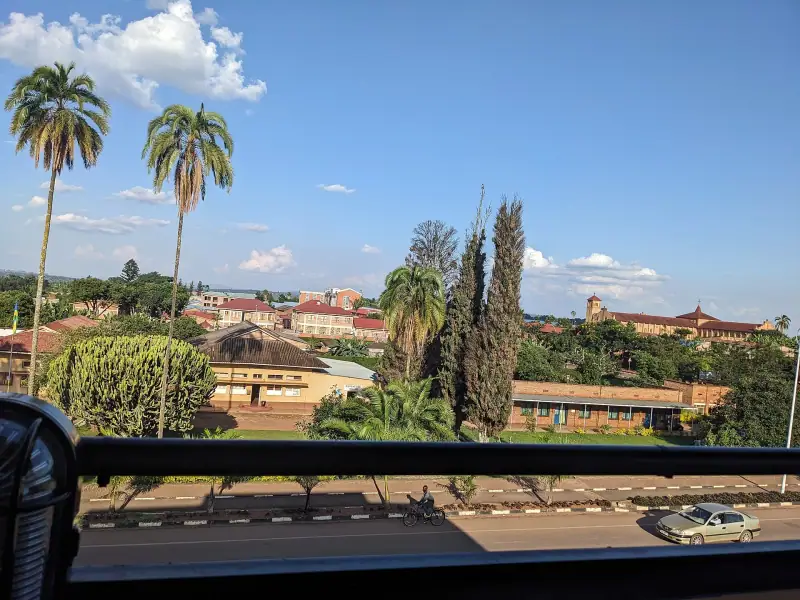
Visiting Huye (Butare): complete guide to Rwanda's cultural capital
Huye (Butare), Rwanda's cultural capital: National Museum, Nyanza Royal Palace, gateway to Nyungwe. A complete guide to visiting the town.
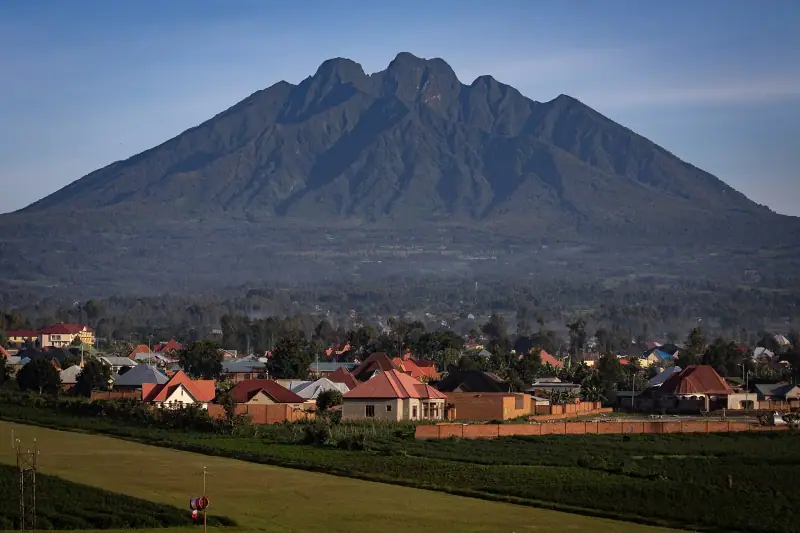
Visiting Musanze: complete guide to the gateway to the gorillas and volcanoes
Musanze, Rwanda: Virunga gorillas, volcanoes, Lakes Ruhondo and Burera, caves and market. A complete guide to the capital of the North.
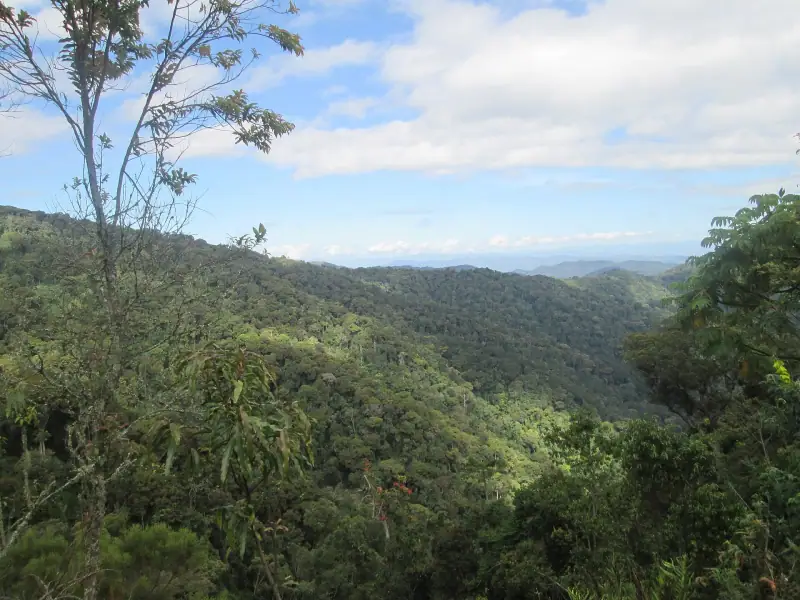
Visiting Nyungwe: complete guide to Rwanda's primary forest
Nyungwe, Rwanda: chimpanzee trek, canopy walk, endemic birds and primates. A complete guide to exploring this southwestern gem.
Ready-made
Rwanda itineraries
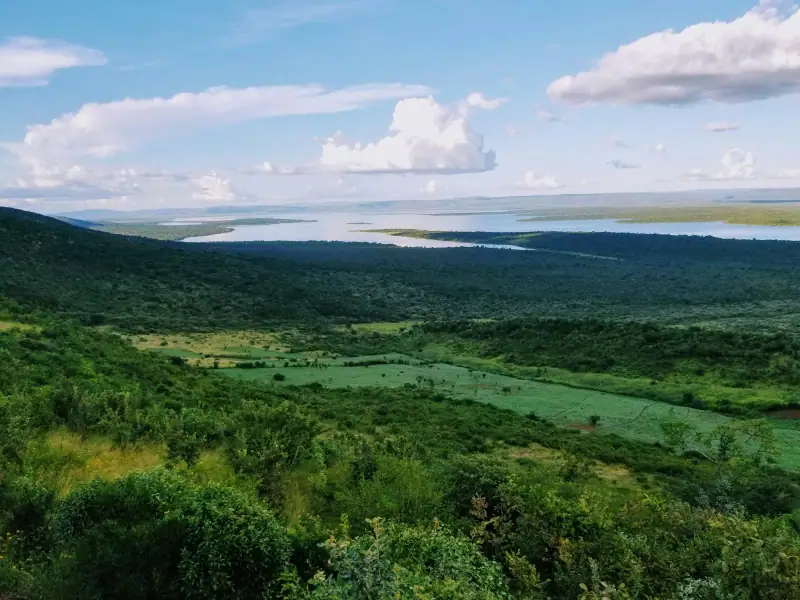
10 days
Rwanda in 10 days: complete itinerary with gorillas, safari, Lake Kivu and Nyungwe
KigaliAkagera National ParkMusanzeRubavu (Gisenyi)Nyungwe
7 days
Rwanda in 7 days: complete itinerary and practical tips
KigaliMusanzeGisenyi (Rubavu)
Can be adapted in the planner
3 days
Lake Kivu road trip: from Rubavu to Karongi along the Rwandan shore
Rubavu (Gisenyi)Karongi (Kibuye)