What to see
Visiting Nyungwe: complete guide to Rwanda's primary forest
We may earn a commission when you book through links on this page, at no extra cost to you. We don't visit or try the places we cover: we summarize published sources. How we work
In short
- Nyungwe covers 1,019 km² (393 sq mi) of montane forest, about 220 km (137 mi) from Kigali, 4 to 5 hours by road to the Gisakura entrance.
- A chimpanzee trek permit is USD 100 per person with one hour with the group; the Uwinka canopy walk is USD 60; the daily park fee is USD 40.
- Plan at least 2 nights: one day for chimpanzees, another for the canopy walk and a birding trail; 3 nights add Cyamudongo.
- Nyungwe combines easily with Lake Kivu: Rusizi is 45 minutes to 1 hour west of the Gisakura entrance.
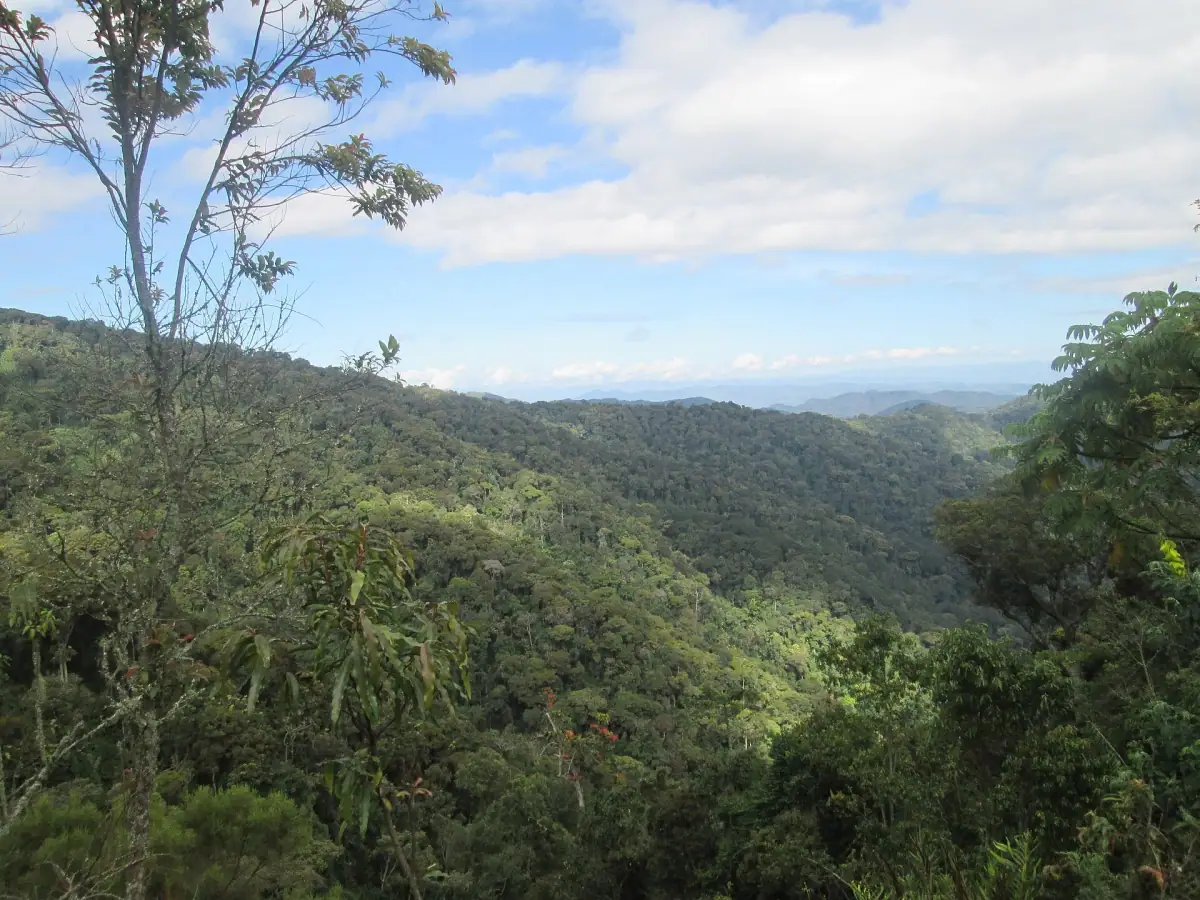
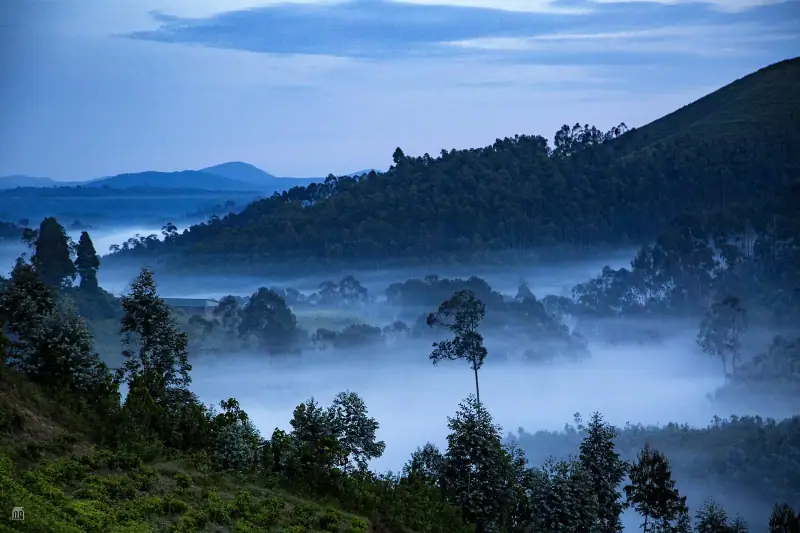
On the edge between Rwanda and Burundi, where the hills of the land of a thousand hills rise to 2,950 meters (9,678 ft) before dropping again toward the Congo valley, Nyungwe forest spreads 1,019 square kilometers (393 sq mi) of practically intact primary montane forest. It is one of the largest and best-preserved in Central Africa: a world apart, hung in the clouds, where thirteen primate species share the canopy and three hundred bird species make the park one of the continent’s birdwatching hotspots.
Nyungwe National Park is often overshadowed by the fame of the Virunga gorillas. Wrongly so. If Musanze grabs the headlines with its USD 1,500 permits, Nyungwe offers an equally deep experience, and a far more accessible one, with its chimpanzees, its dizzying canopy walk and its trails winding beneath age-old forest vaults. This complete guide gives you everything you need to plan your stay in this little-known gem of southwestern Rwanda.
Nyungwe at a glance: the largest mountain forest in Central Africa
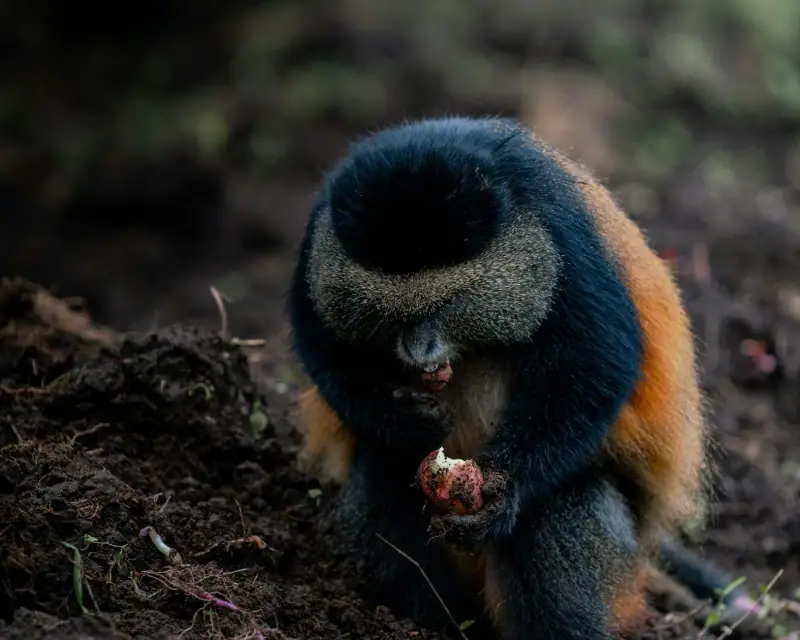
Nyungwe National Park was officially created in 2004, although the forest had enjoyed partial protection since the Belgian colonial era. It covers 1,019 km² (393 sq mi) across the Western and Southern Provinces, stretching between the districts of Karongi, Nyamasheke, Rusizi, Nyamagabe and Nyaruguru.
Altitude ranges from 1,600 to 2,950 meters (5,250 to 9,680 ft), creating a diversity of microhabitats: bamboo forest, moss forest, high-altitude heath, mountain swamps and dense closed-canopy forest. This altitude variation explains the exceptional biodiversity: Nyungwe is home to 13 primate species, 310 bird species (29 of them endemic to the Albertine Rift), 86 mammal species, 248 orchid species and hundreds of butterfly species.
Cyamudongo forest, an isolated patch of about 410 hectares (4.1 km² / 1.6 sq mi) west of the main massif, between the national road and the Congolese border, is home to a second group of habituated chimpanzees, reachable from Kamembe (Rusizi).
The park headquarters and its main entrance are at Gisakura, on national road N1 between Huye and Rusizi, about 220 km (137 mi) from Kigali.
Chimpanzee trekking: the headline experience
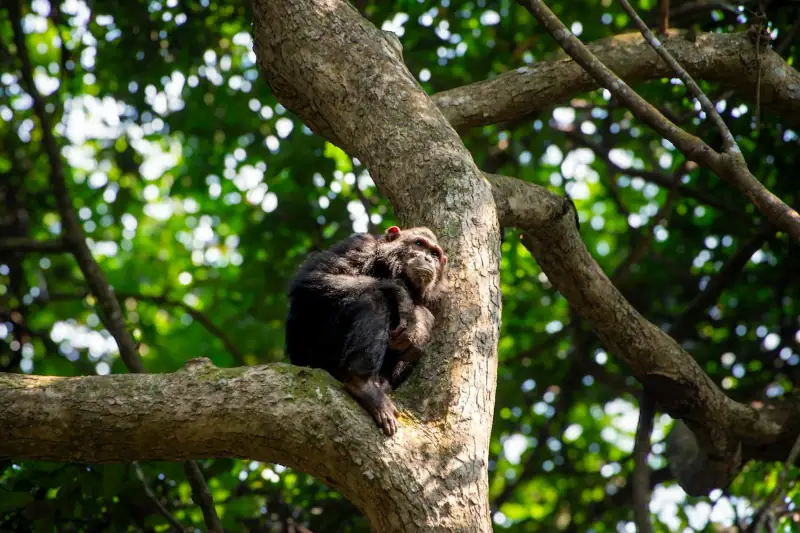
Chimpanzee trekking is Nyungwe’s signature activity, and what sets the park apart from any other Rwandan site. Nyungwe is home to between 400 and 500 common chimpanzees (Pan troglodytes schweinfurthii), spread over several communities, of which two groups are habituated to human presence: the Cyamudongo group (in the west) and the main-forest group around Gisakura.
How does the trek work?
The briefing starts at 5:30 am at the park office in Gisakura. Trackers are sent into the forest at dawn to locate the community, often identifiable by its calls: chimpanzees are noisy, and their rallying call (pant-hoot) carries far through the quiet morning forest.
The trek itself can last 1 to 5 hours depending on where the group is in the forest. Unlike gorillas, which move slowly, chimpanzees are active, unpredictable and fast. Once located, you have one hour of observation with the group. Watching a dominant male come down from a fig tree three meters (10 ft) above you, or a mother nursing her infant, is an experience that easily rivals gorilla trekking.
Chimpanzee permit price: USD 100 per person, guide included. Booking through the Rwanda Development Board (rdb.rw) or a specialized agency.
Tips: come rested, wear clothing that covers arms and legs (protection against insects and thorns), and put on waterproof boots. Chimpanzees in the trees sometimes have the unfortunate habit of urinating on observers below, so a rain jacket is advised.
Excursions and treks in Nyungwe
Chimpanzee trekking, canopy walk, birdwatching: book your activities in Nyungwe forest with RDB-certified guides.
The canopy walk: walking above the forest
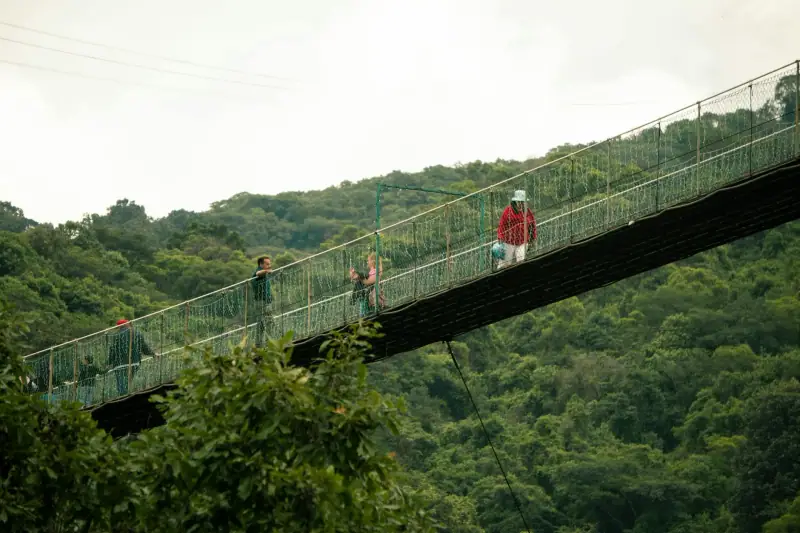
Reached from the Uwinka Visitor Center via the Igishigishigi trail (2.1 km / 1.3 mi, about 30 minutes’ walk), the Nyungwe canopy walk is one of Rwanda’s most spectacular attractions: a walkway suspended about 70 meters (230 ft) high above the forest floor, 160 meters (525 ft) long.
From the walkway the view over the canopy is striking: a sea of rolling green stretching to the horizon over the hills, dotted with giant crowns of Parinari and Syzygium, pierced by shafts of light where troops of black-and-white colobus stir. On a clear day (in the morning, before mist rises from the valleys), you can glimpse the glint of Lake Kivu to the west.
Canopy walk price: USD 60 per person, mandatory guide included. The canopy walk is reached from the Uwinka Visitor Center (about 15-20 km / 9-12 mi east of Gisakura on the N1, ~30 minutes by road), via the Igishigishigi trail (2.1 km, about 30 minutes’ walk from Uwinka). The round-trip trail from Uwinka takes about 2 to 3 hours. The best time to go is early morning (7 to 9 am), before the forest is covered in mist, and to maximize the chances of wildlife sightings.
The canopy walk is accessible to most fitness levels; the access trail is sloped but well marked. People who are afraid of heights may find the experience trying (the metal floor is perforated), but the safety ropes are sturdy and the rangers attentive. For time slots, booking and the minimum age, see the page on the Nyungwe canopy walk.
Birdwatching: a paradise for bird lovers
Nyungwe is one of the most important birdwatching sites in East Africa. Of the 310 species recorded in the park, 29 are endemic to the Albertine Rift, the zone of mountain forest stretching from the Albertine Rift (Congo) to Rwanda, Burundi, Uganda and northwestern Tanzania.
Among the emblematic species to look for:
- The great blue turaco (Corythaeola cristata): the world’s largest turaco and Nyungwe’s most emblematic species
- The black-billed turaco (Tauraco schuettii): an endemic and discreet bird of mountain forests
- Hornbills: several species, including the brown-cheeked hornbill
- The malachite kingfisher: often visible near forest streams
- Verreaux’s eagle: visible on open ridges above the canopy
The Karamba trail (4 km / 2.5 mi round trip, 3-4 hours) and the Bigugu trail (toward the highest point at 2,950 m) are the park’s two most renowned birdwatching routes. Specialized bird guides are available on request at the park office in Gisakura.
Nyungwe’s other primates
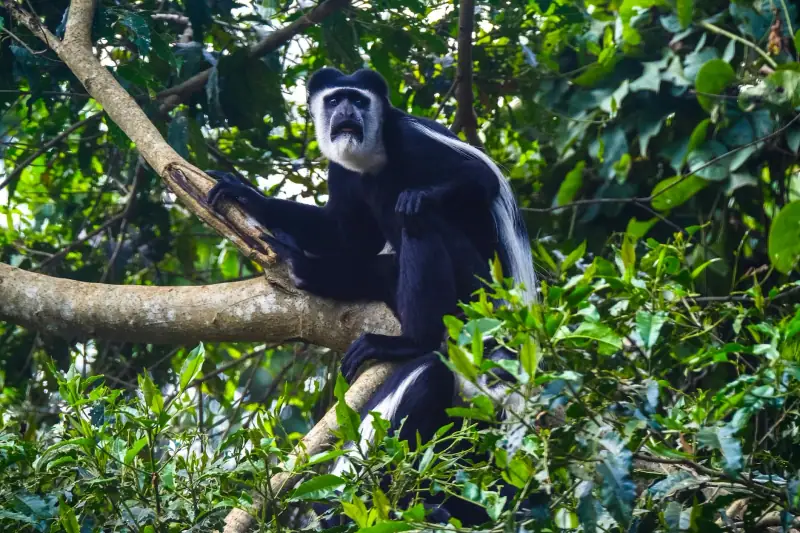
Besides the chimpanzees, Nyungwe has exceptional primate diversity, probably the richest in Central Africa outside the Congo Basin:
The Angolan colobus (Colobus angolensis ruwenzorii): surely the easiest primate to see in the park. These large black-and-white monkeys move in noisy troops of 300 to 400 individuals (one of the largest colobus troops in the world) through the treetops. Their aerial acrobatics are spectacular.
The gray-cheeked mangabey (Lophocebus albigena): a large forest primate, discreet but present in dense forest areas.
L’Hoest’s monkey (Allochrocebus lhoesti): a species endemic to the Great Lakes region, recognizable by the white cape on its back.
The olive baboon (Papio anubis): often visible at the forest edge and around the Gisakura complex.
A nocturnal galago (bushbaby) with thick ear tufts: a species that guided night outings sometimes let you see.
Lodges in and around Nyungwe
From the luxury lodge in the canopy to the guesthouse at the park entrance, find your lodging to discover Nyungwe forest.
Nyungwe’s hiking trails
The park offers about ten marked trails, from a 2-hour stroll to a 2-day hike. All require a mandatory guide (included in the trail entry fee).
Igishigishigi trail (canopy walk): 3 km (1.9 mi) round trip, 2-3 h. The most popular, leads to the suspended walkway. Easy to moderate.
Karamba trail: 4 km (2.5 mi) round trip, 3-4 h. Recommended for birdwatching and primate sightings. Moderate.
Umugote trail: 3.6 km (2.2 mi) round trip, about 3 h. Less visited, crosses a well-preserved dense forest area. Moderate.
Bigugu trail: access to the park’s highest point (2,950 m / 9,678 ft). 360° panorama over Rwanda and Burundi on a clear day. Hard (significant elevation gain, altitude).
Uwinka trail: from the Uwinka visitor center (about 15-20 km / 9-12 mi northeast of Gisakura, ~30 minutes by road), a 4 km (2.5 mi) trail with views of the forest below. Easy to moderate, ideal for families.
Park entry fee: USD 40 per person per day (excluding the special permits for chimpanzees and the canopy walk).
Cyamudongo forest: Lake Kivu’s secret
About 30 km (19 mi) southwest of Gisakura, on the road between Gisakura and Rusizi, Cyamudongo forest is an isolated patch of about 410 hectares (4.1 km²) of primary forest in the middle of tea plantations. It is one of the least visited places in Rwanda, and one of the most fascinating for primatologists.
Cyamudongo is home to the second habituated chimpanzee group of the Nyungwe region. These chimpanzees, isolated from the main massif by years of farming activity, have developed behaviors specific to their small forest, and watching them is often more intimate because groups are smaller and the forest less dense.
Access: from Rusizi (Cyangugu), about 30 minutes by car. Trekking at Cyamudongo is booked at the park office in Gisakura or through the RDB. Same permit: USD 100.
The small town of Kamembe (a district of Rusizi) serves as a base for those who want to combine Cyamudongo and the shores of Lake Kivu in a day.
The Congo Nile Trail: crossing Nyungwe on foot
The Congo Nile Trail (CNT) is one of East Africa’s great trekking trails: 227 km (141 mi) linking Rubavu (Gisenyi) at the northern end of Lake Kivu to Rusizi (Cyangugu) in the south, following the ridge line between the Congo and Nile basins. Part of the trail crosses the eastern edge of Nyungwe forest for several dozen kilometers.
For those who do not want to cover the full 227 km, several short segments (2 to 3 days) let you explore the Nyungwe portion of the trail. The villages crossed (Kitabi, Nyamagabe, Gasaka) offer authentic community immersion with host families along the trail.
What you see on the Nyungwe portion of the CNT: terraced tea plantations, bamboo forest, waterfalls, views of Lake Kivu and the Burundian hills, and passages through high-altitude forest dotted with endemic birds.
Lodges and homestays line the trail at regular intervals. For more information, the RDB office in Gisakura supplies maps and information on the stages.
Rent a car to explore the Southwest
Nyungwe, Lake Kivu, Karongi: southwestern Rwanda is best visited by rental car from Kigali, with complete freedom in your stops.
Where to stay in Nyungwe
Lodging in Nyungwe is concentrated around Gisakura, at the park’s main entrance, and at Uwinka, a second access point about 15-20 km (9-12 mi) to the east.
Luxury
Nyungwe Forest Lodge (One&Only): perched on the ridge above the Nyungwe canopy, this lodge offers luxury tents with direct forest views. It is the park’s top address: spa, fine-dining restaurant, 4x4 transfers, guided activities. Rates: USD 700-1,200 a night.
Nyungwe Top View Hill Hotel: set on the heights above the forest, this more accessible hotel (USD 150-350) offers comfortable rooms with panoramic views and a good restaurant.
Mid-range
Gisakura Guest House (Rwanda Development Board): run directly by the park, right at the Nyungwe entrance at Gisakura. Functional rooms, a simple restaurant, fair rates (USD 50-90). The most practical option for maximizing time in the park.
Kitabi Eco-Centre: 22 km (14 mi) northeast of Gisakura, this community center offers simple lodging in a green setting amid tea plantations. Ideal for tight budgets (USD 30-50).
Hostels and homestays
Several homestays are available in the villages around the park for 15,000-25,000 RWF a night (about €12-20 / $14-23). Quality varies, but the experience of meeting residents is worth the detour. The RDB office in Gisakura can point you in the right direction.
Fitting Nyungwe into your Rwanda circuit
Nyungwe fits naturally into a loop circuit of Rwanda of 7 to 10 days, often combined with Kigali, Lake Kivu and sometimes Huye (Butare).
Classic 10-day circuit with Nyungwe
- Days 1-2: Kigali (Genocide Memorial, Kimironko, food)
- Day 3: drive to Huye (Butare), National Museum of Rwanda
- Days 4-5: Nyungwe forest (chimpanzees, canopy walk, hiking)
- Day 6: drive to Rusizi, southern Lake Kivu, Kamembe
- Day 7: up Lake Kivu to Karongi (Kibuye)
- Day 8: Lake Kivu, northern section of the Congo Nile Trail
- Day 9: drive to Musanze via Kigali
- Day 10: gorilla or golden monkey trek, back to Kigali
For a detailed day-by-day itinerary, see the full Rwanda circuit guide.
If you come mainly for the chimpanzees and hesitate over the Virunga gorillas, the comparison Volcanoes vs Nyungwe will help you decide according to your budget and priorities.
Where to eat in Nyungwe
Dining around Nyungwe is modest. The vast majority of travelers eat at their lodge or guesthouse.
Gisakura Guest House restaurant: the go-to restaurant there, with a simple but reliable menu: Rwandan dishes (rice, beans, plantain, sautéed vegetables, brochettes), a buffet lunch for trekking groups, dinner on order. Budget: 5,000-12,000 RWF.
Roadside restaurants in Nyamagabe: the town of Nyamagabe (formerly Gikongoro), about thirty minutes east, has a few affordable local restaurants with classic Rwandan cooking.
Self-catering: for travelers with a car, stocking up in Huye (Butare) before reaching Nyungwe is the most practical solution. The Nakumatt in Butare has everything needed.
Practical information for visiting Nyungwe
How to get there
From Kigali by bus: departures from Nyabugogo or the Kigali terminal to Rusizi (Cyangugu). Companies: Stella Bus, Horizon Express, Royal Express. Stop at Gisakura on request (tell the driver). Duration: 4 h 30 to 5 h 30. Fare: 5,000-7,000 RWF (about €3.50-5 / $4-6).
From Kigali by car: national road via Huye: 230 km (143 mi), about 4 to 5 hours depending on stops. Fully paved road in good condition. A 4x4 is not necessary to reach Gisakura, but becomes useful for some of the park’s secondary trails.
From Huye (Butare): 90 km (56 mi) via Nyamagabe, 2 to 3 hours. Ideal if you come from Kigali and want to stop at the National Museum.
From Rusizi (Cyangugu/Lake Kivu): 45 minutes to 1 hour east on the N1. A practical arrival point if you come by charter flight or combine Nyungwe and Lake Kivu.
Budget
| Item | Budget | Comfort |
|---|---|---|
| Lodging / night | USD 15-50 | USD 150-800 |
| Meals | €2-6 (~$2.30-7) | €15-30 (~$17-35) |
| Park entry fee | USD 40 / day | USD 40 / day |
| Chimpanzee permit | USD 100 | USD 100 |
| Canopy walk | USD 60 | USD 60 |
| Guided hike | included in entry | included in entry |
| Transport (Kigali bus) | €3.50-5 (~$4-6) | n/a |
The main expense remains the chimpanzee permit (USD 100), far less prohibitive than the Virunga gorillas (USD 1,500). For those traveling on a limited budget, Nyungwe is the most affordable alternative for a primate trekking experience in Central Africa.
Health and safety
Nyungwe is a tropical forest: mosquitoes are present, especially at dawn and dusk. Wear covering clothing for treks. Ask your doctor or a travel clinic before you go, and see the official travel health pages (CDC in the US, TravelHealthPro in the UK).
Altitude (up to 2,950 m / 9,678 ft) is something to raise with your doctor or travel clinic as well.
Parasites in the forest’s streams are a reason not to drink the water untreated. Bring bottled water or purification tablets.
Entry rules depend on your passport. Check the official travel advice of your government before you book: travel.state.gov (US), GOV.UK (UK), travel.gc.ca (Canada), Smartraveller (Australia) (checked November 2026).
Nyungwe, Rwanda’s green lung
There is something irreducible about Nyungwe forest. Where Kigali embodies the modernity and rebirth of a country, where the Virunga gorillas symbolize spectacular conservation, Nyungwe represents something older and quieter: a forest that has come through ice ages, wars and human upheavals without ever ceasing to be what it is, a refuge, an ark, a whole ecosystem suspended between the clouds of the Congo and the hills of Rwanda.
Walking beneath the Nyungwe canopy, hearing chimpanzees sing in trees 20 meters (66 ft) overhead, watching a troop of 300 colobus pass like a black-and-white cloud between the branches: these experiences cannot really be told. You carry them home in your luggage, like a new way of hearing the silence of a forest.
Nyungwe does not try to compete with the gorillas. It has no need to. It has been there for millennia, and it will be there long after tourists have finished talking about it.
To prepare everything before you go, the complete Rwanda guide covers every step of organizing your trip.
Frequently asked questions
How do you get to Nyungwe from Kigali?
From Kigali, allow 4 to 5 hours by road to the southwest via Huye (Butare). By bus, several companies (Horizon Express, Stella Bus) serve Rusizi (Cyangugu) and stop at Gisakura, the park's gateway. Fare: 5,000-7,000 RWF (about €3.50-5 / $4-6). By rental car or taxi, the national road is paved and in good condition all the way.
How much does chimpanzee trekking in Nyungwe cost?
The chimpanzee trekking permit in Nyungwe costs USD 100 per person. The price includes the official park guide. You get a guaranteed hour of observation with the habituated chimpanzee group. The permit is booked through the Rwanda Development Board (rdb.rw) or a specialized agency. Unlike the Virunga gorillas, permits are generally available on shorter notice.
What is the Nyungwe canopy walk?
The Nyungwe canopy walk is a suspended walkway 160 meters (525 ft) long and about 70 meters (230 ft) above the forest floor. It is reached from the Uwinka Visitor Center via the Igishigishigi trail (2.1 km / 1.3 mi, about 30 minutes' walk). It is one of the few experiences of this kind in Central Africa. Entry costs USD 60 per person, guide included.
What is the best season to visit Nyungwe?
The dry season (June to August) is ideal for trekking, as trails are less slippery and the forest more passable. The second dry season (December to February) is also good. In the rainy season (March to May and October to November) the forest is spectacularly green, but tracks can be difficult. Chimpanzee trekking remains possible all year, and rain even improves the chances of finding them near the entrance.
Can you combine Nyungwe and Lake Kivu in one trip?
Yes, and it is even the most popular combination in southwestern Rwanda. From Nyungwe (Gisakura entrance), Lake Kivu is only 45 minutes to 1 hour west by road to Rusizi (Cyangugu), on the southern shore of the lake. Continuing north along the lakeside road, you can reach Karongi (Kibuye) in 2 hours, then Rubavu (Gisenyi) in another 4-5 hours.
How long do you need to visit Nyungwe?
A minimum of 2 nights is recommended to enjoy Nyungwe fully: one day for chimpanzee trekking and another for the canopy walk and a birdwatching trail. With 3 nights you can add Cyamudongo forest, a section of the Congo Nile Trail and outings to Lake Kivu. Birders can easily spend 4 to 5 days.
More Rwanda guides
Keep reading
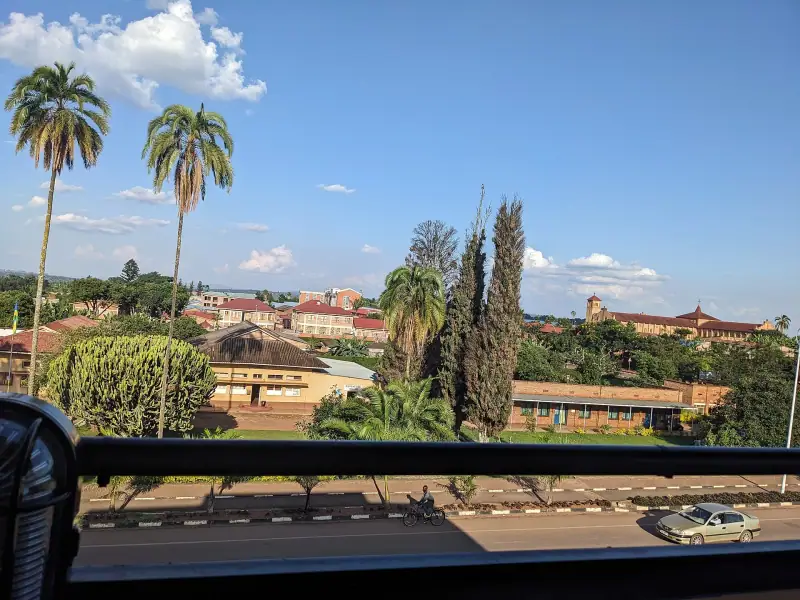
Visiting Huye (Butare): complete guide to Rwanda's cultural capital
Huye (Butare), Rwanda's cultural capital: National Museum, Nyanza Royal Palace, gateway to Nyungwe. A complete guide to visiting the town.
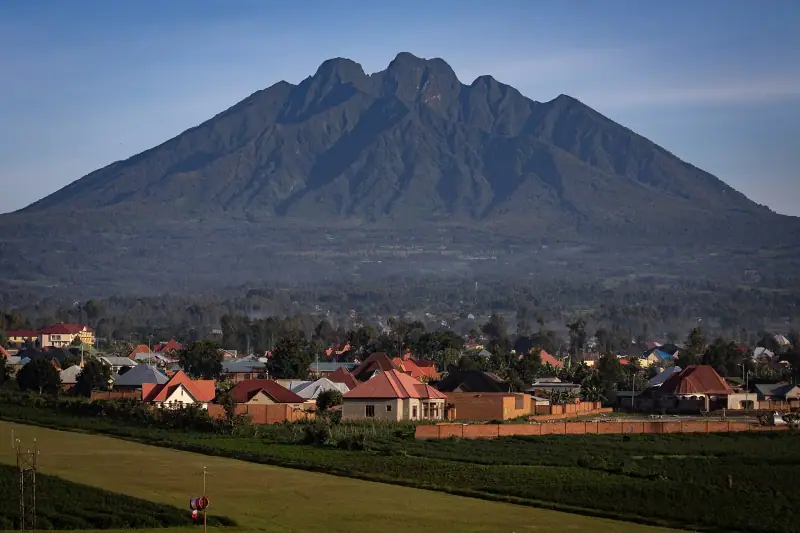
Visiting Musanze: complete guide to the gateway to the gorillas and volcanoes
Musanze, Rwanda: Virunga gorillas, volcanoes, Lakes Ruhondo and Burera, caves and market. A complete guide to the capital of the North.
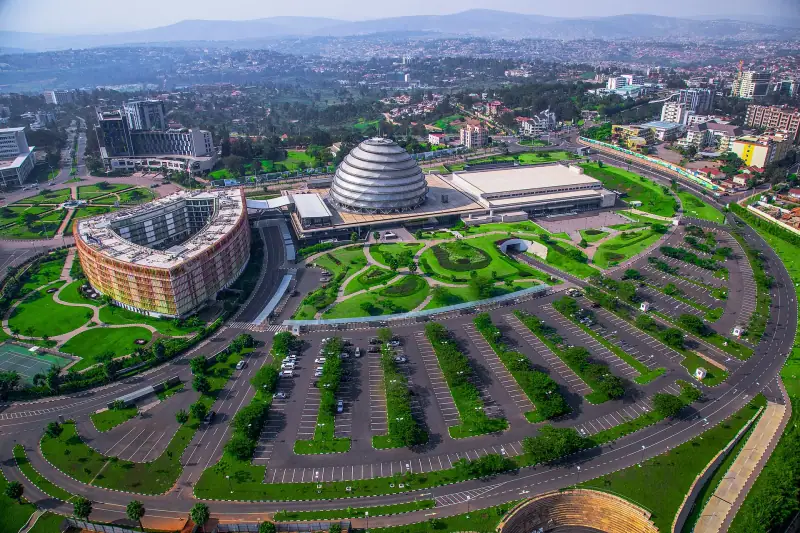
Kigali must-sees: the best places to visit
The best things to visit in Kigali: Genocide Memorial, markets, art, neighborhoods and restaurants. A practical guide to the Rwandan capital.
Ready-made
Rwanda itineraries
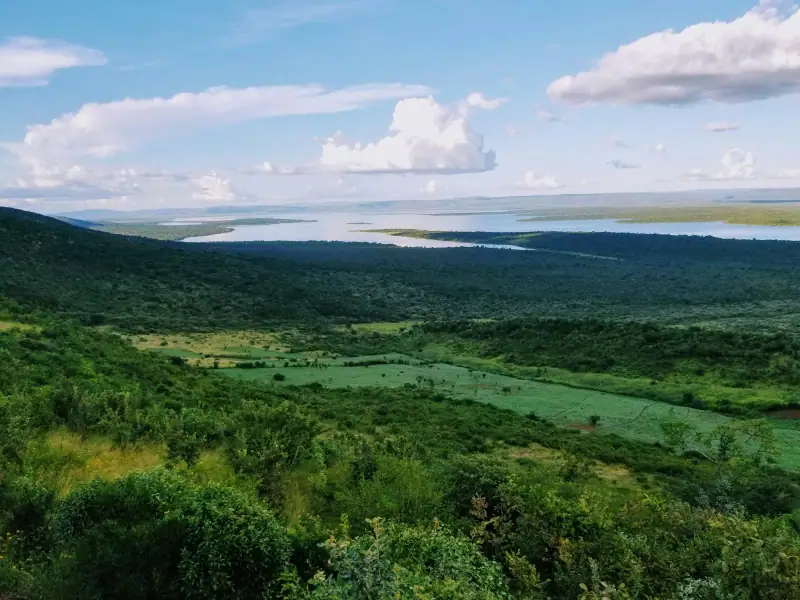
10 days
Rwanda in 10 days: complete itinerary with gorillas, safari, Lake Kivu and Nyungwe
KigaliAkagera National ParkMusanzeRubavu (Gisenyi)Nyungwe
7 days
Rwanda in 7 days: complete itinerary and practical tips
KigaliMusanzeGisenyi (Rubavu)
Can be adapted in the planner
3 days
Lake Kivu road trip: from Rubavu to Karongi along the Rwandan shore
Rubavu (Gisenyi)Karongi (Kibuye)