Itineraries
Rwanda in 10 days: complete itinerary with gorillas, safari, Lake Kivu and Nyungwe
We may earn a commission when you book through links on this page, at no extra cost to you. We don't visit or try the places we cover: we summarize published sources. How we work
Day by day
- Day 1Arrive in Kigali
- Day 2Kigali: Genocide Memorial, Inema Arts Center, Kimironko Market
- Day 3Drive to Akagera National Park, first evening game drive
- Day 4Full safari day in Akagera, optional Lake Ihema boat trip
- Day 5Akagera to Musanze via Kigali, gorilla briefing
- Day 6Gorilla trek in Volcanoes National Park
- Day 7Musanze to Rubavu and Lake Kivu
- Day 8Rubavu to Karongi lunch stop, then Nyungwe
- Day 9Nyungwe: chimpanzee trek or canopy walk
- Day 10Nyungwe to Kigali, stop in Huye, departure
Where to sleep
- Kigali2 nights
- Akagera National Park2 nights
- Musanze2 nights
- Rubavu (Gisenyi)1 night
- Nyungwe2 nights
In short
- A 10-day loop covers Kigali (2 nights), Akagera safari (2 nights), Musanze and the gorilla trek (2 nights), Lake Kivu at Rubavu (1 night) and Nyungwe (2 nights).
- The longest drive days are Akagera to Musanze (about 5 h to 5 h 30 via Kigali) and Rubavu to Nyungwe via Karongi (about 4 to 5 h).
- Gorilla permits cost USD 1,500 per person; book through the Rwanda Development Board at least 3 to 6 months ahead.
- The estimated budget is about €3,100 to 3,800 (about $3,595 to 4,410) per person at mid-range, flights excluded; the dry season (June to September) is ideal.
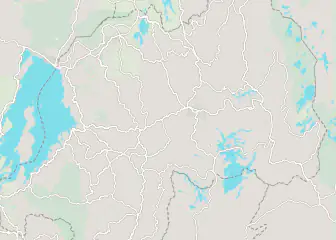
Rwanda is often nicknamed “the land of a thousand hills”, but it is also a land of a thousand contrasts: savanna in the east, volcanoes in the north, a lake in the west, equatorial forest in the south. In 10 days you can link these four worlds in one big loop that takes you from the Akagera safaris to the legendary gorilla trek, and from the shores of Lake Kivu to the canopies of Nyungwe. Here is a complete day-by-day itinerary.
10-day itinerary overview
| Day | Stage | Drive time |
|---|---|---|
| D1 | Arrive in Kigali | n/a |
| D2 | Kigali (city) | n/a |
| D3 | Kigali to Akagera Park | ~2 h 30 |
| D4 | Akagera safari | n/a |
| D5 | Akagera to Musanze | ~5 h to 5 h 30 via Kigali |
| D6 | Gorilla trek (Volcanoes) | n/a |
| D7 | Musanze to Rubavu / Lake Kivu | ~1 h 30 |
| D8 | Rubavu to Karongi to Nyungwe | ~4 h to 5 h |
| D9 | Nyungwe (chimpanzee trek) | n/a |
| D10 | Nyungwe to Kigali, departure | ~5-6 h |
This loop runs east, north, west, south, ending at Nyungwe to return to Kigali on the last day. You can do it in reverse depending on your flights.
Day 1: Arrival in Kigali
Nearly all flights to Rwanda land at Kigali International Airport (KGL).
On arrival:
- Immigration: entry rules depend on your passport. Check the official travel advice of your government before you book: travel.state.gov (US), GOV.UK (UK), travel.gc.ca (Canada), Smartraveller (Australia) (checked November 2026). Passing through usually takes less than 30 minutes.
- Transfer to your Kigali lodging (20-40 minutes depending on traffic).
- First meal in Rwanda: head to a Kimihurura restaurant to discover local cuisine.
Lodging: see the guide to lodging in Kigali to choose your neighborhood and budget.
Day 2: Discovering Kigali
Kigali deserves a full day. Clean, green and surprisingly well organized for an African capital, it pleasantly surprises every traveler.
Morning:
- Kigali Genocide Memorial (open daily, 9 am to 5 pm, last entry 4 pm; opens at 1 pm on the last Saturday of the month): a sober and poignant visit, essential for understanding today’s Rwanda. Allow 2 to 3 hours.
- A coffee break in the Kimihurura neighborhood to catch your breath.
Afternoon:
- Inema Arts Center: a lively gallery of Rwandan contemporary art, with original works for sale.
- Kimironko Market: Kigali’s largest market. Fabrics, spices, baskets, ceramics: this is where Kigali residents’ daily life unfolds.
- A walk in the hills of Kiyovu.
Evening:
- Dinner at a restaurant in the center. See the guide to Kigali restaurants for good addresses.
Guided visits in Kigali
Cultural tours, memorial, markets and neighborhoods of Kigali with a guide.
Day 3: Drive to Akagera Park (East)
Head east! Akagera National Park is about 2 h 30 from Kigali by national road RN3. It is Rwanda’s only savanna park and the only one where you can see the “Big Five”.
Morning:
- Leave Kigali early (7 to 8 am) to enjoy the first hours of light.
- Drive to Kayonza, then fork north to the park entrance gate.
- Settle into your lodge or camp inside or on the edge of the park.
Afternoon:
- First safari outing in the late afternoon (4 to 6:30 pm): this is when animals resume activity after the heat of the day.
- Expect to see zebras, buffalo, impalas, crocodiles and perhaps elephants on this very first outing.
Evening:
- Sunset over the Akagera marshes, with pink reflections on the coastal lakes, a unique sight.
For more information on the park, read the Akagera safari guide.
Day 4: Full safari day in Akagera
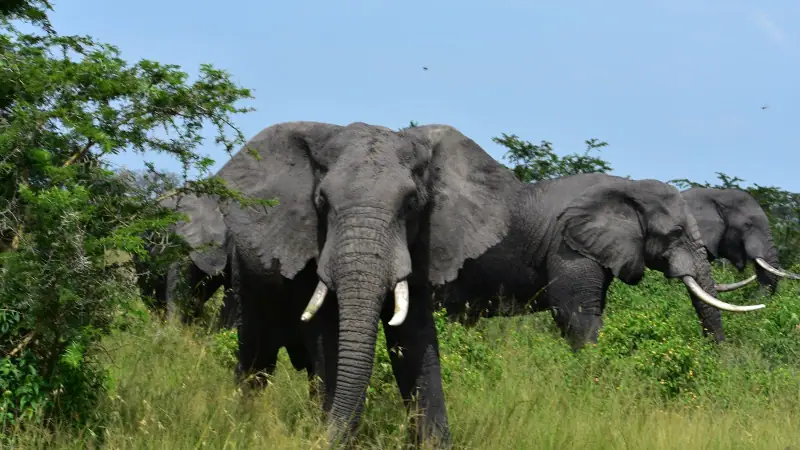
A full day in the park to maximize your chances of sightings.
Typical program:
- Wake-up at 5:30 am: the morning safari starts at dawn. Lions and leopards hunt early.
- 4x4 safari (3 to 4 hours): follow the tracks in the north of the park, richer in large mammals.
- Akagera is home to Rwanda’s only herd of black rhinos, reintroduced in 2017.
- Lunch break at the lodge or outdoors in an authorized area.
- Afternoon safari (3:30 to 6:30 pm): focus on the marshy areas for hippos and birds. Akagera is a birdwatching paradise with more than 500 recorded species.
- Boat safari (optional, to book ahead): an hour on Lake Ihema to approach hippos and crocodiles within a few meters.
Recommended lodging: lodges run in partnership with the RDB are inside the park, offering total immersion in the savanna. Book well ahead.
Car rental in Rwanda
4x4 with or without a driver for your circuit. Compare offers available in Kigali.
Day 5: Akagera to Musanze (North)
This transit day takes you across the whole width of Rwanda.
Route:
- Back to Kigali by the same road (~2 h 30).
- Lunch break in Kigali if needed.
- Resume the road to Musanze (north) via RN2 (~2 h 30).
- Total trip: about 3 h 30 to 4 h of driving, breaks included.
On the way:
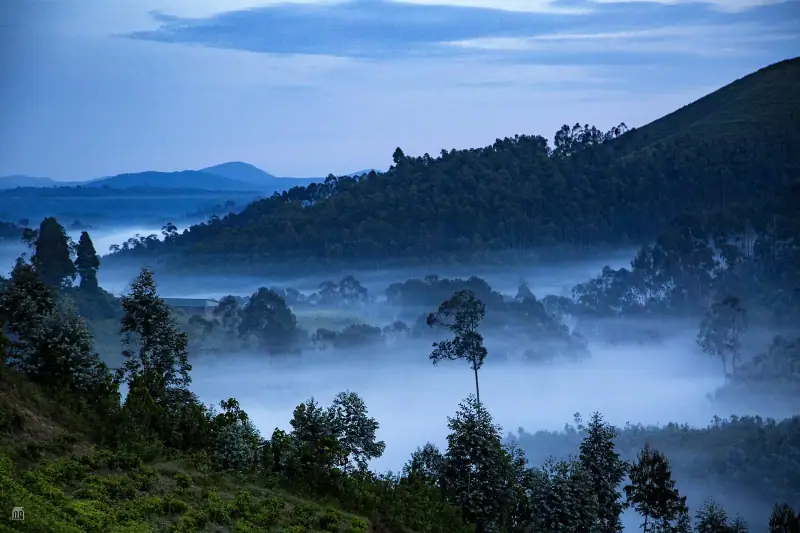
- The RN2 to Musanze is one of Rwanda’s most beautiful roads. Terraced hills, tea bushes and eucalyptus plantations follow one another in a range of greens.
- A stop in the hills for panoramic photos is possible.
Arrival in Musanze:
- Settle into your lodge.
- Gorilla briefing evening: your guide or lodge will give you instructions for the next day (departure time, mandatory gear, rules of conduct).
- Go to bed early; the trek starts at 7:00 am.
Tonight, check your trek gear:
- Waterproof shoes with good ankle support
- A rain jacket or poncho (even in the dry season, it rains in the volcanoes)
- Gardening gloves (for nettles and thorny branches)
- Clothing covering arms and legs
- Water, snacks, sunscreen and insect repellent
To know everything about Musanze, see the guide to Musanze.
Day 6: D-day, mountain gorilla trek
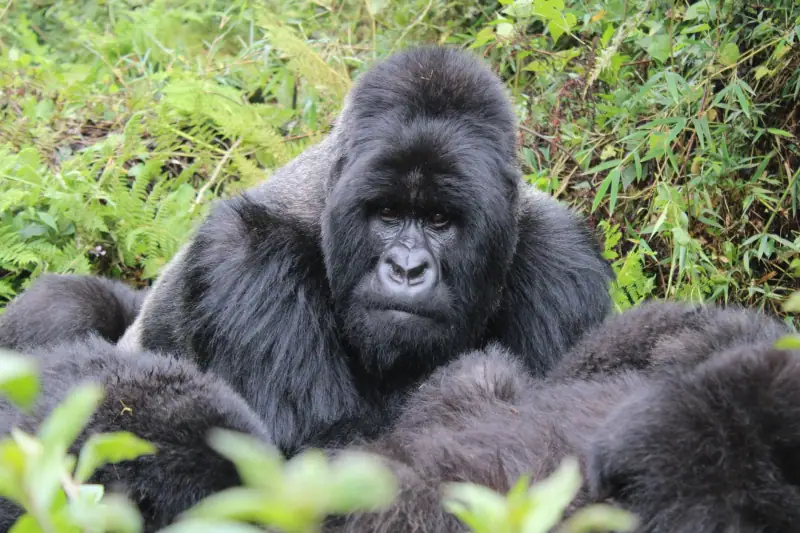
The gorilla trek is often described as one of the most intense experiences a traveler can have. You will not be disappointed.
Morning:
- Wake up at 5:30 to 6:00 am.
- A quick breakfast, then leave for the Rwanda Development Board headquarters at Kinigi at 6:30 am.
- Group briefing at 7:00 am: presentation of the different habituated families, strict rules to follow (minimum distance of 7 meters / 23 ft, no photo flash, a mask if you have a cold, no food).
- Assignment of your family and your guide.
The trek:
- Walking time ranges from 30 minutes to 4-5 hours depending on the family’s position that day.
- The terrain is often steep, sometimes slippery. Local porters available at the park entrance can carry your backpack, a way to contribute to the local economy.
- The hour with the gorillas: strictly limited to 60 minutes. This hour is often described as outside of time; mountain gorillas are both imposing and disarmingly gentle.
Afternoon:
- Back to the lodge, lunch, recovery.
- Optional: visit the Musanze caves, lava tubes formed by volcanic eruptions.
Further reading: the complete guide to gorilla trekking in Rwanda.
Gorilla permits and Volcanoes excursions
Activities in Volcanoes National Park, guided treks and local experiences in Musanze.
Day 7: Musanze to Rubavu and Lake Kivu
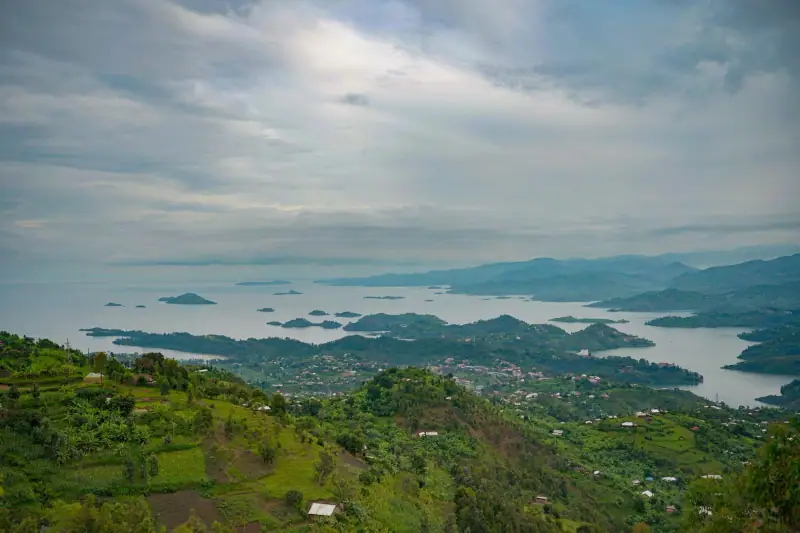
After the intensity of the trek, this day offers a gentle transition to the soothing shores of Lake Kivu.
Musanze to Rubavu drive: about 1 h 30
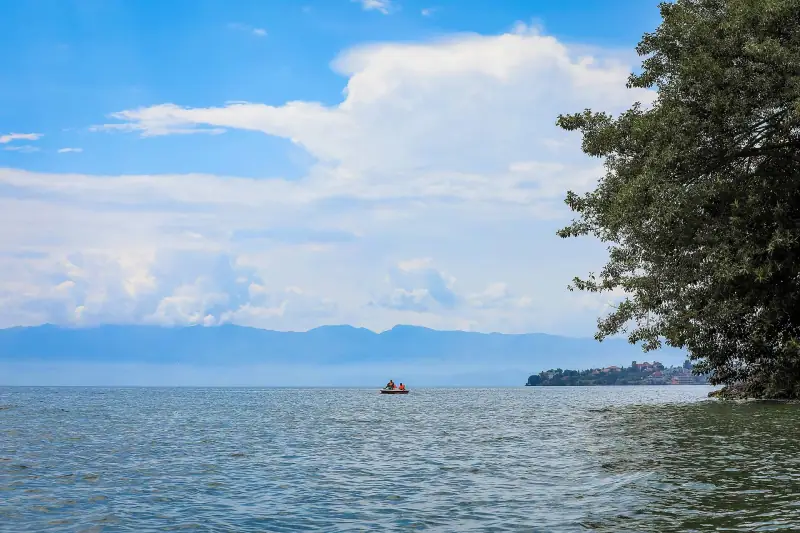
The road descends west from the heights of the volcanoes. The scenery is splendid: vegetation thickens as you approach the lake, at 1,460 meters (4,790 ft).
Arrival in Rubavu (Gisenyi):
- Settle into your hotel or lodge on the lake.
- Swimming in Lake Kivu is possible. Ask your doctor or a travel clinic before swimming, and see the official travel health pages (CDC in the US, TravelHealthPro in the UK).
- A walk through the streets of Rubavu, a relaxed town marked by its colonial past and its border with the Democratic Republic of the Congo (Goma is visible on the other side).
Tonight:
- Sunset from a terrace overlooking the lake, one of Rwanda’s finest scenes.
- Dinner by the water. See the guide to lodging in Rubavu for addresses.
Day 8: Rubavu to Karongi to Nyungwe Forest
This is the longest day in terms of driving (~4 to 5 hours in total). Leave early.
Route:
- Rubavu to Karongi (~1 h 30 to 2 h): the road runs along Lake Kivu to the south through green hills. Karongi (Kibuye) is an ideal lunch stop.
- Karongi to Nyungwe (~2 h to 2 h 30): the road continues southwest, rising gradually into the mountain forest (~80-100 km / 50-62 mi on winding roads).
Karongi (lunch break):
- The shores of Lake Kivu at Karongi are quieter than at Rubavu. Boat excursions to the islands are possible if you have time.
Arrival in Nyungwe:
- Nyungwe forest announces itself with a radical change of landscape: the farmed hills give way to a dense, misty, mysterious primary forest.
- Settle into your lodge or camp at the park entrance.
- Book your activity for the next day (chimpanzee trek or canopy walk); this is usually done at the lodging or with the RDB.
Day 9: Nyungwe, chimpanzee trek or canopy
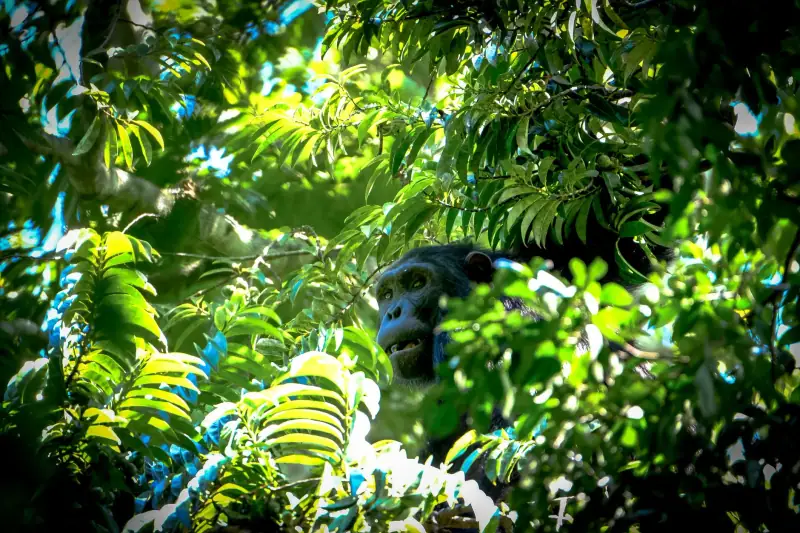
Nyungwe forest is one of the largest and best-preserved mountain forests in Central and East Africa. It is a world apart.
Option 1: Chimpanzee trek
- Departure at dawn from the Uwinka or Cyamudongo visitor center.
- Chimpanzees live in large communities in the forest. Observation generally lasts 1 to 2 hours.
- The trek lasts between 2 and 5 hours depending on where the chimpanzees are. Prepare the same way as for the gorillas (sturdy shoes, covering clothing).
- Nyungwe has many other primates: Angolan colobus in impressive groups, cercopithecus monkeys, mangabeys.
Option 2: Canopy walk
- The suspended walkway at Uwinka lets you stroll at treetop level, about 70 meters (230 ft) above the ground.
- A superb view of the forest and the surrounding hills. Ideal in late morning when the mist clears.
- Accessible to all levels, with a guide.
Afternoon:
- A walk on one of the park’s many trails marked by the RDB (Rwanda Development Board).
- Birdwatching: Nyungwe is home to more than 300 bird species, including many Albertine endemics.
- Rest at the lodge, a night in the heart of the forest.
Stays in Nyungwe
Lodges and eco-lodges in the heart of or at the edge of Nyungwe forest.
Day 10: Nyungwe to Kigali and departure
This last day is mainly devoted to the return to Kigali.
Nyungwe to Kigali drive: about 5 to 6 hours
The road passes through Huye (Butare), the university town of southern Rwanda. If your flight is in the evening (after 8 pm), you can allow yourself a stop in Huye:
- National Museum of Rwanda in Huye: one of the richest in Central Africa, with exceptional ethnographic and historical collections. Allow 2 hours.
Arrival in Kigali:
- Depending on your flight time, you may have lunch at a Kimihurura restaurant.
- A last visit to Kimironko Market for souvenirs (Rwandan coffee, basketry, kitenge fabric).
- Transfer to the airport. Plan to arrive 3 hours before your international flight.
Tips for the return:
- Kigali airport is modern and well organized. Security formalities are quick.
- The duty-free area generally sells Rwandan coffee (one of the best in the world); bring some home for friends and family.
Estimated budget for this 10-day circuit
| Item | Average budget (per person) | Comfort budget (per person) |
|---|---|---|
| Gorilla permit | €1,380 (~USD 1,500) | €1,380 |
| Nyungwe chimpanzee trek | ~€80-130 (~USD 90-150 depending on season) | ~€80-130 |
| Akagera entry (5 days) | ~€170 (~$200), check with African Parks | ~€170 (~$200) |
| Lodging (9 nights) | €600-900 (~$695-1,045) | €1,500-3,000 (~$1,740-3,480) |
| 4x4 rental (10 days) | €500-700 (~$580-810) | €900-1,500 (~$1,045-1,740) |
| Meals | €200-350 (~$230-405) | €400-600 (~$465-695) |
| Extras (guides, tips, souvenirs) | €100-200 (~$115-230) | €200-400 (~$230-465) |
| TOTAL (excluding flights) | ~€3,100-3,800 (~$3,595-4,410) | ~€4,700-7,200 (~$5,450-8,350) |
For budget details, see the Rwanda budget guide.
When to go for this circuit
The long dry season (June to September) is the ideal period:
- Passable roads, including Akagera’s laterite tracks
- Less dense vegetation, so better visibility for safaris
- Clearer weather, so photos of the volcanoes from Musanze
The short dry season (December to February) is also pleasant, with fewer tourists and lower prices.
The rainy seasons (March to May, October to November) are best avoided for unpaved roads. On the other hand, Nyungwe forest is especially lush and the chimpanzees more active.
For a complete guide to the seasons, read the article Best time to visit Rwanda.
This 10-day circuit is one of the most complete you can do in Rwanda. By linking savanna, volcanoes, lake and forest, it offers a 360° view of a country unlike any other in Africa. Safe travels!
Sources
- Rwanda Development Board (Visit Rwanda Bookings): prices checked November 2026
- Kigali Genocide Memorial (Aegis Trust): figures checked November 2026
Frequently asked questions
Are 10 days enough for the grand loop of Rwanda?
10 days let you cover the main regions: Kigali, the East (Akagera), the North (Volcanoes and gorillas), the West (Lake Kivu) and the Southwest (Nyungwe). The pace is brisk but realistic. Allow 12 to 14 days if you want to take your time.
Do you need to book the gorilla permit far in advance?
Yes, absolutely. Gorilla permits (USD 1,500 per person) are very limited, about a hundred permits a day for all the habituated families. Book through the Rwanda Development Board (RDB) at least 3 to 6 months before departure, even more in high season (July to August).
What type of vehicle should you rent for this 10-day circuit?
A 4x4 (Toyota Land Cruiser, RAV4 or similar) is strongly recommended, especially if you visit Akagera and Nyungwe. Tracks in the parks are often packed dirt and some secondary roads can be rough in the rainy season. A 4x4 with a driver-guide is a comfortable option for those who don't want to drive.
Can you see gorillas AND chimpanzees in 10 days in Rwanda?
Yes, this 10-day itinerary allows it. Gorillas are tracked in Volcanoes National Park (Musanze, North), chimpanzees in Nyungwe forest (Southwest). By adding both to your program, you get both of Rwanda's great primate experiences.
What is the total budget for this 10-day Rwanda circuit?
Allow between €4,000 and €7,000 per person (about $4,640 to $8,120), flights not included, covering the gorilla permit (USD 1,500), Akagera entry, the chimpanzee trek in Nyungwe, mid-range lodging and vehicle rental. For upscale lodging (premium lodges), the budget can exceed €10,000 per person (about $11,600).
What is the best season for this circuit?
The long dry season (June to September) is ideal: passable roads, clear skies, less dense vegetation for spotting animals. The short dry season (December to February) is also pleasant. Avoid the heavy rains (March to May) for unpaved roads and treks.
More Rwanda guides
Keep reading
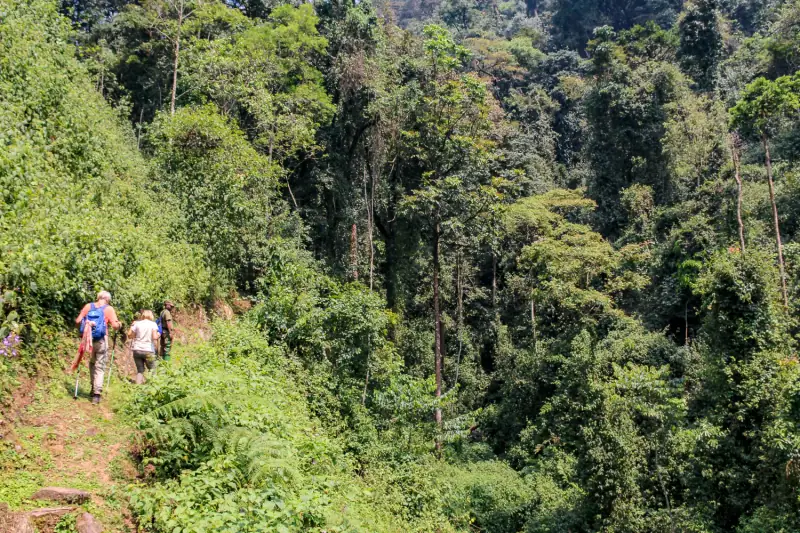
Hiking in Rwanda: the best treks from the volcanoes to Nyungwe
Complete guide to hiking in Rwanda: Bisoke volcano, Karisimbi, Dian Fossey's grave, Nyungwe canopy walk, Congo Nile Trail. Levels, rates, preparation.
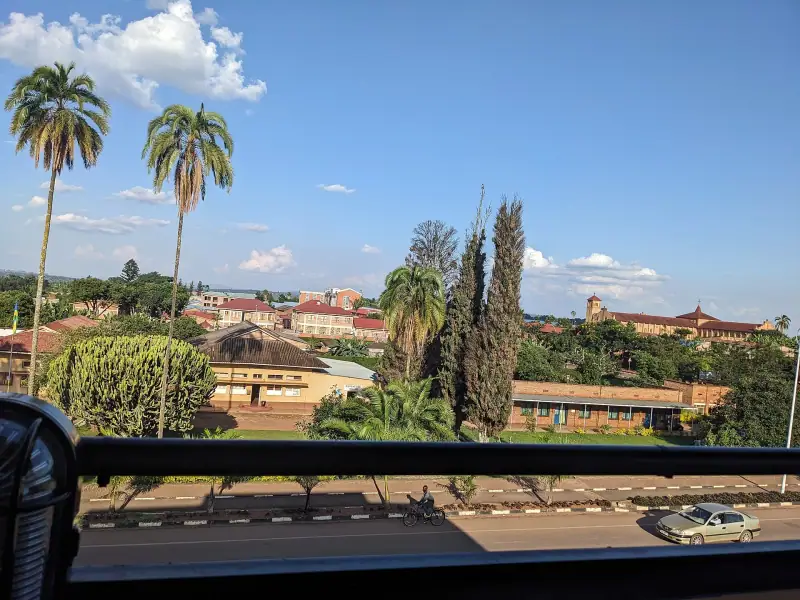
Visiting Huye (Butare): complete guide to Rwanda's cultural capital
Huye (Butare), Rwanda's cultural capital: National Museum, Nyanza Royal Palace, gateway to Nyungwe. A complete guide to visiting the town.
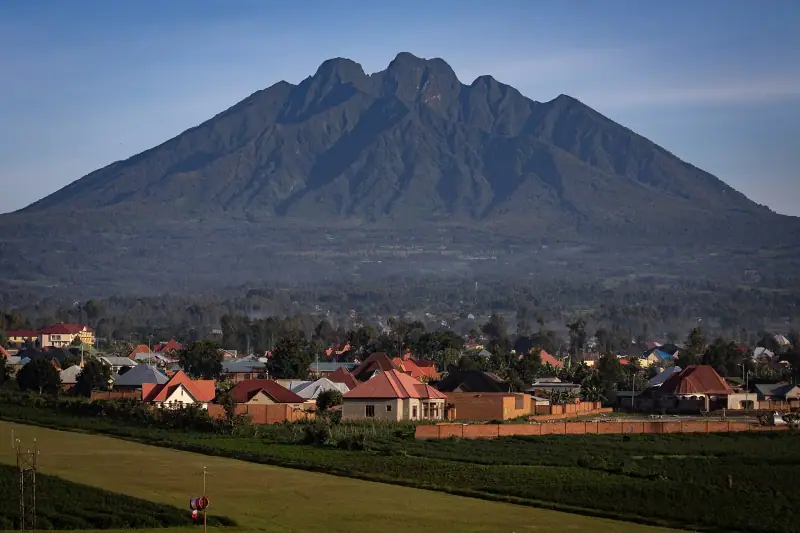
Visiting Musanze: complete guide to the gateway to the gorillas and volcanoes
Musanze, Rwanda: Virunga gorillas, volcanoes, Lakes Ruhondo and Burera, caves and market. A complete guide to the capital of the North.
Ready-made
Rwanda itineraries
7 days
Rwanda in 7 days: complete itinerary and practical tips
KigaliMusanzeGisenyi (Rubavu)
Can be adapted in the planner
3 days
Lake Kivu road trip: from Rubavu to Karongi along the Rwandan shore
Rubavu (Gisenyi)Karongi (Kibuye)