Itineraries
Réunion's Wild South: A Complete Guide to the Volcanic Coast
We may earn a commission when you book through links on this page, at no extra cost to you. We don't visit or try the places we cover: we summarize published sources. How we work
In short
- The Wild South runs from Saint-Pierre to Sainte-Rose along the RN2; you need a car, and a full day or two days is enough.
- The Langevin Waterfall is a flat walk of about 20 to 30 minutes from the parking lot, with natural pools for swimming.
- Sea swimming is generally dangerous on this coast; Manapany-les-Bains has a natural pool in the volcanic rocks.
- The dry season (May to November) gives the best conditions; this windward coast is the wettest on the island.
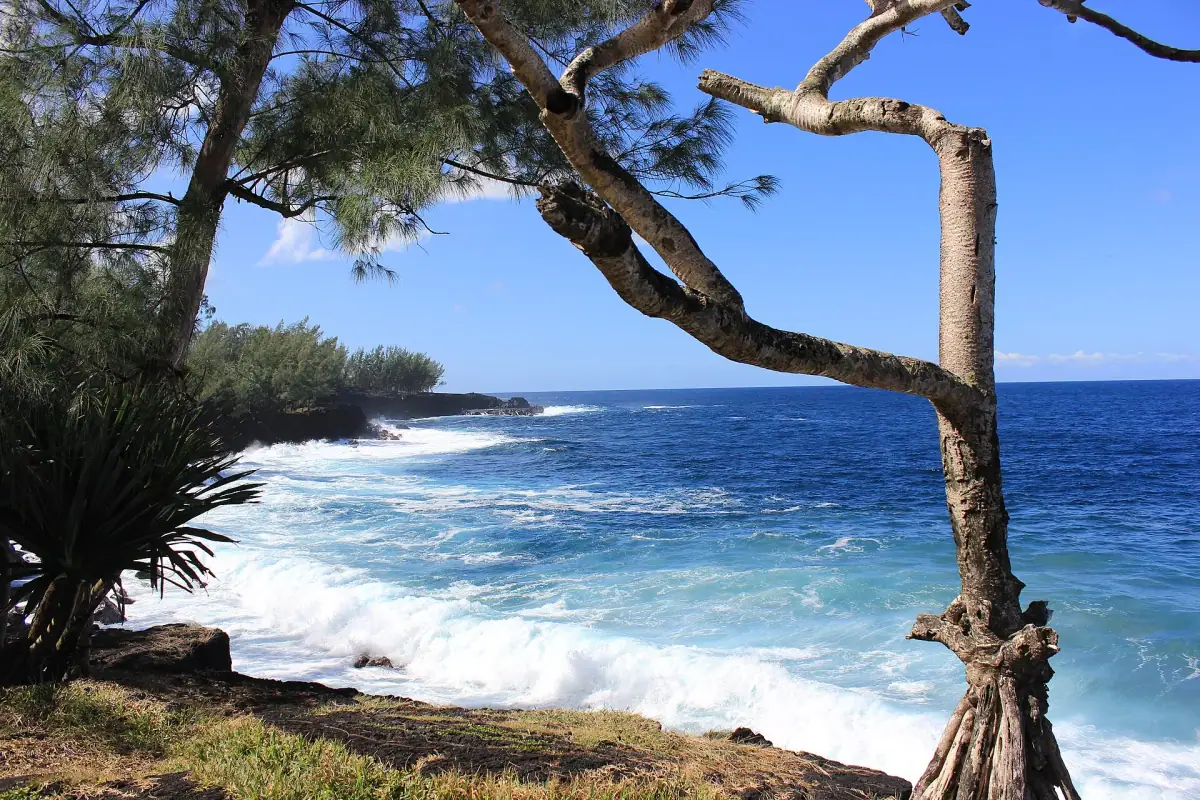
If Réunion has a postcard coast, the one around Saint-Gilles and its fine-sand beaches, it also has its flip side: a volcanic, green, wild and spectacular coast that locals simply call the Wild South (Sud Sauvage). Between Saint-Pierre and Sainte-Rose, the Route des Laves follows a shoreline of black basalt pounded by Indian Ocean waves, passing sleepy fishing villages, dense tropical forest and areas where lava from the Piton de la Fournaise has often covered everything.
This is the other face of Réunion, the one hurried travelers miss. Yet the Wild South holds some of the island’s most breathtaking natural sites: the Langevin Waterfall, among the most beautiful in the world, the natural pools of the Langevin River with their unearthly green water, the Grand Brûlé lava flows that reach the sea, and the Notre-Dame des Laves church in Sainte-Rose, which by miracle stopped short of the molten lava in 1977.
This guide takes you on a full circuit through the Wild South, step by step, from Saint-Pierre to Sainte-Rose.
The coastal RN2: between Saint-Pierre and Saint-Joseph
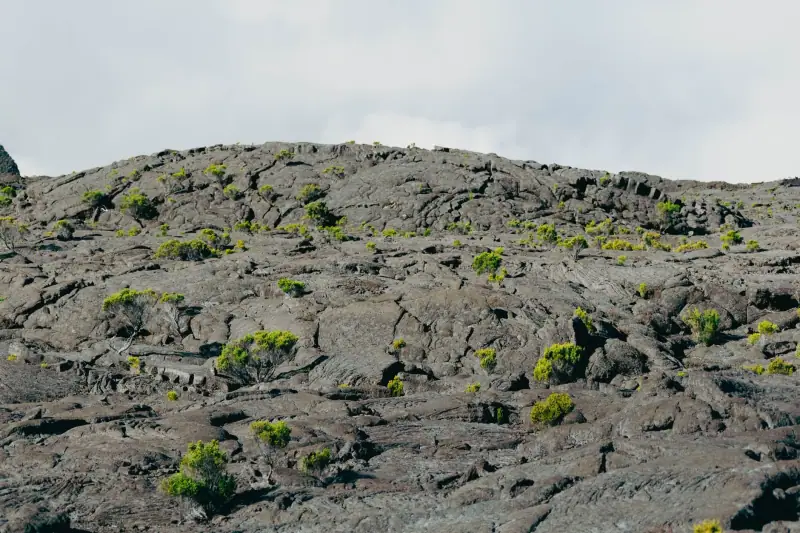
The Wild South really begins on leaving Saint-Pierre, the big city of the south. The national road leaves the familiar southern shoreline and heads into ever wilder landscapes, running alongside lava cliffs and deep valleys where jade-colored rivers roar.
This stretch of road is a trip in itself. Stop at the viewpoints along the way: the views of the wild Indian Ocean, with no coral barrier on this coast so that waves crash straight onto the black rocks, are among the most dramatic on the island.
Manapany-les-Bains: the south’s natural pool
About 13 km (8 mi) east-southeast of Saint-Pierre, in the commune of Saint-Joseph, Manapany-les-Bains is one of the few places in the Wild South where swimming is safe. A small natural pool formed in the volcanic rocks has translucent water, protected from the waves by the basalt barrier. Réunionese families come on weekends and public holidays, a sign of its authenticity. The black rocks against the turquoise water make it especially photogenic.
Nearby, a local produce market is held on some weekends: exotic fruit, spices, Creole crafts. It is a good chance to stop and chat with residents.
Car rental in Réunion
A car is essential to explore the Wild South at your own pace. Compare offers from Roland Garros airport or Saint-Pierre.
The Langevin Waterfall: one of the most beautiful in the world
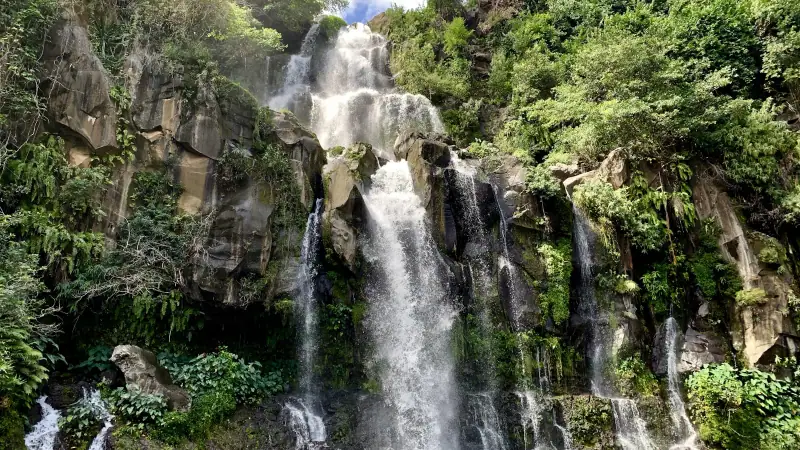
This is probably the best-known site in the Wild South and one of the most spectacular waterfalls in the entire southern hemisphere. The Langevin Waterfall, also known as the Grand Galet Waterfall, drops in several veils into a breathtaking amphitheater of tropical vegetation at the bottom of the Langevin River valley, between Saint-Joseph and Vincendo.
How to get there
From the national road, a road climbs the Langevin valley toward the highlands. Leave your car at the parking lot and take the shaded trail along the river. Allow about 20 to 30 minutes of easy walking on a well-marked path lined with pandanus and tree ferns. On arrival, the waterfall reveals itself in all its splendor: several dozen meters of free fall into an emerald pool.
The natural pools of the Langevin River
Going up or down the trail, you will pass several natural pools carved into the basalt by erosion, filled with deep green, crystal-clear water, where you can swim in an almost unreal setting. The main pool, downstream of the waterfall, is the busiest and the easiest to reach.
Swimming is allowed in these pools, but follow the signs on site: in rainy spells the river level can rise quickly. After heavy rain in the highlands, the pools can become dangerous within minutes.
Tip: Arrive early in the morning (before 9 am) to enjoy the pools before the weekend crowds and to get the best light for photographing the waterfall.
For thrill seekers, the Langevin valley is also one of the best places for canyoning in Réunion: rappelling down waterfalls, natural slides and jumps into pools make it a unique experience.
Canyoning trips in the Langevin valley
Rappelling descents, natural slides and swimming in the Langevin River pools with professional guides.
Saint-Joseph: the heart of the Wild South
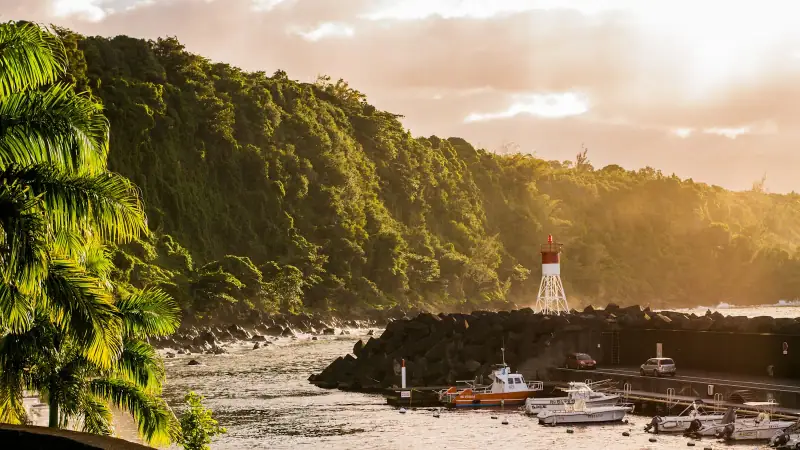
Saint-Joseph is the main town of the Wild South and the natural resupply point of the circuit. This small farming and fishing town lacks the tourist charm of Saint-Gilles or the grandeur of Saint-Denis, but it has a rare authenticity: lively markets, Creole snack stands used by locals and the quiet atmosphere of a Réunionese provincial town.
The Saint-Joseph market
The Saint-Joseph market is one of the most colorful on the island. You will find fruit and vegetables grown in the surrounding highlands (chayote, guava, lychee, loquat, anthurium), spices, medicinal herbs, mountain honey and handmade goods. It is also the ideal place to taste fresh fruit juices and cheap Creole snacks.
Local life
Saint-Joseph offers a window on ordinary Réunionese life, far from the tourist routes. The people of this coast, often of Malagasy and African origin, have preserved particular musical and culinary traditions. Maloya, a ritual music listed as UNESCO intangible heritage, still has deep roots here.
Saint-Philippe: vanilla and the end of the world
Farther east, Saint-Philippe is one of the most isolated communes in Réunion. Tucked between lava flows and tropical forest, this small town lives at a slow pace, far from the bustle of the west coast. It is known for two things: its spices and its position as the gateway to the Grand Brûlé.
The spice and perfume garden
Saint-Philippe has a garden devoted to Réunion’s aromatic and medicinal plants: vanilla, geranium, ylang-ylang, vetiver, cinnamon and many more. A guided visit is a chance to learn how these plants are grown and processed, a part of the island’s agricultural and fragrant identity. The explanations of vanilla work (a flower pollinated by hand, then dried and aged) are especially fascinating.
The volcanic coast of Saint-Philippe
Around Saint-Philippe, the shoreline reaches an almost intimidating intensity. Basalt rocks cut cliffs against the heaving sea, with no beach and no natural barrier between the solidified lava and the Indian Ocean. The coastal viewpoints give dizzying panoramas of this end-of-the-world landscape.
The Pointe de la Table, a promontory of solidified lava jutting into the sea east of Saint-Philippe, is one of the most impressive volcanic formations on the coast.
Where to stay in the Wild South
Charming guesthouses, authentic bed and breakfasts and small hotels between Saint-Joseph and Sainte-Rose to immerse yourself in the real Wild South.
The Grand Brûlé and the church spared by lava at Sainte-Rose
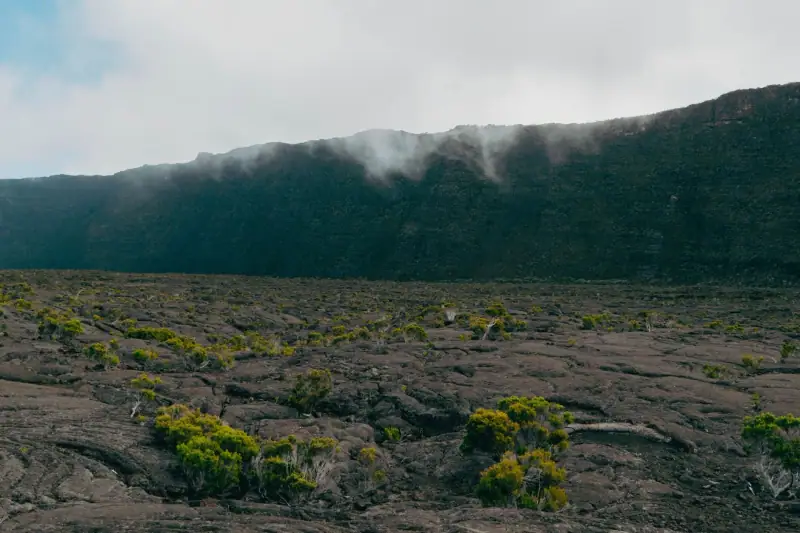
The most spectacular part of the circuit lies between Saint-Philippe and Sainte-Rose, in the area called the Grand Brûlé: a vast territory covered by recent lava flows from the Piton de la Fournaise. Here the national road literally crosses fields of black lava barely cooled (some flows are less than twenty years old) in a lunar, fascinating landscape.
Lava flows to the sea
In the Grand Brûlé, eruptions of the Piton de la Fournaise have regularly sent lava flows all the way to the ocean. When that happens, and it still does regularly, a lava platform slowly forms at the water’s edge in a show of steam and hissing. The national road itself has been buried by lava several times in recent history, and some rebuilt sections have been paved over several layers of successive flows.
It is a powerful reminder that this island is alive: Réunion is not only something to look at, it is still being formed before your eyes. To learn more about the volcano itself, see our Piton de la Fournaise guide and the one on the Plaine des Cafres, the gateway to the hikes toward the craters.
Notre-Dame des Laves church
In Sainte-Rose, make a stop at one of Réunion’s most extraordinary sites: Notre-Dame des Laves church. In 1977, a flow from a Piton de la Fournaise eruption ran through the village of Sainte-Rose, engulfing houses in its path. The lava advanced to the church entrance, flowed around it on both sides… and stopped.
Today the solidified black lava surrounds and spills onto the church forecourt, forming a striking scene that Réunionese believers consider miraculous. The church is still in use and freely open. It is one of the most moving and symbolic places on the whole island.
Food in the Wild South
The cooking of the Wild South is that of deep Réunion: generous, spicy, family-style and rooted in local produce. Restaurants on this coast are few but often excellent, used first and foremost by locals.
The essentials
- Fish carry: on this fishing coast, carries made with freshly caught tuna, swordfish or bonito are delicious. The fish is usually cooked in a spicy tomato sauce with turmeric and ginger, served with white rice and beans.
- Goat carry (carry cabri): goat slow-cooked with local aromatics, an emblematic dish of the Réunion highlands.
- Rougail zambrocal: a mix of corn, beans and meat, a poor man’s dish turned regional specialty, especially common in the south of the island.
- Saint-Philippe vanilla: worth trying in a dessert or in a homemade arranged rum.
Roadside Creole snack stands, often anonymous and without a sign, serve the best plates at low prices. Trust the cars parked out front.
Recommended itinerary: the Wild South circuit in one day
The ideal day in the Wild South from Saint-Pierre heads east, taking advantage of morning light in the valleys.
- 7:30 am: Leave Saint-Pierre eastbound on the national road.
- 8:00 am: Stop at Manapany-les-Bains for a morning swim in the natural pool.
- 9:00 am: Head up the Langevin valley. Walk to the waterfall and swim in the Langevin River pools.
- 12:00 pm: Carry lunch at a snack stand in Saint-Joseph.
- 1:30 pm: Visit central Saint-Joseph and the market (if it is a market day).
- 3:00 pm: Drive to Saint-Philippe and visit the spice and perfume garden.
- 4:30 pm: Grand Brûlé: stops at the viewpoints over the lava flows.
- 5:30 pm: Sainte-Rose and a visit to Notre-Dame des Laves church.
- 6:30 pm: Return to Saint-Pierre or stay overnight in the Wild South.
If you want to combine this day with the Plaine des Cafres and the Piton de la Fournaise, allow two days and stay overnight in Bourg-Murat or Saint-Joseph.
Helicopter flight over the Grand Brûlé
See the Grand Brûlé lava flows from the air, especially if the Piton de la Fournaise is erupting. Great views of the whole Wild South circuit.
Practical information
How to reach the Wild South:
- From Saint-Pierre: The most direct access. Allow about 30 minutes to Saint-Joseph and about 1 h 30 to 2 h to reach Sainte-Rose, depending on stops.
- From Saint-Denis: Allow about 50 minutes to 1 h 10 via the east coast road, or 1 h 15 to 1 h 30 through the interior via the Plaine des Cafres.
- From Saint-Gilles: Plan about 2 h via Saint-Pierre.
Transport: A car is absolutely essential in the Wild South. Public transport (Car Jaune) exists but is infrequent and unsuited to sightseeing. Plan your road trip in Réunion with a rental car from the moment you arrive.
Weather: The Wild South is the island’s “windward” coast, the wettest one. Showers are frequent, especially at altitude. Bring a light rain jacket. Morning is usually the best part of the day, before clouds build up over the mountains.
Safety:
- Never underestimate rising water in rivers and waterfalls.
- Swimming in the sea is not recommended and often dangerous along almost the whole Wild South coast (violent currents, rocks).
- Respect signs closing access during eruptions or floods.
Sample budget:
- Langevin Waterfall (entry and trail): free
- Saint-Philippe spice garden: low admission (check there)
- Carry meal at a local snack stand: €10-14 (~$12-16)
- Night in a bed and breakfast: about €50-90 (~$58-105) depending on comfort
- Car rental per day: €40-70 (~$46-81)
The Wild South is not a destination to contemplate passively from a deck chair. It is a Réunion you feel in your legs, in lungs filled with humid air, in the splash of cool Langevin water and in the solemn silence in front of the Sainte-Rose church, surrounded by frozen lava. Those who make the detour don’t forget what they saw there. And most of them come back.
For a high-altitude hike in the area, see our guide to hiking in Réunion.
Frequently asked questions
What is Réunion's Wild South?
The Wild South is the eastern and southern coast of Réunion, between Saint-Pierre and Sainte-Rose. It is the side exposed to the trade winds (the windward coast), wilder, greener and less touristy than the west coast. It holds the Route des Laves, the Langevin Waterfall, the Grand Brûlé lava fields and many strikingly beautiful natural sites.
How do you get around the Wild South?
A car is essential. The main road is the Route Nationale (RN2), which follows the coast from Saint-Pierre to Sainte-Rose, passing through Saint-Joseph, Saint-Philippe and Sainte-Rose. Plan a full day or two days to explore the area at your own pace without rushing.
Is the Langevin Waterfall easy to reach?
Yes. The Langevin Waterfall (also called the Grand Galet Waterfall) is easily reached from the RN2. A road climbs the Langevin River valley from Saint-Joseph. Allow about 20 to 30 minutes by road from the seafront. The parking lot is downstream, and you then walk about twenty minutes on a shaded trail to reach the main fall.
Can you swim in the Wild South?
Yes, there are several swimming spots. The natural pools of the Langevin River, reached from the Grand Galet Waterfall trail, are among the most popular: the water is cool and the green setting is spectacular. Manapany-les-Bains, on the coast, has a natural pool in the volcanic rocks. Swimming in the sea, however, is generally dangerous on this coast because of currents and waves. Note that Bassin la Paix and Bassin la Mer, often mentioned, are actually on the Rivière des Roches at Bras-Panon / Saint-Benoît (northeast coast), not in the Wild South.
What is the church spared by lava at Sainte-Rose?
Notre-Dame des Laves church in Sainte-Rose has become a symbol of Réunion and a place of pilgrimage. In 1977, a lava flow from the Piton de la Fournaise ran through the village of Sainte-Rose and destroyed houses, but it stopped at the church entrance and flowed around it on both sides. The church was not destroyed, and the lava frozen on its forecourt forms a striking black scene. The church and the frozen flows around it can be visited freely.
When should you visit the Wild South?
The Wild South can be visited all year, but the dry season (May to November) gives the best conditions: less rain, green vegetation without flooding, and a calmer sea. The rainy season (December to April) can flood some roads and makes waterfalls rougher but also more impressive. Avoid high tides and cyclone periods.
More Réunion guides
Keep reading
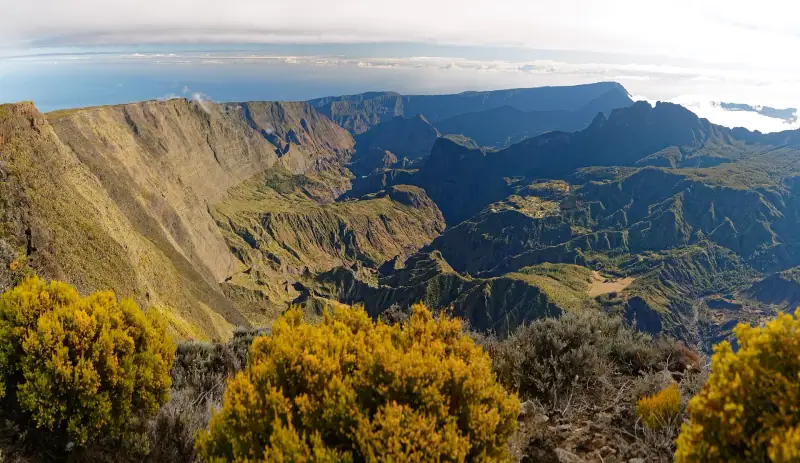
Cirque de Mafate: A Complete Guide to Réunion's Only Road-Free Cirque
Cirque de Mafate: multi-day hikes, access, villages (îlets), places to stay and practical tips for Réunion's only cirque with no road.
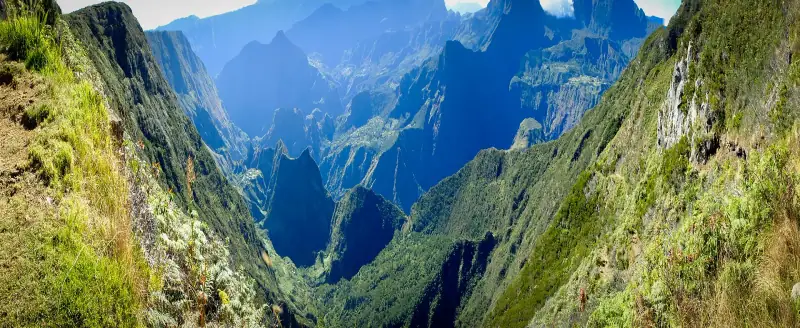
Maïdo at sunrise: when to leave, the road and the fog risk
Watching sunrise at Maïdo: when to leave from Saint-Gilles or Saint-Paul, the forest road, the cold, fog and a plan B if the view is socked in.
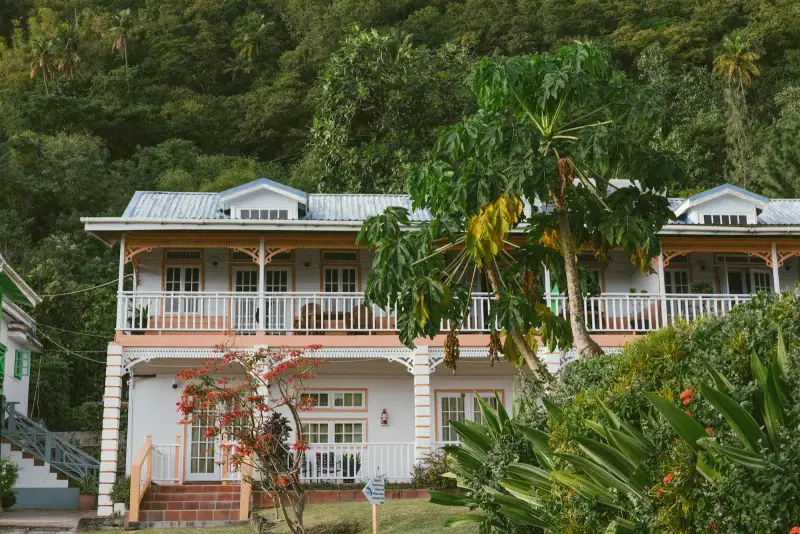
Where to Stay in Cilaos and the Cirques: Gîtes and Lodging
The best places to stay in Cilaos, Hell-Bourg and the cirques of Réunion. Creole gîtes, mountain gîtes and authentic addresses.
Ready-made
Réunion itineraries
3 days
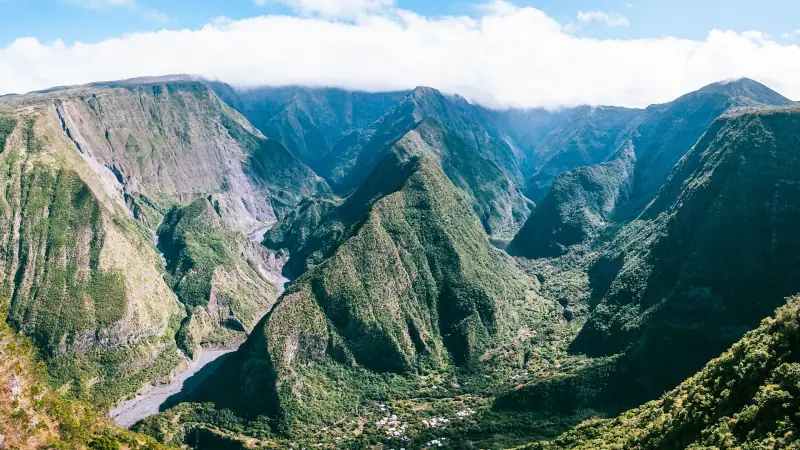
3 Days in Cilaos: A Weekend Hiking Itinerary in the Highlands
What to do in Cilaos in 3 days? Hikes, thermal baths, lentils and local wine. A full weekend itinerary for the cirque.
14 days
Réunion Road Trip: A 2-Week Driving Itinerary
The best 14-day road trip itinerary in Réunion: coasts, cirques, the volcano and Creole villages. Full guide with stops, places to stay and tips.
8 days
Réunion in 8 Days with Kids: Stops, Miles and a Realistic Pace
Saint-Gilles-les-BainsCilaosSaint-Pierre