What to see
Visiting Saint-Leu: A Complete Guide to Réunion's Surf Capital
We may earn a commission when you book through links on this page, at no extra cost to you. We don't visit or try the places we cover: we summarize published sources. How we work
In short
- Saint-Leu is on Réunion's west coast, about 50 km (31 mi) and 32 to 42 minutes by car from Saint-Denis.
- La Gauche de Saint-Leu is a reef wave for experienced surfers only; the surf season runs May to September.
- Humpback whales are visible June to October; whale-watching boat trips cost about €50-75 (~$58-87) for 3 hours.
- Kélonia, the sea turtle observatory, costs about €12 (~$14) for adults and €8 (~$9) for children; allow 1 h 30 to 2 h.
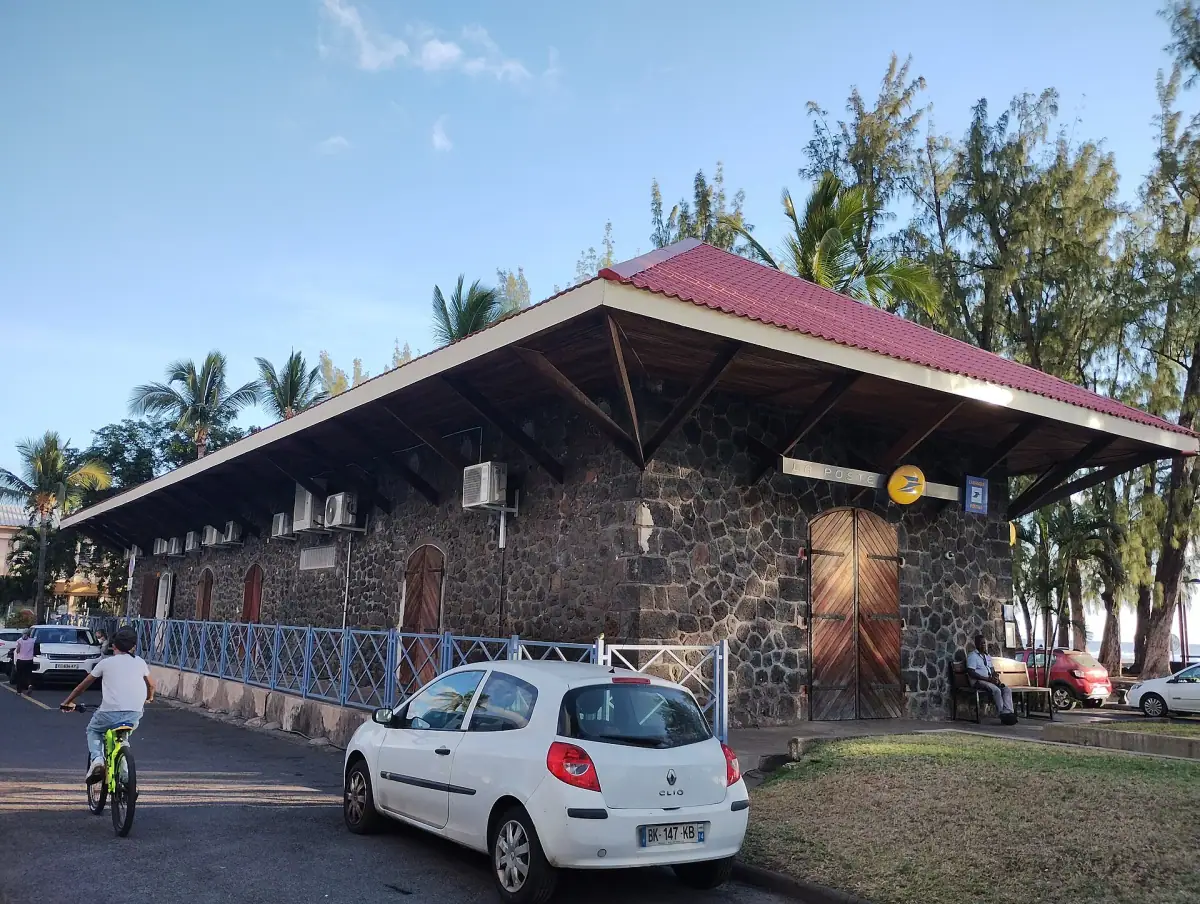
Saint-Leu is one of those towns travelers pass through too fast, in a hurry to reach the beaches of Saint-Gilles or the volcano. That is a mistake. Set on the west coast about 32 minutes from Saint-Denis, this town of roughly 36,200 people has a personality of its own: a world-famous long left-hand surf break, a sea turtle sanctuary, a natural lookout for humpback whales, and a vivid blue lagoon protected by an intact coral reef.
Saint-Leu is the authentic, unspoiled side of Réunion’s west coast. Less commercial than Saint-Gilles, less austere than Saint-Pierre, it has kept its Creole character while welcoming visitors with sincere hospitality. This guide gives you what you need to make the most of it.
La Gauche de Saint-Leu: one of the world’s best waves
Saint-Leu owes its international reputation to a single wave: La Gauche de Saint-Leu, a long tube breaking over a coral reef about 600 m (1,970 ft) from shore. This left-hander offers barreling sections that can reach 4 to 6 m (13 to 20 ft) on the face during big southern swells, between May and September.
A world-class spot
La Gauche de Saint-Leu has hosted several international surf competitions, including the Rip Curl Pro (ASP World Tour, 1996 and 2005) and other Quiksilver events. The world’s best surfers come here regularly: Kelly Slater, Michel Bourez (nicknamed “The Spartan,” born in Rurutu, French Polynesia), and Johanne Defay, an Olympic bronze medalist born in Le Puy-en-Velay who grew up in Réunion from the age of 20 months.
The wave is for experienced surfers only. It breaks over shallow coral and can become dangerous in big swells. Still, simply watching from the harbor jetty or from the beach is a fascinating show in itself.
For beginners: accessible spots
If you are not yet a seasoned surfer, don’t be discouraged. Surf schools in Saint-Gilles-les-Bains (15 minutes to the north) offer lessons from age 12 on spots suited to beginners. After two or three sessions, you will understand the Indian Ocean and its subtleties much better.
Best time to surf: May to September, with southern Indian Ocean swells. The austral summer (October to April) is generally calmer.
Surf lessons and water activities in Réunion
Surf lessons for beginners, boat excursions, diving trips and whale watching from the west coast.
Kélonia: the sea turtle observatory
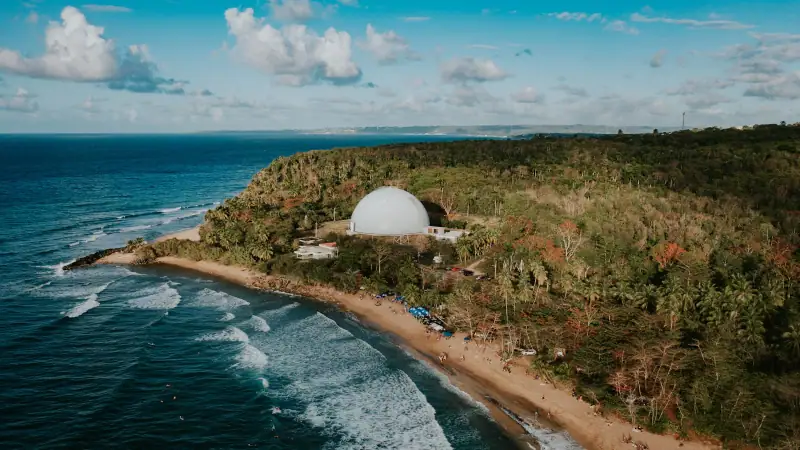
One of the most original visits in all of Réunion is on the waterfront at Saint-Leu: Kélonia, an observatory devoted to sea turtles that is unique in mainland France and the overseas departments.
What is Kélonia?
Opened in 2006, Kélonia occupies the former premises of a sea turtle farm (the Ferme Corail, established in 1977). Farming stopped in 1997, and the site was converted into a care and education center for marine species conservation.
You can see green turtles (Chelonia mydas) and hawksbill turtles (Eretmochelys imbricata) in large outdoor and indoor tanks. Most of these turtles are injured or in rehabilitation, and are treated before being released into the Indian Ocean.
What you see and learn
The guided visit (about 1 h 30) takes visitors through several themed areas:
- The care tanks: turtles recovering from boat collisions or entanglement in fishing nets
- The tropical aquarium: fish of Réunion’s coral reefs, rays, reef sharks
- The permanent exhibition: sea turtle biology, life cycles, and the threats they face (plastic pollution, climate change, poaching)
- The reconstructed nesting room: to understand how females lay their eggs on tropical beaches
Practical info: Kélonia is open 7 days a week, 9 am to 6 pm (including Monday). It closes only on January 1, May 1, November 1 and December 25. Approximate admission: about €12 (~$14) for adults, €8 (~$9) for children (check current prices on the official website). The visit is highly recommended for families with children and anyone interested in ocean protection.
Good to know: Outside Kélonia, sea turtles are regularly seen while snorkeling in the Saint-Leu lagoon. You may not approach a sea turtle in the wild closer than 2 m (6.5 ft). It is prohibited, and for good reason.
Watching humpback whales from Saint-Leu
Between June and October, humpback whales (Megaptera novaeangliae) migrate from the cold Antarctic waters to the warm tropical waters of the Indian Ocean to breed and give birth. Réunion’s west coast, and especially the waters off Saint-Leu, is one of the best places in the world to see them.
From the coast
The show can begin without leaving the shore. From the Saint-Leu waterfront or from the beach, especially late in the afternoon, it is not unusual to spot whales a few kilometers offshore. Breaches (spectacular leaps out of the water) and tail slaps are visible to the naked eye in clear conditions.
The harbor jetty at Saint-Leu, set up high, gives a nice view of the open sea. Bring binoculars to improve your chances.
From the sea
For a truly close encounter, boat trips are unmatched. Operators based in Saint-Leu and Saint-Gilles offer two- to three-hour excursions by Zodiac or catamaran, with marine biologists on board. These trips follow a respectful approach charter (no engine running in the water, no approach closer than 100 m / 330 ft).
What you see: not only whales. Dolphins (bottlenose and spinner dolphins) are present all year. Sea turtles, marlin and sometimes whale sharks can cross the boats’ path.
Tip: book your trip several days ahead in July and August, as high season is very busy. Pack a windbreaker even in good weather, because the sea can be cool in the morning.
Whale and dolphin trips in Réunion
Boat excursions from July to October to watch humpback whales in their breeding waters.
Scuba diving and snorkeling in the lagoon
Saint-Leu is one of the best scuba diving spots in all of Réunion. The coral reef bordering the lagoon is in excellent condition and shelters remarkable marine life.
Dive sites around Saint-Leu
Local dive clubs run trips to several sites:
- Le Grand Tombant de Saint-Leu: a vertical wall dropping to 70 m (230 ft) (a shelf between 15 and 34 m / 49 and 112 ft, then a sheer drop), frequented by gray reef sharks, leopard rays and giant trevally
- Le Jardin de corail: a shallow coral garden (8-18 m / 26-59 ft), ideal for intro dives and beginner divers, with green turtles and parrotfish
- La Pointe du Gouffre: for advanced divers, with a view of solidified underwater lava flows plunging into the abyss
Conditions: visibility is generally good to excellent (15-30 m / 49-98 ft), with water at 24-27 °C (75-81 °F) in the austral summer and 21-24 °C (70-75 °F) in winter. Diving is possible all year.
Snorkeling in the lagoon
Even without dive training, the Saint-Leu lagoon offers good snorkeling from the beach. With just a mask and snorkel, you will see colorful tropical fish, sea urchins and, with luck, sea turtles grazing on the seagrass near the reef.
For a full rundown of the island’s best dive spots, see our guide to diving in Réunion.
The beach and lagoon of Saint-Leu
The Saint-Leu lagoon is one of the best preserved and most pleasant on the west coast. Protected by a coral reef that breaks the surface at low tide, it has clear blue-green, shallow water, ideal for swimming with the family.
Saint-Leu beach
The main beach at Saint-Leu is a long strip of well-kept beige sand, with coconut palms and filao trees providing shade. Public toilets, showers and a few food kiosks make a beach day easy to organize. On weekends the atmosphere is very local and warm: Réunionese families with coolers, games of pétanque and barbecues on the waterfront lawns.
Good to know: Swimming is allowed only in the lagoon marked off by buoys. Outside this zone, currents are strong and the presence of bull sharks (Carcharhinus leucas) is documented in the waters beyond the reef. The safety signs are clear: follow them strictly.
Natural pools and snorkeling spots
Around the main lagoon, several small natural pools carved into the volcanic rock offer quiet snorkeling spots that are less crowded than the beach. At low tide you can explore lava basins filled with anemones, starfish and small tropical fish.
For a comparison of all of Réunion’s beaches, see our guide to Réunion’s beaches.
Where to stay in Saint-Leu and on the west coast
Creole guesthouses by the sea, villas with lagoon views, hotels in Saint-Gilles: compare places to stay on the west coast.
Air activities: skydiving and paragliding
Réunion offers two spectacular air experiences. Important: don’t confuse tandem skydiving (jumps from a plane or helicopter) with paragliding (launching from a mountain).
Tandem skydiving in Saint-Pierre
Tandem skydiving operates from Pierrefonds airfield in Saint-Pierre, with the FLY 974 TANDEM center. It is one of the most spectacular experiences you can have on the island. Jumps give breathtaking views of the south coast, the Saint-Leu lagoon in the distance, and the cirques.
How it works: the tandem option is open to anyone age 15 and over (with parental consent for minors). After a short ground briefing (about 30 minutes), you jump strapped to a licensed instructor from an altitude of 3,000 to 3,500 m (9,840 to 11,500 ft). The free fall lasts about 35 to 50 seconds before the parachute opens, followed by 5 to 7 minutes of canopy flight to the landing.
Practical info: booking is essential, especially in high season. Expect to pay about €220-270 (~$255-315) for a tandem jump. Flights usually take place in the morning, when weather conditions are best.
Paragliding at Saint-Leu
Saint-Leu, on the other hand, is the well-known paragliding site of the west coast. The village of Les Colimaçons, in the highlands above Saint-Leu at about 800 m (2,625 ft), is a well-known launch site for paragliding and free flight. Experienced paraglider pilots launch from here regularly, enjoying an exceptional panorama of the west coast and the Indian Ocean.
The Creole village and Saint-Leu church
Beyond the water and sports activities, Saint-Leu is worth a stroll through its historic center. The town has kept a pleasant Creole heritage, with flower-covered houses with verandas (varangues) and its parish church, Notre-Dame de La Salette.
Notre-Dame de La Salette church
Built in 1790 on a promontory overlooking the waterfront, the church of Saint-Leu is one of the most visited in Réunion. Its forecourt has a nice view of the lagoon and the open sea. The interior, modest but well kept, holds some local religious art. Every year in September, a large pilgrimage gathers thousands of Creole worshippers here.
The waterfront and its terraces
The Saint-Leu waterfront was recently redeveloped with gardens, green spaces and a pedestrian promenade that runs along the lagoon for several hundred meters. Restaurant and Creole snack terraces have set up there, serving carry, rougail and grilled fresh-caught fish.
The local market
A small crafts market is held on weekends on the waterfront. You’ll find local wood jewelry, homemade jams, arranged rum (rhum arrangé) and medicinal plants grown in the highlands of Saint-Leu. It is much smaller than the Saint-Pierre market, but charming in its authenticity.
The highlands of Saint-Leu and hiking
Saint-Leu is also a gateway to the west coast highlands, an unspoiled area of ravines and mountain forest that few tourists visit.
The Saint-Gilles ravine and Le Plate
The Ravine Saint-Gilles, in the neighboring commune of Saint-Paul, is an excellent hiking area reachable from the coast. The trail that climbs the ravine from the Saint-Gilles-les-Bains shoreline gives nice views of the coast and gradually enters a subtropical forest dominated by pandanus and bois de couleur trees. A full day gets you to the mountain village of Le Plate, an isolated Creole hamlet reachable only on foot.
Les Colimaçons and the panoramic view
The village of Les Colimaçons, in the highlands above Saint-Leu at about 800 m (2,625 ft), is a well-known launch site for paragliding and free flight. It has an exceptional panorama over the whole west coast and the Indian Ocean. It is also a good starting point for hikes in the cryptomeria forests (trees of Japanese origin planted by the ONF, the national forestry office). The road up from Saint-Leu is itself a pleasure to drive.
For a full overview of hiking in Réunion, see our guide to hiking in Réunion.
Car rental in Réunion
Essential for exploring the west coast and the highlands above Saint-Leu. Compare rates and book in advance.
Itinerary: 2 days in Saint-Leu and the west coast
Day 1: Saint-Leu and the lagoon
- 8:00 am: Creole breakfast on the waterfront: café péi, bread with butter and jam
- 9:00 am: Visit Kélonia (1 h 30 to 2 h); book online if possible
- 11:00 am: Snorkeling in the lagoon; mask and snorkel (rentals available there)
- 12:30 pm: Lunch at a Creole snack stand on the waterfront: chicken carry or sausage rougail
- 2:00 pm: Lagoon beach: swimming, relaxing, watching surfers on La Gauche
- 4:30 pm: Stroll through the Creole village, visit Notre-Dame de La Salette church
- 7:00 pm: Seafood or grilled fish dinner on a terrace
Day 2: Skydiving, diving and a boat excursion
- 7:30 am: Tandem skydive (if booked); 1 h 30 for the whole experience
- 10:00 am: Dive with a local club (intro dive or reef exploration)
- 12:30 pm: Back on land, lunch
- 2:00 to 5:00 pm (July to October): Boat excursion to watch whales and dolphins
- 7:00 pm: Rhum arrangé aperitif on a terrace, sunset over the Indian Ocean
Practical information
Getting to Saint-Leu
- From Saint-Denis: 50 km (31 mi), about 32 to 42 minutes by car via the Route des Tamarins (A33). Take the Saint-Leu-Centre exit.
- From Saint-Gilles-les-Bains: 15 km (9 mi), about 20 minutes on the coastal RN1.
- From Saint-Pierre: 32 km (20 mi), about 21 minutes via the Route des Tamarins.
- By Car Jaune bus: services run from Saint-Denis and Saint-Gilles, but frequencies are limited. A car is still essential.
For places to stay on the west coast, Saint-Gilles-les-Bains has a bigger choice. Our Saint-Gilles accommodation guide lays out all the options.
Where to stay in Saint-Leu
Saint-Leu has a more intimate range of accommodation than Saint-Gilles:
- Creole guesthouses by the sea: €70-120 per night (~$81-139), local charm guaranteed, a few with direct lagoon views
- Vacation villas: €100-200 per night (~$115-230) for 4 to 6 people, good for families or groups of friends
- Bed and breakfasts in the highlands: €55-90 per night (~$64-105), in a cooler, greener setting with panoramic views
Sample budget
| Activity | Approximate price |
|---|---|
| Kélonia admission | €8-12 (~$9-14) |
| Tandem skydive | €220-270 (~$255-315) |
| Intro dive | €60-80 (~$70-93) |
| Whale trip (3 h) | €50-75 (~$58-87) |
| Mask and snorkel rental | €10-15 (~$12-17) |
| Local carry lunch | €10-14 (~$12-16) |
| Dinner on a terrace | €20-40 (~$23-46) |
Best time to visit
Saint-Leu is pleasant all year, but the seasons change the experience:
- April to November (dry season): best weather, little rain on the coast, good conditions for water activities. The surf season (May to September) and the whale season (July to October) overlap for a good three-month stretch.
- December to March (austral summer): hotter (30-34 °C / 86-93 °F), calmer sea, sometimes rainy spells or cyclone passages. Surf is less interesting.
The west coast has an excellent microclimate: even when Saint-Denis or the cirques are under cloud, Saint-Leu is often sunny thanks to the foehn effect.
Saint-Leu is not the postcard Réunion. It is something better: a human-scale town where world-class surf sits alongside recovering turtles, where whales pass offshore while families picnic on the beach, and where a €12 (~$14) Creole snack rivals any restaurant in the capital. Take the time to stop here. You won’t regret it.
Frequently asked questions
When can you see whales at Saint-Leu?
Humpback whale season in Réunion runs from June to October. Saint-Leu is one of the best viewing points from shore, but boat trips from Saint-Leu harbor or Saint-Gilles get you much closer. Whales usually stay between 1 and 5 km (0.6 to 3 mi) off the west coast.
What level do you need to surf at Saint-Leu?
The main wave at Saint-Leu, La Gauche de Saint-Leu, is for experienced surfers only (advanced to expert). It breaks over a coral reef and can reach several meters in big swells. Beginners and intermediates can find more accessible spots on the west coast, notably at Saint-Gilles and Roches Noires. Surf schools in Saint-Gilles offer lessons for all levels.
What exactly is Kélonia, and is it worth visiting?
Kélonia is a sea turtle observatory, unique in France, on the waterfront at Saint-Leu. You can see green and hawksbill turtles in tanks and learn about their biology and conservation. Admission is about €12 (~$14) for adults and €8 (~$9) for children. The visit takes 1 h 30 to 2 h and is a highlight for families and marine wildlife fans.
Can you swim at Saint-Leu?
Yes. Saint-Leu has a natural lagoon protected by a coral reef, with a fine-sand beach and calm, shallow water. It is one of the calmest lagoons on the west coast, good for swimming, snorkeling and children. Swimming outside the lagoon is not recommended because of currents and sharks offshore.
How do you get to Saint-Leu from Saint-Denis?
From Saint-Denis, allow about 32 to 42 minutes (50 km / 31 mi) by road via the Route des Tamarins (A33 then RN1) or via Saint-Gilles. A car is by far the most practical option. The Car Jaune bus serves Saint-Leu from Saint-Denis and Saint-Gilles, but service is infrequent and poorly suited to excursions. Renting a car is strongly recommended to explore the west coast at your own pace.
Are there places to stay in Saint-Leu?
Yes. Saint-Leu has several Creole guesthouses (gîtes), vacation villas and small hotels, on the waterfront and in the highlands. Prices are often lower than in Saint-Gilles. For a wider choice of hotels and tourist residences, Saint-Gilles-les-Bains, 15 km (9 mi) to the north, is still the island's main beach resort.
More Réunion guides
Keep reading
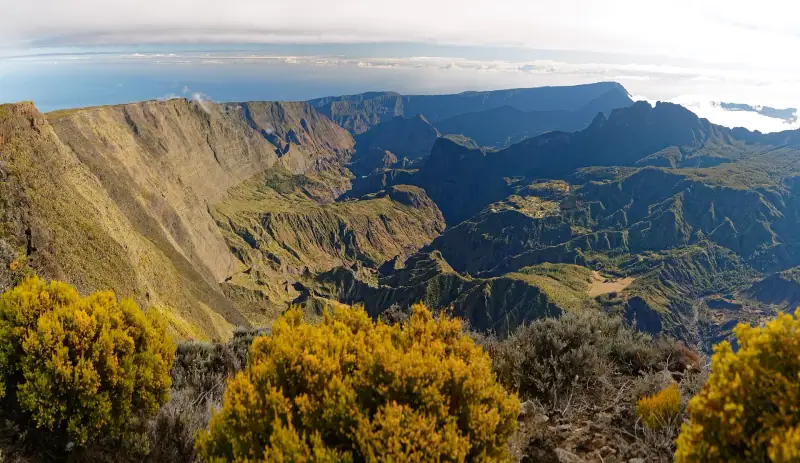
Cirque de Mafate: A Complete Guide to Réunion's Only Road-Free Cirque
Cirque de Mafate: multi-day hikes, access, villages (îlets), places to stay and practical tips for Réunion's only cirque with no road.
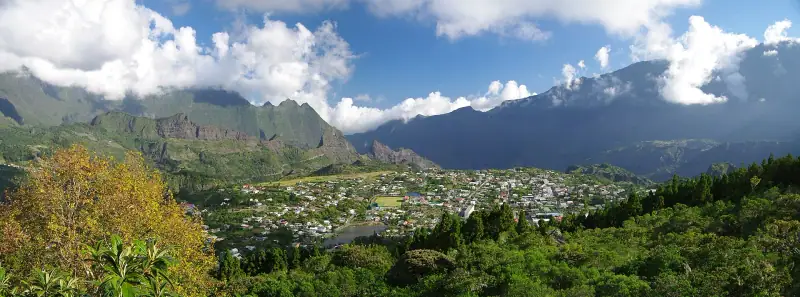
Visiting Cilaos: Complete Guide to Réunion's Volcanic Cirque
Cilaos: hot springs, local wine, lentils and Creole embroidery. Complete guide to hiking the Piton des Neiges and exploring the cirque.
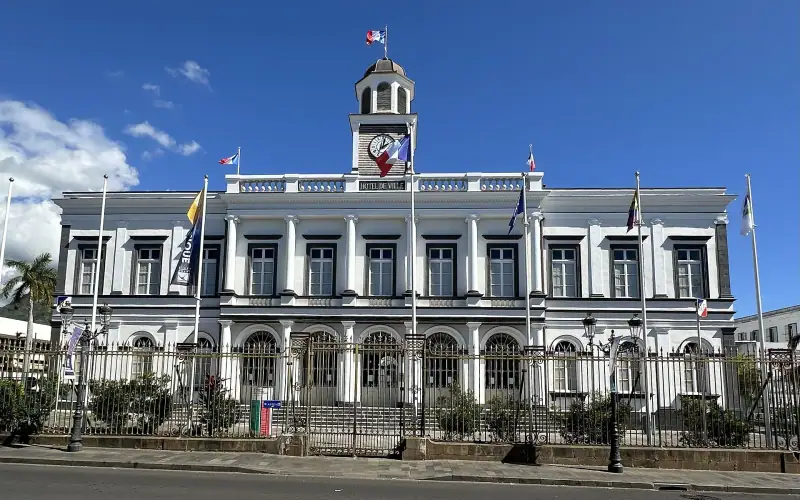
Saint-Denis: What to See and Do in Réunion's Capital
Saint-Denis guide: top sights, museums, markets, restaurants and neighborhoods to visit in Réunion's Creole capital.
Ready-made
Réunion itineraries
3 days
3 Days in Cilaos: A Weekend Hiking Itinerary in the Highlands
What to do in Cilaos in 3 days? Hikes, thermal baths, lentils and local wine. A full weekend itinerary for the cirque.
14 days
Réunion Road Trip: A 2-Week Driving Itinerary
The best 14-day road trip itinerary in Réunion: coasts, cirques, the volcano and Creole villages. Full guide with stops, places to stay and tips.
8 days
Réunion in 8 Days with Kids: Stops, Miles and a Realistic Pace
Saint-Gilles-les-BainsCilaosSaint-Pierre