What to see
Saint-Denis: What to See and Do in Réunion's Capital
We may earn a commission when you book through links on this page, at no extra cost to you. We don't visit or try the places we cover: we summarize published sources. How we work
In short
- Half a day to a full day is enough for Saint-Denis; the historic center is easy to explore on foot.
- Main stops: Creole houses on Rue de Paris, the Jardin de l'État, the Léon Dierx Museum, the covered market and the cathedral.
- Go to the covered market early (7-8 am) for the best spices and produce; the Chaudron market is usually held Wednesday and Sunday mornings.
- A 3-hour walking route covers the essentials of the historic center, starting at 8:00 am at the covered market.
Saint-Denis is much more than a simple transit point for travelers arriving in Réunion. The island’s capital is a lively, cultural and architecturally remarkable city, where Creole history can be read in every facade, every market and every monument.
With 150,000 residents, Saint-Denis is the most populated city on the island and the regional prefecture. It holds most of Réunion’s cultural institutions, museums and colonial architectural heritage.
Creole architecture: the signature of Saint-Denis
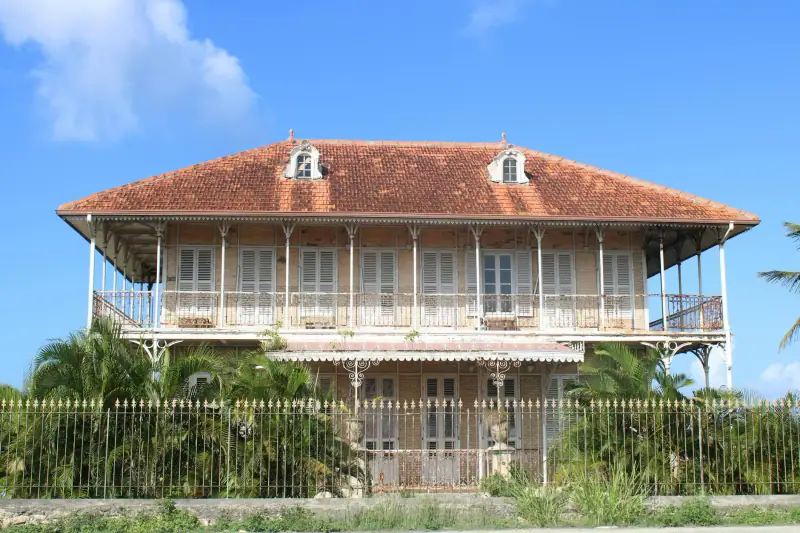
Réunion’s Creole architecture is one of the most original and beautiful in the Indian Ocean. It combines European building traditions (gabled roofs, tall doors and windows) with the demands of the tropical climate (varangues, natural ventilation, gardens). The result is a unique, colorful and warm style.
Rue de Paris and its surroundings
Rue de Paris is the main historic artery of Saint-Denis. Lined up along this wide, shaded avenue, the 19th-century colonial Creole houses have kept their flowered varangues (verandas), carved wooden doors and colorful facades.
Highlights of Rue de Paris:
- The Préfecture: A fine example of 18th-century colonial architecture with its neoclassical facade and tropical gardens
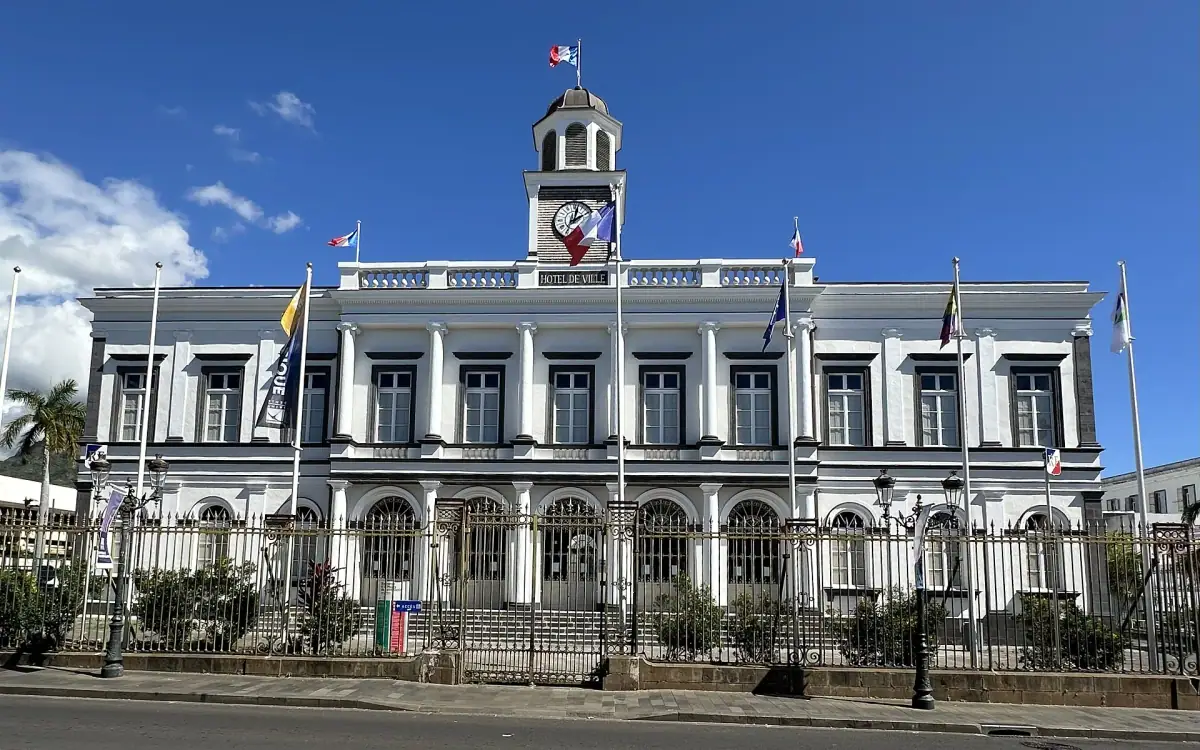
- The Hôtel de Ville (town hall): A former trading house turned town hall, with a beautiful inner courtyard
- The merchants’ houses: The large bourgeois houses of Rue de Paris reflect the town’s prosperity in the 18th and 19th centuries
La Maison Carrère
One of the most beautiful Creole houses in Saint-Denis, which according to some sources now houses the North intercommunal tourist office (check with the office). Its facade with ventelles (wooden jalousies), typical of Réunion architecture, is a model of the genre. It cannot be visited, but its exterior deserves a photo stop.
The Jardin de l’État
This 2.5-hectare (about 6-acre) botanical park downtown is one of the oldest botanical gardens in the southern hemisphere. Founded in 1773, it holds hundreds of exotic and tropical species, including giant tree ferns, endemic palms and trees several centuries old.
Practical: Free entry. Generally open every day; check hours with the tourist office. Ideal for a cool break in the middle of the day.
The main museums
The Léon Dierx Museum
Considered one of the most important modern art museums in the Indian Ocean, the Léon Dierx Museum occupies a superb 19th-century Creole villa. Its permanent collection includes works by Paul Gauguin, Auguste Renoir and other artists of the same period, collected by the Réunionese poet Léon Dierx.
Practical: Rue de Paris. Open every day except Monday. Modest admission fee.
The Villèle Historical Museum
Located in Saint-Paul (15 minutes from Saint-Denis), this museum is devoted to the history of Réunion and slavery. It occupies the former Desbassayns estate, a large 19th-century plantation. The grounds include historic gardens and the remains of buildings from the slavery era.
It is an essential site for understanding Réunion’s complex and painful history. Recommended for everyone.
The Natural History Museum
Housed in the Jardin de l’État, this museum presents Réunion’s fauna and flora in a 19th-century colonial building. The collections of mounted lemurs, endemic birds and geological specimens are remarkable; check that the museum is open and which collections are on display before your visit.
The markets: the soul of Saint-Denis
The Saint-Denis covered market
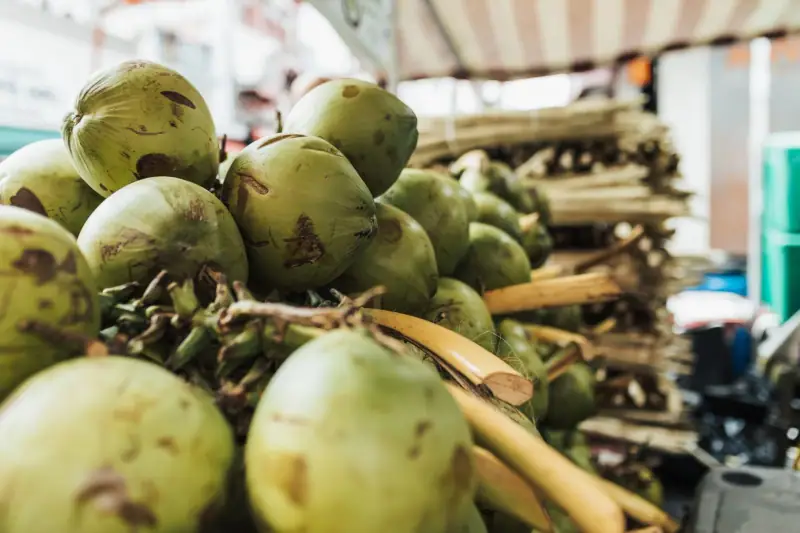
The large covered market of Saint-Denis, in the town center, is the place to feel the pulse of the city and discover local products. Spices, exotic fruit (lychees, longans, mangoes, passion fruit), local vegetables, takeaway carry, artisanal rum punches…
Hours: normally Monday to Saturday, during the day; check hours with the tourist office.
What to buy:
- Combava (a small, very fragrant citrus, a Réunion specialty)
- Safran péi (local turmeric, the base of carry)
- Bourbon vanilla (more expensive than elsewhere but of exceptional quality)
- Artisanal arranged rum in decorated bottles
The Chaudron market
A popular market in the Chaudron neighborhood (a suburb of Saint-Denis), generally held on Wednesday and Sunday mornings. Less touristy than the covered market, this is where Réunion residents do their shopping. Authentic atmosphere, unbeatable prices on fruit and vegetables.
Religious heritage
Saint-Denis Cathedral
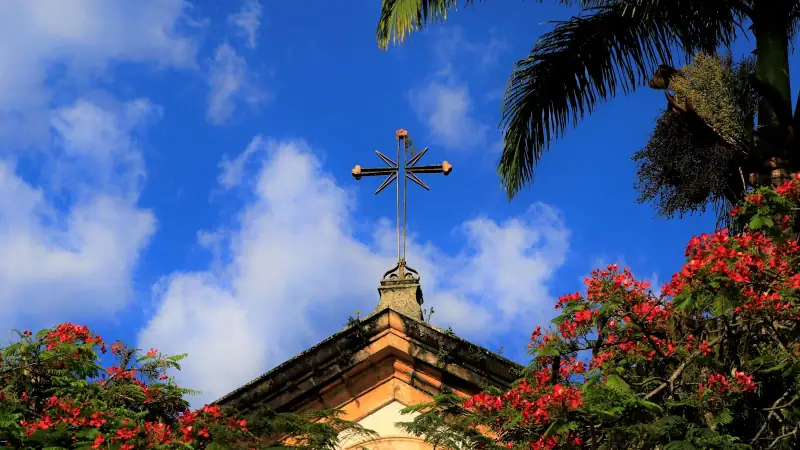
The cathedral, built in the 19th century, is the island’s main Catholic building. Its neo-Romanesque architecture and colorful stained glass are worth a short visit. Masses are held on Sundays; ask the parish for service times and languages.
The Noor-E-Islam Mosque
One of the largest mosques in France by capacity, the Champ-Fleuri mosque reflects the importance of the Muslim community in Réunion (mainly of Comorian and Indian origin).
The Tamil temples
Small, colorful Hindu temples dot the neighborhoods of Saint-Denis. Dedicated to different deities of the Hindu pantheon, these temples are living evidence of the Tamil culture brought to Réunion during indentured labor in the 19th century. The colorful, musical ceremonies are open to respectful visitors.
Eating in Saint-Denis
Saint-Denis has the widest range of restaurants on the island, from Creole street-food joints to fine-dining restaurants.
Le Barachois: The seafront is lined with restaurants of every category. Evenings are lively, especially on weekends.
Rue Jean Chatel: This pedestrian street in the heart of town has cafés, Creole restaurants and snack bars. Ideal for a quick, affordable meal.
The covered market: For takeaway carry or a quick meal alongside Réunion residents.
For specific addresses, see our food guide to Réunion.
Hotels in Saint-Denis
Stay downtown to explore the capital on foot.
A walking route for a morning in Saint-Denis
Here is a 3-hour walking route covering the essentials of the historic center:
- 8:00 am: Covered market (1 h) - spices, exotic fruit, Réunion coffee
- 9:30 am: Rue de Paris on foot (30 min) - Creole houses, Préfecture
- 10:00 am: Jardin de l’État (30 min) - cool botanical stroll
- 10:30 am: Léon Dierx Museum (1 h) - art and Réunion culture
- 11:30 am: Saint-Denis Cathedral (15 min) - religious heritage
- 12:00 pm: Lunch at the Barachois - one last Creole meal before the rest of your trip
For most travelers, Saint-Denis is not a destination in itself, but it absolutely deserves more than a quick pass through the airport. A morning in its Creole streets, colorful markets and museums gives you the keys to understanding the history and complex culture of this unique island.
Frequently asked questions
How long do you need to visit Saint-Denis?
Half a day to a full day is enough to see the main attractions of Saint-Denis. If you want to visit the museums in detail, go to a market and explore several neighborhoods, plan a full day.
Is downtown Saint-Denis walkable?
Yes, the historic center of Saint-Denis is very pleasant to explore on foot. The main sights (Rue de Paris, Barachois, the cathedral, the market) are all within walking distance of the center. Bring good shoes for the cobbled lanes and watch out for the tropical sun.
When is the best time to visit the markets in Saint-Denis?
The Chaudron market (in the Chaudron neighborhood, not to be confused with the covered market downtown) is generally held on Wednesday and Sunday mornings, from about 6 am to noon; check the days with the tourist office. The downtown covered market is open during the day, normally Monday to Saturday. Arrive early (7-8 am) to find the best spices, fruit and fresh produce and to avoid the late-morning crowds.
Is Saint-Denis safe for tourists?
Saint-Denis is generally safe for tourists who stay in busy areas (historic center, Rue de Paris, Barachois). As in any large city, avoid pulling out large sums of cash, leave nothing in your car and avoid isolated residential areas at night.
Is there a tourist office in Saint-Denis?
Yes, the North intercommunal tourist office (OTI Nord) has a branch in the center of Saint-Denis, on Rue de Paris. You can get brochures, maps and advice for planning your stay. Check with the office for opening hours and available mobile apps.
More Réunion guides
Keep reading

Cirque de Mafate: A Complete Guide to Réunion's Only Road-Free Cirque
Cirque de Mafate: multi-day hikes, access, villages (îlets), places to stay and practical tips for Réunion's only cirque with no road.

Visiting Cilaos: Complete Guide to Réunion's Volcanic Cirque
Cilaos: hot springs, local wine, lentils and Creole embroidery. Complete guide to hiking the Piton des Neiges and exploring the cirque.
Visiting Saint-Gilles-les-Bains: Complete Guide to Réunion's Beach Resort
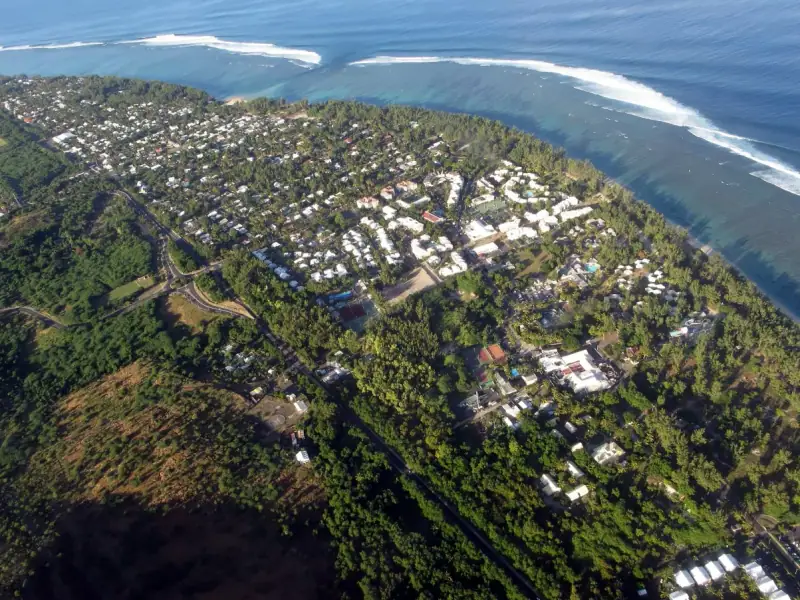
Saint-Gilles-les-Bains guide: beaches, lagoons, marina, diving, surfing and nightlife. Réunion's essential beach resort.
Ready-made
Réunion itineraries

3 days
3 Days in Cilaos: A Weekend Hiking Itinerary in the Highlands
What to do in Cilaos in 3 days? Hikes, thermal baths, lentils and local wine. A full weekend itinerary for the cirque.
14 days
Réunion Road Trip: A 2-Week Driving Itinerary
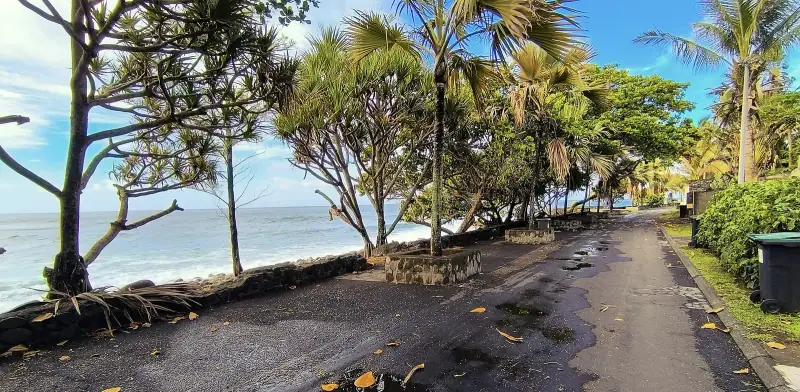
The best 14-day road trip itinerary in Réunion: coasts, cirques, the volcano and Creole villages. Full guide with stops, places to stay and tips.
8 days
Réunion in 8 Days with Kids: Stops, Miles and a Realistic Pace
Saint-Gilles-les-BainsCilaosSaint-Pierre