What to see
Visiting Puno: Complete Guide to Lake Titicaca and the Peruvian Altiplano
We may earn a commission when you book through links on this page, at no extra cost to you. We don't visit or try the places we cover: we summarize published sources. How we work
In short
- Allow 2 to 3 days for the Uros floating islands, Taquile or Amantaní, and Sillustani; 3 to 4 days if you add a homestay night on an island.
- Puno sits at 3,827 m (12,556 ft) on Lake Titicaca (3,812 m / 12,507 ft). Take it slow for the first hours after arrival.
- From Cusco, the tourist bus takes about 10 hours with guided stops (Raqchi, La Raya, Pukará); from Arequipa, buses take about 6 h 30. Flights land at Juliaca, 45 km (28 mi) away.
- The dry season, May to October, is best; the Candelaria festival in early February fills hotels months ahead, so book 3 to 4 months before.
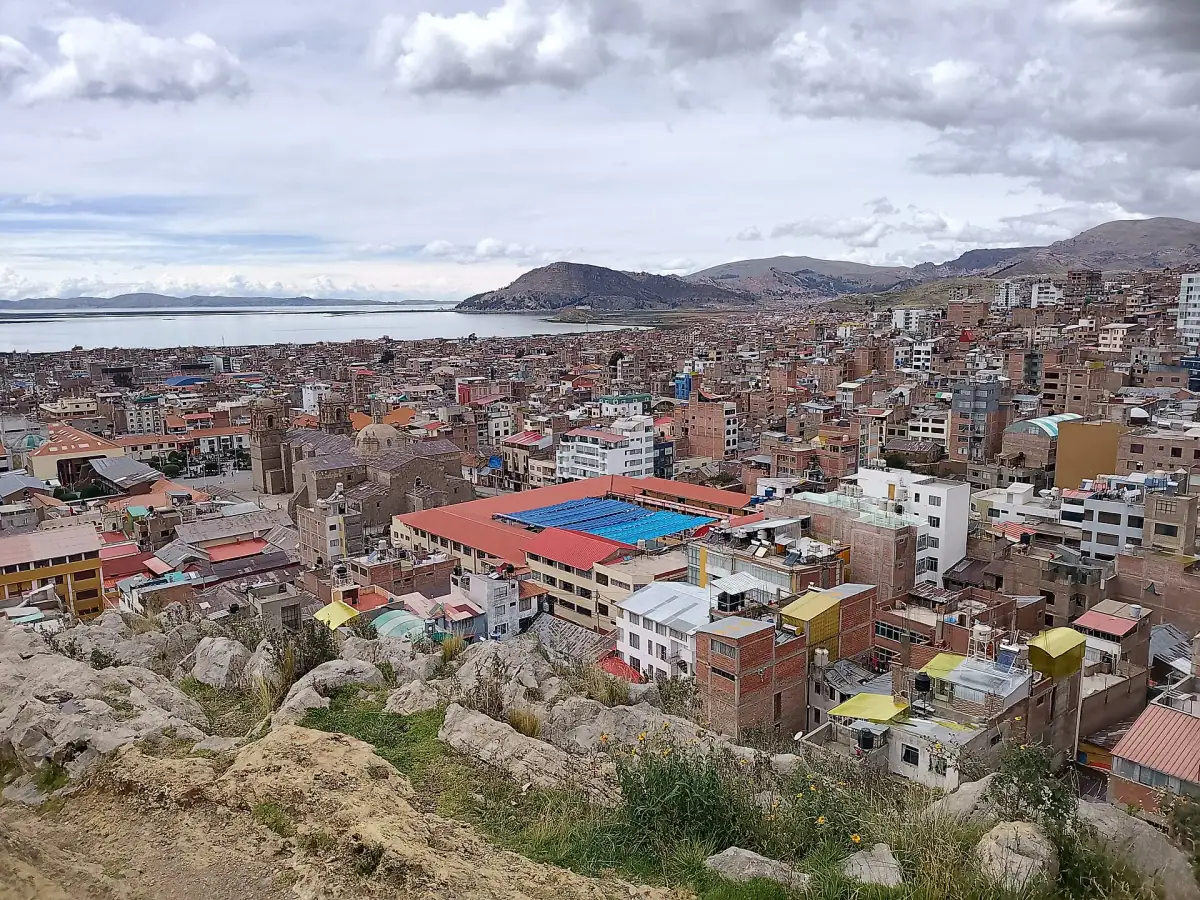
Puno is a city that disorients you from the first breath, and that is not just a metaphor. Perched at 3,827 m (12,556 ft) on the shores of Lake Titicaca, on the vast Andean plateau of the Altiplano, it is one of the highest cities in South America. The essential gateway to the highest navigable lake in the world, Puno holds a cultural, ethnographic and natural richness that few places on Earth can match.
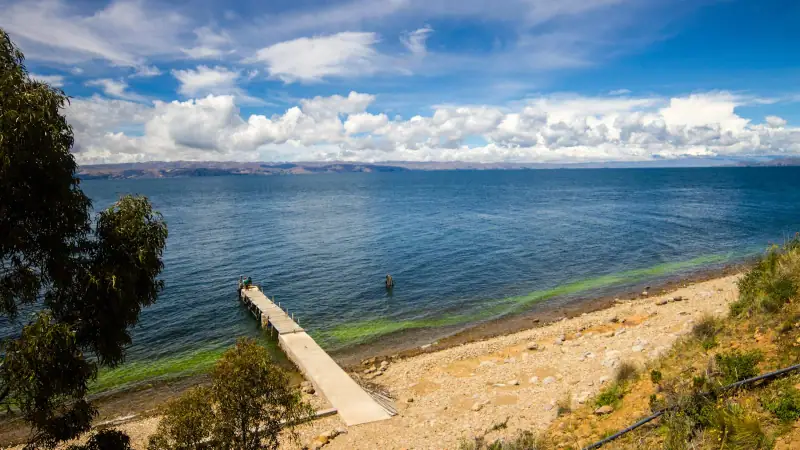
Lake Titicaca itself is a legend: 8,372 km² (3,233 sq mi) of cobalt-blue water at 3,812 m (12,507 ft), shared between Peru and Bolivia, the mythical cradle of Inca civilization, according to which the sun god Inti sent his children Manco Cápac and Mama Ocllo there to found the Inca Empire. On its waters live the Uros, a pre-Inca people who have built floating reed islands for centuries. On its shores, Aymara communities perpetuate textile traditions listed as UNESCO intangible heritage.
Puno is not just a stopover on the Cusco-Bolivia route. It is a destination in its own right, with its own character, its wild Candelaria festival and its breathtaking panoramas. Here is everything you need to know to plan your stay.
Lake Titicaca: everything to understand before you go
Before visiting the islands, a little context to fully appreciate the extraordinary.
Lake Titicaca is 190 km (118 mi) long and 80 km (50 mi) wide, and can reach 280 m (919 ft) in depth. Its altitude of 3,812 m (12,507 ft) makes it the largest navigable high-altitude lake in the world; the light is especially intense, the sky an almost unreal blue, and sunsets over the water turn the landscape into an impressionist painting.
On the Peruvian side, the lake is divided into two main zones: the Lago Mayor (the large part of the lake, shared with Bolivia) and the Lago Menor or Wiñaymarca, smaller and shallow, also shared between Peru and Bolivia. The Uros floating islands and Taquile Island are in the Lago Mayor.
The lake’s wildlife is surprising: endemic giant frogs, flamingos that land on the shallow shores, wild ducks, shorebirds. Local fishermen still use boats of woven totora reeds, know-how that is thousands of years old.
Hotels in Puno
Hotels with a view of Lake Titicaca, local guesthouses and island homestays for every budget.
The Uros floating islands: a civilization on the water
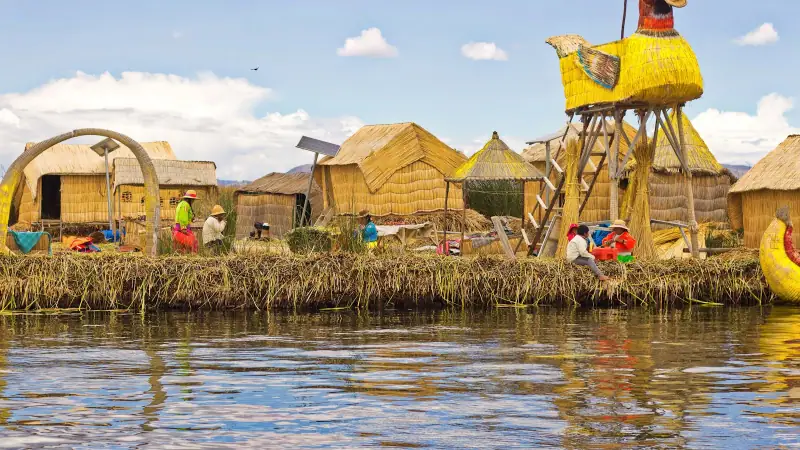
The Uros islands are Puno’s most famous attraction, and one of the most astonishing in all of Peru. On the 60 to 120 floating islands built entirely of layers of dried, interwoven totora reeds, moored a few kilometers from the port of Puno, lives a community estimated at between 1,200 and 4,000 people that maintains a pre-Inca tradition.
How the floating islands are built
The construction process is fascinating: totora roots form natural plates (the “khilis”) that the Uros cut, stack and tie together until they make a platform 20 to 30 cm (8 to 12 in) thick. Each island must be maintained constantly: layers of fresh reeds are added on top as the ones below rot in the water. A typical island can move: it is simply anchored by wooden poles planted in the mud of the lake bottom.
Houses, boats, baskets, children’s toys: everything is made of totora. The reed is also a source of food: the fresh, slightly sweet bulbs are nibbled like crackers. The Uros call totora “the bread of the lake.”
How to organize the visit
The port of Puno is 5 minutes from the town center. Motorboats leave regularly from 7 to 8 am for a crossing of about 30 minutes. Two main options:
Half-day guided visit (recommended for a first look): You visit 1 or 2 islands, meet an Uros family, watch a demonstration of island building and can buy local crafts. Duration: 2 to 3 hours in total.
Homestay night on an island: The most immersive experience. You sleep in a reed hut, dine with the family, take part in daily life. Wake up at sunrise over the lake, an unforgettable moment.
Tip: To avoid the most touristy islands and overly staged presentations, ask your guide or agency to take you to the islands farther from the port (45 to 60 minutes by boat). The interaction there is markedly more authentic.
Taquile Island: the UNESCO weavers
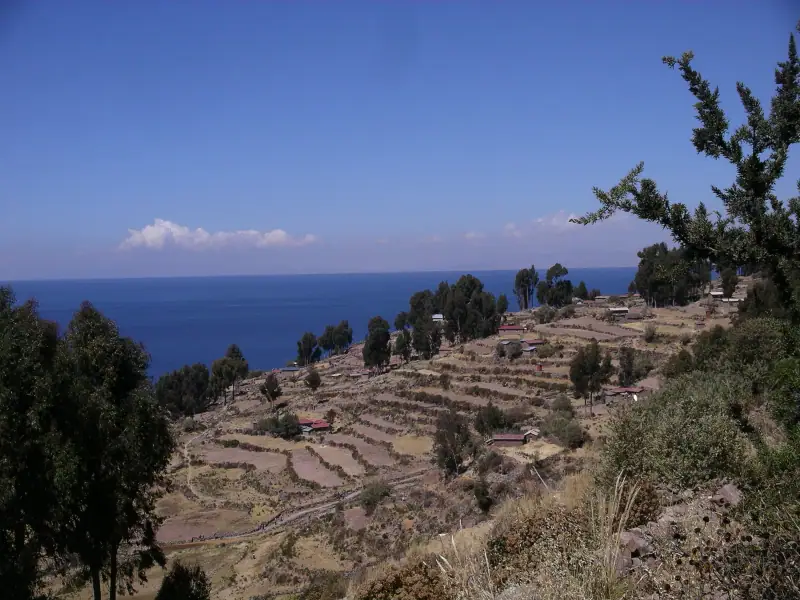
At 36 km (22 mi) from Puno (2 h 30 to 3 h by boat from the port), Taquile Island is a world apart. With an area of 5.72 km² (2.2 sq mi; about 5.5 km / 3.4 mi long by 1.6 km / 1 mi wide), and about 2,000 inhabitants of Quechua origin, it was proclaimed a UNESCO masterpiece in 2005 and inscribed on the Representative List of Intangible Heritage in 2008 for its extraordinary textile tradition.
The textile art of Taquile
On the island, it is the men who knit, by hand, eyes on the horizon, even while walking. The caps (chullos) with complex patterns show the social status, marital status and even political convictions of the wearer. The women weave the belts and skirts. Taquile textiles are renowned throughout Peru for the fineness of the work and the richness of their symbolism.
On the island’s central square, a cooperative sells local products at fixed prices, a guarantee that the money goes directly to the artisans. Plan a textile budget if you are looking for a truly authentic souvenir.
Visiting the island
The main trail climbs from the landing stages to the central Plaza Mayor in a 40-minute ascent (about 150 m / 490 ft of elevation gain). Take your time. The panorama from the top of the island is spectacular: on both sides, the blue immensity of the lake, a few red earth houses, cultivated terraces descending to the water.
Stay for lunch there (the plaza restaurants serve excellent local dishes at modest prices: lake trout, quinoa) before taking the boat back to Puno in the late afternoon.
Lake Titicaca excursions from Puno
Guided tours to the Uros, Taquile and Amantaní islands with a guide, including transfers and meals.
Amantaní: a homestay night on the big island
Amantaní Island, the largest Peruvian island of Lake Titicaca with its 9.28 km² (3.6 sq mi) of surface, is less visited than Taquile and offers an even more immersive experience. Almost all visitors spend the night with a host family (an activity managed collectively by the island’s families in a fair rotation).
On the evening of your arrival, the host family lends you local traditional clothing and takes you to dance to Aymara music on the village square, a participatory and joyful experience. The next morning, climb the island’s two summits (Pachatata and Pachamama, respectively “Father Earth” and “Mother Earth”), former Inca ceremonial sites offering a 360° view of the lake at over 4,100 m (13,451 ft).
Sillustani: the funerary towers of the Altiplano
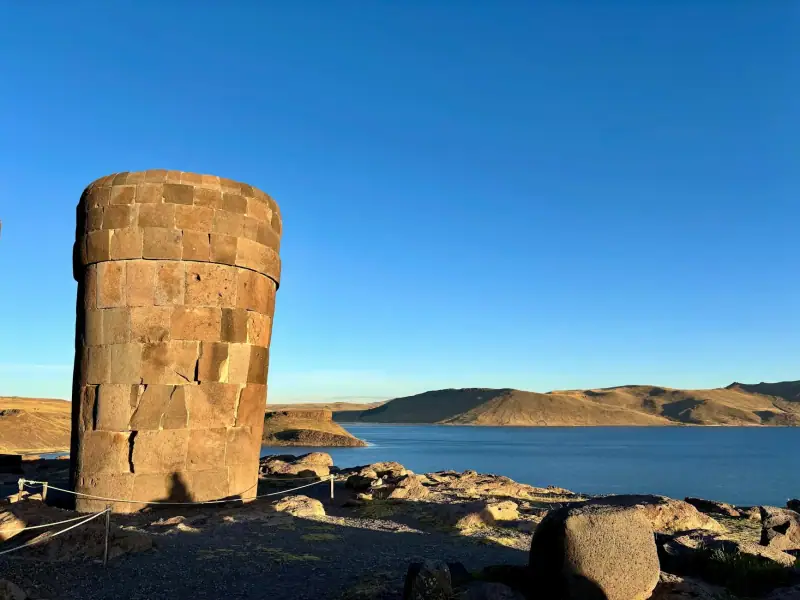
At 32 km (20 mi) north of Puno, on a peninsula of Lake Umayo (a satellite lake with a spectacular volcanic landscape), stand the Sillustani chullpas: cylindrical stone funerary towers 2 to 12 m (7 to 39 ft) high, built by the pre-Inca Colla people between the 13th and 15th centuries (around 1200-1450) to house the bodies and personal effects of their elites.
The architectural peculiarity of these towers is fascinating: they were built from the bottom up with ever larger blocks (unlike the usual technique of the reverse), creating a silhouette that flares toward the top. The joints are so precise that you cannot slip a blade between the stones, the same technique as Sacsayhuamán in Cusco.
The site is easily visited in half a day from Puno, often paired with a visit to the Uros floating islands in the morning. Sunset over the chullpas and Lake Umayo is a rare photographic experience.
The Candelaria festival: Peru’s biggest party
If you can plan your trip for early February, do not miss the Virgen de la Candelaria Festival. Listed as UNESCO intangible heritage in 2014, it is one of the biggest folk dance and music festivals in South America.
For two weeks, Puno turns into a giant stage: thousands of dancers in extravagant costumes parade through the streets to the sound of dancing devils (the Diablada), warriors (Waca Waca), devil-chasers (los Kullawadas) and a hundred other traditional dances. The city is flooded with color, deafening music and extraordinary collective energy.
Hotels are full months ahead; book at least 3 to 4 months before if you want to attend the Candelaria. Prices double or triple during the event.
Flights to Puno / Juliaca
The airport closest to Puno is Juliaca (45 min). Flights from Lima with LATAM Airlines Perú and Sky Airlines.
What to see in the city of Puno
Often reduced to a simple base for excursions on the lake, the city of Puno nonetheless deserves a full half day of exploration.
The Plaza de Armas and the cathedral
Puno’s Plaza de Armas is one of the liveliest in Peru. Its 18th-century baroque cathedral, built of gray stone, stands out for its finely carved facade and austere interior, contrasting with the bright colors of the local life around it. The craft market around the square is a trove of textiles, ceramics and silver objects with lake motifs.
Huajsapata Park and the Manco Cápac monument
Above the town center, Huajsapata Park is dominated by an imposing statue of Manco Cápac, the first Inca king, pointing toward Lake Titicaca from which he supposedly emerged. The climb from the center takes 20 minutes on foot. The panorama over the city, the port and the immensity of the lake rewards the effort.
The Carlos Dreyer Museum
Small but rich, this private museum gathers local archaeological collections: pre-Inca ceramics, ritual gold and silver, models of the floating islands and the chullpas. A useful introduction before visiting the sites. Modest entry fee, open Monday to Saturday.
Where to stay in Puno
Puno has a wide range of accommodation, from lakeside luxury to inexpensive family guesthouses.
Upscale (€100-250 / night, about $115-290):
- Casa Andina Premium Puno: hotel with a lake view, fine-dining restaurant, central heating, a welcome comfort at this altitude.
- Libertador Lago Titicaca: built on a small island connected by a walkway, unique panoramic view of the lake.
Mid-range (€40-90 / night, about $45-105):
- Taypikala Lago: lakeside hotel with a panoramic terrace, welcoming staff, good breakfast.
- Hotel Hacienda Puno: boutique hotel in a fine house in the center, warm rooms with alpaca blankets.
Budget (€12-35 / night, about $14-41):
- Hostal Royal Inn: clean, central and well equipped, hot water guaranteed, which matters at this altitude.
- Many guesthouses around Parque Pino and Lima street for under €15 a night (about $17).
Homestay night on the islands: A unique experience, but conditions are spartan (dry toilets, cold water, blankets), accepted with a philosophical attitude!
How to get to Puno
From Cusco
The Inka Express tourist bus is the best option: a trip of about 10 hours (departure 6:50 am, arrival 5:20 pm) with guided stops at the archaeological sites of Raqchi (temple of Wiracocha), Abra La Raya (the pass at 4,338 m / 14,232 ft, natural boundary between the Cusco and Puno regions), Pukará, lunch included. Express buses exist (5 to 6 hours) but without cultural stops.
For those with the budget, the Belmond Andean Explorer (luxury train) links Cusco to Puno in 3 days and 2 nights with stops at Raqchi and La Raya, an unforgettable experience across the Altiplano.
From Arequipa
Comfortable buses (Cruz del Sur, Oltursa) link Arequipa to Puno in 6 h 30 on average on a fine road across the high plateaus. See our complete guide to Arequipa to combine the two stops.
By plane (via Juliaca)
Inca Manco Cápac International Airport in Juliaca, 45 km (28 mi) from Puno (45 minutes by taxi), receives flights from Lima with LATAM Airlines Perú and Sky Airlines. The taxi from the airport costs about 30 to 40 soles.
Car rental in Puno / Juliaca
Explore the Altiplano, the Sillustani chullpas and the road to Cusco in complete freedom.
Practical information for visiting Puno
Altitude
At 3,827 m (12,556 ft), Puno is the highest-altitude city on the classic Peruvian circuit. Fitness is no guarantee either way. A practical tip: take it slow during the first hours after arrival.
For anything related to altitude, ask your doctor or a travel clinic, and see the official travel health pages (CDC in the US, TravelHealthPro in the UK).
When to visit Puno
The dry season (May to October) offers the best conditions: intense blue sky over the lake, pleasant daytime temperatures (59 to 68 °F / 15 to 20 °C), cold nights (32 to 41 °F / 0 to 5 °C). Bring warm clothes even in the austral summer.
Avoid January to March if you do not like rain: the wet season brings daily rain and sometimes floods that can disrupt boat crossings.
Exception: if the Candelaria festival (early February) is on your travel bucket list, brave the rain; it is the most extraordinary party in Peru.
Indicative daily budget in Puno
| Budget | Estimated cost | Includes |
|---|---|---|
| Tight | €25-35 / day (~$29-41) | Hostel, local meals (menú del día), local transport |
| Mid-range | €55-80 / day (~$64-93) | 3-star hotel, one-day excursion, restaurants |
| Comfort | €100-180 / day (~$115-210) | 4-star lake-view hotel, private tours, island night |
Organized excursions on the lake cost between €15 and 40 (about $17-46) depending on the duration and agency. Entry fees at the islands and Sillustani are modest (5 to 15 soles).
Safety in Puno
Puno is a quiet city. Apply the usual precautions in markets (pickpockets) and avoid walking alone outside the center after 10 pm. The port of Puno is lively but without particular danger. On the islands, safety is total.
To prepare your overall budget for Peru, see our complete budget guide.
Recommended itinerary: 3 days in Puno and Lake Titicaca
Day 1: Arrival and a slow start Arrive late morning from Cusco or Arequipa. Settle into the hotel and rest for 2 hours. Quiet afternoon: stroll on the Plaza de Armas, climb to Huajsapata Park for the view of the lake at sunset. Light dinner (quinoa soup, trucha, the lake trout).
Day 2: Uros Islands and Taquile Leave the port at 7:30 am. Visit the Uros floating islands (1 h 30), cross to Taquile (2 h), lunch on the island facing the lake. Back to Puno in the late afternoon. Free time to explore the craft market.
Day 3: Sillustani and departure Morning: excursion to the Sillustani chullpas (half day). Lunch in Puno. Free afternoon or departure for Cusco on the 2 to 3 pm bus (arrival around 8 to 9 pm).
To fit Puno into a wider circuit of Peru, our complete circuit guide details all the possible connections.
Puno first demands an effort of adjustment: to the altitude, to the white light of the Altiplano, to a way of life nothing really prepares you for. But as soon as you step onto a reed island floating on impossibly blue water, or watch a Taquile weaver knit without looking at his hands while contemplating the horizon, something settles in. Puno is one of those cities unlike any other, and Lake Titicaca one of the most striking landscapes on the planet.
Frequently asked questions
How many days do you need to visit Puno and Lake Titicaca?
Allow at least 2 to 3 days to cover the essentials: a visit to the Uros floating islands, an excursion to Taquile or Amantaní, and the Sillustani ruins. For a full immersion with a homestay night on an island, allow 3 to 4 days. If you arrive from low altitude (Lima or Arequipa), add half a day in Puno to take it easy before heading out on the lake.
How do you get from Cusco to Puno?
The tourist bus is the most common way: companies such as Cruz del Sur, Oltursa or the Inka Express tourist bus link Cusco to Puno in 6 to 7 hours with stops at archaeological sites (Raqchi, Pukará). There is also the Belmond Andean Explorer luxury train between Cusco and Puno, spectacular but expensive. By plane, you have to go through Lima (no direct flight).
Is altitude an issue in Puno?
Puno is at 3,827 m (12,556 ft), 400 m (1,312 ft) higher than Cusco. Take it slow for the first hours after arrival. For anything related to altitude, ask your doctor or a travel clinic, and see the official travel health pages (CDC in the US, TravelHealthPro in the UK).
Are the Uros floating islands authentic or too touristy?
The Uros islands are undoubtedly very touristy, especially the first islands near the port of Puno. That said, the visit remains fascinating: seeing with your own eyes these platforms built entirely of totora reeds, floating on the highest lake in the world, is a unique experience. For a more authentic encounter, ask your guide to take you to the more distant, less visited islands. A night there (homestay available) changes the experience radically.
When is the best time to visit Puno?
The dry season (May to October) offers the best conditions: intense blue sky, perfect visibility over the lake, pleasant daytime temperatures (59 to 68 °F / 15 to 20 °C). Nights stay cold all year (32 to 41 °F / 0 to 5 °C). The rainy season (November to April) turns the landscapes intensely green but hikes can be slippery. The Virgen de la Candelaria festival (early February) is Peru's most spectacular cultural event, and hotels are full months ahead.
Can you go from Puno to Bolivia?
Yes, Puno is the main crossing point to Bolivia. From Puno, boats cross Lake Titicaca to Copacabana (Bolivia) with a stop at Isla del Sol. Tourist buses also link Puno directly to La Paz in 5 to 6 hours, with a ferry crossing of the lake at the Tiquina strait. Check Bolivian visa requirements for your nationality before leaving.
More Peru guides
Keep reading
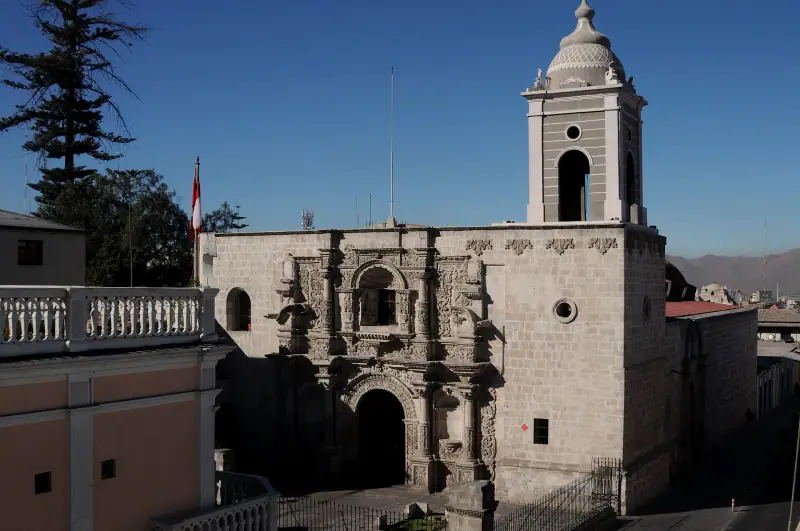
Visiting Arequipa: Complete Guide to Peru's White City
Complete Arequipa guide: Santa Catalina Monastery, Colca Canyon, UNESCO, hotels and practical tips for your stay in Peru's White City.
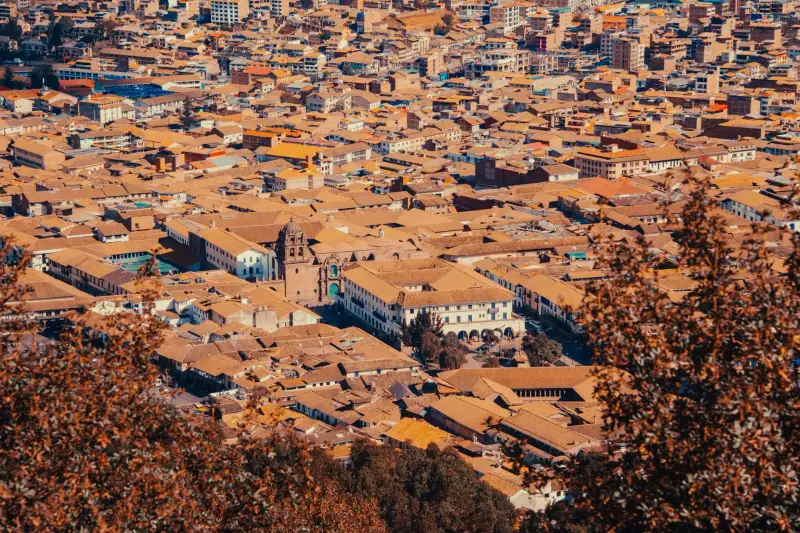
Visiting Cusco: Complete Guide to the Former Inca Capital
Complete Cusco guide: Plaza de Armas, Qorikancha, Sacsayhuamán, San Blas, Sacred Valley. Where to stay, food, the Boleto Turístico and itineraries.
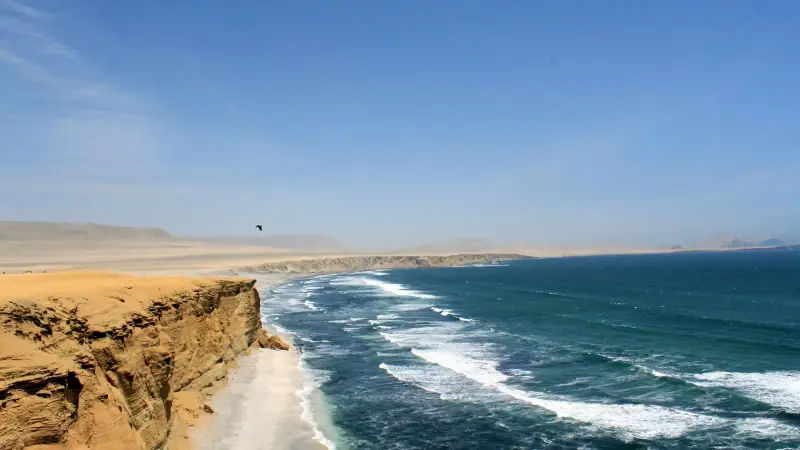
Visiting the Peruvian Coast: Complete Guide to the Pacific Coast
Complete guide to the Peruvian coast: Lima, Paracas, Huacachina, Nazca Lines, Trujillo and Máncora. UNESCO sites, desert and Pacific beaches.
Ready-made
Peru itineraries
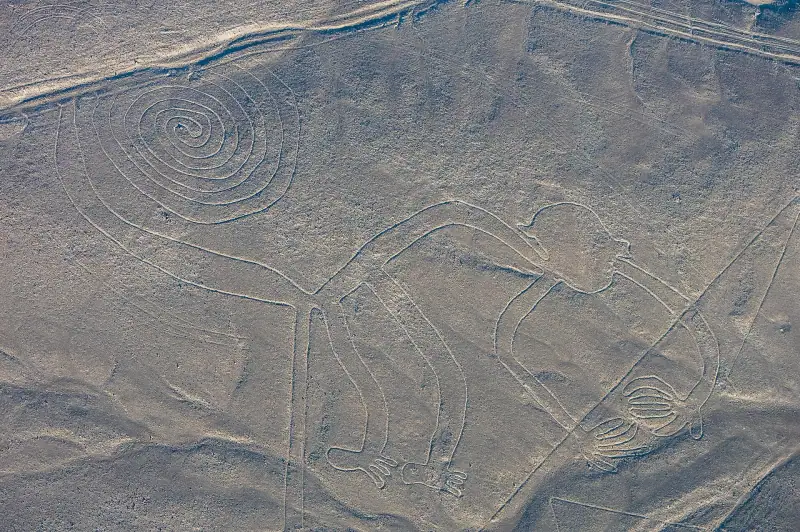
7 days
Peru in 7 Days: The Ideal One-Week Itinerary
LimaCuscoAguas CalientesCusco
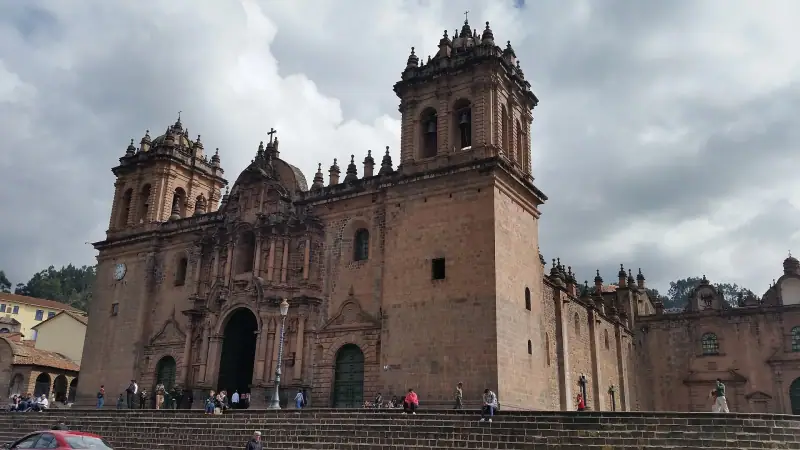
12 days
Peru Sierra Road Trip: 12 Days from Cusco to Huaraz
12-day Peruvian Sierra road trip: Cusco, Machu Picchu, Lake Titicaca, Arequipa, Colca, Huaraz. Complete itinerary with budget.
4 days
Lima, Paracas, Huacachina and Nazca in 4 Days by Bus: Doable Without a Car?
Lima, Paracas, Huacachina and Nazca in 4 days by bus: stages, km, real travel times, recommended departures and what to sacrifice to keep the pace.